From Surf Wiki (app.surf) — the open knowledge base
1939 Amateur World Series
| Field | Value |
|---|---|
| country | |
| dates | 12–26 August |
| num_teams | 3 |
| venues | 1 |
| cities | 1 |
| defending_champion | Great Britain |
| champion | Cuba |
| num_championships | 1 |
| second | Nicaragua |
| second-flagvar | 1908 |
| third | United States |
| third-flagvar | 1912 |
| games | 9 |
| mvp | CUB Cocoliso Torres |
| prevseason | [1938](1938-amateur-world-series) |
| nextseason | [1940](1940-amateur-world-series) |
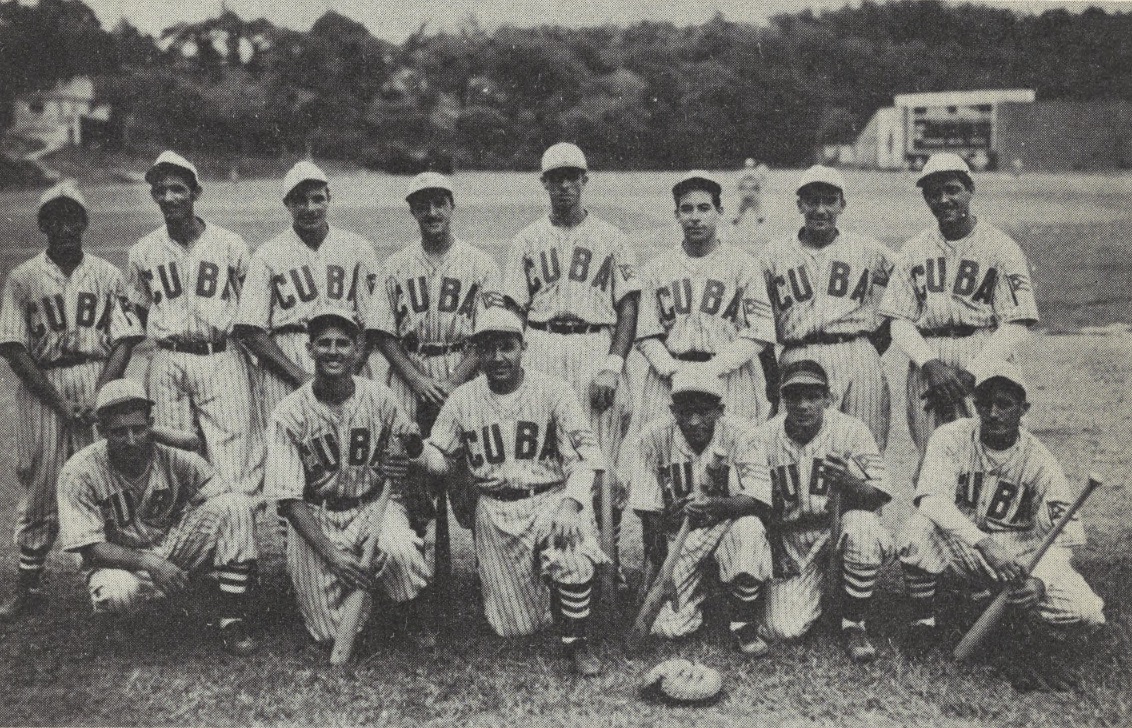
| second-flagvar = 1908 | third-flagvar = 1912 The 1939 Amateur World Series was the second Amateur World Series (AWS), an international men's amateur baseball tournament. The tournament was sanctioned by the International Baseball Federation (which titled it the Baseball World Cup as of the 1988 tournament). Great Britain did not defend the AWS title it had won in the inaugural event the previous year. The tournament took place, for the first time, in Cuba. It was contested by the national teams of Cuba, Nicaragua and the United States, playing six games each from August 12 through August 26. Cuba won its first AWS titlethe first of what would be a record 26 titles by the time the series ended in 2011, 22 more titles than the next closest nation.
Participants
The second Amateur World Series was announced on June 11, 1939. In addition to the United States and Great Britain, which had participated in the inaugural tournament held the previous year, the International Baseball Federation (IBF) hope to increase the visibility of the tournament by inviting thirteen other countries, all of them in the Western Hemisphere. However, only two federations accepted, those of Cuba and Nicaragua; Great Britain, the defending champions, declined for the sake of their domestic league, which began in August of that year. IBF president Leslie Mann was particularly disappointed by Britain's exit from the tournament; they would not return until the 2009 Baseball World Cup.
Invited teams
Caribbean (1)
- (hosts)
- (did not attend)
- (did not attend)
- (did not attend) Europe (0)
- (did not attend) North America (2)
- (did not attend)
- (did not attend)
- (did not attend)
- (did not attend)
- (did not attend) South America (0)
- (did not attend)
- (did not attend)
- (did not attend)
Though only three federations participated in the 1939 edition, most of the invitees would participate in future tournaments, starting with the following year's edition.
Venue
| Havana, Cuba | |||||
|---|---|---|---|---|---|
| {{Location map+ | Cuba | width=500 | float=center | caption= | places= |
| Gran Stadium Cervecería Tropical | |||||
| Capacity: **15,000** | |||||
| [[File:Estadio La Tropical 1937.jpg | 250px]] |
Tournament summary
The ceremonial first pitch was thrown out by Colonel Jaime Mariné, the director of the Cuban sports ministry and a close associate of Fulgencio Batista, who had helped organize the tournament. The United States was badly outmatched against the Cuban and Nicaraguan pitching staffs — which, unlike the amateur leagues in the U.S., included some of the best pitchers from their countries.
In a report on the 1939 series, Mann concluded that the United States "has the youngsters with the ability to compete with the other countries around the world but it is going to take enthusiastic cooperation on part of those amateur players... The U.S.A. should lead in baseball but first they will have to prove it to England, Japan, and Central America which at this time hold upper berths on this challenge."
Results
Rosters


The Cuban team of 1939 was assembled on a somewhat "arbitrary" basis, according to Roberto González Echevarría. There were no professional players from the Cuban League, in keeping with the tournament's amateur basis (though Adolfo Luque, manager of Almendares and formerly of the Cincinnati Reds, acted as an English-language interpreter). Instead, the team was made up of the top players from Cuba's amateur circuits, including the clubs of Regla, Fortuna, Circulo Militar, Cienfuegos, and Deportivo Cardenas. Notably, the Cuban team included two Black Cuban players, Clemente Gonzalez and Esteban Maciques, as part of Mariné's efforts to desegregate the amateur leagues.
Conrado Marrero, a future Washington Senators pitcher, was on the Cuban squad, as was future New York Giants farmhand Andrés Fleitas (C). Bernardo Cuervo (1B) hit .200, leading the tournament with two triples and six runs batted in, while Ernesto Estevez (2B) hit .389 with two doubles. Wenceslao Gonzales (P), a future cup of coffee player with the Washington Senators, hit .500 (3 for 6). Pedro "Natilla" Jiménez was the best pitcher in the tournament with a 2–0 record and a 0.95 earned run average. Esteban Maciques (RF) hit .250 with 7 runs (led tournament). Cocoliso Torres (CF) won the most valuable player award for the tournament despite a .174 batting average. Gerardo Toyo (LF) hit .333 (9 for 27), tied for lead in hits.
Nicaragua's Stanley Cayasso (1B) hit one of only two home runs of the tournament plus two doubles to start a string of successful appearances in the tournament. Jonathan Robinson (RF) hit the other home run of the tournament, while Colbert Newell (LF) stole four bases to lead the tournament in that category
Charles Forbes led the team in offensive performance with a .300 avera, going 6 for 20 with 3 walks and 3 runs. American second baseman Joe Justice would go on to become head baseball coach at Rollins College, leading them to the 1954 College World Series, while left fielder Tom Callahan would later play basketball for the Providence Steamrollers of the BAA
Final standings
| Pos. | Team | W | L |
|---|---|---|---|
| 6 | 0 | ||
| 3 | 3 | ||
| 0 | 6 |
Honors and awards
Statistical leaders
| Statistic | Name | Total | Batting average | Hits | Runs | Home runs | Runs batted in | Stolen bases |
|---|---|---|---|---|---|---|---|---|
| Sam Garth | .500 | |||||||
| Sam Garth | ||||||||
| Gerardo Toyo | 9 | |||||||
| Esteban Maciques | 6 | |||||||
| Stanley Cayasso | ||||||||
| Jonathan Robinson | 9 | |||||||
| Bernardo Cuervo | 6 | |||||||
| Colbert Newell | 4 |
| Statistic | Name | Total | Wins | Earned run average | Strikeouts |
|---|---|---|---|---|---|
| Alfredo García | 3 | ||||
| Natilla Jiménez | 0.95 | ||||
| Alfredo García | 21 |
Awards
| Award | Player | Ref. | ||
|---|---|---|---|---|
| Most Valuable Player |
Notes
References
Bibliography
- Bjarkman, Peter. A History of Cuban Baseball
References
- (1999). "The Pride of Havana: A History of Cuban Baseball". Oxford University Press.
- (2019). "The Game We Love". World Baseball Softball Confederation.
- (1940). "Baseball Around the World". International Amateur Baseball Federation.
- Mann, p. 41
- Bjarkman, Peter. (2007). "A History of Cuban Baseball, 1864-2006". McFarland.
- "Historia de la Copa Mundial/World Cup History I-X (1938-1948)".
This article was imported from Wikipedia and is available under the Creative Commons Attribution-ShareAlike 4.0 License. Content has been adapted to SurfDoc format. Original contributors can be found on the article history page.
Ask Mako anything about 1939 Amateur World Series — get instant answers, deeper analysis, and related topics.
Research with MakoFree with your Surf account
Create a free account to save articles, ask Mako questions, and organize your research.
Sign up freeThis content may have been generated or modified by AI. CloudSurf Software LLC is not responsible for the accuracy, completeness, or reliability of AI-generated content. Always verify important information from primary sources.
Report