From Surf Wiki (app.surf) — the open knowledge base
1932 Tour de France

| Field | Value |
|---|---|
| name | 1932 Tour de France |
| image | Route of the 1932 Tour de France.png |
| image_caption | Route of the 1932 Tour de France followed counterclockwise, starting in Paris |
| image_size | 360px |
| date | 6–31 July 1932 |
| stages | 21 |
| distance | 4479 |
| unit | km |
| time | 154h 11' 49" |
| first | André Leducq |
| first_nat | FRA |
| first_color | yellow |
| first_team | France |
| second | Kurt Stöpel |
| second_nat | GER |
| second_natvar | Weimar |
| second_team | Germany/Austria |
| third | Francesco Camusso |
| third_nat | ITA |
| third_natvar | 1861 |
| third_team | Italy |
| team | Italy |
| previous | [1931](1931-tour-de-france) |
| next | [1933](1933-tour-de-france) |
The 1932 Tour de France was the 26th edition of the Tour de France, taking place from 6 to 31 July. It consisted of 21 stages over 4479 km.
André Leducq, who also won six stages, won the race, thanks to the bonification system; had the bonification system not existed, the margin between Leducq and Kurt Stöpel would only have been three seconds.
Innovations and changes
In the 1931 Tour de France, there had been a time bonification system, which gave 3 minutes of bonification to the winner of the stage, if he finished more than three minutes ahead of the second cyclist in that stage. In 1932, this bonification system changed: now the winner of the stage received 4 minutes, the second-placed cyclist 2 minutes and the third-placed cyclist 1 minute, plus an extra three minutes if the margin was more than three minutes. The bonification system was invented to give sprinters, who lost a lot of time in the mountains, a chance to battle for the general classification.
The number of stages decreased from 24 to 21. The total distance also decreased, so the average length per stage remained about the same, 215 km (compared to 160–170 km in modern Tours).
Teams
Main article: List of teams and cyclists in the 1932 Tour de France
For the third year, the race was run in the national team format, with five different teams. Belgium, Italy, Switzerland and France each sent a team with eight cyclists, while Germany and Austria sent a combined team, with seven German cyclists and one Austrian cyclist. In addition, 40 cyclists joined as touriste-routiers.
Charles Pélissier, who had won 13 stages in the 1930 and 1931 Tours, and Antonin Magne, the winner of 1931, were absent from the French team. Still, there were so many good French cyclists in that time that the French team was still considered superior.
The Italian team included three Giro d'Italia winners: the winner from the 1930 Giro d'Italia, Luigi Marchisio; the winner from the 1931 Giro d'Italia, Francesco Camusso and the winner from the 1932 Giro d'Italia, Antonio Pesenti.
The Belgium team had Jef Demuysere, who had fought for the victory in the previous Tour until the end and had come second, and two-time world champion Georges Ronsse.
Race overview
Main article: 1932 Tour de France, Stage 1 to Stage 11, 1932 Tour de France, Stage 12 to Stage 21
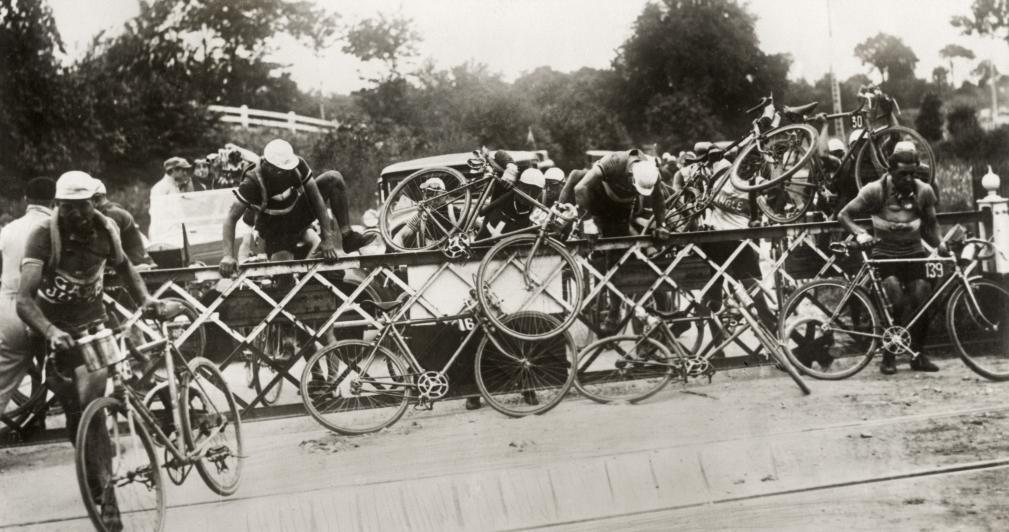
In the first stage, the Belgians had a good start. Jean Aerts won the stage, with Jef Demuysere in second place. In the second stage, there were struggles in the Belgian team between the Dutch-speaking and the French-speaking cyclists. Aerst, Dutch-speaking, did not get the support from his French-speaking teammates, and lost ten minutes in that stage, together with the Italian favourites. German Kurt Stöpel won the stage, and donned the yellow jersey, thanks to the bonification. Stöpel was the first German cyclist to lead the general classification in the Tour de France. In the third stage, the longest stage of this Tour with 387 km, Stöpel lost the lead to André Leducq. Leducq kept the lead for the rest of the race, winning six stages along the way. In the fifth stage, Spaniard Vicente Trueba escaped and reached the top of the Col d'Aubisque first. On the way down, Benoît Fauré overtook him, and reached the Tourmalet first. But he didn't win the stage, as Italian Antonio Pesenti caught him. Behind the leaders in the stage, Leducq was fighting for the leading position in the general classification. He was not a good climber, but was one of the best descenders.
On one stage, Leducq flatted, and received a wheel from his teammate Georges Speicher, who would win the next Tour.
In the tenth stage, Leducq almost lost the lead. Camusso had escaped, and Stöpel had followed him. Leducq lost more than five minutes in the stage, and even more due to the bonification time. After that stage, Stöpel was within three minutes of Leducq, and Camusso within six minutes. In the eleventh stage, Leducq could have lost the race. Benoît Fauré, a French cyclist riding as a touriste-routier, escaped, and was followed by Francesco Camusso. At one point, they were so far ahead that Camusso was the virtual leader, but eventually they were caught back.
Leducq also crossed the finishline first in the eighteenth stage, but the jury relegated him because he had been pushed by Albert Barthélemy.
Leducq and Stöpel finished in the same group for most of the stages. Only in four stages was there a time difference:
- Stage 3, when Leducq won 45 seconds
- Stage 5, when Leducq won 20 seconds
- Stage 10, when Stöpel won 2 minutes and 52 seconds
- Stage 13, when Leducq won 1 minute and 50 seconds Without the bonification system, the time difference between Leducq and Stöpel was three seconds. Leducq received 31 bonification minutes (six first places, two second places and three third place), while Stöpel received only 7 bonification minutes (one first place and three third places).
Results
The cyclist to reach the finish in the least time was the winner of the stage. The time that each cyclist required to finish the stage was recorded. For the general classification, these times were added together. If a cyclist had received a time bonus, it was subtracted from this total; all time penalties were added to this total. The cyclist with the least accumulated time was the race leader, identified by the yellow jersey.
The team classification was calculated by adding up the times in the general classification of the three highest ranking cyclists per team; the team with the least time was the winner.
Stage winners
| Stage | Date | Course | Distance | Type | Winner | Race leader | [1](1932-tour-de-france-stage-1-to-stage-11-stage-1) | [2](1932-tour-de-france-stage-1-to-stage-11-stage-2) | [3](1932-tour-de-france-stage-1-to-stage-11-stage-3) | [4](1932-tour-de-france-stage-1-to-stage-11-stage-4) | [5](1932-tour-de-france-stage-1-to-stage-11-stage-5) | [6](1932-tour-de-france-stage-1-to-stage-11-stage-6) | [7](1932-tour-de-france-stage-1-to-stage-11-stage-7) | [8](1932-tour-de-france-stage-1-to-stage-11-stage-8) | [9](1932-tour-de-france-stage-1-to-stage-11-stage-9) | [10](1932-tour-de-france-stage-1-to-stage-11-stage-10) | [11](1932-tour-de-france-stage-1-to-stage-11-stage-11) | [12](1932-tour-de-france-stage-12-to-stage-21-stage-12) | [13](1932-tour-de-france-stage-12-to-stage-21-stage-13) | [14](1932-tour-de-france-stage-12-to-stage-21-stage-14) | [15](1932-tour-de-france-stage-12-to-stage-21-stage-15) | [16](1932-tour-de-france-stage-12-to-stage-21-stage-16) | [17](1932-tour-de-france-stage-12-to-stage-21-stage-17) | [18](1932-tour-de-france-stage-12-to-stage-21-stage-18) | [19](1932-tour-de-france-stage-12-to-stage-21-stage-19) | [20](1932-tour-de-france-stage-12-to-stage-21-stage-20) | [21](1932-tour-de-france-stage-12-to-stage-21-stage-21) | |||
|---|---|---|---|---|---|---|---|---|---|---|---|---|---|---|---|---|---|---|---|---|---|---|---|---|---|---|---|---|---|---|
| 6 July | Paris to Caen | 208 km | [[File:Plainstage.svg | 20px | alt= | link=]] | Plain stage | Jean Aerts | Jean Aerts | |||||||||||||||||||||
| 7 July | Caen to Nantes | 300 km | [[File:Plainstage.svg | 20px | alt= | link=]] | Plain stage | Kurt Stöpel | Kurt Stöpel | |||||||||||||||||||||
| 9 July | Nantes to Bordeaux | 387 km | [[File:Plainstage.svg | 20px | alt= | link=]] | Plain stage | André Leducq | André Leducq | |||||||||||||||||||||
| 11 July | Bordeaux to Pau | 206 km | [[File:Plainstage.svg | 20px | alt= | link=]] | Plain stage | Georges Ronsse | André Leducq | |||||||||||||||||||||
| 12 July | Pau to Luchon | 229 km | [[File:Mountainstage.svg | 20px | alt= | link=]] | Stage with mountain(s) | Antonio Pesenti | André Leducq | |||||||||||||||||||||
| 14 July | Luchon to Perpignan | 322 km | [[File:Mountainstage.svg | 20px | alt= | link=]] | Stage with mountain(s) | Frans Bonduel | André Leducq | |||||||||||||||||||||
| 16 July | Perpignan to Montpellier | 168 km | [[File:Plainstage.svg | 20px | alt= | link=]] | Plain stage | Frans Bonduel | André Leducq | |||||||||||||||||||||
| 17 July | Montpellier to Marseille | 206 km | [[File:Plainstage.svg | 20px | alt= | link=]] | Plain stage | Michele Orecchia | André Leducq | |||||||||||||||||||||
| 18 July | Marseille to Cannes | 191 km | [[File:Plainstage.svg | 20px | alt= | link=]] | Plain stage | Rafaele di Paco | André Leducq | |||||||||||||||||||||
| 19 July | Cannes to Nice | 132 km | [[File:Mountainstage.svg | 20px | alt= | link=]] | Stage with mountain(s) | Francesco Camusso | André Leducq | |||||||||||||||||||||
| 21 July | Nice to Gap | 233 km | [[File:Mountainstage.svg | 20px | alt= | link=]] | Stage with mountain(s) | André Leducq | André Leducq | |||||||||||||||||||||
| 22 July | Gap to Grenoble | 102 km | [[File:Mountainstage.svg | 20px | alt= | link=]] | Stage with mountain(s) | Roger Lapébie | André Leducq | |||||||||||||||||||||
| 23 July | Grenoble to Aix-les-Bains | 230 km | [[File:Mountainstage.svg | 20px | alt= | link=]] | Stage with mountain(s) | André Leducq | André Leducq | |||||||||||||||||||||
| 24 July | Aix-les-Bains to Evian | 204 km | [[File:Mountainstage.svg | 20px | alt= | link=]] | Stage with mountain(s) | Rafaele di Paco | André Leducq | |||||||||||||||||||||
| 25 July | Evian to Belfort | 291 km | [[File:Mountainstage.svg | 20px | alt= | link=]] | Stage with mountain(s) | André Leducq | André Leducq | |||||||||||||||||||||
| 26 July | Belfort to Strasbourg | 145 km | [[File:Plainstage.svg | 20px | alt= | link=]] | Plain stage | Gérard Loncke | André Leducq | |||||||||||||||||||||
| 27 July | Strasbourg to Metz | 165 km | [[File:Plainstage.svg | 20px | alt= | link=]] | Plain stage | Rafaele di Paco | André Leducq | |||||||||||||||||||||
| 28 July | Metz to Charleville | 159 km | [[File:Plainstage.svg | 20px | alt= | link=]] | Plain stage | Rafaele di Paco | André Leducq | |||||||||||||||||||||
| 29 July | Charleville to Malo-les-Bains | 271 km | [[File:Plainstage.svg | 20px | alt= | link=]] | Plain stage | Gaston Rebry | André Leducq | |||||||||||||||||||||
| 30 July | Malo-les-Bains to Amiens | 212 km | [[File:Plainstage.svg | 20px | alt= | link=]] | Plain stage | André Leducq | André Leducq | |||||||||||||||||||||
| 31 July | Amiens to Paris | 159 km | [[File:Plainstage.svg | 20px | alt= | link=]] | Plain stage | André Leducq | André Leducq | |||||||||||||||||||||
| Total | 4479 km |
General classification
Kurt Stöpel was the first German to reach the podium of the Tour de France. He would be the only German on the podium until Jan Ullrich became 2nd in 1996.
| Rank | Rider | Team | Time | 1 | 2 | 3 | 4 | 5 | 6 | 7 | 8 | 9 | 10 |
|---|---|---|---|---|---|---|---|---|---|---|---|---|---|
| André Leducq | France | 154h 11' 49" | |||||||||||
| Kurt Stöpel | Germany/Austria | + 24' 03" | |||||||||||
| Francesco Camusso | Italy | + 26' 21" | |||||||||||
| Antonio Pesenti | Italy | + 37' 08" | |||||||||||
| Georges Ronsse | Belgium | + 41' 04" | |||||||||||
| Frans Bonduel | Belgium | + 45' 13" | |||||||||||
| Oskar Thierbach | Germany/Austria | + 58' 44" | |||||||||||
| Jef Demuysere | Belgium | + 1h 03' 24" | |||||||||||
| Luigi Barral | Touriste-routier | + 1h 06' 57" | |||||||||||
| Georges Speicher | France | + 1h 08' 37" |
| Final general classification (11–57) | Rank | Rider | Team | Time | 11 | 12 | 13 | 14 | 15 | 16 | 17 | 18 | 19 | 20 | 21 | 22 | 23 | 24 | 25 | 26 | 27 | 28 | 29 | 30 | 31 | 32 | 33 | 34 | 35 | 36 | 37 | 38 | 39 | 40 | 41 | 42 | 43 | 44 | 45 | 46 | 47 | 48 | 49 | 50 | 51 | 52 | 53 | 54 | 55 | 56 | 57 |
|---|---|---|---|---|---|---|---|---|---|---|---|---|---|---|---|---|---|---|---|---|---|---|---|---|---|---|---|---|---|---|---|---|---|---|---|---|---|---|---|---|---|---|---|---|---|---|---|---|---|---|---|
| Albert Büchi | Switzerland | + 1h 13' 33" | |||||||||||||||||||||||||||||||||||||||||||||||||
| Benoît Fauré | Touriste-Routier | + 1h 14' 12" | |||||||||||||||||||||||||||||||||||||||||||||||||
| Jean Aerts | Belgium | + 1h 16' 24" | |||||||||||||||||||||||||||||||||||||||||||||||||
| Michele Orecchia | Italy | + 1h 18' 45" | |||||||||||||||||||||||||||||||||||||||||||||||||
| Georges Lemaire | Belgium | + 1h 19' 18" | |||||||||||||||||||||||||||||||||||||||||||||||||
| Maurice Archambaud | France | + 1h 25' 27" | |||||||||||||||||||||||||||||||||||||||||||||||||
| Jan Wauters | Touriste-Routier | + 1h 29' 21" | |||||||||||||||||||||||||||||||||||||||||||||||||
| René Bernard | Touriste-Routier | + 1h 35' 28" | |||||||||||||||||||||||||||||||||||||||||||||||||
| Max Bulla | Germany/Austria | + 1h 38' 23" | |||||||||||||||||||||||||||||||||||||||||||||||||
| Gaston Rebry | Belgium | + 1h 39' 01" | |||||||||||||||||||||||||||||||||||||||||||||||||
| Augusto Zanzi | Touriste-Routier | + 1h 45' 56" | |||||||||||||||||||||||||||||||||||||||||||||||||
| Ludwig Geyer | Germany/Austria | + 1h 49' 48" | |||||||||||||||||||||||||||||||||||||||||||||||||
| Roger Lapébie | France | + 1h 55' 27" | |||||||||||||||||||||||||||||||||||||||||||||||||
| Marcel Mazeyrat | Touriste-Routier | + 1h 56' 53" | |||||||||||||||||||||||||||||||||||||||||||||||||
| Julien Moineau | France | + 1h 58' 16" | |||||||||||||||||||||||||||||||||||||||||||||||||
| Luigi Marchisio | Italy | + 1h 59' 47" | |||||||||||||||||||||||||||||||||||||||||||||||||
| Vicente Trueba | Touriste-Routier | + 2h 00' 40" | |||||||||||||||||||||||||||||||||||||||||||||||||
| Ernest Neuhard | Touriste-Routier | + 2h 22' 21" | |||||||||||||||||||||||||||||||||||||||||||||||||
| Georges Antenen | Switzerland | + 2h 24' 39" | |||||||||||||||||||||||||||||||||||||||||||||||||
| Marcel Bidot | France | + 2h 29' 02" | |||||||||||||||||||||||||||||||||||||||||||||||||
| Marius Guiramand | Touriste-Routier | + 2h 29' 31" | |||||||||||||||||||||||||||||||||||||||||||||||||
| Giuseppe Pancera | Touriste-Routier | + 2h 30' 12" | |||||||||||||||||||||||||||||||||||||||||||||||||
| Raffaele Di Paco | Italy | + 2h 35' 51" | |||||||||||||||||||||||||||||||||||||||||||||||||
| Gérard Loncke | Belgium | + 2h 41' 25" | |||||||||||||||||||||||||||||||||||||||||||||||||
| Fernand Fayolle | Touriste-Routier | + 2h 44' 33" | |||||||||||||||||||||||||||||||||||||||||||||||||
| Alfred Büchi | Switzerland | + 2h 59' 37" | |||||||||||||||||||||||||||||||||||||||||||||||||
| Lazare Venot | Touriste-Routier | + 3h 04' 31" | |||||||||||||||||||||||||||||||||||||||||||||||||
| Amulio Viarengo | Touriste-Routier | + 3h 10' 27" | |||||||||||||||||||||||||||||||||||||||||||||||||
| Herbert Sieronski | Germany/Austria | + 3h 15' 13" | |||||||||||||||||||||||||||||||||||||||||||||||||
| Jules Buysse | Touriste-Routier | + 3h 32' 25" | |||||||||||||||||||||||||||||||||||||||||||||||||
| Alfred Bula | Switzerland | + 3h 34' 06" | |||||||||||||||||||||||||||||||||||||||||||||||||
| Aleardo Simoni | Touriste-Routier | + 3h 38' 18" | |||||||||||||||||||||||||||||||||||||||||||||||||
| Émile Decroix | Touriste-Routier | + 3h 43' 20" | |||||||||||||||||||||||||||||||||||||||||||||||||
| François Moreels | Touriste-Routier | + 3h 55' 22" | |||||||||||||||||||||||||||||||||||||||||||||||||
| Nicolas Frantz | Touriste-Routier | + 4h 00' 17" | |||||||||||||||||||||||||||||||||||||||||||||||||
| Jean Goulême | Touriste-Routier | + 4h 06' 02" | |||||||||||||||||||||||||||||||||||||||||||||||||
| Louis Peglion | France | + 4h 13' 53" | |||||||||||||||||||||||||||||||||||||||||||||||||
| Karl Altenburger | Touriste-Routier | + 4h 20' 41" | |||||||||||||||||||||||||||||||||||||||||||||||||
| Albert Barthélémy | France | + 4h 21' 05" | |||||||||||||||||||||||||||||||||||||||||||||||||
| Jean-Pierre Muller | Touriste-Routier | + 4h 21' 15" | |||||||||||||||||||||||||||||||||||||||||||||||||
| François Haas | Touriste-Routier | + 4h 32' 29" | |||||||||||||||||||||||||||||||||||||||||||||||||
| Robert Brugère | Touriste-Routier | + 4h 38' 35" | |||||||||||||||||||||||||||||||||||||||||||||||||
| Francis Bouillet | Touriste-Routier | + 4h 47' 05" | |||||||||||||||||||||||||||||||||||||||||||||||||
| Fernand Cornez | Touriste-Routier | + 4h 47' 18" | |||||||||||||||||||||||||||||||||||||||||||||||||
| August Erne | Switzerland | + 4h 54' 45" | |||||||||||||||||||||||||||||||||||||||||||||||||
| Georg Umbenhauer | Germany/Austria | + 5h 03' 01" | |||||||||||||||||||||||||||||||||||||||||||||||||
| Rudolf Risch | Germany/Austria | + 5h 05' 14" |
Team classification
| Rank | Team | Time | 1 | 2 | 3 | 4 | 5 |
|---|---|---|---|---|---|---|---|
| Italy | 464h 57' 41" | ||||||
| Belgium | + 7' 27" | ||||||
| France | + 11' 50" | ||||||
| Germany/Austria | + 38' 56" | ||||||
| Switzerland | + 4h 14' 25" |
Other classifications
The organising newspaper, l'Auto named a meilleur grimpeur (best climber), an unofficial precursor to the modern King of the Mountains competition. This award was won by Vicente Trueba.
Aftermath
Winner André Leducq kept riding the Tour de France until 1938, but he never managed to win again, although he had three more stage victories.
Notes
References
Bibliography
References
- Tom James. (15 August 2003). "1932: A bonus for Leducq".
- "25ème Tour de France 1931". Mémoire du cyclisme.
- "The Tour - Year 1932". [[Amaury Sport Organisation]].
- Barry Boyce. (2004). ""Le Joyeux DeDe" Returns to Form". Cycling revealed.
- "The history of the Tour de France – Year 1932 – The starters". [[Amaury Sport Organisation]].
- (19 March 2003). "1932: André Leducq stelt in de Alpen zijn tweede Tourzege veilig". Tourdefrance.nl.
- "26ème Tour de France 1932 - 18ème étape". Mémoire du cyclisme.
- "26ème Tour de France 1932". Mémoire du cyclisme.
- Arian Zwegers. "Tour de France GC top ten". CVCC.
- "The history of the Tour de France – Year 1932 – The stage winners". [[Amaury Sport Organisation]].
- "The history of the Tour de France – Year 1932 – Stage 21 Amiens > Paris". [[Amaury Sport Organisation]].
- (1 August 1932). "Leducq, ganador definitivo, como se espereba, de la XXVI Vuelta a Francia". [[Mundo Deportivo]].
- Michiel van Lonkhuyzen. "Tour-giro-vuelta".
- "The tour - André Leducq". [[Amaury Sport Organisation]].
This article was imported from Wikipedia and is available under the Creative Commons Attribution-ShareAlike 4.0 License. Content has been adapted to SurfDoc format. Original contributors can be found on the article history page.
Ask Mako anything about 1932 Tour de France — get instant answers, deeper analysis, and related topics.
Research with MakoFree with your Surf account
Create a free account to save articles, ask Mako questions, and organize your research.
Sign up freeThis content may have been generated or modified by AI. CloudSurf Software LLC is not responsible for the accuracy, completeness, or reliability of AI-generated content. Always verify important information from primary sources.
Report