From Surf Wiki (app.surf) — the open knowledge base
1930 Grand Prix season
Grand Prix season
.jpg)
Grand Prix season
The 1930 Grand Prix season continued the malaise that had taken over the sport. Although there was little technical advance more privateer teams were forming, getting some factory support. The AIACR continued to mandate its fuel-regulated Formula Libre (open formula) rules. Across the Atlantic, the AAA abandoned the AIACR regulations. Their new regulations were derisively called the “Junk Formula” by purists, opening up to their own version of Formula Libre: with modified stock-standard cars of up to 366 cu in (6-litres) with two seats.
In the dozen major races of the season, the honours were evenly shared by the three major manufacturers. Bugatti won the two national Grands Prix of France and Belgium, as well as at Monaco and Reims. In the Mediterranean theatre, Alfa Romeo had early success at Alessandria and the Targa Florio. Maserati finally claimed victory in their first major races, and had four wins in Italy and the San Sebastián Grand Prix in Spain. Achille Varzi was the pre-eminent driver of the season with the two race-wins for Alfa Romeo and three for Maserati, on his way to winning the Italian Drivers’ Championship.
The Indianapolis 500 produced one of the most dominant driving displays in the race's history with Billy Arnold and his modified 2.5-litre Miller. Arnold claimed pole position then led for all but two of the 200 laps, to win with a four-lap margin. With two further victories, he then went on to claim the 1930 AAA champion.
Grand Épreuves
| Date | Name | Circuit | Race | |||||||||||
|---|---|---|---|---|---|---|---|---|---|---|---|---|---|---|
| Regulations | Weather | Race | ||||||||||||
| Distance | Winner's | |||||||||||||
| Time | Winning driver | Winning | ||||||||||||
| constructor | Fastest | |||||||||||||
| lap | Report | 5 | 7 | 11 | 12 | |||||||||
| **30 May** | USA **XVIII International 500 Mile | |||||||||||||
| Sweepstakes** | Indianapolis | AAA | ? | 500 miles | 4h 59m | United States Billy Arnold | Summers FD-Miller | *not recorded* | [Report](1930-indianapolis-500) | |||||
| 13 Jul | GER German Grand Prix | Nürburgring | *cancelled* | |||||||||||
| **20 Jul** | BEL **II Grand Prix de Belgique | |||||||||||||
| VI European Grand Prix ** | Spa-Francorchamps | AIACR | sunny | |||||||||||
| then cloudy | 600 km | 5h 09m | MCO Louis Chiron | Bugatti Type 35C | Louis Chiron | |||||||||
| Bugatti | [Report](1930-belgian-grand-prix) | |||||||||||||
| 23 Aug | GBR British Grand Prix | Brooklands | *cancelled* | |||||||||||
| 7 Sep | ITA Italian Grand Prix | Monza | *not held* | |||||||||||
| **21 Sep** | FRA **XXIV Grand Prix de l’ACF ** | Pau | Formula Libre | sunny | 400 km | 2h 43m | FRA Philippe Étancelin | Bugatti Type 35C | William Grover-Williams | |||||
| Bugatti | [Report](1930-french-grand-prix) | |||||||||||||
| **5 Oct** | ||||||||||||||
| *postponed 25 Jul* | ESP **VIII Gran Premio do San Sebastián** | |||||||||||||
| (Gran Criterium de los Ases) | Lasarte | Formula Libre | sunny | 520 km | 3h 43m | ITA Achille Varzi | Maserati Tipo 26M | Achille Varzi | ||||||
| Maserati | [Report](1930-san-sebastian-grand-prix) |
A grey background indicates the race was not held this year. Sources:
Major Races
Multiple classes are mentioned when they were divided and run to different race lengths.
| Date | Name | Circuit | Race | ||||||||||||||
|---|---|---|---|---|---|---|---|---|---|---|---|---|---|---|---|---|---|
| Regulations | Weather | Race | |||||||||||||||
| Distance | Winner's | ||||||||||||||||
| Time | Winning driver | Winning | |||||||||||||||
| constructor | Report | 1 | 2 | 3 | 4 | 6 | 8 | 9 | 10 | ||||||||
| 2 Mar | FRA Circuit d'Esterel Plage | L’Estrel beach, | |||||||||||||||
| Saint-Raphaël | Formula Libre | ? | 60 km | 39m | FRA René Dreyfus | Bugatti Type 35B | [Report](1930-circuit-d-esterel-plage) | ||||||||||
| 18 Mar | AUS III Australian Grand Prix | Phillip Island | Formula Libre | ? | 200 miles | 3h 06m | AUS Bill Thompson | Bugatti Type 37A | [Report](1930-australian-grand-prix) | ||||||||
| 23 Mar | LBY VI Gran Premio di Tripoli | Tagiura | Formula Libre, | ||||||||||||||
| heats | ? | 100 km | 43m | ITA Baconin Borzacchini | Maserati Tipo V4 | [Report](1930-tripoli-grand-prix) | |||||||||||
| **6 Apr** | MCO **II Grand Prix de Monaco** | Monte Carlo | Formula Libre | sunny | |||||||||||||
| then cloudy | 320 km | 3h 41m | FRA René Dreyfus | Bugatti Type 35B | [Report](1930-monaco-grand-prix) | ||||||||||||
| **20 Apr** | ITA **VII Circuito di Alessandria** | ||||||||||||||||
| (Gran Premio Bordino) | Alessandria | Formula Libre | rain | 260 km | 2h 22m | ITA Achille Varzi | Alfa Romeo P2 | [Report](1930-alessandria-circuit) | |||||||||
| 27 Apr | French Algeria Grand Prix d’Oranie | Arcole | Formula Libre | sunny | 310 km | 2h 48m | FRA Jean de Maleplane | Bugatti Type 35C | [Report](1930-oran-grand-prix) | ||||||||
| **4 May** | ITA **XXI Targa Florio ** | Medio Madonie | Targa Florio | sunny | 540 km | 6h 55m | ITA Achille Varzi | Alfa Romeo P2 | [Report](1930-targa-florio) | ||||||||
| 11 May | French Algeria III I Grand Prix de Vitesse d’Algèrie | Staouéli | Formula Libre | ||||||||||||||
| handicap | ? | 275 km | |||||||||||||||
| (winner) | ? | FRA Philippe Étancelin | Bugatti Type 35B | [Report](1930-algerian-grand-prix) | |||||||||||||
| 18 May | FRA V Grand Prix de Picardie | Péronne | Formula Libre | ? | 215 km | ||||||||||||
| (winner) | 2 hours | FRA Max Fourny | Bugatti Type 37A | [Report](1930-picardy-grand-prix) | |||||||||||||
| **25 May** | ITA **VI Premio Reale di Roma** | Tre Fontane | Formula Libre | cloudy | 260 km | 1h 56m | Italy Luigi Arcangeli | Maserati Tipo 26M | [Report](1930-rome-grand-prix) | ||||||||
| 9 Jun | BEL V Grand Prix des Frontières | Chimay | Formula Libre | ? | 110 km | 59m | Belgium Georges de Marotte | Salmson GP | [Report](1930-grand-prix-des-frontieres) | ||||||||
| 15 Jun | FRA II Grand Prix de Lyon | Quincieux | Formula Libre | sunny | 300 km | 2h 33m | MCO Louis Chiron | Bugatti Type 35C | [Report](1930-lyon-grand-prix) | ||||||||
| **29 Jun** | FRA VI Grand Prix de la Marne | Reims-Gueux | Formula Libre | hot | 400 km | 2h 49m | FRA René Dreyfus | Bugatti Type 35B | [Report](1930-marne-grand-prix) | ||||||||
| 20 Jul / | |||||||||||||||||
| 6 Jul | Germany IV Eifelrennen | Südschleife, | |||||||||||||||
| Nürburgring | Formula Libre | sunny | 230 km | 2h 09m | Germany Heinrich-Joachim von Morgen | Bugatti Type 35B | [Report](1930-eifelrennen) | ||||||||||
| FRA II Grand Prix de Dieppe | Dieppe | Formula Libre | ? | 290 km | 2h 26m | French Algeria Marcel Lehoux | Bugatti Type 35B | [Report](1930-dieppe-grand-prix) | |||||||||
| **3 Aug** / | |||||||||||||||||
| 21 Jul | ITA **IV Coppa Ciano** | Montenero | Formula Libre | hot | 225 km | 2h 34m | Italy Luigi Fagioli | Maserati Tipo 26M | [Report](1930-coppa-ciano) | ||||||||
| 10 Aug | FRA Circuit du Dauphiné | Grenoble | Formula Libre | ||||||||||||||
| Voiturette | sunny | 240 km | 2h 01m | France Philippe Étancelin | Bugatti Type 35C | [Report](1930-circuit-du-dauphine) | |||||||||||
| **17 Aug** | ITA **VI Coppa Acerbo ** | Pescara | Formula Libre | hot | 250 km | 2h 06m | Italy Achille Varzi | Maserati Tipo 26M | [Report](1930-coppa-acerbo) | ||||||||
| FRA VI Grand Prix du Comminges | Saint-Gaudens | Formula Libre | |||||||||||||||
| Voiturette | hot | 390 km | 3h 13m | France François Miquel | Bugatti Type 35C | [Report](1930-comminges-grand-prix) | |||||||||||
| **7 Sep** | ITA **III Gran Premio di Monza** | Monza | Formula Libre, | ||||||||||||||
| heats | hot | 240 km | 1h 36m | ITA Achille Varzi | Maserati Tipo 26M | [Report](1930-monza-grand-prix) | |||||||||||
| ITA VI Gran Premio delle Vetturette | Monza | Voiturette | hot | 100 km | 44m | ITA Luigi Premoli | Salmson | [Report](1930-monza-grand-prix) | |||||||||
| 8 Sep | Poland Grand Prix Miasta Lwowa | ||||||||||||||||
| (Großer Preis von Lemberg) | Lviv | Formula Libre | sunny | 50 km | 38m | Poland Henryk Liefeldt | Austro Daimler ADR | [Report](1930-lwow-grand-prix) | |||||||||
| title=Golden Era of Grand Prix Racing | url=http://www.kolumbus.fi/leif.snellman/gp3012 | access-date=2020-10-12}} | TCH Masaryk Circuit | Masaryk-Ring, | |||||||||||||
| Brno | Formula Libre | cloudy | 500 km | 4h 54m | Germany *Prinz* Hermann zu Leiningen | ||||||||||||
| Germany Heinrich-Joachim von Morgen | Bugatti Type 35B | [Report](1930-masaryk-circuit) |
Teams and drivers
These tables only intend to cover entries in the major races, as keyed above. Sources:
| Entrant | Constructor | Chassis | Engine | Tyre | Driver | Rounds | Bugatti | Maserati | Alfa Romeo | O.M. | Ariès | Impéria | Mercedes-Benz | Peugeot | Duesenberg | Talbot | Bugatti | Alfa Romeo | Bugatti | Stevens-Miller | Coleman-Miller | Summers-Miller | Stevens-Duesenberg |
|---|---|---|---|---|---|---|---|---|---|---|---|---|---|---|---|---|---|---|---|---|---|---|---|
| FRA Usines Bugatti | Type 35C | Bugatti 2.0L S8 s/c | MCO Louis Chiron | 1, 3, 4, 6♠, 7, 11 | |||||||||||||||||||
| GBR William Grover-Williams | 1, 3, 11 | ||||||||||||||||||||||
| FRA Guy Bouriat | 1, 4, 7, 11 | ||||||||||||||||||||||
| FRA Albert Divo | 3, 7, [11] | ||||||||||||||||||||||
| ITA *Conte* Caberto Conelli | 3 | ||||||||||||||||||||||
| ITA Officine Alfieri Maserati SpA | Tipo V4 | ||||||||||||||||||||||
| Tipo 26M | |||||||||||||||||||||||
| Tipo 26B | |||||||||||||||||||||||
| Tipo 26C | Maserati 4.0L 2x8 twin s/c | ||||||||||||||||||||||
| Maserati 2.5L S8 s/c | |||||||||||||||||||||||
| Maserati 2.0L S8 s/c | |||||||||||||||||||||||
| Maserati 2.1L S8 s/c | |||||||||||||||||||||||
| Maserati 1.1L S8 s/c | ITA Ernesto Maserati | 3, 9, 10 | |||||||||||||||||||||
| ITA Baconin Borzacchini | 1, 3, 5 | ||||||||||||||||||||||
| ITA Luigi Arcangeli | 1, 3, 4, 9, 10 | ||||||||||||||||||||||
| ITA Luigi Fagioli | [3], 4, 8, 9, 10 | ||||||||||||||||||||||
| ITA Achille Varzi | 9, 10, 12 | ||||||||||||||||||||||
| ITA Alfieri Maserati | 10 | ||||||||||||||||||||||
| ITA *Conte* Aymo Maggi | 12 | ||||||||||||||||||||||
| ITA Alfa Corse | 6C-1750 GS | ||||||||||||||||||||||
| P2 | Alfa Romeo 1.75L S6 s/c | ||||||||||||||||||||||
| Alfa Romeo 2.0L S8 s/c | ITA Achille Varzi | 2, 3, 4, 8 | |||||||||||||||||||||
| ITA Tazio Nuvolari | 2, 3, 4 | ||||||||||||||||||||||
| ITA Giuseppe Campari | 3, 8 | ||||||||||||||||||||||
| ITA *Conte* Aymo Maggi | 3 | ||||||||||||||||||||||
| ITA Pietro Ghersi | [3] | ||||||||||||||||||||||
| ITA Officine Meccaniche | 665 S | O.M. 2.2L S 6 | ITA Giuseppe Morandi | 3 | |||||||||||||||||||
| ITA Ferdinando Minoia | 3 | ||||||||||||||||||||||
| ITA Archimede Rosa | [3] | ||||||||||||||||||||||
| FRA Société des Automobiles Ariès | Ariès 3.0L S4 | FRA Arthur Duray | 7 | ||||||||||||||||||||
| FRA Robert Laly | [7] | ||||||||||||||||||||||
| BEL SA des Automobiles | |||||||||||||||||||||||
| Impéria-Excelsior | 1800C Sport | Knight 1.8L S6 *sleeve-valve * | ITA *Conte* Goffredo Zehender | 7 | |||||||||||||||||||
| FRA Michel Doré | 7 | ||||||||||||||||||||||
| FRA Jacques “Elgy” Ledure | 7 | ||||||||||||||||||||||
| Germany Daimler-Benz AG | SSK | Mercedes-Benz 7.1L S6 s/c | Germany Rudolf Caracciola | 10 | |||||||||||||||||||
| FRA SA des Autos et Cycles Peugeot | 174 S | Peugeot 4.0L S 4 | FRA Henri Stoffel | 7♠, 11, 12 | |||||||||||||||||||
| FRA René Ferrand | 11, 12 | ||||||||||||||||||||||
| FRA Louis Rigal | [11] | ||||||||||||||||||||||
| United States Duesenberg Bros | A | Duesenberg 4.2L S8 | United States Babe Stapp | 5 | |||||||||||||||||||
| ITA Scuderia Materassi | 700 GPLB | Talbot 1.5L S8 s/c | ITA *Conte* Gastone Brilli-Peri | † | |||||||||||||||||||
| ITA Clemente Biondetti | 1, [2], 3, 9, 10 | ||||||||||||||||||||||
| FRA Edmond Bourlier | [1] | ||||||||||||||||||||||
| ITA *Marchese* Antonio Brivio | 9, 10 | ||||||||||||||||||||||
| FRA Écurie Friderich | Type 35B | ||||||||||||||||||||||
| Type 35C | Bugatti 2.3L S8 s/c | ||||||||||||||||||||||
| Bugatti 2.0L S8 s/c | FRA René Dreyfus | 1, 6♠, [11♠] | |||||||||||||||||||||
| ITA Scuderia Ferrari | P2 | ||||||||||||||||||||||
| 6C-1750 SS | Alfa Romeo 2.0L S8 s/c | ||||||||||||||||||||||
| Alfa Romeo 1.75L S6 s/c | ITA Enzo Ferrari | [1], 2, 9 | |||||||||||||||||||||
| ITA Giuseppe Campari | [1], 4, [9], 10 | ||||||||||||||||||||||
| ITA Alfredo Caniato | 2, [9] | ||||||||||||||||||||||
| ITA Mario Tadini | 4 | ||||||||||||||||||||||
| ITA Tazio Nuvolari | 8, 9, 10, [12] | ||||||||||||||||||||||
| ITA Baconin Borzacchini | 8, 9, 10, [12] | ||||||||||||||||||||||
| ITA Luigi Arcangeli | 8 | ||||||||||||||||||||||
| Germany German Bugatti Team | Type 35B | ||||||||||||||||||||||
| Type 35C | |||||||||||||||||||||||
| Type 37A | Bugatti 2.3L S8 s/c | ||||||||||||||||||||||
| Bugatti 2.0L S8 s/c | |||||||||||||||||||||||
| Bugatti 1496cc S4 s/c | Germany Ernst-Günther Burggaller | 2, 10 | |||||||||||||||||||||
| Germany Heinrich-Joachim von Morgen | 4, 10 | ||||||||||||||||||||||
| United States Bill White Race Cars | Miller | United States Shorty Cantlon | 5 | ||||||||||||||||||||
| United States/CHE Herman Schurch | [5] | ||||||||||||||||||||||
| United States Coleman Axle | FD | Miller | United States Lou Moore | 5 | |||||||||||||||||||
| United States Phil Shafer | 5 | ||||||||||||||||||||||
| United States Harry Hartz | 152 FD | Miller 2.5L S8 | United States Billy Arnold | 5 | |||||||||||||||||||
| United States Peter DePaolo | Duesenberg | United States Pete DePaolo | 5 | ||||||||||||||||||||
| United States Fred Roberts | [5] | ||||||||||||||||||||||
| United States Bill Cummings | 5 | ||||||||||||||||||||||
| United States Freddie Winnai | [5] |
Significant Privateer drivers
| Entrant | Constructor | Chassis | Engine | Driver | Rounds | Bugatti | Bugatti | Bugatti | Bugatti | Bugatti | Bugatti | Alfa Romeo | Maserati | Mercedes-Benz | Stutz | Stevens-Miller | Stevens-Miller | Snowberger-Miller | Bugatti | Bugatti | Bugatti | Amilcar | Montier | Bugatti | Bentley | Bugatti | Bugatti | Delage | Bugatti |
|---|---|---|---|---|---|---|---|---|---|---|---|---|---|---|---|---|---|---|---|---|---|---|---|---|---|---|---|---|---|
| *Private Entrant* | Type 35B | Bugatti 2.3L S8 s/c | BEL Georges Bouriano | 1, 2, [7], [11] | |||||||||||||||||||||||||
| *Private Entrant* | Type 37A | Bugatti 1.5L S4 s/c | FRA Michel Doré | 1, 6 | |||||||||||||||||||||||||
| *Private Entrant* | Type 35C | Bugatti 2.0L S8 s/c | FRA Philippe Étancelin | 1, 6, 10, 11, 12 | |||||||||||||||||||||||||
| *Private Entrant* | Type 35B | ||||||||||||||||||||||||||||
| Type 35C | Bugatti 2.3L S8 s/c | ||||||||||||||||||||||||||||
| Bugatti 2.0L S8 s/c | French Algeria Marcel Lehoux | 1, 6, 10, 11, 12 | |||||||||||||||||||||||||||
| *Private Entrant* | Type 35B | ||||||||||||||||||||||||||||
| Type 35C | Bugatti 2.3L S8 s/c | ||||||||||||||||||||||||||||
| Bugatti 2.0L S8 s/c | CHI Juan Zanelli | 1, 2, 6, [8], 11, 12 | |||||||||||||||||||||||||||
| *Private Entrant* | Type 35B | Bugatti 2.3L S8 s/c | ITA *Conte* Goffredo Zehender | 1 | |||||||||||||||||||||||||
| *Private Entrant* | 6C-1500 | Alfa Romeo 1.5L S6 s/c | ITA *Marchese* Antonio Brivio | 2, 8 | |||||||||||||||||||||||||
| *Private Entrant* | Tipo 26B | Maserati 2.0L S8 s/c | ITA Cleto Nenzioni | 2, [3], 4, [6] | |||||||||||||||||||||||||
| *Private Entrant* | SSK | Mercedes-Benz 7.1L S6 s/c | CHE / ITA Fritz Caflisch | 4, 9, 10 | |||||||||||||||||||||||||
| *Private Entrant* | Stutz | United States Lora L. Corum | 5 | ||||||||||||||||||||||||||
| *Private Entrant* | Miller | United States Louis Meyer | 5 | ||||||||||||||||||||||||||
| *Private Entrant* | Miller | United States Louis Schneider | 5 | ||||||||||||||||||||||||||
| *Private Entrant* | Miller | United States Russ Snowberger | 5 | ||||||||||||||||||||||||||
| *Private Entrant* | Type 37A | ||||||||||||||||||||||||||||
| Type 35C | Bugatti 1.5L S4 s/c | ||||||||||||||||||||||||||||
| Bugatti 2.0L S8 s/c | POL *Count* Stanisław Czaykowski | ||||||||||||||||||||||||||||
| FRA | [6], 11 | ||||||||||||||||||||||||||||
| *Private Entrant* | Type 37A | ||||||||||||||||||||||||||||
| Type 35C | Bugatti 1.5L S4 s/c | ||||||||||||||||||||||||||||
| Bugatti 2.0L S8 s/c | FRA Max Fourny | 6, 10, 11, 12 | |||||||||||||||||||||||||||
| *Private Entrant* | Type 37A | Bugatti 1.5L S4 s/c | FRA Jean Gaupillat | 6, 11 | |||||||||||||||||||||||||
| *Private Entrant* | MCO | ||||||||||||||||||||||||||||
| C6 | Amilcar 1.1L S6 s/c | BEL / FRA José Scaron | 6, 10, [11] | ||||||||||||||||||||||||||
| *Private Entrant* | Spéciale | Ford 3.3L S4 | FRA Charles Montier | 7, 11 | |||||||||||||||||||||||||
| FRA Ferdinand Montier | 7, 11 | ||||||||||||||||||||||||||||
| *Private Entrant* | Type 35C | Bugatti 2.0L S8 s/c | ITA *Conte* Aymo Maggi | 8, 9 | |||||||||||||||||||||||||
| *Private Entrant* | 4½ Litre | Bentley 4.4L S4 | GBR *Capt* Henry “Tim” Birkin | 11 | |||||||||||||||||||||||||
| *Private Entrant* | Type 35C | Bugatti 2.0L S8 s/c | FRA Jean de Maleplane | 11 | |||||||||||||||||||||||||
| *Private Entrant* | Type 35C | Bugatti 2.0L S8 s/c | FRA “Sabipa” (Louis Charavel) | 11 | |||||||||||||||||||||||||
| *Private Entrant* | Type 15S8 | Delage 1.5L S8 s/c | FRA Robert Sénéchal | 11, [12] | |||||||||||||||||||||||||
| *Private Entrant* | Type 37A | Bugatti 1.5L S4 s/c | FRA Jean-Pierre Wimille | 11 |
Note: * raced in event as a relief driver, ♠ Works driver raced as a privateer. Those in brackets show, although entered, the driver did not race
Note: † driver killed during this racing season
Regulations and Technical
The AIACR persisted with its fuel economy formula introduced the year before. The Grands Prix still had to be at least 600 km long (although the official European GP event did not meet that requirement). The fuel limitation remained at 14 kg per 100 km (14.5 mpg), however the fuel mixture could now include up to 30% benzole. The fuel still had to be carried in an incongruous external fuel-tank with a visible fuel gauge. The minimum engine size remained 1100cc.
Once again, most race organisers chose to ignore the official regulations and ran their races to Formula Libre instead, including having racing cars and sports cars together in the entry lists. Only the French and Belgian Grands Prix (nominally) met the AIACR requirements. But by June, the French organisers had received not a single entry and were forced to postpone the Grand Prix and then open it up to Formula Libre. With other national races either cancelled or run as alternatives, the 1930 Championship was abandoned.
Meanwhile, in America, the AAA abandoned the AIACR regulations. Eddie Rickenbacker, owner of the Indianapolis Speedway, wanted to encourage a bigger diversity of manufacturers on the track. The board ovals were closing, limiting the single-seater racing and the Wall Street crash had slashed sponsorship. Derisively called the “Junk Formula” by purists, the new regulations opened races up to modified stock-standard cars of up to 366 cu in (6-litres) with two seats. Minimum weight was equivalent to 207 kg per litre and the only supercharged cars would be those with 2-stroke engines.
Technical Innovation
With little official manufacturer interest, there was negligible technical development from the models of the previous few years. Companies like Bugatti and Maserati weathered the economic disaster by selling the limited production of their current models to wealthy individuals. Ongoing development did continue. The Alfa Romeo P2 had first appeared in 1924. This year's model took the steering, brakes and suspension from their successful 6C sports car. With a new supercharger, the 2-litre engine now put out 175 bhp. Maserati bored out its Tipo 26 to 2.5 litres, as the 26M. The 8C-2500 engine put out 175 bhp. In contrast, Bugatti took the twin-engine concept of the Maserati V4 to produce the Type 45 sports car. The twin 8-cylinder engine was augmented by two Roots superchargers, was a combined 3.8-litres and generated a powerful 250 bhp. However, its handling was poor and it also suffered from excessive tyre wear. Instead, the works team relied on its type 35, now a 7-year-old design, with the 2.3-litre 35B and 2.0-litre 35C, both now in their fifth season.
| Manufacturer | title=1930 Season | url=http://www.kolumbus.fi/leif.snellman/gp30.htm | access-date=2020-10-12}} | Engine | Power |
|---|---|---|---|---|---|
| Output | Max. Speed | ||||
| (km/h) | Dry Weight | ||||
| (kg) | |||||
| FRA Bugatti | Type 35B | Bugatti 2.3L S8 *supercharged* | 140 bhp | 210 | 710 |
| FRA Bugatti | Type 35C | Bugatti 2.0L S8 *supercharged* | |||
| FRA Bugatti | Type 37A | Bugatti 1496cc S4 *supercharged* | 90 bhp | 180 | 720 |
| ITA Maserati | Tipo V4 | Maserati 4.0L twin-8 *supercharged* | 300 bhp | 255 | 1050 |
| ITA Maserati | Tipo 26M | Maserati 2.5L S8 *supercharged* | 175 bhp | ||
| ITA Alfa Romeo | P2 | Alfa Romeo 2006cc S8 *supercharged* | 175 bhp | 225 | 780 |
| ITA Alfa Romeo | 6C-1750 GS | Alfa Romeo 1752cc S6 *supercharged* | 105 bhp | 165 | 860 |
| FRA/GBR Talbot | 700 GPLB | Talbot 1.7L S4 *supercharged* | 155 bhp | 210 | 700 |
| Germany Mercedes-Benz | SSK | Mercedes-Benz 7.1L S6 | |||
| *part-supercharged* | 225 bhp | ||||
| AUT Austro-Daimler | ADR | Austro-Daimler 3.0L S6 | 120 bhp | 195 | 1020 |
Season review
Formed late in 1929, the new Scuderia Ferrari was the brainchild of former Alfa Corse works driver Enzo Ferrari and wealthy gentlemen drivers Alfredo Caniato and Mario Tadini. Ferrari's close relationship with Alfa Romeo enabled him to purchase former factory cars. Initially the three were the only team drivers; however Ferrari soon attracted the current Alfa works drivers to also drive for him.
A bad start to the season
The season started tragically at the Tripoli Grand Prix, the opening round of the Italian Championship. A dozen cars were entered, headed by the Maserati works team (with Baconin Borzacchini in the twin-engine V4 and Luigi Arcangeli in a 2-litre Tipo 26B) and the Scuderia Materassi with their 1.5-litre supercharged Talbot 700s for Conte Gastone Brilli-Peri and Clemente Biondetti. This year the race would be run with two four-lap heats followed by a 4-lap final. But during Saturday practice, Brilli-Peri had a serious crash while testing his team's cars. While travelling at close to top speed, he cut one of the fast, gentle corners too fine. The car flipped, throwing the driver out who was killed instantly upon impact. It overshadowed a dominant display by the Maserati drivers with Borzacchini leading a 1-2 result – the first Grand Prix win for the Maserati team.
The second Monaco Grand Prix was held a fortnight later and attracted a large, high-quality field. From 40 applications, 24 starters were selected. Once again the Bugatti works team ran the Type 35C with its supercharged 2-litre engine for their drivers Louis Chiron, William Grover-Williams and Guy Bouriat. The German customer team had Ernst-Günther Burggaller in a smaller 1.5-litre Type 37A. For the tight and narrow circuit, Maserati this time gave both drivers the Tipo 26B, with Arcangeli's bored out slightly to 2.1-litres to enter the next highest class. Alfa Romeo was not entered, so it fell upon the new Scuderia Ferrari to represent them. But they did not arrive, as the cars (for Enzo Ferrari and Giuseppe Campari) were still getting modified at the factory. The Scuderia Materassi had regrouped after their African disaster. Two cars had been entered, though only Biondetti arrived, as Brilli-Peri's car had not been repaired in time. The rest of the field were privateer drivers: from Austria came Graf Arco-Zinneberg in his big 7-litre Mercedes-Benz, and Hans Stuck in a 3.6-litre Austro-Daimler tourer. There were a raft of international Bugatti drivers including the Italian Goffredo Zehender, Chilean Juan Zanelli, Algerian Marcel Lehoux and Belgian Georges Bouriano, all driving the 2.3-litre Type 35B, while Philippe Étancelin and Swiss Hans Stuber ran the 35C. René Dreyfus had a specially modified 35B for local, former works-driver Ernest Friderich. They installed an extra 30-litre fuel tank in the passenger's seat to allow him to run non-stop in the race. Rudolf Caracciola had been expected to bring his Mercedes back to race, but pulled out at the last minute. Two other notable absentees were the Italian rivals Achille Varzi and Tazio Nuvolari, both choosing to practice for the upcoming Mille Miglia instead. As well as a first prize of FF100,000 and the prince's trophy, there were prizes for each class-winner and the class-leader at every ten of the 100 laps. Williams started from pole with a starting grid drawn by lot, but it Chiron who bolted from the second row to take the lead up the hill for the first time, and breaking the lap record on the next lap. The young Count Arco-Zinneberg was the first to retire, on the second lap, when a stone fired up by another car smashed his goggles and making him crash coming out of the tunnel. The Bugatti team initially ran 1-2-3 until Williams had to pit with magneto issues, losing four laps. Bouriano had quickly moved from 11th to 3rd in a half-dozen laps but when he tried to overtake Bouriano he went off at the chicane and also lost four laps with damaged steering. Borzacchini had been running fourth but having brake issues that culminated in the Maserati missing a corner and hitting a wall. After twenty laps, there were only 13 cars left running. Bugattis filled the top eight places, with Chiron, Bouriat, Dreyfus, Zanelli and Stuber the only ones now on the lead lap. When Arcangeli retired his Maserati on lap 30, also with brake problems it left Stuck's Austro-Daimler as the only non-Bugatti left running, albeit four laps behind with ignition problems. He also then retired two laps later with a broken clutch. At the halfway point, Chiron led Dreyfus be almost two minutes, with Bouriat, Zanelli, Stuber and Étancelin a lap behind. Dreyfus was now catching Chiron at two seconds a lap and after 60 laps the lead was down to 85 seconds. Chiron responded by setting another lap record and was able to keep the lead steady after 80 laps. His pit crew called him in to refuel and he came out only ten seconds ahead of Dreyfus who did not need to stop. Chiron was now having problems with his accelerator and the more powerful 2.3-litre engine enabled Dreyfus to pass the Monegasque on lap 85 and set a lap record three laps later. He gradually pulled away to win by 22 seconds from Chiron. Bouriat and Zanelli were three laps back and only six cars finished. It was the first major win for the driver from Nice, but both Ettore Bugatti and Chiron were annoyed to be beaten by a privateer and would not congratulate him. Dreyfus earned over FF200,000 in prizemoney and bonuses (including a 1.2% portion of proceeds from the betting totalizator). Fights broke out after the race with punters believing the race had been rigged for Chiron to lead until lap 40 when the in-race betting closed, and then to lose. The episode thereafter ended race-betting at the Monaco GP.

City to city racing in Italy
In just four years, the Mille Miglia had quickly earned a premier reputation. The 1930 edition provided one of the most thrilling races. The entry list was dominated by Alfa Romeo, with the works team supported by the fledgling Scuderia Ferrari. The race became a showdown between the Alfas of Varzi and Nuvolari. Having both recorded an identical time getting to Rome (6hr 02min), Varzi was convinced the team had given him false information about Nuvolari behind him. Because, as dawn was breaking, Nuvolari saw Varzi up ahead on the road. Turning off his headlights he was able to catch and pass the surprised Varzi, going on to take the victory. His record time of 16hrs 19min for the first time averaged over 100 km/h. Alfa Romeo swept the top four places.
A week later, over Easter weekend, Alessandria held the Circuito di Pietro Bordino, the next round of the Italian Championship. A new memorial to the racing hero was unveiled and it was also the first appearance of the new Scuderia Ferrari. Georges Bouriano's Bugatti led initially until passed by Varzi. When a brief downpour swept the circuit, Bouriano crashed giving Varzi a comfortable win from Juan Zanelli with Enzo Ferrari third.
The Targa Florio promised an exciting showdown between Bugatti, winner of the last five Targas, and the Italian teams. In the absence of the Italian Grand Prix, it assumed the place as the pre-eminent local race for the season. Bugatti relied on their proven Type 35B with the supercharged 2262cc engine for their full works team, including two-time winner Albert Divo, Chiron, “Williams” and Caberto Conelli. This year, there was far less support from the gentlemen drivers, with only the Czech Ottakar Bittmann arriving. Alfa Romeo had two P2 racers for Varzi and Campari and three new 6C-1750 sports cars, driven by Nuvolari, Pietro Ghersi and Aymo Maggi. Maserati had the new 2.5-litre 26M for Borzacchini and Arcangeli, while Ernesto Maserati ran the older 2.1-litre Tipo 26B. In its sole appearance, Officine Meccaniche had its uprated version of their 665 for team regulars Giuseppe Morandi and Ferdinando Minoia along with several privateers.
In practice the Alfa Romeo team found the road-holding of the P2s not as good as previously. Also, the 38-year old veteran Campari was overweight and suffered badly from the excessive heat coming off the engine. He took over Ghersi's car. Varzi on the other hand, racing the Targa for the first time, was happy with the power advantage of the P2, with Ghersi nominated as his reserve. At 9am Borzacchini led off the 17 starters in 3-minute intervals. Varzi set a new lap record on the first lap, to lead by a minute on elapsed time from Nuvolari, Campari and the Bugattis of Chiron, Divo and Conelli. The Maseratis and OMs were already five minutes behind and off the pace. By the end of the second lap, Chiron had worked his way up to second, just over three minutes behind Varzi. Divo missed a corner and had to retire with bent suspension – no hat-trick of victories for him. Varzi, Chiron and Nuvolari all stopped for fuel and tyres on the third lap, which reduced Varzi's lead to just two minutes. On the fourth lap, going over rough potholes, the mountings of his spare wheel broke, but Varzi could not afford to stop and retrieve it. More importantly, it also damaged the fuel tank creating a small leak. Going into the last lap, Chiron was only 23 seconds behind, but his onboard mechanic had car-sickness that slowed his last pitstop. Desperate to make up time, he misjudged a corner and slid on the gravel into a wall breaking both leftside wheels. Fortunately with two spares he could continue but precious time was lost. Varzi had also stopped for fuel, but as the leak worsened the engine sputtered. Alfa Romeo had stationed a number of refuelling points for their team so the mechanic grabbed a tank and poured in the petrol while Varzi raced on. But spilled fuel dropped onto the hot exhaust and caught fire. Racing downhill to the coast, and still not stopping, Varzi told his mechanic to rip up his seat and beat the fire out with the cushion. It was a famous victory for an Italian in an Italian car, breaking the domination of the French Bugattis. Chiron was second, only two minutes behind after 7 hours of hard racing. Conelli got up to third for Bugatti ahead of Campari (delayed by gearbox problems) and Nuvolari (with suspension issues). All five cars beat Divo's time from the previous year with Varzi dropping the race record by 20 minutes.
First major win for Maserati
Many of the same protagonists met again at the Rome Grand Prix. Bugatti had Chiron and Bouriat, with “Williams” as reserve. Maserati had Arcangeli in its 26M while Luigi Fagioli ran the 1.7-litre Tipo 26. This time, Alfa Corse only ran the pair of P2s for Varzi and Nuvolari, while Campari and Tadini were hired by Ferrari to race their 6C 1750 sports cars. Biondetti had the Materassi Talbot and Fritz Caflisch let the privateers in his big Mercedes-Benz. Arcangeli was on pole and led the first lap from Varzi, Chiron, Fagioli and Nuvolari. Chiron was soon sidelined by mechanical issues but the lead five continued to pull away from the rest. A few laps later, Bouriat (running fifth) was called in to be replaced by Chiron, while Varzi retired with a broken clutch. At the halfway point Nuvolari had overtaken Arcangeli, who was still right on his tail. Chiron's hard driving back through the field had got him back to third, while Fagioli was close behind in the smaller Maserati. Nuvolari's engine also started playing up and going into the last lap, Chiron was only a second behind the Maserati. Swapping the lead back and forth, Arcangeli made a brave pass on the outside of the last corner and pulled away to claim the first major race win for Maserati. Fagioli was unlucky having his suspension break on the last lap, so third (a lap behind) went to Heinrich von Morgen from the German Bugatti team.
This year's Indianapolis 500 was run to a new formula, opened up to stock-standard cars of up to 366 cu in (6-litres) capacity. It succeeded in generating a wider variety of entrants, while still including a number of unsupercharged Millers modified to the new regulations. Riding mechanics were once again compulsory. Half the entries were from rookie drivers. Billy Arnold, driving a 2.5-litre Summers-Miller for Harry Hartz’s team, got pole position on the first day of practice. Previous winner Louis Meyer was beside him on the front row in a Stevens chassis powered by two Miller engines, along with Bill White's Stevens driven by rookie Shorty Cantlon. A surprise entry came from Italian Baconin Borzacchini driving the big Maserati V4, without its twin superchargers.
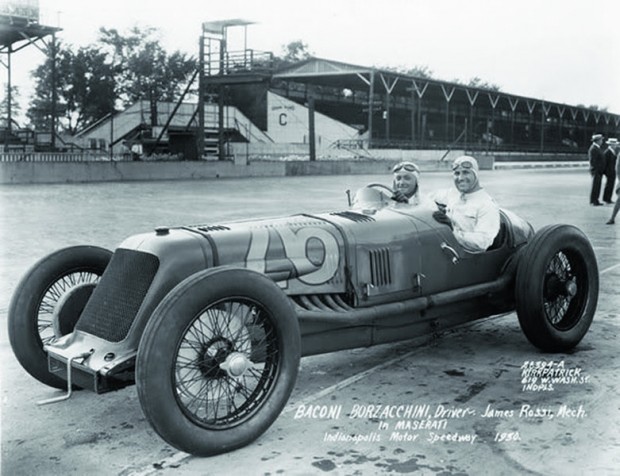
From the rolling start, Meyer took the lead, which he held for the first two laps until Arnold overtook him. Arnold went on to hold his lead for the rest of the race, setting a record for most laps lead, still held to this day. He was also the first driver to average over 100 mph without a relief driver. The race was marred by several major accidents. On lap 23, Fred Roberts (reliving Pete DePaolo) crashed in turn 3, collecting six other cars in the mayhem. Worse happened eight laps later, when Cy Marshall crashed his Duesenberg at the same corner. The car went up and over the wall, tumbling 25 feet down the other side. The driver, trapped underneath the wreck, was seriously injured, however his brother Paul running as his riding mechanic was thrown out and killed. Arnold dominated more than in any previous edition of the race – from pole position, leading all but two laps to win by over 7 minutes, and four laps, ahead of Shorty Canlon. Despite the new formula, reworked Millers still took the top four places. Billy Arnold won two more of the eight races to win the AAA series.
Bugatti to the fore
Many of the top French drivers were at Reims for the Marne GP. Of the nineteen starters, all drove Bugattis – mostly the 1.5-litre Type 37A. Lehoux led initially until overtaken by Étancelin. Alongside Dreyfus and Zanelli they vied for the lead in the heat on the long fast straights. Chiron had once again encountered engine problems and then Étancelin slid on wet tar and slammed into a tree breaking a wheel. Dreyfus gradually built a lead over the others. Late in the race, Zanelli pitted to refuel but could not restart his car. Dreyfus led Lehoux home by two minutes with Michel Doré the only other finisher, a quarter hour behind, before the crowds invaded the track.
The European Grand Prix was the first race of the year run to the AIACR fuel formula, and was.organised by the Belgian association marking the 100th anniversary of Belgian independence. No Italian cars were entered and the Bugatti works team were the firm favourites. Drivers Chiron, Divo and Bouriat again raced the 2-litre supercharged T35C. To make an appearance at their auspicious home race, Belgian manufacturer Impéria-Excelsior adapted three sports models with the unusual unsupercharged sleeve-valve engine. They hired Goffredo Zehender, Michel Doré, and Jacques Ledure as their drivers. The French company Ariès had a single 3-litre for the 48-year old veteran Arthur Duray, and the Montier father and son had a pair of their modified Fords. Starting with a Model A, they lowered the suspension and fitted their own uprated engine. Among the other half-dozen privateers was Henri Stoffel running his 4-litre Peugeot 174 Sports.
The Bugattis soon made their mark and by the second lap, the three works cars had a minute lead over Stoffel and Belgian Joseph Reinartz (in a 2.3-litre Bugatti T43 sports car) and Duray. By the halfway mark after 20 laps, the order was still the same, but Stoffel was closing in. On lap 26, Chiron pitted from the lead to change sparkplugs, dropping to fourth. Bouriat inherited the lead and when Divo pitted five laps later to change wheels, Stoffel was up to second and closing fast. But a major upset was not to be, as Stoffel ran out of fuel with two laps to go, as did Reinartz and Charles Montier. Following team orders, Bouriat came to a stop to give the win to Chiron, with Divo taking third and Duray finishing over ten minutes back in fourth.

The seventh running of the Eifelrennen was the only circuit race of the year in Germany, and only the second time that race-cars had been to the Nürburgring since it opened in 1927. However, there were only eleven starters mixing sports and racing cars. Run on the shorter Südschleife course, it was won by Heinrich-Joachim von Morgen for the new German Bugatti team. The next round of the Italian Championship was the Coppa Ciano on the long, fast Montenero circuit. Initially it was a close duel between Varzi and Nuvolari. Both were racing P2 Alfas, but for rival teams (Alfa Corse and Scuderia Ferrari respectively). But when they both retired with mechanical issues, victory fell to Luigi Fagioli and his 2.8-litre Maserati 26M. At the next round a fortnight later, the Coppa Acerbo at Pescara, the situation was reversed when Fagioli stopped on the last lap while leading. It was Varzi, (who had left Alfa Romeo and now with Maserati, such was the enmity with Nuvolari), who won with team–owner Ernesto Maserati second and Borzacchini third for the Scuderia Ferrari.
Again, in the absence of the Italian Grand Prix and with the track still being renovated, the Monza GP was held on a modified circuit that omitted the banking. With a big field, it was again run as a series of heats with a repêcharge, leading to a 35-lap final. The Maserati works team made a concerted effort and arrived with three 2.5-litre cars for Varzi, Fagioli and Arcangeli, while Ernesto Maserati ran the V4 and Alfieri made a rare drive, with the 1.1-litre 26C. Alfa Romeo and Bugatti were represented by strong customer teams and privateers. Ferrari had Nuvolari, Borzacchini and Campari, and the German Bugatti Team had von Morgen and Burggaller. Philippe Étancelin and Marcel Lehoux led the flotilla of Bugattis. Scuderia Materassi brought its supercharged Talbots for Brivio and Biondetti. The largest-engine class had, aside from the Maserati V4, the works Mercedes of Rudolf Caracciola and Swiss privateer Fritz Caflisch. Babe Stapp also arrived from America with his 4.2-litre Duesenberg A. With a total prizemoney pool of 500,000 lire, the race attracted 66 entries and over 100000 spectators. During practice, Ferrari had found their Pirelli tyres unreliable and wanted to withdraw their Alfa Romeos. The alarmed organisers immediately cabled Rome for support. A personal hand-written reply from Benito Mussolini himself, stating “Your proposed action does not meet with my approval”, changed Ferrari's mind.
In the first heat, Étancelin narrowly beat von Morgen by two seconds, both driving 2-litre Bugattis. In the second heat, Arcangeli, Borzacchini, Fagioli and Varzi were the four qualifiers. Nuvolari was fifth when he had to pit late to change a rear tyre. With just five starters, the third heat could have been routine. But after Maserati went off the track he drove hard to come back and take the win from Caracciola, Stapp and Caflisch. Nuvolari and Campari qualified through the repêcharge and were the leaders at the start of the final. Then soon after on consecutive laps, the three Ferrari drivers (Nuvolari, Campari and Borzacchini) pitted with their tyres shredded, whereupon they were withdrawn for safety. Arcangeli and Varzi duelled for the lead, with Maserati thirty seconds behind, until Varzi had to pit and change a sparkplug. He then set about a thrilling driver back through the field. With ten laps to go, Arcangeli and Maserati were only separated by seconds, with Varzi less than a minute behind. With five laps left, he was only sixteen seconds behind. He passed Maserati two laps later and then with only a few corners to go, he took the lead and the win to a rapturous reception of the spectators.

For the first time, the French Grand Prix was held at the southern city of Pau. The 16 km track was essentially triangular with two 5 km long fast straights. Such was the disinterest in the AIACR regulations though, that no entries had been received by June. The organisers were forced to concede and run the race as Formula Libre, postponing the race from July to September. Bugatti were still the only works team to arrive, with two cars for Bouriat and “Williams” (with Chiron and Divo as reserves). In the absence of any Italian drivers, the field still had the best of the French circuit: Étancelin, Lehoux, Zanelli and Count Stanisław Czaykowski led a dozen privateer 2-litre Bugattis. It was also the debut of a young Jean-Pierre Wimille in a 1.5-litre T37A. Robert Sénéchal had an older ex-factory Delage, the Montier father and son had their Ford-specials and Henri Stoffel his old Peugeot. The other notable entry was Briton Tim Birkin bringing a Bentley 4½ Litre sports car. Despite the day dawning with heavy rain, the race started in sunshine. After the first lap, Williams had passed 18 cars to be in the lead. Soon after, his teammate Bouriat pulled in and handed over to Louis Chiron, staying in third. Twice, Williams had to pit to change tyres, worn by his speed. On the eleventh lap, Louis Charavel crashed at the Morlaas hairpin. The driver was thrown out of his car, landing head first in the middle of the road. He was extremely fortunate not to be hit by the Peugeots and Bentley following close behind before he could stagger, dazed, to the roadside. On lap 12, at the hallway point, Chiron also had a puncture and had to limp back to the pits. This left Étancelin leading, almost three minutes ahead (half a lap) of Zanelli. Birkin was third, the Bentley being the fastest car in a straight line, getting up to 214 km/h. When Chiron blocked him when he tried to pass, he could sound his horn. Chiron returned the car back to Bouriat and Sénéchal pitted from fourth with a major, smoking, oil-leak. Étancelin had deliberately set the gearing on his car to limit his top speed, to protect the engine and tyres, and took the race-win from Birkin, just ahead of Zanelli with Czaykowski a lap behind in fourth. Neither Étancelin and Birkin had stopped, and both drivers commented they felt it was their best-driven races. By contrast, neither of the hard-charging works Bugattis finished.

Racing comes to Eastern Europe
Organised motor-racing was making an impact in eastern Europe, where hill-climbs had already been popular. This year saw the inaugural Lwów Grand Prix in Poland (also known by its German name of Lemberg), run on the basalt-tiled streets of the city. It only attracted a small field, but the next event three weeks later got a bigger response. The first Masaryk Circuit (also known as the Czechoslovakian Grand Prix) was held at the newly set up 29 km track out from the west of the city of Brno. It attracted a number of works teams, including the local Tatra, Walter, Wikov and Zbrojovka companies. Caracciola drove for Mercedes-Benz while Impéria-Excelsior hired local driver Jiři “Georg“ Tacheci. The favourites though were the two Alfa Romeos of Scuderia Ferrari and the three cars of the German Bugatti Team. In front of a large crowd, Caracciola held the lead initially until he missed a corner and crashed, without injury. Von Morgen took the lead until he too had engine problems. He, however, had the luxury of being able to call in his teammate Leiningen to swap their cars. It meant resuming a lap (over ten minutes) behind his teammate in fourth with three laps to go. He passed his teammate Burggaller the next lap and then Leiningen came to a stop. When Nuvolari's Alfa overheated and stopped, empty of water on the last lap, von Morgen took an unlikely victory. The race was marred by a bad accident that left promising young French driver Michel Doré seriously injured, effectively ending his racing career. Nuvolari's third place would mark the last racing appearance of the classic Alfa Romeo P2, after six successful seasons.
The season wrapped up with the San Sebastián Grand Prix. Originally cancelled because of the economic crisis, it was rescheduled when the King of Spain, himself a keen motor-racing follower, intervened. As the premier Spanish race of the year, it attracted a good field. Maserati was the favourites with Varzi and Count Maggi driving the 2.5-litre 26M. In the end Scuderia Ferrari (with Nuvolari and Borzacchini) did not arrive. So competition came from the Bugattis of Dreyfus, Étancelin, Lehoux and Zanelli. There were also the two Montiers and the Peugeots of Stoffel and Ferrrand. After a rolling start in front of the king, Varzi had stormed to the lead after the first lap. There was a tight 3-way battle for second between Lehoux, Dreyfus and Zanelli. Étancelin had retired when his car rolled after breaking a wheel, fortunately without injury to the driver. When the drivers all pitted at the halfway point for fuel, Varzi had a bad stop coming out a minute behind the three Bugattis. But he made up the time and retook the lead after seven laps. The Bugattis all retired – Zanelli crashed, bringing down a telegraph pole injuring a spectator; Dreyfus was injured when he skidded and rolled his car, while Lehoux broke a driveshaft out in the countryside. Varzi had lapped the field three times to win comfortably. Maggi was second, in his last competitive race, and the two Peugeots took the next places.
Achille Varzi was the pre-eminent driver of the season with the two race-wins for Alfa Romeo and three for Maserati, on his way to winning the Italian Drivers’ Championship. While circuit racing was subdued across the Germanic countries, hill-climbs were far more popular with a European championship. Rudi Caracciola and his Mercedes were crowned European Mountain champions in 1930. In sports car racing, despite the growing ascendance of Alfa Romeo, Bentley won its fifth Le Mans victory after seeing off Caracciola's Mercedes. But it was also a tough year for serious accidents. As well as those mentioned above, including the death of Conte Gastone Brilli-Peri at the start of the season, the Baroness Aniela d’Elern had been killed in the Algerian GP handicap race in May. A month later, the English Grand Prix winner Sir Henry Segrave died in a water speed record attempt.
Results of the season's major races
| Pos | Driver | Team | [MON](1930-monaco-grand-prix) | ||||||||||||||||||||||||||
|---|---|---|---|---|---|---|---|---|---|---|---|---|---|---|---|---|---|---|---|---|---|---|---|---|---|---|---|---|---|
| MCO | [ALS](1930-alessandria-circuit) | ||||||||||||||||||||||||||||
| ITA | [TGF](1930-targa-florio) | ||||||||||||||||||||||||||||
| ITA | [ROM](1930-rome-grand-prix) | ||||||||||||||||||||||||||||
| ITA | [IND](1930-indianapolis-500) | ||||||||||||||||||||||||||||
| USA | [MAR](1930-marne-grand-prix) | ||||||||||||||||||||||||||||
| FRA | [BEL](1930-belgian-grand-prix) | ||||||||||||||||||||||||||||
| BEL | [CCN](1930-coppa-ciano) | ||||||||||||||||||||||||||||
| ITA | [CAC](1930-coppa-acerbo) | ||||||||||||||||||||||||||||
| ITA | [MNZ](1930-monza-grand-prix) | ||||||||||||||||||||||||||||
| ITA | [FRA](1930-french-grand-prix) | ||||||||||||||||||||||||||||
| FRA | [SEB](1930-san-sebastian-grand-prix) | ||||||||||||||||||||||||||||
| ESP | Pos | Driver | Team | [MON](1930-monaco-grand-prix) | |||||||||||||||||||||||||
| MCO | [ALS](1930-alessandria-circuit) | ||||||||||||||||||||||||||||
| ITA | [TGF](1930-targa-florio) | ||||||||||||||||||||||||||||
| ITA | [ROM](1930-rome-grand-prix) | ||||||||||||||||||||||||||||
| ITA | [IND](1930-indianapolis-500) | ||||||||||||||||||||||||||||
| USA | [MAR](1930-marne-grand-prix) | ||||||||||||||||||||||||||||
| FRA | [BEL](1930-belgian-grand-prix) | ||||||||||||||||||||||||||||
| BEL | [CCN](1930-coppa-ciano) | ||||||||||||||||||||||||||||
| ITA | [CAC](1930-coppa-acerbo) | ||||||||||||||||||||||||||||
| ITA | [MNZ](1930-monza-grand-prix) | ||||||||||||||||||||||||||||
| ITA | [FRA](1930-french-grand-prix) | ||||||||||||||||||||||||||||
| FRA | [SEB](1930-san-sebastian-grand-prix) | ||||||||||||||||||||||||||||
| ESP | |||||||||||||||||||||||||||||
| ITA Achille Varzi | SA Alfa Romeo | ||||||||||||||||||||||||||||
| Officine Alfieri Maserati | *1* | ***1*** | Ret | Ret | 1 | *1* | ***1*** | ||||||||||||||||||||||
| FRA René Dreyfus | Écurie Friderich | *1* | *1* | Ret | |||||||||||||||||||||||||
| MCO Louis Chiron | Usines Bugatti | **2** | 2 | Ret [*2*] | Ret | **1** | Ret | ||||||||||||||||||||||
| ITA Luigi Arcangeli | Officine Alfieri Maserati | ||||||||||||||||||||||||||||
| Scuderia Ferrari | Ret | Ret | **1** | Ret | **Ret** | **2** | |||||||||||||||||||||||
| ITA Luigi Fagioli | Officine Alfieri Maserati | Ret | 1 | *DSQ* | 5 | ||||||||||||||||||||||||
| USA Billy Arnold | Harry Hartz | 1 | |||||||||||||||||||||||||||
| FRA Philippe Étancelin | *Private Entry* | Ret | Ret | Ret | 1 | Ret | |||||||||||||||||||||||
| FRA Guy Bouriat | Usines Bugatti | 3 | 2 | *2* | Ret | ||||||||||||||||||||||||
| ITA Ernesto Maserati | Officine Alfieri Maserati | 8 | 2 | 3 | |||||||||||||||||||||||||
| CHL Juan Zanelli | *Private Entry* | Ret | 2 | Ret | 3 | Ret | |||||||||||||||||||||||
| ITA Aymo Maggi | SA Alfa Romeo | ||||||||||||||||||||||||||||
| Officine Alfieri Maserati | Ret | 3 | Ret | 2 | |||||||||||||||||||||||||
| ITA Giuseppe Campari | Scuderia Ferrari | ||||||||||||||||||||||||||||
| SA Alfa Romeo | 4 | 5 | 2 | Ret | |||||||||||||||||||||||||
| USA Shorty Cantlon | Bill White Race Cars | 2 | |||||||||||||||||||||||||||
| French Algeria Marcel Lehoux | *Private Entry* | Ret | **2** | DNQ | Ret | Ret | |||||||||||||||||||||||
| GBR Henry Birkin | *Private Entry* | Ret | 2 | ||||||||||||||||||||||||||
| ITA Baconin Borzacchini | Officine Alfieri Maserati | ||||||||||||||||||||||||||||
| Scuderia Ferrari | Ret | 11 | Ret | 4 | 3 | Ret | |||||||||||||||||||||||
| FRA Michel Doré | SA des Automobiles Imperia-Excelsior | 5 | 3 | Ret | |||||||||||||||||||||||||
| ITA Enzo Ferrari | Scuderia Ferrari | 3 | Ret | ||||||||||||||||||||||||||
| ITA Caberto Conelli | Usines Bugatti | 3 | |||||||||||||||||||||||||||
| GER Heinrich-Joachim von Morgen | Deutsches Bugatti Team | 3 | Ret | ||||||||||||||||||||||||||
| USA Louis Schneider | 3 | ||||||||||||||||||||||||||||
| FRA Albert Divo | Usines Bugatti | Ret [7] | 3 | ||||||||||||||||||||||||||
| FRA Henri Stoffel | SA des Autos et Cycles Peugeot | Ret | 8 | 3 | |||||||||||||||||||||||||
| ITA Goffredo Zehender | SA des Automobiles Imperia-Excelsior | 4 | 5 | ||||||||||||||||||||||||||
| ITA Antonio Brivio | Scuderia Materassi | 5 | Ret | 4 | DNQ | ||||||||||||||||||||||||
| ITA Federico Valpreda | *Private Entry* | 4 | |||||||||||||||||||||||||||
| ITA Clemente Biondetti | Scuderia Materassi | Ret | 4 | Ret | Ret | DNQ | |||||||||||||||||||||||
| USA Louis Meyer | *Private Entry* | **4** | |||||||||||||||||||||||||||
| ITA Giorgio Faggioli | *Private Entry* | 4 | |||||||||||||||||||||||||||
| FRA Arthur Duray | Société des Automobiles Ariès | 4 | |||||||||||||||||||||||||||
| ITA Giovanni Minozzi | *Private Entry* | Ret | 4 | ||||||||||||||||||||||||||
| POL/FRA Stanisław Czaykowski | *Private Entry* | 4 | |||||||||||||||||||||||||||
| FRA René Ferrand | SA des Autos et Cycles Peugeot | 9 | 4 | ||||||||||||||||||||||||||
| ITA Tazio Nuvolari | Alfa Corse | ||||||||||||||||||||||||||||
| Scuderia Ferrari | Ret | 5 | Ret | ***Ret*** | 5 | Ret | |||||||||||||||||||||||
| USA Bill Cummings | Pete DePaolo | 5 | |||||||||||||||||||||||||||
| FRA? Louis Casali | *Private Entry* | 5 | Ret | ||||||||||||||||||||||||||
| ITA Eugenio Fontana | *Private Entry* | 5 | |||||||||||||||||||||||||||
| FRA Jean de l'Espée | *Private Entry* | 5 | Ret | ||||||||||||||||||||||||||
| FRA Max Fourny | *Private Entry* | Ret | DNQ | Ret | 5 | ||||||||||||||||||||||||
| CHE/ITA Fritz Caflisch | *Private Entry* | 6 | 6 | Ret | |||||||||||||||||||||||||
| ITA Arrigo Sartorio | *Private Entry* | 6 | Ret | Ret | 8 | DNQ | 7 | ||||||||||||||||||||||
| FRA Jean de Maleplane | *Private Entry* | 7 | 6 | ||||||||||||||||||||||||||
| CHE Hans Stuber | *Private Entry* | 6 | |||||||||||||||||||||||||||
| ITA Giuseppe Morandi | Fabbrica Officine Meccaniche | 6 | |||||||||||||||||||||||||||
| USA Dave Evans | *Private Entry* | 6 | |||||||||||||||||||||||||||
| FRA Charles Montier | *Private Entry* | 6 | Ret | Ret | |||||||||||||||||||||||||
| ITA? Carlo Gazzabini | *Private Entry* | 6 | |||||||||||||||||||||||||||
| FRA Robert Sénéchal | *Private Entry* | 6 |
italics show the driver of the race's fastest lap.
Only those drivers with a best finish of 6th or better, or a fastest lap, are shown. Sources:
;Citations
References
- Acerbi, Leonardo (2015) Mille Miglia – A race in pictures Milan: Giorgio Nada Editorie
- Cimarosti, Adriano (1997) The Complete History of Grand Prix Motor Racing London: Aurum Press Ltd
- Fondi, Pino (2006) Targa Florio: 20th Century Epic Milan: Giorgio Nada Editore
- Fox, Charles (1973) The Great Racing Cars & Drivers London: Octopus Books Ltd
- Georgano, Nick (1971) The Encyclopaedia of Motor Sport London: Ebury Press Ltd
- Higham, Peter (1995) The Guinness Guide to International Motor Racing London: Guinness Publishing
- Legate, Trevor (2006) 100 years of Grand Prix Kent: Touchstone Books Ltd
- Ludvigsen, Karl (2008) Racing Colours – Italian Racing Red Surrey: Ian Allan Publishing Ltd
- Ludvigsen, Karl (2009) Racing Colours – German Racing Silver Surrey: Ian Allan Publishing Ltd
- Monkhouse, George (1953) Grand Prix Racing Facts and Figures London: G.T. Foulis & Co Ltd
- Montagna, Paolo (ed.) (1989) The Legendary Italian Grand Prix Milan: A.C. Promotion
- Rendall, Ivan (1991) The Power and The Glory – A Century of Motor Racing London: BBC Books
- Rendall, Ivan (1993) The Chequered Flag – 100 years of Motor Racing London: Weidenfeld & Nicolson Ltd
- Venables, David (2009) Racing Colours – French Racing Blue Surrey: Ian Allan Publishing Ltd
References
- "Golden Era of Grand Prix Racing".
- "ChampCar Stats".
- "MotorSport AAA results".
- "French Circuits".
- "1930 Season".
- "TeamDan".
- "Speedfreaks.org".
- Rendall 1993, p.362
- "6th Gear".
- "La Targa Florio".
- "World Sports Racing Prototypes".
- "Australian Circuits".
- "African Circuits".
- "Italian Circuits".
- "African Circuits".
- "Italian Circuits".
- "African Circuits".
- "French Circuits".
- "Italian Circuits".
- "Belgian Circuits".
- "French Circuits".
- "Golden Era of Grand Prix Racing".
- "TeamDan".
- "French Circuits".
- "French Circuits".
- "Golden Era of Grand Prix Racing".
- "Czech Circuits".
- "1930 Season".
- "Speedfreaks.org".
- "Formula 2".
- "MotorSport".
- "ChampCar Stats".
- "Monaco GP".
- "Monza GP".
- Venables 2009, p.56
- "1930 Regulations".
- "1930 French GP".
- Cimarosti 1997, p.87
- Rendall 1993, p.125
- Georgano 1971, p.99
- Venables 2009, p.57
- Cimarosti 1997, p.81
- "1930 Season".
- Georgano 1971, p.337
- "1930 Targa Florio".
- "1930 Season Lineup".
- "1930 Season Lineup".
- "Tripoli GP".
- "Motorsport Memorial".
- Acerbi 2015, p.45-7
- Rendall 1993, p.126
- Ludvigsen 2008, p.58
- Fondi 2006, p.352-3
- "1930 Targa Florio".
- "1930 Targa Florio".
- Fondi 2006, p.103
- "1930 Targa Florio".
- Rendall 1993, p.127
- "1930 Rome GP".
- Georgano 1971, p.175
- "Motorsport Memorial".
- "ChampCar Stats 1930".
- Georgano 1971, p.163
- "1930 Marne GP".
- "1930 Europe GP".
- "1930 Europe GP".
- Venables 2009, p.58
- "1930 Eifelrennen".
- "1930 Coppa Ciano".
- "1930 Coppa Acerbo".
- Georgano 1971, p.324
- Georgano 1971, p.296
- Georgano 1971, p.187
- "1930 French GP".
- Georgano 1971, p.109
- "Monza GP".
- "Masaryk GP".
- Georgano 1971, p.251
- "San Sebastian GP".
- Ludvigsen 2009, p.43
- Georgano 1971, p.184
- "Motorsport Memorial".
- "1930 Season".
This article was imported from Wikipedia and is available under the Creative Commons Attribution-ShareAlike 4.0 License. Content has been adapted to SurfDoc format. Original contributors can be found on the article history page.
Ask Mako anything about 1930 Grand Prix season — get instant answers, deeper analysis, and related topics.
Research with MakoFree with your Surf account
Create a free account to save articles, ask Mako questions, and organize your research.
Sign up freeThis content may have been generated or modified by AI. CloudSurf Software LLC is not responsible for the accuracy, completeness, or reliability of AI-generated content. Always verify important information from primary sources.
Report