From Surf Wiki (app.surf) — the open knowledge base
1925 in aviation
none
none
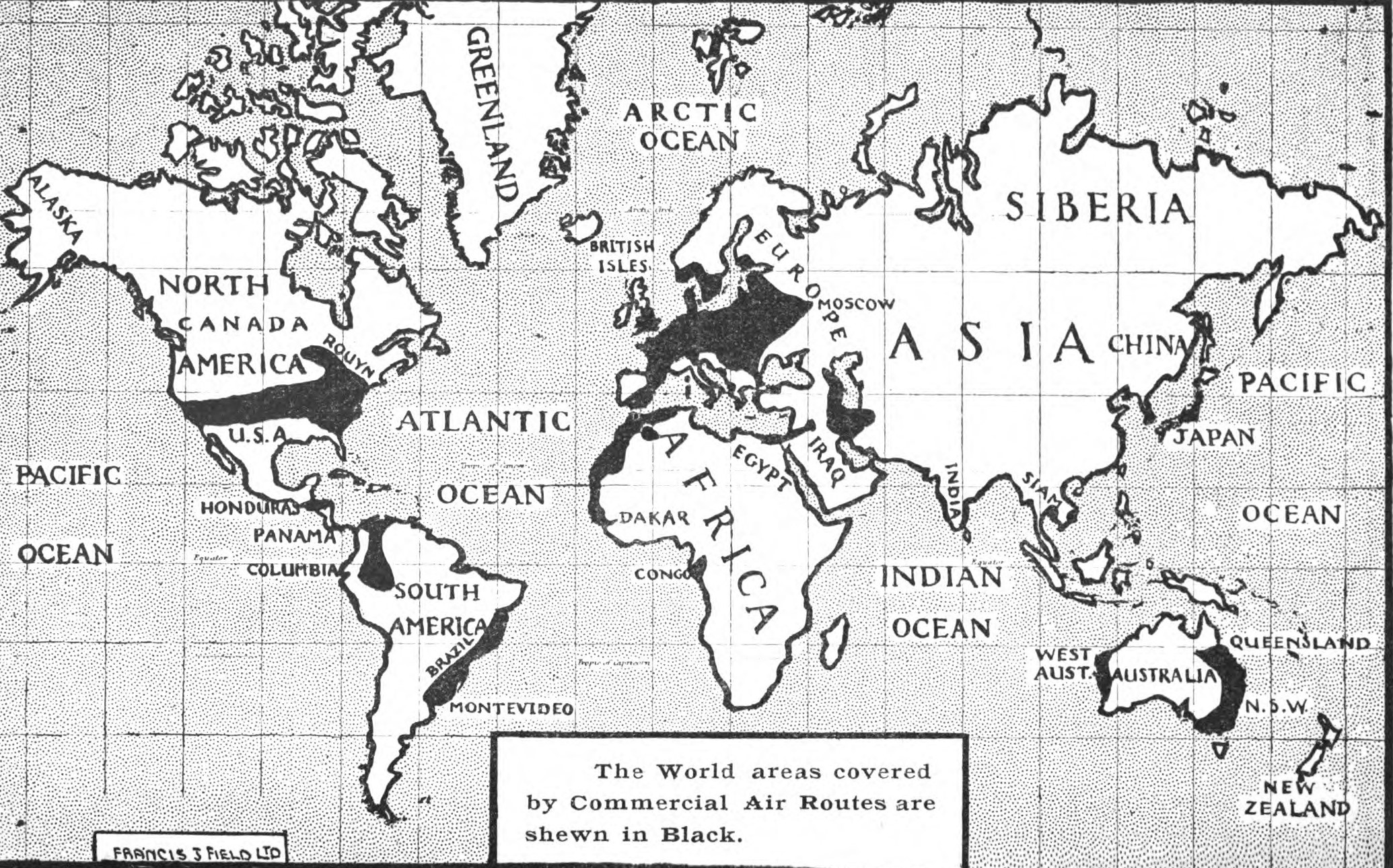
|in?=in aviation This is a list of aviation-related events from 1925.
Events
- In the United Kingdom, the first Royal Auxiliary Air Force squadrons are formed.
- The Eberhart Steel Products Company of Buffalo, New York, forms an aircraft design and manufacturing subsidiary, the Eberhart Aeroplane and Motor Company.
- Summer 1925 – Two Breguet 19 G.R. aircraft owned by the Japanese Asahi Shimbun newspaper group fly from Tokyo, Japan, to Paris, France.
January
- January 1 – The French airline CIDNA is formed.
February
- February 3–4 – In a Breguet 19 G.R., the French aviators Henri Lemaître and Ludovic Arrachart set a world distance record, flying 3,166 km from Étampes, Paris, France, to Villa Cisneros, Spanish Sahara.
- February 12 – Sabena establishes the first airline connection between Belgium and the Belgian Congo, pioneering a long-haul route to Léopoldville.
March
- March 1 – Ryan Airline Company begins regular services.
- March 2 – Huff Daland Dusters is established as the world's first aerial crop dusting company. Founded in Macon, Georgia, in the United States. It formed the roots of Delta Air Service (1928), then Delta Air Corporation (1930, renamed Delta Air Lines in 1945).
April
- April
- The first in-flight movie is shown on a scheduled flight: First National's The Lost World on Imperial Airways service from London to the Continent.
- The Prix Solex, a competition in France offering a prize of 55,000 FF requiring a flight of about 120 km from Paris to Rouen using less than 3 kg of gasoline and oil, takes place. Maurice Drouhin wins in a Salmson 3 Ad-powered Farman Aviette.
- April 13 - The first scheduled air freight service begins in the United States.
- April 15 - Ukvozdukhput/Ukrainian Airways begins services in Ukraine.
- April 21 – Italian aviator Francesco de Pinedo and his mechanic Ernesto Campanelli depart Rome on a 201-day flight in the SIAI S.16ter flying boat Gennariello that will take them to Australia and Japan before they return to Rome in November.
May
- May 1 - The Imperial Japanese Army Air Corps is established under the command of Lieutenant General Kinichi Yasumitsu. It has 3,700 personnel and about 500 aircraft.
- May 4 – Italian legislation sets the peacetime strength of the Regia Aeronautica (Italian Royal Air Force) at 182 squadrons, with 78 of them assigned directly to the air force, 69 to the Italian Royal Army, and 35 to the Regia Marina (Italian Royal Navy). The army and navy are given temporary command of the squadrons assigned to them for the length of time it takes to train them for wartime operations.
June
- June 10 – Italian aviator Francesco de Pinedo and his mechanic, Ernesto Campanelli, arrive at Melbourne, Australia, after a 50-day flight from Rome in the SIAI S.16ter flying boat Gennariello during which they have made 27 intermediate stops without serious mishaps. They will remain in Melbourne for 36 days before continuing their journey through Australia and to Japan.
- June 20 – Off New England, a United States Coast Guard Vought UO-1 becomes the first aircraft to pursue a rum-runner.
- June 24 – Off New England, a U.S. Coast Guard Vought UO-1 becomes the first aircraft to assist in the capture of a rum-runner.
July
- July 1 – The United States Post Office Department inaugurates 24-hour transcontinental air mail service. Previously, mailplanes had not flown at night and trains had carried the mail during the hours of darkness, but the completion of a coast-to-coast system of lighted beacons has allowed night flying to become practical along the entire route. The day-and-night flying allows the transcontinental air mail service to deliver mail notably faster than train-only service for the first time.
- July 13 - Western Air Express, the future Western Airlines, is founded. It will begin flight operations in April 1926.
- July 16 – Italian aviator Francesco de Pinedo and his mechanic Ernesto Campanelli resume their flight from Italy to East Asia and the Western Pacific, flying from Melbourne to Sydney, Australia, in the SIAI S.16ter flying boat Gennariello after a 36-day stay in Melbourne. They had left Rome 86 days earlier and made 28 intermediate stops before arriving in Sydney. They will remain in Sydney for 21 days before continuing their journey through Australia and to Japan.
August
- The Italian government's Commission for Aeronautics is replaced by a new Ministry of Aeronautics. The Regia Aeronautica (Royal Air Force), formerly subordinate to the commission, is subordinated to the new ministry.
- August 6 – Italian aviator Francesco de Pinedo and his mechanic Ernesto Campanelli resume their flight from Italy to East Asia and the Western Pacific, departing Sydney, Australia, in the SIAI S.16ter flying boat Gennariello on their way to Tokyo.
- August 7–9 – Flying in France on the route Chartres–Étampes–Toussus-le-Noble–Chartres, the French aviators Jules Landry and Maurice Drouhin set a closed-circuit distance record of 4,400 km in 45 hours 11 minutes 59 seconds in a Farman F.62.
- August 31 – Two United States Navy Naval Aircraft Factory PN-9 flying boats take off from San Francisco, California, in an attempt to make the first transpacific flight from North America to the Hawaiian Islands, planning to arrive on September 1 after an overnight flight expected to last about 26 hours. The first PN-9 to depart loses oil pressure and is forced down 300 mi from San Francisco; the destroyer rescues its crew and tows it back to port. The second plane to depart, piloted by Commander John Rodgers, is forced down in the Pacific Ocean on September 1 after flying 1,841.12 mi nonstop. Rodgers and his three crewmen then sail the aircraft as a boat 450 nmi farther toward Hawaii before the U.S. Navy submarine picks them up 10 nmi north of Kauai on September 10. Although unsuccessful, their flight sets a world nonstop distance record for Class C seaplanes which will stand until 1930.
September
- The Czechoslovak Avia BH-21R racer wins the Czechoslovak national air races, covering the 200 km course at an average speed of 300.59 km/h.
- September 1 – After modifications, the aircraft carrier returns to service with the Royal Navy as the first ship ever to be equipped with a round-down Located at the after end of her flight deck, the round-down, which improves air flow and gives pilots landing aboard Furious greater confidence, will become standard on aircraft carriers.
- September 2 – The U.S. Navy dirigible breaks up in a storm and crashes near Caldwell, Ohio, killing 14 of her crew. Twenty-nine crew members survive.
- September 3 – The Spanish Navy aviation ship Dédalo, the only ship ever built capable of operating airships, balloons, and seaplanes, accompanies a Spanish fleet to Morocco to participate in the Rif War. Her aircraft and one of the airships she operates support the Spanish campaign to capture Ajir, which falls on October 2. She is the only European aviation ship to see combat between the end of the Russian Civil War and the beginning of World War II.
- September 15 – The Bolivian airline Lloyd Aéreo Boliviano is founded.
- September 23 – The Bolivian airline Lloyd Aéreo Boliviano begins flight operations, flying a Junkers F.13 which takes off from Cochabamba, Bolivia.
- September 26 – Italian aviator Francesco de Pinedo and his mechanic Ernesto Campanelli arrive in Tokyo in the SIAI S.16ter flying boat Gennariello after a 58-day flight from Sydney, Australia, during which they have made 19 intermediate stops. They had departed Rome 158 days earlier and made 48 intermediate stops, including lengthy stays in Melbourne and Sydney, Australia, on their way to Tokyo, all without an engine change or any serious mishaps.
October
- October 3 – The Royal Navy cruiser Vindictive launches a Fairey IIID floatplane by catapult. It is the first catapult launch of a standard British naval aircraft from a ship at sea.
- October 15 – The British airship R.33 successfully launches a de Havilland DH.53 Humming Bird piloted by Flying Officer Campbell MacKenzie-Richards and Flying Officer Riggs in flight.
- October 16 – The Air Union Farman F.60 Goliath F-HMFU Île de France crashes at Wadhurst, East Sussex, England, during a scheduled passenger flight from England to Paris, France. Three of the six people aboard die and two suffer injuries.
- October 17 – Italian aviator Francesco de Pinedo and his mechanic Ernesto Campanelli depart Tokyo in the SIAI S.16ter flying boat Gennariello after a 21-day stay to begin the homeward leg of their flight from Rome to Australia and Tokyo and back again. The only engine change of what has so far been a 187-day, 49-stop flight has been made in Tokyo.
- October 18
- Joseph Sadi-Lecointe wins the Beumont Cup, with a speed of 194 mph.
- American professional baseball player Marv Goodwin of the Cincinnati Reds is seriously injured during reserve duty with the United States Army Air Service when the plane he is piloting during a training exercise goes into a tailspin at an altitude of 200 ft and crash-lands at Ellington Field in Houston, Texas. He will die of his injuries on October 21, the first professional athlete killed as the result of a plane crash.
- October 19 – Frank T. Courtney makes the first flight in the United Kingdom by a rotary-wing aircraft, demonstrating the Cierva C.4 autogiro for the Royal Aircraft Establishment near Farnborough Airfield.
- October 25 – A storm with 80 mph winds strikes Bay Shore Park in Maryland on the Chesapeake Bay, where the United States Navy has moored 23 Curtiss SC-1 biplane floatplanes, planning to fly them in an air show demonstration during the next day's Schneider Trophy race. The gale breaks the 3 in mooring lines of 17 of the floatplanes, which then are dashed against seawalls or the shore. Seven of the planes are destroyed and 10 damaged. The 26 October afternoon edition of the Baltimore Evening Sun has the headline "Plane Disaster in Harbor Called Hard Blow to Navy" and quotes United States Army Air Service Brigadier General William "Billy" Mitchell, who calls the loss of the CS-1s "staggering" and blames it on U.S. Navy mismanagement of its aviation program.
- October 26 – The 1925 Schneider Trophy race is flown at Baltimore, Maryland, in the United States. Jimmy Doolittle of the United States Army Air Service wins in a Curtiss R3C-2 at an average speed of 374.2 km/h.
November
- In mid-month, Farman Aviation Works test pilot Louis Bossoutrot sets several load-related world aviation records in the prototype of the Farman F.140 Super Goliath, reaching an altitude of 4,990 m with a useful load of 2,000 kg, an altitude of 3,586 m with a useful load of 5,000 kg and a flight duration of 1 hour 12 minutes 21 seconds, and an altitude of 2,000 m with a greatest useful load of 6,000 kg.
- November 7 – Italian aviator Francesco de Pinedo and his mechanic Ernesto Campanelli return to Rome, completing a 201-day flight covering around 35,000 mi in the SIAI S.16ter flying boat Gennariello. Departing Rome on April 21, their outbound route had taken to them to Brindisi in Italy; Leros in Greece; Baghdad in Iraq; Bushehr and Chabar in Persia; Karachi, Bombay, Cocanada, and Calcutta in British India; Akyab, Rangoon, Tavoy, and Mergui in Burma; Phuket in Siam; Penang in British Malaya; Singapore; Batavia, Surabaya, Sumbawa, and Kupang in the Netherlands East Indies, and Broome, Carnarvon, Perth, Bunbury, Albany, Israelite Bay, Adelaide, and Melbourne, Australia, where they had arrived on June 10 and spent just over five weeks before proceeding to Sydney, where they had arrived on July 16 and spent another three weeks. Resuming their flight on August 6, they had visited Brisbane, Rockhampton, Townsville, Innisfail, and Cooktown, and Thursday Island, Australia; Merauke, Dobo, Amboina, and Menado in the Netherlands East Indies; Cebu, Atimonan, Manila, and Aparri in the Philippines; Tamsui on Formosa; Shanghai in China; Mokpo in Korea; and Yamakawa and Kagoshima, Japan, before arriving in Tokyo on September 26. After a three-week stay there, they had begun their return journey on October 17, a 15,000-mile (24,155-kilometer) trip that they make in only 22 days, with stops at Kagoshima; Shanghai; Hong Kong; Haiphong and Saigon in French Indochina; Bangkok in Siam; Rangoon; Calcutta, Benares, Delhi, and Karachi in British India; Bandar Abbas in Persia; Baghdad; Alexandretta in Turkey; and Taranto in Italy before arriving in Rome. The entire journey, made without special preparations for support at any of the stops and involving two long flights – of 600 and – across the dry land of the Indian subcontinent in a non-amphibious flying boat, proceeds without major incident and requires only one engine change, carried out at Tokyo. Flight describes the journey as "the most extensive aerial tour on record."
- November 20 – Germany holds a state funeral in Berlin for fighter pilot Manfred von Richthofen, the top-scoring ace of World War I with 80 aerial victories. He had been shot down and killed on 21 April 1918.
First flights
- Abrial A-2 Vautour
- Aero A.11
- Curtiss Carrier Pigeon
- Curtiss Lark
- Detroit G1 Gull
- Dewoitine D.14 (between 20 January and 4 February)
- Dewoitine D.19
- Dewoitine D.21
- Farman F.130
- Farman F.170 Jabiru
- Grigorovich SUVP
- Pitcairn PA-1 Fleetwing
- Westland Yeovil
January
- Avia BH-21
- January 3 - Fairey Fox
- January 5 - Short Singapore
February
- Gloster Gamecock
- Latécoère 15
- Thomas-Morse TM-24
- February 22 – de Havilland Moth
March
- Avro 563 Andover
- March 10 – Supermarine Southampton
April
- April 22 – Junkers J 29
May
- May 2 - Douglas C-1
- May 10 - Armstrong Whitworth Atlas
- May 26 - Bäumer B II Sausewind
June
- June 4 — Marinens Flyvebaatfabrikk M.F.9
July
- July 6 - Douglas DAM
- July 7 - Boeing 40
- July 29 - Blériot 155
August
- August 24 – Supermarine S.4
- August 29 – Gloster III
September
- September 11 – Curtiss R3C-1
November
- November 9 - Fairey Firefly (biplane)
- November 26 - Tupolev TB-1
December
- Curtiss P-2 Hawk
- Curtiss XP-2, a modified Curtiss P-2 Hawk
Entered service
January
- Kawanishi K-7 Transport Seaplane with Japan Aviation Company Ltd
May
- May 15 – Junkers G.23 with Swedish Air Lines
August
- Curtiss F6C with the United States Navy
- August 17 – Curtiss P-1 Hawk with 1st Pursuit Group, United States Army Air Service
December
- Handley Page Hyderabad with the Royal Air Force's No. 9 (Bomber) Squadron, last RAF heavy bomber of wooden construction to enter squadron service
Retirements
- May – Westland Weasel by the Royal Air Force
- Late 1925 – Westland Walrus by the Royal Air Force
Births
- March 20 – David Warren, Australian aviation scientist, inventor of the cockpit voice recorder (d. 2010)
References
References
- (8 October 1925). "Auxiliary Air Force". [[Flight International.
- Angelucci, Enzo. (1987). "The American Fighter: The Definitive Guide to American Fighter Aircraft From 1917 to the Present". Orion Books.
- (1997). "The Complete Encyclopedia of World Aircraft". Barnes & Noble Books.
- (1987). "Chronicle of the 20th Century". Chronicle Publications.
- "Founding".
- Robertson, Patrick. (2001). "Film Facts". Aurum.
- (2023-10-05). "Aeroflot {{!}} Airline Safety, Fleet Size & Destinations {{!}} Britannica".
- (1 October 1925). "Italian Flight to Tokyo Accomplished". Flight.
- (12 November 1925). "Rome-Tokyo-Rome: Marquis de Pinedo's Grand Air Tour Successfully Concluded". Flight.
- Francillon, René J.. (1979). "Japanese Aircraft of the Pacific War". Naval Institute Press.
- Gooch, John, ''Mussolini and His Generals: The Armed Forces and Fascist Foreign Policy, 1922-1940'', Cambridge, U.K: Cambridge University Press, 2007, {{ISBN. 978-0-521-85602-7, p. 58.
- "A Chronological History of Coast Guard Aviation: The Early Years, 1915-1938".
- Jensen, Richard, "The Suicide Club," ''Aviation History'', May 2017, pp. 63, 64, 65.
- Gardiner, Robert, ed., ''Conway′s All the World′s Fighting Ships 1906-1921'', Annapolis, Maryland: Naval Institute Press, 1985, {{ISBN. 0-87021-907-3, p. 252.
- "Flight to Hawaiian Islands," in James Langland (ed.), ''The Chicago Daily News Almanac and Year-Book for 1926.'' Chicago: Chicago Daily News Company, 1925; pg. 629.
- "Aviation Hawaii: 1920-1929 Chronology of Aviation in Hawaii".
- Sturtivant, Ray. (1990). "British Naval Aviation: The Fleet Air Arm, 1917-1990". Naval Institute Press.
- Layman, R. D.. (1989). "Before the Aircraft Carrier: The Development of Aviation Vessels 1849-1922".
- Thetford, Owen. (1991). "British Naval Aircraft Since 1912". Naval Institute Press.
- (17 October 1925). "Air Accidents in the Fog".
- "Aviation Safety Network: Accident Description".
- "Famous People Who Died in Aviation Accidents: 1920s".
- "Air and Auto Races Called Off by Rain— Schneider Cup Dash And Laurel Contest Postponed", ''The Evening Sun'' (Baltimore), October 24, 1925, p.1
- "ATLANTIC GALE WRECKS 17 COSTLY PLANES— Begin Inquiry Into New Blow at Navy Bureau", ''Akron (O.) Beacon Journal'', October 26, 1925, p.1
- Small, Robert T., "Plane Disaster in Harbor Called Hard Blow to Navy", ''The Evening Sun'' (Baltimore), October 26, 1925, p.1
- Gough, Michael, "''Doolittle Wins In Baltimore''", ''Airpower'', November 2005, Volume 35, Number 11, page 50.
- Kilduff, Peter. (1994). "The Red Baron: Beyond the Legend". Cassell.
- (1978). "The Complete Illustrated History of the World{{'}}s Aircraft". Chartwell Books, Inc..
- "Handley Page Hyderabad and Hinaidi".
This article was imported from Wikipedia and is available under the Creative Commons Attribution-ShareAlike 4.0 License. Content has been adapted to SurfDoc format. Original contributors can be found on the article history page.
Ask Mako anything about 1925 in aviation — get instant answers, deeper analysis, and related topics.
Research with MakoFree with your Surf account
Create a free account to save articles, ask Mako questions, and organize your research.
Sign up freeThis content may have been generated or modified by AI. CloudSurf Software LLC is not responsible for the accuracy, completeness, or reliability of AI-generated content. Always verify important information from primary sources.
Report