From Surf Wiki (app.surf) — the open knowledge base
1925 Grand Prix season
First AIACR World Manufacturers' Championship season

First AIACR World Manufacturers' Championship season
| {{Motorsport season | series = Grand Prix | Grand Prix]] season | link = Grand Prix season | year = 1925 |
|---|
The 1925 Grand Prix season was the first year for the new AIACR World Manufacturers' Championship season. The championship was won by Alfa Romeo, with its P2 model.
In January, the AIACR had settled on the championship format – four Grands Prix to be held in the US, Belgium, France and Italy (of minimum 800km length), with compulsory attendance of the Italian GP and the manufacturer's home race to qualify. The best three of the four results would count. It ran on the successful 2-litre formula already in place.
This year, the Targa Florio was a competition between the French teams of Bugatti and Peugeot as the major Italian teams did not enter. In a close race, the Peugeots initially led but it was the smaller Bugatti of Bartolomeo Costantini that came through for the victory. Louis Wagner was second for Peugeot, after he was delayed when stopping to assist his teammate, Christian d'Auvergne, who had been seriously injured in an accident.
Only a small entry lined up for the Indianapolis 500, dominated by Millers. Dave Lewis ran the new Miller – the first front-wheel drive car to enter the race. The Duesenberg challenge was led by the previous year's winner Peter DePaolo. From the start the Duesenberg teammates DePaolo and Phil Shafer set the pace. Just after halfway, DePaolo pitted suffering from blistered hands, taking relief from Norman Batten while the injury was attended to. Lewis in the FWD Miller got to the lead but was reeled in by DePaolo after he had gotten back in his car. Lewis in turn was substituted by Bennett Hill who had retired earlier. Although Hill charged hard, DePaolo held on and won by almost a minute, with Shafer third. It was the first time the race had been won in under 5 hours, averaging over 100mph. Pete DePaolo would go on to win the AAA championship.
The inaugural Belgian Grand Prix had only seven entrants with only the Alfa Romeo and Delage works teams starting. Then when all four of the French cars had retired by half distance, it left just Antonio Ascari and Giuseppe Campari circulating to give Alfa Romeo a 1–2 victory. The blue riband French Grand Prix did have a more complete entry list and was held on the recently completed full circuit at Montlhéry. Once again Ascari leaped into the lead until he misjudged a corner and crashed. Seriously injured, he died on the way to the hospital. When the news was announced the rest of the Alfa Romeo team was withdrawn. After that, Robert Benoist led giving Delage a 1–2 victory and becoming the first Frenchman to win his home Grand Prix since 1913.
The Italian Grand Prix was the final race of the championship. Alfa Romeo, Delage and Duesenberg had one win apiece but Delage chose not to contest it. Duesenberg entered two cars for Tommy Milton and Pete Kreis. Indianapolis winner Pete DePaolo also came across, taking the place of Ascari in the Alfa Corse team. Bugatti entered its new 1.5-litre models. Kreis in the Duesenberg led at the start but crashed on lap 3. The Alfas then set the pace but when they pitted for fuel Milton led until he was delayed with a slow pitstop. Brilli-Peri took a comfortable win by 20 minutes from Campari, thus giving Alfa Romeo the Manufacturer's Championship.
In the middle of the year, Germany was admitted into the AIACR, allowing German teams to enter the Championship in 1926. This was the last year of the current 2-litre formula. Increased concerns about the high speeds and safety led the AIACR change the regulations the following year to the 1.5-litre voiturette class for Grand Prix racing.
Manufacturers' World Championship
Sources:
| Rnd | Date | Name | Circuit | Race | ||||||||||
|---|---|---|---|---|---|---|---|---|---|---|---|---|---|---|
| Regulations | Weather | Race | ||||||||||||
| Distance | Winner's | |||||||||||||
| Time | Winning driver | Winning | ||||||||||||
| constructor | Fastest | |||||||||||||
| lap | Report | 1 | 2 | 3 | 4 | |||||||||
| 30 May | USA **XIII International 500 Mile | |||||||||||||
| Sweepstakes** | Indianapolis | AAA | sunny | 500 miles | 4h 57m | USA Pete DePaolo | Duesenberg 122 | *not recorded* | [Report](1925-indianapolis-500) | |||||
| 28 Jun | BEL I **Belgian Grand Prix ** | |||||||||||||
| III European Grand Prix | Spa-Francorchamps | AIACR | fine | 800 km | 6h 43m | ITA Antonio Ascari | Alfa Romeo P2 8C/2000 | ITA Antonio Ascari | ||||||
| Alfa Romeo | [Report](1925-belgian-grand-prix) | |||||||||||||
| 26 Jul | FRA **XIX French Grand Prix ** | Montlhéry | AIACR | fine then | ||||||||||
| rain | 1000 km | 8h 55m | FRA Robert Benoist | |||||||||||
| FRA Albert Divo | Delage 2LCV | FRA Albert Divo | ||||||||||||
| Delage | [Report](1925-french-grand-prix) | |||||||||||||
| 6 Sep | ITA **V Italian Grand Prix ** | Monza | AIACR | |||||||||||
| Voiturette | sunny | 800 km | 5h 15m | ITA *Conte* Gastone Brilli-Peri | Alfa Romeo P2 8C/2000 | USA Pete Kreis | ||||||||
| Duesenberg | [Report](1925-italian-grand-prix) |
Other races
''Major non-championship races are in '''bold'''''
Sources:
| Date | Name | Circuit | Race | |||||||||
|---|---|---|---|---|---|---|---|---|---|---|---|---|
| Regulations | Weather | Race | ||||||||||
| Distance | Winner's | |||||||||||
| Time | Winning driver | Winning | ||||||||||
| constructor | Report | A | B | C | ||||||||
| **22 Feb** | ITA **I Premio Reale di Roma ** | Monte Mario | Formula Libre | |||||||||
| Voiturette | fine | 425 km | 4h 21m | ITA Carlo Masetti | Bugatti Type 35 | [Report](1925-rome-grand-prix) | ||||||
| 8 Mar | FRA I Grand Prix de Provence | Miramas | Formula Libre | cloudy | 500 km | 3h 59m | GBR Henry Segrave | Talbot 70 | [Report](1925-provence-grand-prix) | |||
| 18 Apr | ITA I Gran Premio di Tripoli | Tripoli | Formula Libre | sunny | 210 km | 2h 15m | ITA Renato Balestrero | OM 665 S | [Report](1925-tripoli-grand-prix) | |||
| 26 Apr | Italy II Circuito di Alessandria | Alessandria | Formula Libre | brief | ||||||||
| rain | 255 km | 3h 11m | ITA Massimo Degiovannini | Bugatti Type 22 | [Report](1925-circuit-alessandria) | |||||||
| **3 May** | Italy **VIII Coppa Florio** | Medio Madonie | Targa Florio | hot | 432 km | 6h 04m | FRA André Boillot | Peugeot 174 S | [Report](1925-targa-florio) | |||
| Italy **XVI Targa Florio**The Targa Florio and the Coppa Florio were run simultaneously over the same route. The Targa Florio comprised four laps of the 108 km route for a total of 432 km, and the Coppa Florio added a fifth lap, for a total of 540 km. It was possible to win one and not the other. | 540 km | 7h 32m | ITA Meo Constantini | Bugatti Type 35 | ||||||||
| 17 May | FRA II Grand Prix de l’Ouverture | Montlhéry | Voiturette | fine then | ||||||||
| rain | 500 km | 3h 12m | GBR George Duller | Talbot 70 | [Report](1925-grand-prix-de-l-ouverture) | |||||||
| Germany I Solituderennen | Solitude | Formula Libre | sunny | 225 km | 2h 48m | Germany Otto Merz | Mercedes M72/94 PP TF | [Report](1925-solituderennen) | ||||
| 21 May | ITA III Circuito di Savio | Ravenna | Formula Libre | sunny | 300 km | 2h 48m | ITA Emilio Materassi | Itala Special 5.8L | [Report](1925-savio-circuit) | |||
| 24 May | Italy II Coppa della Perugina | Perugia | Formula Libre | brief | ||||||||
| rain | 300 km | 2h 46m | ITA *Conte* Gastone Brilli-Peri | Ballot Indianapolis 1919 | [Report](1925-coppa-della-perugina) | |||||||
| 31 May | ITA VI Circuito di Mugello | Mugello | Formula Libre | hot | 360 km | 5h 13m | ITA Emilio Materassi | Itala Special 5.8L | [Report](1925-mugello-circuit) | |||
| ITA I Coppa Etna | Gelso Bianco | Formula Libre | sunny | 250 km | 2h 51m | ITA Costantino Magistri | Bugatti Type 13 | [Report](1925-coppa-etna) | ||||
| 19 Jun | Germany IV Eifelrennen | Nideggen | Formula Libre | |||||||||
| Voiturette | rain | 500 km | 6h 55m | ITA Vittorio Rosa | Alfa Romeo RL SS | [Report](1925-eifelrennen) | ||||||
| 21 Jun | Italy II Coppa Acerbo | Pescara | Formula Libre | hot | 510 km | 5h 28m | ITA Guido Ginaldi | Alfa Romeo RL TF | [Report](1925-coppa-acerbo) | |||
| 5 Jul | ITA I Coppa Vinci | Messina | Formula Libre | sunny | 260 km | 3h 43m | ITA Renato Balestrero | OM 665 S | [Report](1925-coppa-vinci) | |||
| 2 Aug | FRA I Grand Prix de la Marne | Beine-Nauroy | Formula Libre | ? | 220 km | 2h 09m | FRA Pierre Clause | Bignan | [Report](1925-grand-prix-de-la-marne) | |||
| 16 Aug | ITA V Coppa Montenero | Montenero | Formula Libre | hot | 225 km | 3h 17m | ITA Emilio Materassi | Itala Special | [Report](1925-coppa-montenero) | |||
| 29 Aug | FRA V Grand Prix de Boulogne | Boulogne-sur-Mer | Voiturette | ? | 450 km | 4h 20m | GBR Bunny Marshall | Bugatti Type 22 | [Report](1925-boulogne-grand-prix) | |||
| 6 Sep | FRA I Grand Prix du Comminges | Saint-Gaudens | Formula Libre | ? | 390 km | 4h 49m | FRA Goury | Bignan B | [Report](1925-grand-prix-du-comminges) | |||
| **19 Sep** | ESP III **Gran Premio de San Sebastián** | Lasarte | AIACR | hot | 710 km | 5h 45m | FRA Albert Divo | |||||
| FRA André Morel | Delage 2LCV | [Report](1925-san-sebastian-grand-prix) | ||||||||||
| 29 Sep | GBR V Junior Car Club 200 | Brooklands | Voiturette | |||||||||
| Cyclecar | ? | 200 miles | 2h 35m | GBR Henry Segrave | Talbot-Darracq 70 | [Report](1925-jcc-200) | ||||||
| 18 Oct | ITA V Circuito del Garda | Salò | Formula Libre | sunny | 250 km | 2h 56m | ITA *Conte* Aymo Maggi | Bugatti Type 35 | [Report](1925-garda-circuit) | |||
| 22 Nov | ITA I Apuano Circuit | Carrara | Formula Libre | ? | 160 km | 1h 58m | ITA Renato Balestrero | OM 665 S | [Report](1925-apuano-circuit) |
Teams and drivers
Sources:
| Entrant | Constructor | Chassis | Engine | Tyre | Driver | Rounds | Alfa Romeo | Duesenberg | Miller | Miller | Miller | Miller | |||||||||
|---|---|---|---|---|---|---|---|---|---|---|---|---|---|---|---|---|---|---|---|---|---|
| Duesenberg | Bugatti | Delage | Sunbeam | Diatto | O.M. | Chiribiri | Peugeot | Bianchi | Tatra | ||||||||||||
| ITA Alfa Corse | RL Targa Florio | ||||||||||||||||||||
| P2 8C/2000 | Alfa Romeo 3.0L S6 | ||||||||||||||||||||
| Alfa Romeo 2.0L S8 s/c | ITA Antonio Ascari | 2, 3; A | |||||||||||||||||||
| ITA Giuseppe Campari | 2, 3, 4 | ||||||||||||||||||||
| ITA *Conte* Gastone Brilli-Peri | 2, 3, 4 | ||||||||||||||||||||
| United States Peter DePaolo | 4 | ||||||||||||||||||||
| ITA Giovanni Minozzi | 4* | ||||||||||||||||||||
| United States Duesenberg Bros | Type 122 | Duesenberg 2.0L S8 s/c | United States Peter DePaolo | 1 | |||||||||||||||||
| United States Phil Shafer | 1 | ||||||||||||||||||||
| United States Pete Kreis | 1, 4 | ||||||||||||||||||||
| United States Wade Morton | 1 | ||||||||||||||||||||
| United States Norman Batten | 1* | ||||||||||||||||||||
| United States Jimmy Gleason | 1* | ||||||||||||||||||||
| United States Miller Automobiles | Type 122 | Miller 2.0L S8 s/c | United States Bennett Hill | 1 | |||||||||||||||||
| United States Jules Ellingboe | 1 | ||||||||||||||||||||
| United States Cliff Durant | Junior 8 | ||||||||||||||||||||
| Type 122 | Miller 2.0L S8 s/c | ||||||||||||||||||||
| Miller 2.0L S8 s/c | United States Dave Lewis | 1 | |||||||||||||||||||
| United States Earl Cooper | 1 | ||||||||||||||||||||
| United States Harry Hartz | Type 122 | Miller 2.0L S8 s/c | United States Harry Hartz | 1 | |||||||||||||||||
| United States Fred Comer | 1 | ||||||||||||||||||||
| United States “Leon Duray” | 1 | ||||||||||||||||||||
| United States Ira Vail | 1 | ||||||||||||||||||||
| United States Tommy Milton | Type 122 | ||||||||||||||||||||
| Type 122 | Miller 2.0L S8 s/c | ||||||||||||||||||||
| Duesenberg 2.0L S8 s/c | United States Tommy Milton | 1, 4 | |||||||||||||||||||
| United States Bob McDonogh | 1 | ||||||||||||||||||||
| FRA Usines Bugatti | Type 35 | ||||||||||||||||||||
| Type 39 | |||||||||||||||||||||
| Type 37 | Bugatti 2.0L S8 | ||||||||||||||||||||
| Bugatti 1.5L S8 s/c | |||||||||||||||||||||
| Bugatti 1.5L S4 | ITA Meo Constantini | [2], 3, 4; B, C | |||||||||||||||||||
| ESP Pierre de Vizcaya | [2], 3, 4; B, C | ||||||||||||||||||||
| ESP Ferdinand de Vizcaya | 3, 4; B, C | ||||||||||||||||||||
| FRA Jules Goux | 3, 4 | ||||||||||||||||||||
| ITA Giulio Foresti | 4 | ||||||||||||||||||||
| FRA Automobiles Delage | Delage 2LCV | Delage 2.0L V12 s/c | FRA Albert Divo | 2, 3, [4]; C | |||||||||||||||||
| FRA Robert Benoist | 2, 3, [4]; C | ||||||||||||||||||||
| FRA René Thomas | 2, [4]; C | ||||||||||||||||||||
| FRA Paul Torchy | 2, 3*, [4]; C | ||||||||||||||||||||
| FRA Louis Wagner | 3 | ||||||||||||||||||||
| FRA André Morel | C* | ||||||||||||||||||||
| GBR STD Motors Ltd | |||||||||||||||||||||
| FRA | GP | Sunbeam 2.0L S4 s/c | GBR Henry Segrave | [2], 3; [C] | |||||||||||||||||
| ITA *Conte* Giulio Masetti | [2], 3; C | ||||||||||||||||||||
| ITA Caberto Conelli | [2], 3; [C] | ||||||||||||||||||||
| ITA SA Autocontruzioni | |||||||||||||||||||||
| Diatto | 20S | Diatto 2.0L S4 s/c | ITA Alfieri Maserati | 4; [C] | |||||||||||||||||
| ITA Emilio Materassi | 4; [C] | ||||||||||||||||||||
| ITA Officine Meccaniche | Tipo 665 S | O.M. 2.0L S6 | ITA Renato Balestrero | A, B | |||||||||||||||||
| ITA Giuseppe Morandi | A | ||||||||||||||||||||
| ITA Archimede Rosa | A | ||||||||||||||||||||
| ITA Fab. Torinese Velivoli | |||||||||||||||||||||
| Chiribiri & Cie | 12/16 | Chiribiri 1.5L S4 | ITA Luigi Platé | 4; A | |||||||||||||||||
| ITA? . Santoleri | 4 | ||||||||||||||||||||
| ITA? “Nino” | A | ||||||||||||||||||||
| FRA SA des Autos | |||||||||||||||||||||
| et Cycles Peugeot | Type 174 Sport | Peugeot 3.8L S4 | FRA André Boillot | B | |||||||||||||||||
| FRA Louis Wagner | B | ||||||||||||||||||||
| FRA Louis Rigal | B | ||||||||||||||||||||
| FRA Christian d'Auvergne | B | ||||||||||||||||||||
| ITA SA Automobiles | |||||||||||||||||||||
| Eduardo Bianchi | 18 | Bianchi 2L | ITA Luigi Lopez | [B] | |||||||||||||||||
| CZE Tatra-Werke AG | 12 | Tatra 1.1L F2 | ITA Alfieri Maserati | B | |||||||||||||||||
| ITA Emilio Materassi | B |
Significant Privateer drivers
| Entrant | Constructor | Chassis | Engine | Tyre | Driver | Rounds | Fiat | Miller | Eldridge | Guyot | Alfa Romeo | Bugatti |
|---|---|---|---|---|---|---|---|---|---|---|---|---|
| *Private Entrant* | 805/405 | Fiat 2.0L S8 s/c | ITA Pietro Bordino | 1 | ||||||||
| *Private Entrant* | Type 122 | Miller 2.0L S8 s/c | United States Ralph DePalma | 1 | ||||||||
| *Private Entrant* | Special | Anzani 1.5L S4 | GBR Ernest Eldridge | [3], 4 | ||||||||
| *Private Entrant* | Spéciale | Schmid 2.0L S6 | ||||||||||
| *sleeve-valve supercharged* | FRA Albert Guyot | 4 | ||||||||||
| *Private Entrant* | RL Targa Florio | Alfa Romeo 3.0L S6 | ITA Guido Ginaldi | A, B | ||||||||
| *Private Entrant* | Type 35 | Bugatti 2.0L S8 | ITA *Conte* Carlo Masetti | A |
Note: * was raced as a relief driver. Those in brackets show, although entered, the driver did not race
Regulations and technical
The AIACR (forerunner of the FIA) 2-litre regulations for Grand Prix races remained unchanged. In the United States, the American Automobile Association (AAA) stayed with the same regulations as well. The AIACR followed the American example to remove the mandatory mechanic on board, replacing him with a compulsory rear-view mirror instead. As the circuits used became shorter, as well as the danger to the passenger, the mechanic had become superfluous. Incongruously, the cars still had to be 2-seaters.
The Targa Florio regulations remained open to any sized cars. The smallest engine classes were merged up to 1.1-litres and only ran three laps. Each car had a minimum weight of 120kg and, unlike other regulations, had to have a driver and a mechanic (who was not permitted to drive). The crew was allowed to be swapped at the end of a lap with a pre-registered substitute crew. With a maximum time limit of 10 hours, each entry had to finish within an hour of the class winner to be classified. The Targa Florio and Coppa Florio were held simultaneously, with the Coppa was held over just four laps, with teams paying extra to enter both races. The Coppa Ciano was only open to factory entries who had registered. The two smaller classes – to 1.1-litre and to 1.5-litre only ran 3 laps.
[[World Manufacturers' Championship|The World Championship]]
As early as the October 1923 meeting of the AIACR, there were discussions about holding an international championship. The initial ideas were for a European competition including grand prix, touring car and endurance events but there were concerns about achieving a balance of performance.
At the January 1925 meeting, the Automobile Club of Italy gave its proposal to the committee – for an ongoing international series through to 1930. The 1925 season would comprise the existing Grand Prix of Italy, France and Indianapolis as well as new Grand Prix for Spain, Belgium and Great Britain. The committee voted to omit the Spanish GP, and Brooklands had to cancel the British race because of legal action with neighbours about noise complaints. Each race had to be at least 800km long and run to the existing 2-litre formula. Cars had a minimum empty weight of 650kg and be a 2-seater with a minimum width of 80cm. Following the death of Kenelm Lee Guinness's riding mechanic during the 1924 Spanish Grand Prix, riding mechanics were banned and a rear-view mirror was made compulsory.
The championship was for manufacturers, not individual drivers, and to be eligible teams had to enter the Italian GP, as well their own national GP if available. They would only score points from their best three results of the four races. The winning manufacturer would receive FF70000 cash prize as well as a FF30000 bronze and gold trophy designed by Italian sculptor Antonio Maraini.
Only the best-finishing car for each manufacturer would score points, which were awarded as follows:
| Position | Points |
|---|---|
| 1st place | 1 |
| 2nd place | 2 |
| 3rd place | 3 |
| All other finishers | 4 |
| All non-finishers | 5 |
| Not starting | 6 |
And in the case of a tie, a 200km race-off would be held at Monza within 2 days of the Italian GP. At the February meeting the committee ratified the proposal. They also voted to exclude German teams from the Championship, as Germany was not a member of the AIACR, and they were still not permitted to officially race in France, Great Britain or Belgium.
Note: Information is limited as the AIACR did not release official notices or confirm the results. Etzrodt has pieced together information from contemporary magazines. For example, it is unclear whether only works teams scored points or privateers could score for the manufacturer. Likewise, it was not stipulated whether racing specials based on a given chassis would score separately (for example the various Miller specials that were popular in the USA).
Technical innovation
Fiat and Rolland Pilain had retired from motor-racing. Alfa Romeo had dominated the previous year with their P2 model. Between seasons, chief engineer Vittorio Jano further developed the engine, boosting its output from 145 up to 155 bhp. With new fuel for the year, an additional forward fuel tank was fitted for the higher consumption, as were larger drum brakes.
Delage joined the other top manufacturers by supercharging their 2-litre V12 engine. They chose to use twin Roots-style superchargers. The power output was 190bhp, closing in on the “magical” 100bhp per litre milestone. However, despite a 5-speed gearbox, the chassis was still not capable of transferring all the power to the road. The bonnet was now louvered to try and dissipate the great amount of heat generated by the engine. With riding mechanics now banned, Sunbeam fitted their cars with a fuel pump to maintain fuel pressure, which was a role the mechanic used to do.
.jpg)
There were also several specials entered in Grand Prix. Albert Guyot had been a regular driver for Rolland-Pilain who had also raced at the Indianapolis race since before the war. He took three of the Rolland-Pilain cars, adding a Cozette supercharger to a new Burt-McCollum sleeve-valve engine. English driver Ernest Eldridge took an Amilcar GS and fitted a 1.5-litre supercharged Anzani side-valve engine that got up to 185 km/h.
After the 1924 Indianapolis race, Jimmy Murphy had suggested to Harry Miller that a lower centre-of-gravity would increase cornering speeds. That could be achieved with front-wheel drive obviating the need for a central driveshaft. Miller started work on it but, sadly Murphy was killed later in the year. The Miller FWD had a supercharger giving out 200 bhp. He also supplied supercharger kits to his customers that they could retrofit to their cars, which many did.
The Duesenberg had a vanes-type compressor, that could rev at up to 30000 rpm, far higher than the Roots supercharger. This format gave them better performance at low speeds. The wider wheelbase also gave greater cornering stability.
| Manufacturer | title=1925 Season | url=https://goldenera.fi/gp25.htm | access-date=2025-05-10}} | Engine | Power |
|---|---|---|---|---|---|
| Output | Max. Speed | ||||
| (km/h) | Dry Weight | ||||
| (kg) | |||||
| ITA Alfa Romeo | P2 8C/2000 | Alfa Romeo 1987cc S8 *supercharged* | 155 bhp | 240 | 750 |
| FRA Bugatti | Type 35 | Bugatti 1991cc S8 | 90 bhp | 180 | 750 |
| FRA Delage | 2LCV | Delage 1983cc V12 *supercharged* | 190 bhp | 215 | 1065 |
| GBR Sunbeam | GP | Sunbeam 1988cc S4 *supercharged* | 138 bhp | 200 | 680 |
| United States Duesenberg | Type 122 | Duesenberg 1984cc S8 *supercharged* | 150 bhp | ||
| United States Miller | 122 FWD | Miller 1977cc S8 *supercharged* | 200 bhp | ||
| ITA Diatto | GP | Diatto 1982cc S8 *supercharged* | 130 bhp | 175 | 700 |
| ITA Chiribiri | Monza | Chiribiri 1453cc S4 *supercharged* | 95 bhp | 165 | |
| GER Mercedes | M218 | Mercedes 1980cc S8 *supercharged* | 170 bhp | 210 | 660 |
| FRA Guyot | Spéciale | Schmid 1984cc S6 | |||
| *sleeve-valve supercharged* | 125 bhp | 193 | 690 | ||
| FRA Peugeot | 174 S | Peugeot 3990cc S4 | 100 bhp | 190 | 960 |
The first Grand Prix was held in Belgium at the Spa-Francorchamps. Originally opened in 1921, it was a roughly triangular track with similar elevation changes to the French circuit at Lyon. Right on the frontier, the Malmedy corner was in former German territory. Grand prix racing also extended across the Mediterranean to Libya. Intended to increase tourism and prospective immigrants, an event was organised in the Italian province of Tripolitania. The previous year, Casablanca had hosted a race for touring cars. This event was held on a 70km road circuit heading out from the south of Tripoli, the provincial capital.
Season review
This year the season opener was a new event, the Grand Prix of Rome, held in February. The race was run on a 10.6km circuit on the streets of Rome north of the Vatican City. A big field of 35 starters lined up for an overall prize of 100000 lire. Predominantly Italians, a number of top drivers entered including Conte Gastone Brilli-Peri in a Ballot designed for the 1919 Indianapolis race, Emilio Materassi with his pair of his modified Itala Specials and Conte Carlo Masetti in a Bugatti 35. He was the older brother of Giulio Masetti, the famous double-winner of the Targa Florio. The only foreign driver was Christian Werner, who was driving as a privateer; in the Mercedes with which he had won the 1924 Targa Florio. Brilli Peri led initially but retired with a broken gearbox, and Werner crashed and had to retire. Antonio Ascari, who had replaced Giovanni Minozzi in his Alfa Romeo, crashed heavily on the steep downhill section while overtaking Conte Aymo Maggi in a smaller car. Fortunately, despite bowling two telephone poles, both emerged unscathed. Masetti won by nearly half an hour from Materassi, giving Bugatti its first win in Italy at its first attempt.
The first event in Africa for grand prix cars had an inauspicious start. The boat bringing the small-engine cars from Italy mistakenly offloaded them in Benghazi, so their race was delayed by two days. This left a small field of five in the over 2-litre class in their own race on the Thursday. Then on Saturday the ten smaller cars had their race. Renato Balestrero, works driver for OM won from Luigi Platé, who drove his Chiribiri with his wife as the co-driver.
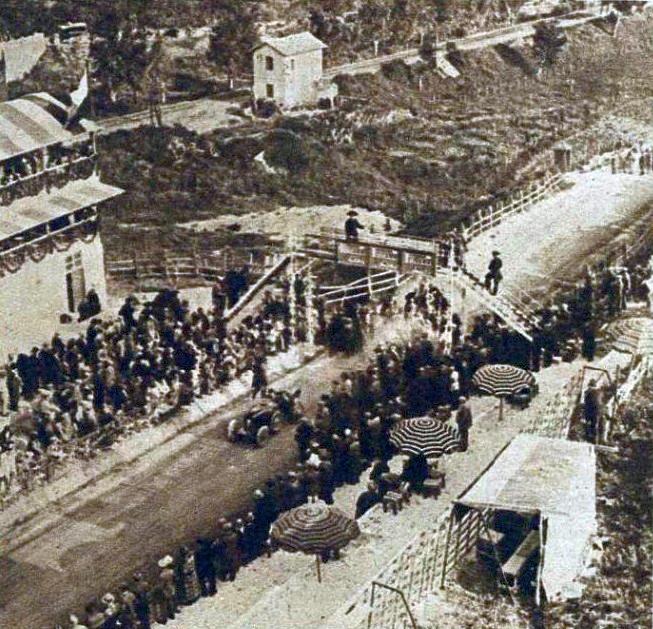
The Bugatti team returned to Italy for the Targa Florio. Once again, the event was run in conjunction with the Coppa Florio, with that being based on the results of the event's first four laps of the newly sealed Madonie circuit. In 1924, the grandstands had been destroyed by a fire but within a year they had been rebuilt. Whereas in 1924 the German teams arrived in force, this year it was the French. Bugatti had a three-car team with Bartolomeo Costantini and the Spanish de Vizcaya brothers, Pierre and Ferdinand. Peugeot returned with four of their Type 174 sports cars with André Boillot, Louis Wagner, Victor Rigal and Christian d'Auvergne as the drivers. None of the Italian works teams turned up, with the small field filled out by privateers. The field started at 4-minute intervals with the Peugeots, as the only entrants in the Coppa Florio, going out first. They set the early pace with Boillot setting a new lap record on the first circuit (assisted by the better quality roads). Going into the third lap, now led by Wagner they were running 1-2-3 with Costantini three minutes behind. However, d'Auvergne missed a corner, hit a wall and rolled. His mechanic was thrown clear while d'Auvergne lay pinned under the burning car. Wagner, following a few minutes behind, stopped and together with the mechanic pulled his badly injured teammate from the wreck before re-joining the race. Costantini meanwhile was picking up his pace and was ahead on elapsed time by the end of the third lap. He drove a smooth incident-free run, putting in the fastest lap of the race on his final lap to beat the Peugeots of Wagner and Boillot, to win the Targa. By dint of Peugeot being the only team to register for the Coppa, André Boillot won that prize. Along with their 1922 victory, Peugeot became the first two-time winners and were awarded the Coppa Florio, but decided to put it up for competition again.
The Grand Prix d’Ouverture heralded the official opening for racing at the completed Autodrome de Linas-Montlhéry outside of Paris. Held on the oval circuit, it was restricted to voiturettes up to 1.5-litres with 150000 francs in prizes. A big field was therefore expected but this waned when the works teams from Bugatti and Chiribiri withdrew. This left the Talbot team as the overwhelming favourites, with Henry Segrave, George Duller and Conte Caberto Conelli. They were joined by racing specials from J. G. Parry-Thomas and Ernest Eldridge. Against them were teams from some of the many small French manufacturers springing up: La Perle, Bucciali, Jean Gras and Salmson. A pedestrian race ended in rain with the expected 1-2-3 result for the Talbots led by Duller, 20 laps ahead of Eldridge. Conelli had been racing hard to catch Duller and as the latter eased off to take the flag Conelli clipped his car, rolled and skated past the line– perhaps the only driver to get a podium after finishing a race upside down.
One of the smallest entry lists for the Indianapolis 500 was once again dominated by the Miller 122, in various guises, with 16 of the 22 starters. Harry Miller had developed his front-wheel drive model, which Cliff Durant entered as a “Junior-8” for Dave Lewis – the first front-wheel drive car to be at the race. He also ran a standard Miller for teammate Earl Cooper. Miller's own team driver, Bennett Hill, tested the car but preferred to race the older, rear-wheel drive version with a supercharger instead. Harry Hartz also ran supercharged Millers for himself, Fred Comer and Leon Duray, as did previous race-winners Tommy Milton and Ralph DePalma.
Up against the Millers was Fred Duesenberg's cars. The four supercharged 122s were led by the previous year's winner Peter DePaolo in what he called his “Banana Wagon”. Circuit director Pop Meyers had travelled to Europe to encourage their teams to come to the race, but they all refused. FIAT driver Pietro Bordino had been racing his 805 in the USA since the previous year and entered his car as a privateer. After over a decade, the brick surface was becoming increasingly rough. Instead of the usual straight-sided high-pressure tyres, Firestone decided to supply the teams with balloon-style, low-pressure tyres for the first time.
Although nominally the first round of the new Championship, the American cars did not technically meet the AIACR regulations. They had 122 cubic inch (2-litre) engines, but the chassis were narrow single-seaters less than 80cm wide. This year the AAA lifted the qualifying speed to an average of 85mph – or 7m 30s over a 4-lap, 10-mile run. Duray set a new lap record of 113.2mph to get pole position. Second fastest was DePaolo and his Duesenberg with Duray's team-leader Hartz completing the front row. Last year's co-winner, L.L. Corum, crashed his car in Friday practise and would not be a starter, becoming a relief driver for DePaolo instead.
Race day was sunny and warm, and 145000 spectators arrived. DePaolo took the lead from the start, and after 100 miles was just ahead of the veterans Cooper and Hartz, with less than 30 seconds covering the top five. Bordino was an early stop at the pits, losing two laps to change spark plugs. At quarter distance, DePaolo's teammate, rookie Phil Shafer (who had been the final qualifier, starting at the back) had moved up to second and the pair duelled for the lead for the next eighty miles.
Many of the drivers were being shaken up and exhausted by the rough surface and a number of relief drivers were employed. Bordino stopped again, with an injured hand and while he went to the track hospital Antoine Mourre took over the Fiat. Soon after Herb Jones's Miller crashed into the wall and caught fire. Jones was also taken to the track hospital with injuries. Just after halfway, DePaolo pitted suffering from blistered hands and took relief from Norman Batten as the blisters were attended to. As the pitstops worked through, this soon put Cooper into the lead until a puncture nudged him into the wall and he had to pit. DePaolo had got back into his car again on lap 127 and, running fourth, set off after the leaders. Lewis, in the Miller FD, ran at the front but in ten laps was hauled in and passed by DePaolo. An exhausted Lewis finally pitted to be relieved by Bennett Hill who had retired early with suspension issues. Although Hill charged hard, DePaolo held on and won by almost a minute, or half a lap, from Hill, with Shafer third. It was the first time the race had been won in under 5 hours, averaging 101.3mph. With four other wins in the 11-race season, Pete DePaolo would, in 1927, be retroactively declared the year's AAA champion, well ahead of Tommy Milton. The end of the year saw the retirement of Milton and DePalma, two of America's greatest post-war drivers.
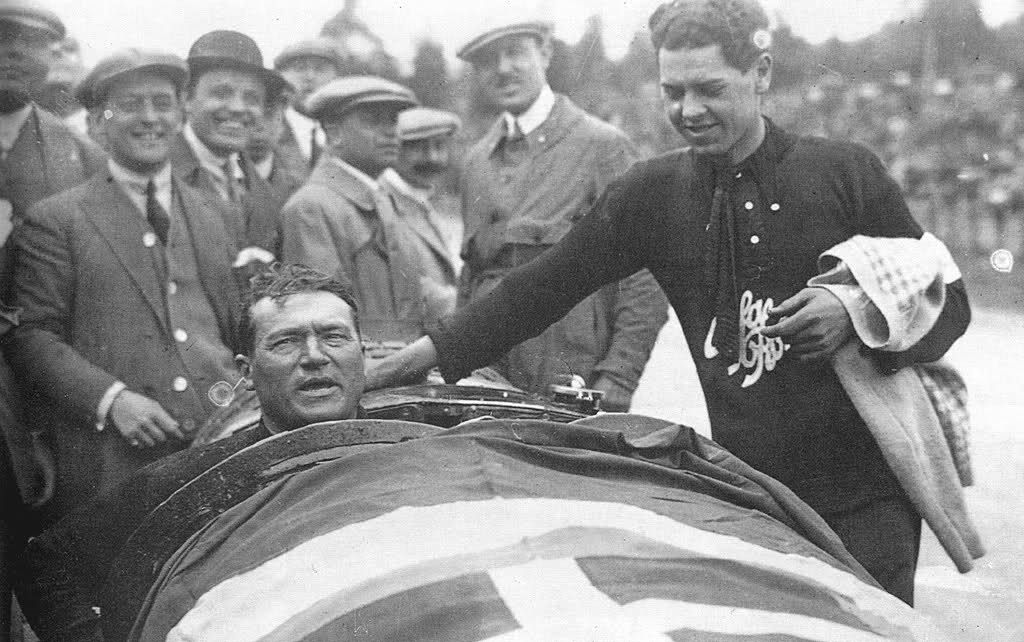
The third European Grand Prix turned out to be a major anti-climax. It was the inaugural Belgian Grand Prix and part of the World Championship, but only the Alfa Romeo and Delage works teams arrived. Sunbeam claimed its cars were not ready, as did Alfred Guyot. Alfa Corse had Antonio Ascari, Giuseppe Campari and Gastone Brilli-Peri as their drivers, with the latter running an older, 1924, model. The four Delages (driven by team manager René Thomas, Albert Divo, Robert Benoist and Paul Torchy) were now fitted with twin superchargers. In practice the two teams had similar lap times, although grid positions were still drawn by lot unlike Indianapolis. From the start, Ascari took off with a big lead over his teammates Campari and Brilli-Peri. The Delages had an abysmal time and all failed during the race. Benoist pulled into the pits on just the second lap with a cracked fuel-tank. Thomas' car caught fire and even though Divo kept up with the Alfas, the strain burnt out the supercharger. Just after halfway through the race there were only the Alfas of Ascari and Campari left. An apocryphal story has risen about the race: The partisan Belgian crowd were very disappointed and booed the Italian team. In response, team manager Vittorio Jano called his drivers in to stop for a lunchbreak. However, this is refuted by Etzrodt who says it was just a methodical pit-stop to change all four tyres on both cars. They then went back out to complete a farcical 1–2 victory.
The next round of the championship, the French Grand Prix, was held at the new track at Montlhéry. Now completed with its road section to complement the banked oval, it was the first French GP not held on a public-road circuit. This time all the main protagonists turned up: Alfa Corse returned with their three cars and drivers. This time Delage had just three cars, with Thomas' destroyed, and Louis Wagner brought in to join Divo and Benoist. Thomas apparently had been fired as team chief for taking money for deficient connecting rods. There were three works Bugattis for “Meo” Costantini, Pierre de Vizcaya and veteran Jules Goux, along with two privateer entries for Pierre's brother Ferdinand and Giulio Foresti. Finally, the Sunbeam team arrived from Britain with three cars for Henry Segrave and the Italian counts Giulio Masetti and Caberto Conelli.

After a confused rolling-start, it was Ascari who led at the end of the first lap. Divo was second but dropped back after just three laps to retire again with supercharger issues. Ascari built a comfortable lead while Campari, Benoist and Masetti competed duelled behind him. Then on the 22nd lap, after two hours racing, Ascari cut a corner too close, slide and mowed down 100 metres of fencing, before the car rolled twice throwing the driver out. Badly injured, but conscious, he was pulled free but died on the way to the hospital. When the news came through the crowd was stunned and the other two Alfa Corse cars were withdrawn. The remainder of the race was fairly pedestrian. After a slow start, Benoist had moved up the field and inherited the lead from Campari. Aided by Divo as the rain closed in, he went on to win the race, the first Frenchman to win his home Grand Prix since Georges Boillot in 1913. Teammate Wagner (relieved by teammate Torchy) finished second over seven minutes behind with Masetti just ahead of Costantini in the best of the outpaced Bugattis. Awarded a big wreath of flowers from the French President, Benoist drove to where Ascari had crashed and laid it there in respect.

So, going into the final race, the Italian Grand Prix at Monza, Alfa Romeo, Delage and Duesenberg had one win apiece. Delage felt they were beaten and instead chose to concentrate on preparing for the upcoming (non-Championship) San Sebastián Grand Prix. Duesenberg, though, did arrive with two cars, for Tommy Milton and young new driver Pete Kreis. Indianapolis winner Pete DePaolo also came across, taking the place of Ascari in the Alfa Corse team, alongside Campari and Brilli-Peri. Tazio Nuvolari had originally been selected but had crashed heavily in the trial when the car's gearbox seized (heavily bandaged he then went out the next week to win the Grand Prix des Nations motorcycle race in pouring rain). Fellow Italian manufacturer Diatto had two new cars, designed by Alfieri Maserati and driven by himself and Emilio Materassi, with the final 2-litre entrant being former pre-war Delage driver Albert Guyot in his own Special. The Organisers also had a separate trophy for 1.5-litre Voiturette cars. The Bugatti works team entered its new 1.5-litre Type 37 and supercharged Type 39, in anticipation of the change in GP formula coming up in 1926. Their competition was from two Chiribiris and Ernest Eldridge’s special. After the accident at Montlhéry, the Lesmo corners were modified putting a 60cm strip of sand to even out the inside of the bends. A banked wall was also put on the final, fastest, corner of the oval.
The Duesenbergs were fastest in practice, although it was said the Alfas had held back to conserve the cars. From the start, Kreis in his Duesenberg bolted from the second row into the lead. But it was short-lived. After setting what turned out to be the fastest lap of the race, he crashed at the Lesmo curves on lap 3. The car rolled but Kreis was unhurt. Campari then led from Brilli-Peri at the head of the field. Milton stayed with the two red cars and took the lead when they pitted for fuel on lap 32. Campari had a slow stop while Brilli-Peri had a quick pitstop and came out in second. He took the lead when Milton was delayed with his stop and took a comfortable win, almost 20 minutes ahead of Campari. The supercharged Bugatti of Costantini was third, ten minutes back, just ahead of Milton and DePaolo.
The victory clinched the inaugural World Championship for Alfa Romeo. Henceforth the iconic Visconti badge carried on their cars had a laurel wreath added to the design to celebrate the achievement.
_-_Fondo_Car-Kutxa_Fototeka.jpg)
_-_Fondo_Car-Kutxa_Fototeka.jpg)
Delage had chosen to miss the Italian Grand Prix for the race in Spain a fortnight later. The team arrived with four cars, as did the Bugatti team while Giulio Masetti ran a sole Sunbeam works car. The Lasarte track south of San Sebastián was a 18km circuit on sealed public roads. A huge crowd turned out, including the Spanish King and Queen, for the rolling start at 9am. In the early part Divo led Masetti's Sunbeam and the other Delages of Benoist and Thomas and the Bugatti of Costantini. On the fifth lap the race was marred by the crash of the fourth Delage driver Paul Torchy. He had gone off the road when trying to pass the Sunbeam. Slamming into roadside trees, he was crushed fatally against his steering wheel. At the halfway point, the Delages pitted to refuel. André Morel relieved Divo and Benoist took the lead. The Bugattis had all run into issues and Masetti retired the Sunbeam soon after with faulty steering. Thereafter it was clear running for the Delages and Divo led home a 1-2-3 result over the Bugatti team.
The proliferation of races across Italy spread into France with the advent of two well-supported local races – the Marne Grand Prix held near Reims and the Comminges Grand Prix at St Gaudens, near Toulouse.
German and Austrian manufacturers and drivers had not been allowed to compete in races held in France, Belgium or Great Britain since the end of the war. Mercedes, Benz and Opel led a number of German companies continuing to develop new cars and engineering. However, in May, the German Automobile Club was re-admitted into the AIACR and in November, back into the CSI regulatory body. Local races in Germany were increasing in number. In May, Otto Merz in a 2-litre Mercedes won the main race in an opening weekend of the new Solitude circuit around the castle of the same name near Stuttgart in front of over 100000 spectators. Similarly, the Eifelrennen event was a 3-day festival of racing for cars and motorbikes. When the Mercedes team withdrew from the main race, it lost a lot of its interest and the wet Ardennes weather further detracted from the occasion. Vittorio Rosa won overall in an Alfa Romeo RL Unlike in France and Italy with their number of road and track races, and Brooklands in England with its open-class handicap races, the German racing scene placed equal emphasis on winning hill-climbs with many being held across the country.
This was the last year of the 2-litre formula that had been in place since 1922. It had been a successful innovation, dramatically advancing engine design and bringing the advent of supercharging. But becoming more and more concerned with the higher speeds, the AIACR decided that a new 1.5-litre formula for Grand prix racing would come into effect as of the 1926 season.
Championship final standings
Table lists the highest race position for each manufacturer.
- ** non-participation disqualified the manufacturer from the championship*
| Pos | Manufacturer | [500](1925-indianapolis-500) | |||||||||||||||||||||||||||||||||||||
|---|---|---|---|---|---|---|---|---|---|---|---|---|---|---|---|---|---|---|---|---|---|---|---|---|---|---|---|---|---|---|---|---|---|---|---|---|---|---|---|
| USA | [BEL](1925-belgian-grand-prix) | ||||||||||||||||||||||||||||||||||||||
| BEL | [FRA](1925-french-grand-prix) | ||||||||||||||||||||||||||||||||||||||
| FRA | [ITA](1925-italian-grand-prix) | ||||||||||||||||||||||||||||||||||||||
| ITA | Pts | 1 | 7 | 2 | 11 | 3 | 13 | 4= | 17 | 4= | 17 | 4= | 17 | — | [12] | — | [14] | — | [15] | — | [16] | — | [16] | — | [17] | — | [17] | Pos | Manufacturer | [500](1925-indianapolis-500) | |||||||||
| USA | [BEL](1925-belgian-grand-prix) | ||||||||||||||||||||||||||||||||||||||
| BEL | [FRA](1925-french-grand-prix) | ||||||||||||||||||||||||||||||||||||||
| FRA | [ITA](1925-italian-grand-prix) | ||||||||||||||||||||||||||||||||||||||
| ITA | Pts | ||||||||||||||||||||||||||||||||||||||
| ITA Alfa Romeo | * | 1 | Ret | 1 | |||||||||||||||||||||||||||||||||||
| USA Duesenberg | 1 | * | - | 4 | |||||||||||||||||||||||||||||||||||
| FRA Bugatti | * | - | 4 | 3 | |||||||||||||||||||||||||||||||||||
| ITA Diatto | * | - | - | Ret | |||||||||||||||||||||||||||||||||||
| ITA Chiribiri | * | - | - | Ret | |||||||||||||||||||||||||||||||||||
| GBR Eldridge Special | * | - | - | Ret | |||||||||||||||||||||||||||||||||||
| FRA Delage | * | Ret | 1 | ** | |||||||||||||||||||||||||||||||||||
| USA Junior Eight | 2 ? | * | - | ** | |||||||||||||||||||||||||||||||||||
| GBR Sunbeam | * | - | 3 | ** | |||||||||||||||||||||||||||||||||||
| USA Miller | 4 ? | * | - | ** | |||||||||||||||||||||||||||||||||||
| ITA Fiat | 10? | * | - | ** | |||||||||||||||||||||||||||||||||||
| USA Skelly-Ford Special | Ret | * | - | ** | |||||||||||||||||||||||||||||||||||
| FRA Guyot Special | * | - | ** | Ret |
|}
Results of the season's major races
| Pos | Driver | Team | [ROM](1925-rome-grand-prix) | ||||||||||||||||
|---|---|---|---|---|---|---|---|---|---|---|---|---|---|---|---|---|---|---|---|
| ITA | [TGF](1925-targa-florio) | ||||||||||||||||||
| ITA | [IND](1925-indianapolis-500) | ||||||||||||||||||
| USA | [BEL](1925-belgian-grand-prix) | ||||||||||||||||||
| BEL | [FRA](1925-french-grand-prix) | ||||||||||||||||||
| FRA | [ITA](1925-italian-grand-prix) | ||||||||||||||||||
| ITA | [SEB](1925-san-sebastian-grand-prix) | ||||||||||||||||||
| ESP | Pos | Driver | Team | [ROM](1925-rome-grand-prix) | |||||||||||||||
| ITA | [TGF](1925-targa-florio) | ||||||||||||||||||
| ITA | [IND](1925-indianapolis-500) | ||||||||||||||||||
| USA | [BEL](1925-belgian-grand-prix) | ||||||||||||||||||
| BEL | [FRA](1925-french-grand-prix) | ||||||||||||||||||
| FRA | [ITA](1925-italian-grand-prix) | ||||||||||||||||||
| ITA | [SEB](1925-san-sebastian-grand-prix) | ||||||||||||||||||
| ESP | |||||||||||||||||||
| FRA Robert Benoist | Automobiles Delage | Ret | 1 | 2 | |||||||||||||||
| ITA Bartolomeo Costantini | Usines Bugatti | *1* | 4 | 3 | *Ret* | ||||||||||||||
| USA Pete DePaolo | Duesenberg Brothers | ||||||||||||||||||
| Alfa Corse | 1 | 5 | |||||||||||||||||
| ITA Carlo Masetti | *Private Entry* | *1* | |||||||||||||||||
| ITA Antonio Ascari | Alfa Corse | Ret | *1* | † | |||||||||||||||
| ITA Gastone Brilli-Peri | Alfa Corse | Ret | Ret | Ret | 1 | ||||||||||||||
| FRA Albert Divo | Automobiles Delage | Ret | Ret *[1]* | 1 | |||||||||||||||
| FRA Louis Wagner | SA des Autos et Cycles Peugeot | ||||||||||||||||||
| Automobiles Delage | 2 | 2 | |||||||||||||||||
| ITA Giuseppe Campari | Alfa Corse | 2 | Ret | 2 | |||||||||||||||
| ITA Emilio Materassi | *Private Entry* | ||||||||||||||||||
| SA Autocontruzioni Diatto | 2 | Ret | |||||||||||||||||
| USA Dave Lewis | Cliff Durant | 2 | |||||||||||||||||
| ITA Guido Ginaldi | *Private Entry* | 3 | 6 | ||||||||||||||||
| FRA André Boillot | SA des Autos et Cycles Peugeot | 3 | |||||||||||||||||
| USA Phil Shafer | Duesenberg Brothers | 3 | |||||||||||||||||
| ITA Giulio Masetti | STD Motors Ltd | 3 | Ret | ||||||||||||||||
| FRA René Thomas | Automobiles Delage | Ret | 3 | ||||||||||||||||
| ESP Pierre de Vizcaya | Usines Bugatti | 4 | 7 | 8 | 4 | ||||||||||||||
| USA Tommy Milton | Tommy Milton | 5 | 4 | ||||||||||||||||
| ITA Pasquale Croce | *Private Entry* | 4 | |||||||||||||||||
| USA Harry Hartz | Harry Hartz | 4 | |||||||||||||||||
| ESP Ferdinand de Vizcaya | Usines Bugatti | 9 | 6 | 6 | 5 | ||||||||||||||
| ITA Luigi Platé | Fab. Torinese Velivoli | ||||||||||||||||||
| Chiribiri & Cie | 5 | Ret | Ret | ||||||||||||||||
| ITA Renato Balestrero | Officine Meccaniche | Ret | 5 | ||||||||||||||||
| FRA Jules Goux | Usines Bugatti | 5 | Ret | Ret | |||||||||||||||
| ITA Franco Mazzotti | *Private Entry* | 6 | |||||||||||||||||
| USA Leon Duray | Harry Hartz | 6 |
italics show the driver of the race's fastest lap.
Only those drivers with a best finish of 6th or better are shown. Sources:
References
;Citations
- Cimarosti, Adriano (1997) The Complete History of Grand Prix Motor Racing London: Aurum Press Ltd
- Fondi, Pino (2006) Targa Florio: 20th Century Epic Milan: Giorgio Nada Editore
- Fox, Charles (1973) The Great Racing Cars & Drivers London: Octopus Books Ltd
- Georgano, Nick (1971) The Encyclopaedia of Motor Sport London: Ebury Press Ltd
- Higham, Peter (1995) The Guinness Guide to International Motor Racing London: Guinness Publishing
- Legate, Trevor (2006) 100 years of Grand Prix Kent: Touchstone Books Ltd
- Ludvigsen, Karl (2008) Racing Colours - Italian Racing Red Surrey: Ian Allan Publishing Ltd
- Ludvigsen, Karl (2009) Racing Colours - German Racing Silver Surrey: Ian Allan Publishing Ltd
- Monkhouse, George (1953) Grand Prix Racing Facts and Figures London: G.T. Foulis & Co Ltd
- Montagna, Paolo (ed.) (1989) The Legendary Italian Grand Prix Milan: A.C. Promotion
- Rendall, Ivan (1991) The Power and The Glory – A Century of Motor Racing London: BBC Books
- Rendall, Ivan (1993) The Chequered Flag – 100 years of Motor Racing London: Weidenfeld & Nicolson Ltd
- Venables, David (2008) Racing Colours - British Racing Green Surrey: Ian Allan Publishing Ltd
- Venables, David (2009) Racing Colours - French Racing Blue Surrey: Ian Allan Publishing Ltd
References
- "1925 Season".
- "Speedfreaks.org".
- Rendall 1993, p.360
- "ChampCar Stats".
- "MotorSport AAA results".
- "1925 Season".
- "Speedfreaks.org".
- "La Targa Florio".
- "Golden Era of Grand Prix Racing".
- "Golden Era of Grand Prix Racing".
- "Golden Era of Grand Prix Racing".
- "Golden Era of Grand Prix Racing".
- "Golden Era of Grand Prix Racing".
- "Golden Era of Grand Prix Racing".
- "Golden Era of Grand Prix Racing".
- "Golden Era of Grand Prix Racing".
- "Golden Era of Grand Prix Racing".
- "Golden Era of Grand Prix Racing".
- "Golden Era of Grand Prix Racing".
- "Golden Era of Grand Prix Racing".
- "1925 Season".
- "TeamDan".
- "Speedfreaks.org".
- "La Targa Florio".
- "Formula 2".
- "MotorSport".
- "ChampCar Stats".
- Rendall 1993, p.110
- Legate 2006, p.12
- Monkhouse 1953, p.6
- "Grand Prix Winners 1895–1949".
- "Costantini wins the Targa Florio, Boillot with Peugeot the Coppa Florio".
- "1925 World Championship".
- Cimarosti 1997, p.68
- "1925 World Championship".
- Nye, Doug. (1973). "International Motor Racing". Crowell.
- "1925 World Championship".
- "1925 World Championship".
- Cimarosti 1997, p.67
- "Golden Era of Grand Prix Racing".
- "Golden Era of Grand Prix Racing".
- "Golden Era of Grand Prix Racing".
- "Golden Era of Grand Prix Racing".
- "Golden Era of Grand Prix Racing".
- Fox 1973, p.34
- Montagna 1989, p.32
- Cimarosti 1997, p.71
- "1925 Season".
- Ludvigsen 2008, p.47
- "Golden Era of Grand Prix Racing".
- "Golden Era of Grand Prix Racing".
- "Golden Era of Grand Prix Racing".
- Rendall 1993, p.111
- "Golden Era of Grand Prix Racing".
- "La Targa Florio".
- "Golden Era of Grand Prix Racing".
- "La Targa Florio".
- "Golden Era of Grand Prix Racing".
- Fondi 2006, p.345
- "Golden Era of Grand Prix Racing".
- "InvincibleTalbots".
- Georgano 1971, p.196
- "Ultimate Racing History".
- Fox 1973, p.35
- "1925 World Championship".
- Ludvigsen 2008, p.37
- "1925 World Championship".
- "1925 World Championship".
- "1925 World Championship".
- "1925 World Championship".
- Fox 1973, p.36
- "Racing Reference".
- "Ultimate Racing History".
- Georgano 1971, p.202
- Rendall 1993, p.113
- "Golden Era of Grand Prix Racing".
- "Golden Era of Grand Prix Racing".
- "Golden Era of Grand Prix Racing".
- Venables 2009, p.46
- "Golden Era of Grand Prix Racing".
- "1925 World Championship".
- Georgano 1971, p.269
- Georgano 1971, p.254
- Ludvigsen 2008, p.67
- "Golden Era of Grand Prix Racing".
- Montagna 1989, p.33
- Montagna 1989, p.197
- Ludvigsen 2008, p.45
- "Motorsport Memorial".
- "Golden Era of Grand Prix Racing".
- Venables 2009, p.47
- "Golden Era of Grand Prix Racing".
- "Grand Prix Winners 1895–1949".
- "Solitude-Rennen".
- Georgano 1971, p.257
- "Eifel-Rennen".
- "1925 World Championship".
- "1925 Season".
- "TeamDan".
- "Speedfreaks.org".
- "La Targa Florio".
- "Formula 2".
- "MotorSport".
- "ChampCar Stats".
This article was imported from Wikipedia and is available under the Creative Commons Attribution-ShareAlike 4.0 License. Content has been adapted to SurfDoc format. Original contributors can be found on the article history page.
Ask Mako anything about 1925 Grand Prix season — get instant answers, deeper analysis, and related topics.
Research with MakoFree with your Surf account
Create a free account to save articles, ask Mako questions, and organize your research.
Sign up freeThis content may have been generated or modified by AI. CloudSurf Software LLC is not responsible for the accuracy, completeness, or reliability of AI-generated content. Always verify important information from primary sources.
Report