From Surf Wiki (app.surf) — the open knowledge base
1920 APFA season
Sports season
Sports season
| Field | Value |
|---|---|
| year | 1920 |
| NFLchampion | Akron Pros |
| regular_season | September 26 – December 19, 1920 |
The 1920 APFA season was the inaugural season of the American Professional Football Association, direct lineal forerunner of the National Football League, reorganized as such in 1922. The Association included 14 teams from the Midwest and Northeast during its inaugural season. Teams scheduled their own games, including contests against non-APFA opponents, with the champion to be determined by a vote of league owners rather than through raw winning percentage.
At the league meeting held on April 30, 1921, the Akron Pros were awarded the Brunswick-Balke Collender Cup as champions for the 1920 season, the only year the trophy was used.
History
First meeting
Prior to the APFA, there were several other loose, professional organizations; most of the APFA teams were from either the Ohio League or the New York Pro Football League. On August 20, 1920, a meeting attended by representatives of four Ohio League teams — Ralph Hay and Jim Thorpe for the Canton Bulldogs, Jimmy O'Donnell and Stan Cofall for the Cleveland Tigers, Carl Storck for the Dayton Triangles, and Frank Nied and Art Ranney for the Akron Pros — was held. At this initial session held at Ralph Hay's office in Canton, Ohio, the club representatives tentatively agreed to call their new league the American Professional Football Conference (APFC), to introduce a salary cap for the teams, and not to sign college players nor players under contract with another team. Plans were tentatively made by the four clubs to play one another "home and away,' creating a uniform six game schedule for each team.
According to the Canton Evening Repository, the purpose of the league was to "raise the standard of professional football in every way possible, to eliminate bidding for players between rival clubs and to secure cooperation in the formation of schedules, at least for the bigger teams." The representatives then contacted other major professional teams and invited them to a meeting for September 17.
Organizational meeting
Word of the new organization spread. A second meeting including an expanded circle of interested teams was called to Canton on September 17, 1920, for the purpose of formal organization. Participants included the original four APFC clubs, as well as a fifth Ohio team, the Columbus Panhandles that had played together with these teams in what historians later dubbed the "Ohio League"; four teams from Illinois (the Chicago Cardinals and Chicago Tigers, Decatur Staleys, and Rock Island Independents); two from Indiana (the Hammond Pros and Muncie Flyers); two from New York (the Buffalo All-Americans and Rochester Jeffersons); and the Detroit Heralds from Michigan. These 14 founding teams determined to form a formal association known as the American Professional Football Association (APFA).
Jim Thorpe, player-coach of the Canton Bulldogs, was named the APFA's first president — more for the publicity associated with his famous name than for any particular administrative prowess. A franchise admission fee of $100 was adopted — although George S. Halas, player-coach of the Chicago Staleys, later recalled that "I can testify that no money changed hands" between the 14 founding adopters.
Writing in 1978, a team of gridiron historians noted that
"This new organization did not resemble a league as we would know it today, but was more like a professional association whose sole functions were membership and articulation of some general principles. Perhaps the best modern-day analogy would be a weak form of the NCAA. As can be imagined, the league office had no influence on anybody. It set no schedules, leaving each team to arrange its own slate."
Since scheduling was left in the hands of each team, there were wide variations from club to club in the total number of games played, the number played against fellow association members, and the strength of opponents added to the schedule. Traditional local rivalries were maintained, regardless of affiliation. For example, the Rochester Jeffersons played a schedule consisting mostly of local teams from their local sandlot circuit and the New York Professional Football League, playing but one game against an APFA opponent.
Indeed, of the 90 games played by APFA teams during the football season of 1920, 51 were against teams not affiliated with the APFA. No official standings were maintained by the association or published in the press, with later standings for the APFA teams assembled and published by football historians after the fact. Because most APFA games played in 1920 matched teams from the same geographic area, fans in different regions had different opinions of who the league champion was — with the final determination to be made by a meeting of team owners held during the winter after completion of the season.
Teams
The APFA had 14 teams that played during its inaugural season.
| **Team folded this season** |
|---|
| Team | Owner | Head coach | Stadium(s) |
|---|---|---|---|
| [Akron Pros](1920-akron-pros-season) | Fred Nied, | ||
| Art Ranney | Elgie Tobin | Akron League Park | |
| [Buffalo All-Americans](1920-buffalo-all-americans-season) | Frank McNeil | Tommy Hughitt | Canisius Villa (7), |
| Buffalo Baseball Park (3) | |||
| [Canton Bulldogs](1920-canton-bulldogs-season) | Ralph Hay | Jim Thorpe | Lakeside Park |
| [Chicago Cardinals](1920-chicago-cardinals-season) | Chris O'Brien | Paddy Driscoll | Normal Park |
| Chicago Tigers | Guil Falcon | Guil Falcon | Cubs Park |
| [Cleveland Tigers](1920-cleveland-tigers-nfl-season) | Stan Cofall, | ||
| Jimmy O'Donnell | Stan Cofall (3 games), | ||
| Al Pierotti (5 games) | Dunn Field | ||
| [Columbus Panhandles](1920-columbus-panhandles-season) | Joe Carr | Ted Nesser | Neil Park |
| [Dayton Triangles](1920-dayton-triangles-season) | Carl Storck | Bud Talbott | Triangle Park |
| [Decatur Staleys](1920-decatur-staleys-season) | A. E. Staley | George Halas | Staley Field |
| [Detroit Heralds](1920-detroit-heralds-season) | *Detroit Herald* newspaper | Billy Marshall | Navin Field |
| [Hammond Pros](1920-hammond-pros-season) | Doc Young | Hank Gillo | *Traveling team* |
| [Muncie Flyers](1920-muncie-flyers-season) | Earl Ball, | ||
| Cooney Checkaye | Ken Huffine | *Traveling team* | |
| [Rochester Jeffersons](1920-rochester-jeffersons-season) | Leo Lyons | Jack Forsyth | Rochester Baseball Park |
| [Rock Island Independents](1920-rock-island-independents-season) | Walter Flanigan, | ||
| *booster association* | Rube Ursella | Douglas Park |
Season review
The regular-season schedule was not fixed but was created dynamically by each team as the season progressed. The first game involving an APFA team occurred on September 26, when the Rock Island Independents beat the St. Paul Ideals 48–0.
The first official game between APFA (NFL) members occurred on October 3, when the Dayton Triangles beat the Columbus Panhandles 14–0. The Triangles' Lou Partlow scored the league's first touchdown and George "Hobby" Kinderline kicked the first extra point. An historic marker placed by the Ohio Historical Society at Triangle Park in Dayton marks the location of that first ever game.
The final game of the season was a 14–14 tie between the Chicago Cardinals and the non-league Chicago Stayms on December 19, 1920. The Decatur Staleys and the Canton Bulldogs played the most games in the season (13), while the Muncie Flyers played the fewest (1). The Buffalo All-Americans scored the most points all season (258), and the Akron Pros allowed the fewest points (7).
| Symbol | Meaning |
|---|---|
| Highlighted | APFA game |
| Non-APFA team | |
| (numbers in parentheses) | Team's win–loss–tie record |
| September 26, 1920 | Visitor | Score | Home | Score | Location | October 3, 1920 | October 10, 1920 | October 17, 1920 | October 24, 1920 | October 31, 1920 | November 7, 1920 | November 11, 1920 | November 14, 1920 | November 21, 1920 | November 25, 1920 | November 28, 1920 | December 4, 1920 | December 5, 1920 | December 11, 1920 | December 12, 1920 | December 18, 1920 | December 19, 1920 |
|---|---|---|---|---|---|---|---|---|---|---|---|---|---|---|---|---|---|---|---|---|---|---|
| St. Paul Ideals | 0 | Rock Island Independents (1–0–0) | 48 | Douglas Park | ||||||||||||||||||
| Wheeling Stogies | 0 | Akron Pros (1–0–0) | 43 | Akron League Park | ||||||||||||||||||
| West Buffalo | 6 | Buffalo All-Americans (1–0–0) | 32 | Canisius Field | ||||||||||||||||||
| Pitcairn Quakers | 0 | Canton Bulldogs (1–0–0) | 48 | Lakeside Park | ||||||||||||||||||
| Columbus Panhandles (0–1–0) | 0 | Dayton Triangles (1–0–0) | 14 | Triangle Park | ||||||||||||||||||
| Moline Universal Tractors | 0 | Decatur Staleys (1–0–0) | 20 | Staley Field | ||||||||||||||||||
| Muncie Flyers (0–1–0) | 0 | Rock Island Independents (2–0–0) | 45 | Douglas Park | ||||||||||||||||||
| All-Buffalo | 0 | Rochester Jeffersons (1–0–0) | 10 | Rochester Baseball Park | ||||||||||||||||||
| Columbus Panhandles (0–2–0) | 0 | Akron Pros (2–0–0) | 37 | Akron League Park | ||||||||||||||||||
| All-Buffalo | 0 | Buffalo All-Americans (2–0–0) | 51 | Canisius Field | ||||||||||||||||||
| Toledo Maroons | 0 | Canton Bulldogs (2–0–0) | 42 | Lakeside Park | ||||||||||||||||||
| Racine Cardinals (0–0–1) | 0 | Chicago Tigers (0–0–1) | 0 | Cubs Park | ||||||||||||||||||
| Cleveland Tigers (0–0–1) | 0 | Dayton Triangles (1–0–1) | 0 | Triangle Park | ||||||||||||||||||
| Kewanee Walworths | 7 | Decatur Staleys (2–0–0) | 25 | Staley Field | ||||||||||||||||||
| Cleveland Panthers | 14 | Detroit Heralds (1–0–0) | 40 | Mack Park | ||||||||||||||||||
| Hammond Pros (0–1–0) | 0 | Rock Island Independents (3–0–0) | 26 | Douglas Park | ||||||||||||||||||
| Fort Porter | 0 | Rochester Jeffersons (2–0–0) | 66 | Rochester Baseball Park | ||||||||||||||||||
| Cincinnati Celts | 0 | Akron Pros (3–0–0) | 13 | Akron League Park | ||||||||||||||||||
| McKeesport Olympics | 7 | Buffalo All-Americans (3–0–0) | 28 | Canisius Field | ||||||||||||||||||
| Cleveland Tigers (0–1–1) | 0 | Canton Bulldogs (3–0–0) | 7 | Lakeside Park | ||||||||||||||||||
| Moline Universal Tractors | 3 | Racine Cardinals (1–0–1) | 33 | St. Rita's Field | ||||||||||||||||||
| Detroit Heralds (1–1–0) | 0 | Chicago Tigers (1–0–1) | 12 | Cubs Park | ||||||||||||||||||
| Columbus Panhandles (0–3–0) | 0 | Fort Wayne Friars | 14 | Fort Wayne League Park | ||||||||||||||||||
| Hammond Pros (0–2–0) | 0 | Dayton Triangles (2–0–1) | 44 | Triangle Park | ||||||||||||||||||
| Decatur Staleys (3–0–0) | 7 | Rock Island Independents (3–1–0) | 0 | Douglas Park | ||||||||||||||||||
| Utica Knights of Columbus | 0 | Rochester Jeffersons (2–0–1) | 0 | Rochester Baseball Park | ||||||||||||||||||
| Cleveland Tigers (0–2–1) | 0 | Akron Pros (4–0–0) | 7 | Akron League Park | ||||||||||||||||||
| Toledo Maroons | 0 | Buffalo All-Americans (4–0–0) | 38 | Canisius Field | ||||||||||||||||||
| Canton Bulldogs (3–0–1) | 20 | Dayton Triangles (2–0–2) | 20 | Triangle Park | ||||||||||||||||||
| Racine Cardinals (1–1–1) | 0 | Rock Island Independents (4–1–0) | 7 | Douglas Park | ||||||||||||||||||
| Decatur Staleys (4–0–0) | 10 | Chicago Tigers (1–1–1) | 0 | Cubs Park | ||||||||||||||||||
| Columbus Panhandles (0–4–0) | 0 | Detroit Heralds (2–1–0) | 6 | Mack Park | ||||||||||||||||||
| Syracuse Stars | 7 | Rochester Jeffersons (3–0–1) | 21 | Rochester Baseball Park | ||||||||||||||||||
| Akron Pros (5–0–0) | 10 | Canton Bulldogs (3–1–1) | 0 | Lakeside Park | ||||||||||||||||||
| Rochester Jeffersons (3–1–1) | 6 | Buffalo All-Americans (5–0–0) | 17 | Canisius Field | ||||||||||||||||||
| Detroit Heralds (2–2–0) | 0 | Racine Cardinals (2–1–1) | 21 | Cubs Park | ||||||||||||||||||
| Chicago Tigers (1–2–1) | 7 | Rock Island Independents (5–1–0) | 20 | Douglas Park | ||||||||||||||||||
| Columbus Panhandles (0–5–0) | 0 | Cleveland Tigers (1–2–1) | 7 | Dunn Field | ||||||||||||||||||
| Cincinnati Celts | 7 | Dayton Triangles (3–0–2) | 23 | Triangle Park | ||||||||||||||||||
| Decatur Staleys (5–0–0) | 29 | Rockford A.C. | 0 | Kishwaukee Park | ||||||||||||||||||
| Hammond Pros (1–2–0) | 14 | Logan Square | 9 | Logan Square Park | ||||||||||||||||||
| All-Tonawanda Lumberjacks | 0 | Buffalo All-Americans (6–0–0) | 35 | Canisius Field | ||||||||||||||||||
| Canton Bulldogs (4–1–1) | 18 | Cleveland Tigers (1–3–1) | 0 | Dunn Field | ||||||||||||||||||
| Racine Cardinals (3–1–1) | 6 | Chicago Tigers (1–3–1) | 3 | Cubs Park | ||||||||||||||||||
| Columbus Panhandles (1–5–0) | 10 | Zanesville Mark Grays | 0 | Zanesville, Ohio | ||||||||||||||||||
| Decatur Staleys (5–0–1) | 0 | Rock Island Independents (5–1–1) | 0 | Douglas Park | ||||||||||||||||||
| Hammond Pros (2–2–0) | 14 | Pullman Thorns | 13 | Chicago, Illinois | ||||||||||||||||||
| Utica Knights of Columbus | 7 | Rochester Jeffersons (4–1–1) | 27 | Rochester Baseball Park | ||||||||||||||||||
| Decatur Staleys (6–0–1) | 20 | Champaign Legion | 0 | Champaign, Illinois | ||||||||||||||||||
| Rock Island Independents (5–1–2) | 7 | Thorn Tornadoes | 7 | Monmouth, Illinois | ||||||||||||||||||
| Akron Pros (5–0–1) | 7 | Cleveland Tigers (1–3–2) | 7 | Dunn Field | ||||||||||||||||||
| Columbus Panhandles (1–6–0) | 7 | Buffalo All-Americans (7–0–0) | 43 | Canisius Field | ||||||||||||||||||
| Chicago Tigers (1–4–1) | 0 | Canton Bulldogs (5–1–1) | 21 | Lakeside Park | ||||||||||||||||||
| Cincinnati Celts | 0 | Racine Cardinals (4–1–1) | 21 | Chicago, Illinois | ||||||||||||||||||
| Dayton Triangles (4–0–2) | 21 | Rock Island Independents (5–2–2) | 0 | Douglas Park | ||||||||||||||||||
| Decatur Staleys (7–0–1) | 3 | Minneapolis Marines | 0 | Nicollet Park | ||||||||||||||||||
| Detroit Heralds (2–2–1) | 0 | Fort Wayne Friars | 0 | Fort Wayne League Park | ||||||||||||||||||
| Hammond Pros (2–3–0) | 6 | Gary Elks | 7 | Gleason Field | ||||||||||||||||||
| All-Tonawanda Lumberjacks | 6 | Rochester Jeffersons (4–2–1) | 0 | Rochester Baseball Park | ||||||||||||||||||
| Dayton Triangles (4–1–2) | 0 | Akron Pros (6–0–1) | 13 | Akron League Park | ||||||||||||||||||
| Canton Bulldogs (6–1–1) | 3 | Buffalo All-Americans (7–1–0) | 0 | Canisius Field | ||||||||||||||||||
| Lansing Oldsmobile | 0 | Racine Cardinals (5–1–1) | 14 | Chicago, Illinois | ||||||||||||||||||
| Toledo Maroons | 0 | Cleveland Tigers (2–3–2) | 14 | Dunn Field | ||||||||||||||||||
| Columbus Panhandles (1–6–1) | 0 | Zanesville Mark Grays | 0 | Zanesville, Ohio | ||||||||||||||||||
| Hammond Pros (2–4–0) | 7 | Decatur Staleys (8–0–1) | 28 | Staley Field | ||||||||||||||||||
| Rochester Scalpers | 0 | Rochester Jeffersons (5–2–1) | 16 | Rochester Baseball Park | ||||||||||||||||||
| Canton Bulldogs (6–2–1) | 0 | Akron Pros (7–0–1) | 7 | Akron League Park | ||||||||||||||||||
| Decatur Staleys (9–0–1) | 6 | Chicago Tigers (1–5–1) | 0 | Chicago Cub Park | ||||||||||||||||||
| Columbus Panhandles (1–6–2) | 0 | Elyria Athletics | 0 | Lorain, Ohio | ||||||||||||||||||
| Detroit Heralds (2–3–1) | 0 | Dayton Triangles (5–1–2) | 28 | Triangle Park | ||||||||||||||||||
| Hammond Pros (2–5–0) | 0 | Chicago Boosters | 27 | DePaul Field | ||||||||||||||||||
| All-Tonawanda Lumberjacks (2–1–0) | 14 | Rochester Jeffersons (5–3–1) | 3 | Rochester Baseball Park | ||||||||||||||||||
| Akron Pros (8–0–1) | 14 | Dayton Triangles (5–2–2) | 0 | Triangle Park | ||||||||||||||||||
| Cleveland Tigers (2–4–2) | 0 | Buffalo All-Americans (8–1–0) | 7 | Buffalo Baseball Park | ||||||||||||||||||
| Decatur Staleys (9–1–1) | 6 | Racine Cardinals (6–1–1) | 7 | Normal Park | ||||||||||||||||||
| Thorn Tornadoes | 0 | Chicago Tigers (2–5–1) | 27 | Cubs Park | ||||||||||||||||||
| Lansing Oldsmobile | 0 | Detroit Heralds (2–3–2) | 0 | Mack Park | ||||||||||||||||||
| Rochester Scalpers | 6 | Rochester Jeffersons (6–3–1) | 7 | Rochester Baseball Park | ||||||||||||||||||
| Pittsburgh All-Collegians | 7 | Rock Island Independents (6–2–2) | 48 | Douglas Park | ||||||||||||||||||
| Canton Bulldogs (6–3–1) | 3 | Buffalo All-Americans (9–1–0) | 7 | New York Polo Grounds | ||||||||||||||||||
| Akron Pros (8–0–2) | 0 | Buffalo All-Americans (9–1–1) | 0 | Buffalo Baseball Park | ||||||||||||||||||
| Canton Bulldogs (6–3–2) | 0 | Washington Glee Club | 0 | New Haven, Connecticut | ||||||||||||||||||
| Racine Cardinals (6–2–1) | 0 | Decatur Staleys (10–1–1) | 10 | Cubs Park | ||||||||||||||||||
| Columbus Wagner Pirates | 0 | Columbus Panhandles (2–6–2) | 24 | Neil Park | ||||||||||||||||||
| Detroit Maroons | 7 | Detroit Heralds (2–3–3) | 7 | Mack Park | ||||||||||||||||||
| Rochester Scalpers | 0 | Rochester Jeffersons (6–3–2) | 0 | Exposition Park | ||||||||||||||||||
| Canton Bulldogs (6–4–2) | 7 | Union Club of Phoenixville | 13 | Phillies Park | ||||||||||||||||||
| Akron Pros (8–0–3) | 0 | Decatur Staleys (10–1–2) | 0 | Cubs Park | ||||||||||||||||||
| Canton Bulldogs (7–4–2) | 39 | Richmond Athletics | 0 | Boulevard Field | ||||||||||||||||||
| Racine Cardinals (6–2–2) | 14 | Chicago Stayms | 14 | Pyott Field |
Final standings
Postseason and legacy
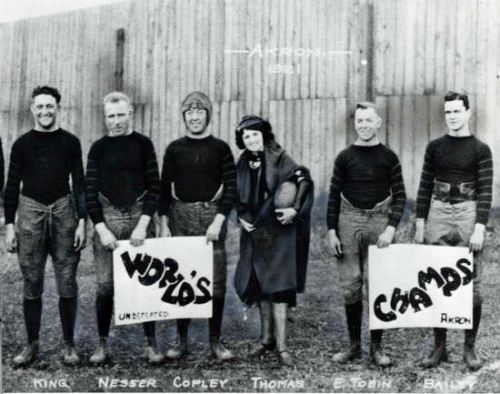
The Akron Pros ended the season as the only undefeated team in the Association. Despite this, two one-loss teams, the Decatur Staleys and Buffalo All-Americans, who both tied Akron that year, made cases for a co-championship.
As there was no playoff system in the APFA until 1932, a meeting was held to determine the 1920 Champions. Each team that showed up had a vote to determine the champions. Since the Akron Pros never lost a game, the Pros were awarded the Brunswick-Balke Collender Cup on April 30, 1921. The trophy was a "silver loving cup", donated by the Brunswick-Balke-Collender Company.
This decision, however, would arise with controversy. The Staleys and the All-Americans each stated that they should win the award because they had more wins and were not beaten by the Akron Pros. Each player from the Pros was also awarded with a golden fob; this was in the shape of a football and inscribed with "1920", "WORLD CHAMPIONS", and each player's first initial and last name.
The Pros did not officially celebrate their championship season until the following year. In October 1921, most of the team was invited to the Elks Club of Akron, which was labeled as "a grand homecoming celebration for the world's champions". Fritz Pollard was congratulated during an Akron Merchants Association of Colored Business Men's meeting.
The Pros were the first team in the history of the APFA to complete a non-modern "perfect season". Only four other teams have since accomplished this feat: the 1922 Canton Bulldogs at 10–0–2, the 1923 Canton Bulldogs at 11–0–1, the 1929 Green Bay Packers at 12–0–1, and the 1972 Miami Dolphins at 17–0–0. In 1972, the NFL changed the rules, so ties count as a half-win and a half-loss.
Even though the Pros were given the trophy in 1920, the league lost track of the event, and for a long time published in its own record books that the 1920 championship was undecided. It was not until the 1970s that the NFL discovered this early vote on awarding the Akron Pros the championship.
Of the 14 teams that played in the APFA/NFL's inaugural season, the Chicago Cardinals, now the Arizona Cardinals, and the Decatur Staleys, now the Chicago Bears, are the only teams that remain in the league.
Awards
All-Pro
Bruce Copeland, sportswriter for the Rock Island Argus, compiled an All-Pro list for 1920. He used the games played in Rock Island, other newspapers, and his own memory to determine the first-, second-, and third-team All-Pro list. Pro-Football-Reference.com uses this list as the official All-Pro list of 1920. Twenty of the players were from Illinois and thirteen were from Ohio. The Rock Island Independents had the most players on the list (9), and Racine Cardinals had the least (1). ; First-Team All-Pro
| Player | Position | Team |
|---|---|---|
| Guy Chamberlin | End | Decatur Staleys |
| Oak Smith | End | Rock Island Independents |
| Wilbur Henry | Tackle | Canton Bulldogs |
| Hugh Blacklock | Tackle | Decatur Staleys |
| Fred Denfield | Guard | Rock Island Independents |
| Dewey Lyle | Guard | Rock Island Independents |
| George Trafton | Center | Decatur Staleys |
| Paddy Driscoll | Quarterback | Racine Cardinals |
| Eddie Novak | Halfback | Rock Island Independents |
| Fritz Pollard | Halfback | Akron Pros |
| Rip King | Fullback | Akron Pros |
; Second-Team All-Pro
| Player | Position | Team |
|---|---|---|
| George Halas | End | Decatur Staleys |
| Obe Wenig | End | Rock Island Independents |
| Cub Buck | Tackle | Canton Bulldogs |
| Ed Shaw | Tackle | Rock Island Independents |
| Alf Cobb | Guard | Akron Pros |
| Harry Dadmun | Guard | Canton Bulldogs |
| Shorty Des Jardien | Center | Chicago Tigers |
| Al Mahrt | Quarterback | Dayton Triangles |
| Norb Sacksteder | Halfback | Dayton Triangles |
| Joe Guyon | Halfback | Canton Bulldogs |
| Gil Falcon | Fullback | Chicago Tigers |
; Third-Team All-Pro
| Player | Position | Team |
|---|---|---|
| Bob Marshall | End | Rock Island Independents |
| Bob Nash | End | Akron Pros |
| Burt Ingwerson | Tackle | Decatur Staleys |
| Walt Buland | Tackle | Rock Island Independents |
| Brad Tomlin | Guard | Akron Pros |
| Ross Petty | Guard | Decatur Staleys |
| Freeman Fitzgerald | Center | Rock Island Independents |
| Milt Chee | Quarterback | Chicago Tigers |
| Ed Sternaman | Halfback | Decatur Staleys |
| Frank Bacon | Halfback | Dayton Triangles |
| Pete Calac | Fullback | Canton Bulldogs |
Hall of Fame
As of 2012, 10 players have been enshrined in the Pro Football Hall of Fame who played in the 1920 APFA season. One non-player, Joseph Carr, the owner of the Columbus Panhandles in the 1920 season and league president from 1921 to 1939, was also elected to the Hall.
| Ref. | Carr, Joseph | Chamberlin, Guy | Conzelman, Jimmy | Driscoll, Paddy | Guyon, Joe | Halas, George | Healey, Ed | Henry, Pete | Pollard, Fritz | Thorpe, Jim | Trafton, George |
|---|---|---|---|---|---|---|---|---|---|---|---|
| 1963 |
References
References
- Crippen, Ken. (July 27, 2009). "The Rochester Jeffersons Take to the National Stage (Part 1)". Two Bills Drive.
- PFRA Research (1980), pp. 3–4
- Siwoff, Zimmber & Marini (2010), pp. 352–353
- [http://www.profootballresearchers.org/coffin-corner80s/02-08-038.pdf "Happy Birthday NFL?"], by PFRA Research, ''The Coffin Corner'', Vol. 2, No. 8 (August 1980)
- [https://operations.nfl.com/updates/football-ops/nfl-announces-plans-to-celebrate-100th-season/ "NFL Announces Plans to Celebrate 100th Season"], NFL.com, August 1, 2019
- (August 21, 1920). "{{-'}}Pro' Football Moguels Form National Body". Canton Evening Repository.
- PFRA Research (1980), p. 1
- David S. Neft, Richard M. Cohen, Jordan A. Deutsch, with John G. Hogrogian, ''Pro Football: The Early Years: An Encyclopedic History, 1895–1959.'' Ridgefield, Ct: Sports Products Inc. Publishers, 1978; pp. 15–16.
- Craig R. Coenen, ''From Sandlots to the Superbowl: The National Football League, 1920–1967.'' Knoxville, TN: University of Tennessee Press, 2005; p. 13.
- "1920 APFA Coaches". Sports Reference.
- "NFL, AFL, and AAFC Stadium". Sports Reference.
- "Triangle Park: Site of First Game In The NFL".
- "Past Standings". National Football League.
- "1920 APFA Standings, Team & Offensive Statistics". Sports Reference.
- "History: The First Playoff Game". [[Pro Football Hall of Fame]].
- Carroll (1982), p. 3
- Price, Mark. (April 25, 2011). "Searching for the Lost Trophy". [[Akron Beacon Journal]].
- PFRA Research (1980), p. 6
- (September 29, 2010). "Medallion from NFL's first champions". Pro Football Hall of Fame.
- Price, Mark. (April 25, 2011). "Searching for Lost Trophy". [[Akron Beacon-Journal]].
- "1922 Canton Bulldogs Statistics & Players". Sports Reference.
- "1923 Canton Bulldogs Statistics & Players". Sports Reference.
- "1929 Green Bay Packers Statistics & Players". Sports Reference.
- "1972 Miami Dolphins Statistics & Players". Sports Reference.
- Siwoff, Zimmber & Marini (2010), p. 360
- PFRA Research (n.d.), p. 1
- "Franchise History".
- "1920 APFA All-Pros". Sports Reference.
- Hogrogian (1984), p. 1–2
- "Joe Carr". [[Pro Football Hall of Fame]].
- "Guy Chamberlin". [[Pro Football Hall of Fame]].
- "Jimmy Conzelman". [[Pro Football Hall of Fame]].
- "John (Paddy) Driscoll". [[Pro Football Hall of Fame]].
- "Joe Guyon". [[Pro Football Hall of Fame]].
- "George Halas". [[Pro Football Hall of Fame]].
- "Ed Healey". Pro Football Hall of Fame.
- "Wilbur (Pete) Henry". [[Pro Football Hall of Fame]].
- "Fritz Pollard". [[Pro Football Hall of Fame]].
- "Jim Thorpe". [[Pro Football Hall of Fame]].
- "George Trafton". [[Pro Football Hall of Fame]].
This article was imported from Wikipedia and is available under the Creative Commons Attribution-ShareAlike 4.0 License. Content has been adapted to SurfDoc format. Original contributors can be found on the article history page.
Ask Mako anything about 1920 APFA season — get instant answers, deeper analysis, and related topics.
Research with MakoFree with your Surf account
Create a free account to save articles, ask Mako questions, and organize your research.
Sign up freeThis content may have been generated or modified by AI. CloudSurf Software LLC is not responsible for the accuracy, completeness, or reliability of AI-generated content. Always verify important information from primary sources.
Report