From Surf Wiki (app.surf) — the open knowledge base
1916 Republican National Convention
American political convention
American political convention
| Field | Value |
|---|---|
| year | 1916 |
| party | Republican |
| image | Governor_Charles_Evans_Hughes.jpg |
| image2 | CWFairbanks.jpg |
| image_size2 | 98 |
| caption | Nominees |
| Hughes and Fairbanks | |
| date | June 7–10, 1916 |
| venue | Chicago Coliseum |
| city | Chicago, Illinois |
| presidential_nominee | Charles Evans Hughes of New York |
| vice_presidential_nominee | Charles W. Fairbanks of Indiana |
| previous_year | 1912 |
| next_year | 1920 |
| ballots | 3 |
| totaldelegates | 987 |
| votesneeded | 494 |
Hughes and Fairbanks
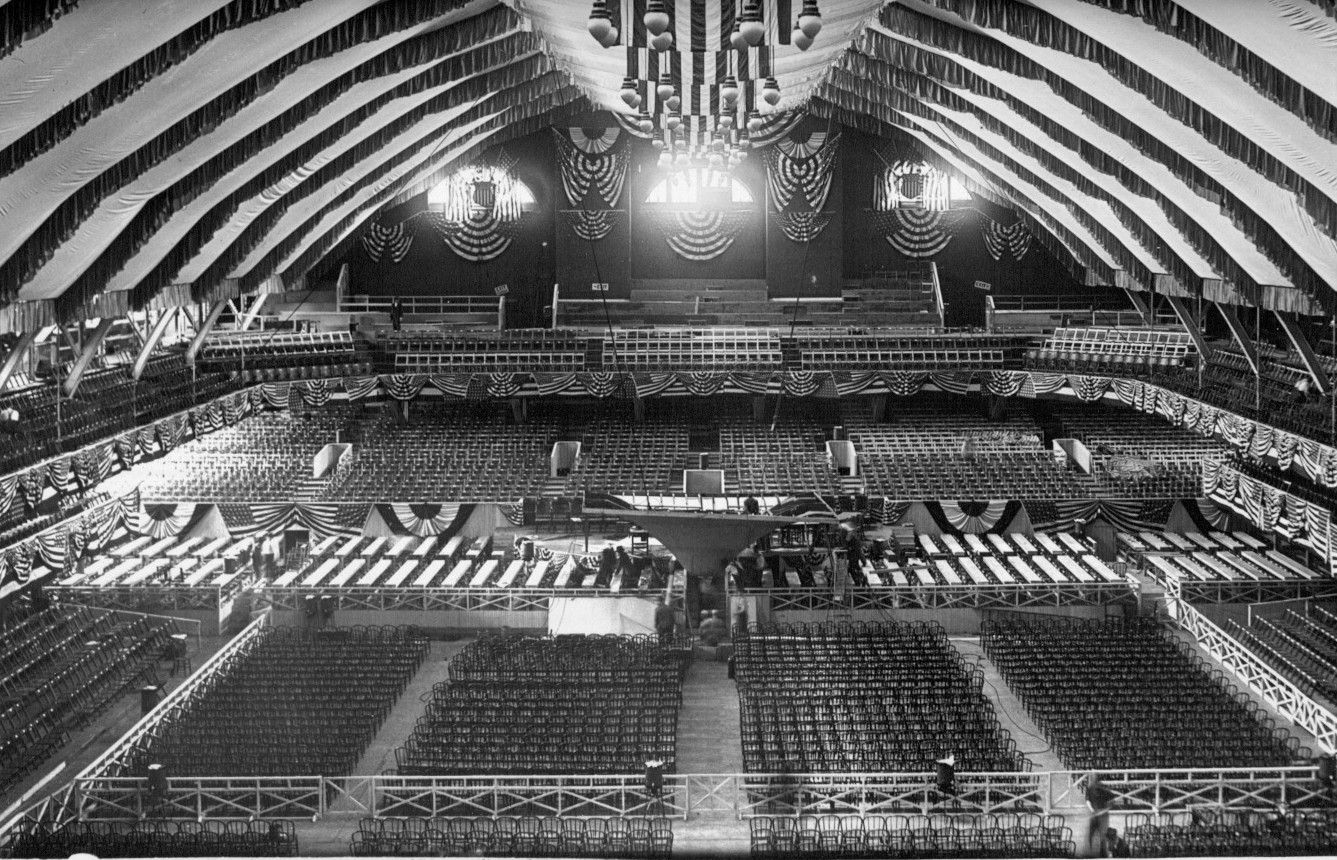
The 1916 Republican National Convention was held in Chicago from June 7 to June 10. A major goal of the party's bosses at the convention was to heal the bitter split within the party that had occurred in the 1912 presidential campaign. In that year, Theodore Roosevelt bolted the GOP and formed his own political party, the Progressive Party, which contained most of the GOP's liberals. William Howard Taft, the incumbent president, won the nomination of the regular Republican Party. This split in the GOP ranks divided the Republican vote and led to the election of Democrat Woodrow Wilson.
Although several candidates were openly competing for the 1916 nomination—most prominently conservative Senator Elihu Root of New York, Senator John W. Weeks of Massachusetts, and liberal Senator Albert Cummins of Iowa—the party's bosses wanted a moderate who would be acceptable to all factions of the party. They turned to Supreme Court Justice Charles Evans Hughes, who had served on the court since 1910 and thus had the advantage of not having publicly spoken about political issues in six years. Although he had not sought the nomination, Hughes made it known that he would not turn it down; he won the presidential nomination on the third ballot. Former Vice President Charles W. Fairbanks was nominated as his running mate.
Hughes is the only Supreme Court Justice to be nominated for president by a major political party. Fairbanks is the last former vice president to be nominated for vice president.
Then-Senator Warren G. Harding is credited with coining the phrase "Founding Fathers" during his keynote address.
Presidential nomination
Presidential candidates
File:Governor Charles Evans Hughes (cropped).jpg|alt=Associate JusticeCharles Evans Hughesof New York|Associate Justice Charles Evans Hughes of New York File:John Wingate Weeks, Bain bw photo portrait.jpg|Senator John W. Weeks of Massachusetts File:E-Root (3x4a).jpg|Former Senator Elihu Root of New York (Withdrawn during 3rd Ballot) File:CWFairbanks.jpg|Former Vice President Charles W. Fairbanks of Indiana (Withdrawn during 3rd Ballot) File:Albert Baird Cummins circa 1917 (1).jpg|Senator Albert B. Cummins of Iowa (Withdrawn during 3rd Ballot) File:T Roosevelt (closeincropped 3x4).jpg|Former President Theodore Roosevelt of New York (Withdrawn during 3rd Ballot, endorsed Hughes) File:Burton, Hon. Theodore E. 1918 - DPLA - 4a18b59509d5b50e6091adb9d247dd97.jpg|Former Senator Theodore E. Burton of Ohio (Withdrawn during 3rd Ballot) File:Lawrence Yates Sherman (a).jpg|Senator Lawrence Y. Sherman of Illinois File:MartinGBrumbaugh.jpg|Governor Martin G. Brumbaugh of Pennsylvania (Withdrew after 1st Ballot) File:Famous Living Americans - Robert M. LaFollette.jpg|Senator Robert M. La Follette of Wisconsin File:Thomas Coleman du Pont 1902.jpg|RNC Member T. Coleman du Pont of Delaware
At the start, Supreme Court Justice Charles Evans Hughes was widely seen as the favorite due to his ability to unite the party, though the nomination of a dark horse candidate such as Massachusetts Senator Henry Cabot Lodge or General Leonard Wood seemed possible. Many Republicans sought to nominate a candidate palatable to Theodore Roosevelt in hopes of averting another third-party run by progressive Republicans, though these Republicans were unwilling to nominate Roosevelt himself. Hughes won the nomination on the third ballot, and Roosevelt chose to forgo a third-party bid.
| **Presidential Ballot** | Candidate | 1st | 2nd | 3rd | Unanimous | Hughes | Weeks | Root | Fairbanks | Cummins | Roosevelt | Burton | Sherman | Knox | Ford | Brumbaugh | La Follette | Taft | du Pont | Lodge | Wanamaker | Willis | Borah | Harding | McCall | Wood | Not Voting | Not Represented |
|---|---|---|---|---|---|---|---|---|---|---|---|---|---|---|---|---|---|---|---|---|---|---|---|---|---|---|---|---|
| 253.5 | 328.5 | 949.5 | 987 | |||||||||||||||||||||||||
| 105 | 79 | 3 | ||||||||||||||||||||||||||
| 103 | 98.5 | 0 | ||||||||||||||||||||||||||
| 74.5 | 88.5 | 0 | ||||||||||||||||||||||||||
| 85 | 85 | 0 | ||||||||||||||||||||||||||
| 65 | 81 | 18.5 | ||||||||||||||||||||||||||
| 77.5 | 76.5 | 0 | ||||||||||||||||||||||||||
| 66 | 65 | 0 | ||||||||||||||||||||||||||
| 36 | 36 | 0 | ||||||||||||||||||||||||||
| 32 | 0 | 0 | ||||||||||||||||||||||||||
| 29 | 0 | 0 | ||||||||||||||||||||||||||
| 25 | 25 | 3 | ||||||||||||||||||||||||||
| 14 | 0 | 0 | ||||||||||||||||||||||||||
| 12 | 13 | 5 | ||||||||||||||||||||||||||
| 0 | 0 | 7 | ||||||||||||||||||||||||||
| 0 | 5 | 0 | ||||||||||||||||||||||||||
| 4 | 1 | 0 | ||||||||||||||||||||||||||
| 2 | 0 | 0 | ||||||||||||||||||||||||||
| 0 | 1 | 0 | ||||||||||||||||||||||||||
| 1 | 1 | 0 | ||||||||||||||||||||||||||
| 0 | 1 | 0 | ||||||||||||||||||||||||||
| 2.5 | 2 | 1 | ||||||||||||||||||||||||||
| 4 | 4 | 4 | 4 |
Presidential Balloting / 3rd Day of Convention (June 9, 1916) File:1916RepublicanPresidentialNomination1stBallot.png|1st Presidential Ballot File:1916RepublicanPresidentialNomination2ndBallot.png|2nd Presidential Ballot
Presidential Balloting / 4th Day of Convention (June 10, 1916) File:1916RepublicanPresidentialNomination3rdBallot.png|3rd Presidential Ballot
Vice Presidential nomination
Vice Presidential candidates
Image:CWFairbanks.jpg|Former Vice President Charles W. Fairbanks of Indiana Image:BURKETT, Elmer Jacob,.jpg|Former Senator Elmer Burkett of Nebraska
Former Vice President Charles W. Fairbanks had no interest in serving another term as vice president, but when the party nominated him, he accepted the nomination.
| **Vice Presidential Ballot** | Candidate | 1st | Unanimous | Fairbanks | Burkett | Borah | Webster | Burton | Johnson | Not Voting | Not Represented |
|---|---|---|---|---|---|---|---|---|---|---|---|
| 863 | 987 | ||||||||||
| 108 | |||||||||||
| 8 | |||||||||||
| 2 | |||||||||||
| 1 | |||||||||||
| 1 | |||||||||||
| 4 | |||||||||||
| 4 | 4 |
Vice Presidential Balloting / 4th Day of Convention (June 10, 1916) File:1916RepublicanVicePresidentialNomination1stBallot.png|1st Vice Presidential Ballot
Coinciding women's suffrage conventions in Chicago
Coinciding with the Republican convention, both the Congressional Union for Woman Suffrage and the National American Woman Suffrage Association held conventions in Chicago. The Congressional Union, at their convention in the Auditorium Theatre, promoted the so-called "Susan B. Anthony Amendment" , later ratified as the Nineteenth Amendment to the United States Constitution. The Congressional Union also created the National Woman's Party at their event.
References
Bibliography
References
- [https://timesmachine.nytimes.com/timesmachine/1920/05/30/118324087.pdf "Republicans to Meet in Historic Hall," ''The New York Times,'' May 30, 1920]
- (7 June 1916). "Hughes Movement Gains Strength With No Dark Horse Yet In Sight; Dickering With Moose Fruitless". New York Times.
- (11 June 1912). "Hughes Accepts Republican Nomination for President; Declares for Upholding American Rights on Land and Sea; Roosevelt, Named by Moose, Declines; He's 'Out of Politics'". New York Times.
- (1916). "Official Report of the Proceedings of the Sixteenth Republican National Convention: Held in Chicago, Illinois, June 7, 8, 9 and 10, 1916, Resulting in the Nomination of Charles Evans Hughes, of New York, for President and the Nomination of Charles Warren Fairbanks, of Indiana, for Vice-president". Tenny Press.
- "Charles Warren Fairbanks, 26th Vice President (1905-1909)".
- "Auditorium Building, Roosevelt University, Chicago, Illinois (U.S. National Park Service)". National Park Service.
- (November 10, 2025). "Auditorium Theatre to restore original Sullivan and Adler elements, including stained glass atrium".
- Weatherford, Doris. (1998). "A History of the American Suffragist Movement". The Moschovitis Group.
This article was imported from Wikipedia and is available under the Creative Commons Attribution-ShareAlike 4.0 License. Content has been adapted to SurfDoc format. Original contributors can be found on the article history page.
Ask Mako anything about 1916 Republican National Convention — get instant answers, deeper analysis, and related topics.
Research with MakoFree with your Surf account
Create a free account to save articles, ask Mako questions, and organize your research.
Sign up freeThis content may have been generated or modified by AI. CloudSurf Software LLC is not responsible for the accuracy, completeness, or reliability of AI-generated content. Always verify important information from primary sources.
Report