From Surf Wiki (app.surf) — the open knowledge base
1914 Jubilee Exhibition

The 1914 Jubilee Exhibition took place in Kristiania, Norway, from May 5 to October 11, 1914. It marked the centennial anniversary of the 1814 constitution and focused on industry and agriculture. The main location was the grounds of Frogner Manor (the site of the current Frogner Park), in addition to a subsection on shipping at Skarpsno at Frognerkilen. The exhibition opened on 15 May, and was closed on 11 October 1914. The total number of visitors was more than 1.5 million. On 11 October, the final day, more than 100,000 visitors visited the exhibition.
Planning
The idea for the exhibition is credited to architect Torolf Prytz, in a proposal to the board of Kristiania haandverks- og industriforening in 1907. Prytz became chairman of the planning committee, and later also chairman of the exhibition. Various location alternatives were discussed, including Hovedøya, but it was finally decided on Frogner. In August 1911 the Kristiania city council granted a funding of to the exhibition, in addition to extra funding for street modifications.
Exhibition pavilions
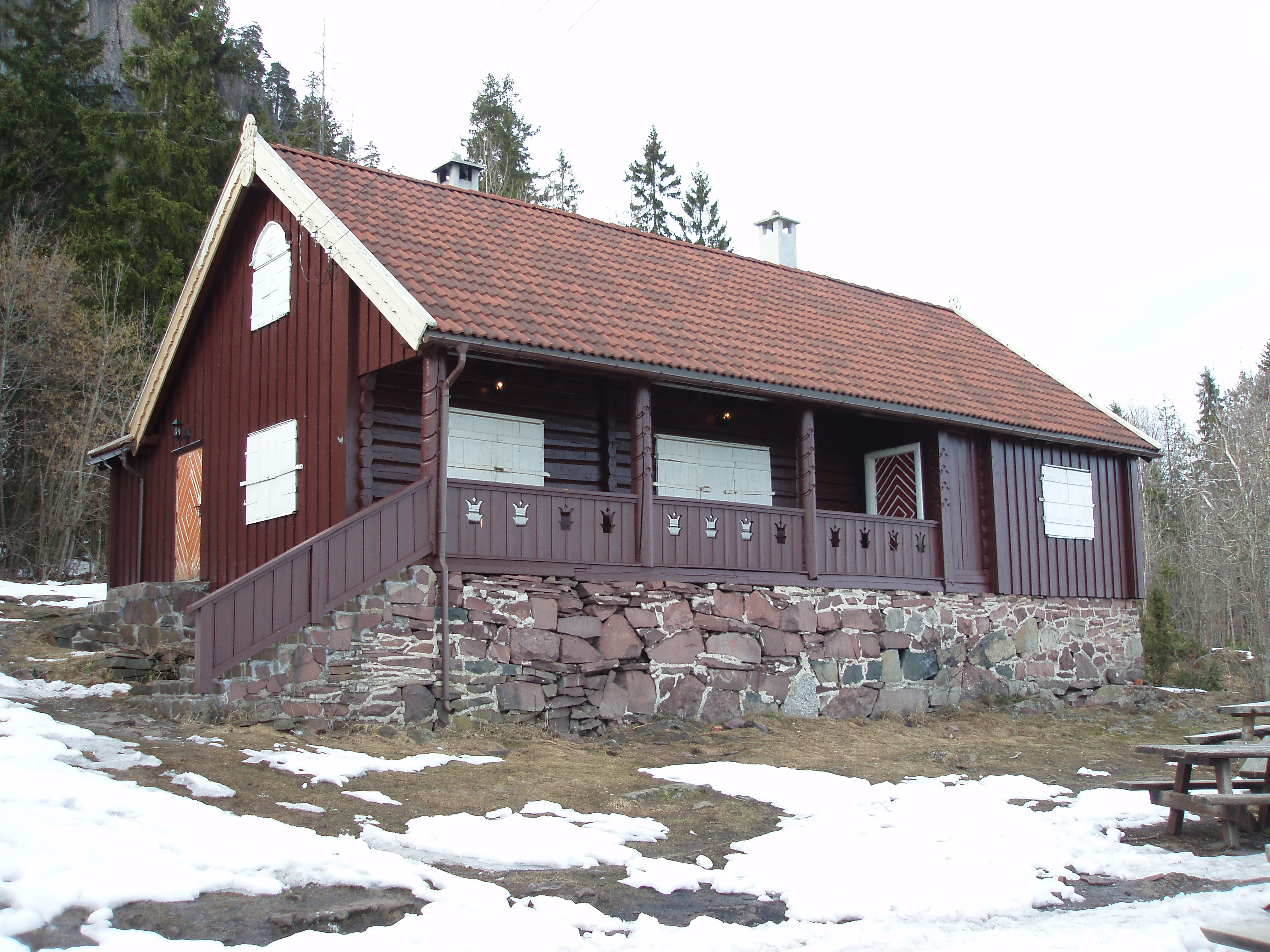

The park area was designed by architect Josef Nickelsen, and leading architects were Henrik Bull, August Nielsen, Rudolf Emanuel Jacobsen and Adolf Jensen. the Machinery Hall, restaurants, and more than hundred other buildings. Among the exhibitions was a village with 80 inhabitants brought in from Kongo;
Other amusements were a 700 meter long roller coaster, the Tanagra theatre, and Lilleputbanen. A maritime department was located in Frognerkilen, at Skarpsno.
Most of the pavilions were demolished after the exhibition, with a few exceptions.
Events
The exhibition opened on 5 May 1914, and was met with great interest from the public. Among the performances in "Sangerhallen" was Edvard Grieg's Kongekvadet, and a new cantata written by Nils Collett Vogt with music by Christian Sinding. Actor Johan Fahlstrøm recited the national hymn "Ja, vi elsker dette landet". The exhibition was declared open by King Haakon. In the evening a dinner was given for 1,400 invited guests, which included 300 mayors from various municipalities.
Several large gatherings took place during the exhibition period. At one assembly the restaurant served dinner for 4,000 guests. On 4 July a dinner was served for 2,600 guests. In July the exhibition faced some unexpected problems. A tram strike reduced the accessibility drastically. At the outbreak of World War I the Tyrolean orchestra and a German brass band had to leave, heading for the front. On 8 August the number of visitors was below 2,000 for the first time, but from then on the daily number of visitors increased again. On 4 October there were 30,000 visitors. On the closing day, Sunday, 11 October, there were more than 100,000 visitors, and a fireworks ceremony ended the exhibition. During the whole period, the exhibition had total of about 1.5 million visits.
The Congo Village-exhibition

The Kongo village was regarded as popular and exotic; "the public appeared as they were mesmerized. All day they could stand and stare at the activities of the around 80 aborigins"; spectators "let themselves mesmerize by the fantastic African village", according to Sverre Bjørstad Graff. (At the time there probably were not any Africans who lived in Oslo, but at traveling fairs (tivoli) Africans were occasionally encountered.)
The exhibition also led to a heated newspaper debate. During the planning stage of the exhibition, a Dagbladet article said that it would be preferable with a large open-air theatre in the entertainment area rather than a "gang of filthy, begging rascals from the fever swamps of Zulu".
Benno Singer was the man behind this exhibition, and he "clearly knew what was required to catch the public's attention", according to Graff.
The village's inhabitants were from Senegal.
Reactions to the Congo Village include the 2014 "construction of a copy of the Congo Village that stood in Frogner Park in 1914", according to Dagbladet. The constructors of the 2014 "village", will be artists Mohammed Ali Fadlabi and Lars Cuzner.
References
References
- (1966). "Frognerparken". Aschehoug.
- Hammer, S. C.. (1928). "Kristianias historie". Cappelen.
- Schou, August. (1938). "Håndverk og industri i Oslo 1838–1938". Oslo håndverks- og industriforening.
- Steigan, Geir Tandberg. "Jubileumsutstillingen i Kristiania, 1914". arc!.
- Steigan, Geir Tandberg. "Jubileumsutstillingen i Kristiania, 1914: Industrihallen". arc!.
- Steigan, Geir Tandberg. "Jubileumsutstillingen i Kristiania, 1914: Maskinhallen". arc!.
- Bjerkek, Ole Petter. "Hjalmar Welhaven". Kunnskapsforlaget.
- Steigan, Geir Tandberg. "Jubileumsutstillingen i Kristiania, 1914: Sjøfarts- og fiskeriutstillingen, Skarpsno". arc!.
- Steigan, Geir Tandberg. "Arkitektur og historie i Oslo: Jubileumsutstillingen i Kristiania, 1914". arc!.
- Birame Diouf. (2014-05-28). "Rasisme. Talentløs kunst og manglende innsikt gjør at det lukter lureri av Kongolandsbyen. - Makkverket i Frognerparke". Aftenposten.
- [http://www.dagbladet.no/2014/03/28/kultur/meninger/kronikk/kongolandsbyen/rasisme/32541855/ Eg er rasist, men ...]
This article was imported from Wikipedia and is available under the Creative Commons Attribution-ShareAlike 4.0 License. Content has been adapted to SurfDoc format. Original contributors can be found on the article history page.
Ask Mako anything about 1914 Jubilee Exhibition — get instant answers, deeper analysis, and related topics.
Research with MakoFree with your Surf account
Create a free account to save articles, ask Mako questions, and organize your research.
Sign up freeThis content may have been generated or modified by AI. CloudSurf Software LLC is not responsible for the accuracy, completeness, or reliability of AI-generated content. Always verify important information from primary sources.
Report