From Surf Wiki (app.surf) — the open knowledge base
1912 Summer Olympics medal table
none
none
| Field | Value |
|---|---|
| name | 1912 Summer Olympics medals |
| location | Stockholm, SWE |
| image | 1912 Alfred Lane.JPG |
| caption | American sport shooter Alfred Lane won three gold medals at the 1912 Summer Olympics, tied for the most of any competing athlete. |
| alt | Alfred Lane standing with a gun by his side. He's wearing a sports coat, slacks, and a hat. |
| award2_type | Most total medals |
| award2_winner | SWE |
| award1_type | Most gold medals |
| award1_winner | USA |
| award3_type | Medalling NOCs |
| award3_winner | 19 |
| previous | [1908](1908-summer-olympics-medal-table) |
| main | Olympics medal tables |
| next | [1920](1920-summer-olympics-medal-table) |
The 1912 Summer Olympics, officially known as the Games of the V Olympiad, were an international multi-sport event held in Stockholm, Sweden, between 5 May and 27 July 1912. A total of 2,407 athletes representing 28 National Olympic Committees (NOCs) participated, which included seven teams making their Olympic debut at the Summer Games; Chile, Egypt, Iceland, Japan, Luxembourg, Portugal, and Serbia. The games featured 107 events in 19 disciplines. The games included the Olympic debut of equestrian dressage and eventing, as well as the modern pentathlon.
Athletes representing 19 NOCs received at least one medal, with 16 winning at least one gold medal. Sweden won the most medals overall, with 65, while the United States won the most gold medals, with 44. Among individual participants, Swedish shooter Vilhelm Carlberg, Finnish runner Hannes Kolehmainen, and American shooter Alfred Lane tied for the most gold medals, with three each. Carlberg had the most total medals, with five (three gold, two silver).
Medal table
The medal table is based on information provided by the International Olympic Committee (IOC) and is consistent with IOC conventional sorting in its published medal tables. The table uses the Olympic medal table sorting method. By default, the table is ordered by the number of gold medals the athletes from a nation have won, where a nation is an entity represented by a NOC. The number of silver medals is taken into consideration next and then the number of bronze medals. If teams are still tied, equal ranking is given and they are listed alphabetically by their IOC country code.
The 1912 Games featured five art competitions which awarded medals, but did not do so for a full top three, instead opting to award only a first or first and second place medal. Only gold and no silver or bronze medals were awarded in architecture, literature, music, and painting. In sculpturing, a gold and silver medal, but no bronze, were awarded.
In the men's light heavyweight Greco-Roman, the final round featured three wrestlers, Anders Ahlgren, Ivar Böhling, and Béla Varga, who took turns facing off against one another. Ahlgren and Böhling defeated Varga, but they were unable to defeat each other. The match between Ahlgren and Böhling lasted for over 9 hours without a victor. The Olympic rules at the time specifically stated that the winner must have beaten their opponent, and since neither person could claim to have done so, both Ahlgreen and Böhling were awarded silver medals, with no gold being awarded.
In men's single sculls and men's coxed four, there were two-way ties for third which resulted in two bronze medals being awarded in each event. In men's pole vault, there was a two-way tie for second, which resulted in two silver medals being awarded. Additionally, there was a three-way tie for fourth, which the IOC awarded bronze medals for.
In the tug of war, three of the five teams withdrew for unknown reasons, resulting in only two teams participating and a bronze medal not being awarded. Three teams made the final round of the men's 4 x 100 metres relay, but when Germany was disqualified for a faulty baton pass, it resulted in no bronze medal being awarded for the event.
Changes in medal standings
| Event | Ruling date | Athlete (NOC) | Net change | Comment | Athletics, men's pentathlon | Athletics, men's decathlon | Athletics, men's pentathlon | Athletics, men's decathlon | Athletics, men's pentathlon | Athletics, men's decathlon |
|---|---|---|---|---|---|---|---|---|---|---|
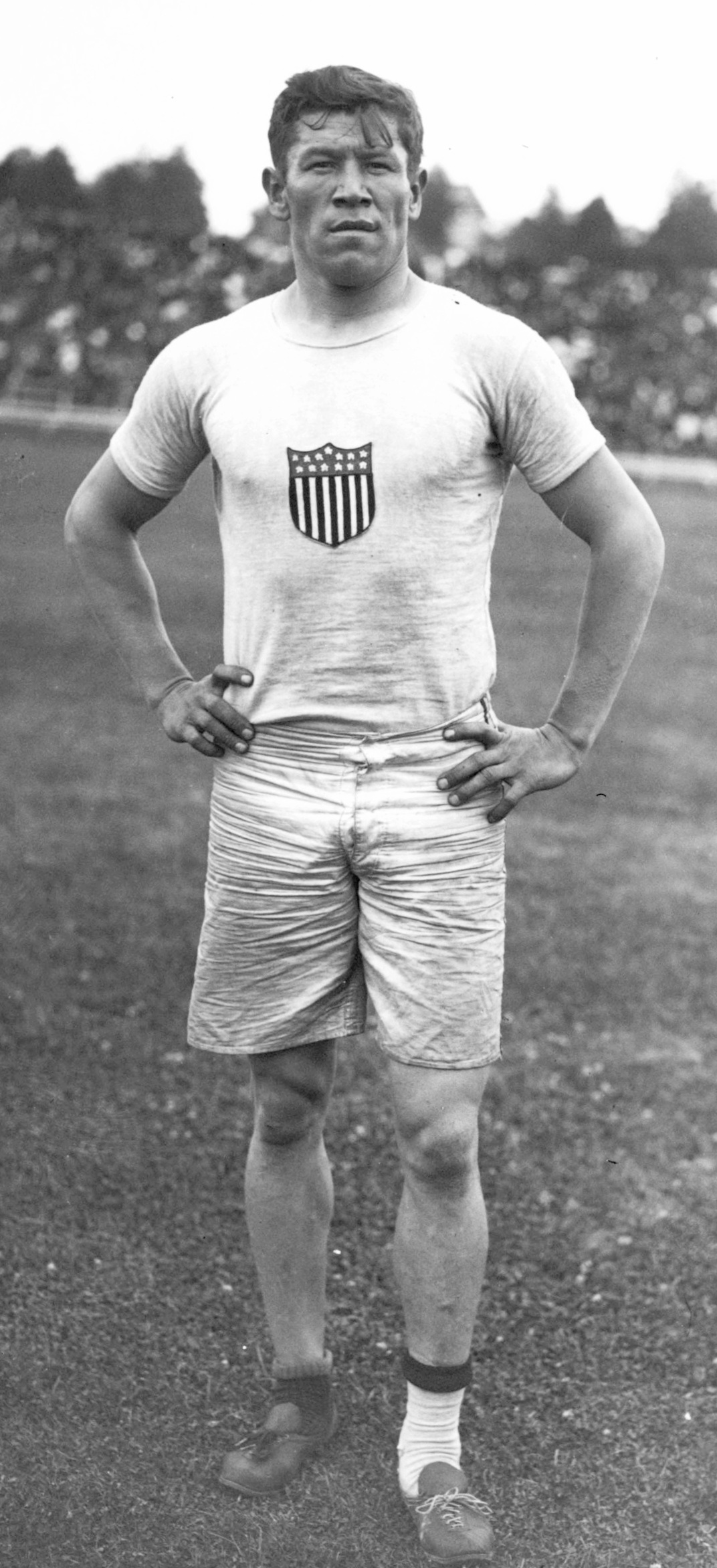
| 1913 | Jim Thorpe | −1 | −1 | Jim Thorpe, the winner of the pentathlon and decathlon events, was subsequently disqualified after having taken expense money for playing semi-professional baseball. Only amateur athletes were allowed to compete at the time, and by taking money, he was no longer considered an amateur. The athletes ranking second through fourth were upgraded to first through third. | ||||||
| Ferdinand Bie | +1 | 0 | ||||||||
| James Donahue | +1 | –1 | 0 | |||||||
| Frank Lukeman | +1 | +1 | ||||||||
| Jim Thorpe | −1 | −1 | ||||||||
| Hugo Wieslander | +1 | –1 | 0 | |||||||
| Charles Lomberg | +1 | –1 | 0 | |||||||
| Gösta Holmér | +1 | +1 | ||||||||
| October 1982 | Jim Thorpe | +1 | +1 | In 1982, twenty-nine years after Thorpe's death, he was reinstated as a co-winner in both events as the disqualification was deemed improper. Thorpe became co-champion with Ferdinand Bie and Hugo Wieslander. None of the other medalists had their positions adjusted. | ||||||
| +1 | +1 | |||||||||
| July 2022 | Ferdinand Bie | –1 | +1 | 0 | In 2022, Thorpe was reinstated as the sole winner of the events with the consent of the involved National Olympic Committees and descendants of the athletes. There were no adjustments made to the standings of the other competitors who were awarded medals. | |||||
| Hugo Wieslander | –1 | +1 | 0 |
| NOC | Gold | Silver | Bronze | Net change | CAN | NOR | SWE | USA |
|---|---|---|---|---|---|---|---|---|
| +1 | +1 | |||||||
| 0 | ||||||||
| +1 | +1 | |||||||
| +1 | –1 | 0 |
References
References
- (8 February 2019). "FAQ: What are the Olympic Games?".
- "1912 Summer Olympics Overview".
- "Stockholm 1912 Summer Olympics – Athletes, Medals & Results".
- "Chile – Profile".
- "Egypt – Profile".
- "Iceland (ISL)".
- "Japan – Profile".
- "Luxembourg – Profile".
- "Portugal – Profile".
- "Serbia (SRB)".
- (October 19, 2017). "Equestrian Sport: History of Equestrian Sport at the Olympic Games".
- "Modern Pentathlon: Olympic history, rules, latest updates and upcoming events for the Olympic sport".
- "1912 Stockholm Summer Games".
- (2022-07-15). "Jim Thorpe Is Restored as Sole Winner of 1912 Olympic Gold Medals". [[The New York Times]].
- (11 August 2024). "Olympic medal table: USA beat China to top spot at Paris 2024".
- (18 August 2008). "A Medal Count That Adds Up To Little".
- (10 August 2024). "What happens if two countries are tied in the Olympic medal table? Tiebreaker rules explained".
- "Art Competitions at the 1912 Summer Olympics".
- "Inseparable Ahlgren and Bohling share wrestling gold".
- "Stockholm 1912 single sculls 1x men Results – Olympic rowing".
- "Stockholm 1912 four-oared shell with coxswain men Results – Olympic rowing".
- "Stockholm 1912 pole vault men Results – Olympic athletics".
- "Tug-Of-War at the 1912 Summer Olympics".
- "4 x 100 metres Relay, Men".
- "Stockholm 1912 Olympic Medal Table – Gold, Silver & Bronze".
- (2022-07-14). "IOC reinstates Jim Thorpe as sole winner of 1912 Olympic decathlon and pentathlon".
- (2022-07-15). "IOC to display the name of Jim Thorpe as sole Stockholm 1912 pentathlon and decathlon gold medallist".
- (2020-07-15). "Campaign launched to recognise Thorpe as sole champion from Stockholm 1912".
This article was imported from Wikipedia and is available under the Creative Commons Attribution-ShareAlike 4.0 License. Content has been adapted to SurfDoc format. Original contributors can be found on the article history page.
Ask Mako anything about 1912 Summer Olympics medal table — get instant answers, deeper analysis, and related topics.
Research with MakoFree with your Surf account
Create a free account to save articles, ask Mako questions, and organize your research.
Sign up freeThis content may have been generated or modified by AI. CloudSurf Software LLC is not responsible for the accuracy, completeness, or reliability of AI-generated content. Always verify important information from primary sources.
Report