From Surf Wiki (app.surf) — the open knowledge base
1903 World Series
First modern Major League Baseball championship
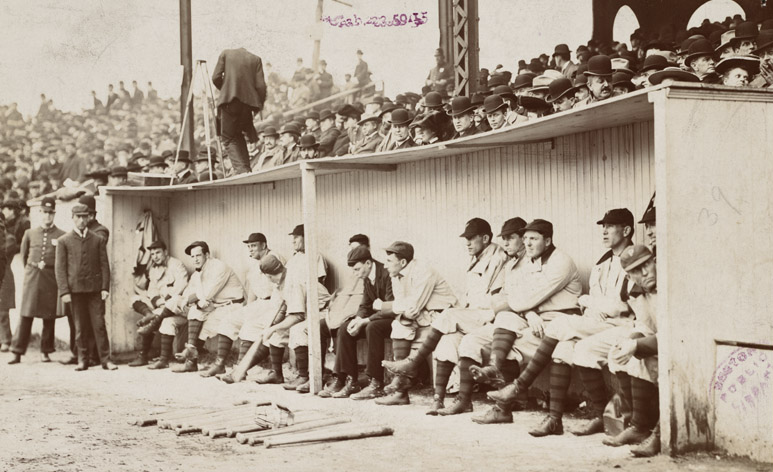
First modern Major League Baseball championship
| Field | Value |
|---|---|
| image | WorldSeries1903-640.jpg |
| image_size | 250px |
| caption | An overflow crowd at the Huntington Avenue Grounds in Boston prior to Game 3 |
| country | World |
| year | 1903 |
| champion | [Boston Americans](1903-boston-americans-season) (5) |
| champion_manager | Jimmy Collins (player/manager) |
| champion_games | 91–47, , GA: |
| runnerup | [Pittsburgh Pirates](1903-pittsburgh-pirates-season) (3) |
| runnerup_manager | Fred Clarke (player/manager) |
| runnerup_games | 91–49, , GA: |
| date | October 1–13 |
| venue | Huntington Avenue Grounds (Boston) |
| Exposition Park (Pittsburgh) | |
| MVP | |
| television | |
| announcers | |
| radio_network | |
| radio_announcers | |
| umpires | Hank O'Day (NL) |
| Tom Connolly (AL) | |
| HOFers | **Umpires:** |
| Tom Connolly | |
| Hank O'Day | |
| **Americans:** | |
| Jimmy Collins | |
| Cy Young | |
| **Pirates:** | |
| Fred Clarke | |
| Honus Wagner | |
| ALCS | |
| NLCS | |
| previous | 1900 |
| *Chronicle-Telegraph* Cup |
Exposition Park (Pittsburgh) Tom Connolly (AL) Tom Connolly Hank O'Day Americans: Jimmy Collins Cy Young Pirates: Fred Clarke Honus Wagner Chronicle-Telegraph Cup](chronicle-telegraph-cup) The 1903 World Series was the first modern World Series to be played in Major League Baseball. It matched the American League (AL) champion Boston Americans against the National League (NL) champion Pittsburgh Pirates in a best-of-nine series, with Boston prevailing five games to three, winning the last four. The first three games were played in Boston, the next four in Allegheny (home of the Pirates), and the eighth (last) game in Boston.
Pittsburgh pitcher Sam Leever injured his shoulder while trap shooting, so his teammate Deacon Phillippe pitched five complete games. Phillippe won three of his games, but it was not enough to overcome the club from the new American League. Boston pitchers Bill Dinneen and Cy Young led Boston to victory. In Game 1, Phillippe struck out ten Boston batters. The next day, Dinneen bettered that mark, striking out 11 Pittsburgh batters in Game 2.
Honus Wagner, bothered by injuries, batted only 6-for-27 (.222) in the Series and committed six errors. The shortstop was deeply distraught by his performance. The following spring, Wagner (who in 1903 led the National League in batting average) refused to send his portrait to a "Hall of Fame" for batting champions. "I was too bum last year", he wrote. "I was a joke in that Boston-Pittsburgh Series. What does it profit a man to hammer along and make a few hits when they are not needed only to fall down when it comes to a pinch? I would be ashamed to have my picture up now."
Due to overflow crowds at the Exposition Park games in Allegheny City, if a batted ball rolled under a rope in the outfield that held spectators back, a "ground-rule triple" would be scored. 17 ground-rule triples were hit in the four games played at the stadium.
In the series, Boston came back from a three games to one deficit, winning the final four games to capture the title. Such a large comeback would not happen again until the Pirates came back to defeat the Washington Senators in the 1925 World Series, and has happened only 11 times in baseball history. (The Pirates themselves repeated this feat in against the Baltimore Orioles.) Much was made of the influence of Boston's "Royal Rooters", who traveled to Exposition Park and sang their theme song "Tessie" to distract the opposing players (especially Wagner). Boston wound up winning three out of four games in Allegheny City.
Pirates owner Barney Dreyfuss added his share of the gate receipts to the players' share, so the losing team's players actually finished with a larger individual share than the winning team's.
The Series brought the new American League prestige and proved its best could beat the best of the National League, thus strengthening the demand for future World Series competitions.
Background
A new league
In 1901, Ban Johnson, president of the Western League, a minor league organization, formed the American League to take advantage of the National League's 1900 contraction from twelve teams to eight. Johnson and fellow owners raided the National League and signed away many star players, including Cy Young and Jimmy Collins. Johnson had a list of 46 National Leaguers he targeted for the American League; by 1902, all but one had made the jump. The constant raiding, however, nixed the idea of a championship between the two leagues. Pirates owner Barney Dreyfuss, whose team ran away with the 1902 National League pennant, was open to a postseason contest and even said he would allow the American League champion to stock its roster with all-stars. However, Johnson had spoken of putting a team in Pittsburgh and even attempted to raid the Pirates' roster in August 1902, which soured Dreyfuss. At the end of the season, however, the Pirates played a group of American League All-Stars in a four-game exhibition series, winning two games to one, with one tie.
The leagues finally called a truce in the winter of 1902–03 and formed the National Commission to preside over organized baseball. The following season, the Boston Americans and Pittsburgh Pirates had secured their respective championship pennants by September. That August, Dreyfuss challenged the American League to an 11-game championship series. Encouraged by Johnson and National League President Harry Pulliam, Americans owner Henry J. Killilea met with Dreyfuss in Pittsburgh in September and instead agreed to a best-of-nine championship, with the first three games played in Boston, the next four in Allegheny City, and the remaining two (if necessary) in Boston.
One significant point about this agreement was that it was an arrangement primarily between the two clubs rather than a formal arrangement between the leagues. In short, it was a voluntary event, a fact which would result in no Series at all for . The formal establishment of the Series as a compulsory event started in .
The teams
The Pirates won their third straight pennant in 1903 thanks to a powerful lineup that included legendary shortstop Honus Wagner, who hit .355 and drove in 101 runs, player-manager Fred Clarke, who hit .351, and Ginger Beaumont, who hit .341 and led the league in hits and runs. The Pirates' pitching was weaker than it had been in previous years but boasted 24-game winner Deacon Phillippe and 25-game winner Sam Leever.
The Americans had a strong pitching staff, led by Cy Young, who went 28–9 in 1903 and became the all-time wins leader that year. Bill Dinneen and Long Tom Hughes, right-handers like Young, had won 21 games and 20 games each. The Boston outfield, featuring Chick Stahl (.274), Buck Freeman (.287, 104 RBI) and Patsy Dougherty (.331, 101 runs scored) was considered excellent.

Although the Pirates had dominated their league for the previous three years, they went into the series riddled with injuries and plagued by bizarre misfortunes. Otto Krueger, the team's only utility player, was beaned on September 19 and never fully played in the series. 16-game winner Ed Doheny left the team three days later, exhibiting signs of paranoia; he was committed to an insane asylum the following month. Leever had been battling an injury to his pitching arm (which he made worse by entering a trapshooting competition). Worst of all, Wagner, who had a sore thumb throughout the season, injured his right leg in September and was never 100 percent for the postseason.
Some sources say Boston were heavy underdogs. Boston bookies actually gave even odds to the teams (and only because Dreyfuss and other "sports" were alleged to have bet on Pittsburgh to bring down the odds). The teams were generally thought to be evenly matched, with the Americans credited with stronger pitching and the Pirates with superior offense and fielding. The outcome, many believed, hinged on Wagner's health. "If Wagner does not play, bet your money at two to one on Boston", said the Sporting News, "but if he does play, place your money at two to one on Pittsburg."
Summary
Matchups
Game 1
The Pirates started Game 1 strong, scoring six runs in the first four innings, and held on to win the first World Series game in modern baseball history. They extended their lead to 7–0 on an inside-the-park home run by Jimmy Sebring in the seventh, the first home run in World Series history. Boston scored a few runs in the last three innings, but it was too little, too late; they ended up losing 7–3 in the first ever World Series game. Both Phillippe and Young threw complete games, with Phillippe striking out ten and Young fanning five, but Young also gave up twice as many hits and allowed three earned runs to Phillippe's two.
Game 2
After starting out strong in Game 1, the Pirates simply shut down offensively, eking out a mere three hits, all singles. Pittsburgh starter Sam Leever went 1 inning and gave up three hits and two runs, before his ailing arm forced him to leave in favor of Bucky Veil, who finished the game. Bill Dinneen struck out 11 and pitched a complete game for the Americans, while Patsy Dougherty hit home runs in the first and sixth innings for two of the Boston's three runs. The Americans' Patsy Dougherty led off the Boston scoring with an inside-the-park home run, the first time a lead-off batter did just that until Alcides Escobar of the Kansas City Royals duplicated the feat in the 2015 World Series, 112 years later. Dougherty's second home run was the first in World Series history to actually sail over the fence, an incredibly rare feat at the time.
Game 3
Phillippe, pitching after only a single day of rest, started Game 3 for the Pirates and didn't let them down, hurling his second complete-game victory of the Series to put Pittsburgh up two games to one.
Game 4
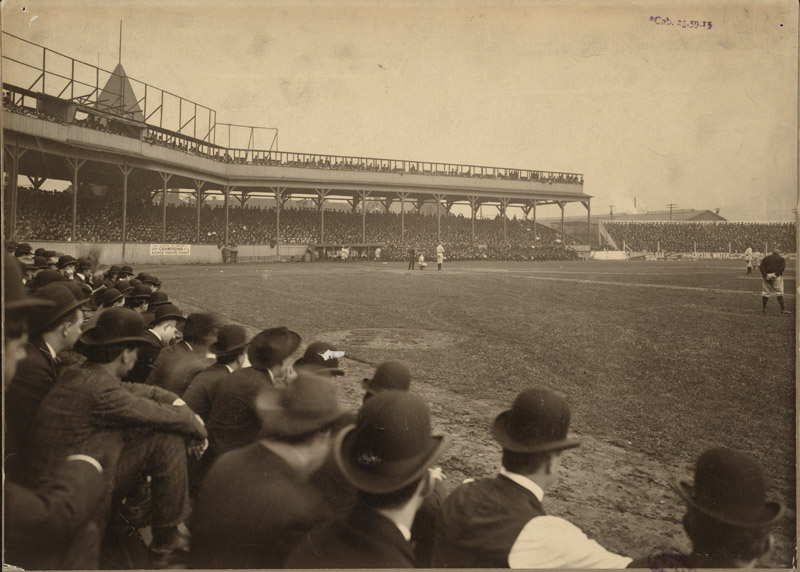
After two days of rest, Phillippe was ready to pitch a second straight game. He threw his third complete-game victory of the series against Bill Dinneen, who was making his second start of the series. But Phillippe's second straight win was almost not to be, as the Americans, down 5–1 in the top of the ninth, rallied to narrow the deficit to one run. The comeback attempt failed, as Phillippe managed to put an end to it and give the Pirates a commanding 3–1 series lead.
Game 5

Game 5 was a pitcher's duel for the first five innings, with Boston's Cy Young and Pittsburgh's Brickyard Kennedy giving up no runs. That changed in the top of the sixth, however, when the Americans scored a then-record six runs before being retired. Young, on the other hand, managed to keep his shutout intact before finally giving up a pair of runs in the bottom of the eighth. He went the distance and struck out four for his first World Series win.
Game 6
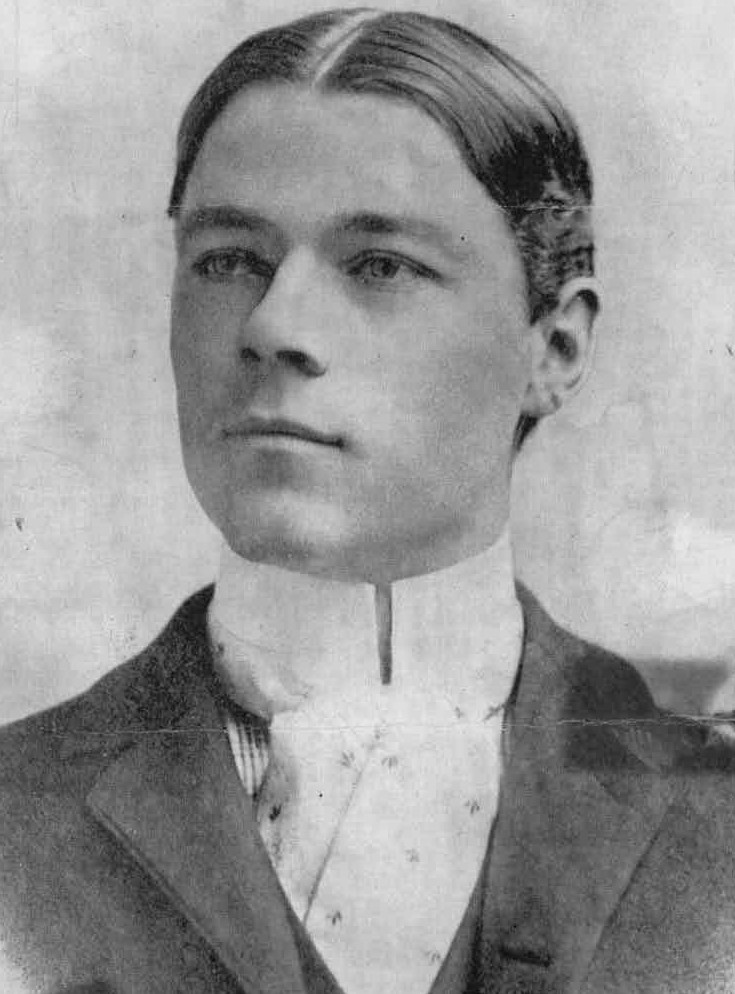
Game 6 was a rematch between the starters of Game 2, Boston's Dinneen and Pittsburgh's Leever. Leever pitched a complete game this time but so did Dinneen, who outmatched him to earn his second complete-game victory of the series. After losing three of the first four games of the World Series, the underdog Americans had tied the series at three games apiece.
Game 7
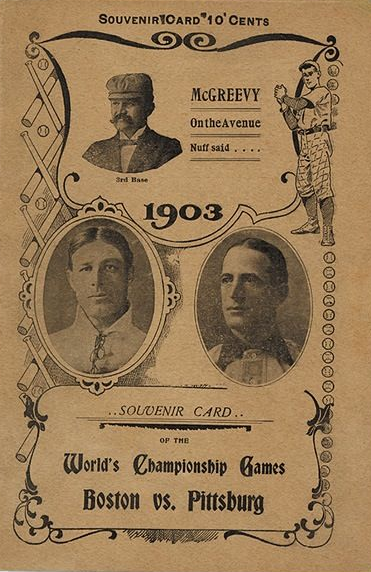
The fourth and final game in Allegheny saw Phillippe start his fourth game of the Series for the Pirates. This time, however, he did not fare as well as he did in his first three starts. Cy Young, in his third start of the Series, held the Pirates to three runs and put the Americans ahead for the first time as the Series moved back to Boston.
Game 8
The final game of this inaugural World Series started out as an intense pitcher's duel, scoreless until the bottom of the fourth when Hobe Ferris hit a two-run single. Phillippe started his fifth and final game of the series and Dinneen his fourth. As he did in Game 2, Dinneen threw a complete-game shutout, striking out seven and leading his Americans to victory, while Phillippe pitched respectably but could not match Dinneen because his arm had been worn out with five starts in the eight games, giving up three runs to give the first 20th-century World Championship to the Boston Americans, Honus Wagner striking out to end the Series.
Composite line score
1903 World Series (5–3): Boston Americans (A.L.) over Pittsburgh Pirates (N.L.)
Series Statistics
Boston Americans
Batting
Note: GP=Games played; AB=At bats; R=Runs; H=Hits; 2B=Doubles; 3B=Triples; HR=Home runs; RBI=Runs batted in; BB=Walks; AVG=Batting average; OBP=On base percentage; SLG=Slugging percentage
| Player | GP | AB | R | H | 2B | 3B | HR | RBI | BB | AVG | OBP | SLG | Reference |
|---|---|---|---|---|---|---|---|---|---|---|---|---|---|
| Jimmy Collins | 8 | 36 | 5 | 9 | 1 | 2 | 0 | 1 | 1 | .250 | .270 | .389 | |
| Lou Criger | 8 | 26 | 1 | 6 | 0 | 0 | 0 | 4 | 2 | .231 | .286 | .231 | |
| Bill Dinneen | 4 | 12 | 1 | 2 | 2 | 1 | 0 | 0 | 1 | .167 | .231 | .167 | |
| Patsy Dougherty | 8 | 34 | 3 | 8 | 0 | 2 | 2 | 5 | 2 | .235 | .297 | .529 | |
| Duke Farrell | 2 | 2 | 0 | 0 | 0 | 0 | 0 | 1 | 0 | .000 | .000 | .000 | |
| Hobe Ferris | 8 | 31 | 3 | 9 | 0 | 1 | 0 | 5 | 0 | .290 | .313 | .355 | |
| Buck Freeman | 8 | 32 | 6 | 9 | 0 | 3 | 0 | 4 | 2 | .281 | .324 | .469 | |
| Long Tom Hughes | 1 | 0 | 0 | 0 | 0 | 0 | 0 | 0 | 0 | .000 | .000 | .000 | |
| Candy LaChance | 8 | 27 | 5 | 6 | 2 | 1 | 0 | 4 | 3 | .222 | .300 | .370 | |
| Jack O'Brien | 2 | 2 | 0 | 0 | 0 | 0 | 0 | 0 | 0 | .000 | .000 | .000 | |
| Freddy Parent | 8 | 32 | 8 | 9 | 0 | 3 | 0 | 4 | 1 | .281 | .324 | .469 | |
| Chick Stahl | 8 | 33 | 6 | 10 | 1 | 3 | 0 | 3 | 1 | .303 | .324 | .515 | |
| Cy Young | 4 | 15 | 1 | 1 | 0 | 1 | 0 | 3 | 0 | .067 | .067 | .200 |
Pitching
Note: G=Games Played; GS=Games Started; ERA=Earned Run Average; W=Wins; L=Losses; SV=Saves; IP=Innings Pitched; H=Hits; R=Runs; ER= Earned Runs; BB=Walks; SO= Strikeouts
| Player | G | GS | ERA | W | L | SV | IP | H | R | ER | BB | SO | Reference |
|---|---|---|---|---|---|---|---|---|---|---|---|---|---|
| Bill Dinneen | 4 | 4 | 2.06 | 3 | 1 | 0 | 35.0 | 29 | 8 | 8 | 8 | 28 | |
| Tom Hughes | 1 | 1 | 9.00 | 0 | 1 | 0 | 2.0 | 4 | 3 | 2 | 2 | 0 | |
| Cy Young | 4 | 3 | 1.85 | 2 | 1 | 0 | 34.0 | 31 | 13 | 7 | 4 | 17 |
Pittsburgh Pirates
Batting
Note: GP=Games played; AB=At bats; R=Runs; H=Hits; 2B=Doubles; 3B=Triples; HR=Home runs; RBI=Runs batted in; BB=Walks; AVG=Batting average; OBP=On base percentage; SLG=Slugging percentage
| Player | GP | AB | R | H | 2B | 3B | HR | RBI | BB | AVG | OBP | SLG | Reference |
|---|---|---|---|---|---|---|---|---|---|---|---|---|---|
| Ginger Beaumont | 8 | 34 | 6 | 9 | 0 | 1 | 0 | 2 | 2 | .265 | .306 | .324 | |
| Kitty Bransfield | 8 | 29 | 3 | 6 | 0 | 2 | 0 | 1 | 1 | .207 | .233 | .345 | |
| Fred Clarke | 8 | 34 | 3 | 9 | 2 | 1 | 0 | 0 | 1 | .265 | .286 | .382 | |
| Brickyard Kennedy | 1 | 2 | 0 | 1 | 1 | 0 | 0 | 0 | 0 | .500 | .500 | 1.000 | |
| Tommy Leach | 8 | 33 | 3 | 9 | 0 | 4 | 0 | 8 | 1 | .273 | .294 | .515 | |
| Sam Leever | 2 | 4 | 0 | 0 | 0 | 0 | 0 | 0 | 0 | .000 | .000 | .000 | |
| Ed Phelps | 8 | 26 | 1 | 6 | 2 | 0 | 0 | 1 | 1 | .231 | .259 | .308 | |
| Deacon Phillippe | 5 | 18 | 1 | 4 | 0 | 0 | 0 | 1 | 0 | .222 | .222 | .222 | |
| Claude Ritchey | 8 | 27 | 2 | 4 | 1 | 0 | 0 | 2 | 4 | .148 | .258 | .185 | |
| Jimmy Sebring | 8 | 30 | 3 | 10 | 0 | 1 | 1 | 4 | 1 | .333 | .355 | .500 | |
| Harry Smith | 1 | 3 | 0 | 0 | 0 | 0 | 0 | 0 | 0 | .000 | .000 | .000 | |
| Gus Thompson | 1 | 1 | 0 | 0 | 0 | 0 | 0 | 0 | 0 | .000 | .000 | .000 | |
| Bucky Veil | 1 | 2 | 0 | 0 | 0 | 0 | 0 | 0 | 0 | .000 | .000 | .000 | |
| Honus Wagner | 8 | 27 | 2 | 6 | 1 | 0 | 0 | 3 | 3 | .222 | .323 | .259 |
Pitching
Note: G=Games Played; GS=Games Started; ERA=Earned Run Average; W=Wins; L=Losses; SV=Saves; IP=Innings Pitched; H=Hits; R=Runs; ER= Earned Runs; BB=Walks; SO= Strikeouts
| Player | G | GS | ERA | W | L | SV | IP | H | R | ER | BB | SO | Reference |
|---|---|---|---|---|---|---|---|---|---|---|---|---|---|
| Brickyard Kennedy | 1 | 1 | 5.14 | 0 | 1 | 0 | 7.0 | 10 | 10 | 4 | 3 | 3 | |
| Sam Leever | 2 | 2 | 5.40 | 0 | 2 | 0 | 10.0 | 13 | 8 | 6 | 3 | 2 | |
| Deacon Phillippe | 5 | 5 | 3.07 | 3 | 2 | 0 | 44.0 | 38 | 19 | 15 | 3 | 22 | |
| Gus Thompson | 1 | 0 | 4.50 | 0 | 0 | 0 | 2.0 | 3 | 1 | 1 | 0 | 1 | |
| Bucky Veil | 1 | 0 | 1.29 | 0 | 0 | 0 | 7.0 | 5 | 1 | 1 | 5 | 1 |
Notes
References
References
- (1995). "Honus Wagner: A Biography". University of Pittsburgh Press.
- (2004). "Baffling Baseball Trivia". Sterling Publishing Company.
- "World Series: Every World Series in Major League Baseball History".
- "1903 World Series Game 1 – Pittsburgh Pirates vs. Boston Americans". Retrosheet.
- "1903 World Series Game 2 – Pittsburgh Pirates vs. Boston Americans". Retrosheet.
- "1903 World Series Game 3 – Pittsburgh Pirates vs. Boston Americans". Retrosheet.
- "1903 World Series Game 4 – Boston Americans vs. Pittsburgh Pirates". Retrosheet.
- "1903 World Series Game 5 – Boston Americans vs. Pittsburgh Pirates". Retrosheet.
- "1903 World Series Game 6 – Boston Americans vs. Pittsburgh Pirates". Retrosheet.
- "1903 World Series Game 7 – Boston Americans vs. Pittsburgh Pirates". Retrosheet.
- "1903 World Series Game 8 – Pittsburgh Pirates vs. Boston Americans". Retrosheet.
- "World Series Gate Receipts and Player Shares". Baseball Almanac.
- "The 1903 BOS A World Series Batting Splits for Jimmy Collins".
- "The 1903 BOS A World Series Batting Splits for Lou Criger".
- "The 1903 BOS A World Series Batting Splits for Bill Dinneen".
- "The 1903 BOS A World Series Batting Splits for Patsy Dougherty".
- "The 1903 BOS A World Series Batting Splits for Duke Farrell".
- "The 1903 BOS A World Series Batting Splits for Hobe Ferris".
- "The 1903 BOS A World Series Batting Splits for Buck Freeman".
- "Tom Hughes".
- "The 1903 BOS A World Series Batting Splits for Candy LaChance".
- "The 1903 BOS A World Series Batting Splits for Jack O'Brien".
- "The 1903 BOS A World Series Batting Splits for Freddy Parent".
- "The 1903 BOS A World Series Batting Splits for Chick Stahl".
- "The 1903 BOS A World Series Batting Splits for Cy Young".
- "The 1903 BOS A World Series Pitching Splits for Bill Dinneen".
- "The 1903 BOS A World Series Pitching Splits for Tom Hughes".
- "The 1903 BOS A World Series Pitching Splits for Cy Young".
- "The 1903 PIT N World Series Batting Splits for Ginger Beaumont".
- "The 1903 PIT N World Series Batting Splits for Kitty Bransfield".
- "The 1903 PIT N World Series Batting Splits for Fred Clarke".
- "The 1903 PIT N World Series Batting Splits for Brickyard Kennedy".
- "The 1903 PIT N World Series Batting Splits for Tommy Leach".
- "The 1903 PIT N World Series Batting Splits for Sam Leever".
- "The 1903 PIT N World Series Batting Splits for Ed Phelps".
- "The 1903 PIT N World Series Batting Splits for Deacon Phillippe".
- "The 1903 PIT N World Series Batting Splits for Claude Ritchey".
- "The 1903 PIT N World Series Batting Splits for Jimmy Sebring".
- "The 1903 PIT N World Series Batting Splits for Harry Smith".
- "The 1903 PIT N World Series Batting Splits for Gus Thompson".
- "The 1903 PIT N World Series Batting Splits for Bucky Veil".
- "The 1903 PIT N World Series Batting Splits for Honus Wagner".
- "The 1903 PIT N World Series Pitching Splits for Brickyard Kennedy".
- "The 1903 PIT N World Series Pitching Splits for Sam Leever".
- "The 1903 PIT N World Series Pitching Splits for Deacon Phillippe".
- "The 1903 PIT N World Series Pitching Splits for Gus Thompson".
- "The 1903 PIT N World Series Pitching Splits for Bucky Veil".
This article was imported from Wikipedia and is available under the Creative Commons Attribution-ShareAlike 4.0 License. Content has been adapted to SurfDoc format. Original contributors can be found on the article history page.
Ask Mako anything about 1903 World Series — get instant answers, deeper analysis, and related topics.
Research with MakoFree with your Surf account
Create a free account to save articles, ask Mako questions, and organize your research.
Sign up freeThis content may have been generated or modified by AI. CloudSurf Software LLC is not responsible for the accuracy, completeness, or reliability of AI-generated content. Always verify important information from primary sources.
Report