From Surf Wiki (app.surf) — the open knowledge base
1882 transit of Venus
Astronomical event
Astronomical event
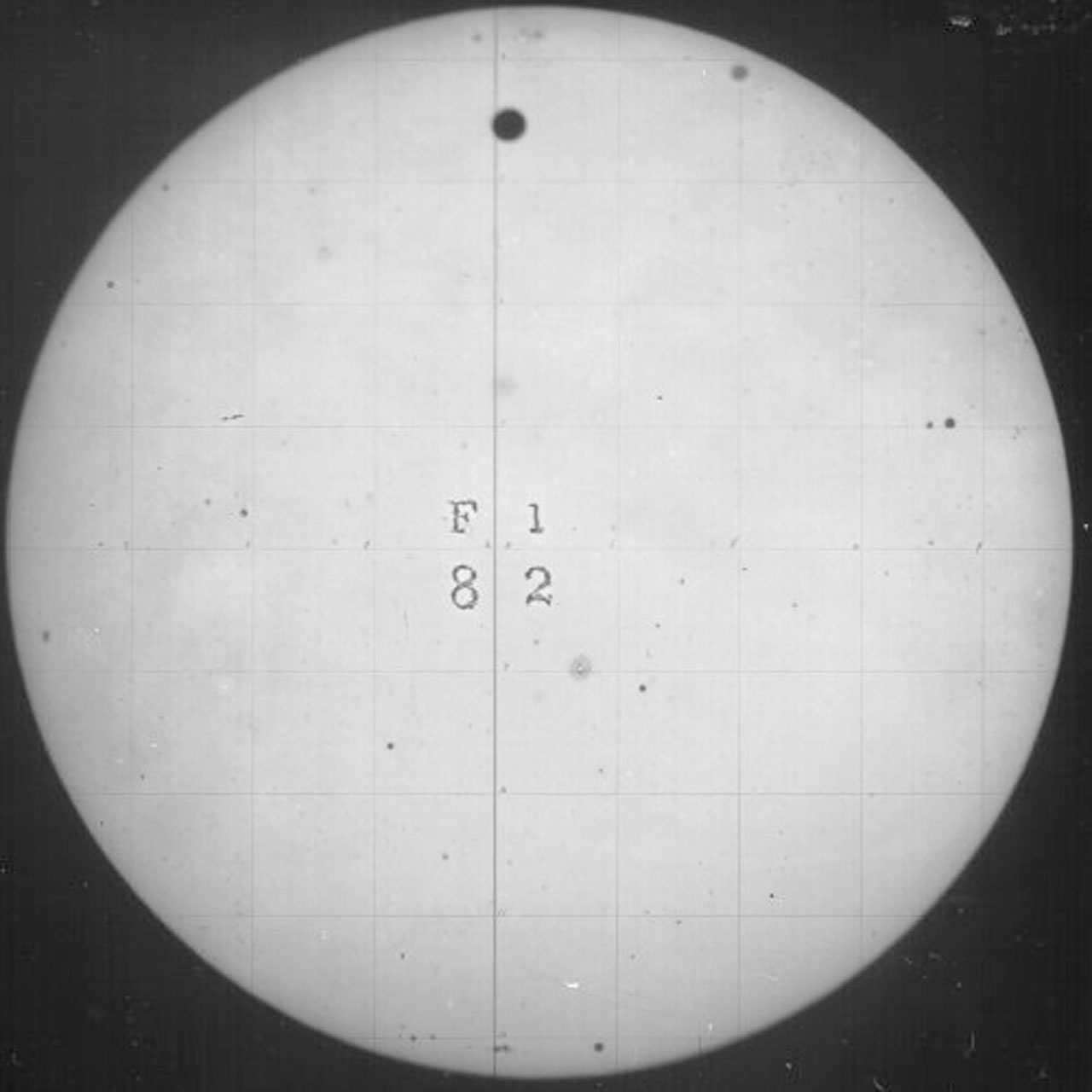
The 1882 transit of Venus on 6 December 1882 (13:57 to 20:15 UTC), was the second and last transit of Venus of the 19th century, the first having taken place eight years earlier in 1874. Many expeditions were sent by European powers to describe both episodes, eight by the United States Congress alone.
Edward James Stone organized the British expeditions. Stephen Joseph Perry and Commander Pelham Aldrich, as captain of HMS , observed the transit from an improvised tent observatory in Madagascar.
Jean-Charles Houzeau invented in 1871 a heliometer with unequal focal lengths. For the observation of the transit he organized two expeditions: one to San Antonio, Texas, and another to Santiago de Chile. The two expeditions each had an identical copy of Houzeau's heliometer.

The French Academy of Sciences organized ten expeditions to various locations, including Florida, Mexico, Haiti, Martinique, and Cape Horn. For observations of the transit by French expeditions, for the year 1883 the French Academy of Sciences awarded nine Lalande Prizes to scientists, including Jean Jacques Anatole Bouquet de La Grye (leader of expedition to Puebla, Mexico), Octave de Bernardières (leader of expedition to San Bernardo, Chile), and the naval officer Georges-Ernest Fleuriais (leader of expedition to the coast of the province Santa Cruz in Patagonia).
The transit was observed from the United Kingdom by Samuel Cooper in Charminster and Roger Langdon at Silverton, both in Devon, and by W F Denning in Bristol. In Ireland by R S Ball, W Doberck and J L E Dreyer also saw it.
The event was celebrated in music with the Transit of Venus March by John Philip Sousa.
References
References
- "The American Transit of Venus Expeditions of 1882, Including San Antonio". Aas.org.
- [https://ras.ac.uk/library/about-the-library2e45 Transits of Venus, 1874 & 1882, Royal Astronomical Society]
- Sterken, Christiaan. "Jean-Charles Houzeau and the 1882 Belgian Transit of Venus Expeditions".
- [http://www.amphilsoc.org/mole/view?docId=ead/Mss.B.F63-ead.xml Passage de Vénus, Mission de Santa Cruz (Patagonie), Photograph Album, American Philosophical Society]
- (1887). "LES LAURÉATS DU PRIX LALANDE". La Revue scientifique.
- [http://transitofvenus.nl/wp/past-transits/1882-december-6/ 1882 December 6, Venustransit, by Steven van Roode] {{Webarchive. link. (9 December 2014)
- (2012-03-04). "Samuel Cooper 1882 ToV photos".
- (1882-12-14). "Nature 1882-12-14: Vol 27 Iss 685". Nature Publishing Group.
- (1882-12-14). "Nature 1882-12-14: Vol 27 Iss 685". Nature Publishing Group.
- (1882-12-14). "Nature 1882-12-14: Vol 27 Iss 685". Nature Publishing Group.
- (1882-12-14). "Nature 1882-12-14: Vol 27 Iss 685". Nature Publishing Group.
This article was imported from Wikipedia and is available under the Creative Commons Attribution-ShareAlike 4.0 License. Content has been adapted to SurfDoc format. Original contributors can be found on the article history page.
Ask Mako anything about 1882 transit of Venus — get instant answers, deeper analysis, and related topics.
Research with MakoFree with your Surf account
Create a free account to save articles, ask Mako questions, and organize your research.
Sign up freeThis content may have been generated or modified by AI. CloudSurf Software LLC is not responsible for the accuracy, completeness, or reliability of AI-generated content. Always verify important information from primary sources.
Report