From Surf Wiki (app.surf) — the open knowledge base
1852 in science
none
none
The year 1852 in science and technology involved some significant events, listed below.
Aeronautics
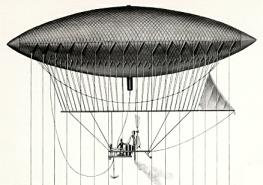
- September 24 – French engineer Henri Giffard makes the first airship trip, from Paris to Trappes.
Astronomy
- September 19 – Annibale de Gasparis discovers the asteroid 20 Massalia from the north dome of the Astronomical Observatory of Capodimonte in Naples.
Biology
- October 5 – American apiarist L. L. Langstroth patents the Langstroth hive for the cultivation of honey bees.
- Last recognised sighting of a great auk, on the Grand Banks of Newfoundland.
Chemistry
- August Beer proposes Beer's law, which explains the relationship between the composition of a mixture and the amount of light it will absorb. Based partly on earlier work by Pierre Bouguer and Johann Heinrich Lambert, it establishes the analytical technique known as spectrophotometry.
Mathematics
- October 23 – Francis Guthrie poses the four colour problem to Augustus De Morgan.
Medicine
- January 15 – Nine representatives of Hebrew charitable organizations come together to form what will become the Mount Sinai Hospital, New York.
- February 15 – The Great Ormond Street Hospital for Sick Children, London, admits its first patient.
Technology
- March 2 – The first American experimental steam fire engine, designed by Alexander Bonner Latta, is tested.
- August 23 – George Jennings receives a U.K. patent for improvements to the flush toilet.
- The mechanical semaphore line in France is superseded by the electric telegraph.
- Captain E. M. Boxer of the Royal Arsenal devises an improvement to the shrapnel shell by insertion of an iron diaphragm, preventing premature ignition.
- French physicist Léon Foucault (1819–1868) makes the first gyroscope for scientific use
Awards
- Copley Medal: Alexander von Humboldt
- Wollaston Medal for Geology: William Henry Fitton
Births
- March 25 – Charles Loomis Dana (died 1935), American neurologist.
- April 10 – Arthur Vierendeel (died 1940), Belgian civil engineer.
- May 1 – Santiago Ramón y Cajal (died 1934), Spanish neuroscientist, winner of the Nobel Prize in Physiology or Medicine.
- August 4 – Catharine van Tussenbroek (died 1925), Dutch physician.
- August 30 – Jacobus van 't Hoff (died 1911), Dutch chemist.
- September 9 – John Henry Poynting (died 1914), English physicist, discoverer of the Poynting–Robertson effect and the Poynting vector.
- September 15 – Edward Bouchet (died 1918), African American physicist.
- September 23 – William Stewart Halsted (died 1922), American surgeon.
- September 28 – Isis Pogson (died 1945), English astronomer and meteorologist.
- October 2 – William Ramsay (died 1916), Scottish winner of the Nobel Prize in Chemistry.
- October 6 – Bruno Abakanowicz (died 1900), Polish mathematician, inventor and electrical engineer.
- October 9 – Hermann Emil Fischer (died 1919), German winner of the Nobel Prize in Chemistry.
- November 12 - Xavier Arnozan (died 1928), French physician.
- December 13 – Charles E. de M. Sajous (died 1929), American endocrinologist.
- December 15 – Henri Becquerel (died 1908), French physicist.
Deaths
- January 1 – John George Children (born 1777), English chemist, mineralogist and entomologist.
- January 6 – Louis Braille (born 1809), French inventor.
- January 13 - Jean-Nicolas Gannal (born 1791), French pharmacist, chemist, and inventor.
- August 15 – Johan Gadolin (born 1760), Finnish chemist.
- August 24 – Sarah Guppy (born 1770), English inventor.
- September 4 – William MacGillivray (born 1796), Scottish naturalist and ornithologist.
- September 8 – Anna Maria Walker (born 1778), Scottish botanist.
- October 9 – Thomas Frederick Colby (born 1784), English cartographer.
- November 10 – Gideon Mantell (born 1790), English paleontologist.
- November 27 – Augusta Ada King (née Byron), Countess of Lovelace (born 1815), English computing pioneer.
References
References
- BirdLife International.. (2016). "Pinguinus impennis".
- (2007-03-07). "Lambert-Beer Law". Sigrist-Photometer AG.
- Wilson, Robin. (2002). "Four Colors Suffice". Penguin Books.
- Cayley, Arthur. (1879). "On the colourings of maps". Blackwell.
- (2006). "Penguin Pocket On This Day". Penguin Reference Library.
- King, William T.. (1896). "History of the American Steam Fire-Engine".
- "Innovations in toilet design". The National Archives.
- Marshall, A.. (1920). "The Invention and Development of the Shrapnel Shell". The Field Artillery Journal.
- "Copley Medal {{!}} British scientific award".
- {{Base Léonore. 19800035/241/31985
This article was imported from Wikipedia and is available under the Creative Commons Attribution-ShareAlike 4.0 License. Content has been adapted to SurfDoc format. Original contributors can be found on the article history page.
Ask Mako anything about 1852 in science — get instant answers, deeper analysis, and related topics.
Research with MakoFree with your Surf account
Create a free account to save articles, ask Mako questions, and organize your research.
Sign up freeThis content may have been generated or modified by AI. CloudSurf Software LLC is not responsible for the accuracy, completeness, or reliability of AI-generated content. Always verify important information from primary sources.
Report