From Surf Wiki (app.surf) — the open knowledge base
1794
Note
1794
Events
January–March
- January 1 – The Stibo Group is founded by Niels Lund as a printing company in Aarhus (Denmark).
- January 13 – The U.S. Congress enacts a law providing for, effective May 1, 1795, a United States flag of 15 stars and 15 stripes, in recognition of the recent admission of Vermont and Kentucky as the 14th and 15th states. A subsequent act restores the number of stripes to 13, but provides for additional stars upon the admission of each additional state.
- January 21 – King George III of Great Britain delivers the speech opening Parliament and recommends a continuation of Britain's war with France.
- February 4 – French Revolution: The National Convention of the French First Republic abolishes slavery.
- February 8 – Wreck of the Ten Sail on Grand Cayman.
- February 11 – The first session of the United States Senate is open to the public.
- March 4 – The Eleventh Amendment to the United States Constitution is passed by Congress for submission to the states for ratification.
- March 11 – Canonsburg Academy (modern-day Washington & Jefferson College) is chartered by the Pennsylvania General Assembly.
- March 12 – General Antoni Madaliński, a commander of the National Cavalry in the Polish–Lithuanian Commonwealth, disobeys an order from the ruling Russian Empire and Kingdom of Prussia imposing demobilization, advancing his troops from Ostrołęka to Kraków.
- March 14 – Eli Whitney is granted a United States patent for the cotton gin.
- March 22 – Congress prohibits American ships from supplying slaves to any nation other than the United States, setting a penalty of forfeiture of the ship and a $2,000 fine.
- March 23 – British troops capture Martinique from the French.
- March 24 – Tadeusz Kościuszko makes his proclamation starting the Kościuszko Uprising against the Russian Empire and Kingdom of Prussia in the Polish–Lithuanian Commonwealth and Prussian Partition.
- March 26 – The U.S. lays a 60-day embargo on all shipping to and from Great Britain.
- March 27
- The United States Government authorizes the building of the first six United States Navy vessels; in 1797 the first three frigates, , and will go into service (not to be confused with October 13, 1775, which is observed as the Navy's Birthday).
- The U.S. Senate passes a rule ending its policy of closing all of its sessions to the public.
April–June
- April 4 – Battle of Racławice: Polish supporters of the Kościuszko Uprising defeat forces of the Russian Empire.
- April 5 – Reign of Terror: Georges Danton and Camille Desmoulins are executed.
- April 17–19 – Kościuszko Uprising – Warsaw Uprising: The Polish people overthrow the Russian garrison in Warsaw.
- April 19 – Britain, Prussia and the Netherlands sign a treaty of alliance against France.
- April 28 – Sardinian Vespers: The people of Cagliari in Sardinia oust the viceroy and his Piedmontese functionaries.
- April 29–May 1 – Battle of Boulou: The French defeat the Spanish and Portuguese forces.
- May 7 – Robespierre establishes the Cult of the Supreme Being as the new state religion of the French First Republic.
- May 8 – Reign of Terror: chemist Antoine Lavoisier is tried, convicted and executed in Paris with 27 co-defendants also associated with the former ferme générale.
- May 18 – Battle of Tourcoing: French troops defeat British forces.
- May 21 – the French Revolutionary Government decides that the Terror would be centralised, with almost all the tribunals in the provinces closed and all the trials held in Paris.
- May 28–June 1 – The Glorious First of June (Battle of Ushant): The British win a crushing tactical victory over the French fleet, but the merchant convoy escorted by the French fleet arrives safely in France.
- May 30–June 4 – Battle of Port-Républicain: British troops capture Port-au-Prince in Haiti from the French.
- June 17
- The Anglo-Corsican Kingdom is established.
- Battle of Mykonos: The British Royal Navy captures .
- June 24 – Bowdoin College is founded in Brunswick, Maine.
- June 26 – Battle of Fleurus: French forces defeat the Austrians and their allies, leading to permanent loss of the Austrian Netherlands and destruction of the Dutch Republic. French use of an observation balloon marks the first participation of an aircraft in battle.
- June–July – Mount Vesuvius erupts in Italy; the town of Torre del Greco is destroyed.
July–September
- July 12 – Horatio Nelson loses the sight in his right eye in the British Siege of Calvi in Corsica.
- July 13 – Battle of Trippstadt between French forces and those of Prussia and Austria (First Coalition).
- July 13–September 6 – Kościuszko Uprising: Siege of Warsaw – The Polish people resist a siege by armies of the Russian Empire and Kingdom of Prussia.
- July 17 – The sixteen Carmelite Martyrs of Compiègne are guillotined in Paris in the last stage of the French Revolution's Reign of Terror.
- July 27 (9 Thermidor) – French Revolution – Thermidorian Reaction: Maximilien, Augustin Robespierre and Saint-Just are arrested on the orders of the French National Convention; they are executed the next day, ending the French Revolution's Reign of Terror.
- August – Colombian Antonio Nariño is denounced as a traitor after he translates and publishes the French Declaration of the Rights of Man and of the Citizen.
- August 1 – Aristocrats in Sweden gather to mourn the demise of coffee after the beverage is forbidden by royal decree.
- August 9 – Napoleon is arrested and put under house arrest at Nice for his association with the Robespierres during their fall in the Thermidorian Reaction. He is later taken to Antibes and detained in a military fort.
- August 20 – Battle of Fallen Timbers in Northwestern Ohio: American troops under the command of General Anthony Wayne (nicknamed "Mad Anthony") defeat Native American tribes of the Western Confederacy.
- August 21 – British troops capture Corsica following the bombardment by Nelson.
- August 29 – Stonyhurst College is finally established as a Roman Catholic school in Lancashire, England, having had several European locations.
- September 10 – The University of Tennessee is established at Knoxville.
- September 23 – France occupies Aachen.
- September 28 – Austria, Britain and Russia ally against France.
October–December
- October 2 – Battle of Aldenhoven between French forces and those of Austria.
- October 4 – In the first and only instance of an incumbent United States president leading men into battle, George Washington arrives at Carlisle, Pennsylvania to guide the U.S. Army's suppression of the Whiskey Rebellion. The rebels soon disperse and the insurrection collapses by the end of the month.
- October 10 – Battle of Maciejowice: Forces of the Russian Empire defeat Polish supporters of the Kościuszko Uprising; Tadeusz Kościuszko is wounded and captured.
- October 22 – Fort Wayne founded in what is now the U.S. state of Indiana.
- November 4 – Battle of Praga: Russian General Alexander Suvorov storms Warsaw in the war against the Polish Kościuszko Uprising and captures Praga, one of its suburbs, unwittingly killing many civilians.
- November 14 – The first recorded meeting of the Franklin Literary Society is held at Canonsburg Academy (modern-day Washington & Jefferson College).
- November 16 – The Kościuszko Uprising ends in the defeat of Tadeusz Kościuszko and his forces.
- November 19 – The United States and Great Britain sign the Jay Treaty (coming into effect in 1796), which attempts to clear up some issues left over from the American Revolutionary War and secures a decade of peaceful trade between the two nations. Britain agrees to evacuate border forts in the Northwest Territory (roughly the area north of the Ohio River and east of the Mississippi) and thereby end British support for the Indians.
- November 20 – Battle of St-Laurent-de-la-Muga fought between French and Spanish forces.
- December 8 – The Great New Orleans Fire (1794) burns over 200 buildings in the French Quarter.
- December 23 – St. Louis Cathedral, New Orleans is dedicated.
Date unknown
- The Ayrshire (Earl of Carrick's Own) Yeomanry, a British Yeomanry Cavalry Regiment, is formed by the Earl of Cassillis at Culzean Castle, Ayrshire.
- The Oban distillery is built in Scotland.
Births
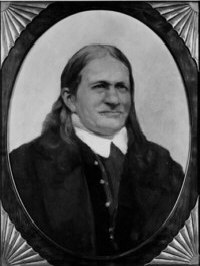



- January 7 – Eilhard Mitscherlich, German chemist (d. 1863)
- February 8 – Friedlieb Ferdinand Runge, German chemist (d. 1867)
- February 11 – Charlotta Eriksson, Swedish actor (d. 1862)
- February 20 – William Carleton, Irish novelist (d. 1869)
- February 21 – Antonio López de Santa Anna, Mexican general and President of Mexico (d. 1876)
- March 5
- April 10 – Matthew Calbraith Perry, American commodore (d. 1858)
- April 11 – Edward Everett, American politician (d. 1865)
- May 17 – Anna Brownell Jameson, British writer (d. 1860)
- May 24 – William Whewell, English scientist, philosopher and historian of science (d. 1866)
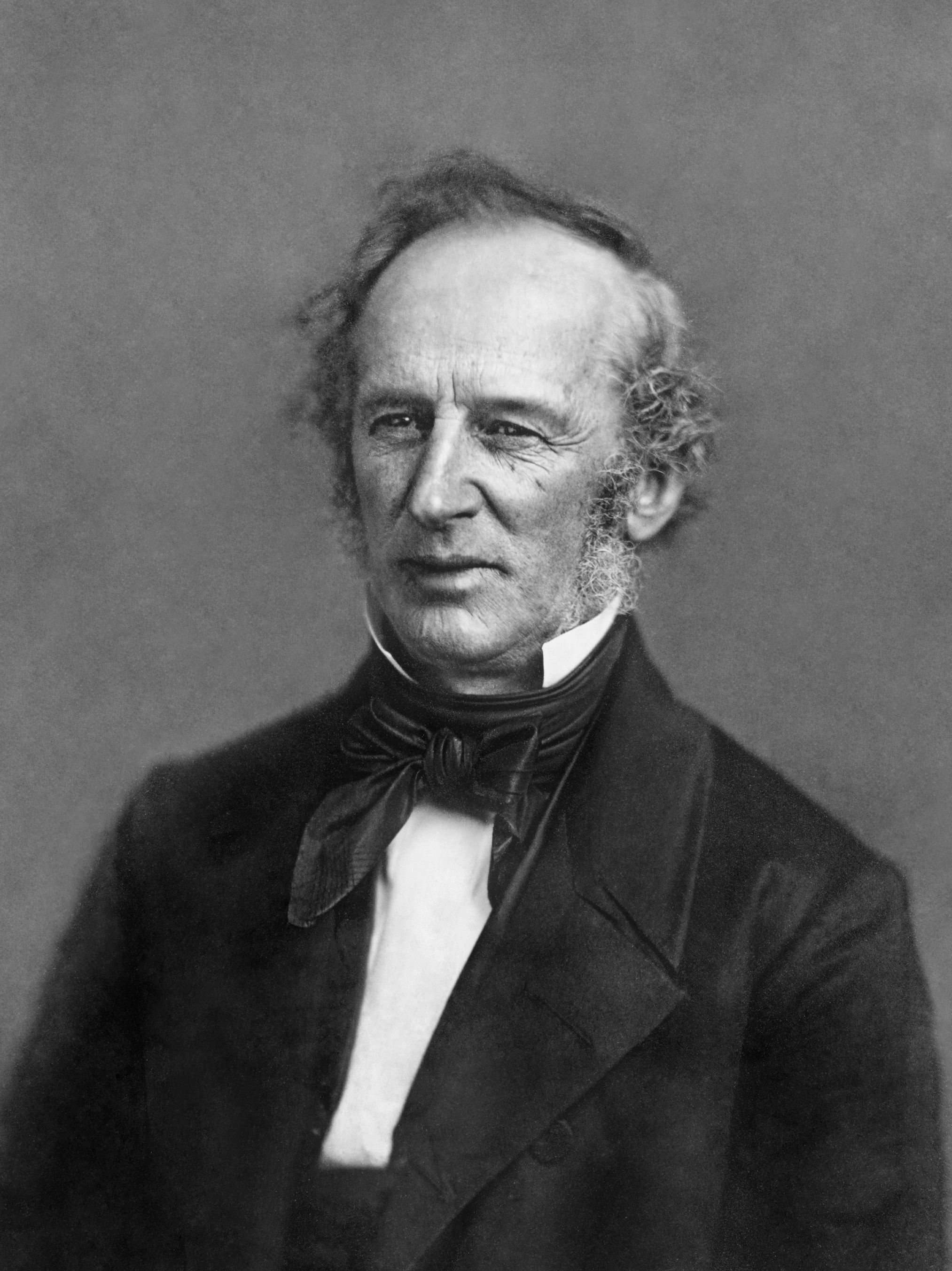
- May 27 – Cornelius Vanderbilt, American entrepreneur (d. 1877)
- June 16 – María Trinidad Sánchez, heroine of the Dominican War of Independence (d. 1846)
- July 5 – Sylvester Graham, American nutritionist, inventor (d. 1851)
- July 7 – Frances Stackhouse Acton, British botanist, archaeologist, writer and artist (d. 1881)
- July 18 – Feargus O'Connor, Irish political radical, Chartist leader (d. 1855)
- July 28 – Charles Longley, Archbishop of Canterbury (d. 1868)
- August 8 – Francesco Puccinotti, Italian pathologist (d. 1872)
- September 24 – Jeanne Villepreux-Power, French marine biologist (d. 1871)
- November 3 – William Cullen Bryant, American poet (d. 1878)
- November 10 – Robert Towns, merchant, founder of Townsville, Queensland, Australia (d. 1873)
Date unknown
Deaths
.jpg)


- January 4 – Nicolas Luckner, Marshal of France (executed) (b. 1722)
- January 6
- January 8 – Justus Möser, German statesman (b. 1720)
- January 11 – Caroline Townshend, 1st Baroness Greenwich, English peeress (b. 1717)
- January 16 – Edward Gibbon, English historian (b. 1737)
- January 17 – Peniston Portlock Powney, English politician (b. 1743)
- January 24 – Marie-Adélaïde de La Touche-Limouzinière, French aristocrat, counter-revolutionary and combatant in the War of the Vendée (b. 1760)
- January 28 – Henri de la Rochejaquelein, French Revolutionary leader (b. 1772)
- January 31 – Mariot Arbuthnot, British admiral (b. 1711)
- February 10 – Jacques Roux, French priest (b. 1752)
- February 12 – Mahadaji Shinde, Maratha emperor of India (1764–1794)
- March 24 – Jacques Hébert, French Revolutionary leader (executed) (b. 1757)
- March 29 – Marquis de Condorcet, French mathematician, philosopher and political scientist (died in prison) (b. 1743)
- April 5
- Georges Danton, French Revolutionary leader (executed) (b. 1759)
- Camille Desmoulins, French Revolutionary leader (executed) (b. 1760)
- Marie-Jean Hérault de Séchelles, French Revolutionary leader (executed) (b. 1759)
- Fabre d'Églantine, French dramatist, revolutionary (executed) (b. 1750)
- François Joseph Westermann, French Revolutionary leader and general (executed) (b. 1751)
- April 13
- April 18 – Charles Pratt, 1st Earl Camden, Lord Chancellor of Great Britain (b. 1714)
- April 23 – Guillaume-Chrétien de Lamoignon de Malesherbes, French statesman (executed) (b. 1721)
- April 27
- May 8 – Antoine Lavoisier, French chemist (executed) (b. 1743)
- May 10 – Élisabeth of France, French princess (executed) (b. 1764)
- May 17 – Sir Thomas Dyke Acland, 9th Baronet (b. 1752)
- May 27 – Mary Palmer, English writer (b. 1716)
- June 14 – Francis Seymour-Conway, 1st Marquess of Hertford, Viceroy of Ireland (b. 1718)
- June 17 – Marguerite-Élie Guadet, French Revolutionary leader (executed) (b. 1753)
- June 18
- June 19 – Richard Henry Lee, 12th President of the Continental Congress (b. 1732)
- June 25 – Jean-Olivier Briand, French-born Catholic bishop of Quebec (b. 1715)
- June 27
- July 13 – James Lind, British pioneer of naval hygiene in the Royal Navy (b. 1716)
- July 17 – John Roebuck, English inventor (b. 1718)
- July 23 – Alexandre de Beauharnais, French politician and general (executed) (b. 1760)
- July 25
- July 28
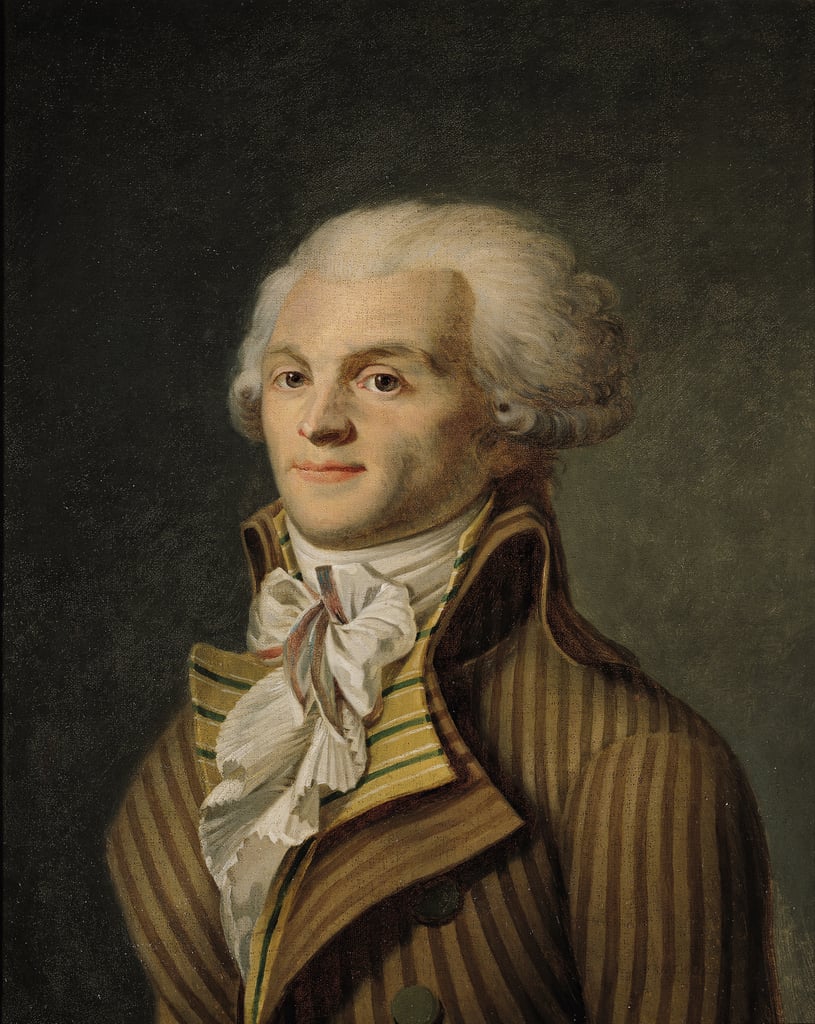
- Maximilien Robespierre, French Revolutionary leader (executed) (b. 1758)
- Augustin Robespierre, French Revolutionary leader (executed) (b. 1763)
- Louis Antoine de Saint-Just, French Revolutionary leader (executed) (b. 1767)
- Jean-Baptiste de Lavalette, French general (executed) (b. 1753)
- François Hanriot, French Revolutionary leader (executed) (b. 1761)
- August 6 – Henry Bathurst, 2nd Earl Bathurst, British politician (b. 1714)
- August 14 – Jacoba van den Brande, Dutch cultural personality (b. 1735)
- August 17 – Countess Palatine Elisabeth Auguste of Sulzbach, politically active Electress of Bavaria (b. 1721)
- September 1 – Catherine Théot, French visionary (b. 1716)
- September 4 – John Hely-Hutchinson, Irish statesman (b. 1724)
- September 15 – Abraham Clark, American signer of the Declaration of Independence (b. 1725)
- September 16 – Hester Bateman, English silversmith (bap. 1708)
- September 25 – Paul Rabaut, French Huguenot pastor (b. 1718)
- October 21
- November 3 – François-Joachim de Pierre de Bernis, French cardinal, statesman (b. 1715)
- November 9 – Thomas Walker, distinguished Virginia physician, explorer (b. 1715)
- November 15
- November 22
- November 28
- December 2 – Johann Gottlob Leidenfrost, German physician (b. 1715)
- December 12 – Meshullam Feivush Heller, Austrian Hasidic author (b. c. 1742)
- December 16 – Jean-Baptiste Carrier, French Revolutionary leader (executed) (b. 1756)
References
References
- "Flag of the United States". ''The Port Folio'' (July, 1818) p. 18.
- (1910). "Harper's Encyclopaedia of United States History from 458 A.D. to 1909". Harper & Brothers.
- Coleman, Helen Turnbull Waite. (1956). "Banners in the Wilderness: The Early Years of Washington and Jefferson College". [[University of Pittsburgh Press]].
- "Navy's Birthday".
- [https://books.google.com/books?id=9lWNCwAAQBAJ&dq=government+decided+that+the+Terror+would+be+centralised&pg=PR14-IA87 The French Revolution: From Enlightenment to Tyranny by Ian Davidson, p. xiv]
- Constantine, David. (2002). "Fields of Fire". Phoenix Press.
- Victor M. Uribe-Uran. (15 March 2000). "Honorable Lives: Lawyers, Family, and Politics in Colombia, 1780–1850". University of Pittsburgh Pre.
- (2001). "The world of caffeine: the science and culture of the world's most popular drug". Psychology Press.
- Calestous Juma. (2016). "Innovation and Its Enemies: Why People Resist New Technologies". Oxford University Press.
- Dwyer, Philip (2015). "Napoleon, the Revolution and the Empire". ''The Oxford Handbook of the French Revolution'', p. 157. Oxford University Press. {{ISBN. 978-0-19-963974-8.
- Christopher J. Kauffman. (1 December 1978). "Tamers of Death: The history of the Alexian Brothers from 1789 to the present". Seabury Press.
- Hogeland, William. (2015). "The Whiskey Rebellion: George Washington, Alexander Hamilton and the Frontier Rebels Who Challenged America's Newfound Sovereignty". Simon and Schuster.
- McClelland, W. C.. (1903). "The Centennial Celebration of the Chartering of Jefferson College in 1802". George H. Buchanan and Company.
- "Elizabeth Of France {{!}} princess of France".
- "BBC - History - Historic Figures: Maximilien Robespierre (1758-1794)".
- "Louis de Saint-Just {{!}} French revolutionary {{!}} Britannica".
Info: Wikipedia Source
This article was imported from Wikipedia and is available under the Creative Commons Attribution-ShareAlike 4.0 License. Content has been adapted to SurfDoc format. Original contributors can be found on the article history page.
Ask Mako anything about 1794 — get instant answers, deeper analysis, and related topics.
Research with MakoFree with your Surf account
Create a free account to save articles, ask Mako questions, and organize your research.
Sign up free
Content sourced from Wikipedia, available under CC BY-SA 4.0.
This content may have been generated or modified by AI. CloudSurf Software LLC is not responsible for the accuracy, completeness, or reliability of AI-generated content. Always verify important information from primary sources.
Report