From Surf Wiki (app.surf) — the open knowledge base
1672 in science
none
none
The year 1672 in science and technology involved some significant events.
Astronomy
- February 6 – Isaac Newton submits his first paper on optics to the Royal Society of London.
- December 23 – Giovanni Cassini discovers Rhea, a satellite of Saturn.
- John Flamsteed determines the solar parallax from observations of Mars.
Botany
- Robert Morison publishes Plantarum Umbelliferarum Distributio Nova, per Tabulas Cognationis et Affinitatis, ex Libra Naturae observata et detecta, the first monograph devoted to a specific group of plants, the Umbelliferae.
Mathematics
- Georg Mohr publishes the Mohr–Mascheroni theorem, that any geometric construction that can be performed by a compass and straightedge can be performed by a compass alone.
Medicine
- Paul Barbette publishes Opera omnia medica et chirurgica.
- Richard Lower publishes De Catarrhis, the first scholarly attempt by an English physician to take a classical doctrine (the theory that nasal catarrh is caused by secretions overspilling from the brain) and to disprove it by scientific experiment.
- Dutch physician Regnier de Graaf describes the female reproductive system.
- Isbrand van Diemerbroeck publishes the first edition of his Anatome corporis humani in Utrecht.
- Thomas Willis publishes the earliest English work on medical psychology, Two Discourses concerning The Soul of Brutes, Which is that of the Vital and Sensitive of Man.
Technology
- Dutch painter Jan van der Heyden improves the fire hose, with his brother Nicolaes, a hydraulic engineer.
Institutions
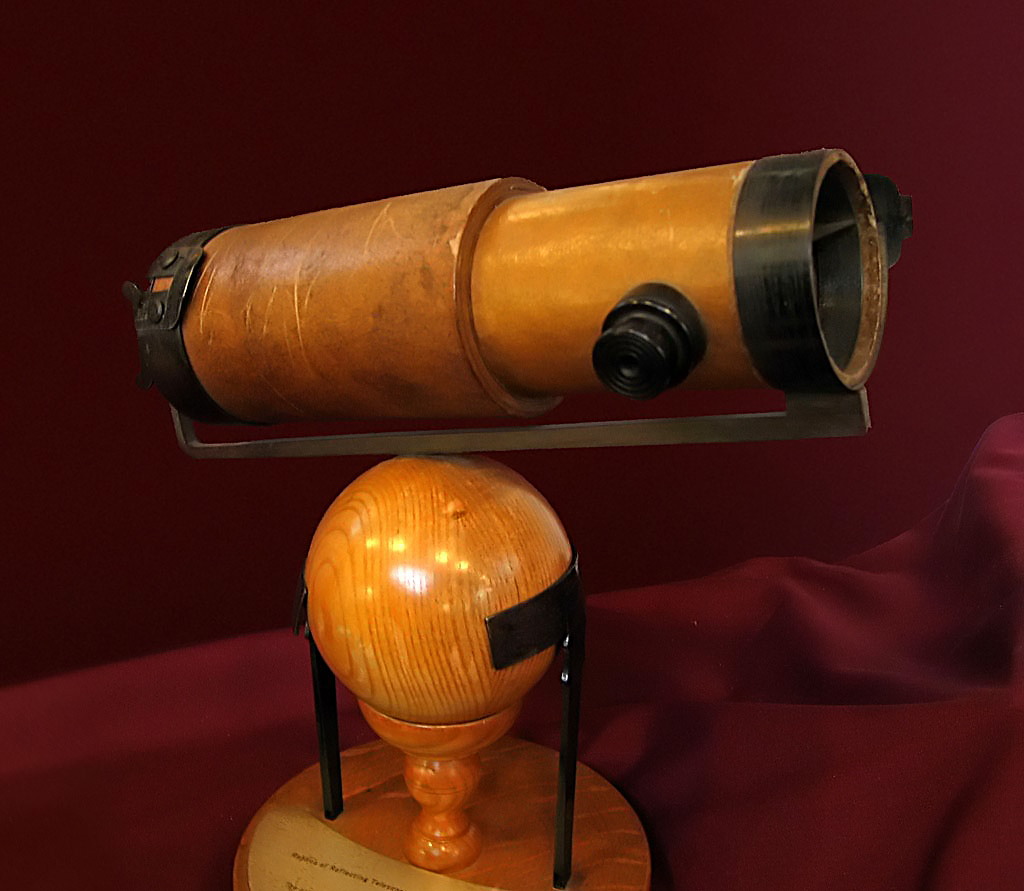
- January 11 – Isaac Newton is elected a Fellow of the Royal Society of London and it then demonstrates his reflecting telescope to King Charles II of England.
Births
Deaths
- March – Peter Blondeau, French-born pioneer of mechanised minting of coin
- April 26 – Lionel Lockyer, English quack doctor (born c. 1600)
- July 3 – Francis Willughby, English ornithologist and ichthyologist, pleurisy (born 1635)
- November 19 – John Wilkins, English bishop and natural philosopher, co-founder of the Royal Society (born 1614)
- late – Semyon Dezhnev, Pomor navigator who in 1648 made the first recorded voyage through the Bering Strait (born c. 1605)
References
References
- (1672-02-19). "A Letter of Mr. Isaac Newton, Professor of the Mathematicks in the University of Cambridge; Containing His New Theory about Light and Colors: Sent by the Author to the Publisher from Cambridge, Febr. 6. 1671/72; In Order to be Communicated to the R. Society". Philosophical Transactions of the Royal Society.
- Oliver, Francis Wall. (1913). "Makers of British Botany". Cambridge University Press.
- Mohr, Georg. (1672). "Euclides Danicus". Jacob van Velsen.
- Crilly, Tony. (2007). "50 Mathematical Ideas you really need to know". Quercus.
- ''[https://archive.org/details/BIUSante_34292/page/n3 De mulierum organis generationi inservientibus tractatus novus: demonstrans tam homines & animalia caetera omnia, quae vivipara dicuntur, haud minus quàm ovipara ab ovo originem ducere.]''
- "Thomas Willis". [[Who Named It?.
- (2015). "Fellowship of the Royal Society 1660-2015". Royal Society.
This article was imported from Wikipedia and is available under the Creative Commons Attribution-ShareAlike 4.0 License. Content has been adapted to SurfDoc format. Original contributors can be found on the article history page.
Ask Mako anything about 1672 in science — get instant answers, deeper analysis, and related topics.
Research with MakoFree with your Surf account
Create a free account to save articles, ask Mako questions, and organize your research.
Sign up freeThis content may have been generated or modified by AI. CloudSurf Software LLC is not responsible for the accuracy, completeness, or reliability of AI-generated content. Always verify important information from primary sources.
Report