From Surf Wiki (app.surf) — the open knowledge base
1124 papal election
none
none
| Field | Value |
|---|---|
| year | 1124 |
| notconclave | true |
| commonname | |
| dates | 16–21 December 1124 |
| location | Monastery of St Pancratius, Lateran Basilica, Rome |
| vetoed | |
| pope_elected | Lamberto Scannabecchi |
| nametaken | Honorius II |
| prevconclave_year | 1119 |
| prevconclave_link | 1119 papal election |
| nextconclave_year | 1130 |
| nextconclave_link | 1130 papal election |
A papal election was held from 16 to 21 December 1124, after the death of Pope Callixtus II on 13 December 1124. The election was characterised by a power struggle between Italian cardinals supported by the Pierleoni family and northern cardinals supported by the Frangipani family. On 16 December the cardinals elected Theobaldo Boccapecci, the cardinal-priest of Sant'Anastasia. He chose the name Celestine II. Before his consecration, however, an armed party of the Frangipani attacked and wounded the newly elected pope. In the following confusion the Bishop of Ostia Lamberto Scannabecchi, the Frangipani's candidate was proclaimed pope under the name Honorius II. After several days of factional fighting Celestine was abandoned by his supporters. However, Honorius would not accept the throne in this manner and resigned as well. He was immediately re-elected and consecrated on 21 December 1124.
Background
Pressures building within the Curia, together with ongoing conflicts among the Roman nobility, would erupt after the death of Pope Callixtus II in 1124. The pontificates of Urban II and Paschal II had seen an expansion in the College of Cardinals of Italian clerics that strengthened the local Roman influence. These cardinals were reluctant to meet with the group of cardinals recently promoted by Callixtus II, who were mainly French or Burgundian. As far as the older cardinals were concerned, these newer cardinals were dangerous innovators, and they were determined to resist their increasing influence. The northern cardinals, led by Cardinal Aymeric de Bourgogne (the Papal Chancellor), were equally determined to ensure that the elected pope would be one of their candidates. Both groups looked towards the great Roman families for support.
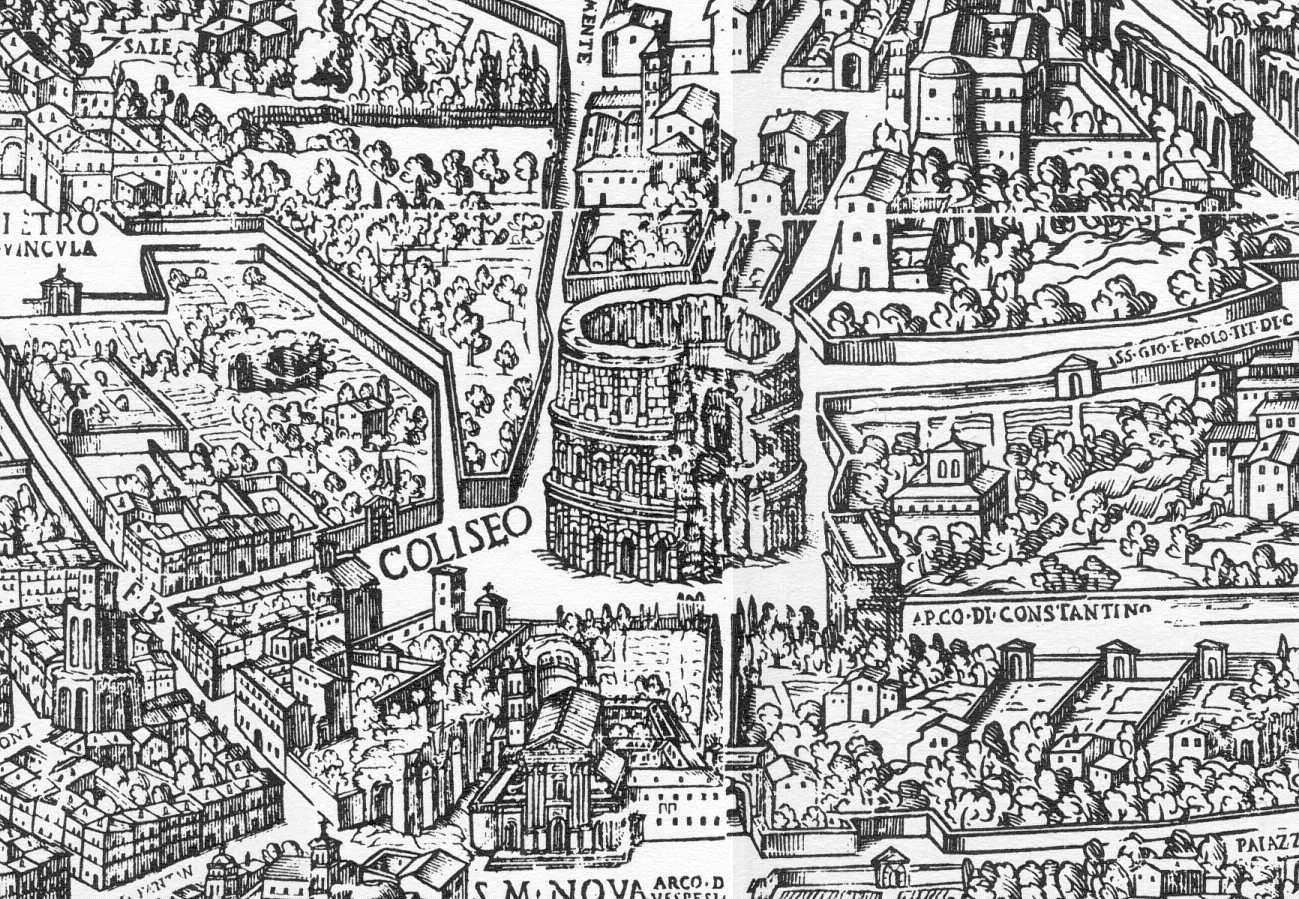
By 1124, there were two great factions dominating local politics in Rome: the Frangipani family, which controlled the region around the fortified Colosseum and supported the northern cardinals, and the Pierleoni family, which controlled the Tiber Island and the fortress of the Theatre of Marcellus and supported the Italian cardinals. With Callixtus II's death on 13 December 1124, both families agreed that the election of the next pope should be in three days time, in accordance with the church canons. The Frangipani, led by Leo Frangipani, pushed for a delay in order that they could promote their preferred candidate, Lamberto, but the people were eager to see Saxo de Anagni, the Cardinal-Priest of San Stefano in Celiomonte elected as the next pope. Leo, eager to ensure a valid election, approached key members of every Cardinal's entourage, promising each one that he would support their master when the voting for the election was underway.
Election
On 16 December, the Cardinals, including Lamberto, assembled in the chapel of the monastery of St. Pancratius attached to the south of the Lateran basilica. There, at the suggestion of Jonathas, the cardinal-deacon of Santi Cosma e Damiano, who was a partisan of the Pierleoni family, the Cardinals unanimously elected as Pope the cardinal-priest of Sant' Anastasia, Theobaldo Boccapecci, who took the name Celestine II. He had only just put on the red mantle and the Te Deum was being sung when an armed party led by Roberto Frangipani (in a move pre-arranged with Cardinal Aymeric) burst in, attacked the newly enthroned Celestine, who was wounded, and acclaimed Lamberto as Pope. Since Celestine had not been formally consecrated pope, the wounded candidate declared himself willing to resign, but the Pierleoni family and their supporters refused to accept Lamberto, who in the confusion had been proclaimed Pope under the name Honorius II. Historians call the election "a travesty of canonical procedure".
Rome descended into factional infighting, while Cardinal Aymeric and Leo Frangipani attempted to win over the resistance of Urban, the City Prefect, and the Pierleoni family with bribes and extravagant promises. Eventually, Celestine's supporters abandoned him, leaving Honorius the only contender for the papal throne. Honorius, unwilling to accept the throne in such a manner, resigned his position before the assembled Cardinals, but was immediately and unanimously re-elected and consecrated on 21 December 1124.
Cardinals
The College of Cardinals probably had between 47 and 53 members. Little information is available on which Cardinals were actually present in Rome during the election(s).
The following table lists the Cardinals who were alive at the time of the election.
| Elector | Title{{refn | group=lower-alpha | Elevated | Elevator | Notes | |
|---|---|---|---|---|---|---|
| Crescenzio | Cardinal-Bishop of Sabina | 1102 | Paschal II | |||
| Pietro Senex | Cardinal-Bishop of Porto | c. 1106 | Paschal II | |||
| Lamberto Scannabecchi | Cardinal-Bishop of Ostia | 1116 | Paschal II | Elected pope Honorius II | ||
| Vitalis | Cardinal-Bishop of Albano | 1116 | Paschal II | |||
| Guillaume | Cardinal-Bishop of Palestrina | c. 1122 | Callixtus II | |||
| Gilles de Paris | Cardinal-Bishop of Tusculum | c. 1122 | Callixtus II | |||
| Bonifacio | Cardinal-Priest of S. Marco | c. 1100 | Paschal II | *prior cardinalium* (by 1127) | ||
| Gregorio de Ceccano | Cardinal-Priest of Ss. XII Apostoli | c. 1102 | Paschal II | Future antipope Victor IV | ||
| Benedict | Cardinal-Priest of S. Pietro in Vincoli | c. 1102 | Paschal II | |||
| Anastasius | Cardinal-Priest of S. Clemente | c. 1102 | Paschal II | |||
| Teobaldo Boccapecci | Cardinal-Priest of S. Anastasia | c. 1103 or 1112 | Paschal II | Elected pope Celestine II on 16 December, and resigned | ||
| Ioannes | Cardinal-Priest of S. Cecilia | c. 1106 | Paschal II | |||
| Corrado della Suburra | Cardinal-Priest of S. Pudenziana | c. 1113 | Paschal II | Future pope Anastasius IV | ||
| Teobaldo | Cardinal-Priest of Ss. Giovanni e Paolo | c. 1117 | Paschal II | |||
| Deusdedit | Cardinal-Priest of S. Lorenzo in Damaso | c. 1116 | Paschal II | |||
| Gregorio Albergati | Cardinal-Priest of S. Lorenzo in Lucina | c. 1116 | Paschal II | |||
| Petrus Pisanus | Cardinal-Priest of S. Susanna | c. 1116/1117 | Paschal II | |||
| Amico, O.S.B. | Cardinal-Priest of Ss. Nereo ed Achilleo | 1117 | Paschal II | |||
| Desiderius | Cardinal-Priest of S. Prassede | c. 1115 | Paschal II | |||
| Gerardo / GregorioMiranda notes that Cardinal Gerardo died around 1120 and does not mention the title for the 1124 election; Miranda follows the *Liber Pontificalis* (Petrus Pisanus), and confuses the evidence. Adams records only Gerardus, and states, on the authority of Hüls, p. 199, that his latest surviving subscription stems from 1129. | Cardinal-Priest of Ss. Prisca ed Aquila | c. 1115 | Paschal II | |||
| Sigizo | Cardinal-Priest of S. Sisto | c. 1117 | Paschal II | |||
| Saxo de Anagnia | Cardinal-Priest of S. Stefano al Monte Celio | c. 1117 | Paschal II | |||
| Petrus Rufus (Pietro Ruffino Cariaceno)Miranda lists a Cardinal Domnizzone at Ss. Silvestro e Martino for the election of 1124. He contradicts himself, however, by accepting that Pietro Cariaceno occupied that title since December 1122. | Cardinal-Priest of Ss. Silvestro e Martino | 1118 or 1122According to Adams, following Hüls, p. 220, he was previously Cardinal-deacon of S. Adriano (it is unclear whether it is the same "Petrus Rufus" created by Gelasius II, or another Petrus created by Paschal II). Miranda makes a distinction between Pietro "il Diacono" of S. Adriano and Pietro Cariaceno of Ss. Silvestro e Martino. Adams indicates, however, that the former could not have been Cardinal of S. Adriano at the time. | Gelasius II | |||
| Crescenzio di Anagni | Cardinal-Priest of Ss. Marcellino e Pietro | c. 1121/1122 ? | Calixtus II | |||
| Petrus | ||||||
| (Pierre de Fontaines)Zenker, p. 102, says that he was a Burgundian. | Cardinal-Priest of S. Marcello | c. 1120 | Callixtus II | |||
| Gerardo Caccianemici | Cardinal-Priest of S. Croce in Gerusalemme | c. 1122 | Callixtus II | Future pope Lucius II | ||
| Ugo LectifredoAccording to Miranda, Cardinal Lectifredo was created in a consistory celebrated in 1123. Adams notes that Lectifredo first subscribes in 1128 and considers the title of S. Vitale to be vacant for the election of 1124. | Cardinal-Priest of S. Vitale | 1123 | Callixtus II | |||
| Roscemanno | Cardinal-Deacon of S. Giorgio in Velabro | c. 1112 | Paschal II | |||
| Gregorio of Gaeta | Cardinal-Deacon of S. Lucia in Septisolio | c. 1112 | Paschal II | |||
| Gregorio Papareschi | Cardinal-Deacon of S. Angelo in Pescheria | c. 1088?/1116 | Paschal II | Future pope Innocent II | ||
| Gregorio | Cardinal-Deacon of S. Eustachio | c. 1099 ? | Paschal II | |||
| Comes / Cosma | Cardinal-Deacon of S. Maria in AquiroAdams lists him as Cardinal-Priest of S. Sabina, based on a subscription on April 15, 1123. This may be an error, since he states elsewhere that he was promoted only in 1126 by Honorius II. | c. 1116Miranda states that he was created in 1088 (hence by Urban II). Adams considers this unlikely since he only begins to subscribe in 1116. | Paschal II | |||
| EnricoHe was Dean of Mazara in Sicily. Mazara is not his name, but his ecclesiastical position. Hüls, p. 242. | Cardinal-Deacon of S. Teodoro | c. 1117 | Paschal II | |||
| Angelo | Cardinal-Deacon of S. Maria in Domnica | c. 1122 | Callixtus II | |||
| Romano | Cardinal-Deacon of S. Maria in Portico | c. 1119According to Miranda he was made a Cardinal in 1099 by Paschal II. Adams considers him a creation of Gelasius II. | Callixtus II | |||
| Étienne de Bar | Cardinal-Deacon of S. Maria in Cosmedin | c. 1120 | Callixtus II | |||
| Ionathas (Gionata) | Cardinal-Deacon of Ss. Cosma e Damiano | c. 1120 | Callixtus II | |||
| Giovanni Dauferio | Cardinal-Deacon of S. Nicola in Carcere | c. 1122 | Callixtus II | |||
| Gregorio Tarquini | Cardinal-Deacon of Ss. Sergio e Bacco | c. 1122 | Callixtus II | |||
| Romuald I]] and Romuald Guarna (II). | Cardinal-Deacon of S. Maria in Via Lata | c. 1123 | Callixtus II | |||
| Gregorio | Cardinal-Deacon of Ss. Vito e Modesto | c. 1122 | Callixtus II | |||
| Matteo | Cardinal-Deacon of S. Adriano | c. 1122 | Callixtus II | |||
| Aymeric de la Châtre | Cardinal-Deacon of S. Maria Nuova | 1122 or 1123 | Callixtus II | Chancellor |
Absentee Cardinals
| Elector | Title | Elevated | Elevator | Notes |
|---|---|---|---|---|
| Giovanni da Crema | Cardinal-Priest of S. Crisogono | c. 1117 | Paschal II | Papal legate in Scotland or England at the time of the election |
| Pietro Pierleoni | Cardinal-Priest of S. Maria in Trastevere | c. 1106 | Paschal II | Papal legate in France at the time of the election. Future antipope Anacletus II |
| Oderisio di SangroCardinal Oderisio did not participate in the election according to Petrus Diaconus, cited by Adams. According to Miranda, he *did* participate. | Cardinal-Priest of S. Ciriaco in ThermisCardinal Oderisio was promoted from S. Agata to S. Ciriaco in Thermis in 1122, according to Miranda. Adams is less sure of this and states that the date of the promotion is not recorded. | c. 1112 | Paschal II | Abbot of Montecassino |
References
Works cited
- Levillain, Philippe (2002) The Papacy: An Encyclopedia, Vol II: Gaius-Proxies, Routledge
- Mann, Horace K. (1925) The Lives of the Popes in the Middle Ages, Vol 8
- Thomas, P. C. (2007) A Compact History of the Popes, St Pauls BYB
Notes
References
- Levillain, pg. 732
- Mann, pg. 231
- Mann, pg. 232
- Thomas, pg. 90
- Miranda, Salvador. (1998–2020). "Election of December 13 to 15, 1124 (Honorius II)". [[Florida International University.
- Mann, pg. 233
- Stroll, Mary. (2004). "Calixtus the Second, 1119–1124: A Pope Born to Rule". Brill.
- Adams, John Paul. (August 10, 2015). "Sede Vacante 1124". [[California State University, Northridge.
- Hüls (1977), pp. 84, 127. Crescentius was present at the papal election of 24 January 1118. He remained in Rome when Pope Gelasius fled to Pisa and then France; he did not, therefore, sign papal documents in 1119 or the first half of 1120. In March 1119, he sent a letter from Rome to Cluny, approving the election of [[Pope Calixtus II]]. He subscribed ahead of Petrus of Porto, Cono of Palestrina, Lamberto of Ostia, and Vitalis of Albano.
- Hüls (1977), p. 84, 106-107, 215. His position in the list of e[iscopal subscriptions reflects the date of his consecration as a bishop.
- Vitalis always subscribes after Petrus of Porto: Hüls (1977), pp. 63, 84, 95. He was created a cardinal after 24 May 1116 and before 21 December.
- Guillaume's predecessor, Cardinal Cono, died on 9 August 1122. Guillaume first subscribes on 6 April 1123. Hüls (1977), pp. 84, 114, 116. He signed after Vitalis and Divizo.
- Aegidius (Gilles) first subscribes on 6 April 1123. Hüls (1977), pp. 84, 142-143.
- Bonifacius had his title at least by 1100, according to the ''Anciennitatprinzip''. Huls, p. 85; 186. His earliest subscription, however, is in 1111.
- Francesco Liverani, ''Delle opere di monsignor Francesco Liverani'' Volume IV (Macerata: Alessandro Mancini 1859), pp. 258-264, at p. 262.
- Gregorius had his title at least by 1102, according to the ''Anciennitatprinzip''. Huls, p. 85; he subscribes after Bonifacio and before Benedictus and Anastasius; his earliest surviving subscription, however, is dated 18 February 1107: Huls, p. 107.
- Benedictus' earliest subscription occurs on 23 March 1112: Hüls (1977), p. 195. The ''Anciennitatprinzip'' worked out by Huls, p. 86, shows that he would have been created a cardinal by 1102; he has precedence over Bonifacio of S. Marco and Anastasius of S. Clemente.
- Hüls (1977), pp. 85, 161.
- Teobaldo's earliest subscription is apparently on 3 July 1103, but Hüls (1977), p. 235, n. 2, doubts it since it is not in agreement with his ''Anciennitätprinzip'', and Teobaldo's subscription of 30 January 1110 indicates that he was a deacon of the Lateran Palace. His earliest subscription as cardinal-deacon of S. Maria Nuova occurs on 23 March 1112. On 17 April 1121 he was still Cardinal-deacon of S. Maria Nuova. He became Cardinal-priest of S. Anastasia before 6 April 1123. HHüls (1977), p. 149.
- Paravicini Bagliani, Agostino. (1975). "Capizucchi, Roberto". Dizionario Biografico degli Italiani.
- Hüls, pp. 85, 201.
- Petrus had previously been Cardinal-deacon of S. Adriano, attested from 1113 to 1116. Hüls, pp. 85, 210, 219-220.
- Hüls, p. 193. Ganzer, p. 69.
- Hüls, pp. 193, 220.
- Hüls, pp. 85, 183-184, states that he was created a cardinal in 1121 or 1122. Barbara Zenker, p. 115, assigns his appointment to Gelasius II (1118).
- Petrus' earliest surviving subscription is dated 24 September 1120. He was deposed in March 1139 by Innocent II, as an adherent of the Obedience of Pope Anacletus II. Hüls, pp. 85, 184.
- Hüls, pp. 86, 164
- Hüls, pp. 86, 227. His earliest appearance in the record is at the Lateran council on 23 March 1112.
- Hüls, p. 229.
- Gregorius' earliest subscription occurs on 24 May 1116. Hüls, pp. 223-224, whose ''Anciennitätprinzip'' (p. 86) also assigns him a date of 1116. Hüls, p. 222, places Cardinal Berardus at S. Angelo in Pescheria between 1107 and 1109, which makes Cardinal Gregorio's early tenure under Urban II impossible.
- Hüls, p. 227, marks his first documented appearance as an elector of [[Pope Gelasius II]] in January 1118. His position in the subscription lists, Hüls' ''Anciennitätprinzip'' (p. 86), assigns him a date of c. 1110. He joined the Obedience of [[antipope Anacletus II. Pope Anacletus II]] in 1130.
- He is named as one of the electors of [[Pope Gelasius II]] in January 1118.
- Stephanus subscribes just after Romanus of S. Maria in Porticu. His earliest surviving subscription is on 24 September 1120 in Benevento. Hüls, p. 86, 232-233.
- Hüls, p. 87.
- Cardinal Uberto subscribed after Gregorio of Ss. Sergio e Bacco, and before Matteo of S. Adriano. His earliest known subscription is on 6 April 1123. Hüls places his appointment in 1122. Hüls, pp. 87, 238-239.
- Hüls, pp. 87, 244.
- Cardinal Matthaeus first subscribes on 6 April 1123; he was appointed cardinal-priest of S. Pietro in Vincoli by 7 May 1128: Hüls, pp. 87, 221.
- Hüls, pp. 87, 236.
This article was imported from Wikipedia and is available under the Creative Commons Attribution-ShareAlike 4.0 License. Content has been adapted to SurfDoc format. Original contributors can be found on the article history page.
Ask Mako anything about 1124 papal election — get instant answers, deeper analysis, and related topics.
Research with MakoFree with your Surf account
Create a free account to save articles, ask Mako questions, and organize your research.
Sign up freeThis content may have been generated or modified by AI. CloudSurf Software LLC is not responsible for the accuracy, completeness, or reliability of AI-generated content. Always verify important information from primary sources.
Report