From Surf Wiki (app.surf) — the open knowledge base
0,10 Exhibition
1915-16 Russian exhibition
1915-16 Russian exhibition


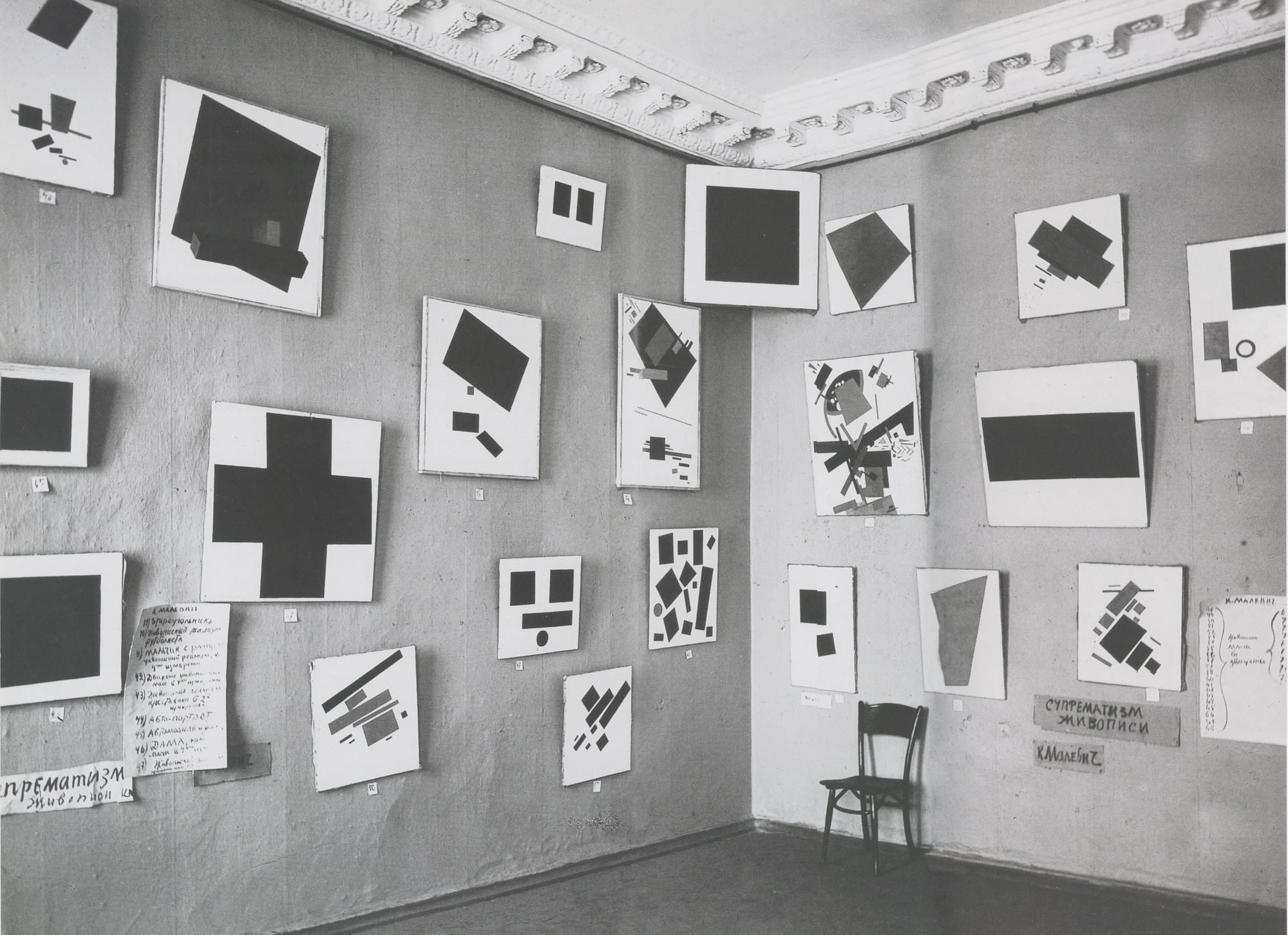
The Last Futurist Exhibition of Paintings 0,10 (pronounced "zero-ten") was an exhibition presented by the Dobychina Art Bureau at Marsovo Pole, Petrograd, from 19 December 1915 to 17 January 1916. The exhibition was important in inaugurating a form of non-objective art called Suprematism, introducing a daring visual vernacular composed of geometric forms of varying colour, and in signifying the end of Russia's previous leading art movement, Cubo-Futurism, hence the exhibition's full name. The sort of geometric abstraction relating to Suprematism was distinct in the apparent kinetic motion and angular shapes of its elements.
Origin of the name
The mysterious number 0,10 refers to a figure of thought: Zero, either because it was expected that after the destruction of the old world, the year zero could begin again, or because the artists exhibiting wanted to find the core of painting, and ten, because ten artists were originally scheduled to participate. In fact, there were fourteen artists who participated in the exhibition.
The non-numerical part of the exhibition's name - "Last Exhibition of Futurist Paintings" - was coined by the display's main organiser, Ivan Puni.
Background
The first all-Futurist exhibition in Russia, "Tramway V", which was organised by Puni, opened in March that year. Vladimir Tatlin was the main focus of the exhibition, and the display was met with hostility that ultimately led to a succés de scandale. The public response to this previous exhibition would eventually lead Puni to bring together one last exhibition, the 0,10 Exhibition.
Throughout that year, Kazimir Malevich was busily writing and painting about his new art movement inspired by Cubo-Futurism, Suprematism.
Event
The exhibition itself opened on 19 December 1915, and closed on 17 January 1916. Malevich now felt ready to officially announce Suprematism, and thus thirty-nine pieces of his work were on display. Because Malevich and Tatlin were, due to an argument, rivals by the time the exhibition began, some of the artists decided to take sides. Thanks to Malevich's room planning which even Puni was unaware of, the artists who supported Malevich became the victors.
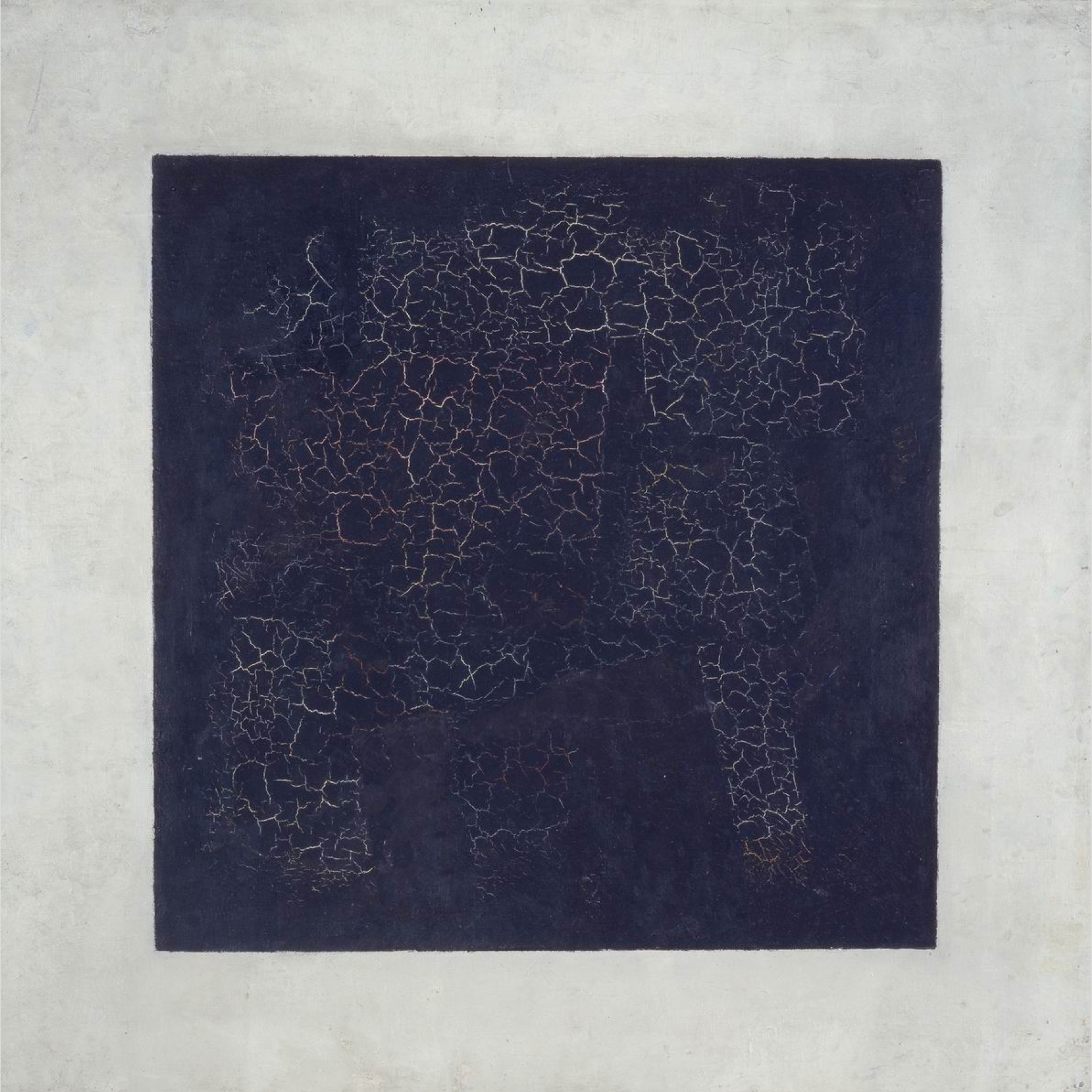
In total, 155 works were shown. Highlights of the exhibition were Malevich's Black Square, Tatlin's Corner Counter Reliefs, and Olga Rozanova's Metronome. Black Square was seen by some visitors as being especially scandalous, because it was placed in the top corner of the room, a location where Russian Orthodox households place their icons. Corner Counter Reliefs were a series of abstract sculptures. Metronome was one of Rozanova's works during the middle stages in her career; the clock can be interpreted as combining moments with the infinite.
Several related publications, for example the catalogue and Malevich's From Cubism to Suprematism, accompanied the exhibition. The poster was designed by Puni.
Impact and legacy
Though only a single photograph of Malevich's exhibition space survives, the exhibition is credited as introducing a groundbreaking new era in avant-garde art. Malevich and several other artists would go on to paint in the Suprematist style, while Tatlin would become a Constructivist, and later become famous for his eponymous Tower.
Artists
The following artists eventually exhibited:
Notes
References and sources
;References ;Sources
- Malevich: Journey to Infinity, 2008. Author: Gerry Souter, 255 pages in English language, publisher: Parkstone International,
- Farewell to an Idea: Episodes from a History of Modernism, 2001. Author: T.J. Clark, 451 pages, Publisher: Yale University Press,
References
- "Malevich, Black Square, 1915, Guggenheim New York, exhibition, 2003-2004". Archive.org.
- "Malevich (Exhibition Room Guide): Room 6 - The Last Exhibition of Futurist Paintings 0.10".
- (28 September 2012). "Exhibition Gallery". International Chamber of Russian Modernism.
- "0.10 (The Last Exhibition of Futurist Paintings 0,10)".
- "Suprematism". The Art Story.Org.
- Sarabianov, Andrei D.. "Ivan Albertovich Puni".
- Boersma, Linda. (1994). "0,10: The Last Futurist Exhibition of Painting". 0,10 Publications.
- Gurianova, Nina. (2000). "Exploring Color: Olga Rozanova and the Early Russian Avant-Garde, 1910-1918". Routledge.
- [[Hugh Honour. Honour, H.]] and Fleming, J. (2009) ''A World History of Art''. 7th edn. London: Laurence King Publishing, p. 794. {{ISBN. 9781856695848
This article was imported from Wikipedia and is available under the Creative Commons Attribution-ShareAlike 4.0 License. Content has been adapted to SurfDoc format. Original contributors can be found on the article history page.
Ask Mako anything about 0,10 Exhibition — get instant answers, deeper analysis, and related topics.
Research with MakoFree with your Surf account
Create a free account to save articles, ask Mako questions, and organize your research.
Sign up freeThis content may have been generated or modified by AI. CloudSurf Software LLC is not responsible for the accuracy, completeness, or reliability of AI-generated content. Always verify important information from primary sources.
Report