Tatar ( ; Tatar: татар теле, romanized: tatar tele or татарча, romanized: tatarça) is a Turkic language spoken by the Tatars mainly located in modern Republic of Tatarstan, wider Volga-Ural region, as well as many other regions of Russia. Tatar belongs to the same branch of Turkic languages such as Bashkort, Kazakh, Nogai and Kyrgyz.
The two main dialects of Tatar are the Central Dialect (urta / qazan; most common), and the Western Dialect (könbatış / mişər). The literary Tatar language is based on the Central Dialect and on a local variant of Türki. Tatar should not be confused with Crimean Tatar or Siberian Tatar, which are different languages, although also part of the Kipchak language group.
Like other Turkic languages, Tatar was traditionally written in the Arabic script for most of its history. Since 1939, the alphabet has been Cyrillic, though a number of Latin-based versions have also been used over the years.
Geographic distribution
The Tatar language is spoken in Russia by about 5.3 million people, and also by communities in Azerbaijan, China, Finland, Georgia, Israel, Kazakhstan, Latvia, Lithuania, Romania, Turkey, Ukraine, the United States, Uzbekistan, and several other countries. Globally, there are more than 7 million speakers of Tatar.
Tatar is also the mother tongue for several thousand Mari, a Finnic people; Mordva's Qaratay group also speak a variant of Kazan Tatar.
In the 2010 census, 69% of Russian Tatars claimed at least some knowledge of the Tatar language. In Tatarstan, 93% of Tatars and 3.6% of Russians claimed to have at least some knowledge of the Tatar language. In neighbouring Bashkortostan, 67% of Tatars, 27% of Bashkirs, and 1.3% of Russians claimed to understand basic Tatar language.
Official status
Bilingual guide in [[Kazan MetroA subway sign in Tatar (top) and Russian
Tatar, along with Russian, is the official language of the Republic of Tatarstan. The official script of the Tatar language is based on the Cyrillic script with some additional letters. The Republic of Tatarstan passed a law in 1999, which came into force in 2001, establishing an official Tatar Latin alphabet. A Russian federal law overrode it in 2002, making Cyrillic the sole official script in Tatarstan since. Unofficially, other scripts are used as well, mostly Latin and Arabic. All official sources in Tatarstan must use Cyrillic on their websites and in publishing. In other cases, where Tatar has no official status, the use of a specific alphabet depends on the preference of the author.
The Tatar language was made a de facto official language in Russia in 1917, but only within the Tatar Autonomous Soviet Socialist Republic. Tatar is also considered to have been the official language in the short-lived Idel-Ural State, briefly formed during the Russian Civil War.
The usage of Tatar declined during the 20th century. By the 1980s, the study and teaching of Tatar in the public education system was limited to rural schools. However, Tatar-speaking pupils had little chance of entering university because higher education was available in Russian almost exclusively.
As of 2001, Tatar was considered a potentially endangered language while Siberian Tatar received "endangered" and "seriously endangered" statuses, respectively. Higher education in Tatar can only be found in Tatarstan, and is restricted to the humanities. In other regions Tatar is primarily a spoken language and the number of speakers as well as their proficiency tends to decrease. Tatar is popular as a written language only in Tatar-speaking areas where schools with Tatar language lessons are situated. On the other hand, Tatar is the only language in use in rural districts of Tatarstan.
Since 2017, Tatar language classes are no longer mandatory in the schools of Tatarstan. According to the opponents of this change, it will further endanger the Tatar language and is a violation of the Tatarstan Constitution which stipulates the equality of Russian and Tatar languages in the republic.
Dialects
There are two main dialects of Tatar:
Central or Middle (Urta / Qazan)
Western (Könbatış / Mişär)
These dialects also have subdivisions. Significant contributions to the study of the Tatar language and its dialects, were made by a scientist Gabdulkhay Akhatov, who is considered to be the founder of the modern Tatar dialectological school.
Spoken idioms of Siberian Tatars, which differ significantly from the above two, are often considered as the third dialect group of Tatar by some, but as an independent language on its own by others.
Central or Middle
The Central or Middle dialectal group is spoken in Kazan and most of Tatarstan and is the basis of the standard literary Tatar language. Middle Tatar includes the Nagaibak dialect.
Mishar
Main article: Mishar Tatar dialect
The Western (Mishar) dialect is distinguished from the Central dialect most clearly by the absence of the uvular q and ğ and the rounded å of the first syllable. Letters ç and c are pronounced as affricates. Regional differences exist also.
Mishar Dialect, and especially its regional variant in Sergachsky district (Nizhny Novgorod), is said to be "faithfully close" to the ancient Kipchak language. Some linguists, such as Radlov, Samoylovich, think that Mishar traditionally belongs to the Kipchak-Cuman group of languages, rather than to the Kipchak-Bulgar group.
Mishar is the dialect spoken by the Tatar minority of Finland.
Siberian Tatar
Main article: Siberian Tatar language
Two main isoglosses that characterize Siberian Tatar are ç as and c as , corresponding to standard and . There are also grammatical differences within the dialect, scattered across Siberia.
Many linguists claim the origins of Siberian Tatar dialects are actually independent of Volga–Ural Tatar; these dialects are quite remote both from Standard Tatar and from each other, often preventing mutual comprehension. The claim that this language is part of the modern Tatar language is typically supported by linguists in Kazan, Moscow and by Siberian Tatar linguists and denounced by some Russian and Tatar ethnographs.
Over time, some of these dialects were given distinct names and recognized as separate languages (e.g. the Chulym language) after detailed linguistic study. However, the Chulym language was never classified as a dialect of Tatar language. Confusion arose because of the endoethnonym "Tatars" used by the Chulyms. The question of classifying the Chulym language as a dialect of the Khakass language was debatable. A brief linguistic analysis shows that many of these dialects exhibit features which are quite different from the Volga–Ural Tatar varieties, and should be classified as Turkic varieties belonging to several sub-groups of the Turkic languages, distinct from Kipchak languages to which Volga–Ural Tatar belongs.
Phonology
Vowels
date=July 2024}}
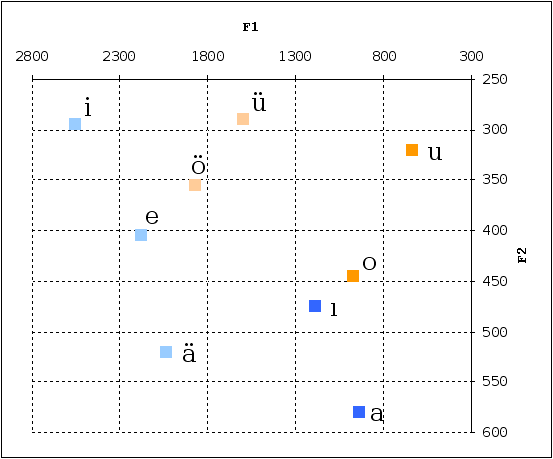
There exist several interpretations of the Tatar vowel phonemic inventory. In total Tatar has nine or ten native vowels, and three or four loaned vowels (mainly in Russian loanwords).
According to Baskakov (1988) Tatar has only two vowel heights, high and low. There are two low vowels, front and back, while there are eight high vowels: front and back, round (R+) and unround (R−), normal and short (or reduced).
Front
Back
R−
R+
R−
R+
High
Normal
Short
Low
i
ü
ï
u
e
ö
ë
o
ä
a
Poppe (1963) proposed a similar yet slightly different scheme with a third, higher mid, height, and with nine vowels.
Front
Back
R−
R+
R−
R+
High
Higher Mid
Low
i
ü
u
e
ö
ï
o
ä
a
According to Makhmutova (1969) Tatar has three vowel heights: high, mid and low, and four tongue positions: front, front-central, back-central and back (as they are named when cited).
Front
Central
Back
Front
Back
R−
R+
R−
R+
R−
R+
R−
R+
High
Mid
Low
i
ü
ï
u
e
ö
ë
o
ä
a
The mid back unrounded vowel ''ë is usually transcribed as ı, though it differs from the corresponding Turkish vowel.
The tenth vowel ï is realized as the diphthong ëy (), which only occurs word-finally, but it has been argued to be an independent phoneme.
Phonetically, the native vowels are approximately thus (with the Cyrillic letters and the usual Latin romanization in angle brackets):
Front
Back
R−
R+
R−
R+
High
Mid
Low
**и**⟨**i**⟩
**ү**⟨**ü**⟩
[~]
**ый**⟨**ıy**⟩
[]
**у**⟨**u**⟩
**э,е**⟨**e**⟩
[~]
**ө**⟨**ö**⟩
[~]
**ы**⟨**ı**⟩
[~]
**о**⟨**o**⟩
**ә**⟨**ä**⟩
[~]
**а**⟨**a**⟩
In polysyllabic words, the front-back distinction is lost in reduced vowels: all become mid-central. The mid reduced vowels in an unstressed position are frequently elided, as in кеше keşe 'person', or кышы qışı '(his) winter'. Low back is rounded in the first syllable and after , but not in the last, as in бала bala 'child', балаларга balalarğa 'to children'. In Russian loans there are also , , , and , written the same as the native vowels: ы, е/э, о, а respectively.
Historical shifts
Historically, the Old Turkic mid vowels have raised from mid to high, whereas the Old Turkic high vowels have become the Tatar reduced mid series. (The same shifts have also happened in Bashkir.)
Vowel
Old Turkic
Kazakh
Tatar
Bashkir
Gloss
*e
*et
et
it
it
'meat'
*ö
*söz
söz
süz
hüź
'word'
*o
*sol
sol
sul
hul
'left'
*i
*it
it
et
et
'dog'
*ï
*qïz
qız
qız
qıź
'girl'
*u
*qum
qum
qom
qom
'sand'
*ü
*kül
kül
köl
köl
'ash'
Consonants
Labial
Dental
Post-
alveolar
Palatal
Velar
Uvular
Glottal
Nasals
Plosives
Voiceless
Voiced
Affricates
Voiceless
Voiced
Fricatives
Voiceless
Voiced
Trill
Approximants
м⟨m⟩
н⟨n⟩
ң⟨ñ⟩
п⟨p⟩
т⟨t⟩
к⟨k⟩
къ⟨q⟩
э/ь⟨ʼ⟩
б⟨b⟩
д⟨d⟩
г⟨g⟩
ц⟨ts⟩
ч⟨ç⟩
җ⟨c⟩
ф⟨f⟩
с⟨s⟩
ш⟨ş⟩
ч⟨ś⟩
х⟨x⟩
һ⟨h⟩
в⟨v⟩
з⟨z⟩
ж⟨j⟩
җ⟨ź⟩
гъ⟨ğ⟩
р⟨r⟩
л⟨l⟩
й⟨y⟩
у/ү/в⟨w⟩
;Notes:
: The phonemes , , , , , are only found in loanwords. occurs more commonly in loanwords, but is also found in native words, e.g. yafraq 'leaf'. , , , may be substituted with the corresponding native consonants , , , by some Tatars.
: and are the dialectal Western (Mişär) pronunciations of җ⟨c⟩ and ч⟨ç⟩, the latter are in the literary standard and in the Central (Kazan) dialect. is the variant of ч⟨ç⟩ as pronounced in the Eastern (Siberian) dialects and some Western (Mişär) dialects. Both and are also used in Russian loanwords (the latter written ц).
: and are usually considered allophones of and in the environment of back vowels, so they are never written in the Tatar Cyrillic orthography in native words, and only rarely in loanwords with къ and гъ. However, and also appear before front in Perso-Arabic loanwords which may indicate the phonemic status of these uvular consonants.
Palatalization
Tatar consonants usually undergo slight palatalization before front vowels. However, this allophony is not significant and does not constitute a phonemic status. This differs from Russian where palatalized consonants are not allophones but phonemes on their own. There are a number of Russian loanwords which have palatalized consonants in Russian and are thus written the same in Tatar (often with the "soft sign" ь). The Tatar standard pronunciation also requires palatalization in such loanwords; however, some Tatar may pronounce them non-palatalized.
Syllables
In native words there are six types of syllables (Consonant, Vowel, Sonorant):
V (ı-lıs, u-ra, ö-rä)
VC (at-law, el-geç, ir-kä)
CV (qa-la, ki-ä, su-la)
CVC (bar-sa, sız-law, köç-le, qoş-çıq)
VSC (ant-lar, äyt-te, ilt-kän)
CVSC (tört-te, qart-lar, qayt-qan)
Loanwords allow other types: CSV (gra-mota), CSVC (käs-trül), etc.
Prosody
Stress is usually on the final syllable. However, some suffixes cannot be stressed, so the stress shifts to the syllable before that suffix, even if the stressed syllable is the third or fourth from the end. A number of Tatar words and grammatical forms have the natural stress on the first syllable. Loanwords, mainly from Russian, usually preserve their original stress (unless the original stress is on the last syllable, in such a case the stress in Tatar shifts to suffixes as usual, e.g. sovétsovetlársovetlarğá).
Phonetic alterations
Tatar phonotactics dictate many pronunciation changes which are not reflected in the orthography.
Unrounded vowels ı and e become rounded after o or ö:
::борын/*borın* [boron]
::көзге/*közge* [közgö]
::соры/*sorı* [soro]
- Nasals are assimilated to the following stops:
::унбер/*unber* [umber]
::менгеч/*mengeç* [meñgeç]
- Stops are assimilated to the preceding nasals (this is reflected in writing):
::урманнар/*urmannar* (
::комнар/*komnar* (
- Voicing may also undergo assimilation:
::күзсез/*küzsez* [küssez]
- Unstressed vowels may be syncopated or reduced:
::урыны/*urını* [urnı]
::килене/*kilene* [kilne]
- Vowels may also be elided:
::кара урман/*qara urman* [qarurman]
::килә иде/*kilä ide* [kiläyde]
::туры урам/*turı uram* [tururam]
::була алмыйм/*bula almıym* [bulalmıym]
- In consonant clusters longer than two phones, **ı** or **e** (whichever is dictated by vowel harmony) is inserted into speech as an epenthetic vowel.
::банк/*bank* [bañqı]
- Final consonant clusters are simplified:
::артист/*artist* [artis]
- Final devoicing is also frequent:
::табиб/*tabib* [tabip]
## Grammar
Like other Turkic languages, Tatar is an agglutinative language.
### Nouns
Tatar nouns are inflected for cases and numbers. Case suffixes change depending on the last consonants of the noun, while nouns ending in for example p/k (п/к) are voiced to b/g (б/г) when a possessive suffix is added (kita**p** – kita**b**ım / кита**б**ым, "my book"). Suffixes below are in back vowel, with front variant can be seen at #Phonology section.
::data[format=table]
| Case | After voiced consonants | After nasals | After unvoiced consonants | Special endings | Nominative (баш килеш) | Accusative (төшем килеше) | Genitive (иялек килеше) | Dative (юнәлеш килеше) | Locative (урын-вакыт килеше) | Ablative (чыгыш килеше) | Plural | Nominative | Accusative | Genitive | Dative | Locative | Ablative |
|---|---|---|---|---|---|---|---|---|---|---|---|---|---|---|---|---|---|
| – | | | | | | | | | | | | | | | | | |
| -ны *-nı* | -н *-n* | | | | | | | | | | | | | | | | |
| -ның *-nıñ* | | | | | | | | | | | | | | | | | |
| -га *-ğa* | -ка *-qa* | -а, -на *-a*, *-na* | | | | | | | | | | | | | | | |
| -да *-da* | -та *-ta* | -нда *-nda* | | | | | | | | | | | | | | | |
| -дан *-dan* | -нан *-nan* | -тан *-tan* | -ннан *-nnan* | | | | | | | | | | | | | | |
| -лар *-lar* | -нар *-nar* | -лар *-lar* | | | | | | | | | | | | | | | |
| -ларны *-larnı* | -нарны *-narnı* | -ларны *-larnı* | | | | | | | | | | | | | | | |
| -ларның *-larnıñ* | -нарның *-narnıñ* | -ларның *-larnıñ* | | | | | | | | | | | | | | | |
| -ларга *-larğa* | -нарга *-narğa* | -ларга *-larğa* | | | | | | | | | | | | | | | |
| -ларда *-larda* | -нарда *-narda* | -ларда *-larda* | | | | | | | | | | | | | | | |
| -лардан *-lardan* | -нардан *-nardan* | -лардан *-lardan* | | | | | | | | | | | | | | | |
::
The declension of possessive suffixes is even more irregular, with the dative suffix -а used in 1st singular and 2nd singular suffixes, and the accusative, dative, locative, and ablative endings -н, -на, -нда, -ннан is used after 3rd person possessive suffix. Nouns ending in -и, -у, or -ү, although phonologically vowels, take consonantic endings.
::data[format=table]
| Person | After consonants | After vowels | 1st singular | 2nd singular | 3rd | 1st plural | 2nd plural |
|---|---|---|---|---|---|---|---|
| -ым *-ım* | -м *-m* | | | | | | |
| -ың *-ıñ* | -ң *-ñ* | | | | | | |
| -ы *-ı* | -сы *-sı* | | | | | | |
| -ыбыз *-ıbız* | -быз *-bız* | | | | | | |
| -ыгыз *-ığız* | -гыз *-ğız* | | | | | | |
::
### Declension of pronouns
The declension of personal and demonstrative pronouns tends to be irregular. Irregular forms are in **bold**.
::data[format=table title="Personal pronouns"]
| Case | Singular | Plural | I || you (sg.), thou || he, she, it || we || you (pl.) || they | Nominative | Accusative | Genitive | Dative | Locative | Ablative |
|---|---|---|---|---|---|---|---|---|---|
| мин *min* | син *sin* | ул *ul* | без *bez* | сез *sez* | алар *alar* | | | | |
| **мине** *mine* | **сине** *sine* | **аны** *anı* | безне *bezne* | сезне *sezne* | аларны *alarnı* | | | | |
| **минем** *minem* | **синең** *sineñ* | **аның** *anıñ* | безнең *bezneñ* | сезнең *sezneñ* | аларның *alarnıñ* | | | | |
| **миңа** *miña* | **сиңа** *siña* | **аңа** *aña* | безгә *bezgä* | сезгә *sezgä* | аларга *alarğa* | | | | |
| миндә *mindä* | синдә *sindä* | **анда** *anda* | бездә *bezdä* | сездә *sezdä* | аларда *alarda* | | | | |
| миннән *minnän* | синнән *sinnän* | **аннан** *annan* | бездән *bezdän* | сездән *sezdän* | алардан *alardan* | | | | |
::
::data[format=table title="Demonstrative pronouns"]
| Case | Singular | Plural | "This" || "That" || "These" || "Those" | Nominative | Accusative | Genitive | Dative | Locative | Ablative |
|---|---|---|---|---|---|---|---|---|---|
| бу *bu* | шул *şul* | болар *bolar* | шулар *şular* | | | | | | |
| **моны** *monı* | **шуны** *şunı* | боларны *bolarnı* | шуларны *şularnı* | | | | | | |
| **моның** *monıñ* | **шуның** *şunıñ* | боларның *bolarnıñ* | шуларның *şularnıñ* | | | | | | |
| **моңа** *moña* | **шуңа** *şuña* | боларга *bolarğa* | шуларга *şularğa* | | | | | | |
| **монда** *monda* | **шунда** *şunda* | боларда *bolarda* | шуларда *şularda* | | | | | | |
| **моннан** *monnan* | **шуннан** *şunnan* | болардан *bolardan* | шулардан *şulardan* | | | | | | |
::
::data[format=table title="Interrogative pronouns"]
| Case | Who? | What? | Nominative | Accusative | Genitive | Dative | Locative | Ablative |
|---|---|---|---|---|---|---|---|---|
| кем *kem* | нәрсә *närsä* | | | | | | | |
| кемне *kemne* | нәрсәне *närsäne* | | | | | | | |
| кемнең *kemneñ* | нәрсәнең *närsäneñ* | | | | | | | |
| кемгә *kemgä* | нәрсәгә *närsägä* | | | | | | | |
| кемдә *kemdä* | нәрсәдә *närsädä* | | | | | | | |
| кемнән *kemnän* | нәрсәдән *närsädän* | | | | | | | |
::
### Verbs
::data[format=table]
| Tense | After voiced consonants | After unvoiced consonants | After vowels | Present | Definite past | Indefinite past | Definite future | Indefinite future | Conditional | Non-finite tenses | Present participle | Past participle | Future participle | Definite future participle | Indefinite future participle | Verbal participle | Pre-action gerund | Post-action gerund | Verbal noun | Infinitive |
|---|---|---|---|---|---|---|---|---|---|---|---|---|---|---|---|---|---|---|---|---|
| -а *-a* | -ый *-ıy* | | | | | | | | | | | | | | | | | | | |
| -ды *-dı* | -ты *-tı* | -ды *-dı* | | | | | | | | | | | | | | | | | | |
| -ган *-ğan* | -кан *-qan* | -ган *-ğan* | | | | | | | | | | | | | | | | | | |
| -ачак *-açaq* | -ячак *-yaçaq* | | | | | | | | | | | | | | | | | | | |
| -ар/ыр *-ar/-ır* | -р *-r* | | | | | | | | | | | | | | | | | | | |
| -са *-sa* | | | | | | | | | | | | | | | | | | | | |
| -учы *-uçı* | | | | | | | | | | | | | | | | | | | | |
| -ган *-ğan* | -кан *-qan* | -ган *-ğan* | | | | | | | | | | | | | | | | | | |
| -асы *-ası* | -ыйсы *-ıysı* | | | | | | | | | | | | | | | | | | | |
| -ачак *-açaq* | | | | | | | | | | | | | | | | | | | | |
| -ар/-ыр *-ar/ır* | -р *-r* | | | | | | | | | | | | | | | | | | | |
| -ып *-ıp* | -п *-p* | | | | | | | | | | | | | | | | | | | |
| -ганчы *-ğançı* | -канчы *-qançı* | -ганчы *-ğançı* | | | | | | | | | | | | | | | | | | |
| -гач *-ğaç* | -кач *-qaç* | -гач *-ğaç* | | | | | | | | | | | | | | | | | | |
| -у | | | | | | | | | | | | | | | | | | | | |
| -мак *-maq* | | | | | | | | | | | | | | | | | | | | |
| -арга/-ырга *-arğa/ırğa* | -рга *-rğa* | | | | | | | | | | | | | | | | | | | |
::
The distribution of present tense suffixes is complicated, with the former (also with vowel harmony) is used with verb stems ending in consonants, and the latter is used with verb stem ending in vowels (with the last vowel being deleted, eşläw / эшләү – eşli / эшл**и**; compare Turkish *işlemek* – continuous ''işl**iyor'''''). The distribution of indefinite future tense is more complicated in consonant-ending stems, it is resolved by -арга/-ырга infinitives (yazarga / язарга – yaz**ar** / яз**ар'''). However, because some have verb citation forms in verbal noun (-у), this rule becomes somewhat unpredictable.
Tenses are negated with -ма, however in the indefinite future tense and the verbal participle they become -mas / -мас and -mıyça / -мыйча instead, respectively. Alongside vowel-ending stems, the suffix also becomes -мый when negates the present tense. To form interrogatives, the suffix -мы is used.
::data[format=table title="Personal inflections"]
| Type | 1st singular | 2nd singular | 3rd singular | 1st plural | 2nd plural | 3rd plural | I | II | Imperative |
|---|---|---|---|---|---|---|---|---|---|
| -мын/-м *-mın/-m* | -сың *-sıñ* | -∅ | -быз *-bız* | -сыз *-sız* | -лар/-нар *-lar/-nar* | | | | |
| -м *-m* | -ң *-ñ* | -∅ | -к *-q, -k* | -гыз *-ğız* | -лар/-нар *-lar/-nar* | | | | |
| -ыйм *-ıym* | -∅ | -сын *-sın* | -ыйк *-ıyq* | -(ы)гыз *-ığız* | -сыннар *-sınnar* | | | | |
::
Definite past and conditional tenses use type II personal inflections instead. When in the case of present tense, short ending (-м) is used. After vowels, the first person imperative forms deletes the last vowel, similar to the present tense does (eşläw – eşl**im**). Like plurals of nouns, the suffix -лар change depending the preceding consonants (-alar, but -ğannar).
#### Anomalous verbs
Some verbs, however, fall into this category. Dozens of them have irregular stems with a final mid vowel, but obscured on the infinitive (uqu – uq**ı**, uq**ıy**; tözü – töz**e**, töz**i**). The verbs qoru / кору "to build", tanu / тану "to disclaim", taşu / ташу "to spill" have contrastive meanings with verbs with their final vowelled counterparts, meaning "to dry", "to know", "to carry".
The verb (diyu) "to say" is significantly more irregular than any other verbs: its 2nd person singular imperative is digen (диген), while its expected regular form is repurposed as the present tense forms (dim, diñ, di…).
### Predicatives
::data[format=table]
| After voiced consonants | After unvoiced consonants | 1st singular | 2nd singular | 3rd | 1st plural | 2nd plural |
|---|---|---|---|---|---|---|
| -мын *-mın* | | | | | | |
| -сың *-sıñ* | | | | | | |
| -дыр *-dır* | -тыр *-tır* | | | | | |
| -быз *-bız* | | | | | | |
| -сыз *-sız* | | | | | | |
::
These predicative suffixes have now fallen into disuse, or rarely used.
## Writing system
*Main article: Tatar alphabets, Yañalif*
::figure[src="https://upload.wikimedia.org/wikipedia/commons/f/fa/Tatar_Latin_Janalif_Arabic_1928.png" caption="Tatar Latin (Jaꞑalif) and Arabic scripts, 1927"]
::
::figure[src="https://upload.wikimedia.org/wikipedia/commons/a/a7/Tatar_guide_in_Latin.jpg" caption="Some guides in [[Kazan]] are in [[Latin]] script, especially in fashion boutiques."]
::
::figure[src="https://upload.wikimedia.org/wikipedia/commons/f/ff/Nizhny-Novgorod-Mosque-inscription-C0274.jpg" caption="Tatar sign on a [[madrasah]] in [[Nizhny Novgorod]], written in both Arabic and Cyrillic Tatar scripts"]
::
During its history, Tatar has been written in Arabic, Latin and Cyrillic scripts.
Before 1928, Tatar was mostly written in Arabic script (Иске имля/İske imlâ, "Old orthography", to 1920; Яңа имла/Yaña imlâ, "New orthography", 1920–1928).
During the 19th century, Russian Christian missionary Nikolay Ilminsky devised the first Cyrillic alphabet for Tatar. This alphabet is still used by Christian Tatars (Kryashens).
In the Soviet Union after 1928, Tatar was written with a Latin alphabet called Jaꞑalif.
In 1939, in Tatarstan and all other parts of the Soviet Union, a Cyrillic script was adopted and is still used to write Tatar. It is also used in Kazakhstan.
The Republic of Tatarstan passed a law in 1999 that came into force in 2001 establishing an official Tatar Latin alphabet. A Russian federal law overrode it in 2002, making Cyrillic the sole official script in Tatarstan since. In 2004, an attempt to introduce a Latin-based alphabet for Tatar was further abandoned when the Constitutional Court ruled that the federal law of 15 November 2002 mandating the use of Cyrillic for the state languages of the republics of the Russian Federation does not contradict the Russian constitution. In accordance with this Constitutional Court ruling, on 28 December 2004, the Tatar Supreme Court overturned the Tatarstani law that made the Latin alphabet official.
In 2012 the Tatarstan government adopted a new Latin alphabet but with limited usage (mostly for Romanization).
In 2024, the modified Common Turkic Alphabet replaced letter ä with ə, which was already in use in Azerbaijani, as well as among Tatar activists using the Latin alphabet.
- Tatar Perso-Arabic alphabet (before 1928):
::data[format=table]
| و | ۇ | ڤ | ی | ئ | | | |
|---|---|---|---|---|---|---|---|
::
- Tatar Old Latin (Jaꞑalif) alphabet (1928 to 1940):
::data[format=table]
| Ь ь | ' | | | | | |
|---|---|---|---|---|---|---|
::
- Tatar Old Cyrillic alphabet (by Nikolay Ilminsky, 1861; the letters in parentheses are not used in modern publications):
::data[format=table]
| Ъ ъ | Ы ы | Ь ь | (Ѣѣ) | Э э | Ю ю | Я я | (Ѳѳ) |
|---|---|---|---|---|---|---|---|
::
- Tatar Cyrillic alphabet (1939; the letter order adopted in 1997):
::data[format=table]
| Щ щ | Ъ ъ | Ы ы | Ь ь | Э э | Ю ю | Я я | |
|---|---|---|---|---|---|---|---|
::
- 1999 Tatar Latin alphabet, made official by a law adopted by Tatarstani authorities but annulled by the Tatar Supreme Court in 2004:
::data[format=table]
| Y y | Z z | ʼ | | | | | |
|---|---|---|---|---|---|---|---|
::
- 2012 Tatar Latin alphabet
::data[format=table]
| Y y | Z z | ʼ | | | | | |
|---|---|---|---|---|---|---|---|
::
## History
*Main article: Turkic languages#Vocabulary comparison*
The ancestors of Tatar are the extinct Turkic Bulgar and Kipchak languages.
The literary Tatar language is based on the Central Tatar (Kazan) dialect and on Türki, also known as *Old Tatar Language*. Both are members of the Volga-Ural subgroup of the Kipchak group of Turkic languages, although they also partly derive from the ancient Volga Bulgar language.
Crimean Tatar, although similar by name, belongs to another subgroup of the Kipchak languages. Unlike Kazan Tatar, Crimean Tatar is heavily influenced by Turkish (mostly its Ottoman variety with Arabic and Persian influences) and Nogai languages.
### Influences in Tatar
Most of the Uralic languages in the Volga River area have strongly influenced the Tatar language, as have the Arabic, Persian and Russian languages.
#### Arabic and Persian
The Arabic and Persian influence on Tatar can be seen most clearly in loan words but also in specific sounds. For example, Tatar ğ / г is the Arabic ghayn غ. However, in Arabic words and names where there is an ayin ع, Tatar adds the ghayn instead (عبد الله, ***’***Abdullah*;* Tatar: ***Ğ**abdulla* / **Г**абдулла; Yaña imlâ: غابدوللا /**ʁ**abdulla/). In the Mishar Tatar Dialect, ğ is not pronounced, and thus, a word like *şiğır* (شعر, шигыр, "poem") is *şigır* or *şiyır* for Mishars (who in Finland use the Latin alphabet).
When it comes to Arabic and Persian loanwords, in the Tatar Latin script, alif is realised as the letter a, and when there is no alif, it is ä (ə) (عيسى, Ğ**ə**ys**ə**; آزاد, **A**z**a**t). When the alif has hamza on top (أ), it is also ä (ə), but Tatar İske imlâ spells it without (امين / أمين, **Ə**min). Vowel harmony as well is a deciding factor (عبد الله, Ğ**a**bd**u**ll**a**; عبد الرشيد, Ğ**ə**bderr**ə**şit). Similarly with ö/o (عمر, Ğ**ö**m**ə**r; عثمان, Ğ**o**sm**a**n). However, this rule is often inconsistent when transliterating from Cyrillic to Latin.
During the Golden Horde (1242–1502), the ancestors of modern Tatars used Persian in addition to their Turkic language to a relatively significant extent, especially in poetry and even after the Golden Horde. For example, the long-serving Khan of the Kazan Khanate (1438–1552), Möxəmməd-Əmin, wrote poetry in Persian. In religious and legal matters Arabic was used. Many Persian and Arabic works are considered part of Tatar literature today.
## Sample text
::figure[src="https://upload.wikimedia.org/wikipedia/commons/0/0a/Article_1_in_Tatar.flac" caption="Tatar pronunciation"]
::
Article 1 of the Universal Declaration of Human Rights in Tatar (Cyrillic):
:Барлык кешеләр дә азат һәм үз абруйлары һәм хокуклары ягыннан тиң булып туалар. Аларга акыл һәм вөҗдан бирелгән, һәм алар бер-берсенә карата туганнарча мөнасәбәттә булырга тиешләр.
Article 1 of the Universal Declaration of Human Rights in Tatar (Latin):
:Barlıq keşelər də azat həm üz abruyları həm xoquqları yağınnan tiñ bulıp tuwalar. Alarğa aqıl həm wöcdan birelgən, həm alar ber-bersenə qarata tuğannarça mönəsəbəttə bulırğa tiyeşlər.
International Phonetic Alphabet transcription:
:
Article 1 of the Universal Declaration of Human Rights in English:
:*All human beings are born free and equal in dignity and rights. They are endowed with reason and conscience and should act towards one another in a spirit of brotherhood.*
## References
## References
1. Ethnic Groups and Religious department, Fujian Provincial Government. (13 September 2022). ["少数民族的语言文字有哪些?"](http://fujian.gov.cn/hdjl/hdjlzsk/mzzjt/mz/202209/t20220913_5991001.htm).
2. ["ACT of 6 January 2005 on national and ethnic minorities and on the regional languages"](http://ksng.gugik.gov.pl/english/files/act_on_national_minorities.pdf).
3. ["Tatar in Russian Federation {{!}} UNESCO WAL"](https://en.wal.unesco.org/countries/russian-federation/languages/tatar).
4. {{Cite Merriam-Webster. Tatar
5. Russian Census 2010. [http://www.gks.ru/free_doc/new_site/perepis2010/croc/Documents/Vol4/pub-04-06.pdf Владение языками населением] {{in lang. ru
6. Russian Census 2010. [http://www.gks.ru/free_doc/new_site/perepis2010/croc/Documents/Vol4/pub-04-07.pdf Владение языками населением наиболее многочисленных национальностей по субъектам Российской Федерации] [Language proficiency of the population of the largest ethnic groups by federal subjects of the Russian Federation] {{in lang. ru
7. Wurm, S. (2001). "Atlas of the world's languages in danger of disappearing". *Unesco Pub.*.
8. (1 December 2017). ["Без языка: Казань отказалась от обязательных уроков татарского"](http://www.bbc.com/russian/features-42186885). *BBC Russia*.
9. (22 September 2017). ["Татарский язык становится "ящиком Пандоры""](https://www.business-gazeta.ru/article/358446). *БИЗНЕС Online*.
10. (12 November 2017). ["Исмагил Хуснутдинов: "Под лозунгом добровольности татарский язык пытаются изгнать из школ""](https://www.business-gazeta.ru/article/363554). *БИЗНЕС Online*.
11. (2005). "Jazyki Rossijskoi Federatsii i sosednih gosudarstv". *Nauka*.
12. Zakiev, M. Z.. (1997). "Tatar". *Indrik*.
13. Leitzinger, Antero: ''Mishäärit – Suomen vanha islamilainen yhteisö''. Kirja-Leitzinger, 1996. {{ISBN. 952-9752-08-3. (p. 41)
14. Махмутова Л. Т. Опыт исследования тюркских диалектов: мишарский диалект татарского языка. — М.: Наука, 1978
15. Leitzinger, Antero. (1996). "Mishäärit – Suomen vanha islamilainen yhteisö". *Kirja-Leitzinger*.
16. [http://www.helsinki.fi/~tasalmin/nasia_report.html#SibTatar Information about Siberian Tatar]
17. Baskakov, Nikolai. (1960). "Тюркские языки". *Издательство восточной литературы*.
18. Утяшева, Гузель Чахваровна. (2006). "Русские заимствования в тоболо-иртышском диалекте сибирских татар". *Казанский федеральный университет*.
19. Рахимова, Роза Нуретдиновна. (2007). "Тюменский говор в системе диалектов сибирских татар: фонетико-морфологическая характеристика". *Казанский федеральный университет*.
20. Рамазанова, Д. Б.. (2006). ["Сибирско-татарские диалекты и говоры татарского языка"](http://atlas.antat.ru/upload/ramazanova/dialekt.pdf). *Казанский федеральный университет*.
21. Валеев, Фоат Тач-Ахметович. (1980). "Западносибирские татары во второй половине XIX – начале XX в. (Историко-этнографические очерки)". *Татарское книжное изд-во*.
22. (2003). "Current Trends in Caucasian, East European and Inner Asian Linguistics". *John Benjamins*.
23. Berta, Árpád. (1998). "The Turkic languages". *Routledge*.
24. Johanson, Lars. (1998). "The Turkic languages". *Routledge*.
25. ["Грамматика татарского языка"](http://www.tatar.com.ru/grammatika.php).
26. Burbiel, Gustav. (2018). ["Tatar Grammar: А Grammar of the Contemporary Tatar Literary Language"](https://ibt.org.ru/sites/default/files/files/TTR_Gram_R_web.pdf). *Institute for Bible Translation*.
27. Зәкиев, М.З.. (2016). ["Татар грамматикасы"](http://antat.ru/ru/iyli/publishing/book/2016/%D0%93%D1%80%D0%B0%D0%BC%D0%BC%D0%B0%D1%82%D0%B8%D0%BA%D0%B0_2.pdf#page=55). *ТӘһСИ*.
28. Spolsky, Bernard. (2004). "Language Policy". *Cambridge University Press*.
29. (16 November 2004). ["Russia court sticks to letter law"](https://news.bbc.co.uk/2/hi/europe/4016571.stm). *[[BBC News]]*.
30. (February 2005). ["The Tatar language will continue to be written through the Cyrillic alphabet"](http://www.usefoundation.org/view/517). *U.S. English Foundation*.
31. Abuova, Nagima. (23 September 2024). ["Turkic States Revive Latin-Based Alphabet to Preserve Linguistic Heritage"](https://astanatimes.com/2024/09/turkic-states-revive-latin-based-alphabet-to-preserve-linguistic-heritage/).
32. Ahmetcan, Aygul. ["Learn Tatar – Vocabulary"](https://www.learntatar.com/vocabulary).
33. ["Tatar Grammar"](https://www.instagram.com/tatargrammar?igsh=MTVmNWRiZmt0cWQwNQ==).
34. ["Law of the Republic of Tatarstan "On the use of the Tatar language as the state language of the Republic of Tatarstan" with an appendix (correspondence table)"](https://cdnstatic.rg.ru/uploads/attachments/73/99/43/pril.pdf).
35. [http://www.princeton.edu/~turkish/aatt/tatar.htm Tatar language – Princeton University] {{Webarchive. [link](https://web.archive.org/web/20061213002624/http://www.princeton.edu/~turkish/aatt/tatar.htm). (13 December 2006)
36. {{in lang. ru [http://www.languages-study.com/tatar.html Татарский язык в Интернете: информация о методах и средствах обучения] [The Tatar language on the Internet: information about teaching methods and tools]
37. ["Tatar (Standard)"](https://eurphon.info/languages/html?lang_id=46).
38. ["Abdullah - Islamic Name Meaning"](https://quranicnames.com/abdullah/).
39. ["Tatar Names"](https://magarif-uku.ru/tatar-isemnere/ir-at/).
40. (20 May 2011). ["Revised Proposal to encode Arabic characters used for Bashkir, Belarusian, Crimean Tatar, and Tatar languages"](https://unicode.org/L2/L2011/11209-n4072-arabic.pdf).
41. (2005). "Jazyki Rossijskoi Federatsii i sosednih gosudarstv". *Nauka*.
42. ["Yabalak Süzlek – Finnish-Tatar Dictionary"](https://yabalak.fi/).
43. (2004-12-24). ["Xristian dönyası Raştua bäyräm itä"](https://www.azatliq.org/a/816786.html).
44. Ahmetcan, Aygul. ["Azat Minnekaev"](https://www.learntatar.com/culture/famous-people/azat-minnekaev).
45. (2003-01-17). ["Äfğanstanda general Dostumnı üterergä telägän keşe qulğa alındı"](https://www.azatliq.org/a/806083.html).
46. (November 2019). ["EXISTENTIAL MOTIVES IN ĞABDULLA TUQAY'S CREATIVE WORK"](https://www.researchgate.net/publication/337712786). *Philology Theory & Practice*.
47. (2003-06-04). ["Ğömär Sabircanov: «Dan qazanğan çittäge millättäşlärebez dä tatar entsiklopediäsenä kertelä ala...»"](https://www.azatliq.org/a/808392.html).
48. (2005-04-01). ["Ğosman Sadä : "Taşqınnar da yua almıy xalıq xäteren..." "Şähri Qazan""](https://www.azatliq.org/a/818220.html).
49. [link](https://www.marefa.org/w/images/9/95/%D0%A5%D0%B0%D0%BB%D1%8C%D1%84%D0%B8%D0%BD_%D0%90%D0%B7%D0%B1%D1%83%D0%BA%D0%B0_%D1%82%D0%B0%D1%82%D0%B0%D1%80%D1%81%D0%BA%D0%BE%D0%B3%D0%BE_%D1%8F%D0%B7%D1%8B%D0%BA%D0%B0_1778.pdf)
50. {{Cite encyclopedia. И.Л.. Измайлов. [link](https://tatarica.org/tat/razdely/istoriya/srednie-veka/gosudarstva/altyn-urda)
51. DeWeese, Devin. (2019). ["Persian and Turkic from Kazan to Tobolsk: Literary Frontiers in Muslim Inner Asia"](https://www.jstor.org/stable/j.ctvr7fdrv.11). *University of California Press*.
52. {{Cite encyclopedia. [link](https://tatarica.org/tat/razdely/kultura/literatura/literatura-tatarskaya)
::callout[type=info title="Wikipedia Source"]
This article was imported from [Wikipedia](https://en.wikipedia.org/wiki/Tatar_language) and is available under the [Creative Commons Attribution-ShareAlike 4.0 License](https://creativecommons.org/licenses/by-sa/4.0/). Content has been adapted to SurfDoc format. Original contributors can be found on the [article history page](https://en.wikipedia.org/wiki/Tatar_language?action=history).
::
This content may have been generated or modified by AI. CloudSurf Software LLC is not responsible for the accuracy, completeness, or reliability of AI-generated content. Always verify important information from primary sources.