From Surf Wiki (app.surf) — the open knowledge base
Ra'ana Liaquat Ali Khan
Pakistani politician and economist (1905–1990)

Pakistani politician and economist (1905–1990)
| Field | Value | ||
|---|---|---|---|
| name | Ra'ana Liaquat Ali Khan | ||
| order | 10th Governor of Sindh | ||
| native_name | بیگم رعنا لياقت على خان | ||
| image | Begum Ra'ana Liaquat Ali Khan (1961).jpg | ||
| smallimage | |||
| caption | Ra'ana in 1961 | ||
| alongside | |||
| predecessor | Mir Rasool Bux Talpur | ||
| president | Fazal Ilahi Chaudhry | ||
| succeeding | |||
| successor | Muhammad Dilawar Khanji | ||
| birthname | Sheila Irene Pant | ||
| birth_date | |||
| birth_place | Almora, Agra and Oudh, British India | ||
| death_date | |||
| death_place | Karachi, Sindh, Pakistan | ||
| citizenship | British Indian (1905–1947) | ||
| Pakistani (1947–1990) | |||
| nationality | Pakistani | ||
| otherparty | |||
| spouse | Liaquat Ali Khan (m. 1932; d. 1951) | ||
| partner | |||
| alma_mater | University of Lucknow | ||
| occupation | Stateswoman | ||
| allegiance | |||
| branch | |||
| serviceyears | 1947–1951 | ||
| rank | [[File:US-O7 insignia.svg | 15px]] [[File:OF-6 Pakistan Army.svg | 15px]] Brigadier (honorary rank) |
| unit | Pakistan Army Medical Corps | ||
| commands | Naval Women's Reserve Corps | ||
| Women's National Guard | |||
| Pakistan Army Medical Corps | |||
| battles | Indo-Pakistani War of 1947 | ||
| awards | {{plainlist | ||
| honorific-suffix | NI OMRI | ||
| honorific-prefix | Madar-e-Pakistan | ||
| Begum | |||
| term_start | 15 February 1973 | ||
| term_end | 28 February 1976 | ||
| order2 | Spouse of the Prime Minister of Pakistan | ||
| party | Muslim League | ||
| term_start2 | 14 August 1947 | ||
| term_end2 | 16 October 1951 | ||
| predecessor2 | *Order established* | ||
| successor2 | Shahbano Ashraf | ||
| primeminister2 | Liaquat Ali Khan | ||
| order3 | President of All Pakistan Women's Association | ||
| office3 | |||
| term_start3 | 14 August 1949 | ||
| term_end3 | 29 October | ||
| office4 | Pakistan Ambassador to the Netherlands | ||
| term_start4 | 1954 | ||
| term_end4 | 1961 | ||
| office5 | Pakistan Ambassador to Italy and Tunisia | ||
| term_start5 | 1965 | ||
| term_end5 | 1966 | ||
| education | Master in Science (MSc) | ||
| native_name_lang | ur |
Pakistani (1947–1990) Women's National Guard Pakistan Army Medical Corps
- Nishan-e-Imtiaz
- Order of Merit of the Italian Republic
- Order of Orange-Nassau | honorific-suffix = NI OMRI | honorific-prefix = Madar-e-Pakistan Begum 1951
Begum Ra'ana Liaqat Ali Khan (, known as Gul-i-Rana; 13 February 1905 – 13 June 1990) was the First Lady of Pakistan from 1947 to 1951 as the wife of Liaquat Ali Khan who served as the 1st Prime Minister of Pakistan. She was also the first female governor in Pakistan, serving Sindh. She was one of the leading woman figures in the Pakistan Movement, and a career economist, and prominent stateswoman from the start of the cold war till the fall and the end of the Cold War.
She was one of the leading women politicians and nationwide respected female personalities witnessed key major events in Pakistan. She was one of the leading and pioneering women figures in the Pakistan Movement and served as the executive member of Pakistan Movement committee working under Muhammad Ali Jinnah. She also served as economic adviser to Jinnah's Pakistan Movement Committee and later became First Lady of Pakistan when her husband Liaqat Khan Ali became Pakistan's first prime minister. Rana Liaqat Ali khan as First Lady of Pakistan, she launched programs for woman's development in the newly founded country. Later, she would start her career as a stateswoman that would last a decade.
In the 1970s, she joined hands with Zulfikar Ali Bhutto's political movement and joined the socialist government of Zulfikar Ali Bhutto, elected prime minister at that time. She was one of the most trusted and close government and economical advisers to Bhutto and his government, and had played influential role and involved with many key economical decisions taken by Zulfikar Ali Bhutto. Zulfikar Ali Bhutto led the appointment of Ra'ana as the Governor of Sindh Province, and she took the oath on 15 February 1973. Ra'ana was the first woman Governor of Sindh as well as first Chancellor of University of Karachi. In 1977, Ra'ana along with Bhutto and his party, and won the parliamentary elections of 1977, but did not take the gubernatorial office due to martial law imposed by General Zia-ul-Haq, Chief of Army Staff of Pakistan Army. Ra'ana went on to work and dedicated her life for the social and economic benefit of women of Pakistan till her death in 1990. She died in 1990 due to cardiac arrest and was buried in Karachi, with full state and military honours given to her in her funeral. Because of her services and efforts for medical and woman development and woman empowerment, Ra'ana is commonly known as "Māder-e-Pakistan" (English translation: Mother of Pakistan).
Biography
Early life and education
Sheila Irene Pant was born in Almora, Kumaon in 1905 in a Kumaoni family that had converted to Christianity in 1869.Hina Azmat, Journal of the Punjab University Historical Society, Volume No. 32, Issue No. 1, January - June 2019 https://pu.edu.pk/images/journal/HistoryPStudies/PDF_Files/5_v32_1_2019.pdf She attended the University of Lucknow, where in 1927 she was awarded a BA degree in Economics and a Bachelor of Theology in Religious Studies. In 1929, she obtained a double MSc in Economics and Sociology. She began her career as a teacher in the Gokhale Memorial School after completing the Teachers Diploma Course from the Diocesan College, Calcutta. She was appointed as Professor of Economics at Indraprastha College, Delhi, in 1931 and met Liaqat Ali Khan in the same year when he visited to deliver a lecture on law. The couple married in 1932. At this time, she converted to Islam and took the name Begum Ra'ana (Gul-i-Rana) Liaqat Ali Khan. After the reorganisation of the Muslim League, Begum Ra'ana devoted herself to the task of creating political consciousness amongst the Muslim women society of the British Indian Empire. During this time, Ra'ana became an executive member of Jinnah's Working Committee and served there as economical adviser. Her struggle for emancipation and support for Pakistan continued till the creation of Pakistan for Muslims of India in 1947.
Pakistan Movement
With her husband, Ra'ana strongly opposed the Simon Commission. While a Professor of Economics, Ra'ana intensely mobilised students from her college and went to the Legislative Assembly to hear her husband's debate carrying placards of "Simon Go Home". With Liaquat Ali Khan winning the debate, she became an instant hero with her friends. She later sold him a ticket to a stage show to raise funds for flood relief in Bihar. Ra'ana proved to be Liaquat Ali Khan's constant partner and companion. She became politically involved with her husband and played a major role in the Pakistan Movement. She became a defining moment in Pakistan's history when she accompanied her husband to London, United Kingdom in May 1933. There, she and Khan met with Jinnah at Hamstead Heath residence, and successfully convinced Jinnah to return to the British Indian Empire to resume the leadership of the All India Muslim League. Jinnah returned to India, and Ra'ana was appointed as an executive member of the Muslim League and the Chairperson of the Economic Division of the Party.
In 1942, when it became apparent that Imperial Japan was near attacking India, Jinnah summoned Ra'ana and said to her "Be prepared to train the women. Islam doesn't want women to be shut up and never see fresh air". To undertake this task, Ra'ana organised Muslim women in the same year, when she formed a small volunteer medical corps for nursing and first aid in Delhi. Begum Ra'ana played an important role in creating political awareness among women. Ra'ana was among the aspiring women in South Asia and encouraged hundreds of women to fight for Pakistan shoulder-to-shoulder with men.
First Lady
Ra'ana was the first First Lady of Pakistan. As First Lady, she initiated reforms for woman and child development and social progress of women, and played a major role for women's part in Pakistan's politics. After the assassination of her husband Liaquat Ali Khan in 1951, Begum Ra'ana continued her services for the social and economic benefit of women of Pakistan till her death in 1990. One of the daunting challenges for her was to organise health services for women and children migrating from India to Pakistan.
In 1947, as the refugees poured in from across the border, amidst the most pitiable of conditions with cholera, diarrhoea and smallpox being common sights everywhere, she called upon women to come forward and collect food and medical supplies from government offices. The women came forward despite the resistance they faced from certain sections of society, including certain newspapers where they were attacked in the most vicious manner by elements that did not want women to come out from their "four walls". She firmly believed that for a society to do justice to itself, it was pertinent that women played their due role in reforming society alongside the men.
During this point in Pakistan's history there weren't many nurses in Karachi, so Begum Liaquat asked the army to train women to give injections and first aid. Women were thus trained in three to six-month courses and as such the para-military forces for women were formed. The Pakistan Army quickly established Army Medical Corps and recruited a large number of women nurses as army nurses. During this period, girls were also personally encouraged by Begum Liaquat to take up nursing as a profession. They were also taught the rifle drill, to decode ciphers, typing and a host of other duties so they could be useful in times of national crisis like the refugee crisis of 1947.
Initiatives for women
Ra'ana founded the Women's National Guard (PWNG), and helped established the Women's Naval Reserves in the Navy, and was appointed as the Chief Controller.{{Cite web
|url-status = dead |archive-url = https://web.archive.org/web/20140328220925/http://www.wpcp.org.pk/wpcp/LegendBegumRanLiaqatAliKhan.aspx |archive-date = 28 March 2014
Establishment of APWA
In 1949, Begum Ra'ana arranged a conference of over 100 active women from all over Pakistan. The conference announced the formation of a voluntary and non-political organisation for the social, educational and cultural uplift of the women, named All Pakistan Women's Association (APWA). She was nominated as its first president and unlike Pakistan Women National Guard, the APWA continued to grow as it continuously fought for women's rights in Pakistan. For its services, the Government of Pakistan established APWA College in Lahore as part of its struggle.
Career as stateswoman
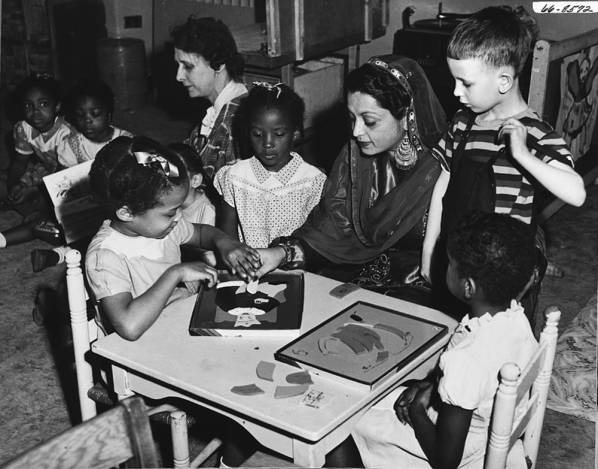
After her husband's death, Ra'ana went on to start her career as a stateswoman that lasted more than 2 decades. In 1952, Ra'ana was the first Muslim woman delegate to the United Nations. In 1954, the Government of Pakistan had appointed her as Pakistan's Ambassador to the Netherlands, and also was the first woman ambassador of Pakistan. She represented Pakistan in the Netherlands until 1961 and was also the doyen of the Diplomatic Corps. In June 1966, she was appointed as Pakistan's Ambassador to Italy and stayed there until 1965. Later, she was directed to Tunisia as Pakistan's Ambassador to Tunisia and held this position until March 1966. Following her return to Pakistan, Ra'ana joined Rana Liaquat Ali Khan Government College of Home Economics as Professor of Economics and stayed there until 1973. The Government College University awarded her an honorary doctorate in economics and conferred her with a Doctor of Philosophy in Economics in 1967.
Bhutto's companion
In 1972, as Pakistan was dismembered and going through an intense crisis, Ra'ana joined hands with then-President Zulfikar Ali Bhutto and his political movement, and joined the socialist government of Zulfikar Ali Bhutto.{{Citation | author-link = Mubashir Hassan | orig-year =2000
Death
Begum Liaquat died on 13 June 1990 and was buried next to her husband in the precincts of the Quaid-e-Azam's Mausoleum. With her has ended a historic period for the women and youth of Pakistan who, in future generations, will no doubt seek inspiration from Begum Liaquat's life and contributions to the emancipation of women.
Honors and legacy
Ra'ana is considered one of the greatest female leaders Pakistan has produced. In Pakistan, she is given the title of "Mother of Pakistan", received in 1950. Ra'ana continues to be seen as a symbol of selfless service to the cause of humanity and uplift of women. In recognition of her lifelong struggle for women's rights, she was awarded the United Nations Human Rights Award in 1978. Her many other awards and medals include the Jane Adam's Medal in 1950, Woman of Achievement Medal 1950, Mother of Pakistan in 1950, Nishan-i-Imtiaz in 1959, Grand Cross of Orange Nassau in 1961 (the Netherlands), International Gimbel Award 1962, Woman of the World in 1965 chosen by the Turkish Women's Association, Ankara, and Vavaliera di Gran Croce in 1966 (Italy).
- United Nation's Human Rights Award (1978)
- honorary doctorate in Economics (1967)
- Knight Grand Cross of the Order of Merit of the Italian Republic (1 March 1966)
- Woman of the World, Turkish Women's Association (1965)
- Grand Cross of Orange Nassau (1961)
- Nishan-i-Imtiaz (1951)
- Mother of Pakistan in 1950
- Jane Addams Medal in 1950
- Woman of Achievement Medal 1950
Eponymous
- Ra'ana Liaquat Ali Khan, Government College of Home Economics (RLAK CHE), Karachi – The economics research institutes of the Government College University established in the 1960s in her honour.
- Raana Liaquat Model Colony – a settlement in Karachi named after Ra'ana Liaqat Ali Khan.
Awards and honours
- Government of Pakistan honoured her with the highest military honour Nishan-e-Imtiaz.
- Queen Juliana of the Netherlands conferred on her the Grand Cross of Orange–Nassau.
- Recipient of the International Gimbel Award for service to humanity (1962).
- United Nations Prize in the Field of Human Rights for her outstanding contribution to the promotion and protection of the human rights embodied in the Universal Declaration of Human Rights and in other United Nations human rights instruments (1978).
References
References
- [https://books.google.com/books?id=6VIYAAAAIAAJ&q=Ra%27ana+Liaquat+Ali+Khan+February+13,+1905 Profile of Ra'ana Liaquat Ali Khan]
- Faisal Abdulla. "Women of Pakistan: Begum Ra'ana Liaqat Ali Khan".
- (APWA) Kumauni people, All Pakistan Woman Association. "APWA Public Press". All Pakistan Woman Association.
- Pirbhai, M. Reza. (2017). "Fatima Jinnah". Cambridge University Press.
- Ahmed, Khaled. (24 June 2019). "Pakistan's First Lady". The Indian Express.
- Life devoted to human welfare, Dawn, Muneeza Shamsie, 11 June 1982
- (23 October 2013). "Begum Raana Liaquat Ali Khan".
- Siddique, Mohammad. (27 Mar 2010). "First woman governor?".
- "Women Who Made History".
- "LIAQUAT ALI KHAN S.E.la Begum Raana". Italian Government.
This article was imported from Wikipedia and is available under the Creative Commons Attribution-ShareAlike 4.0 License. Content has been adapted to SurfDoc format. Original contributors can be found on the article history page.
Ask Mako anything about Ra'ana Liaquat Ali Khan — get instant answers, deeper analysis, and related topics.
Research with MakoFree with your Surf account
Create a free account to save articles, ask Mako questions, and organize your research.
Sign up freeThis content may have been generated or modified by AI. CloudSurf Software LLC is not responsible for the accuracy, completeness, or reliability of AI-generated content. Always verify important information from primary sources.
Report