From Surf Wiki (app.surf) — the open knowledge base
Piano Concerto No. 4 (Saint-Saëns)
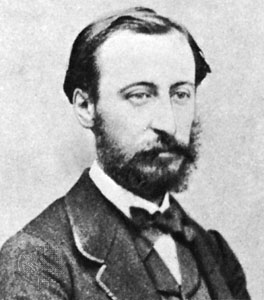
The Piano Concerto No. 4 in C minor, Op. 44 was composed by Camille Saint-Saëns in 1875. It was premièred on October 31, 1875, at the Théâtre du Châtelet of Paris, with the composer as the soloist. The concerto is dedicated to Anton Door, a professor of piano at the Vienna Conservatory.
Structure
The fourth piano concerto is the composer's most structurally innovative piano concerto. In one sense it is structured like a four-movement symphony, but these are grouped in pairs. That is, the piece is divided into two parts, each of which combines two main movements (I. A moderate-tempo Theme and Variations in C minor; II. A slower, related Theme and Variations in A major; III. Scherzo in C minor; IV. Finale in C major). However, in each part there is a bridge-like transitional section, between the two main "movements" – for example, a fugal Andante in part II functions as an interlude between the two main triple-meter sections.
|Allegro moderato – Andante :The first movement begins with a gently mischievous chromatic subject, heard in dialogue between the strings and piano soloist, and continues in a creative thematic development similar to Saint-Saëns' third symphony. The composer demonstrates brilliant skill in employing the piano and orchestra almost equally. In the Andante, he introduces a hymn-like theme with the woodwinds (also strikingly similar to the tune of the third symphony's final section), and uses this as a platform on which he builds a series of variations before bringing the movement to a quiet close. :[[File:Orchesterwerke Romantik Themen.pdf|450px|page=695]]
|Allegro vivace – Andante – Allegro :The Allegro vivace begins as a playful and cunning scherzo (although still in C minor), deriving its main theme from the original chromatic subject in the beginning of the first movement. There is a bold switch to time, and the piano leads the orchestra into a new brief but energetic theme. Eventually the orchestra moves into a lush Andante, recapitulating the chorale-style melody. Rather suddenly, the piano climbs up to a flurry of double octave trills and a climactic trumpet fanfare, leading to the jubilant finale based once more on the hymn theme played at triple time. The concerto concludes with the piano, in cadenza-like cascades, guiding the orchestra to a fortissimo close. :[[File:Orchesterwerke Romantik Themen.pdf|450px|page=696]]
Instrumentation
The concerto is scored for solo piano, 2 flutes, 2 oboes, 2 clarinets, 2 bassoons, 2 horns, 2 trumpets, 3 trombones, timpani and strings.
References
Recordings
- Alfred Cortot, piano, Orchestre de la Société des Concerts du Conservatoire, conducted by Charles Munch 1935. Report CD Naxos 2000
- Lélia Gousseau, piano, Orchestre National de la RTF, conducted by André Cluytens (Live 11/12/1956). CD INA 2014
- Jeanne-Marie Darré, Complete piano concertos, Orchestre de la Radiodiffusion française, conductedby Louis Fourestier. Recorded 1955–1957. 2 CD Emi 1996
- Alexander Brailowsky, piano, Boston Symphony Orchestra, conducted by Charles Munch. LP His Master's Voice 1954
- Grant Johannesen, piano, Philarmonia Orchestra, conducted by Georges Tzipine. LP His Master's Voice 1958
- Gabriel Tacchino, piano, Orchestra Of Radio Luxembourg, conducted by Louis De Froment "Complete Works For Piano And Orchestra" 3 LP Vox 1976 / reprint: CD Brilliant Classics
- Robert Casadesus, piano, New York Philharmonic, conducted by Leonard Bernstein. 1962. Report CD Sony 1993
- François-René Duchable, piano, Orchestre Philharmonique de Strsbourg, conducted by Alain Lombard (with piano concerto n°2). CD Erato 1982.
- Stephen Hough, City of Birmingham Symphony Orchestra, conducted by Sakari Oramo. CD Hyperion 2001. Gramophone Awards record of the year 2002. Diapason d'or, Choc Le Monde la Musique
- Jean-François Heisser, piano, Les Siècles, conducted by François-Xavier Roth. CD Actes Sud 2010
- Alexandre Kantorow, piano, Tapiola Sinfonietta, conducted by Jean-Jacques Kantorow (with piano concertos n°3 & 5). SACD Bis 2019. Diapason d'or, Choc de Classica
References
- (1875). "Les Annales du théâtre et de la musique". Charpentier et Cie. Libraires-Editeurs, París.
This article was imported from Wikipedia and is available under the Creative Commons Attribution-ShareAlike 4.0 License. Content has been adapted to SurfDoc format. Original contributors can be found on the article history page.
Ask Mako anything about Piano Concerto No. 4 (Saint-Saëns) — get instant answers, deeper analysis, and related topics.
Research with MakoFree with your Surf account
Create a free account to save articles, ask Mako questions, and organize your research.
Sign up freeThis content may have been generated or modified by AI. CloudSurf Software LLC is not responsible for the accuracy, completeness, or reliability of AI-generated content. Always verify important information from primary sources.
Report