From Surf Wiki (app.surf) — the open knowledge base
People's Commissariat
Structure in the Soviet government from 1917–1946
Structure in the Soviet government from 1917–1946
A People's Commissariat (; narkomat) was a structure in the Soviet state from 1917–1946 which functioned as the central executive body in charge of managing a particular field of state activity or a separate sector of the national economy; analogue of the ministry. As a rule, a People's Commissariat was headed by a People's Commissar (; narkom), which was part of the government – the Council of People's Commissars of the appropriate level.
Commissariats were created as central organs of state administration when the Soviet Union was established in the territory of the former Russian Empire.
The number of People's Commissariats changed in accordance with the requirements of the current moment; overall it increased due to the separation of existing ones and the formation of new ones.
First People's Commissariats
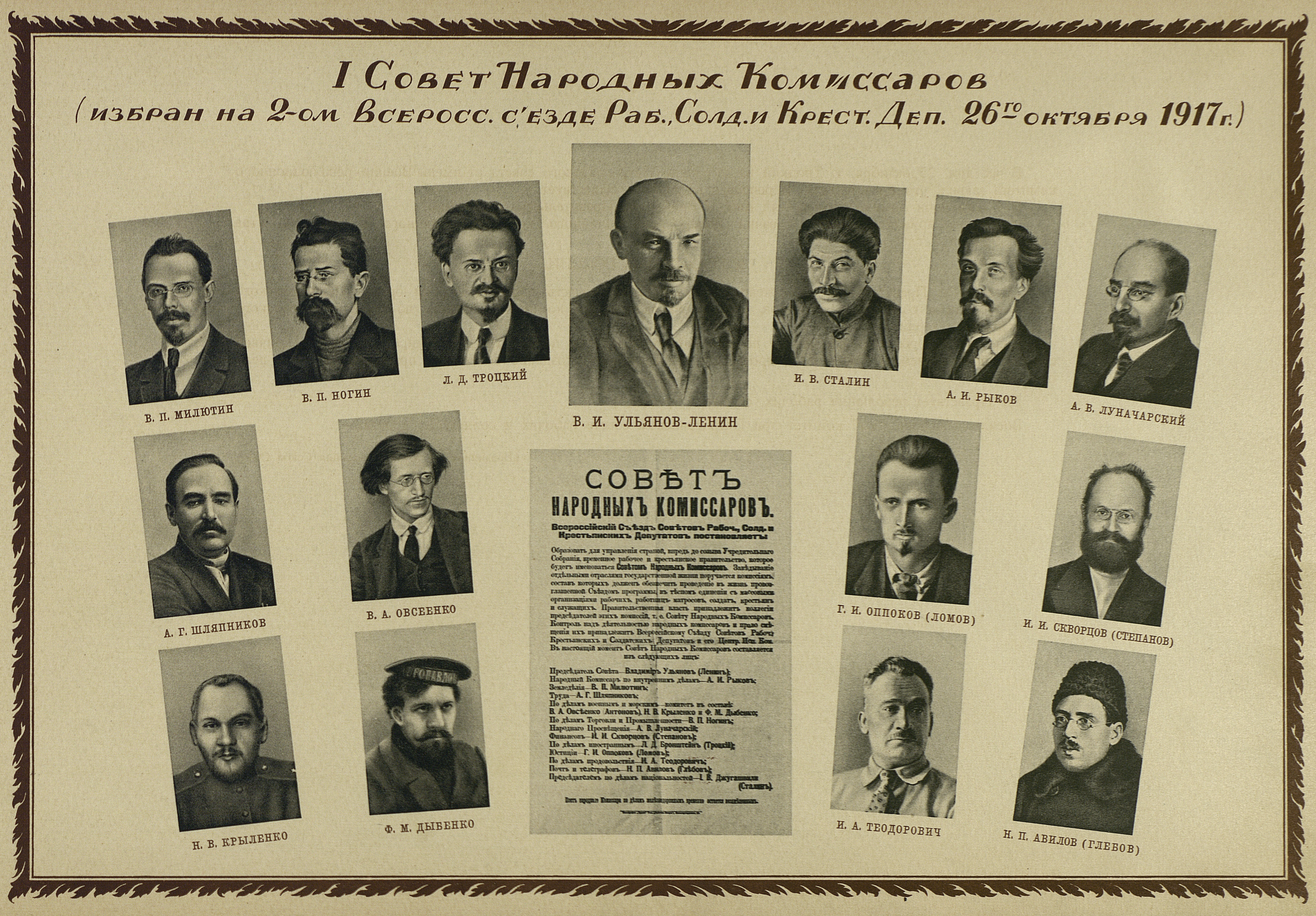
The first People's Commissariats were created by the "Decree on the establishment of the Council of People's Commissars", adopted by the 2nd Congress of Soviets on November 9, 1917. The decree was established: {{Blockquote
The All-Russian Congress of Soviets and its executive body, the All-Russian Central Executive Committee, had the right to control the activities of the People's Commissars and to remove them.
By the same decree the first composition of the Council of People's Commissars was formed, including the list of People's Commissariats:
- People’s Commissariat for Internal Affairs;
- People's Commissariat of Agriculture;
- People's Commissariat of Labor;
- People's Commissariat for Military and Naval Affairs;
- People's Commissariat of Trade and Industry;
- People's Commissariat of Education;
- People's Commissariat of Finance;
- People's Commissariat for Foreign Affairs;
- People's Commissariat of Justice;
- People's Commissariat of Food;
- People's Commissariat of Posts and Telegraphs;
- People's Commissariat of National Affairs;
- People's Commissariat of Railway Affairs.
Later, by a decree of the All-Russian Central Executive Committee and the Council of People's Commissars of December 15, 1917, the Supreme Council of National Economy under the Council of People's Commissars, which had the status of People's Commissariat, was established to organize and manage the national economy.
When Soviet power was established in other Soviet republics, similar commissariats were established on the territory of the former Russian Empire.
Salary
The Council of People's Commissars adopted on December 1, 1917, at the suggestion of Lenin, the decree "On the amount of remuneration of the people's commissars and senior officials" (published on December 6, 1917, in No. 16 of the "Newspapers of the Provisional Worker and Peasant Government"). According to the decree, the remuneration of the people's commissars was 500 rubles plus 100 rubles for each disabled family member, which was approximately equal to the average wage of the worker.
People's Commissariats of the Soviet Republics
Russian Soviet Federative Socialist Republic
With minor changes and additions, the same list of people's commissariats of the Russian Soviet Federative Socialist Republic is also presented in Article 43 of the Constitution of the Russian Soviet Federative Socialist Republic of 1918 adopted by the 5th All-Russian Congress of Soviets.
Autonomous Republics
Article 11 of the Constitution of the Russian Soviet Federative Socialist Republic of 1918 provided for the opportunity for "regions differing in special life and national composition" to create autonomous regions with the formation of their regional Congresses of Soviets and their executive bodies, that is, the Councils of People's Commissars. Thus, in the Kirghiz Autonomous Socialist Soviet Republic, formed in 1926 as part of the Russian Soviet Federative Socialist Republic, in 1929 the Constitution was adopted, which reads:{{Blockquote
Ukrainian Soviet Socialist Republic
Main article: Council of People's Commissars (Ukraine)
The Constitution of the Ukrainian Soviet Socialist Republic, adopted in 1919, in article 14 established:{{Blockquote
However, no list of People's Commissariats was provided in the Constitution.
Relation with the Council of People's Commissars of the Soviet Union
Since the formation of the Soviet Union, the Union republics delegated part of their sovereign powers to the newly formed state, only a part of governance issues remained in their jurisdiction. The Treaty on the Creation of the Soviet Union (Article 18) defines the list of People's Commissariats, whose leaders were members of the Council of People's Commissars of the Republics:
- Supreme Council of National Economy;
- People's Commissariat of Agriculture;
- People's Commissariat of Food;
- People's Commissariat of Finance;
- People's Commissariat of Labor;
- People's Commissariat of Internal Affairs;
- People's Commissariat of Justice;
- People's Commissariat of Workers' and Peasants' Inspection;
- People's Commissariat of Education;
- People's Commissariat of Health;
- People's Commissariat of Social Security;
- People's Commissariat of National Affairs.
The Council of People's Commissars of the Republic with a deliberative vote also included representatives representing those People's Commissariats, whose leadership began to fall within the competence of the Soviet Union:
- People's Commissariat for Foreign Affairs;
- People's Commissariat for Military and Naval Affairs;
- People's Commissariat of Foreign Trade;
- People's Commissariat of Communications;
- People's Commissariat of Posts and Telegraphs.
People's Commissariats of the Soviet Union
The creation of the Soviet Union was legally formalized by the Treaty on the Creation of the Soviet Union, which provided for the formation of the government of the union state. It was called the Council of People's Commissars of the Soviet Union; it included the chairman of the Council of People's Commissars of the Soviet Union, his deputies, the leaders of the People's Commissariats of the Soviet Union.
The Treaty (Article 11) provides the following list of People's Commissariats of the Soviet Union:
- People's Commissariat for Foreign Affairs;
- People's Commissariat for Military and Naval Affairs;
- People's Commissariat of Foreign Trade;
- People's Commissariat of Communications;
- People's Commissariat of Posts and Telegraphs;
- People's Commissariat of Workers' and Peasants' Inspection;
- Supreme Council of National Economy;
- People's Commissariat of Labor;
- People's Commissariat of Food;
- People's Commissariat of Finance.
As the national economy developed and strengthened, the number of People's Commissariats at all levels increased. So, in 1932, the Supreme Council of the National Economy of the Soviet Union was transformed into three people's commissariat:
- People's Commissariat of Heavy Industry;
- People's Commissariat of Light Industry;
- People's Commissariat of the Forest Industry.
Further, from 1936 to 1939, the number of People's Commissariats increased to 24. For example, in 1939, the People's Commissariats of Fish Industry and Meat and Dairy Industry were divided off from the People's Commissariat of Food Industry USSR.
Transformation into ministries
In 1946, the People's Commissariats of all levels were transformed into ministries of the same name.
References
References
- [https://ru.wikisource.org/wiki/Декрет_об_учреждении_Совета_Народных_Комиссаров Decree on the establishment of the Council of People's Commissars]
- [http://www.hist.msu.ru/ER/Etext/DEKRET/snk.htm Decree of the 2nd All-Russian Congress of Soviets on the formation of the Workers' and Peasants' Government on November 8, 1917]
- Collection of laws and regulations of the workers' and peasants' government. Division one. Moscow, 1917, No. 5, article 83.
- ''Vladimir Lenin.'' [https://www.marxists.org/russkij/lenin/works/36-2.htm The immediate tasks of the Soviet government]. 1918. Note number 2 // Complete Works. 5th edition. Volume 36. Moscow, 1974.
- [https://ru.wikisource.org/wiki/Конституция_РСФСР_(1918) The Constitution of the Russian Soviet Federative Socialist Republic (1918)]
- [https://ru.wikisource.org/wiki/Конституция_Киргизской_Автономной_Советской_Социалистической_Республики_1929_года The 1929 Constitution of the Kirghiz Autonomous Soviet Socialist Republic.]
- [https://ru.wikisource.org/wiki/Конституция_Украинской_ССР_(1919) Constitution of the Ukrainian Soviet Socialist Republic (1919)]
- [https://ru.wikisource.org/wiki/Договор_об_образовании_Союза_Советских_Социалистических_Республик Treaty on the formation of the Union of Soviet Socialist Republics]
- On the transformation of the Council of People's Commissars of the Soviet Union into the Council of Ministers of the Soviet Union and the Councils of People's Commissars of the Union and Autonomous Republics – into the Councils of Ministers of the Union and Autonomous Republics: Soviet Law of March 15, 1946 // Vedomosti of the Supreme Council of the Soviet Union, 1946, No. 10.
This article was imported from Wikipedia and is available under the Creative Commons Attribution-ShareAlike 4.0 License. Content has been adapted to SurfDoc format. Original contributors can be found on the article history page.
Ask Mako anything about People's Commissariat — get instant answers, deeper analysis, and related topics.
Research with MakoFree with your Surf account
Create a free account to save articles, ask Mako questions, and organize your research.
Sign up freeThis content may have been generated or modified by AI. CloudSurf Software LLC is not responsible for the accuracy, completeness, or reliability of AI-generated content. Always verify important information from primary sources.
Report