From Surf Wiki (app.surf) — the open knowledge base
Pantheism
Belief that God and reality are identical
Belief that God and reality are identical
Pantheism refers to a diverse family of philosophical and religious beliefs, that equate reality with divinity. Pantheistic concepts date back thousands of years, and pantheistic elements have been identified in diverse religious traditions, such as Christianity. Most notably, pantheism refers to the belief that the totality of being—called by various names Nature, universe, cosmos—is a self-organizing unity that needs no distinct creator, and can be met with the same sense of reveration and awe as theists attribute to their gods.
Pantheism is not to be confused with the panentheism, which maintains divinity as an entity greater than the universe out of which the universe arises.
Pantheist belief does not recognize a distinct personal god, anthropomorphic or otherwise, but instead characterizes a broad range of doctrines differing in forms of relationships between reality and divinity. One of the earliest uses of the term pantheism dates back to mathematician Joseph Raphson in 1697.
Pantheism was popularized in Western culture based on the work of the 17th-century philosopher Baruch Spinoza—in particular, his book Ethics. A pantheistic stance was also taken in the 16th century by philosopher and cosmologist Giordano Bruno, who for his pantheist views was burnt at the stake by the inquisition of the Catholic church.
In the East, Advaita Vedanta, a school of Hindu philosophy is thought to be similar to pantheism in Western philosophy. The early Taoism of Laozi and Zhuangzi is also sometimes considered pantheistic, although it could be more similar to panentheism. Cheondoism, which arose in the Joseon Dynasty of Korea, and Won Buddhism are also considered pantheistic.
Etymology
Pantheism derives from the Greek πᾶν pan "all, of everything" and θεός theos "deity, divinity, god". The first known combination of these roots appears in Latin, in Joseph Raphson's 1697 book De Spatio Reali seu Ente Infinito, where he refers to "pantheismus". It was subsequently translated into English as "pantheism" in 1702.
Definitions
url-access=registration}}</ref>
There are numerous definitions of pantheism, including:
a theological and philosophical position which identifies God with the universe, or regards the universe as a manifestation of God;
the belief that everything is part of an all-encompassing, immanent God and that all forms of reality may then be considered either mode of that Being, or identical with it; and
a non-religious philosophical position maintaining that the Universe (in the sense of the totality of all existence) and God are identical.
History
Pre-modern times
Pantheism "is primarily a polemical term", so there are not many pantheists in Ancient history.
Early traces of pantheist thought can be found within animistic beliefs and tribal religions throughout the world as an expression of unity with the divine, specifically in beliefs that have no central polytheist or monotheist personas. Hellenistic theology makes early recorded reference to pantheism within the ancient Greek religion of Orphism, where pan (the all) is made cognate with the creator God Phanes (symbolizing the universe), and with Zeus, after the swallowing of Phanes.
Pantheistic tendencies existed in a number of Gnostic groups, with pantheistic thought appearing throughout the Middle Ages. These included the beliefs of mystics such as Ortlieb of Strasbourg, David of Dinant, Amalric of Bena, and Eckhart.
The Bible affirms pantheism (Acts 17:28, Jeremiah 23:24). According to others, Acts 17:28 is not pantheist, but panentheist. According to Jacqueline Lagrée, Acts 17:28 could be pantheistic, but panentheism is more accurate for what has been called pantheism. The Catholic Church has long regarded pantheistic ideas as heresy. Sebastian Franck was considered an early Pantheist. Giordano Bruno, an Italian friar who evangelized about a transcendent and infinite God, was burned at the stake in 1600 by the Roman Inquisition. He has since become known as a celebrated pantheist and martyr of science.
The Hindu philosophy of Advaita Vedanta is thought to be similar to pantheism. The term Advaita (literally "non-secondness", but usually rendered as "nondualism", and often equated with monism{{refn|group=note|name=Monism|Form of monism:
: "The interpretation of advaita that is the most common equates non-duality with monism and acosmic illusionism. Only the Absolute, or the paraa brahma, is said to exist; everything else is but an illusory appearance."
: "The essential philosophy of Advaita is an idealist monism, and is considered to be presented first in the Upaniṣads and consolidated in the Brahma Sūtra by this tradition."
: "The prevailing monism of the Upanishads was developed by the Advaita Vedanta to its ultimate extreme."
: "Nyaya-Vaiseshika is realistic; Advaita Vedanta is idealistic. The former is pluralistic, the latter monistic."}}) refers to the idea that Brahman alone is ultimately real, while the transient phenomenal world is an illusory appearance (maya) of Brahman. In this view, jivatman, the experiencing self, is ultimately non-different ("na aparah") from Ātman-Brahman, the highest Self or Reality.{{refn|group=note|name=Brahman|Highest self:
Shankara, Upadesasahasri I.18.3: "I am ever-free, the existent" (Sat). I.18.6: "The two [contradictory] notions "I am the Existent-Brahman" and "I act," have Atman as their witness. It is considered more reasonable to give up only [that one] of the two [notions] which arises from ignorance. I.18.7: "The notion, "I am the Existent," arises from right means of knowledge [while] the other notion has its origin in fallacious means of knowledge." ()
: "Brahman (the Absolute) is alone real; this world is unreal; and the Jiva or individual soul is non-different from Brahman."
: "The experiencing self (jīva) and the transcendental self of the Universe (ātman) are in reality identical (both are Brahman), though the individual self seems different as space within a container seems different from space as such. These cardinal doctrines are represented in the anonymous verse "brahma satyam jagan mithya; jīvo brahmaiva na aparah" (Brahman is alone True, and this world of plurality is an error; the individual self is not different from Brahman)."
: "[the] essential status [of the individual human person] is that of unqualified reality, of identity with the Absolute [...] the self (jiva) is only misperceived: the self is really Brahman."
: "Atman, which is identical to Brahman, is ultimately the only reality and [...] the appearance of plurality is entirely the work of ignorance [...] the self is ultimately of the nature of Atman/Brahman [...] Brahman alone is ultimately real."
: "There is only Brahman, which is necessarily undifferentiated. It follows that there cannot even be a difference, or duality, between the human subject, or self, and Brahman, for Brahman must be that very self (since Brahman is the reality underlying all appearance). The goal of human life and wisdom must, therefore, be the realization that the self (ātman) is Brahman."
notes that Shankara uses two groups of words to denote 'atman': "One group - principally jiva, vijnanatman, and sarira - expresses the illusory aspect of the soul [...] But in addition there are the two expressions atman and pratyagatman. These also designate the individual soul, but in its real aspect." uses the word pratyagatman; , , and use the term jiva when referring to the identity of atman and Brahman.}} The jivatman or individual self is a mere reflection or limitation of singular Ātman in a multitude of apparent individual bodies.
Baruch Spinoza
The philosophy of Baruch Spinoza is often regarded as pantheism.<ref name=Picton/><ref>*Fraser, Alexander Campbell "Philosophy of Theism", William Blackwood and Sons, 1895, p 163.</ref>
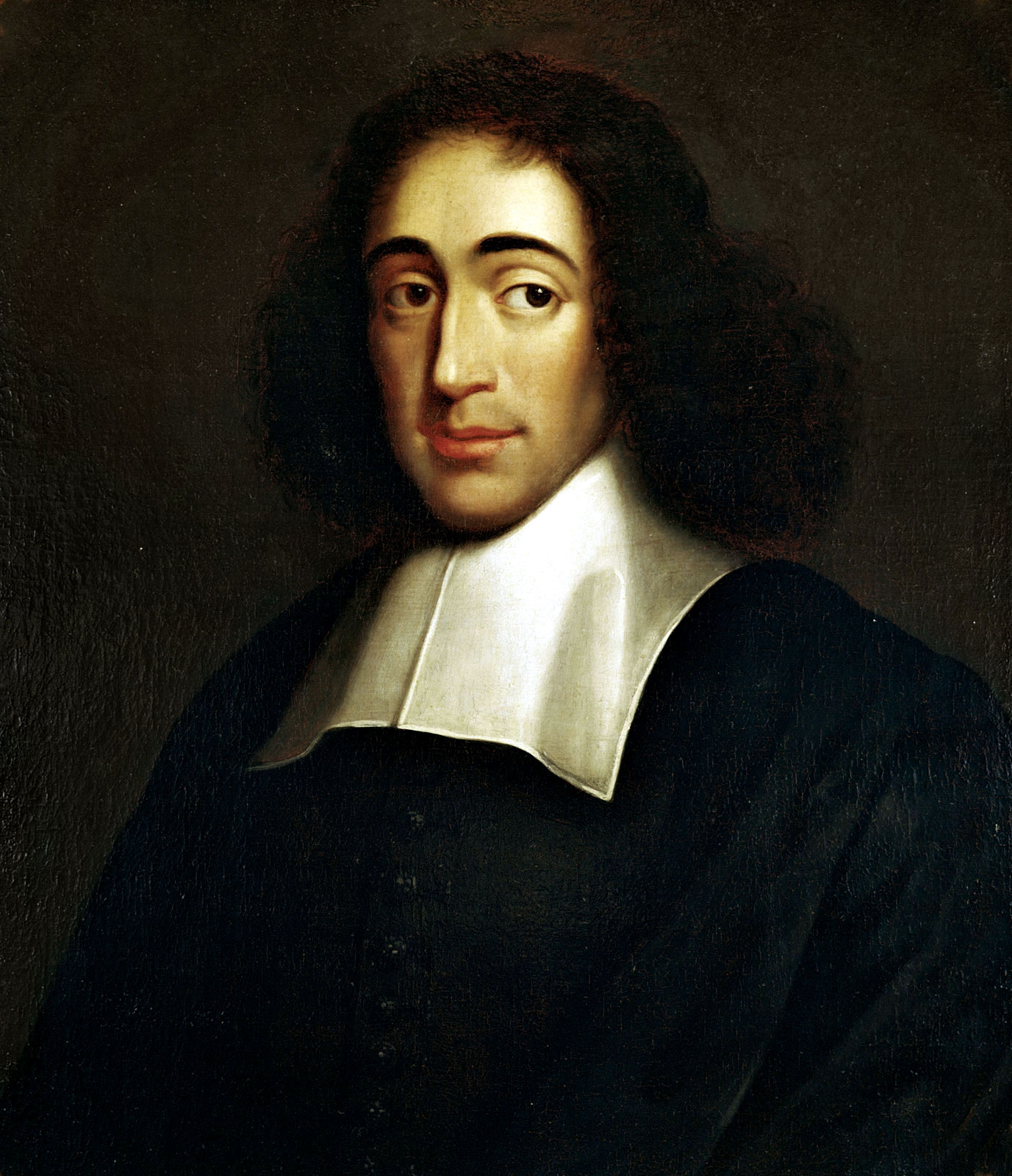
In the West, pantheism was formalized as a separate theology and philosophy based on the work of the 17th-century philosopher Baruch Spinoza. He developed highly controversial ideas regarding the authenticity of the Hebrew Bible and the nature of the Divine, and was effectively excluded from Jewish society at age 23, when the local synagogue issued a herem against him. A number of his books were published posthumously, and shortly thereafter included in the Catholic Church's Index of Forbidden Books.
In the posthumously published Ethics, he opposed René Descartes' famous mind–body dualism, the theory that the body and spirit are separate. This view influenced philosophers such as Georg Wilhelm Friedrich Hegel, who said, "You are either a Spinozist or not a philosopher at all." Spinoza earned praise as one of the great rationalists of 17th-century philosophy and one of Western philosophy's most important thinkers. Although the term "pantheism" was not coined until after his death, he is regarded as the most celebrated advocate of the concept. His book, Ethics, was the major source from which Western pantheism spread.
18th century
The first known use of the term "pantheism" was in Latin ("pantheismus") by the English mathematician Joseph Raphson in his work De Spatio Reali seu Ente Infinito, published in 1697. Raphson begins with a distinction between atheistic "panhylists" (from the Greek roots pan, "all", and hyle, "matter"), who believe everything is matter, and Spinozan "pantheists" who believe in "a certain universal substance, material as well as intelligence, that fashions all things that exist out of its own essence." Raphson thought that the universe was immeasurable in respect to a human's capacity of understanding, and believed that humans would never be able to comprehend it. He referred to the pantheism of the Ancient Egyptians, Persians, Syrians, Assyrians, Greek, Indians, and Jewish Kabbalists, specifically referring to Spinoza.
The term was first used in English in a translation of Raphson's work in 1702. It was later used and popularized by Irish writer John Toland in his work of 1705 Socinianism Truly Stated, by a Pantheist. Like Raphson, he used the terms "pantheist" and "Spinozist" interchangeably. In 1720 he wrote the Pantheisticon: or The Form of Celebrating the Socratic-Society in Latin, envisioning a pantheist society that believed, "All things in the world are one, and one is all in all things ... what is all in all things is God, eternal and immense, neither born nor ever to perish." He clarified his idea of pantheism in a letter to Gottfried Leibniz in 1710 when he referred to "the pantheistic opinion of those who believe in no other eternal being but the universe".
In the mid-eighteenth century, the English theologian Daniel Waterland defined pantheism this way: "It supposes God and nature, or God and the whole universe, to be one and the same substance—one universal being; insomuch that men's souls are only modifications of the divine substance." In the early nineteenth century, the German theologian Julius Wegscheider defined pantheism as the belief that God and the world established by God are one and the same.
Between 1785–89, a controversy about Spinoza's philosophy arose between the German philosophers Friedrich Heinrich Jacobi (a critic) and Moses Mendelssohn (a defender). Known in German as the Pantheismusstreit (pantheism controversy), it helped spread pantheism to many German thinkers.
19th century
Growing influence
During the beginning of the 19th century, pantheism was the viewpoint of many leading writers and philosophers, attracting figures such as William Wordsworth and Samuel Coleridge in Britain; Johann Gottlieb Fichte, Schelling and Hegel in Germany; Knut Hamsun in Norway; and Walt Whitman, Ralph Waldo Emerson and Henry David Thoreau in the United States. Seen as a growing threat by the Vatican, in 1864, it was formally condemned by Pope Pius IX in the Syllabus of Errors.
A letter written in 1886 by William Herndon, Abraham Lincoln's law partner, was sold at auction for US$30,000 in 2011. In it, Herndon writes of the U.S. President's evolving religious views, which included pantheism.
The subject is understandably controversial, but the letter's content is consistent with Lincoln's fairly lukewarm approach to organized religion.
Comparison with non-Christian religions
Some 19th-century theologians thought that various pre-Christian religions and philosophies were pantheistic. They thought Pantheism was similar to the ancient Hinduism
19th-century European theologians also considered Ancient Egyptian religion to contain pantheistic elements and pointed to Egyptian philosophy as a source of Greek Pantheism. The Stoics were pantheists, beginning with Zeno of Citium and culminating in the emperor-philosopher Marcus Aurelius. During the pre-Christian Roman Empire, Stoicism was one of the three dominant schools of philosophy, along with Epicureanism and Neoplatonism. The early Taoism of Laozi and Zhuangzi is also sometimes considered pantheistic, although it could be more similar to panentheism.
Cheondoism, which arose in the Joseon Dynasty of Korea, and Won Buddhism are also considered pantheistic. The Realist Society of Canada believes that the consciousness of the self-aware universe is reality, which is an alternative view of Pantheism.
20th century
In the late 20th century, some declared that pantheism was an underlying theology of Neopaganism, and pantheists began forming organizations devoted specifically to pantheism and treating it as a separate religion.
21st century
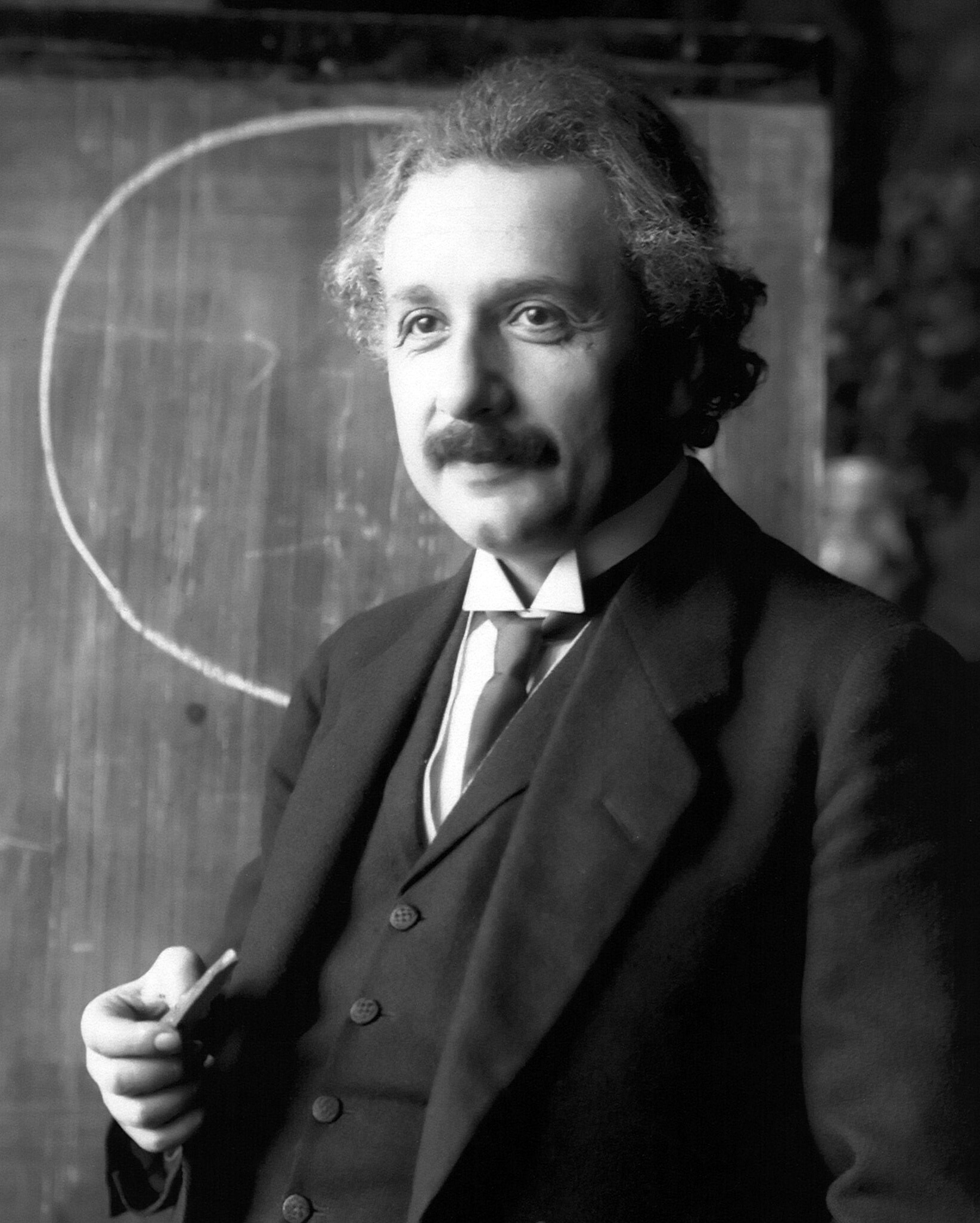
Albert Einstein is considered a pantheist by some commentators.
Dorion Sagan, son of scientist and science communicator Carl Sagan, published the 2007 book Dazzle Gradually: Reflections on the Nature of Nature, co-written with his mother Lynn Margulis. In the chapter "Truth of My Father", Sagan writes that his "father believed in the God of Spinoza and Einstein, God not behind nature, but as nature, equivalent to it."
In 2009, pantheism was mentioned in a Papal encyclical and in a statement on New Year's Day, 2010, criticizing pantheism for denying the superiority of humans over nature and seeing the source of man salvation in nature.
In 2015, The Paradise Project, an organization "dedicated to celebrating and spreading awareness about pantheism," commissioned Los Angeles muralist Levi Ponce to paint the 75-foot mural in Venice, California, near the organization's offices. The mural depicts Albert Einstein, Alan Watts, Baruch Spinoza, Terence McKenna, Carl Jung, Carl Sagan, Emily Dickinson, Nikola Tesla, Friedrich Nietzsche, Ralph Waldo Emerson, W.E.B. Du Bois, Henry David Thoreau, Elizabeth Cady Stanton, Rumi, Adi Shankara, and Laozi.
Categorizations
There are multiple varieties of pantheism and various systems of classifying them relying upon one or more spectra or in discrete categories.
Degree of determinism
The philosopher Charles Hartshorne used the term Classical Pantheism to describe the deterministic philosophies of Baruch Spinoza, the Stoics, and other like-minded figures. Pantheism (All-is-God) is often associated with monism (All-is-One) and some have suggested that it logically implies determinism (All-is-Now). Albert Einstein explained theological determinism by stating, "the past, present, and future are an 'illusion. This form of pantheism has been referred to as "extreme monism", in which in the words of one commentator "God decides or determines everything, including our supposed decisions." Other examples of determinism-inclined pantheisms include those of Ralph Waldo Emerson,Dependence and Freedom: The Moral Thought of Horace Bushnell by David Wayne Haddorff https://books.google.com/books?id=dL6_maZuNjYC&pg=PA156 Emerson's belief was "monistic determinism".
Creatures of Prometheus: Gender and the Politics of Technology by Timothy Vance Kaufman-Osborn, Prometheus ((Writer)) https://books.google.com/books?id=PZiLIEQzgHcC&pg=PA28 "Things are in a saddle, and ride mankind."
However, some have argued against treating every meaning of "unity" as an aspect of pantheism, and there exist versions of pantheism that regard determinism as an inaccurate or incomplete view of nature. Examples include the beliefs of John Scotus Eriugena, Friedrich Wilhelm Joseph Schelling and William James.* Theories of the will in the history of philosophy by Archibald Alexander p. 307 Schelling holds "...that the will is not determined but self-determined." https://archive.org/details/theorieswillinh00alexgoog/page/n319
The Dynamic Individualism of William James by James O. Pawelski p. 17 "[His] fight against determinism" "My first act of free will shall be to believe in free will." https://books.google.com/books?id=-21UjntpjFkC&pg=PA17
Degree of belief
It may also be possible to distinguish two types of pantheism, one being more religious and the other being more philosophical. The Columbia Encyclopedia writes of the distinction:
:"If the pantheist starts with the belief that the one great reality, eternal and infinite, is God, he sees everything finite and temporal as but some part of God. There is nothing separate or distinct from God, for God is the universe. If, on the other hand, the conception taken as the foundation of the system is that the great inclusive unity is the world itself, or the universe, God is swallowed up in that unity, which may be designated nature."
Form of monism
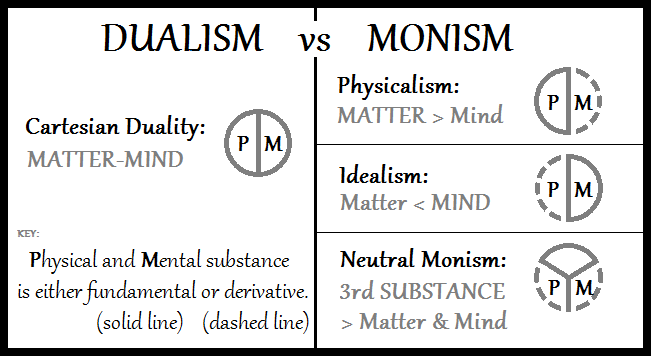
A diagram with neutral monism compared to Cartesian dualism, physicalism and idealism
Philosophers and theologians have often suggested that pantheism implies monism.{{refn|group=note|Different types of monism include:
Substance monism, "the view that the apparent plurality of substances is due to different states or appearances of a single substance".
Attributive monism, "the view that whatever the number of substances, they are of a single ultimate kind".
Partial monism, "within a given realm of being (however many there may be) there is only one substance".
Existence monism, the view that there is only one concrete object token (The One, "Τὸ Ἕν" or the Monad).
Priority monism, "the whole is prior to its parts" or "the world has parts, but the parts are dependent fragments of an integrated whole."
Property monism: the view that all properties are of a single type (e.g. only physical properties exist).
Genus monism: "the doctrine that there is a highest category; e.g., being".
Views contrasting with monism are:
Metaphysical dualism, which asserts that there are two ultimately irreconcilable substances or realities such as Good and Evil, for example, Manichaeism.
Metaphysical pluralism, which asserts three or more fundamental substances or realities.
Nihilism, negates any of the above categories (substances, properties, concrete objects, etc.).
Monism in modern philosophy of mind can be divided into three broad categories:
Idealism, phenomenalism, or mentalistic monism, which holds that only mind or spirit is real.
Neutral monism, which holds that one sort of thing fundamentally exists, to which both the mental and the physical can be reduced.
Material monism (also called Physicalism and Materialism), which holds that only the physical is real, and that the mental or spiritual can be reduced to the physical:
::b. Reductive physicalism, according to which mental things do exist and are a kind of physical thing, Such as Behaviourism, Type-identity theory and Functionalism.
Certain positions do not fit easily into the above categories, such as functionalism, anomalous monism, and reflexive monism. Moreover, they do not define the meaning of "real".}}
For the Aztecs *teotl* was the metaphysical omnipresence creating the cosmos and all its contents *from within* itself as well as *out of* itself. This is conceptualized in a kind of monistic pantheism as manifest in the supreme god Ometeotl, as well as a large pantheon of lesser gods and idealizations of natural phenomena.
### Other
In 1896, J. H. Worman, a theologian, identified seven categories of pantheism: Mechanical or materialistic (God the mechanical unity of existence); Ontological (fundamental unity, Spinoza); Dynamic; Psychical (God is the soul of the world); Ethical (God is the universal moral order, Fichte); Logical (Hegel); and Pure (absorption of God into nature, which Worman equates with atheism).
In 1984, Paul D. Feinberg, professor of biblical and systematic theology at Trinity Evangelical Divinity School, also identified seven: Hylozoistic; Immanentistic; Absolutistic monistic; Relativistic monistic; Acosmic; Identity of opposites; and Neoplatonic or emanationistic.
## Demographics
### Prevalence
According to censuses of 2011, the UK was the country with the most Pantheists. As of 2011, about 1,000 Canadians identified their religion as "Pantheist", representing 0.003% of the population. By 2021, the number of Canadian pantheists had risen to 1,855 (0.005%). In Ireland, Pantheism rose from 202 in 1991, to 1106 in 2002, to 1,691 in 2006, 1,940 in 2011. In New Zealand, there was exactly one pantheist man in 1901. By 1906, the number of pantheists in New Zealand had septupled to 7 (6 male, 1 female). This number had further risen to 366 by 2006.
::data[format=table title=""]
| Country | Subdivision(s) | Number | Year |
|---|---|---|---|
| Australia | | 1,394 (0.006%) | 2011 |
| Canada | | 1,855 (0.005%) | 2021 |
| Canada | Quebec | 75 (0.001%) | 2011 |
| Canada | Ontario | 295 (0.002%) | 2011 |
| Canada | Nova Scotia | 30 (0.003%) | 2011 |
| Canada | New Brunswick | 45 (0.006%) | 2011 |
| Canada | Manitoba | 40 (0.003%) | 2011 |
| Canada | British Columbia | 395 (0.008%) | 2011 |
| Canada | Prince Edward Island | 0 (0%) | 2011 |
| Canada | Saskatchewan | 25 (0.002%) | 2011 |
| Canada | Alberta | 125 (0.004%) | 2011 |
| Canada | Newfoundland and Labrador | 0 (0%) | 2011 |
| Canada | Northwest Territories | 0 (0%) | 2011 |
| Canada | Yukon | 0 (0%) | 2011 |
| Canada | Nunavut | 0 (0%) | 2011 |
| Ireland | | 1,940 (0.04%) | 2011 |
| Ireland | Border Region | 179 (0.04%) | 2006 |
| Ireland | Dublin | 524 (0.04%) | 2006 |
| Ireland | Mid-East Region | 177 | 2006 |
| Ireland | Midland Region | 118 | 2006 |
| Ireland | South-East Region | 173 | 2006 |
| Ireland | South-West Region | 270 | 2006 |
| Ireland | West Region | 181 | 2006 |
| New Zealand | | 366 (0.009%) | 2006 |
| United Kingdom | Scotland | 60 (0.001%) | 2001 |
| United Kingdom | England and Wales | 2,216 (0.004%) | 2011 |
| United Kingdom | Northern Ireland | 29 (0.002%) | 2011 |
| Uruguay | | 790 (0.02%) | 2006 |
::
### Age, ethnicity, and gender
The [2021 Canadian census](2021-canadian-census) showed that pantheists were somewhat more likely to be in their 20s and 30s compared to the general population. People under 15 were about four times less likely to be pantheist than the general population.
The 2021 Canadian census also showed that pantheists were less likely to be part of a recognized minority group compared to the general population, with 90.3% of pantheists not being part of any minority group (compared to 73.5% of the general population). The census did not register any pantheists who were Arab, Southeast Asian, West Asian, Korean, or Japanese.
In Canada (2011), there was no gender difference in regards to pantheism. However, in Ireland (2011), pantheists were slightly more likely to be female (1074 pantheists, 0.046% of women) than male (866 pantheists, 0.038% of men). In contrast, Canada (2021) showed pantheists to be slightly more likely to be male, with men representing 51.5% of pantheists.
::data[format=table]
| Comparison of pantheists in Canada against the general population (2021) | General population | Pantheists | Total population | Gender | Male | Female | Age | 0 to 14 | 15 to 19 | 20 to 24 | 25 to 34 | 35 to 44 | 45 to 54 | 55 to 64 | 65 and over | Ethnicity | Non-minority | South Asian | Chinese | Black | Filipino | Arab | Latin American | Southeast Asian | West Asian | Korean | Japanese | Visible minority, n.i.e. | Multiple visible minorities |
|---|---|---|---|---|---|---|---|---|---|---|---|---|---|---|---|---|---|---|---|---|---|---|---|---|---|---|---|---|---|
| 36,328,480 | 1,855 | | | | | | | | | | | | | | | | | | | | | | | | | | | | |
| 17,937,165 (49.4%) | 955 (51.5%) | | | | | | | | | | | | | | | | | | | | | | | | | | | | |
| 18,391,315 (50.6%) | 895 (48.2%) | | | | | | | | | | | | | | | | | | | | | | | | | | | | |
| 5,992,555 (16.5%) | 75 (4%) | | | | | | | | | | | | | | | | | | | | | | | | | | | | |
| 2,003,200 (5.5%) | 40 (2%) | | | | | | | | | | | | | | | | | | | | | | | | | | | | |
| 2,177,860 (6%) | 125 (6.7%) | | | | | | | | | | | | | | | | | | | | | | | | | | | | |
| 4,898,625 (13.5%) | 405 (21.8%) | | | | | | | | | | | | | | | | | | | | | | | | | | | | |
| 4,872,425 (13.4%) | 380 (20.5%) | | | | | | | | | | | | | | | | | | | | | | | | | | | | |
| 4,634,850 (12.8%) | 245 (13.2%) | | | | | | | | | | | | | | | | | | | | | | | | | | | | |
| 5,162,365 (14.2%) | 245 (13.2%) | | | | | | | | | | | | | | | | | | | | | | | | | | | | |
| 6,586,600 (18.1%) | 325 (17.5%) | | | | | | | | | | | | | | | | | | | | | | | | | | | | |
| 26,689,275 (73.5%) | 1,675 (90.3%) | | | | | | | | | | | | | | | | | | | | | | | | | | | | |
| 2,571,400 (7%) | 20 (1.1%) | | | | | | | | | | | | | | | | | | | | | | | | | | | | |
| 1,715,770 (4.7%) | 45 (2.4%) | | | | | | | | | | | | | | | | | | | | | | | | | | | | |
| 1,547,870 (4.3%) | 45 (2.4%) | | | | | | | | | | | | | | | | | | | | | | | | | | | | |
| 957,355 (2.6%) | 10 (0.5%) | | | | | | | | | | | | | | | | | | | | | | | | | | | | |
| 694,015 (1.9%) | 0 (0%) | | | | | | | | | | | | | | | | | | | | | | | | | | | | |
| 580,235 (1.6%) | 25 (1.3%) | | | | | | | | | | | | | | | | | | | | | | | | | | | | |
| 390,340 (1.1%) | 0 (0%) | | | | | | | | | | | | | | | | | | | | | | | | | | | | |
| 360,495 (1%) | 0 (0%) | | | | | | | | | | | | | | | | | | | | | | | | | | | | |
| 218,140 (0.6%) | 0 (0%) | | | | | | | | | | | | | | | | | | | | | | | | | | | | |
| 98,890 (0.3%) | 0 (0%) | | | | | | | | | | | | | | | | | | | | | | | | | | | | |
| 172,885 (0.5%) | 0 (0%) | | | | | | | | | | | | | | | | | | | | | | | | | | | | |
| 331,805 (0.9%) | 15 (0.8%) | | | | | | | | | | | | | | | | | | | | | | | | | | | | |
::
::figure[src="https://upload.wikimedia.org/wikipedia/commons/5/56/Canada_Pantheism_distribution_map.png" caption="Canadian pantheist population by percentage (2011 National Household Survey)"]
::
## Related concepts
Nature worship or nature mysticism is often conflated and confused with pantheism. It is pointed out by at least one expert, Harold Wood, founder of the Universal Pantheist Society, that in pantheist philosophy Spinoza's identification of God with nature is very different from a recent idea of a self identifying pantheist with environmental ethical concerns. His use of the word nature to describe his worldview may be vastly different from the "nature" of modern sciences. He and other nature mystics who also identify as pantheists use "nature" to refer to the limited natural environment (as opposed to man-made built environment). This use of "nature" is different from the broader use from Spinoza and other pantheists describing natural laws and the overall phenomena of the physical world. Nature mysticism may be compatible with pantheism but it may also be compatible with theism and other views.:
- "The idea that Unity that is rooted in nature is what types of nature mysticism (e.g. Wordsworth, Robinson Jeffers, Gary Snyder) have in common with more philosophically robust versions of pantheism. It is why nature mysticism and philosophical pantheism are often conflated and confused for one another."
- "[Wood's] pantheism is distant from Spinoza's identification of God with nature, and much closer to nature mysticism. In fact it is nature mysticism."
- "Nature mysticism, however, is as compatible with theism as it is with pantheism." Pantheism has also been involved in animal worship especially in primal religions.
Nontheism is an umbrella term which has been used to refer to a variety of religions not fitting traditional theism, and under which pantheism has been included.
Panentheism (from Greek πᾶν (pân) "all"; ἐν (en) "in"; and θεός (theós) "God"; "all-in-God") was formally coined in Germany in the 19th century in an attempt to offer a philosophical synthesis between traditional theism and pantheism, stating that God is substantially omnipresent in the physical universe but also exists "apart from" or "beyond" it as its Creator and Sustainer. Thus panentheism separates itself from pantheism, positing the extra claim that God exists above and beyond the world as we know it. The line between pantheism and panentheism can be blurred depending on varying definitions of God, so there have been disagreements when assigning particular notable figures to pantheism or panentheism.
Pandeism is another word derived from pantheism, and is characterized as a combination of reconcilable elements of pantheism and deism. It assumes a Creator-deity that is at some point distinct from the universe and then transforms into it, resulting in a universe similar to the pantheistic one in present essence, but differing in origin.
Panpsychism is the philosophical view that consciousness, mind, or soul is a universal feature of all things. Some pantheists also subscribe to the distinct philosophical views hylozoism (or panvitalism), the view that everything is alive, and its close neighbor animism, the view that everything has a soul or spirit.
## Pantheism in religion
### Traditional religions
Many traditional and folk religions, including African traditional religions and Native American religions, can be seen as pantheistic or a mixture of pantheism and other worldviews, such as polytheism and animism. According to pantheists, there are elements of pantheism in some forms of Christianity.
Ideas resembling pantheism existed in Eastern religions before the 18th century (notably Hinduism, Confucianism, and Taoism). Although there is no evidence that these influenced Spinoza's work, there is evidence regarding other contemporary philosophers, such as Leibniz, and later Voltaire. In the case of Hinduism, pantheistic views exist alongside panentheistic, polytheistic, monotheistic, and atheistic ones.
### Spirituality and new religious movements
Pantheism is popular in modern spirituality and new religious movements, such as Neopaganism and Theosophy. Two organizations that specify the word pantheism in their title formed in the last quarter of the 20th century. The Universal Pantheist Society, open to all varieties of pantheists and supportive of environmental causes, was founded in 1975. The World Pantheist Movement is headed by Paul Harrison, an environmentalist, writer and a former vice president of the Universal Pantheist Society, from which he resigned in 1996. The World Pantheist Movement was incorporated in 1999 to focus exclusively on promoting naturalistic pantheism – a strict metaphysical naturalistic version of pantheism, considered by some a form of religious naturalism. It has been described as an example of "dark green religion" with a focus on environmental ethics.
## Notes
## References
## Sources
-
-
-
-
-
-
-
-
-
-
-
-
-
-
-
-
-
-
-
-
## References
1. Ann Thomson; Bodies of Thought: Science, Religion, and the Soul in the Early Enlightenment, 2008, page 54.
2. Raphson, Joseph. (1697). "De spatio reali". *Londini*.
3. Suttle, Gary. ["Joseph Raphson: 1648–1715"](http://naturepantheist.org/raph-son.html). *Pantheist Association for Nature*.
4. "A Companion to Philosophy of Religion".
5. Lloyd, Genevieve. (1996). "Routledge Philosophy GuideBook to Spinoza and The Ethics". *[[Routledge]]*.
6. Birx, Jams H.. (11 November 1997). ["Giordano Bruno"](http://www.theharbinger.org/xvi/971111/birx.html). *The Harbinger*.
7. (2008). ["Encyclopedia of Religion and Nature"](https://books.google.com/books?id=i4mvAwAAQBAJ&pg=PA1342). *A&C Black*.
8. (1998). "The New Oxford Dictionary Of English". *Clarendon Press*.
9. (1967). ["Encyclopedia of Philosophy"](https://archive.org/details/encyclopediaofph08edwa). *Macmillan*.
10. Picton, James Allanson. (1905). ["Pantheism: its story and significance"](https://archive.org/details/pantheismitsstor00pictrich). *Archibald Constable & Co. LTD.*.
11. Owen, H. P. ''Concepts of Deity''. London: Macmillan, 1971, p. 65.
12. (1998). "The New Oxford Dictionary Of English". *Clarendon Press*.
13. ["''The Theogonies''"](http://www.sacred-texts.com/cla/af/af12.htm). *sacred-texts.com*.
14. Betegh, Gábor, ''The Derveni Papyrus'', Cambridge University Press, 2004, pp. 176–178 {{ISBN. 978-0-521-80108-9
15. Worman, J. H., "Pantheism", in ''Cyclopædia of Biblical, Theological, and Ecclesiastical Literature, Volume 1'', John McClintock, James Strong (Eds), Harper & Brothers, 1896, pp. 616–624.
16. Levine, Michael. (25 January 2011). ["Pantheism"](https://plato.stanford.edu/archives/spr2012/entries/pantheism/). *Stanford Encyclopedia of Philosophy*.
17. Levine, Michael P.. (2002). ["Pantheism: A Non-Theistic Concept of Deity"](https://books.google.com/books?id=GAYyLrfsZvUC&dq=%2522It+seems+undeniable,+though+it+usually+is+denied,+that+pantheism+is+intimated+in+these+quotations%2522&pg=PT154). *Routledge*.
18. Long, Phillip J.. (25 March 2015). ["Acts 17:22-28 – Quoting the Philosophers?"](https://readingacts.com/2015/03/25/acts-1722-28-quoting-the-philosophers/).
19. Schwarz, Hans. (1986). ["Responsible Faith: Christian Theology in the Light of 20th-century Questions"](https://books.google.com/books?id=fP8QAQAAIAAJ&q=%2522pantheism%2522+acts+17:28). *Augsburg Publishing House*.
20. Scanlon, Michael J.. (2007). "Transcendence and Beyond: A Postmodern Inquiry". *Indiana University Press*.
21. Lagrée, Jacqueline. (2005). "Encyclopedia of Christian Theology". *Routledge*.
22. Collinge, William J.. (2012). "Historical Dictionary of Catholicism". *Bloomsbury Publishing PLC*.
23. ["What is pantheism?"](https://www.catholic.com/qa/what-is-pantheism). *catholic.com*.
24. (2009-06-11). ["The Two Eyes of Spinoza & Other Essays on Philosophers – Leszek Kołakowski – Google Books"](https://books.google.com/books?id=KPbWAAAAMAAJ&q=%22the+first+pantheist%22). *St. Augustine's Press*.
25. McIntyre, James Lewis, ''Giordano Bruno'', Macmillan, 1903, p 316.
26. (27 August 2014). ["Bruno Was a Martyr for Magic, Not Science | Science 2.0"](https://www.science20.com/science_20/bruno_was_martyr_magic_not_science-115582).
27. <ref>*Fraser, Alexander Campbell "Philosophy of Theism", William Blackwood and Sons, 1895, p 163.
28. (2015-09-01). ["Why Spinoza Was Excommunicated"](https://www.neh.gov/humanities/2013/septemberoctober/feature/why-spinoza-was-excommunicated).
29. (3 May 2012). ["Destroyer and Builder"](https://newrepublic.com/book/review/book-forged-hell-spinoza-treatise-steven-nadler).
30. Plumptre, Constance. (1879). "General sketch of the history of pantheism, Volume 2". *Samuel Deacon and Co*.
31. Scruton 1986 (2002 ed.), ch. 2, p.26
32. (1990). "Expressionism in Philosophy: Spinoza". *Zone Books*.
33. Shoham, Schlomo Giora. (2010). "To Test the Limits of Our Endurance". *Cambridge Scholars*.
34. Raphson, Joseph. (1697). "De spatio reali". *Londini*.
35. Koyré, Alexander. (1957). ["From the Closed World to the Infinite Universe"](https://archive.org/details/fromclosedworldt0000koyr/page/190). *Johns Hopkins Press*.
36. (1702). ["The History of the Works of the Learned"](https://books.google.com/books?id=zv0vAAAAYAAJ&pg=498). *H.Rhodes*.
37. (2009). ["Encyclopedia of Romanticism (Routledge Revivals)"](https://books.google.com/books?id=KMeOAgAAQBAJ). *Routledge*.
38. {{rp. pp. 617–618 Toland was influenced by both Spinoza and Bruno and had read Joseph Raphson's ''De Spatio Reali'', referring to it as "the ingenious Mr. Ralphson's (sic) Book of Real Space".<ref>Daniel, Stephen H. "Toland's Semantic Pantheism," in John Toland's Christianity not Mysterious, Text, Associated Works and Critical Essays. Edited by Philip McGuinness, Alan Harrison, and Richard Kearney. Dublin, Ireland: The Lilliput Press, 1997.
39. R.E. Sullivan, "John Toland and the Deist controversy: A Study in Adaptations", Harvard University Press, 1982, p. 193.
40. Harrison, Paul. ["Toland: The father of modern pantheism"](http://www.pantheism.net/paul/history/toland.htm). *World Pantheist Movement*.
41. Toland, John, Pantheisticon, 1720; reprint of the 1751 edition, New York and London: Garland, 1976, p. 54.
42. Honderich, Ted, ''The Oxford Companion to Philosophy'', Oxford University Press, 1995, p. 641: "First used by John Toland in 1705, the term 'pantheist' designates one who holds both that everything there is constitutes a unity and that this unity is divine."
43. Thompson, Ann, ''Bodies of Thought: Science, Religion, and the Soul in the Early Enlightenment'', Oxford University Press, 2008, p. 133, {{ISBN. 9780199236190.
44. Worman cites Waterland, Works, viii, p. 81.
45. (2001-12-06). ["Friedrich Heinrich Jacobi"](http://plato.stanford.edu/entries/friedrich-jacobi/).
46. (9 June 1862). ["Syllabus of Errors 1.1"](http://www.papalencyclicals.net/Pius09/p9syll.htm).
47. Herndon, William. (4 February 1866). ["Sold – Herndon's Revelations on Lincoln's Religion"](http://www.raabcollection.com/abraham-lincoln-autograph/Abraham-Lincoln-Autograph-Religion/). *Raab Collection*.
48. Adams, Guy. (17 April 2011). ["'Pantheist' Lincoln would be unelectable today"](https://www.independent.co.uk/news/world/americas/pantheist-lincoln-would-be-unelectable-today-2269024.html). *The Independent*.
49. Armstrong, AH. (1967). "The Cambridge History of Later Greek and Early Medieval Philosophy". *Cambridge University Press*.
50. McLynn, Frank. (2010). "Marcus Aurelius: A Life". *Da Capo Press*.
51. ["About Realism"](http://www.realistsocietyofcanada.com/). *The Realist Society of Canada*.
52. Adler, Margot. (1986). "Drawing Down the Moon". *Beacon Press*.
53. Sagan, Dorion, "Dazzle Gradually: Reflections on the Nature of Nature" 2007, p. 14.
54. Caritas In Veritate, 7 July 2009.
55. ["43rd World Day of Peace 2010, If You Want to Cultivate Peace, Protect Creation {{!}} BENEDICT XVI"](https://www.vatican.va/content/benedict-xvi/en/messages/peace/documents/hf_ben-xvi_mes_20091208_xliii-world-day-peace.html).
56. ["New Mural in Vence: "Luminaries of Pantheism""](https://www.venicepaparazzi.com/recent-events-covered/new-mural-in-venice-inspiration-of-pantheism/). *VenicePaparazzi*.
57. Rod, Perry. ["About the Paradise Project"](https://pantheism.com/about/pantheismcom/). *The Paradise Project*.
58. (Summer 2017). "New Online Pantheism Community Seeks Common Ground". *Pantheist Vision*.
59. (1953). ["Philosophers Speak of God"](https://archive.org/details/philosophersspea009720mbp). *University of Chicago Press*.
60. Goldsmith, Donald. (2006). ["E = Einstein: His Life, His Thought, and His Influence on Our Culture"](https://books.google.com/books?id=zGzcV40b3IkC&pg=PA187). *Stirling Publishing*.
61. F.C. Copleston, "Pantheism in Spinoza and the German Idealists," Philosophy 21, 1946, p. 48.
62. Literary and Philosophical Society of Liverpool, "Proceedings of the Liverpool Literary & Philosophical Society, Volumes 43–44", 1889, p. 285.
63. John Ferguson, "The Religions of the Roman Empire", Cornell University Press, 1970, p. 193.
64. Isaacson, Walter. (2007). ["Einstein: His Life and Universe"](https://archive.org/details/einsteinhislifeu0000isaa). *Simon and Schuster*.
65. (2005). ["Encyclopedia of Religion: Volume 10"](https://archive.org/details/encyclopediaofre0000unse_v8f2). *MacMillan*.
66. Levine, Michael P.. (August 1992). "Pantheism, substance and unity". *International Journal for Philosophy of Religion*.
67. (2019). ["John Scottus Eriugena"](https://plato.stanford.edu/archives/win2019/entries/scottus-eriugena/). *Metaphysics Research Lab, Stanford University*.
68. (2012). ["Pantheism"](http://www.answers.com/topic/pantheism). *Columbia University Press*.
69. Owen, H. P.. (1971). "Concepts of Deity". *Macmillan*.
70. Schaffer, Jonathan. ["Monism: The Priority of the Whole"](http://www.jonathanschaffer.org/monism.pdf).
71. Schaffer, Jonathan. (19 March 2007). ["Monism"](http://plato.stanford.edu/archives/sum2015/entries/monism/).
72. Maffie, James. (2014). ["Aztec Philosophy: Understanding a World in Motion"](https://www.jstor.org/stable/j.ctt9qhkh2). *University Press of Colorado*.
73. ''[[Evangelical Dictionary of Theology]]'', edited by Walter A. Elwell, p. 887.
74. ["Pantheists Around the World"](https://pantheism.net/groups/pantheists-worldwide/).
75. (8 May 2013). ["2011 National Household Survey: Data tables"](https://www12.statcan.gc.ca/nhs-enm/2011/dp-pd/dt-td/Rp-eng.cfm?TABID=1&LANG=E&A=R&APATH=3&DETAIL=0&DIM=0&FL=A&FREE=0&GC=01&GL=-1&GID=1118296&GK=1&GRP=0&O=D&PID=105399&PRID=0&PTYPE=105277&S=0&SHOWALL=0&SUB=0&Temporal=2013&THEME=95&VID=0&VNAMEE=&VNAMEF=&D1=0&D2=0&D3=0&D4=0&D5=0&D6=0). *Statistics Canada*.
76. Government of Canada, Statistics Canada. (2022-10-26). ["Religion by visible minority and generation status: Canada, provinces and territories, census metropolitan areas and census agglomerations with parts"](https://www150.statcan.gc.ca/t1/tbl1/en/tv.action?pid=9810034201).
77. Gilmour, Desmond A.. (January 2006). ["Changing Religions in the Republic of Ireland, 1991–2002"](https://www.researchgate.net/publication/249058598). *Irish Geography*.
78. (2007). ["Census 2006: Volume 13 – Religion"](https://www.cso.ie/en/media/csoie/census/census2006results/volume13/volume_13_religion.pdf). *Central Statistics Office*.
79. ["Statistical Tables"](https://www.cso.ie/en/media/csoie/census/documents/census2011profile7/Profile_7_Education_Ethnicity_and_Irish_Traveller_Tables_and_appendices.pdf).
80. ["Results of a Census of the Colony of New Zealand Taken for the Night of the 31st March 1901"](https://www3.stats.govt.nz/historic_publications/1901-census/1901-results-census/1901-results-census.html). *Statistics New Zealand*.
81. (29 April 1906). ["Results of a Census of the Colony of New Zealand Taken for the Night of the 29th April, 1906."](https://www3.stats.govt.nz/historic_publications/1906-census/1906-results-census/1906-results-census.html). *Statistics New Zealand*.
82. 2006 New Zealand census.
83. 2011 Australia Census
84. 2001 Scotland Census
85. (2011). ["2011 Census: Religion"](https://www.bristol.gov.uk/documents/20182/34008/Key%20Statistics%20Religion_0.pdf/370b3935-a399-4734-ad3b-04e8f6996a5d). *Census Office for National Statistics*.
86. ["Census 2011: Religion – Full Detail: QS218NI – Northern Ireland"](http://www.ninis2.nisra.gov.uk/Download/Census%202011_Excel/2011/QS218NI.xls). *nisra.gov.uk*.
87. 2006 Uruguay Census
88. (2009). ["World Religions at Your Fingertips – Michael McDowell, Nathan Robert Brown – Google Books"](https://books.google.com/books?id=K0_dHrRY3gIC&dq=%22pantheism%22+%22animal+worship%22&pg=PA4). *Penguin*.
89. Cooper, John W.. (2006). "The Other God of the Philosophers". *Baker Academic*.
90. (1998). ["Genealogy to Iqbal"](https://books.google.com/books?id=5m5z_ca-qDkC).
91. Johnston, Sean F.. (2009). ["The History of Science: A Beginner's Guide"](https://archive.org/details/historyofscience0000john/page/90). *Oneworld Publications*.
92. (23 May 2001). ["Panpsychism"](http://plato.stanford.edu/archives/win2012/entries/panpsychism/).
93. Haught, John F.. (1990). "What Is Religion?: An Introduction". *Paulist Press*.
94. Parrinder, EG. (1970). "Monotheism and Pantheism in Africa". *Journal of Religion in Africa*.
95. Harrison, Paul. ["North American Indians: the spirituality of nature"](http://www.pantheism.net/paul/history/native-americans.htm). *World Pantheist Movement*.
96. Harrison, Paul. ["The origins of Christian pantheism"](http://www.pantheism.net/paul/history/gospel.htm). *World Pantheists Movement*.
97. Fox, Michael W.. ["Christianity and Pantheism"](http://pantheist.net/society/christianity_and_pan_fox.html). *Universal Pantheist Society*.
98. Zaleha, Bernard. ["Recovering Christian Pantheism as the Lost Gospel of Creation"](http://www.christianecology.org/ConsiderLillies.html). *Fund for Christian Ecology, Inc.*.
99. (1971). "Leibniz's Interpretation of Neo-Confucianism". *Philosophy East and West*.
100. Lan, Feng (2005). ''Ezra Pound and Confucianism: remaking humanism in the face of modernity''. University of Toronto Press. p. 190. {{ISBN. 978-0-8020-8941-0.
101. Carpenter, Dennis D. (1996). "Emergent Nature Spirituality: An Examination of the Major Spiritual Contours of the Contemporary Pagan Worldview". In Lewis, James R., ''Magical Religion and Modern Witchcraft''. Albany: State University of New York Press. {{ISBN. 978-0-7914-2890-0. p. 50.
102. ["Home page"](http://www.pantheist.net/). *Universal Pantheist Society*.
103. World Pantheist Movement. ["Naturalism and Religion: can there be a naturalistic & scientific spirituality?"](http://www.pantheism.net/natural.htm).
104. Stone, Jerome Arthur. (2008). ["Religious Naturalism Today: The Rebirth of a Forgotten Alternative"](https://archive.org/details/religiousnatural00ston). *State University of New York Press*.
105. Bron Raymond Taylor, "[[Dark Green Religion. Dark Green Religion: Nature Spirituality and the Planetary Future]]", University of California Press, 2010, pp. 159–160.
::callout[type=info title="Wikipedia Source"]
This article was imported from [Wikipedia](https://en.wikipedia.org/wiki/Pantheism) and is available under the [Creative Commons Attribution-ShareAlike 4.0 License](https://creativecommons.org/licenses/by-sa/4.0/). Content has been adapted to SurfDoc format. Original contributors can be found on the [article history page](https://en.wikipedia.org/wiki/Pantheism?action=history).
::
pantheismmonism
Want to explore this topic further?
Ask Mako anything about Pantheism — get instant answers, deeper analysis, and related topics.
This content may have been generated or modified by AI. CloudSurf Software LLC is not responsible for the accuracy, completeness, or reliability of AI-generated content. Always verify important information from primary sources.