From Surf Wiki (app.surf) — the open knowledge base
Nösnerland
Historic region of Transylvania
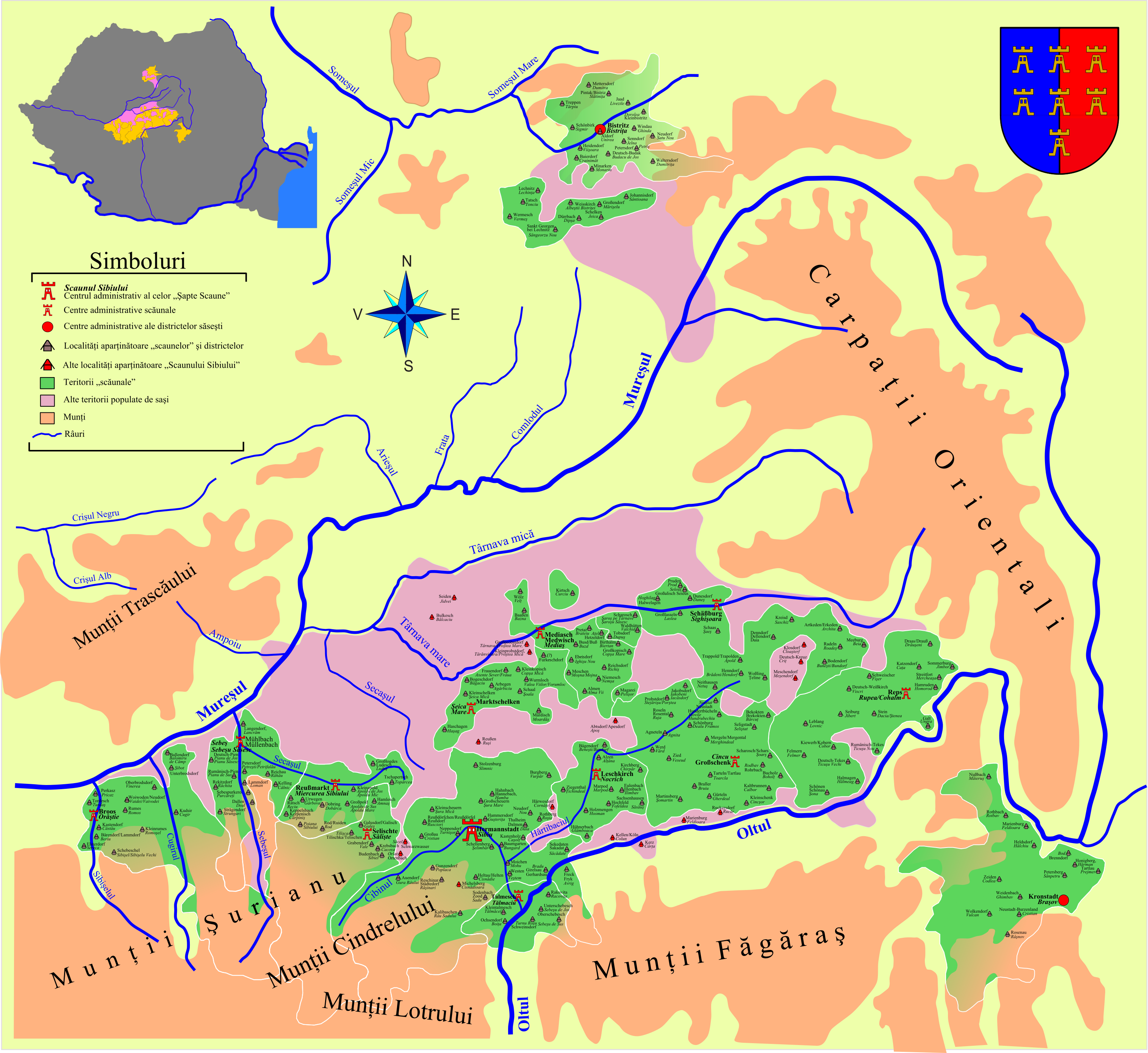
Historic region of Transylvania
The Nösnerland (, also known as Nösnergau; ; ) is a historic region of northeastern Transylvania in present-day Romania centered between the Bistrița and Mureș rivers. In today's administrative boundaries, it is located in southern Bistrița-Năsăud County and north-central Mureș County.
History
Beginning in the 12th century and increasingly in the 13th–14th centuries, Hungarian kings invited German colonists (mainly from present-day Luxembourg and the adjacent areas in western contemporary Germany) to settle in the then eastern lands of the Kingdom of Hungary; these German settlers became collectively known as the Transylvanian Saxons (). The Saxons in the southeast settled in the Burzenland, while the settlers in the northeast established towns along the Bistrița and Mureș rivers beginning in the early 13th century. As the latter settlers' first major town in the area was Nösen on the Bistrița in 1206, the surrounding area became known as the Nösnerland. The largest cities of this region were Nösen, later known as Bistritz (Bistrița in Romanian), in the north and Sächsisch-Regen (Reghin in Romanian) in the south.
During World War II, after Romania switched sides to the Allies as a result of King Michael's Coup of 23 August 1944, the German military ordered in September 1944 the evacuation of the German population from Northern Transylvania. After the Romanian Revolution and the fall of the Communist regime in 1989, additional Transylvanian Germans emigrated from their homeland to Germany.
Towns and villages
In each case, the modern Romanian name is given first, followed by the historic German and Hungarian names.
- Albeștii Bistriței (Weißkirch bei Bistritz, Kisfehéregyház)
- Arcalia (Kallesdorf, Árokalja)
- Batoș (Botsch, Bátos)
- Bistrița (Nösen / Bistritz, Beszterce)
- Budacu de Jos (Deutsch-Budak, Szászbudak)
- Chiraleș (Kyrieleis, Kerlés)
- Corvinești (Niederneudorf, Kékesújfalu)
- Cușma (Auen / Kuschma, Kusma)
- Dedrad (Deutsch-Zepling, Dedrád)
- Dipșa (Dürrbach, Dipse)
- Domnești (Attelsdorf / Billak, Bilak)
- Dorolea (Kleinbistritz, Aszubeszterce)
- Dumitra (Mettersdorf, Szentdemeter)
- Dumitrița (Waltersdorf, Kisdemeter)
- Ghinda (Windau, Vinda)
- Herina (Mönchsdorf, Harina)
- Ideciu de Jos (Niedereidisch, Alsóidecs)
- Ideciu de Sus (Obereidisch, Felsőidecs)
- Jelna (Senndorf, * Kiszsolna*)
- Lechința (Lechnitz, Szászlekence)
- Livezile (Jaad, Jád)
- Logig (Ludwigsdorf, Ludvég)
- Monariu (Minarken, Malomárka)
- Moruț (Moritzdorf, Aranyosmóric)
- Năsăud (Nußdorf / Nassod, Naszód)
- Orheiu Bistriţei (Burghalle, Óvárhely)
- Petelea (Birk, Petele)
- Petriș (Petersdorf bei Bistritz, Petres)
- Posmuș (Paßbusch, Paszmos)
- Reghin (Sächsisch-Regen, Szászrégen)
- Sângeorzu Nou (Sankt Georgen bei Lechnitz, Szászszentgyörgy)
- Sâniacob (Jakobsdorf bei Bitritz, Szászszentjakab)
- Satu Nou (Oberneudorf, Felsőszászújfalu)
- Sigmir (Schönbirk, Szépnyír)
- Slătinița (Pintak, * Pinták*)
- Șieu (Groß-Schogen, Nagysajó)
- Șieu-Măgheruș (Ungersdorf, Sajómagyarós)
- Tărpiu (Treppen, Szásztörpény)
- Teaca (Tekendorf, Teke)
- Tonciu (Tatsch, Tacs)
- Uila (Weilau, Vajola)
- Unirea (Wallendorf, Aldorf)
- Vermeș (Wermesch, Vermes)
- Viile Tecii (Großeidau, Kolozsnagyida)
- Viișoara (Heidendorf, Besenyő)
This article was imported from Wikipedia and is available under the Creative Commons Attribution-ShareAlike 4.0 License. Content has been adapted to SurfDoc format. Original contributors can be found on the article history page.
Ask Mako anything about Nösnerland — get instant answers, deeper analysis, and related topics.
Research with MakoFree with your Surf account
Create a free account to save articles, ask Mako questions, and organize your research.
Sign up freeThis content may have been generated or modified by AI. CloudSurf Software LLC is not responsible for the accuracy, completeness, or reliability of AI-generated content. Always verify important information from primary sources.
Report