From Surf Wiki (app.surf) — the open knowledge base
Legal system of Saudi Arabia
none
none
The legal system of Saudi Arabia is based on Sharia, Islamic law derived from the Quran and the Sunnah (the traditions) of the Islamic prophet Muhammad. The sources of Sharia also include Islamic scholarly consensus developed after Muhammad's death. Its interpretation by judges in Saudi Arabia is influenced by the medieval texts of the literalist Hanbali school of Fiqh. Uniquely in the Muslim world, Sharia has been adopted by Saudi Arabia in an uncodified form. This, and the lack of judicial precedent, has resulted in considerable uncertainty in the scope and content of the country's laws. The government therefore announced its intention to codify Sharia in 2010, and, in 2018, a sourcebook of legal principles and precedents was published by the Saudi government. Sharia has also been supplemented by regulations issued by royal decree covering modern issues such as intellectual property and corporate law. Nevertheless, Sharia remains the primary source of law, especially in areas such as criminal, family, commercial and contract law, and the Qur'an and the Sunnah are declared to be the country's constitution. In the areas of land and energy law the extensive proprietorial rights of the Saudi state (in effect, the Saudi royal family) constitute a significant feature.
The current Saudi court system was created by King Abdul Aziz, who founded the Kingdom of Saudi Arabia in 1932, and was introduced to the country in stages between 1927 and 1960. It comprises general and summary Sharia courts, with some administrative tribunals to deal with disputes on specific modern regulations. Trials in Saudi Arabia are bench trials. Courts in Saudi Arabia observe few formalities and the country's first criminal procedure code, issued in 2001, has been largely ignored. King Abdullah, in 2007, introduced a number of significant judicial reforms, although they are yet to be fully implemented.
Criminal law punishments in Saudi Arabia include public beheading, stoning, amputation and lashing. Serious criminal offences include not only internationally recognized crimes such as murder, rape, theft and robbery, but also apostasy, adultery, witchcraft and sorcery. In addition to the regular police force, Saudi Arabia has a secret police, the Mabahith, and "religious police", the Mutawa. The latter enforces Islamic social and moral norms, but their powers have greatly been restricted over the last few years. Western-based human rights organizations, such as Amnesty International and Human Rights Watch, have criticized the activities of both the Mabahith and the Mutawa, as well as a number of other aspects of human rights in Saudi Arabia. These include the number of executions, the range of offences which are subject to the death penalty, the lack of safeguards for the accused in the criminal justice system, the treatment of homosexuals, the use of torture, the lack of religious freedom, and the highly disadvantaged position of women. The Albert Shanker Institute and Freedom House have also reported that "Saudi Arabia's practices diverge from the concept of the rule of law."
History
Sharia (or Islamic law), the primary source of law in modern Saudi Arabia, was developed gradually by Muslim judges and scholars between the seventh and tenth centuries. From the time of the Abbasid Caliphate in the 8th century, the developing Sharia was accepted as the basis of law in the towns of the Muslim world, including the Arabian Peninsula, and upheld by local rulers, eclipsing urf (or pre-Islamic local customary law). In the rural areas, urf continued to be predominant for some time, and, for instance, was the main source of law among the bedouin of Nejd in central Arabia until the early 20th century.
By the 11th century, the Muslim world had developed four major Sunni schools of Islamic jurisprudence (or fiqh), each with its own interpretations of Sharia: Hanbali, Maliki, Shafi and Hanafi. In Arabia, the Hanbali school was preferred by the Wahhabi movement, founded in the 18th century. Wahhabism, a strict form of Sunni Islam, was supported by the Saudi royal family (the Al Saud) and is now dominant in Saudi Arabia. From the 18th century, the Hanbali school therefore predominated in Nejd and central Arabia, the heartland of Wahhabi Islam. In the more cosmopolitan Hejaz, in the west of the peninsula, both the Hanafi and Shafi schools were followed.
Similarly, different court systems existed. In 1927, the king introduced a new court system to the Hejaz comprising general and summary courts and ordered that Hanbali fiqh should be used. However, Nejd's traditional system of judges was left in place in the face of conservative opposition from the Nejd religious establishment.
After becoming familiar with the Hejaz court system in the following decades, the religious establishment allowed its introduction to the rest of the country between 1957 and 1960. The system of Sharia courts and government tribunals created by Abdul Aziz largely remained in place until the 2007 judiciary reforms (see below). When the incumbent Grand Mufti died in 1969, however, the then king, Faisal decided not to appoint a successor and took the opportunity to transfer responsibility to the newly established Ministry of Justice.
The Shia community of the Eastern province have a separate legal tradition. Although they follow Sharia, they apply the Shia Jafari school of jurisprudence to it. In 1913, when Abdul Aziz conquered the area, he granted the Shias a separate judiciary for dealing with religious and family law cases: one judge in Qatif, and one in Al-Hasa. This remained the position, with the two judges ministering to a population of around two million, until 2005 when the number of judges was increased to seven.
Sources of law
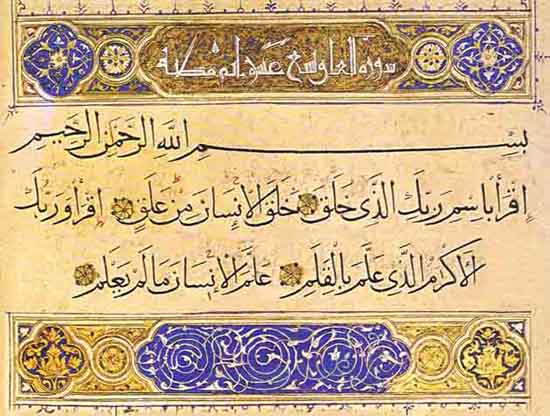
Verses from the Quran, a primary source of the law of Saudi Arabia.
The primary source of law in Saudi Arabia is the Islamic Sharia. Sharia is derived from the Qur'an and the traditions of Muhammad contained in the Sunnah; Officially, Sharia, in Saudi Arabia, is generally applied in accordance with the Hanbali legal school of thought (or madhhab), which only allows qiyas when absolutely necessary. The Saudi royal family and state are proponents of the Wahhabi Islamic movement which generally follows the Hanbali school. However, opponents of Wahhabism have noted that Wahhabi beliefs, as practised in Saudi Arabia, diverge from the Hanbali school in certain respects and, even, that Wahhabism may constitute a separate school or madhhab.
Muslim countries that retain or adopt Sharia usually determine which parts of the Sharia are enforceable and codify (and thereby modernize) them. Unlike other Muslim countries, Saudi Arabia regards uncodified Sharia in its entirety as the law of the land and does not interfere with it. It is, therefore, unique not only when compared to Western systems, but also in comparison to other Muslim countries, and according to the Dutch legal scholar, Jan Michiel Otto, could be described as the closest system in the modern world to the form of Sharia adopted at the advent of Islam.
The lack of codification of Sharia leads to considerable variation in its interpretation and application. Furthermore, there is no system of judicial precedent, as Saudi judges are forbidden from engaging in taqlid (or the unquestioning adoption of the interpretation of others) and must, instead, use independent reasoning (ijtihad).
Nevertheless, judges are expected to consult six medieval texts from the Hanbali school of jurisprudence before reaching a decision. The Hanbali school is noted for its literalist interpretation of the Qur'an and hadith. If the answer is not found in the six Hanbali texts, the judge may then consult the jurisprudence of the other three main Sunni schools or apply his independent judgment and legal reasoning through ijtihad.
Because the judge is empowered to disregard previous judgments (either his own or of other judges) and can apply his personal interpretation of Sharia to any particular case through ijtihad, divergent judgements arise even in apparently identical cases. There is a presumption against overturning a decision when it is based on ijtihad. This principle is crucial in two respects. As a result, in 2010, the Minister of Justice announced plans to implement a codification of Sharia law, although resistance from the religious establishment is reportedly delaying its implementation.
Royal decrees (nizam) are the other main source of law but are referred to as regulations rather than laws to indicate that they are subordinate to the Sharia. Royal decrees supplement Sharia in areas such as labor, commercial and corporate law. Additionally, other forms of regulations (lai'hah) include Royal Orders, Council of Ministers Resolutions, Ministerial Resolutions and, Ministerial Circulars, and are similarly subordinate to Sharia.
Any Western commercial laws or institutions are adapted and interpreted from the standpoint of Shariah law.
Additionally, traditional tribal law and custom remain significant.
The courts and the judiciary
Main article: Judiciary of Saudi Arabia
Court structure
The Sharia court system constitutes the basic judiciary of Saudi Arabia and its judges and lawyers form part of the ulema, the country's religious leadership. There are also extra-Sharia government tribunals which handle disputes relating to specific royal decrees
The Sharia courts have general jurisdiction over most civil and criminal cases. At present, there are two types of courts of first instance: general courts and summary courts dealing with lesser cases. Cases are adjudicated by single judges, There are also two courts for the Shia minority in the Eastern Province dealing with family and religious matters. Appellate courts sit in Mecca and Riyadh and review decisions for compliance with Sharia. The Supreme Judicial Council of Saudi Arabia supervises the lower courts and provides legal opinions and advice to the King and reviews sentences of death, stoning, and amputation.
There are also non-Sharia courts covering specialized areas of law, the most important of which is the Board of Grievances. This court was originally created to deal with complaints against the government, but also has jurisdiction over commercial and some criminal cases, such as bribery and forgery, and acts as a court of appeal for a number of non-Sharia government tribunals. These administrative tribunals, referred to as "committees", deal with specific issues regulated by royal decrees, such as labor and commercial law.
Judges
The judicial establishment, in the broadest sense, is composed of qadis, who give binding judgements in specific court cases, and muftis and other members of the ulema, who issue generalized but highly influential legal opinions (fatwas). The Grand Mufti is the most senior member of the judicial establishment as well as being the highest religious authority in the country; his opinions are highly influential among the Saudi judiciary. The judiciary proper (that is, the body of qadis) is composed of about 700 judges, a relatively small number (according to critics) for a country of over 23 million.
Qadis generally have degrees in Sharia law from an Islamic university recognized by the Saudi government with, in many cases, a post-graduate qualification from the Institute of Higher Judiciary in Riyadh. Although most judges have been educated and appointed under the current system, some of the older judges received the traditional qadi's training of years of instruction by a religious mentor in a mosque.
The capabilities and reactionary nature of the judges have been criticized. The main complaint reportedly made by Saudis privately is that judges, who have wide discretion in interpreting the Sharia, have no knowledge, and are often contemptuous, of the modern world. Reported examples of judges' attitudes include rulings banning such things as the children's game Pokémon, telephones that play recorded music, and sending flowers to hospital patients. Saudi judges come from a narrow recruitment pool. By one estimate, 80% of the 600+ Saudi judges and almost all senior judges
come from Qasim, a province in the center of the country with less than 5% of Saudi's population, but known as the strict religious Wahhabi heartland of Saudi Arabia. Senior judges will only allow like-minded graduates of select religious institutes to join the judiciary and will remove judges that stray away from rigidly conservative judgments.
Reforms and developments since 2008
The Saudi system of justice has been criticized for being slow, arcane, lacking in some of the safeguards of justice and unable to deal with the modern world. In 2007, King Abdullah issued royal decrees with the aim of reforming the judiciary and creating a new court system. the reforms have been completed, including the creation of the Supreme Court and the transfer of the Board of Grievances' commercial and criminal jurisdictions to the general court system. The specialist first instance courts now comprise general, criminal, personal status, commercial and labor courts. The Sharia courts have therefore lost their general jurisdiction to hear all cases and the work load of the government's administrative tribunals have been transferred to the new courts. Another important change is the establishment of appeal courts for each province. It has been claimed that the reforms will establish a system for codifying Sharia and incorporating the principle of judicial precedent into court practice.
df=dmy-all }}</ref>
In 2008, the Specialized Criminal Court was created. The court tries suspected terrorists and human rights activists. On 26 June 2011, the court started trials of 85 people suspected of being involved in Al-Qaeda in the Arabian Peninsula and the 2003 Riyadh compound bombings, and in September 2011 another 41 al-Qaeda suspects appeared in the court. In the same year, the court held trial sessions of human rights activists, including Mohammed Saleh al-Bejadi, co-founder of the Saudi Civil and Political Rights Association (ACPRA) and Mubarak Zu'air, a lawyer for long-term prisoners, and a protester, Khaled al-Johani, who spoke to BBC Arabic Television at a protest in Riyadh. The court convicted 16 of the human rights activists to sentences of 5–30 years on 22 November 2011.
In 2009, the King made a number of significant changes to the judiciary's personnel at the most senior level by bringing in a younger generation. For example, as well as appointing a new Minister of Justice, a new chairman of the Supreme Judicial Council was appointed. The outgoing chairman was known to oppose the codification of Sharia. The king also appointed a new head of the Board of Grievances and Abdulrahman Al Kelya as the first chief justice of the new Supreme Court. A January 2013 royal decree ruled that the Supreme Judicial Council will be headed by the justice minister. The chief justice of the Supreme Court will also be a member.
In what is considered "one of the most significant steps of legal reform it has taken for decades", the Saudi judicial system officially released thousands of previously unpublished court cases to the public in 2015.
Law enforcement
The police department of the Saudi Ministry of the Interior is divided into three forces: the regular police, secret police and the religious police.
Regular and secret police
A police vehicle in Saudi Arabia
The Department of Public Safety is the official name of the regular police force and handles most day-to-day police activities. The United Nations' Working Group on Arbitrary Detention has objected to arbitrary detention by the Mabahith at ʽUlaysha.
Mutawa
Main article: Committee for the Promotion of Virtue and the Prevention of Vice (Saudi Arabia)
The religious police, (mutawa is the name used for individual religious police, the "Committee for the Promotion of Virtue and the Prevention of Vice" is the name of the police organization) enforce Islamic codes of behavior. Numbering about 20,000 men untrained in law enforcement, the mutawa ensure that there is strict separation of the sexes in public, that businesses close at prayer time, pressure women to wear traditional dress and, in some areas, prevent them from driving cars.
Major areas of law
Constitutional law
Saudi Arabia is an absolute monarchy, and has no legally binding written constitution. However, in 1992, the Basic Law of Saudi Arabia was adopted by royal decree. The Basic Law outlines the responsibilities and processes of the governing institutions but is insufficiently specific to be considered a constitution. It declares that the king must comply with Sharia (that is, Islamic law) and that the Quran and the Sunna (the traditions of Muhammad) are the country's constitution. Interpretation of the Quran and the Sunna remains necessary, and this is carried out by the ulema, the Saudi religious establishment.
The Basic Law further states:
Criminal law
A police station in [[Riyadh
Saudi Arabia uses the bench trial system and few procedural formalities are observed. The country's first criminal procedure code was introduced in 2001 and contains provisions based on Egyptian and French law. Human Rights Watch, in a 2008 report, noted that judges were either ignorant of the criminal procedure code or were aware of it but routinely ignored the code.
Sharia provides the substantive criminal law and comprises three categories of crime: hudud (fixed Quranic punishments for specific crimes), Qisas (eye-for-an-eye retaliatory punishments), and Tazir, a general category. Qisas crimes include murder or any crime involving bodily harm. Tazir represents most cases, many of which are defined by national regulations such as bribery, trafficking, and drug abuse. The most common punishment for a Tazir offence is lashing.
The Saudi courts impose a number of severe physical punishments. The death penalty can be imposed for a wide range of offences including murder, rape, armed robbery, repeated drug use, apostasy, adultery, witchcraft and sorcery and can be carried out by beheading with a sword, Two executions for "witchcraft and sorcery" were carried out in 2011. There were no reports of stoning between 2007 and 2010. In April 2020, Saudi Arabia excluded minors who commit crimes from facing execution, but instead would get sentenced a maximum of 10 years in a juvenile detention facility.
A conviction requires proof in one of three ways. The first is an uncoerced confession. Lastly, an affirmation or denial by oathThe Muslim oath has no prescribed form except that it must begin "Wallahi, Wabillahi, Watallah" ("By God..."). It is not necessary to place the hand on the Qur'an, although this is often done. See can be required.
archive-date=4 June 2011 }}</ref>
Although repeated theft can be punishable by amputation of the right hand and aggravated theft by the cross-amputation of a hand and a foot, Lashings are a common form of punishment and are often imposed for offences against religion and public morality such as drinking alcohol and neglect of prayer and fasting obligations.
Retaliatory punishments, or Qisas, are practised: for instance, an eye can be surgically removed at the insistence of a victim who lost his own eye. This occurred in a case reported in 2000. Families of someone unlawfully killed can choose between demanding the death penalty or granting clemency in return for a payment of diyya, or blood money, by the perpetrator. There has been a growing trend of exorbitant blood-money demands, for example a sum of $11 million was reported as being recently demanded. Saudi officials and religious figures have criticized this trend and said that the practise of diyya has become corrupted.
Family law
A family fishing in [[Jeddah
Laws relating to marriage, divorce, children and inheritance are not codified and fall within the general jurisdiction of the Sharia courts.
Polygamy is permitted for men but is limited to four wives at any one time. There is evidence that its practice has increased, particularly among the educated Hejazi elite, as a result of oil wealth. The government has promoted polygamy as part of a return to "Islamic values" program. Prior to that, there was no minimum age for marriage and the Grand Mufti reportedly had said in 2009 that girls of the age of 10 or 12 were marriageable.
Transnational marriages involving Saudis are bound by a wide range of legal requirements and restrictions with regards to age and age difference, income, occupation, family consent, and other factors. For example, most Saudis who work in government ministries and agencies are not permitted to marry non-Saudis. A Saudi man must be between the ages of 40 and 65 in order to marry a non-Saudi woman, and since 2014 Saudi men have been banned from marrying foreign women of four nationalities: Pakistan, Bangladesh, Chad, and Myanmar.
Men have a unilateral right to divorce their wives (talaq) without needing any legal justification. The right for men to marry up to four wives, combined with their ability to divorce a wife at any time without cause, can translate to unlimited polygamy. King Abdul Aziz, the founder of the country, reportedly admitted to marrying over 200 women by frequently divorcing wives and marrying new ones. However, his polygamy was considered extraordinary even by Saudi Arabian standards. Notably, this charge was used to prosecute women's rights activists Wajeha Al-Huwaider and Fawzia al-Oyouni for their attempts to assist Nathalie Morin — a Canadian citizen — to escape an abusive Saudi marriage.
With regard to the law of inheritance, the Quran specifies that fixed portions of the deceased's estate must be left to the so-called "Quranic heirs". Generally, female heirs receive half the portion of male heirs. A Sunni Muslim can bequeath a maximum of a third of his property to non-Quranic heirs. The residue is divided between agnatic heirs.
Commercial and contract law
A diagram outlining the basic procedure of enforcing a contract in Saudi Arabia
Business and commerce are governed by Sharia, commercial jurisdiction rests with the Board of Grievances composed of Sharia-trained judges, but "Special Tribunals" tasked with "finding ways to
circumnavigate the more restrictive aspects of Shariah Law" have been established.
For foreign investors, uncertainties around the content of commercial law, because of the Sharia aspect, constitutes a disincentive to invest in Saudi Arabia. Within the general limitations of Sharia, it allows considerable freedom for the parties to agree contract terms. However, contracts involving speculation or the payment of interest are prohibited and are not enforceable. If a contract is breached, Saudi courts will only award compensation for proven direct damage. Claims for loss of profit or opportunity will not be allowed as these would constitute speculation, which is not permitted under Sharia.
As of at least 2003, the non-sharia "Special Tribunals" or "Special Committees" Specific modern aspects of commercial law, for example, commercial paper and securities, intellectual property, and corporate law are governed by modern regulations, and specialist government tribunals deal with related disputes. Because of a lack of resources, when the new patent law went into effect in 2004, the Saudi Patent office had only registered 90 patents since 1989, with a backlog of 9,000 applications. It is believed the backlog has now been reduced.
The Saudi government is also putting greater resources into combating unauthorized distribution of software, printed material, recordings and videos. However, illegally copied material is still widely available. but was removed in 2010.
Saudi law recognizes only corporate or partnership entities established under Sharia or the Saudi Company Law of 1982. A contract with any other type of company will be void and the persons who made the contract in the company's name will be personally liable for it. and again in 2023 with the aim of stimulating small business growth by loosening some types of business restrictions. Among the key changes reflected in the most recent 2023 update, is that companies in the Kingdom with less than 49 employees and SR10 million ($2.66 million) in annual revenue are exempt from tax audits.
Labor law
Employers have a number of obligations, including at least 21 days paid holiday after a year's employment and will be 30 days after five years of continuous service. Terminated employees must receive an "end-of-service" payment of a half a months' salary for each year employed going up to one month if employed for more than five years.
Foreign workers are only permitted to have a fixed-term employment contract (as opposed to an indefinite term contract); if no specific term is stipulated in the contract, then it ends in conjunction with the expiration of the employee's work permit. Agricultural workers and domestic workers including drivers, cleaning staff, and landscapers are not covered by labor protections, and frequently subjected to mistreatment.
Land law
Most land in Saudi Arabia is owned by the government and only cultivated land and urban property are subject to individual ownership. All land titles must be registered, but there is no accurate information as to the extent of registration. Property investments by non-Saudis of more than 30 million Saudi riyals require approval of the Council of Ministers and foreigners remain prohibited from owning property in Medina and Mecca.
Saudi Arabia has three categories of land: developed land (amir), undeveloped land (mawat), and "protective zones" (harim). Developed land comprises the built environment of towns and villages and agriculturally developed land, and can be bought, sold and inherited by individuals. The undeveloped land comprises rough grazing, pasture and wilderness. Rough grazing and pasture is owned in common and everyone has equal rights to its use. The wilderness is owned by the state and may be open to everyone unless specific restrictions are imposed. Harim land is a protective buffer between the owned land and the undeveloped land, and is defined, in the case of a town, as the area that can be reached and returned from in a day for the purposes of collecting fuel and pasturing livestock.
Saudi law utilizes the Waqf, which is a form of land ownership whereby a Muslim can transfer property to a foundation for long-term religious or charitable purposes. The property cannot then be alienated or transferred.
Energy law
Eastern Province
Saudi Arabia's vast oil reserves are owned by the Saudi government, in effect the Saudi royal family. Article 14 of the Basic Law states:
The Ministry of Energy, Industry and Mineral Resources is responsible for general strategy in the oil and gas sectors and for monitoring the state-owned oil company, Saudi Aramco. The oil, gas and refining industries in Saudi Arabia are controlled by law by Saudi Aramco, which has a near monopoly in these areas. It is the world's biggest oil producer, the Middle East's biggest company and is generally considered to be the most important energy company in the world. This was the first time since the 1970s that foreign companies have been permitted to search for oil or gas.
Currently, the electricity industry is in the hands of the 75% state-owned Saudi Electric Company, but plans have been announced to privatize the industry.
## Human rights and rule of law issues
*Main article: Human rights in Saudi Arabia*
Human rights issues and failings in the rule of law in Saudi Arabia have attracted strong criticism. These include criminal law punishments that are considered as cruel, as well as the position of women, religious discrimination, the lack of religious freedom and the activities of the Saudi Mutaween.
Between 1996 and 2000, Saudi Arabia acceded to four UN human rights conventions and, in 2004, the government approved the establishment of the National Society for Human Rights (NSHR), staffed by government employees, to monitor their implementation. The activities of the NSHR have been limited and doubts remain over its neutrality and independence. Saudi Arabia was one of only eight countries that did not accept the UN's Universal Declaration of Human Rights when it was launched in 1948. Now, only Saudi Arabia remains openly opposed to the declaration. In response to the continuing criticism of its human rights record, the Saudi government points to the special Islamic character of the country, and asserts that this justifies a different social and political order.
### Rule of law
Because Sharia, as applied by Saudi courts, is uncodified and because judges are not bound by judicial precedent, the scope and content of the law is uncertain. A study published by the Albert Shanker Institute and Freedom House has criticized a number of aspects of the administration of justice in Saudi Arabia and concluded that the country's "practices diverge from the concept of the rule of law." The study goes on to assert that qadis (judges) reach decisions without following due process and "only the bravest of lawyers ... challenge decisions of the qadis; usually appeals to the king are based on mercy, not on justice or innocence." It also claimed that members of the Saudi royal family are not forced to appear before Saudi courts.
As in many countries, those with influence may receive favorable treatment before the law. According to a former managing editor at *Arab News*, the ruling House of Saud is so unwilling "to let one of their own face the consequences of his criminal activity" that on the rare occasions that they are arrested for a crime, the perpetrating prince is pardoned (Prince Fahd bin Naif, who was 19, gunned down Mundir al-Qadi in 2002) or released, and further media mention of the incident forbidden by the Ministry of Culture and Information (four princes that participated in the disruption of a 2002 Eid al-Fitr gathering on the corniche of Jeddah).
On the other hand, blue collar foreign workers have sometimes been unable to collect salaries due even when the Saudi Labor Office has ruled in their favor, since employers can stall payment until the worker' work permits have expired.
### Women's rights
*Main article: Women's rights in Saudi Arabia*
The U.S. State department considers that “discrimination against women is a significant problem” in Saudi Arabia and that women have few political or social rights. After her 2008 visit, the UN special rapporteur on violence against women noted the lack of women's autonomy and the absence of a law criminalizing violence against women.
Every adult woman has to have a close male relative as her "guardian". The guardian is entitled to make a number of critical decisions on a woman's behalf. However, the Saudi guardianship system was abolished in August 2019, allowing women to travel and own businesses without the need of a guardian's approval. Women also face discrimination in the courts, where the testimony of one man equals that of two women, and in family and inheritance law (see above).
Women formerly required permission to obtain a passport and travel. This restriction was removed on July 26, 2019. Crown Prince Mohammed also extended to women the right to receive equal treatment in the workplace and to obtain family documents from the government in August 2019.
The religious police *mutawa* impose restrictions on women when in public. Driving licenses started being issued to women in June 2018, and the effective ban was lifted on the 24th of June 2018.
In 2013, Saudi Arabia registered its first female trainee lawyer, Arwa al-Hujaili.
### Political freedom and freedom of speech
No political parties or national elections are permitted in Saudi Arabia and according to *The Economist's* 2010 Democracy Index, the Saudi government is the seventh most authoritarian regime from among the 167 countries rated. There is no legal protection of freedom of speech and people are prohibited from publicly criticizing the government, religion, or the royal family. The Saudi press is strictly censored and articles on Saudi dissidents are banned. Saudi censorship is considered among the most restrictive in the world and the country blocks broad swathes of the Internet. After [protests occurred in early 2011](2011-2012-saudi-arabian-protests), the government banned all public demonstrations and marches.
Jamal Khashoggi, an outspoken critic of Saudi Arabia, was murdered by Saudi Officials in 2018. A number of other critics and protesters were also arrested.
### Criminal trials and punishment
Western-based organisations such as Amnesty International and Human Rights Watch have condemned both the Saudi criminal justice system and its severe punishments. However, most Saudis reportedly support the system and say that it maintains a low crime rate.
Human Rights Watch, in their 2008 report on Saudi Arabian criminal justice system, noted that the criminal procedure code introduced in 2002 lacked some basic protections but, as mentioned above, had been ignored by judges in any case. At trial, there is a presumption of guilt and the accused is often unable to examine witnesses and evidence or present a legal defense. The physical punishments imposed by Saudi courts, such as beheading, stoning, amputation and lashing, and the number of executions have also been strongly criticized.
Saudi Arabia has been condemned by various international organizations for its discriminatory legal system towards the guilty. In June 2017, Saudi officials were accused of illegally transferring a Saudi student studying in the US, who was accused of killing a teenager in Oregon. The accused faced first-degree manslaughter — with a minimum sentence of 10 years — as well as hit-and-run, reckless endangerment and reckless driving charges in the US. As per a report by BBC, Saudi authorities helped him obtain an illegal passport and fled him out of the States in a private plane. In June 2018, Saudi officials informed the US that the student was in the kingdom from the past one year.
Saudi Arabia has made bail for its nationals on several previous occasions as well, including for a man accused of rape in Utah in 2015, who also fled, and in 2013 for a Missouri resident, who was accused but later acquitted of murdering a person.
Disregarding the 2020 ruling of abolishing death penalty for juveniles, Saudi Arabia executed Mustafa Hashem al-Darwish in June 2021, over the allegations of taking part in anti-government demonstrations at the age of 17. He was being held in detention since May 2015 and was placed in solitary confinement for years. During the trial, al-Darwish revealed that he faced brutal torture and beatings and was forced to sign confessions.
### Religious freedom
*Main article: Freedom of religion in Saudi Arabia*
::figure[src="https://upload.wikimedia.org/wikipedia/commons/3/3b/Raif_Badawi_cropped.jpg" caption="Saudi Arabian activist Raif Badawi was arrested for blasphemy."]
::
In 2010, the U.S. State Department stated that in Saudi Arabia "freedom of religion is neither recognized nor protected under the law and is severely restricted in practice" and that "government policies continued to place severe restrictions on religious freedom". No faith other than Islam is permitted to be practised, although there are nearly a million Christians, nearly all foreign workers, in Saudi Arabia. There are no churches or other non-Muslim houses of worship permitted in the country. Even private prayer services are forbidden in practice and the Saudi religious police reportedly regularly search the homes of Christians. Foreign workers must observe Ramadan and are not allowed to celebrate Christmas or Easter. Conversion by Muslims to another religion (apostasy) carries the death penalty, although there have been no confirmed reports of executions for apostasy in recent years. Proselytizing by non-Muslims is illegal, and the last Christian priest was expelled from Saudi Arabia in 1985. Compensation in court cases discriminates against non-Muslims: once fault is determined, a Muslim receives all of the amount of compensation determined, a Jew or Christian half, and all others a sixteenth.
According to Human Rights Watch, the Shia minority face systematic discrimination from the Saudi government in education, the justice system and especially religious freedom. Restrictions are imposed on the public celebration of Shia festivals such as Ashura and on the Shia taking part in communal public worship.
In March 2014, the Saudi interior ministry issued a royal decree branding all atheists as terrorists, which defines terrorism as "calling for atheist thought in any form, or calling into question the fundamentals of the Islamic religion on which this country is based".
### LGBT rights
*Main article: LGBT rights in Saudi Arabia*
Saudi Arabia is one of the few countries in the world where homosexual acts are not only illegal but punishable by execution. There have also been raids on "gay parties" and men have been arrested for "behaving like women". The usual penalties inflicted have been limited to flogging and imprisonment.
## Notes
## References
## References
1. (5 January 2018). ["Saudi justice minister inaugurates book on legal precedents"](http://www.arabnews.com/node/1219391/saudi-arabia). *Arabnews*.
2. ["Rule of Law: Country Studies - Saudi Arabia"](http://www.democracyweb.org/rule/saudiarabia.php). *[[Albert Shanker Institute]] and [[Freedom House]]*.
3. Campbell, Christian. (2007). "Legal Aspects of Doing Business in the Middle East". *Lulu Enterprises Incorporated*.
4. Bahl, Taru. (2004). "Encyclopaedia of the Muslim World". *Anmol Publications*.
5. Hourani, Albert. (2005). "A History of the Arab peoples".
6. Hourani, Albert. (2005). "A History of the Arab peoples".
7. Wynbrandt, James. (2010). ["A Brief History of Saudi Arabia"](https://archive.org/details/briefhistoryofsa0000wynb/page/183).
8. Hourani, Albert. (2005). "A History of the Arab peoples".
9. Peterson, J.E.. (2020). ["Historical Dictionary of Saudi Arabia"](https://books.google.com/books?id=nanODwAAQBAJ&dq=wahhabism+hanbali&pg=PA287). *Rowman & Littlefield*.
10. Otto, Jan Michiel. (2010). ["Sharia Incorporated: A Comparative Overview of the Legal Systems of Twelve Muslim Countries in Past and Present"](https://archive.org/details/shariaincorporat00otto). *Amsterdam University Press*.
11. Kaim, Markus. (2008). ["Great powers and regional orders: the United States and the Persian Gulf"](https://archive.org/details/greatpowersregio00kaim).
12. Bowen, Wayne H.. (2007). "The history of Saudi Arabia".
13. Wilson, Peter W.. (1994). "Saudi Arabia: the coming storm". *M.E. Sharpe*.
14. Bowen, Wayne H.. (2007). "The history of Saudi Arabia".
15. Hassner, Ron Eduard. (2009). ["War on sacred grounds"](https://archive.org/details/waronsacredgroun00hass/page/144). *Cornell University Press*.
16. Cordesman, Anthony H.. (2003). ["Saudi Arabia enters the 21st century"](https://archive.org/details/saudiarabiaenter0000cord/page/286).
17. Human Rights Watch. (2009). "Denied dignity: systematic discrimination and hostility toward Saudi Shia citizens". *Human Rights Watch*.
18. Louėr, Laurence. (2008). "Transnational Shia politics: religious and political networks in the Gulf". *Columbia University Press*.
19. Human Rights Watch. (2009). "Denied dignity: systematic discrimination and hostility toward Saudi Shia citizens". *Human Rights Watch*.
20. Kettell, Brian B.. (2011). ["Introduction to Islamic Banking and Finance"](https://archive.org/details/introductiontois0000kett/page/13). *John Wiley & Sons*.
21. ["Hanbali School of Law."](http://www.oxfordislamicstudies.com/article/opr/t125/e799). *[[Oxford University Press]]*.
22. Ayubi, Nazih. (2003). ["Political Islam: Religion and Politics in the Arab World"](https://books.google.com/books?id=mraIAgAAQBAJ&dq=Hanbali+saudi+%22precedent%22&pg=PA75). *Routledge*.
23. Schwartz, Stephen. (2003). ["The Two Faces of Islam"](https://books.google.com/books?id=DLCsJdwh4rgC&dq=wahhabi+diverges+hanbali&pg=PA316). *Knopf Doubleday Publishing*.
24. Zargar, Cameron. (2017). ["Origins of Wahhabism from Hanbali Fiqh"](https://escholarship.org/uc/item/6rp796h4). *Journal of Islamic and Near Eastern Law*.
25. Peters, Rudolph. (2006). ["Crime and Punishment in Islamic Law: Theory and Practice from the Sixteenth to the Twenty-First Century"](https://archive.org/details/crimepunishmenti00libg). *Cambridge University Press*.
26. Otto, Jan Michiel. (2010). ["Sharia Incorporated: A Comparative Overview of the Legal Systems of Twelve Muslim Countries in Past and Present"](https://archive.org/details/shariaincorporat00otto). *Amsterdam University Press*.
27. Wilson, Peter W.. (1994). "Saudi Arabia: the coming storm". *M.E. Sharpe*.
28. Otto, Jan Michiel. (2010). ["Sharia Incorporated: A Comparative Overview of the Legal Systems of Twelve Muslim Countries in Past and Present"](https://archive.org/details/shariaincorporat00otto). *Amsterdam University Press*.
29. Nielsen, Jørgen S.. (2016). ["Shari'a As Discourse"](https://books.google.com/books?id=kaveCwAAQBAJ&dq=Hanbali+saudi+taqlid&pg=PA161). *Routledge*.
30. Al-Farsy, Fouad. (2004). "Modernity and tradition:the Saudi equation". *Panarc International*.
31. Campo, Juan Eduardo. (2006). "Encyclopedia of Islam". *Facts On File*.
32. Commins, David Dean. (2006). ["The Wahhabi mission and Saudi Arabia"](https://archive.org/details/wahhabimissionsa0000comm). *Bloomsbury Academic*.
33. (21 July 2010). ["Saudi to codify Sharia 'for clarity'"](http://www.middle-east-online.com/english/?id=40144). *Middle East Online*.
34. Otto, Jan Michiel. (2010). ["Sharia Incorporated: A Comparative Overview of the Legal Systems of Twelve Muslim Countries in Past and Present"](https://archive.org/details/shariaincorporat00otto). *Amsterdam University Press*.
35. (May 2010). ["Doing Business in Saudi Arabia"](http://www.lw.com/upload/pubContent/_pdf/pub3507_1.pdf). *Latham & Watkins LLP*.
36. Coulson, Noel J. (Graham and Trotman, 1984), ''Commercial Law in the Gulf States: The Islamic Legal Tradition'', 3
37. Ertürk, Yakin. (14 April 2009). ["Report of the Special Rapporteur on violence against women, its causes and consequences: Mission to Saudi Arabia"](http://www2.ohchr.org/english/bodies/hrcouncil/docs/11session/A.HRC.11.6.Add.3_en.pdf). *United Nations*.
38. Esposito, John L.. (1998). "Islam and politics". *Syracuse University Press*.
39. Esposito, John L.. (1998). "Islam and politics". *Syracuse University Press*.
40. Powell, William. (1982). ["Saudi Arabia and its royal family"](https://archive.org/details/saudiarabiaitsro00powe/page/102). *L. Stuart*.
41. Campbell, Christian. (2007). "Legal Aspects of Doing Business in the Middle East". *Lulu Enterprises Incorporated*.
42. Otto, Jan Michiel. (2010). ["Sharia Incorporated: A Comparative Overview of the Legal Systems of Twelve Muslim Countries in Past and Present"](https://archive.org/details/shariaincorporat00otto). *Amsterdam University Press*.
43. Otto, Jan Michiel. (2010). ["Sharia Incorporated: A Comparative Overview of the Legal Systems of Twelve Muslim Countries in Past and Present"](https://archive.org/details/shariaincorporat00otto). *Amsterdam University Press*.
44. Otto, Jan Michiel. (2010). ["Sharia Incorporated: A Comparative Overview of the Legal Systems of Twelve Muslim Countries in Past and Present"](https://archive.org/details/shariaincorporat00otto). *Amsterdam University Press*.
45. Baamir, Abdulrahman Yahya. (2010). ["Shari'a Law in Commercial and Banking Arbitration"](https://archive.org/details/sharialawcommerc00baam). *Ashgate*.
46. Otto, Jan Michiel. (2010). ["Sharia Incorporated: A Comparative Overview of the Legal Systems of Twelve Muslim Countries in Past and Present"](https://archive.org/details/shariaincorporat00otto). *Amsterdam University Press*.
47. Vogel, Frank E.. (1999). ["Islamic law and legal system: studies of Saudi Arabia"](https://archive.org/details/islamiclawlegals00voge).
48. Baamir, Abdulrahman Yahya. (2010). ["Shari'a Law in Commercial and Banking Arbitration"](https://archive.org/details/sharialawcommerc00baam). *Ashgate*.
49. Newman, Graeme R. (2010). ["Crime and Punishment Around the World"](https://books.google.com/books?id=2uK6bR9byVIC&q=saudi+700+judges&pg=PA357). *Abc-Clio*.
50. Baamir, Abdulrahman Yahya. (2010). ["Shari'a Law in Commercial and Banking Arbitration"](https://archive.org/details/sharialawcommerc00baam). *Ashgate*.
51. Vogel, Frank E.. (1999). ["Islamic law and legal system: studies of Saudi Arabia"](https://archive.org/details/islamiclawlegals00voge).
52. Preliminary results of census of 2004-09-15
53. (14 June 2001). ["Cruel, or just unusual?"](https://www.economist.com/international/2001/06/14/cruel-or-just-unusual). *The Economist*.
54. (14 June 2001). ["Saudi Arabian justice: Cruel, or just unusual?"](https://www.economist.com/international/2001/06/14/cruel-or-just-unusual). *[[The Economist]]*.
55. (17 February 2009). ["Tentative steps in Saudi Arabia: The king of Saudi Arabia shows some reformist credentials"](https://www.economist.com/news/2009/02/17/tentative-steps-in-saudi-arabia). *[[The Economist]]*.
56. (4 October 2007). ["Support for shake-up of Saudi justice system"](https://www.ft.com/content/ec3ad182-72a2-11dc-b7ff-0000779fd2ac). *The Financial Times*.
57. (26 November 2018). ["Seven Labor Courts Inaugurated Across KSA to Attract Investment"](https://aawsat.com/english/home/article/1479306/seven-labor-courts-inaugurated-across-ksa-attract-investment). *Asharq Al-Awsat*.
58. (5 January 2018). ["Saudi justice minister inaugurates book on legal precedents"](http://www.arabnews.com/node/1219391/saudi-arabia). *[[Arab News]]*.
59. (2011-12-30). ["Saudi Arabia: Renewed Protests Defy Ban"](https://www.hrw.org/news/2011/12/30/saudi-arabia-renewed-protests-defy-ban). *[[Human Rights Watch]]*.
60. (September 16, 2018). ["Push to Execute Saudi Clerics Rattles Kingdom's Power Structure"](https://www.wsj.com/articles/push-to-execute-saudi-clerics-rattles-kingdoms-power-structure-1537097475). *[[The Wall Street Journal]]*.
61. (2011). ["Specialized criminal court begins hearings against 85 people accused of terrorism"](http://www.saudiembassy.net/latest_news/news06261105.aspx). *[[List of diplomatic missions of Saudi Arabia#North America*.
62. (2011-11-23). ["Saudi Arabia: Lengthy sentences for reformists a worrying development"](https://www.amnesty.org/en/news/saudi-arabia-lengthy-sentences-reformists-worrying-development-2011-11-23). *[[Amnesty International]]*.
63. (2012). ["World Report 2012: Saudi Arabia"](https://www.hrw.org/world-report-2012/world-report-2012-saudi-arabia). *[[Human Rights Watch]]*.
64. Carey, Glen. (2011-09-19). ["Saudi Court Tries Militants for Planning Attacks on U.S. Troops"](http://mobile.bloomberg.com/news/2011-09-19/saudi-court-tries-militants-for-planning-attacks-on-u-s-troops.html). *[[Bloomberg L.P.]]*.
65. Kennedy, Dana. (2011-04-08). ["Imprisoned Father of Autistic Boy Called "the Bravest Man in Saudi Arabia""](http://www.aolnews.com/2011/04/08/khaled-al-johani-the-bravest-man-in-saudi-arabia). *[[AOL*.
66. Buchanan, Michael. (2011-05-24). ["Saudi Arabia: Calls for political reform muted"](https://www.bbc.co.uk/news/world-middle-east-13507318). *[[BBC]]*.
67. (2012-02-22). ["Saudi Arabia: Trial of Riyadh protester 'utterly unwarranted'"](https://www.amnesty.org/en/news/saudi-arabia-trial-riyadh-protester-utterly-unwarranted-2012-02-22). *[[Amnesty International]]*.
68. Ramady, Mohamed A.. (2010). ["The Saudi Arabian Economy: Policies, Achievements, and Challenges"](https://books.google.com/books?id=U7ae3Y2idIkC&q=%22Al+Kelya%22&pg=PA18). *Springer*.
69. (15 January 2013). ["King reshuffles Supreme Judiciary Council and Ulema"](http://www.arabnews.com/king-appoints-new-supreme-court-chief-other-officials). *Arab News*.
70. Vogel, Frank E.. (November 14, 2019). ["Saudi Business Law in Practice: Laws and Regulations as Applied in the Courts and Judicial Committees of Saudi Arabia"](https://books.google.com/books?id=3H67DwAAQBAJ). *[[Bloomsbury Publishing]]*.
71. Dammer, Harry R.. (2010). "Comparative Criminal Justice Systems". *Cengage Learning*.
72. (10 August 2009). ["Human Rights and Saudi Arabia's Counterterrorism Response"](https://www.hrw.org/en/node/84893/section/5). *Human Rights Watch*.
73. (4 November 2002). ["Saudi minister rebukes religious police"](https://news.bbc.co.uk/2/hi/middle_east/2399885.stm). *BBC News*.
74. Cavendish, Marshall. (2007). ["World and Its Peoples: the Arabian Peninsula"](https://archive.org/details/worlditspeoplesm0000unse/page/78). *Marshall Cavendish*.
75. Champion, Daryl. (2003). "The paradoxical kingdom: Saudi Arabia and the momentum of reform". *Hurst & Company*.
76. Robbers, Gerhard. (2007). "Encyclopedia of world constitutions, Volume 2". *Facts On File*.
77. Niblock, Tim. (2006). ["Saudi Arabia: power, legitimacy and survival"](https://archive.org/details/saudiarabiaconte00nibl). *Routledge*.
78. ["The Basic Law of Governance"](http://www.saudiembassy.net/about/country-information/laws/The_Basic_Law_Of_Governance.aspx). *Royal Embassy of Saudi Arabia, Washington D.C.*.
79. Shoult, Anthony. (2006). ["Doing business with Saudi Arabia"](https://archive.org/details/doingbusinesswit00shou_063). *GMB Pub.*.
80. Otto, Jan Michiel. (2010). ["Sharia Incorporated: A Comparative Overview of the Legal Systems of Twelve Muslim Countries in Past and Present"](https://archive.org/details/shariaincorporat00otto). *Amsterdam University Press*.
81. Human Rights Watch. (2008). ["Precarious Justice"](https://books.google.com/books?id=xwGojEygbqAC&q=jury&pg=PA3).
82. Dammer, Harry R.. (2010). "Comparative Criminal Justice Systems". *Cengage Learning*.
83. Otto, Jan Michiel. (2010). ["Sharia Incorporated: A Comparative Overview of the Legal Systems of Twelve Muslim Countries in Past and Present"](https://archive.org/details/shariaincorporat00otto). *Amsterdam University Press*.
84. Whitaker, Brian. (9 August 2003). ["Saudi system condemned"](https://www.theguardian.com/world/2003/aug/09/saudiarabia.brianwhitaker). *The Guardian*.
85. (5 June 2003). ["Saudi executioner tells all"](https://news.bbc.co.uk/2/hi/middle_east/2966790.stm). *BBC News*.
86. Federal Research Division. (2004). "Saudi Arabia A Country Study".
87. Miethe, Terance D.. (2004). ["Punishment: a comparative historical perspective"](https://archive.org/details/punishmentcompar00miet_924). *Cambridge University Press*.
88. (8 April 2011). ["2010 Human Rights Report: Saudi Arabia"](https://www.state.gov/g/drl/rls/hrrpt/2010/nea/154472.htm). *U.S. State Department*.
89. (12 December 2011). ["Saudi woman executed for 'witchcraft and sorcery'"](https://www.bbc.co.uk/news/world-middle-east-16150381). *BBC News Online*.
90. Vogel, Frank E.. (1999). ["Islamic law and legal system: studies of Saudi Arabia"](https://archive.org/details/islamiclawlegals00voge). *BRILL*.
91. (2020-04-26). ["Saudi Arabia scraps execution for those who committed crimes as minors: Commission"](https://www.reuters.com/article/us-saudi-rights-execution-idUSKCN2280LI). *Reuters*.
92. Kritzer, Herbert M.. (2002). "Legal Systems of the World: A Political, Social, and Cultural Encyclopedia".
93. Wynbrandt, James. (2010). ["A Brief History of Saudi Arabia"](https://archive.org/details/briefhistoryofsa0000wynb/page/310). *Infobase*.
94. (5 December 2007). ["Saudi Justice?"](https://www.cbsnews.com/news/saudi-justice/). *CBS News*.
95. Whitaker, Brian. (13 September 2010). ["Saudi Arabia's juggling act on homosexuality"](https://www.theguardian.com/commentisfree/2010/sep/13/saudi-arabia-homosexuality-juggling-act). *The Guardian*.
96. (24 January 2010). ["Report: Saudi girl accepts lashing for assaulting headmistress"](http://articles.cnn.com/2010-01-24/world/saudi.arabia.lashes_1_lashes-al-watan-saudi-city?_s=PM:WORLD). *CNN*.
97. (2020-04-24). ["Saudi Arabia to end flogging as form of punishment - document"](https://uk.reuters.com/article/uk-saudi-rights-flogging-idUKKCN2262UX). *Reuters*.
98. (27 July 2008). ["Saudis Face Soaring Blood-Money Sums"](https://www.washingtonpost.com/wp-dyn/content/article/2008/07/26/AR2008072601785.html). *The Washington Post*.
99. Otto, Jan Michiel. (2010). ["Sharia Incorporated: A Comparative Overview of the Legal Systems of Twelve Muslim Countries in Past and Present"](https://archive.org/details/shariaincorporat00otto).
100. Long, David E.. (2005). ["Culture and Customs of Saudi Arabia"](https://archive.org/details/culturecustomsof00long/page/66). *Bloomsbury Academic*.
101. Otto, Jan Michiel. (2010). ["Sharia Incorporated: A Comparative Overview of the Legal Systems of Twelve Muslim Countries in Past and Present"](https://archive.org/details/shariaincorporat00otto).
102. (2019-12-26). ["Saudi Arabia issues de facto ban on child marriages with court order"](https://www.washingtonexaminer.com/news/saudi-arabia-issues-de-facto-ban-on-child-marriages-with-court-order).
103. Otto, Jan Michiel. (2010). ["Sharia Incorporated: A Comparative Overview of the Legal Systems of Twelve Muslim Countries in Past and Present"](https://archive.org/details/shariaincorporat00otto).
104. Alsharif, Dimah Talal. (January 15, 2020). ["What happens when a Saudi wants to marry a foreigner"](https://www.arabnews.com/node/1613241/amp). *[[Arab News]]*.
105. Toumi, Habib. (March 18, 2018). ["New conditions for Saudi marriages with foreigners"](https://gulfnews.com/world/gulf/saudi/new-conditions-for-saudi-marriages-with-foreigners-1.2189750). *[[Gulf News]]*.
106. Arbaoui, Larba. (August 4, 2014). ["Saudi Men Banned From Marrying Bengali, Pakistani, Chadian, Burmese Women"](https://www.moroccoworldnews.com/2014/08/136005/saudi-men-banned-from-marrying-bengali-pakistani-chadian-burmese-women). *[[Morocco World News]]*.
107. (August 7, 2014). ["Saudi Arabia bans its men from marrying women from Pakistan"](https://www.indiatoday.in/world/story/saudi-arabia-bans-men-from-marrying-pakistani-women-203036-2014-08-06). *[[India Today]]*.
108. Otto, Jan Michiel. (2010). ["Sharia Incorporated: A Comparative Overview of the Legal Systems of Twelve Muslim Countries in Past and Present"](https://archive.org/details/shariaincorporat00otto).
109. Elhadj, Elie. (2006). "The Islamic Shield: Arab Resistance to Democratic and Religious Reforms". *Universal-Publishers*.
110. Al-Rasheed, Madawi. (2010). "A History of Saudi Arabia". *Cambridge University Press*.
111. ["Kuwaiti Columnist: Saudi Women's Rights Activists Wajeha Al-Huweidar And Her Comrades Deserve Nobel Prize"](https://www.memri.org/reports/kuwaiti-columnist-saudi-womens-rights-activists-wajeha-al-huweidar-and-her-comrades-deserve).
112. (2013-09-28). ["Women's rights supporters condemn Saudi Arabia as activists ordered to jail"](http://www.theguardian.com/world/2013/sep/29/saudia-arabia-women-activists-jail).
113. Otto, Jan Michiel. (2010). ["Sharia Incorporated: A Comparative Overview of the Legal Systems of Twelve Muslim Countries in Past and Present"](https://archive.org/details/shariaincorporat00otto). *Amsterdam University Press*.
114. Hinkelman, Edward G.. (2003). ["Importers Manual USA: The Single Source Reference Encyclopedia for Importing to the United States"](https://archive.org/details/importersmanualu4edhink/page/131). *World Trade Press*.
115. Atkinson, Benedict. (2007). "The True History of Copyright". *Sydney University Press*.
116. (30 April 2010). ["2010 Special 301 Report"](http://ipophil.gov.ph/document/8dfdf5ee_301Reports_2010.pdf). *The Office of the United States Trade Representative*.
117. Baamir, Abdulrahman Yahya. (2010). ["Shari'a Law in Commercial and Banking Arbitration"](https://archive.org/details/sharialawcommerc00baam). *Ashgate*.
118. (April 2016). ["The new KSA Companies Law in Focus"](https://www.ilo.org/dyn/natlex/docs/ELECTRONIC/101841/122923/F1928085439/SAU101841%20Eng.pdf). *[[Clyde & Co]]*.
119. (January 6, 2023). ["New companies law to be in force from Jan. 19"](https://saudigazette.com.sa/article/628657). *[[Saudi Gazette]]*.
120. (September 3, 2023). ["No audit for Saudi firms with revenues under $2.7m"](https://www.arabnews.com/node/2366486/business-economy). *[[Arab News]]*.
121. ["Archived copy"](http://www.sagia.gov.sa/Documents/Laws/labor_law_en.pdf).
122. Hinkelman, Edward G.. (2003). ["Importers Manual USA: The Single Source Reference Encyclopedia for Importing to the United States"](https://archive.org/details/importersmanualu4edhink/page/133). *World Trade Press*.
123. Alsharif, Dimah Talal. (2 May 2018). ["Trouble with your work contract? Here's what you need to know"](https://www.arabnews.com/node/1295076). *[[Arab News]]*.
124. (8 July 2021). ["Why working in Saudi Arabia can be a nightmare"](https://www.msn.com/en-xl/africa/other/why-working-in-saudi-arabia-can-be-a-nightmare/ar-AAN39rl).
125. Ziadeh, Farhat J.. (1979). "Property law in the Arab world. ''In an unpaginated Appendix:'' Note on Real Rights in Saudi Arabia and the Gulf". *Graham & Trotman*.
126. Cordesman, Anthony H.. (2003). ["Saudi Arabia enters the 21st century"](https://archive.org/details/saudiarabiaenter0000cord/page/334).
127. Vincent, Peter. (2008). ["Saudi Arabia: an environmental overview"](https://archive.org/details/saudiarabiaenvir00vinc). *Taylor & Francis*.
128. Vassiliev, Alexei. (1997). "The history of Saudi Arabia". *Saqi Books*.
129. McGovern, James. (1981). ["The Oil Game"](https://archive.org/details/oilgamemcgo00mcgo/page/9). *Viking Press*.
130. Oxford Business Group. (2009). "The Report: Saudi Arabia 2009". *Oxford Business*.
131. Oxford Business Group. (2007). "The report: Emerging Saudi Arabia". *Oxford Business*.
132. Watson, Mark. (2008). "Prophets and princes: Saudi Arabia from Muhammad to the present". *John Wiley & Sons*.
133. Oxford Business Group. (2009). "The Report: Saudi Arabia 2009". *Oxford Business*.
134. Al-Rasheed, Madawi. (2010). "A History of Saudi Arabia". *Cambridge University Press*.
135. Al-Rasheed, Madawi. (2010). "A History of Saudi Arabia". *Cambridge University Press*.
136. Weiss, Thomas G.. (1994). ["The United Nations and Changing World Politics"](https://archive.org/details/unitednationscha00weis_0/page/116). *Avalon*.
137. Bradley, John R.. (2005). ["Saudi Arabia Exposed : Inside a Kingdom in Crisis"](https://endofservicecalculator.com). *Palgrave*.
138. (8 April 2011). ["2010 Human Rights Report: Saudi Arabia"](https://www.state.gov/g/drl/rls/hrrpt/2010/nea/154472.htm). *U.S. State Department*.
139. World Economic Forum. (2012). ["The Global Gender Gap Report 2012"](http://www3.weforum.org/docs/WEF_GenderGap_Report_2012.pdf). *World Economic Forum*.
140. Human Rights Watch. (2008). ["Perpetual Minors: human rights abuses from male guardianship and sex segregation in Saudi Arabia"](https://books.google.com/books?id=nFv4d6LdyFEC&q=saudi+%22perpetual+minors%22).
141. Wagtendonk, Anya van. (2019-08-03). ["Saudi Arabia changed its guardianship laws, but activists who fought them remain imprisoned"](https://www.vox.com/world/2019/8/3/20752864/saudi-arabia-guardianship-laws-women-travel-employment-mbs).
142. Hubbard, Ben. (2019-08-01). ["Saudi Arabia Says Women Can Travel Without Male Guardians"](https://www.nytimes.com/2019/08/01/world/middleeast/saudi-arabia-guardianship-women.html). *The New York Times*.
143. (2 August 2019). ["Saudi Arabia Extends New Rights to Women in Blow to Oppressive System"](https://www.nytimes.com/2019/08/02/world/middleeast/saudi-arabia-guardianship.html).
144. (2018-06-05). ["Saudi Arabia issues first driving licenses to women"](https://www.bbc.co.uk/news/world-middle-east-44367981).
145. [".:Middle East Online::New victory for Saudi women: First female lawyer registered"](http://www.middle-east-online.com/english/?id=58013).
146. The Economist Intelligence Unit. ["The Economist Democracy Index 2010"](http://graphics.eiu.com/PDF/Democracy_Index_2010_web.pdf). *[[The Economist]]*.
147. Lewis, James R.. (2001). "The human rights encyclopedia, Volume 2". *Sharpe Reference*.
148. Champion, Daryl. (2003). "The paradoxical kingdom: Saudi Arabia and the momentum of reform". *Hurst & Company*.
149. (13 November 2008). ["Internet Censorship, Saudi Style"](http://www.businessweek.com/magazine/content/08_47/b4109068380136.htm). *Bloomberg Businessweek*.
150. (5 March 2011). ["Saudi Arabia imposes ban on all protests"](https://www.bbc.co.uk/news/world-middle-east-12656744). *BBC News*.
151. (11 July 2021). ["Saudi Arabia: New Details of Alleged Torture Leaked"](https://www.hrw.org/news/2021/07/11/saudi-arabia-new-details-alleged-torture-leaked).
152. (28 March 2000). ["Analysis: Saudi rough justice"](https://news.bbc.co.uk/1/hi/world/middle_east/693680.stm). *BBC News*.
153. Human Rights Watch. (2008). ["Precarious Justice"](https://books.google.com/books?id=xwGojEygbqAC&q=jury&pg=PA3).
154. Human Rights Watch. (2008). ["Precarious Justice"](https://books.google.com/books?id=xwGojEygbqAC&q=jury&pg=PA3).
155. ["Saudis 'helped citizen in Oregon hit-and-run case flee US'"](https://www.bbc.com/news/world-us-canada-46676200?intlink). *BBC News*.
156. (25 June 2017). ["Saudi student now US fugitive after skipping on bail posted by government"](https://www.foxnews.com/us/saudi-student-now-us-fugitive-after-skipping-on-bail-posted-by-government). *Fox News*.
157. ["Mustafa Hashem al-Darwish: Saudi Arabia executes man who took part in protests when under 18"](https://www.thetimes.com/world/middle-east/article/mustafa-hashem-al-darwish-saudi-arabia-executes-man-who-took-part-in-protests-when-under-18-bz0zlpjgc). *[[The Times]]*.
158. (18 June 2021). ["A Man Was Executed For An Alleged Crime When He Was A Teen. More Saudis Could Follow"](https://www.npr.org/2021/06/18/1007778068/saudi-arabia-executed-a-man-for-childhood-offenses-at-least-9-others-could-be-ne?t=1624513378403). *National Public Radio*.
159. (17 November 2010). ["Saudi Arabia: International Religious Freedom Report 2010"](https://www.state.gov/g/drl/rls/irf/2010/148843.htm). *U.S. State Department*.
160. Owen, Richard. (17 March 2008). ["Saudi Arabia extends hand of friendship to Pope"](http://www.timesonline.co.uk/tol/news/world/europe/article3571835.ece). *[[The Times]]*.
161. Human Rights Watch. (2009). "Denied dignity: systematic discrimination and hostility toward Saudi Shia citizens". *Human Rights Watch*.
162. Human Rights Watch. (2009). "Denied dignity: systematic discrimination and hostility toward Saudi Shia citizens". *Human Rights Watch*.
163. [https://www.independent.co.uk/news/world/middle-east/saudi-arabia-declares-all-atheists-are-terrorists-in-new-law-to-crack-down-on-political-dissidents-9228389.html "Saudi Arabia declares all atheists are terrorists in new law to crack down on political dissidents"] {{webarchive. [link](https://web.archive.org/web/20161228002547/http://www.independent.co.uk/news/world/middle-east/saudi-arabia-declares-all-atheists-are-terrorists-in-new-law-to-crack-down-on-political-dissidents-9228389.html). (2016-12-28 ''Independent'', April 2014)
::callout[type=info title="Wikipedia Source"]
This article was imported from [Wikipedia](https://en.wikipedia.org/wiki/Legal_system_of_Saudi_Arabia) and is available under the [Creative Commons Attribution-ShareAlike 4.0 License](https://creativecommons.org/licenses/by-sa/4.0/). Content has been adapted to SurfDoc format. Original contributors can be found on the [article history page](https://en.wikipedia.org/wiki/Legal_system_of_Saudi_Arabia?action=history).
::
This content may have been generated or modified by AI. CloudSurf Software LLC is not responsible for the accuracy, completeness, or reliability of AI-generated content. Always verify important information from primary sources.


.jpg)
.jpg)