From Surf Wiki (app.surf) — the open knowledge base
Gỏi cuốn
Vietnamese dish
Vietnamese dish
| Field | Value |
|---|---|
| name | Gỏi cuốn / cold roll |
| image | Homemade spring rolls (7010969349).jpg |
| image_size | 300 |
| caption | Vietnamese spring rolls (gỏi cuốn) |
| alternate_name | |
| country | Vietnam |
| region | Regions of Vietnam |
| course | Hors d'oeuvre |
| served | Room temperature |
| main_ingredient |
Gỏi cuốn, () nem cuốn, salad roll, summer roll, fresh spring roll, or rice paper roll is a Vietnamese dish traditionally consisting of pork, prawn, vegetables, bún (rice vermicelli), and other ingredients wrapped in bánh tráng (commonly known as rice paper or cold roll).
Gỏi cuốn are served fresh, unlike similar rolls that are fried, like the Vietnamese chả giò. They are served at room temperature (or cooled) and are not cooked on the outside.
Preparation
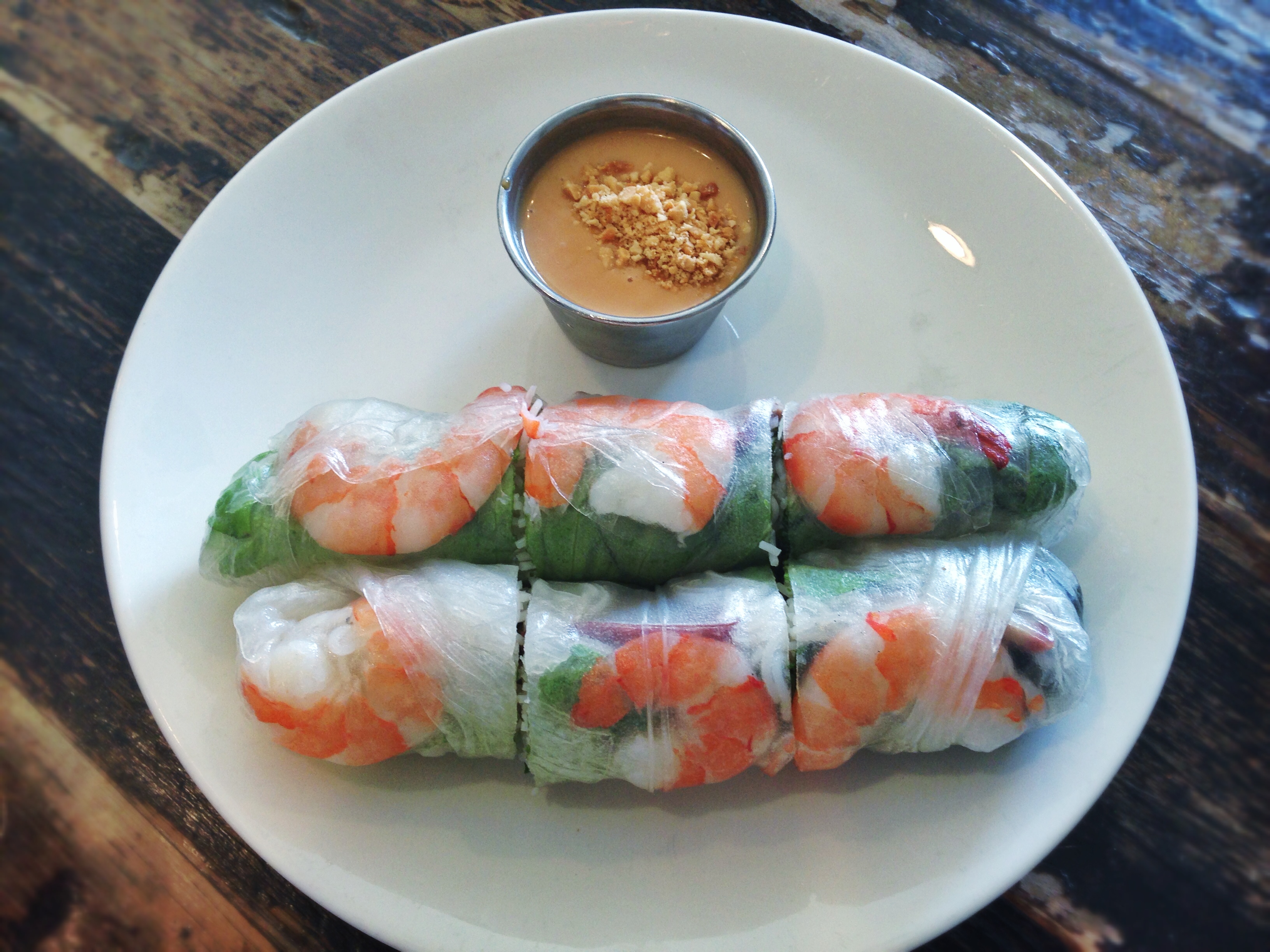
The bánh tráng is dipped in water, then laid flat on a plate with the desired amount of ingredients placed on top. The fresh gỏi cuốn is then rolled up and ready to be eaten. Gỏi cuốn can be served with tương xào (also known as hoisin sauce), which consists of ground tương (tương đen or tương xay) and mixed coconut water (or broth), before being stir-fried with garlic and some sugar and then sprinkled with chili powder and ground peanuts. Alternatively, gỏi cuốn can be served with peanut sauce or other Vietnamese dipping sauces, such as nước chấm, a condiment based on fish sauce.
In Vietnam and in various parts of Southeast Asia, Vietnamese can be seen hand-making bánh tráng and placing them on the rectangular bamboo trays around their houses. Traditionally, gỏi cuốn are eaten with a large group of people at a home setting.
Regional
In southern Vietnam, these rolls are called gỏi cuốn, meaning salad rolls, while in northern Vietnam, these rolls are called nem cuốn, meaning nem rolls. In central Vietnam, they are simply called "rice paper" rolls. In the West, these rolls are called by several different English names, including "salad roll", "spring roll" and "summer roll." Sometimes the word "Vietnamese" is added at the beginning of these words; for example, in Hong Kong, they are called "Vietnamese rolls", and in Australia and the United States they may be called "Vietnamese spring rolls" (although specifically in Australia they may sometimes be referred to as "cold rolls"). Some Asian restaurants in the United States also refer to them as "crystal rolls", "soft rolls" or "salad rolls". The name "summer roll" was popularized by some Vietnamese American restaurants for easier marketing and as a seasonal play on the term "spring roll". But many Vietnamese American restaurants still use "spring roll" as the English translation.

Fresh rolls are easily distinguished from similar rolls by the fact that they are not fried, and the ingredients used are different from (deep-fried) Vietnamese egg rolls. In Cambodia, Vietnamese gỏi cuốn are called nime chao, meaning "raw rice paper"; they are produced by a different technique in the Siem Reap and Battambang areas from that in Vietnam. Another dish called kuy tieu kat ("cut rice noodles") is created by steaming the water mixture and adding meat, vegetables and other assorted condiments. In Japan, they are called nama harumaki ("raw spring rolls"), and are typically filled with shrimp.
Variants

The fillings can vary from the standard pork slices, Vietnamese sausage slices (chả), and shrimp; fish, pan-fried seafood (such as squid), beef poached in a lemongrass broth, grilled nem nướng sausages, braised pork, and egg are among some of the other popular spring roll variations. Vegan variations include tofu, mushrooms or avocado.
References
References
- (2012). "Multicultural Handbook of Food, Nutrition and Dietetics". Wiley-Blackwell.
- [https://web.archive.org/web/20111126002958/http://www.ocregister.com/articles/dat-271038-thanh-pork.html Spring roll showdown in Little Saigon], Orange County Register (archived from [http://www.ocregister.com/articles/dat-271038-thanh-pork.html the original] on 2011-11-26).
- Helen, Clark. (2017-07-12). "40 delicious Vietnamese dishes".
- "Vietnamese Spring Rolls Recipe".
- "Brodard Chateau – Vietnamese Cuisine – Garden Grove".
- (2012-04-21). "Vietnamese spring rolls at Saigon Bistro, 6244 N. California Ave.".
- Nguyen, Andrea. "Into the Vietnamese Kitchen: Treasured Foodways, Modern Flavors".
- Le, Ann. "The Little Saigon Cookbook: Vietnamese Cuisine and Culture in Southern California's Little Saigon".
- [https://www.thrillist.com/eat/nation/the-differences-between-egg-rolls-spring-rolls-popiah-and-lumpia Beyond Egg Rolls: 9 Spring Rolls Everyone Should Know About], Thrillist
- [https://www.willflyforfood.net/2017/08/20/vietnam-goi-cuon-vietnamese-spring-rolls-are-fresh-recipe/ VIETNAM: Gỏi Cuốn Vietnamese Spring Rolls are Fresh! (Recipe)], Will Fly for Food
- (2010-07-16). "Vietnamese Spring Rolls – A Taste for Any Season".
- Herman, Michael. (2012-03-25). "Vietnamese Summer Rolls - Gỏi Cuốn".
- Hồng Phương. (3 May 2023). "Làng nghề bánh tráng hơn 200 năm trở thành Di sản văn hóa phi vật thể quốc gia".
- Clements, Miles. (2010-10-07). "The Find: Dat Thanh in Westminster". Los Angeles Times.
- Jacobson, Max. (1997-09-25). "A Real Meal for Under $4? It's True". Los Angeles Times.
- "Strawberry, avocado and spinach summer rolls recipe".
- Pointing, Charlotte. "Chrissy Teigen’s Top Vegan Recipes, Straight From the Cravings Kitchen".
This article was imported from Wikipedia and is available under the Creative Commons Attribution-ShareAlike 4.0 License. Content has been adapted to SurfDoc format. Original contributors can be found on the article history page.
Ask Mako anything about Gỏi cuốn — get instant answers, deeper analysis, and related topics.
Research with MakoFree with your Surf account
Create a free account to save articles, ask Mako questions, and organize your research.
Sign up freeThis content may have been generated or modified by AI. CloudSurf Software LLC is not responsible for the accuracy, completeness, or reliability of AI-generated content. Always verify important information from primary sources.
Report