From Surf Wiki (app.surf) — the open knowledge base
Glück auf
German miners' greeting phrase
German miners' greeting phrase
Glückauf (alternative spelling Glück auf; also, as an exclamation: Glück auf!) is the traditional German miners' greeting. It describes the hope of the miners: "es mögen sich Erzgänge auftun" ("may lodes [of ore] be opened") which is short for "Ich wünsche Dir Glück, tu einen neuen Gang auf" ("I wish you luck, open a new lode"), because, when mining for ore, without prospecting, no-one could predict with certainty whether the miners' work would lead to a reward. The greeting also expressed the desire that miners would return safely from the mine after their shift.
Today it is still a common form of greeting in the Ore Mountains region of eastern Germany and in the Ruhr area, specifically Bochum, which is home to the German Mining Museum (Deutsches Bergbau-Museum).
Emergence
The greeting emerged in the Saxon Ore Mountains towards the end of the 16th century, when the miners still entered and left the mines on foot using ladders (Fahrten) or man engines (Fahrkunst). That meant that, after a typical 10-hour shift, the miner often had a challenging and dangerous 2 hours of climbing ahead of him, something that they believed needed a degree of luck to negotiate safely. If he slipped (fahrtlos), he fell down the shaft. The result was that at that time (16th to 18th centuries) fatal accidents were very common, and not just when entering or leaving the mine. It was often the case that friends on the next shift, who had been greeted on the way out, were left in the mine.
Historical usage
The miner's greeting was already being used before 1700, being artistically employed in the old miner's song Glück Auf, der Steiger kommt; it thus became part of the folksong repertoire.
Mines were also named after the greeting, such as the Zeche Glückauf-Tiefbau, Zeche Glückauf Barmen or Zeche Glückaufsegen.
By 1890 at the latest the greeting was widespread among German-speaking speleologists (cave explorers) and is still the most common form of greeting in that community today. It is particularly commonly used when entering the cave.
Heutige Verwendung
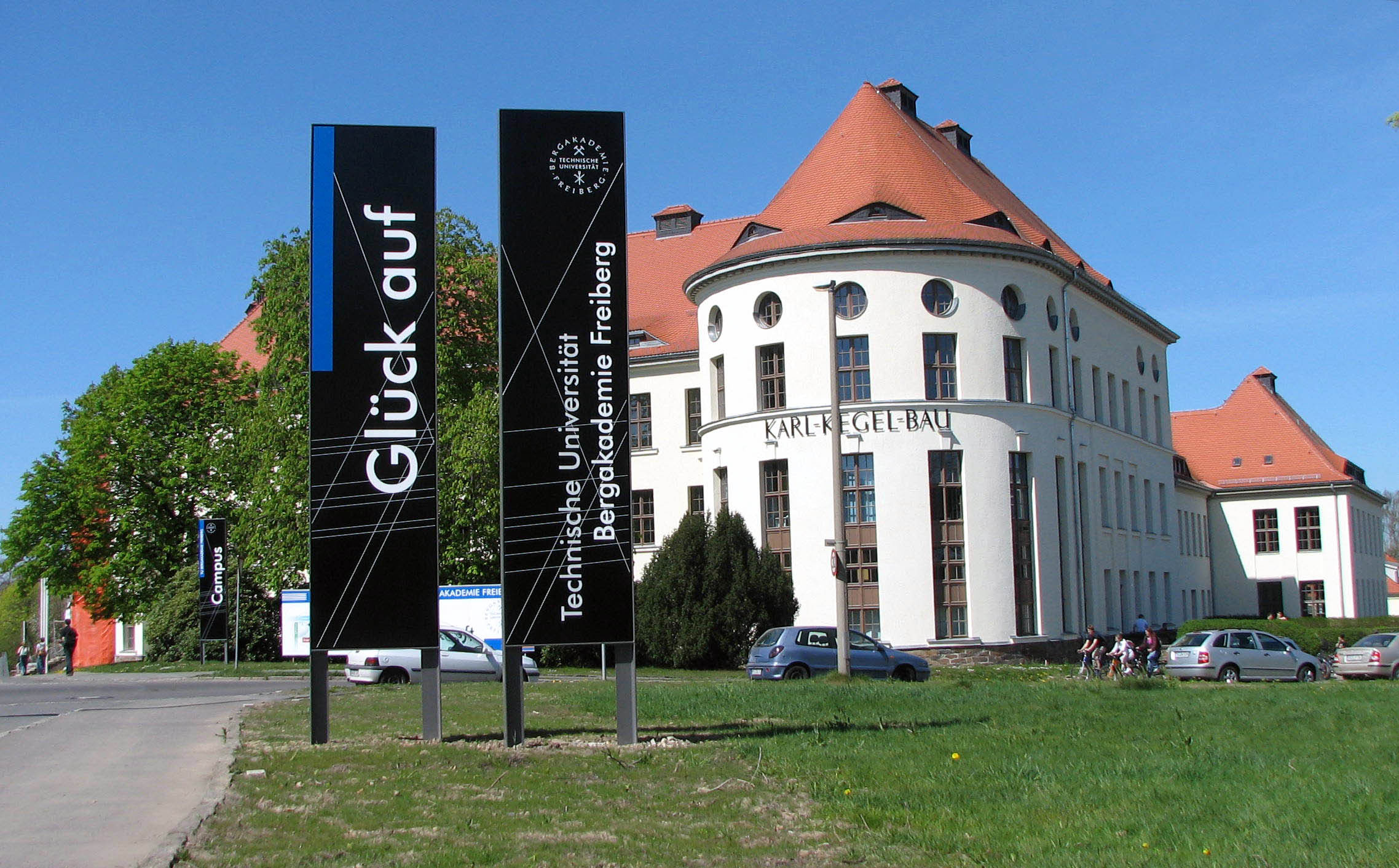
Der Bergmannsgruß ist heute noch im Bergbau anzutreffen. Er wird zum Beispiel bei festlichen bergbaulichen Anlässen und unter Knappschaften benutzt. Das „Glückauf“ wird im Bergbau im dienstlichen und privaten Schriftverkehr als Grußformel genutzt (Mit freundlichem Glückauf!).
Da die Erze nahe an den Gruben verhüttet wurden, hat sich dieser Gruß an einigen Standorten (Harz, Freiberg) auch bei den Hüttenleuten eingebürgert. Der vielfach beschworene Zusammenhalt von Hütten- und Bergleuten („Kohle und Stahl“) hat ein Übriges dazu beigetragen, auch wenn diese Tradition heute bei den Stahlarbeitern zunehmend in Vergessenheit gerät.
In traditionellen Bergbauregionen wird es auch von Nichtbergleuten verwendet. Im Erzgebirge, Oberharz und Ruhrgebiet findet der Gruß auch heute noch im alltäglichen Leben Verwendung (erzgebirgisch: „Glick Auf!“, „Gliggauf“) – vorzugsweise unter Männern. Er wird in Abwandlungen (bspw. „Gauf!“) auch in der regionalen Jugendsprache verwendet. Auch an der Montanuniversität Leoben wird sowohl bei offiziellen Anlässen als auch zu Unterrichtsbeginn mit "Glück Auf!" gegrüßt, aber auch im Leben der studentischen Verbindungen von Leoben hat der Gruß eine elementare Bedeutung. Im Rest der Steiermark ist der Gruß ebenfalls aufgrund der historischen Bergbautradition verbreitet, liegt jedoch (in der Form "ein steirisches Glück auf!") näher an der Ursprungsbedeutung als Glückwunschformel.
Bei Heimspielen des FC Schalke 04 und des FC Erzgebirge Aue werden die Zuschauer mit „Glück auf“ willkommen geheißen, gleichzeitig wird das Steigerlied abgespielt.
Das „Glückauf“ ist ebenfalls der Gruß des Technischen Hilfswerks.
Student culture
With the emergence of student culture in the 1800's student associations linked to mining related fields of study incorporated the 'Glück Auf' greeting as part of their identity. Most notable would be the 'Mijnbouwkundige vereeniging' from the Delft University of Technology.
References
References
- Wilhelm Hermann, Gertrude Hermann: ''Die alten Zechen an der Ruhr.'' 4. Auflage. Verlag Karl Robert Langewiesche, Königstein i. Taunus 1994, {{ISBN. 3-7845-6992-7.
- "Deutsches Wörterbuch von Jacob Grimm und Wilhelm Grimm". S. Hirzel.
- (1871). "Deutsches Bergwörterbuch mit Belegen". Wilhelm Gottlieb Korn.
- CARTHAUS: Bilsteinhöhlen bei Warstein 1890
- [https://www.google.com/search?hl=en&safe=off&q=„Glück+ab!“&aq=f&aqi=&aql=&oq=&gs_rfai= Google-Suche: ''Glück ab!'']
- ""Glück zu" hieß der Müllergruß".
- [https://www.google.com/search?q=Glück+tief!&ie=utf-8&oe=utf-8 Google-Suche: ''Glück tief!'']
- https://mv.tudelft.nl/
This article was imported from Wikipedia and is available under the Creative Commons Attribution-ShareAlike 4.0 License. Content has been adapted to SurfDoc format. Original contributors can be found on the article history page.
Ask Mako anything about Glück auf — get instant answers, deeper analysis, and related topics.
Research with MakoFree with your Surf account
Create a free account to save articles, ask Mako questions, and organize your research.
Sign up freeThis content may have been generated or modified by AI. CloudSurf Software LLC is not responsible for the accuracy, completeness, or reliability of AI-generated content. Always verify important information from primary sources.
Report