From Surf Wiki (app.surf) — the open knowledge base
Fenimore Cooper's Literary Offenses
1895 essay by Mark Twain
1895 essay by Mark Twain
"Fenimore Cooper's Literary Offenses" is an essay by Mark Twain, written as a satire of literary criticism and as a critique of the writings of the novelist James Fenimore Cooper, that appeared in the July 1895 issue of North American Review. It draws on examples from The Deerslayer and The Pathfinder from Cooper's Leatherstocking Tales.
The essay is characteristic of Twain's biting, derisive, and highly satirical style of literary criticism, a form he also used to deride such authors as Oliver Goldsmith, George Eliot, Jane Austen, and Robert Louis Stevenson.
Summary
Twain begins by quoting a few critics who praise the works of Cooper: Brander Matthews, Thomas Lounsbury, and Wilkie Collins. He then claims that they have never read the novels themselves, and that Cooper's work is seriously flawed:
He goes on to list 18 separate literary rules he feels that Cooper does not follow, such as "The tale shall accomplish something and arrive somewhere. But the "Deerslayer" accomplishes nothing and arrives in the air" and "The author shall use the right word, not its second cousin." Twain continues on with few positive things to say about Cooper's writing, citing several examples from Cooper's writing to illustrate the unbelievable excess of the style and Cooper's careless approach to literary craft.
Reception
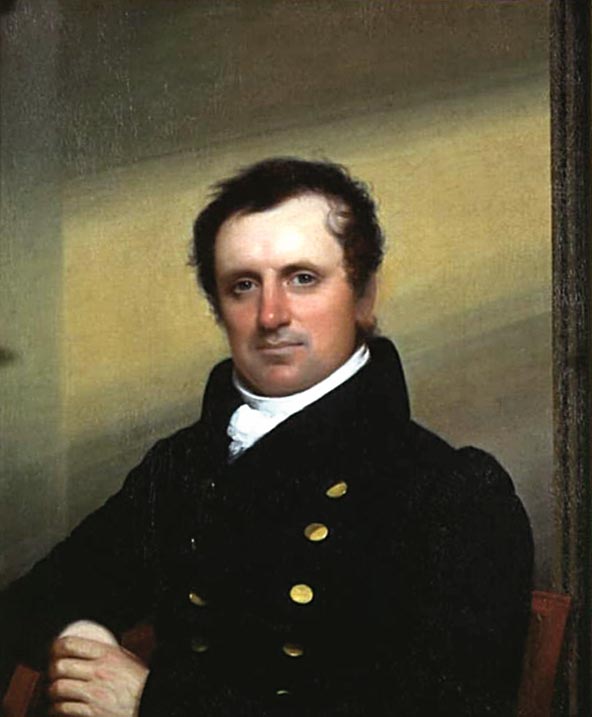
Everett Emerson (in Mark Twain: A Literary Life) wrote that the essay is "possibly the author's funniest". Joseph Andriano, in The Mark Twain Encyclopedia, argued that Twain "Imposed the standards of Realism on Romance" and that this incongruity is a major source of the humor in the essay.
Perhaps inevitably, Twain's essay has been criticized by proponents of Cooper as unfair and distorted. Cooper scholars Lance Schachterle and Kent Ljungquist write, "Twain's deliberate misreading of Cooper has been devastating....Twain valued economy of style (a possible but not necessary criterion), but such concision simply was not characteristic of many early nineteenth-century novelists' work."
Similarly, John McWilliams comments:
Literary scholar Sydney J. Krause, while agreeing that the "sulfurous grumblings over Cooper [are] hardly the work of a judicious person," sees Twain's satire as an attack on Romanticism in general and a formal announcement that Romantic literature "was a literary dead letter in post-Civil War America."
Continuation
A second essay, continuing and completing the original 1895 essay, was published after Twain's death under the title "Fenimore Cooper's Further Literary Offenses" in The New England Quarterly (vol XIX, pp. 291–30, September 1946) as edited by Bernard DeVoto. It was reprinted under the title "Cooper's Prose Style" in the collection Letters from the Earth (on pp 139–150 of the 2004 Harper edition). This essay includes the passage which explains the "114 out of a possible 115" mentioned in the original essay. It is discussed in the "Editor's Notes" in the Letters from the Earth collection. Everett H. Emerson says that the sequel is "less funny but still amusing."
References
References
- "Fenimore Cooper's Literary Offenses (Introduction)". University of Virginia.
- (1895). "Fenimore Cooper's Literary Offences". The North American Review.
- Feinstein, George W. (January 1948). "Twain as Forerunner of Tooth-and-Claw Criticism". Modern Language Notes.
- Twain, Mark. "Fenimore Cooper's Literary Offenses". University of Virginia.
- (1978). "The Genius of John Neal: Selections from His Writings". Peter Lang.
- Emerson, Everett H.. (1999). "Mark Twain: A Literary Life". University of Pennsylvania Press.
- Andriano, Joseph. (1993). "The Routledge Encyclopedia of Mark Twain". Taylor & Francis.
- Schachterle, Lance. (1988). "Fenimore Cooper's Literary Defenses: Twain and the Text of The Deerslayer". University of South Carolina Press.
- Schachterle & Ljungquist, p. 410
- "Bibliographical Note" in ''Letters from the Earth''(1962) p.319 of the 2004 Harper edition, {{ISBN. 978-0-06-051865-3
- On p. 301 of the 2004 Harper edition
This article was imported from Wikipedia and is available under the Creative Commons Attribution-ShareAlike 4.0 License. Content has been adapted to SurfDoc format. Original contributors can be found on the article history page.
Ask Mako anything about Fenimore Cooper's Literary Offenses — get instant answers, deeper analysis, and related topics.
Research with MakoFree with your Surf account
Create a free account to save articles, ask Mako questions, and organize your research.
Sign up freeThis content may have been generated or modified by AI. CloudSurf Software LLC is not responsible for the accuracy, completeness, or reliability of AI-generated content. Always verify important information from primary sources.
Report