From Surf Wiki (app.surf) — the open knowledge base
Empire Nephrite (Fabergé egg)
1902 Imperial Fabergé egg
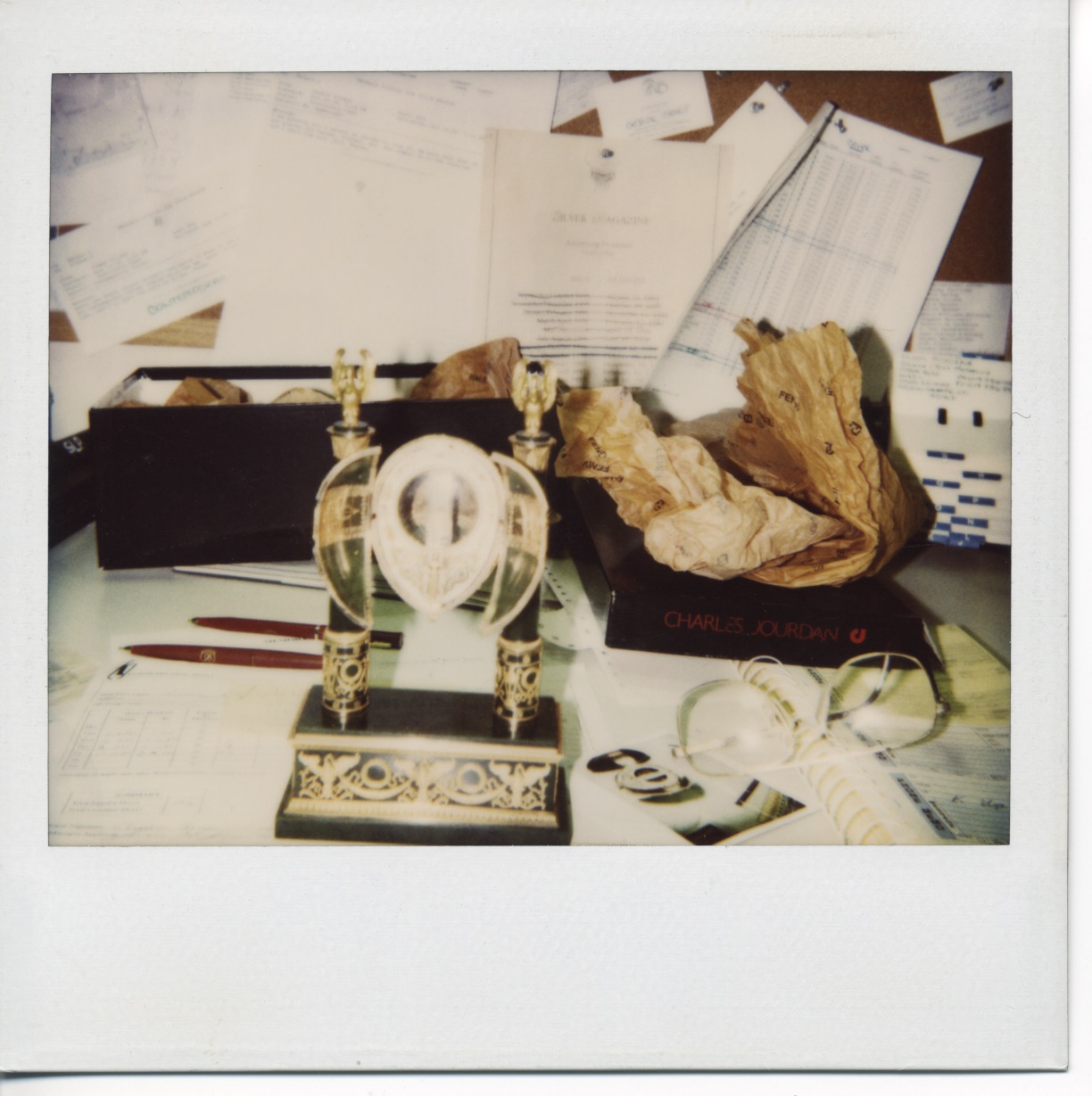
1902 Imperial Fabergé egg
| Field | Value |
|---|---|
| name | Empire Nephrite |
| image | 1902 egg open.jpg |
| year_delivered | 1902 |
| made_for | Nicholas II |
| recipient | Maria Feodorovna |
| owner | Richard Wenner, New York, United States |
| acquisition_year | Last known mid-1990s |
| workmaster | Michael Perkhin |
| materials | Gold, silver, steel, enamel, nephrite, pearls, two brilliants (replacements) |
| height | The egg 95 mm.; overall 215 mm |
| width | The egg 63 mm diameter |
| base | 128 mm long; 6O mm wide; 48 mm high |
| surprise_in_egg | Miniature portrait of Grand Duchess Olga Alexandrovna of Russia and Duke Peter Alexandrovich of Oldenburg (original lost) |
The Empire Nephrite (sometimes mistakenly referred to as the Alexander III Medallion) egg is a jewelled Easter egg, purported to be one of the Imperial Eggs made under the supervision of the Russian jeweller Peter Carl Fabergé in 1901–1902 for Nicholas II of Russia, who presented it to his mother, the Dowager Empress Maria Feodorovna, at Easter 1902. The provenance has been discussed with varying perspectives among Fabergé researchers.
History
The name of the egg refers to the fact that it was made in the Empire Style, from nephrite. The original Fabergé invoice reads: "Egg, 'Empire', from nephrite, with gold, two diamonds and miniature". The egg reappeared in the mid-1990s and some Fabergé researchers were of the mistaken opinion that this egg featured a portrait medallion of Alexander III of Russia, though the original bill did not refer to a portrait of Alexander III.
This mistake was the result of a misinterpretation of the Moscow Armory Chamber valuables selection list. This list noted an "Egg from nephrite, on a golden base, and with portrait of the Emperor Alexander III in a medallion". Because of this, many researchers were certain that the 1902 Imperial egg featured an Alexander III portrait, though there is no evidence to support this.
However, in 2015, during research by a specially commissioned group of experts, a unique historical document was brought to the attention of the experts – the "List of the personal property of the Dowager Empress Maria Feodorovna, located in storage at Gatchina Palace" as of 28 July 1917. This 12-page booklet mentions at least 150 items, including 7 Imperial Fabergé eggs that belonged to the Dowager Empress Maria Feodorovna. This document was first published in 2013.
On the second page of this document, as number 10, there is a description "Egg with gold mounts, on two nephrite columns, with portraits of Gr. Dss. Olga Alexandrovna and Duke P.A. Oldenburg inside". This description is the most accurate that Fabergé researchers have to date concerning the egg of 1902, which was previously mistaken for an "Egg from nephrite, on a gold base and with portrait of the Emperor Alexander III in a medallion".
The egg is currently in a private collection in New York, USA.

Provenance of the egg
1902 – 1918
The egg is believed to have been commissioned as a gift for the Dowager Empress Maria Feodorovna. The Faberge bill is, as many are, relatively vague in its description of the work. In 1918, however, an inventory was commissioned which describes the egg accurately, including descriptions of the miniature and columns which are the chief identifying features, as well as noting that the egg was present with the other eggs in the collection of the Dowager Empress at Gatchina at the time she left for Kiev in 1914. These works remained in place at Gatchina until after the revolution when the inventory was compiled.
1918 – 1996
The work appears to have remained in the Soviet Union with the Schwarz family. After the fall of communism, when both personal property and the sale of antiques became legal again in 1990’s, the heirs of Schwarz approached the St. Petersburg antique dealer Evgeniy Malyshev, who bought the work from the family. Before Malyshev's death in 2004, the work was acquired by a private group who exported the work to London where it was first seen in 1996 at Christie’s in poor condition, and missing several elements.
1996 – 2004
The egg was acquired by a private group who quickly performed restorations and additions to the work, documented in a 2004 private publication written by Faberge Scholars Alexander von Solodkoff (editor), Tatiana Muntyan, Valentin Skurlov and restorer from State museum reserve Tsarskoe Selo Boris Igdalov reintroduced the egg to the public with a full-throated endorsement of the egg's authenticity.
2004 – 2012
The egg was variously offered for sale by several agents and owners until it was acquired in 2012 by its current American owner.
2012 – 2015
The egg was inspected in New York on 27 January 2015, the meeting was attended by the egg's owner, Fabergé specialist Geza von Habsburg, restorer Nikolai Bashmakov, Wartski Director Kieran McCarthy, Sotheby's Karen Kettering, the ex-Forbes Collection's Carol Aiken, keeper of the Fabergé collection in Armory Chamber (Moscow Kremlin) Tatiana Muntyan, and famous Fabergé researcher Valentin Skurlov. A second meeting took place also in New York on 18 May 2015. This time, Kieran McCarthy, Geza von Habsburg, Carol Aiken opted out.
2015 – present
In 2017, “Faberge: The Imperial Egg of 1902” was published by Harrison Piper & Co., with an introduction and series of scholarly articles by conservator Nikolai Bachmakov, Faberge descendant, jeweler and historian Tatiana Faberge, scholar Dmitry Krivoshey, Fabergé specialist Nicholas B.A. Nicholson, independent researchers Anna and Vincent Palmade, and scholar Valentin Skurlov, all of whom agreed on the authenticity of the egg. Supplemental expertise in metallurgy was provided by Dr. Lev Deresh, and in a supplemental appendix, expertises were provided by the Igor Carl Faberge Foundation, Valentin Skurlov, Roizin Refining, Boris Igdalov and AGTA gemological testing. Further, Sotheby’s private sale documentation is included, identifying the egg as the one featured in the Gatchina list.
Authenticity
Some Faberge experts and scholars have publicly supported the authenticity of Empire Egg through various publications and presentations at international scholars’ conferences (Fabergé International Conference in Saint-Petersburg, 2016). However, the egg's authenticity is disputed by some Fabergé experts, who believe the Empire Nephrite egg is lost or still missing. This is contested with the argument that many disputing experts haven't seen the Empire Egg recently and haven't reviewed the newly discovered Gatchina Palace Inventory Book, which reportedly shows the Empire Egg at Gatchina in 1917. This suggests their skepticism might be based on outdated information.
In particular, public assertions have been made about the authenticity of the egg by Andre Ruzhnikov, a London-based Russian art dealer with a specialty in Faberge. In a blog post on his commercial website, he stated: "No one knows where it came from. It was smuggled to London in 1996 after being ‘discovered’ by a dealer in St Petersburg," emphasizing that: "None of the world's major Fabergé dealers have expressed an interest in this egg. None of the world's top Fabergé experts have endorsed it." Ruzhnikov claims the object was offered to him for $2,000,000 in 2005. Ruzhnikov also claims that he was re-offered the item for €55,000,000 in March of 2018.
After publishing the book "Fabergé: The Imperial “Empire” Egg of 1902" in 2017, where its authors defend its authenticity, a team of Dutch students published in 2020 a study "Het Empire Nephrite egg" based on old sources and with vague opinion about the subject. Correspondingly the chief detractor appears to be the London-based Ruzhnikov, who is the only one to have publicly questioned the egg’s veracity but never have seen it.
References
References
- [http://skurlov.blogspot.com/2015/09/blog-post_22.html Valentin Skurlov blog (in Russian)]
- (2001). "Fabergé Eggs: A Retrospective Encyclopedia". Scarecrow Press.
- [http://www.wintraecken.nl/mieks/faberge/eggs/1902-Empire-Nephrite-Egg.htm 1902 Empire Nephrite Egg, Mieks Fabergé Eggs].
- (August 1997). "The Faberge Imperial Easter Eggs". Christie's.
- (2015). "The Russian Imperial House court treasures destiny". The state historical-cultural museum-reserve "The Moscow Kremlin".
- (2013). "Russian Empresses: Fashion and Style. Late 18th century - early 20th century.". Kuchkovo Pole.
- [[Tatiana Fabergé]], Nikolai Bachmakov, Dmitry Krivoshey, Nicholas B.A. Nicholson (ed.), Valentin Skurlov, Anna Palmade, Vincent Palmade. (2017). "Faberge: The Imperial "Empire" Egg of 1902.". Harrison Piper & Co..
- [[Tatiana Fabergé]], Nikolai Bachmakov, Dmitry Krivoshey, Nicholas B.A. Nicholson (ed.), Valentin Skurlov, Anna Palmade, Vincent Palmade. (2017). "Faberge: The Imperial "Empire" Egg of 1902.". Harrison Piper & Co..
- [[Tatiana Fabergé]], Nikolai Bachmakov, Dmitry Krivoshey, Nicholas B.A. Nicholson (ed.), Valentin Skurlov, Anna Palmade, Vincent Palmade. (2017). "Faberge: The Imperial "Empire" Egg of 1902.". Harrison Piper & Co..
- [[Tatiana Fabergé]], Nikolai Bachmakov, Dmitry Krivoshey, Nicholas B.A. Nicholson (ed.), Valentin Skurlov, Anna Palmade, Vincent Palmade. (2017). "Faberge: The Imperial "Empire" Egg of 1902.". Harrison Piper & Co..
- Alexander von Solodkoff (ed.), Tatiana Muntyan, Valentin Skurlov, Boris Igdalov. (2004). "The 1902 Empire Nephrite Egg by Fabergé".
- Ruzhnikov. (2020-05-02). "A Fabergé Farrago of Fakes and Impostors {{!}} Ruzhnikov Articles".
- [[Tatiana Fabergé]], Nikolai Bachmakov, Dmitry Krivoshey, Nicholas B.A. Nicholson (ed.), Valentin Skurlov, Anna Palmade, Vincent Palmade. (2017). "Faberge: The Imperial "Empire" Egg of 1902.". Harrison Piper & Co..
- "Mieks Fabergé Eggs".
- "Fabergé Research Site {{!}} Newsletter 2017 Fall and Winter".
- Ruzhnikov. (2020-08-18). "To All Fabergé Fans of White Elephants {{!}} Ruzhnikov Fine Art News".
- Ruzhnikov. (2020-05-02). "A Fabergé Farrago of Fakes and Impostors {{!}} Ruzhnikov Articles".
- [[Tatiana Fabergé]], Nikolai Bachmakov, Dmitry Krivoshey, Nicholas B.A. Nicholson (ed.), Valentin Skurlov, Anna Palmade, Vincent Palmade. (2017). "Faberge: The Imperial "Empire" Egg of 1902.". Harrison Piper & Co..
- (2020-06-27). "Het Empire Nephrite egg".
This article was imported from Wikipedia and is available under the Creative Commons Attribution-ShareAlike 4.0 License. Content has been adapted to SurfDoc format. Original contributors can be found on the article history page.
Ask Mako anything about Empire Nephrite (Fabergé egg) — get instant answers, deeper analysis, and related topics.
Research with MakoFree with your Surf account
Create a free account to save articles, ask Mako questions, and organize your research.
Sign up freeThis content may have been generated or modified by AI. CloudSurf Software LLC is not responsible for the accuracy, completeness, or reliability of AI-generated content. Always verify important information from primary sources.
Report