From Surf Wiki (app.surf) — the open knowledge base
Caroní River
| Field | Value |
|---|---|
| name | Caroní |
| image | File:Parque La Llovizna.jpg |
| image_size | 250px |
| image_caption | Caroní River in La Llovizna National Park, Puerto Ordaz |
| map | Río Caroní.png |
| source1 | Kukenan |
| source1_location | in Gran Sabana, Bolívar |
| source1_coordinates | |
| source1_elevation | 2271 m |
| source2 | Yuruaní |
| source2_location | Kavanayén, Gran Sabana, Bolívar |
| source2_coordinates | |
| source2_elevation | 1177 m |
| mouth | Orinoco |
| mouth_location | Ciudad Guayana |
| mouth_coordinates | |
| mouth_elevation | 8 m |
| subdivision_type1 | Country |
| subdivision_name1 | Venezuela |
| length | 952 km |
| discharge1_avg | 5093 m3/s at the mouth |
| basin_size | 95000 km2 |
| progression | Caroní → Orinoco → Atlantic Ocean |
the river in Venezuela
The Caroní River is the second most important river of Venezuela, the second in flow, and one of the longest, 952 km from the Kukenan tepui through to its confluence with the Orinoco River. The name "Caroní" is applied starting from the confluence of the Kukenan with the Yuruaní River at 182 km from the source of the Kukenan and 770 km from its discharge in the Orinoco. The confluence takes place in Bolivar State. The Caroní River is the longest river located entirely within Venezuela.
Hydraulic regime
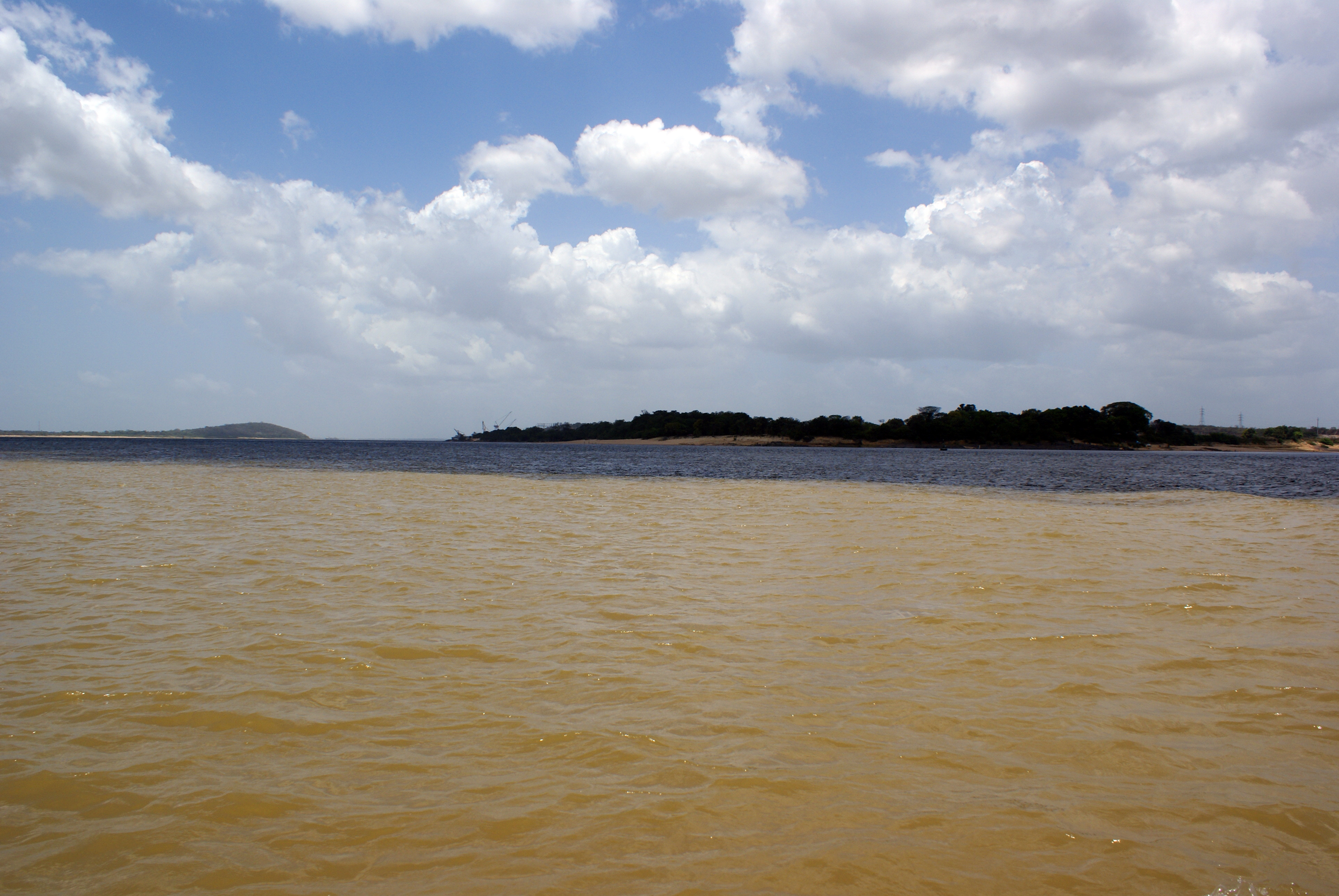
The Caroní is one of the rivers with the highest discharge rates in the world, with respect to the area of its basin. The average discharge is 4850 m3/s, with variations caused by the wet/dry seasons. The average maximum discharge is 6260 m3/s, and the average minimum is 3570 m3/s. Among the historic extremes are 17576 m3/s. The Caroní supplies 15.5 percent of the discharge of the Orinoco river. One of the characteristics of the Caroní's water is the dark color, caused by the high amount of humic acids due to the incomplete decomposition of the phenol content of the vegetation. The Caroní thus belongs to the blackwater rivers, as does the Negro River, or Rio Negro in Brazil, Venezuela and Colombia. In the late 1940s diamonds were found in the Caroní basin near the famous Lost World Region which then was accessible only by aircraft and four wheel drive vehicles.
Basin
The river drain the Guayanan Highlands moist forests ecoregion.{{citation |title=South America: Southern Venezuela, northern Brazil, western Guyana, and eastern Colombia (NT0124)|publisher=WWF: World Wildlife Fund The Caroní basin covers 95000 km2 and is part of the Orinoco basin, the most important river of Venezuela. This means for the two big rivers that they have very similar hydrographic characteristics. The Caroní itself and its tributary the Paragua are rivers with a staircase, in the sense that many falls and rapids are alternated with stretches with gentle slopes, with many meanders and oxbow lakes (naturally cut off meanders). Among the most important falls of these rivers and their tributaries are Angel Falls, with the highest free fall of the world, almost 1000 m, and Kukenan Falls, the tenth on the world scale with a 610 m free fall. Others falls with less height but high volume are the Aponwao, Caruay and La Llovizna waterfalls.
Hydroelectric power

Because of its high discharge rate, with a yearly average of 4850 m3/s and a steep slope, the Caroni ideally suited for the generation of hydroelectric energy with four plants along its course (Macagua I, II and III), near its mouth, the Caruachi, some 30 km aback, and lastly the plant of Guri, in the middle of Necoima or Necuima, some 80 km from Puerto Ordaz. This plant has its reservoir, with an area of 4000 km2, in the middle of the river, and has a power of 10,000 MW, and is now the third biggest in the world, after the Three Gorges Dam in China (22,500 MW) and the Itaipu Dam in Paraguay and Brazil (14,000 MW)
National Parks
In the high basin of the rivers that form the Caroni (Aponguao, Cuquenán and Yuruaní) the Gran Sabana is spread out, partly belonging to the Canaima National Park.
Mining
Along the Caroní River between the confluence with the Icabarú River and San Salvador de Paúl, there are several artisanal gold mines, mainly on the left hand side of the river outside the national park, but a few can also be found on the right hand side inside the Canaima National Park. Besides the devastating effects of logging and deforestation to clear the site for the mines, the far greater danger is the use of mercury which poisons the Caroní river, its fauna and inhabitants living along its shore. High levels of mercury have been found not only in the Caroní river but also in Lake Guri and further downstream. The government of Venezuela pledged to reduce illegal mining activities with the sustainable development plan for mining from 2016-18.
Illegal mining surged under the government of Hugo Chávez, due to the nationalization of mines run by international mining companies and this had the negative consequence of an increase of mercury use as other processes are more difficult and costly to use for illegal, artisanal mining.
References
References
- [https://books.google.com/books?id=mdgDAAAAMBAJ&dq=Popular+Mechanics+Science+installing+linoleum&pg=PA73 "Treasure Hunt In A Lost World."] ''Popular Mechanics'', September 1950, pp. 73–79.
- "Ministerio del Poder Popular de Petróleo y Minería".
- (4 January 2016). "La minería del oro en Venezuela: Una "tormenta perfecta" de ilegalidad, deforestación y mafias".
This article was imported from Wikipedia and is available under the Creative Commons Attribution-ShareAlike 4.0 License. Content has been adapted to SurfDoc format. Original contributors can be found on the article history page.
Ask Mako anything about Caroní River — get instant answers, deeper analysis, and related topics.
Research with MakoFree with your Surf account
Create a free account to save articles, ask Mako questions, and organize your research.
Sign up freeThis content may have been generated or modified by AI. CloudSurf Software LLC is not responsible for the accuracy, completeness, or reliability of AI-generated content. Always verify important information from primary sources.
Report