From Surf Wiki (app.surf) — the open knowledge base
Canada
Country in North America
| Field | Value |
|---|---|
| conventional_long_name | Canada |
| common_name | Canada |
| image_flag | Flag of Canada (Pantone).svg |
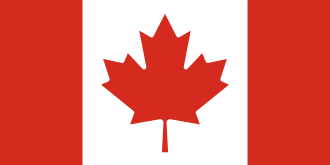
| alt_flag | A vertical triband design (red, white, red) with a red maple leaf in the centre. |
| image_coat | |
| national_motto | |
| "From Sea to Sea" | |
| national_anthem | "O Canada" |
| royal_anthem | "God Save the King" |
| image_map | CAN orthographic.svg |
| map_width | 220px |
| alt_map | A projection of North America with Canada highlighted in green |
| capital | Ottawa |
| coordinates | |
| largest_city | Toronto |
| official_languages | |
| demonym | Canadian |
| government_type | Federal parliamentary constitutional monarchy |
| leader_title1 | Monarch |
| leader_name1 | |
| leader_title2 | Governor General |
| leader_name2 | Mary Simon |
| leader_title3 | Prime Minister |
| leader_name3 | Mark Carney |
| legislature | Parliament |
| upper_house | Senate |
| lower_house | House of Commons |
| sovereignty_type | Independence |
| sovereignty_note | from the United Kingdom |
| established_event1 | Confederation |
| established_date1 | July 1, 1867 |
| established_event2 | Balfour Declaration |
| established_date2 | November 15, 1926 |
| established_event3 | *Statute of Westminster, 1931* |
| established_date3 | December 11, 1931 |
| established_event4 | Patriation |
| established_date4 | April 17, 1982 |
| area_km2 | |
| area_label | Total area |
| area_rank | 2nd |
| area_sq_mi | |
| percent_water | 11.76 (2015) |
| area_label2 | Total land area |
| area_data2 | 9093507 km2 |
| population_estimate | |
| population_estimate_year | 2025 Q4 |
| population_census | |
| population_census_year | [2021](2021-canadian-census) |
| population_estimate_rank | 37th |
| population_density_km2 | 4.2 |
| population_density_sq_mi | 10.9 |
| population_density_rank | 230th |
| GDP_PPP | $2.723 trillion |
| GDP_PPP_year | 2025 |
| GDP_PPP_rank | 16th |
| GDP_PPP_per_capita | $65,500 |
| GDP_PPP_per_capita_rank | 30th |
| GDP_nominal | $2.284trillion |
| GDP_nominal_year | 2025 |
| GDP_nominal_rank | 10th |
| GDP_nominal_per_capita | $54,935 |
| GDP_nominal_per_capita_rank | 23rd |
| Gini | 29.2 |
| Gini_year | 2024 |
| Gini_change | decrease |
| Gini_ref | |
| HDI | 0.939 |
| HDI_year | 2023 |
| HDI_change | increase |
| HDI_ref | |
| HDI_rank | 16th |
| currency | Canadian dollar ($) |
| currency_code | CAD |
| utc_offset | −3.5 to −8 |
| utc_offset_DST | −2.5 to −7 |
| calling_code | +1 |
| cctld | .ca |
"From Sea to Sea"
Canada is a country in North America. Its ten provinces and three territories extend from the Atlantic Ocean to the Pacific Ocean and northward into the Arctic Ocean, making it the second-largest country by total area, with the longest coastline of any country. Its border with the United States is the longest international land border. The country is characterized by a wide range of both meteorologic and geological regions. With a population of over 41million, it has widely varying population densities, with the majority residing in its urban areas and large areas being sparsely populated. Canada's capital is Ottawa and its three largest metropolitan areas are Toronto, Montreal, and Vancouver.
Indigenous peoples have continuously inhabited what is now Canada for thousands of years. Beginning in the 16th century, British and French expeditions explored and later settled along the Atlantic coast. As a consequence of various armed conflicts, France ceded nearly all of its colonies in North America in 1763. In 1867, with the union of three British North American colonies through Confederation, Canada was formed as a federal dominion of four provinces. This began an accretion of provinces and territories resulting in the displacement of Indigenous populations, and a process of increasing autonomy from the United Kingdom. This increased sovereignty was highlighted by the Statute of Westminster, 1931, and culminated in the Canada Act 1982, which severed the vestiges of legal dependence on the Parliament of the United Kingdom.
Canada is a parliamentary democracy and a constitutional monarchy in the Westminster tradition. The country's head of government is the prime minister, who holds office by virtue of their ability to command the confidence of the elected House of Commons and is appointed by the governor general, representing the monarch of Canada, the ceremonial head of state. The country is a Commonwealth realm and is officially bilingual (English and French) in the federal jurisdiction. It is very highly ranked in international measurements of government transparency, quality of life, economic competitiveness, innovation, education and human rights. It is one of the world's most ethnically diverse and multicultural nations, the product of large-scale immigration. Canada's long and complex relationship with the United States has had a significant impact on its history, economy, and culture.
A developed country, Canada has a high nominal per capita income globally and its advanced economy ranks among the largest in the world by nominal GDP, relying chiefly upon its abundant natural resources and well-developed international trade networks. Canada is recognized as a middle power; its support for multilateralism and internationalism has been closely related to its foreign policies of peacekeeping and aid for developing countries. Canada promotes its domestically shared values through participation in multiple international organizations and forums.
Etymology
Main article: Name of Canada
While a variety of theories have been postulated for the etymological origins of Canada, the name is now accepted as coming from the St. Lawrence Iroquoian word kanata, meaning or . In 1535, Indigenous inhabitants of the present-day Quebec City region used the word to direct French explorer Jacques Cartier to the village of Stadacona. Cartier later used the word Canada to refer not only to that particular village but to the entire area subject to Donnacona (the chief at Stadacona); by 1545, European books and maps had begun referring to this small region along the Saint Lawrence River as Canada.
From the 16th to the early 18th century, Canada referred to the part of New France that lay along the Saint Lawrence River. Following the British conquest of New France, this area was known as the British Province of Quebec from 1763 to 1791. In 1791, the area became two British colonies called Upper Canada and Lower Canada. These two colonies were collectively referred to as the Canadas until their union as the Province of Canada in 1841.
Upon Confederation in 1867, Canada was adopted as the legal name for the new country at the London Conference and the word dominion was conferred as the country's title. By the 1950s, the term Dominion of Canada was no longer used by the United Kingdom, which considered Canada a "realm of the Commonwealth".{{multiref2 | |
The Canada Act 1982, which brought the Constitution of Canada fully under Canadian control, referred only to Canada. Later that year, the name of the national holiday was changed from Dominion Day to Canada Day.
History
Main article: History of Canada
Indigenous peoples
The first inhabitants of North America are generally hypothesized to have migrated from Siberia by way of the Bering land bridge and arrived at least 14,000 years ago.{{multiref2 | | | |
The Indigenous population at the time of the first European settlements is estimated to have been between 200,000 and two million, with a figure of 500,000 accepted by Canada's Royal Commission on Aboriginal Peoples. As a consequence of European colonization, the Indigenous population declined by forty to eighty percent. The decline is attributed to several causes, including the transfer of European diseases, to which they had no natural immunity,{{multiref2 | | | |
Although not without conflict, European Canadians' early interactions with First Nations and Inuit populations were relatively peaceful. First Nations and Métis peoples played a critical part in the development of European colonies in Canada, particularly for their role in assisting European coureurs des bois and voyageurs in their explorations of the continent during the North American fur trade. These early European interactions with First Nations would change from friendship and peace treaties to the dispossession of Indigenous lands through treaties.{{multiref2 | | | | |
European colonization
It is believed that the first documented European to explore the east coast of Canada was Norse explorer Leif Erikson.{{multiref2 | | | |
In 1583, Sir Humphrey Gilbert, by the royal prerogative of Queen Elizabeth I, founded St John's, Newfoundland, as the first North American English seasonal camp. In 1600, the French established their first seasonal trading post at Tadoussac along the Saint Lawrence. French explorer Samuel de Champlain arrived in 1603 and established the first permanent year-round European settlements at Port Royal (in 1605) and Quebec City (in 1608). Among the colonists of New France, Canadiens extensively settled the Saint Lawrence River valley and Acadians settled the present-day Maritimes, while fur traders and Catholic missionaries explored the Great Lakes, Hudson Bay, and the Mississippi watershed to Louisiana. The Beaver Wars broke out in the mid-17th century over control of the North American fur trade.
The English established additional settlements in Newfoundland in 1610 along with settlements in the Thirteen Colonies to the south.{{multiref2 | |
British North America

The Royal Proclamation of 1763 established First Nation treaty rights, created the Province of Quebec out of New France, and annexed Cape Breton Island to Nova Scotia. St John's Island (now Prince Edward Island) became a separate colony in 1769. To avert conflict in Quebec, the British Parliament passed the Quebec Act 1774, expanding Quebec's territory to the Great Lakes and Ohio Valley. More importantly, the Quebec Act afforded Quebec special autonomy and rights of self-administration at a time when the Thirteen Colonies were increasingly agitating against British rule. It re-established the French language, Catholic faith, and French civil law there, staving off the growth of an independence movement in contrast to the Thirteen Colonies. The Proclamation and the Quebec Act in turn angered many residents of the Thirteen Colonies, further fuelling anti-British sentiment in the years prior to the American Revolution.
After the successful American War of Independence, the 1783 Treaty of Paris recognized the independence of the newly formed United States and set the terms of peace, ceding British North American territories south of the Great Lakes and east of the Mississippi River to the new country. The American war of independence also caused a large out-migration of Loyalists, the settlers who had fought against American independence. Many moved to Canada, particularly Atlantic Canada, where their arrival changed the demographic distribution of the existing territories. New Brunswick was in turn split from Nova Scotia as part of a reorganization of Loyalist settlements in the Maritimes, which led to the incorporation of Saint John, New Brunswick, as Canada's first city. To accommodate the influx of English-speaking Loyalists in Central Canada, the Constitutional Act of 1791 divided the province of Canada into French-speaking Lower Canada (later Quebec) and English-speaking Upper Canada (later Ontario), granting each its own elected legislative assembly.

The Canadas were the main front in the War of 1812 between the United States and the United Kingdom. Peace came in 1815; no boundaries were changed. Immigration resumed at a higher level, with over arrivals from Britain between 1815 and 1850. New arrivals included refugees escaping the Great Irish Famine as well as Gaelic-speaking Scots displaced by the Highland Clearances. Infectious diseases killed between 25 and 33 percent of Europeans who immigrated to Canada before 1891.
The desire for responsible government resulted in the abortive Rebellions of 1837. The Durham Report subsequently recommended responsible government and the assimilation of French Canadians into English culture. The Act of Union 1840 merged the Canadas into a united Province of Canada and responsible government was established for all provinces of British North America east of Lake Superior by 1855. The signing of the Oregon Treaty by Britain and the United States in 1846 ended the Oregon boundary dispute, extending the border westward along the 49th parallel. This paved the way for British colonies on Vancouver Island (1849) and in British Columbia (1858). The Anglo-Russian Treaty of Saint Petersburg (1825) established the border along the Pacific coast, but, even after the US Alaska Purchase of 1867, disputes continued about the exact demarcation of the Alaska–Yukon and Alaska–British Columbia border.
Confederation and expansion

Following three constitutional conferences, the British North America Act, 1867 officially proclaimed Canadian Confederation on July 1, 1867, initially with four provinces: Ontario, Quebec, Nova Scotia, and New Brunswick.{{multiref2 | |
To open the West and encourage European immigration, the Government of Canada sponsored the construction of three transcontinental railways (including the Canadian Pacific Railway), passed the Dominion Lands Act to regulate settlement and established the North-West Mounted Police to assert authority over the territory.{{multiref2 | |
Early 20th century
Because Britain still maintained control of Canada's foreign affairs under the British North America Act, 1867, its declaration of war in 1914 automatically brought Canada into the First World War. Volunteers sent to the Western Front later became part of the Canadian Corps, which played a substantial role in the Battle of Vimy Ridge and other major engagements of the war. The Conscription Crisis of 1917 erupted when the Unionist Cabinet's proposal to augment the military's dwindling number of active members with conscription was met with vehement objections from French-speaking Quebecers. In 1919, Canada joined the League of Nations independently of Britain, and the Statute of Westminster, 1931, affirmed Canada's independence.
The Great Depression in Canada during the early 1930s saw an economic downturn, leading to hardship across the country. In response to the downturn, the Co-operative Commonwealth Federation (CCF) in Saskatchewan introduced many elements of a welfare state (as pioneered by Tommy Douglas) in the 1940s and 1950s. On the advice of Prime Minister William Lyon Mackenzie King, war with Germany was declared effective September 10, 1939, by King George VI, seven days after the United Kingdom. The delay underscored Canada's independence.
The first Canadian Army units arrived in Britain in December 1939. In all, over a million Canadians served in the armed forces during the Second World War. Canadian troops played important roles in many key battles of the war, including the failed 1942 Dieppe Raid, the Allied invasion of Italy, the Normandy landings, the Battle of Normandy, and the Battle of the Scheldt in 1944. Canada provided asylum for the Dutch monarchy while that country was occupied and is credited by the Netherlands for major contributions to its liberation from Nazi Germany. Despite another conscription crisis in Quebec in 1944, Canada finished the war with a large army and strong economy.
Contemporary era
The financial crisis of the Great Depression led the Dominion of Newfoundland to relinquish responsible government in 1934 and become a Crown colony ruled by a British governor. After two referendums, Newfoundlanders voted to join Canada in 1949 as a province.
Canada's post-war economic growth, combined with the policies of successive Liberal governments, led to the emergence of a new Canadian identity, marked by the adoption of the maple leaf flag in 1965, the implementation of official bilingualism (English and French) in 1969, and the institution of official multiculturalism in 1971. Socially democratic programs were also instituted, such as Medicare, the Canada Pension Plan, and Canada Student Loans; though, provincial governments, particularly Quebec and Alberta, opposed many of these as incursions into their jurisdictions.
.jpg)
Finally, another series of constitutional conferences resulted in the Canada Act 1982, the patriation of Canada's constitution from the United Kingdom, concurrent with the creation of the Canadian Charter of Rights and Freedoms. Canada had established complete sovereignty as an independent country under its own monarchy.{{multiref2 | | In 1999, Nunavut became Canada's third territory after a series of negotiations with the federal government.
At the same time, Quebec underwent profound social and economic changes through the Quiet Revolution of the 1960s, giving birth to a secular nationalist movement. The radical Front de libération du Québec (FLQ) ignited the October Crisis with a series of bombings and kidnappings in 1970, and the sovereigntist Parti Québécois was elected in 1976, organizing an unsuccessful referendum on sovereignty-association in 1980. Attempts to accommodate Quebec nationalism constitutionally through the Meech Lake Accord failed in 1990. This led to the formation of the Bloc Québécois in Quebec and the invigoration of the Reform Party of Canada in the West.{{multiref2 | |
In addition to the issues of Quebec sovereignty, a number of crises shook Canadian society in the late 1980s and early 1990s. These included the explosion of Air India Flight 182 in 1985, the largest mass murder in Canadian history; the École Polytechnique massacre in 1989, a university shooting targeting female students; and the Oka Crisis of 1990, the first of a number of violent confrontations between provincial governments and Indigenous groups. Canada joined the Gulf War in 1990 and was active in several peacekeeping missions in the 1990s, including operations in the Balkans during and after the Yugoslav Wars, and in Somalia, resulting in an incident that has been described as "the darkest era in the history of the Canadian military".{{multiref2 | | | |
In 2011, Canadian forces participated in the NATO-led intervention into the Libyan Civil War and also became involved in battling the Islamic State insurgency in Iraq in the mid-2010s. The COVID-19 pandemic in Canada began on January 27, 2020, causing widespread social and economic disruption. In 2021, possible gravesites of Indigenous children were found near former Canadian residential schools, highlighting the cultural genocide against Indigenous peoples. A trade war involving the United States began on February 1, 2025, when U.S. president Donald Trump signed orders imposing tariffs on goods entering the United States, alongside rhetoric suggesting the annexation of Canada.
Geography
Main article: Geography of Canada

By total area (including its waters), Canada is the second-largest country. By land area alone, Canada ranks fourth, due to having the world's largest area of fresh water lakes. Stretching from the Atlantic Ocean in the east, along the Arctic Ocean to the north, and to the Pacific Ocean in the west, the country encompasses 9984670 km2 of territory. Canada also has vast maritime terrain, with the world's longest coastline of 243042 km. In addition to sharing the world's largest land border with the United States—spanning 8,891 km—Canada shares a land border with Greenland (and hence the Kingdom of Denmark) to the northeast, on Hans Island, and a maritime boundary with France's overseas collectivity of Saint Pierre and Miquelon to the southeast. Canada is also home to the world's northernmost settlement, Canadian Forces Station Alert, on the northern tip of Ellesmere Island—latitude 82.5°N—which lies 817 km from the North Pole. In latitude, Canada's most northerly point of land is Cape Columbia in Nunavut at 83°6′41″N, with its southern extreme at Middle Island in Lake Erie at 41°40′53″N. In longitude, Canada's land extends from Cape Spear, Newfoundland, at 52°37'W, to Mount St. Elias, Yukon Territory, at 141°W.
Canada can be divided into seven physiographic regions: the Canadian Shield, the Interior Plains, the Great Lakes–St. Lawrence Lowlands, the Appalachian region, the Western Cordillera, Hudson Bay Lowlands, and the Arctic Archipelago. Boreal forests prevail throughout the country, ice is prominent in northern Arctic regions and through the Rocky Mountains, and the relatively flat Canadian Prairies in the southwest facilitate productive agriculture. The Great Lakes feed the St. Lawrence River (in the southeast) where the lowlands host much of Canada's economic output. Canada has over 2,000,000 lakes—563 of which are larger than 100 km2—containing much of the world's fresh water.{{multiref2 | |
Climate
Main article: Temperature in Canada, Climate change in Canada
Average winter and summer high temperatures across Canada vary from region to region. Winters can be harsh in many parts of the country, particularly in the interior and Prairie provinces, which experience a continental climate, where daily average temperatures are near -15 C, but can drop below -40 °C with severe wind chills. In non-coastal regions, snow can cover the ground for almost six months of the year, while in parts of the north snow can persist year-round. Coastal British Columbia has a temperate climate, with a mild and rainy winter. On the east and west coasts, average high temperatures are generally in the low 20s °C (70s °F), while between the coasts, the average summer high temperature ranges from 25 to, with temperatures in some interior locations occasionally exceeding 40 °C.
Much of Northern Canada is covered by ice and permafrost. The future of the permafrost is uncertain because the Arctic has been warming at three times the global average as a result of climate change in Canada. Canada's annual average temperature over land has risen by 1.7 C-change, with changes ranging from 1.1 to in various regions, since 1948. The rate of warming has been higher across the North and in the Prairies. In the southern regions of Canada, air pollution from both Canada and the United States—caused by metal smelting, burning coal to power utilities, and vehicle emissions—has resulted in acid rain, which has severely impacted waterways, forest growth, and agricultural productivity. Canada is one of the largest greenhouse gas emitters globally, with emissions increased by 16.5 percent between 1990 and 2022.
Biodiversity
Main article: Wildlife of Canada

Canada is divided into 15 terrestrial and five marine ecozones. These ecozones encompass over 80,000 classified species of Canadian wildlife, with an equal number yet to be formally recognized or discovered. Although Canada has a low percentage of endemic species compared to other countries, due to human activities, invasive species, and environmental issues in the country, there are currently more than 800 species at risk of being lost. About 65 percent of Canada's resident species are considered "Secure". Over half of Canada's landscape is intact and relatively free of human development. The boreal forest of Canada is considered to be the largest intact forest on Earth, with approximately 3000000 km2 undisturbed by roads, cities or industry. Since the end of the last glacial period, Canada has consisted of eight distinct forest regions.{{multiref2 | |
Approximately 12.1 percent of the nation's landmass and freshwater are conservation areas, including 11.4 percent designated as protected areas. Approximately 13.8 percent of its territorial waters are conserved, including 8.9 percent designated as protected areas. Canada's first National Park, Banff National Park was established in 1885.{{multiref2 | | | |
Government and politics
Main article: Government of Canada, Politics of Canada
Canada is described as a "full democracy", with a tradition of liberalism, and an egalitarian, moderate political ideology. Since the 1960s, an emphasis on social justice has been a distinguishing element of Canada's political culture.{{multiref2 | | | | |
At the federal level, Canada has been dominated by two relatively centrist parties practising "brokerage politics":{{efn| name=politics|"Brokerage politics: A Canadian term for successful big tent parties that embody a pluralistic catch-all approach to appeal to the median Canadian voter ... adopting centrist policies and electoral coalitions to satisfy the short-term preferences of a majority of electors who are not located on the ideological fringe."{{multiref2 | | | | | |}} | | | | | | | |}}
Canada has a parliamentary system within the context of a constitutional monarchy—the monarchy of Canada being the foundation of the executive, legislative, and judicial branches.{{multiref2 | | | | | |
Governor general Prime minister
The monarchy is the source of sovereignty and authority in Canada.{{multiref2 | | |

The Parliament of Canada passes all federal statute laws. It comprises the monarch, the House of Commons, and the Senate. While Canada inherited the British concept of parliamentary supremacy, this was later, with the enactment of the Constitution Act, 1982, all but completely superseded by the American notion of the supremacy of the law.
Each of the 343 members of Parliament in the House of Commons is elected by simple plurality in an electoral district or riding. The Constitution Act, 1982, requires that no more than five years pass between elections, although the Canada Elections Act limits this to four years with a "fixed" election date in October; general elections still must be called by the governor general and can be triggered by either the advice of the prime minister or a lost confidence vote in the House.{{multiref2 | | }} The 105 members of the Senate, whose seats are apportioned on a regional basis, serve until age 75.
Canadian federalism divides government responsibilities between the federal government and the 10 provinces. Provincial legislatures are unicameral and operate in parliamentary fashion similar to the House of Commons. Canada's three territories also have legislatures, but these are not sovereign, have fewer constitutional responsibilities than the provinces, and differ structurally from their provincial counterparts.
Law
Main article: Law of Canada
The Constitution of Canada is the supreme law of the country and consists of written text and unwritten conventions. The Constitution Act, 1867 (known as the British North America Act, 1867 prior to 1982), affirmed governance based on parliamentary precedent and divided powers between the federal and provincial governments. The Statute of Westminster, 1931, granted full autonomy, and the Constitution Act, 1982, ended all legislative ties to Britain, as well as adding a constitutional amending formula and the Canadian Charter of Rights and Freedoms. The Charter guarantees basic rights and freedoms that usually cannot be overridden by any government; a notwithstanding clause allows Parliament and the provincial legislatures to override certain sections of the Charter for a period of five years.
Canada's judiciary interprets laws and has the power to strike down acts of Parliament that violate the constitution. The Supreme Court of Canada is the highest court, final arbiter, and has been led since 2017 by Richard Wagner, the Chief Justice of Canada. The governor general appoints the court's nine members on the advice of the prime minister and minister of justice. The federal Cabinet also appoints justices to superior courts in the provincial and territorial jurisdictions.
Common law prevails everywhere except Quebec, where civil law predominates. Criminal law is solely a federal responsibility and is uniform throughout Canada. Law enforcement, including criminal courts, is officially a provincial responsibility, conducted by provincial and municipal police forces. In most rural and some urban areas, policing responsibilities are contracted to the federal Royal Canadian Mounted Police.
Canadian Aboriginal law provides certain constitutionally recognized rights to land and traditional practices for Indigenous groups in Canada. Various treaties and case laws were established to mediate relations between Europeans and many Indigenous peoples. The role of Aboriginal law and the rights they support were reaffirmed by section 35 of the Constitution Act, 1982. These rights may include provision of services, such as healthcare through the Indian Health Transfer Policy, and exemption from taxation.
Provinces and territories
Main article: Provinces and territories of Canada
Canada is a federation composed of 10 federated states, called provinces, and three federal territories. These may be grouped into four main regions: Western Canada, Central Canada, Atlantic Canada, and Northern Canada (Eastern Canada refers to Central Canada and Atlantic Canada together). Provinces and territories have responsibility for social programs such as healthcare, education, and social programs, as well as administration of justice (but not criminal law). Although the provinces collect more revenue than the federal government, equalization payments are made by the federal government to ensure reasonably uniform standards of services and taxation are kept between the richer and poorer provinces.
The major difference between a Canadian province and a territory is that provinces receive their sovereignty from the Crown and power and authority from the Constitution Act, 1867, whereas territorial governments have powers delegated to them by the Parliament of Canada and the commissioners represent the King in his federal Council, rather than the monarch directly. The powers flowing from the Constitution Act, 1867, are divided between the federal government and the provincial governments to exercise exclusively and any changes to that arrangement require a constitutional amendment, while changes to the roles and powers of the territories may be performed unilaterally by the Parliament of Canada.
Foreign relations
Main article: Foreign relations of Canada

Canada is recognized as a middle power for its role in global affairs with a tendency to pursue multilateral and international solutions.{{multiref2 | | | | | |}}
Canada and the United States have a long and complex relationship;{{multiref2 | | | |
Canada promotes its domestically shared values through participating in multiple international organizations. Canada was a founding member of the United Nations (UN) in 1945 and formed the North American Aerospace Defense Command together with the United States in 1958. The country has membership in the World Trade Organization, the Five Eyes, the G7 and the Organisation for Economic Co-operation and Development (OECD). The country was a founding member the Asia-Pacific Economic Cooperation forum (APEC) in 1989 and joined the Organization of American States (OAS) in 1990.{{multiref2 | |
Military
Main article: Canadian Armed Forces, Canadian peacekeeping
.jpg)
Alongside many domestic obligations, more than 3,000 Canadian Armed Forces (CAF) personnel are deployed in multiple foreign military operations. The Canadian unified forces comprise the Royal Canadian Navy, Canadian Army, and Royal Canadian Air Force. The nation employs a professional, volunteer force of approximately 68,000 active personnel and 27,000 reserve personnel—increasing to 71,500 and 30,000 respectively under "Strong, Secure, Engaged"—with a sub-component of approximately 5,000 Canadian Rangers. In 2022, Canada's military expenditure totalled approximately $26.9 billion, or around 1.2 percent of the country's gross domestic product (GDP)placing it 14th for military expenditure by country.
Canada's role in developing peacekeeping and its participation in major peacekeeping initiatives during the 20th century has played a major role in its positive global image.{{multiref2 | | | | |
Economy
Main article: Economy of Canada

Canada's mixed-market economy{{multiref2 | |
The Bank of Canada is the central bank of the country. The minister of finance and minister of innovation, science, and industry use data from Statistics Canada to enable financial planning and develop economic policy. Canada has a strong cooperative banking sector, with the world's highest per-capita membership in credit unions. It ranks low in the Corruption Perceptions Index (14th in 2023) and "is widely regarded as among the least corrupt countries of the world". It ranks high in the Global Competitiveness Report (19th in 2024). Canada's economy ranks above most Western nations on the Heritage Foundation's Index of Economic Freedom and experiences a relatively low level of income disparity. The country's average household disposable income per capita is "well above" the OECD average. Canada ranks among the lowest of the most developed countries for housing affordability and foreign direct investment.{{multiref2 | |
Since the early 20th century, the growth of Canada's manufacturing, mining, and service sectors has transformed the nation from a largely rural economy to an urbanized, industrial one. The Canadian economy is dominated by the service industry, which employs about three-quarters of the country's workforce. Canada has an unusually important primary sector, of which the forestry and petroleum industries are the most prominent components. Many towns in northern Canada, where agriculture is difficult, are sustained by nearby mines or sources of timber.
Canada's economic integration with the United States has increased significantly since the Second World War. The Canada – United States Free Trade Agreement (FTA) of 1988 eliminated tariffs between the two countries, while the North American Free Trade Agreement (NAFTA) expanded the free-trade zone to include Mexico in 1994 (later replaced by the Canada–United States–Mexico Agreement). As of 2023, Canada is a signatory to 15 free trade agreements with 51 different countries.
Canada is one of the few developed nations that are net exporters of energy. Atlantic Canada possess vast offshore deposits of natural gas, and Alberta hosts the fourth-largest oil reserves in the world. The vast Athabasca oil sands and other oil reserves give Canada 13 percent of global oil reserves, constituting the world's third- or fourth-largest. Canada is additionally one of the world's largest suppliers of agricultural products; the Canadian Prairies region is one of the most important global producers of wheat, canola, and other grains. Canada's main exports are zinc, uranium, gold, nickel, platinoids, aluminum, steel, iron ore, coking coal, lead, copper, molybdenum, cobalt, and cadmium.{{multiref2 | |
Science and technology
Main article: Science and technology in Canada
In 2020, Canada spent approximately $41.9 billion on domestic research and development, with supplementary estimates for 2022 at $43.2 billion. , the country has produced 15 Nobel laureates in physics, chemistry, and medicine. The country ranks seventh in the worldwide share of articles published in scientific journals, according to the Nature Index, and is home to the headquarters of a number of global technology firms. Canada has one of the highest levels of Internet access in the world, with approximately 95 percent of its population aged 15 and above.
.jpg)
Canada's achievements in science and technology include the creation of the modern alkaline battery, the discovery of insulin, the development of the polio vaccine, and discoveries about the interior structure of the atomic nucleus. Other major Canadian scientific contributions include the artificial cardiac pacemaker, mapping the visual cortex,{{multiref2 | | | |
The Canadian Space Agency runs an active space program focused on deep-space, planetary, and aviation research, along with rockets and satellites. Canada launched its first satellite, Alouette 1, in 1962. It contributes to the International Space Station and is known for its robotic tools, such as multiple Canadarms. Canada has initiated many long-term projects, including the Radarsat satellite series and the Black Brant rocket series.
Demographics
Main article: Demographics of Canada, List of cities in Canada

The 2021 Canadian census enumerated a total population of 36,991,981, an increase of around 5.2 percent over the 2016 figure. It is estimated that Canada's population surpassed 40,000,000 in 2023. The main drivers of population growth are immigration and, to a lesser extent, natural growth. Canada has one of the highest per-capita immigration rates in the world, driven mainly by economic policy and family reunification.{{multiref2 | |
Canada's population density, at 4.2 PD/km2, is among the lowest in the world, with approximately 95 percent of the population residing south of the 55th parallel north. About 80 percent of the population lives within 150 km of the border with the contiguous United States. Canada is highly urbanized, with over 80 percent of the population living in urban centres. The majority of Canadians (over 70 percent ) live below the 49th parallel, with 50 percent of Canadians living south of 45°42′ (45.7 degrees) north. The most densely populated part of the country is the Quebec City–Windsor Corridor in Southern Quebec and Southern Ontario along the Great Lakes and the St. Lawrence River.
The majority of Canadians (81.1 percent) live in family households, 12.1 percent report living alone, and 6.8 percent live with other relatives or unrelated persons. Fifty-one percent of households are couples with or without children, 8.7 percent are single-parent households, 2.9 percent are multigenerational households, and 29.3 percent are single-person households.
Ethnicity
Main article: Ethnic origins of people in Canada
Respondents in the 2021 Canadian census self-reported over 450 "ethnic or cultural origins". The major panethnic groups chosen were: European (), North American (), Asian (), North American Indigenous (), African (), Latin, Central and South American (), Caribbean (), Oceanian (), and other (). Over 60 percent of Canadians reported a single origin, and 36 percent reported having multiple ethnic origins, thus the overall total is greater than 100 percent.

The country's ten largest self-reported ethnic or cultural origins in 2021 were Canadian{{efn| name=Canadian|1=All citizens of Canada are classified as "Canadians" as defined by Canada's nationality laws. "Canadian" as an ethnic group has since 1996 been added to census questionnaires for possible ancestral origin or descent. "Canadian" was included as an example on the English questionnaire and "Canadien" as an example on the French questionnaire. "The majority of respondents to this selection are from the eastern part of the country that was first settled. Respondents generally are visibly European (Anglophones and Francophones) and no longer self-identify with their ethnic ancestral origins. This response is attributed to a multitude or generational distance from ancestral lineage."{{multiref2 | |
Of the 36.3million people enumerated in 2021, approximately 25.4million reported being "White", representing 69.8 percent of the population. The Indigenous population representing 5 percent or 1.8million people, grew by 9.4 percent compared to the non-Indigenous population, which grew by 5.3 percent from 2016 to 2021. One out of every four Canadians or 26.5 percent of the population belonged to a non-White and non-Indigenous visible minority, the largest of which in 2021 were South Asian (2.6million people; 7.1 percent), Chinese (1.7million; 4.7 percent), Black (1.5million; 4.3 percent), Filipinos (960,000 2.6 percent), Arabs (690,000; 1.9 percent), Latin Americans (580,000; 1.6 percent), Southeast Asians (390,000; 1.1 percent), West Asians (360,000; 1.0 percent), Koreans (220,000; 0.6 percent) and Japanese (99,000; 0.3 percent).
Between 2011 and 2016, the visible minority population rose by 18.4 percent. In 1961, about 300,000 people, less than two percent of Canada's population, were members of visible minority groups. The 2021 census indicated that 8.3million people, or almost one-quarter (23.0 percent) of the population, reported themselves as being or having been a landed immigrant or permanent resident in Canada—above the 1921 census previous record of 22.3 percent. In 2021, India, China, and the Philippines were the top three countries of origin for immigrants moving to Canada.
Languages
Main article: Languages of Canada

A multitude of languages are used by Canadians, with English and French (the official languages) being the mother tongues of approximately 54 percent and 19 percent of Canadians, respectively. Canada's official bilingualism policies give citizens the right to receive federal government services in either English or French with official-language minorities guaranteed their own schools in all provinces and territories.
Quebec's 1974 Official Language Act established French as the only official language of the province. Although more than 82 percent of French-speaking Canadians live in Quebec, there are substantial Francophone populations in New Brunswick, Alberta, and Manitoba, with Ontario having the largest French-speaking population outside Quebec. New Brunswick, the only officially bilingual province, has an Acadian French minority constituting 33 percent of the population. There are also clusters of Acadians in southwestern Nova Scotia, on Cape Breton Island, and in central and western Prince Edward Island.
Other provinces have no official languages as such, but French is used as a language of instruction, in courts, and for other government services, in addition to English. Manitoba, Ontario, and Quebec allow for both English and French to be spoken in the provincial legislatures and laws are enacted in both languages. In Ontario, French has some legal status, but is not fully co-official. There are 11 Indigenous language groups, composed of more than 65 distinct languages and dialects. Several Indigenous languages have official status in the Northwest Territories. Inuktitut is the majority language in Nunavut and is one of three official languages in the territory.
As of the 2021 census, just over 7.8 million Canadians listed a non-official language as their first language. Some of the most common non-official first languages include Mandarin (679,255 first-language speakers), Punjabi (666,585), Cantonese (553,380), Spanish (538,870), Arabic (508,410), Tagalog (461,150), Italian (319,505), German (272,865), and Tamil (237,890). The country is also home to many sign languages, some of which are Indigenous. American Sign Language (ASL) is used across the country due to the prevalence of ASL in primary and secondary schools. Quebec Sign Language (LSQ) is used primarily in Quebec.
Religion
Main article: Religion in Canada
.jpg)
Canada is religiously diverse, encompassing a wide range of beliefs and customs. The Constitution of Canada refers to God; however, Canada has no official church and the government is officially committed to religious pluralism. Freedom of religion in Canada is a constitutionally protected right.
Rates of religious adherence have steadily decreased since the 1970s. With Christianity in decline after having once been central and integral to Canadian culture and daily life, Canada has become a post-Christian, secular state.{{multiref2 | | |
According to the 2021 census, Christianity is the largest religion in Canada, with Roman Catholics representing 29.9 percent of the population having the most adherents. Christians overall representing 53.3 percent of the population, are followed by people reporting irreligion or having no religion at 34.6 percent. Other faiths include Islam (4.9 percent), Hinduism (2.3 percent), Sikhism (2.1 percent), Buddhism (1.0 percent), Judaism (0.9 percent), and Indigenous spirituality (0.2 percent). Canada has the second-largest national Sikh population, behind India.
Health
Main article: Healthcare in Canada
Healthcare in Canada is delivered through the provincial and territorial systems of publicly funded health care, informally called Medicare.{{multiref2 | |
In common with many other developed countries, Canada is experiencing an increase in healthcare expenditures due to a demographic shift toward an older population, with more retirees and fewer people of working age. In 2021, the average age in Canada was 41.9 years. Life expectancy is 81.1 years. A 2016 report by the chief public health officer found that 88 percent of Canadians, one of the highest proportions of the population among G7 countries, indicated that they "had good or very good health". Eighty percent of Canadian adults self-report having at least one major risk factor for chronic disease: smoking, physical inactivity, unhealthy eating or excessive alcohol use. Canada has one of the highest rates of adult obesity among OECD countries, contributing to approximately 2.7 million cases of diabetes. Four chronic diseases—cancer (leading cause of death), cardiovascular diseases, respiratory diseases, and diabetes—account for 65 percent of deaths in Canada.{{multiref2 | |
In 2024, the Canadian Institute for Health Information estimated that healthcare spending reached $372billion, or 12.4 percent of Canada's GDP for that year. In 2022, Canada's per-capita spending on health expenditures ranked 12th among health-care systems in the OECD. Canada has performed close to, or above the average on the majority of OECD health indicators since the early 2000s, ranking above the average on OECD indicators for wait-times and access to care, with average scores for quality of care and use of resources.{{multiref2 | |
Education
Main article: Education in Canada, Higher education in Canada

Education in Canada is for the most part provided publicly, funded and overseen by federal, provincial, and local governments. Education is within provincial jurisdiction and a province's curriculum is overseen by its government.{{multiref2 | |
According to a 2022 report by the OECD, Canada is one of the most educated countries in the world;{{multiref2 | | Raw data OECD}} the country ranks first worldwide in the percentage of adults having tertiary education, with over 56 percent of Canadian adults having attained at least an undergraduate college or university degree. Canada spends an average of 5.3 percent of its GDP on education. The country invests heavily in tertiary education (more than per student). , 89 percent of adults aged 25 to 64 have earned the equivalent of a high-school degree, compared to an OECD average of 75 percent.
Culture
Main article: Culture of Canada
Historically, Canada has been influenced by British, French, and Indigenous cultures and traditions. During the 20th century, Canadians with African, Caribbean, and Asian nationalities have added to the Canadian identity and its culture. Canada's culture draws influences from its broad range of constituent nationalities, and policies that promote a just society are constitutionally protected.{{multiref2 | | | | | |
The official state policy of multiculturalism is often cited as one of Canada's significant accomplishments and a key distinguishing element of Canadian identity.{{multiref2 | | | | | |
Canada's approach to governance emphasizing multiculturalism, which is based on selective immigration, social integration, and suppression of far-right politics, has wide public support. Government policies such as publicly funded health care, higher taxation to redistribute wealth, the outlawing of capital punishment, strong efforts to eliminate poverty, strict gun control, a social liberal attitude toward women's rights (like pregnancy termination) and LGBT rights, and legalized euthanasia and cannabis use are indicators of Canada's political and cultural values.{{multiref2 | | | | |
Symbols
Main article: National symbols of Canada, Canadian royal symbols
Themes of nature, pioneers, trappers, and traders played an important part in the early development of Canadian symbolism. Modern symbols emphasize the country's geography, northern climate, lifestyles, and the Canadianization of traditional European and Indigenous symbols. The use of the maple leaf as a symbol dates to the early 18th century in New France. The maple leaf is depicted on Canada's current and previous flags and on the arms of Canada. Canada's official tartan, known as the "maple leaf tartan", reflects the colours of the maple leaf through the seasons—green in the spring, gold in the early autumn, red at the first frost, and brown after falling. The arms of Canada are closely modelled after those of the United Kingdom, with French and distinctive Canadian elements replacing or added to those derived from the British version.
Other prominent symbols include the national motto, "A mari usque ad mare" ("from sea to sea"), the sports of ice hockey and lacrosse, the beaver, Canada goose, common loon, Canadian horse, the Royal Canadian Mounted Police, the Canadian Rockies, and, more recently, the Indigenous totem pole and Inuksuk. Canadian cuisine items such as Canadian beer, maple syrup, Nanaimo bars, butter tarts, and the Quebec dishes of poutine and tourtière, alongside material items such as tuques, canoes and Hudson's Bay point blanket are considered as uniquely Canadian. Canadian coins feature many of these symbols: the loon on the $1 coin, the coat of arms on the 50¢ piece, and the beaver on the nickel. An image of the monarch appears on $20 bank notes and the obverse of coins.
Literature
Main article: Canadian literature
.jpg)
Canadian literature is often divided into French- and English-language literatures, which are rooted in the literary traditions of France and Britain, respectively. The earliest Canadian narratives were of travel and exploration. This developed into three major themes of historical Canadian literature: nature, frontier life, and Canada's position within the world, all of which tie into the garrison mentality. The evolution of Canadian literature is intricately linked to the country's historical and social contexts, often mirroring the challenges and changes in Canadian society. As Canadian literature progressed into the 20th and 21st centuries, it began to address a broader array of subjects and themes, such as women's rights, LGBTQ rights, immigrant experiences, environmental issues, the relationship with Indigenous peoples, and Canadian values and identity.
Financial support from governmental bodies, such as the Canada Council for the Arts and various provincial grant programs, facilitates the creation, publication, and promotion of works by Canadian authors. Numerous Canadian authors have received international literary awards including the Nobel Prize in Literature, the Booker Prize, and the Pulitzer Prize for Fiction. Canadian literary awards and prizes include the Governor General's Literary Awards, the Giller Prize, the Latner Griffin Writers' Trust Poetry Prize, the Burt Award for First Nations, Inuit and Métis Literature and several accolades for literature aimed at children.
Visual arts
Main article: Canadian art

Art in Canada is marked by thousands of years of habitation by Indigenous peoples, and, in later times, artists have combined British, French, Indigenous, and American artistic traditions, at times embracing European styles while working to promote nationalism. The nature of Canadian art reflects these diverse origins, as artists have taken their traditions and adapted these influences to reflect the reality of their lives in Canada. The Group of Seven is often considered the first uniquely Canadian artistic group and style of painting. Inuit art since the 1950s has been the traditional gift given to foreign dignitaries by the Canadian government.
Historically, the Catholic Church was the primary patron of art in early Canada, especially Quebec. The Government of Canada has played a role in the development of art, through the department of Canadian Heritage by giving grants to art galleries, as well as by establishing and funding art schools and colleges across the country, and through the Canada Council for the Arts. The Canada Council Art Bank also helps artists by buying and publicizing their work. Great achievements in art in Canada are recognized through various awards and prizes, such as the Molson Prize, the Audain Prize for the Visual Arts, and the Governor General's Visual and Media Arts Awards.
Music
Main article: Music of Canada
Canadian music reflects a variety of regional scenes. Canada has developed a vast music infrastructure that includes church halls, chamber halls, conservatories, academies, performing arts centres, record companies, radio stations, music charts, and television music video channels. Government support programs, such as the Canada Music Fund, assist a wide range of musicians and entrepreneurs who create, produce and market original and diverse Canadian music. As a result of its cultural importance, as well as government initiatives and regulations, the Canadian music industry is one of the largest in the world, producing internationally renowned composers, musicians, and ensembles. Music broadcasting in the country is regulated by the CRTC. The Canadian Academy of Recording Arts and Sciences presents Canada's music industry awards, the Juno Awards. The Canadian Music Hall of Fame honours Canadian musicians for their lifetime achievements.
"God Save the King" has been used in Canada since the late 1700s and is the country's de facto royal anthem. Patriotic music by Canadians dates back over 200 years, with "The Bold Canadian", written in 1812, popular throughout the 19th century. "The Maple Leaf Forever", written in 1866, was popular and served as an unofficial national anthem of English Canada. "O Canada", originally composed in French in 1880, also served as an unofficial national anthem during the 20th century and was adopted as the country's official anthem in 1980.
Media
Main article: Media of Canada
Canada's media is highly autonomous, uncensored, diverse, and very regionalized.
The Broadcasting Act declares "the system should serve to safeguard, enrich, and strengthen the cultural, political, social, and economic fabric of Canada". Canada has a well-developed media sector, but its cultural output—particularly in English films, television shows, and magazines—is often overshadowed by imports from the United States. As a result, the preservation of a distinctly Canadian culture is supported by federal government programs, laws, and institutions such as the Canadian Broadcasting Corporation (CBC), the National Film Board of Canada (NFB), and the Canadian Radio-television and Telecommunications Commission (CRTC).
Canadian mass media, both print and digital, and in both official languages, is largely dominated by a "handful of corporations". The largest of these corporations is the country's national public broadcaster, the Canadian Broadcasting Corporation, which also plays a significant role in producing domestic cultural content, operating its own radio and TV networks in both English and French. In addition to the CBC, some provincial governments offer their own public educational TV broadcast services as well, such as TVOntario and Télé-Québec.
Non-news media content in Canada, including film and television, is influenced both by local creators as well as by imports from the United States, the United Kingdom, Australia, and France. In an effort to reduce the amount of foreign-made media, government interventions in television broadcasting can include both regulation of content and public financing. Canadian tax laws limit foreign competition in magazine advertising.
Sports
Main article: Sports in Canada
.jpg)
Canada's official national sports are ice hockey and lacrosse. Other major professional games include curling, basketball, baseball, soccer, and football. Great achievements in Canadian sports are recognized by numerous "Halls of Fame" and museums, such as Canada's Sports Hall of Fame.
Canada shares several major professional sports leagues with the United States. Canadian teams in these leagues include seven franchises in the National Hockey League, three Major League Soccer teams, and one team in each of Major League Baseball and the National Basketball Association. Other popular professional competitions include the Canadian Football League, National Lacrosse League, the Canadian Premier League, and the curling tournaments hosted by Curling Canada. Canadians identified hockey as their preferred sport for viewing, followed by soccer and then basketball.
In terms of participation, swimming was the most commonly reported sport by over one-third (35 percent) of Canadians in 2023. This was closely followed by cycling (33 percent) and running (27 percent). The popularity of specific sports varies;
in general, the Canadian-born population was more likely to have participated in winter sports such as ice hockey (the most popular young adult team sport), skating, skiing and snowboarding, compared with immigrants, who were more likely to have played soccer (the most popular youth team sport), tennis or basketball. Sports such as golf, volleyball, badminton, bowling, and martial arts are also widely enjoyed at the youth and amateur levels.
Canada has enjoyed success both at the Winter Olympics and at the Summer Olympics—particularly the Winter Games as a "winter sports nation"—and has hosted high-profile international sporting events such as the 1976 Summer Olympics, the 1988 Winter Olympics, the 2010 Winter Olympics,{{multiref2 | |
Notes
References
References
- (August 11, 2017). "Royal Anthem". Government of Canada.
- "Surface water and surface water change". [[OECD]].
- (December 17, 2025). "Population estimates, quarterly". [[Statistics Canada]].
- (February 9, 2022). "Census Profile, 2021 Census of Population".
- (November 13, 2025). "World Economic Outlook Database, October 2025 Edition. (Canada)". [[International Monetary Fund]].
- "Income inequality". OECD.
- (May 6, 2025). "Human Development Report 2025". [[United Nations Development Programme]].
- "How to Pronounce Canada".
- (1991). "Historical Dictionary of European Imperialism". Greenwood Publishing Group.
- Rayburn, Alan. (2001). "Naming Canada: Stories about Canadian Place Names". [[University of Toronto Press]].
- Magocsi, Paul R.. (1999). "Encyclopedia of Canada's Peoples". University of Toronto Press.
- (May 14, 2020). "Province of Quebec 1763-91".
- (1841). "An Act to Re-write the Provinces of Upper and Lower Canada, and for the Government of Canada". J.C. Fisher & W. Kimble.
- O'Toole, Roger. (2009). "Holy Nations and Global Identities: Civil Religion, Nationalism, and Globalisation". Brill.
- (2008). "Canada and the British Empire". [[Oxford University Press]].
- Rawat, Rajiv. (2012). "Circumpolar Health Atlas". University of Toronto Press.
- Sonneborn, Liz. (January 2007). "Chronology of American Indian History". Infobase Publishing.
- (2012). "International Trade in Indigenous Cultural Heritage: Legal and Policy Issues". Edward Elgar Publishing.
- (February 9, 2022). "Census Program Data Viewer dashboard".
- (2008). "Dying and Death in Canada". University of Toronto Press.
- Thornton, Russell. (2000). "A population history of North America". [[Cambridge University Press]].
- O'Donnell, C. Vivian. (2008). "Indians in Contemporary Society". Government Printing Office.
- Marshall, Ingeborg. (1998). "A History and Ethnography of the Beothuk". McGill-Queen's University Press.
- Preston, David L.. (2009). "The Texture of Contact: European and Indian Settler Communities on the Frontiers of Iroquoia, 1667–1783". [[University of Nebraska Press]].
- Miller, J.R.. (2009). "Compact, Contract, Covenant: Aboriginal Treaty-Making in Canada". University of Toronto Press.
- Asch, Michael. (1997). "Aboriginal and Treaty Rights in Canada: Essays on Law, Equity, and Respect for Difference". UBC Press.
- (2015). "Truth and Reconciliation Commission of Canada: Calls to Action". National Centre for Truth and Reconciliation.
- (May 31, 2015). "Honouring the Truth, Reconciling for the Future: Summary of the Final Report of the Truth and Reconciliation Commission of Canada". Truth and Reconciliation Commission of Canada.
- (July 14, 2017). "Principles respecting the Government of Canada's relationship with Indigenous peoples".
- Chapman, Frederick T.. "European Claims in North America in 1750".
- (December 4, 2023). "L'Anse aux Meadows National Historic Site". ABC-CLIO.
- (2017). "Conflict and Compromise: Pre-Confederation Canada". University of Toronto Press.
- (1993). "The Voyages of Jacques Cartier". University of Toronto Press.
- Kerr, Donald Peter. (1987). "Historical Atlas of Canada: From the beginning to 1800". University of Toronto Press.
- Rose, George A. (October 1, 2007). "Cod: The Ecological History of the North Atlantic Fisheries". [[Breakwater Books]].
- (2009). "L'Anse aux Meadows National Historic Site". ABC-CLIO.
- (September 30, 2010). "The Making of the Mosaic: A History of Canadian Immigration Policy". University of Toronto Press.
- LaMar, Howard Roberts. (1977). "The Reader's Encyclopedia of the American West". [[University of Michigan Press]].
- (September 30, 2011). "The Encyclopedia of North American Indian Wars, 1607–1890: A Political, Social, and Military History". ABC-CLIO.
- Nolan, Cathal J. (2008). "Wars of the age of Louis XIV, 1650–1715: an encyclopedia of global warfare and civilization". ABC-CLIO.
- Allaire, Gratien. (May 2007). "From 'Nouvelle-France' to 'Francophonie canadienne': a historical survey". International Journal of the Sociology of Language.
- "The Death of General Wolfe".
- Hicks, Bruce M. (March 2010). "Use of Non-Traditional Evidence: A Case Study Using Heraldry to Examine Competing Theories for Canada's Confederation". [[British Journal of Canadian Studies]].
- Hopkins, John Castell. (1898). "Canada: an Encyclopaedia of the Country: The Canadian Dominion Considered in Its Historic Relations, Its Natural Resources, its Material Progress and its National Development, by a Corps of Eminent Writers and Specialists". Linscott Publishing Company.
- Nellis, Eric. (2010). "An Empire of Regions: A Brief History of Colonial British America". University of Toronto Press.
- (2011). "The Catholic Faith and the Social Construction of Religion: With Particular Attention to the Québec Experience". WestBow Press.
- (September 30, 2009). "Native American Movements". [[Scarecrow Press]].
- Newman, Peter C. (2016). "Hostages to Fortune: The United Empire Loyalists and the Making of Canada". Touchstone.
- McNairn, Jeffrey L. (2000). "The capacity to judge". University of Toronto Press.
- (July 13, 2023). "Meeting Between Laura Secord and Lieut. Fitzgibbon, June 1813".
- (2010). "Canadian Society in the Twenty-first Century: An Historical Sociological Approach". Canadian Scholars' Press.
- Harris, Richard Colebrook. (1987). "Historical Atlas of Canada: The land transformed, 1800–1891". University of Toronto Press.
- Gallagher, John A.. (1936). "The Irish Emigration of 1847 and Its Canadian Consequences". CCHA Report.
- Read, Colin. (1985). "Rebellion of 1837 in Upper Canada". McGill-Queen's University Press.
- Romney, Paul. (Spring 1989). "From Constitutionalism to Legalism: Trial by Jury, Responsible Government, and the Rule of Law in the Canadian Political Culture". Law and History Review.
- (1992). "Geographical Snapshots of North America". Guilford Press.
- (August 9, 2016). "The Alaska Boundary Dispute".
- (September 12, 2016). "Territorial Evolution". Natural Resources Canada.
- Bumsted, JM. (1996). "The Red River Rebellion". Watson & Dwyer.
- "Railway History in Canada".
- "Building a nation". [[Canadian Geographic]].
- Denison, Merrill. (1955). "The Barley and the Stream: The Molson Story". McClelland & Stewart Limited.
- Hele, Karl S.. (2013). "The Nature of Empires and the Empires of Nature: Indigenous Peoples and the Great Lakes Environment". Wilfrid Laurier University Press.
- Gagnon, Erica. "Settling the West: Immigration to the Prairies from 1867 to 1914". Canadian Museum of Immigration.
- (2010). "Adaptive Capacity and Environmental Governance". Springer Science & Business Media.
- Daschuk, James William. (2013). "Clearing the Plains: Disease, Politics of Starvation, and the Loss of Aboriginal Life". University of Regina Press.
- Hall, David John. (2015). "From Treaties to Reserves: The Federal Government and Native Peoples in Territorial Alberta, 1870–1905". McGill-Queen's University Press.
- (2020). "Canadian Government and Politics". Broadview Press.
- Tennyson, Brian Douglas. (2014). "Canada's Great War, 1914–1918: How Canada Helped Save the British Empire and Became a North American Nation". Scarecrow Press.
- Morton, Desmond. (1999). "A military history of Canada". [[McClelland & Stewart]].
- McGonigal, Richard Morton. (1962). "The Conscription Crisis in Quebec – 1917: a Study in Canadian Dualism". [[Harvard University Press]].
- Morton, Frederick Lee. (2002). "Law, Politics and the Judicial Process in Canada". University of Calgary Press.
- Bryce, Robert B.. (1986). "Maturing in Hard Times: Canada's Department of Finance through the Great Depression". [[McGill–Queen's University Press.
- Mulvale, James P. (July 11, 2008). "Basic Income and the Canadian Welfare State: Exploring the Realms of Possibility". Basic Income Studies.
- Humphreys, Edward. (2013). "Great Canadian Battles: Heroism and Courage Through the Years". Arcturus Publishing.
- Goddard, Lance. (2005). "Canada and the Liberation of the Netherlands". [[Dundurn Press]].
- Bothwell, Robert. (2007). "Alliance and illusion: Canada and the world, 1945–1984". UBC Press.
- Alfred Buckner, Phillip. (2008). "Canada and the British Empire". Oxford University Press.
- Boyer, J. Patrick. (1996). "Direct Democracy in Canada: The History and Future of Referendums". Dundurn Press.
- Mackey, Eva. (2002). "The house of difference: cultural politics and national identity in Canada". University of Toronto Press.
- (May 2007). "Official language minorities in Canada: an introduction". International Journal of the Sociology of Language.
- (July 1996). "Multiculturalism in Canada: Context and current status". [[Canadian Journal of Behavioural Science]].
- Sarrouh, Elissar. (January 22, 2002). "Social Policies in Canada: A Model for Development". United Nations.
- (March 15, 2021). "The Canadian Charter of Rights and Freedoms".
- (May 5, 2014). "Proclamation of the Constitution Act, 1982". Government of Canada.
- (2005). "Recent Social Trends in Canada, 1960–2000". McGill-Queen's University Press.
- Munroe, HD. (2009). "The October Crisis Revisited: Counterterrorism as Strategic Choice, Political Result, and Organizational Practice". Terrorism and Political Violence.
- Sorens, J. (December 2004). "Globalization, secessionism, and autonomy". Electoral Studies.
- Schmid, Carol L.. (2001). "The Politics of Language: Conflict, Identity, and Cultural Pluralism in Comparative Perspective: Conflict, Identity, and Cultural Pluralism in Comparative Perspective". Oxford University Press.
- "Commission of Inquiry into the Investigation of the Bombing of Air India Flight 182". Government of Canada.
- Sourour, Teresa K. (1991). "Report of Coroner's Investigation".
- (2000). "The Oka Crisis". Canadian Broadcasting Corporation.
- Roach, Kent. (2003). "September 11: consequences for Canada". McGill-Queen's University Press.
- Defence, National. (July 25, 2016). "Canadian Armed Forces operations in Bosnia-Herzegovina".
- (2013). "Libya, the Responsibility to Protect and the Future of Humanitarian Intervention". [[Palgrave Macmillan]].
- Juneau, Thomas. (2015). "Canada's Policy to Confront the Islamic State". [[Canadian Global Affairs Institute]].
- (2021). "Coronavirus disease (COVID-19)". Government of Canada.
- Cooper, Anderson. (February 12, 2023). "Canada's unmarked graves: How residential schools carried out "cultural genocide" against indigenous children".
- Grantham-Philips, Wyatte. (March 12, 2025). "Trump has imposed sweeping tariffs. Here's a timeline of how we got here".
- (2009). "North America: An Introduction". University of Toronto Press.
- Battram, Robert A.. (2010). "Canada in Crisis: An Agenda for Survival of the Nation". [[Trafford Publishing]].
- McColl, R. W.. (September 2005). "Encyclopedia of World Geography". Infobase Publishing.
- "Boundary Facts". International Boundary Commission.
- (June 10, 2022). "Canada and Denmark reach settlement over disputed Arctic island, sources say".
- Gallay, Alan. (2015). "Colonial Wars of North America, 1512–1763: An Encyclopedia". Taylor & Francis.
- (2008). "Canadian Geographic". [[Royal Canadian Geographical Society]].
- "Where is Canada in the World?".
- (September 12, 2016). "Physiographic Regions of Canada". Natural Resources Canada.
- Sandford, Robert William. (2012). "Cold Matters: The State and Fate of Canada's Fresh Water". Biogeoscience Institute at the University of Calgary.
- (April 30, 2003). "An Assessment of Natural Hazards and Disasters in Canada". [[Springer Publishing.
- "Statistics, Regina SK". [[The Weather Network]].
- (September 25, 2013). "Regina International Airport". [[Environment Canada]].
- (2019). "Canada's Changing Climate Report". Government of Canada.
- (2019). "Changes in Temperature and Precipitation Across Canada; Chapter 4". Government of Canada.
- Boyd, David R. (2011). "Unnatural Law: Rethinking Canadian Environmental Law and Policy". UBC Press.
- "Greenhouse Gas (GHG) Emissions". Climate Watch.
- Canada, Climate Change. (January 9, 2007). "Greenhouse gas emissions".
- (January 12, 2018). "Terrestrial ecozones and ecoprovinces of Canada". Statistics Canada.
- (January 10, 2018). "Introduction to the Ecological Land Classification (ELC) 2017". Statistics Canada.
- (2016). "Wild Species 2015: The General Status of Species in Canada". Canadian Endangered Species Conservation Council.
- "Canada: Main Details". Convention on Biological Diversity.
- (2019). "COSEWIC Annual Report". Species at Risk Public Registry.
- (2001). "Wild Species 2000: The General Status of Species in Canada". Conservation Council.
- (October 22, 2010). "State of Canada's Biodiversity Highlighted in New Government Report".
- (2012). "Environment". John Wiley & Sons.
- (2020). "Canada's conserved areas". Environment and Climate Canada.
- (1998). "Algonquin Provincial Park Management Plan". Queen's Printer for Ontario.
- (December 13, 2017). "Spotlight on Marine Protected Areas in Canada". Fisheries and Oceans Canada.
- (2018-08-01). "Canada Ranks 14th on Democracy Index 2024".
- (2014). "Canadian Social Policy: Issues and Perspectives". Wilfrid Laurier University Press.
- (2009). "Canadian Politics". University of Toronto Press.
- Johnson, David. (2016). "Thinking Government: Public Administration and Politics in Canada". University of Toronto Press.
- Gill, Jessica K.. (December 20, 2021). "Unpacking the Role of Neoliberalism on the Politics of Poverty Reduction Policies in Ontario, Canada: A Descriptive Case Study and Critical Analysis". MDPI AG.
- "Election 2015 roundup". Canadian Broadcasting Corporation.
- Johnson, David. (2018). "Battle Royal: Monarchists vs. Republicans and the Crown of Canada". Dundurn Press.
- Forsey, Eugene. (2005). "How Canadians Govern Themselves". Queen's Printer.
- Edwards, Peter. (November 4, 2015). "'A cabinet that looks like Canada:' Justin Trudeau pledges government built on trust".
- Johnson, David. (2006). "Thinking government: public sector management in Canada". University of Toronto Press.
- "The Opposition in a Parliamentary System". Library of Parliament.
- (August 15, 2023). "Restoring and modernizing the West Block". Public Services and Procurement Canada.
- McWhinney, Edward Watson. (October 8, 2019). "Sovereignty".
- (2003). "Handbook of Federal Countries". McGill-Queen's University Press.
- "House of Commons Procedure and Practice: Parliamentary Institutions". Queen's Printer.
- (2010). "Difference between Canadian Provinces and Territories". Intergovernmental Affairs Canada.
- (2008). "Differences from Provincial Governments". Legislative Assembly of the Northwest Territories.
- Dodek, Adam. (2016). "The Canadian Constitution". Dundurn – University of Ottawa Faculty of Law.
- Olive, Andrea. (2015). "The Canadian Environment in Political Context". University of Toronto Press.
- (2004). "World Constitutions". Sterling Publishers.
- (2003). "Canadian Constitutional Law". Emond Montgomery Publications.
- (December 18, 2017). "Current and Former Chief Justices". Supreme Court of Canada.
- (2018). "Law, Politics, and the Judicial Process in Canada, 4th Edition". University of Calgary Press.
- (2000). "Introduction to Law in Canada". Prentice Hall Allyn and Bacon Canada.
- Hermida, Julian. (May 9, 2018). "Criminal Law in Canada". Kluwer Law International B.V..
- Sworden, Philip James. (2006). "An introduction to Canadian law". Emond Montgomery Publications.
- (2009). "Who we are". Ontario Provincial Police.
- Sullivan, L.E.. (2005). "Encyclopedia of Law Enforcement". SAGE Publications.
- Reynolds, Jim. (2015). "Aboriginal Peoples and the Law: A Critical Introduction". UBC Press.
- Patterson, Lisa Lynne. (2004). "Aboriginal roundtable on Kelowna Accord: Aboriginal policy negotiations 2004–2006". Parliamentary Information and Research Service, Library of Parliament.
- Madison, Gary Brent. (2000). "Is There a Canadian Philosophy?: Reflections on the Canadian Identity". [[University of Ottawa Press]].
- "Canada Political Divisions". Natural Resources Canada.
- (2015). "Suburban Governance: A Global View". University of Toronto Press.
- (2013). "Canadian Public Budgeting in the Age of Crises: Shifting Budgetary Domains and Temporal Budgeting". McGill-Queen's University Press.
- (2012). "Beyond Equalization: Examining Fiscal Transfers in a Broader Context". [[Fraser Institute]].
- Jackson, Michael D.. (1990). "The Canadian Monarchy in Saskatchewan". Queen's Printer for Saskatchewan.
- (2017). "The Oxford Handbook of the Canadian Constitution". Oxford University Press.
- Commissioner of the Northwest Territories. "Role of the Commissioner". Government of Northwest Territories.
- Meligrana, John. (2004). "Redrawing Local Government Boundaries: An International Study of Politics, Procedures, and Decisions". UBC Press.
- Nicholson, Norman L.. (1979). "The boundaries of the Canadian Confederation". McGill-Queen's University Press.
- (June 10, 2014). "Diplomatic Missions and Consular Posts Accredited to Canada".
- Bousfield, Dan. (September 1, 2013). "Canadian Foreign Policy in an Era of New Constitutionalism". American Review of Canadian Studies.
- (2010). "The Oxford Handbook of Canadian Politics". OUP USA.
- Morrison, Katherine L.. (2008). "The Only Canadians: Canada's French and the British Connection". Consortium Erudit.
- James, Patrick. (2006). "Handbook of Canadian Foreign Policy". Lexington Books.
- James, Patrick. (January 1, 2011). "Religion, Identity, and Global Governance". University of Toronto Press.
- Wilson, G.A.A.. (2012). "NORAD and the Soviet Nuclear Threat: Canada's Secret Electronic Air War". Dundurn Press.
- Chapnick, Adam. (2011). "The Middle Power Project: Canada and the Founding of the United Nations". UBC Press.
- Heritage, Canadian. (October 23, 2017). "Human rights treaties".
- (March 27, 2014). "RCAF 2014 Demo Jet revealed".
- (2024). "Current operations list". National Defence.
- (September 22, 2017). "Strong, Secure, Engaged: Canada's Defence Policy". National Defence.
- (March 11, 2021). "Canadian Armed Forces 101". National Defence.
- (March 11, 2021). "About the Canadian Armed Forces". National Defence.
- (April 2023). "Trends in World Military Expenditure, 2022". [[Stockholm International Peace Research Institute]].
- Massie, Justin. (April 30, 2019). "Why Canada Goes to War: Explaining Combat Participation in US-led Coalitions". Cambridge University Press (CUP).
- (2007). "Multicultural education policies in Canada and the United States". UBC Press.
- McQuaig, Linda. (2010). "Holding the Bully's Coat: Canada and the U.S. Empire". Random House Digital.
- (2006). "Handbook of Canadian Foreign Policy". Lexington Books.
- Sassen, Saskia. (2018). "Cities in a World Economy". SAGE Publications.
- (April 2, 2019). "World Economic Outlook Database". [[International Monetary Fund]].
- "Evolution of the world's 25 top trading nations – Share of global exports of goods (%), 1978–2020". [[United Nations Conference on Trade and Development]].
- (October 3, 2019). "U.S.-Canada Trade Facts". Global Affairs Canada.
- "Monthly Reports". World Federation of Exchanges.
- Watts, George S.. (1993). "Bank of Canada/La Banque du Canada: Origines et premieres annees/Origins and Early History". McGill-Queen's University Press.
- (2014). "About". Statistics Canada.
- (2018). "From Wall Street to Bay Street: The Origins and Evolution of American and Canadian Finance". University of Toronto Press.
- (January 31, 2023). "Corruption Perceptions Index (latest)". [[Transparency International]].
- (2018). "Canada's Corruption at Home and Abroad". Taylor & Francis.
- (June 10, 2024). "World Competitiveness Center".
- (2020). "Index of Economic Freedom". [[The Heritage Foundation]].
- (October 2018). "Global Wealth Report". [[Credit Suisse]].
- (2021). "Canada". OECD Better Life Index.
- "Prices - Housing prices". OECD.
- (January 9, 2026). "Unemployment rate climbed to 6.8% in December, StatCan says". [[Global News]].
- (1987). "Historical Atlas of Canada: Addressing the Twentieth Century, 1891–1961". University of Toronto Press.
- (January 8, 2009). "Employment by Industry". Statistics Canada.
- (2018). "Environmental Assessment on Energy and Sustainability by Data Envelopment Analysis". Wiley.
- (2021). "Rural and Remote Communities; Chapter 3". Government of Canada.
- (2013). "The American Challenge: The World Resists US Liberalism". [[Ashgate Publishing]].
- (2001). "The Oxford Companion to Politics of the World". Oxford University Press.
- (December 3, 2020). "Expand globally with Canada's free trade agreements". Trade Commissioner.
- Brown, Charles E. (2002). "World Energy Resources". Springer.
- (January 29, 2021). "CER – Market Snapshot: 25 Years of Atlantic Canada Offshore Oil & Natural Gas Production". Canada Energy Regulator.
- Monga, Vipal. (January 13, 2022). "One of the World's Dirtiest Oil Patches Is Pumping More Than Ever".
- Lopez-Vallejo, Marcela. (2016). "Reconfiguring Global Climate Governance in North America: A Transregional Approach". Routledge.
- (2017). "Trade Ranking Report: Agriculture". FCC.
- (January 22, 2015). "Mapping Canada's Top Manufacturing Industries".
- (July 19, 2021). "Canada's oceans and the economic contribution of marine sectors".
- (January 27, 2023). "Gross domestic expenditures on research and development, 2020 (final), 2021 (preliminary) and 2022 (intentions)". Statistics Canada.
- "Canadian Nobel Prize in Science Laureates". Science.ca.
- "2022 tables: Countries/territories {{!}} 2022 tables {{!}} Countries/territories". Nature Index.
- (January 1, 2020). "Top Technology Companies in Canada".
- (July 20, 2023). "The Daily — Canadian Internet Use Survey, 2022".
- (December 31, 2002). "Canadarm, Canadarm2, and Canadarm3 – A comparative table".
- "Lew Urry".
- Fruton, Joseph. (1999). "Proteins, Enzymes, Genes: The Interplay of Chemistry and Biology". Yale University Press.
- "Leone N. Farrell".
- "Leon Katz".
- Bolton, C. T.. (1972). "Identification of Cygnus X-1 with HDE 226868". [[Nature (journal).
- (1992). "Cloning of cDNAs for Fanconi's anemia by functional complementation". [[Nature (journal).
- (2016). "Canadian Space Milestones". Canadian Space Agency.
- Angelo, Joseph A.. (2009). "Encyclopedia of Space and Astronomy". Infobase Publishing.
- (2012). "Field Robotics: Proceedings of the 14th International Conference on Climbing and Walking Robots and the Support Technologies for Mobile Machines". [[World Scientific]].
- Godefroy, Andrew B.. (2017). "The Canadian Space Program: From Black Brant to the International Space Station". Springer.
- (February 11, 2015). "Section 4: Maps".
- Zimonjic, Peter. (February 9, 2022). "Despite pandemic, Canada's population grows at fastest rate in G7: census". CBC News.
- (June 16, 2023). "Canada's population reaches 40{{nbsp}}million".
- (2011). "The Changing Canadian Population". McGill-Queen's University Press.
- Zimmerman, Karla. (2008). "Canada". [[Lonely Planet]].
- (February 12, 2025). "Will Canada's Record 2024 Immigration Levels Ever Be Exceeded?". Immigration.ca.
- Kim, Soo-Jung. (June 14, 2023). "UNHCR calls for concerted action as forced displacement hits new record in 2022".
- Grubel, Herbert G.. (2009). "The Effects of Mass Immigration on Canadian Living Standards and Society". Fraser Institute.
- (2014). "OECD Environmental Performance Reviews OECD Environmental Performance Reviews: Canada 2004". OECD.
- Custred, Glynn. (2008). "Immigration policy and the terrorist threat in Canada and the United States". Fraser Institute.
- "World Bank Open Data".
- Jacobs, Frank. (January 4, 2024). "Most Canadians live south of Seattle and other mental map surprises".
- (2004). "Particulate Matter Science for Policy Makers: A NARSTO Assessment". Cambridge University Press.
- (February 9, 2022). "Profile table, Census Profile, 2021 Census of Population – Canada [Country]". Statistics Canada.
- (October 26, 2022). "The Canadian census: A rich portrait of the country's religious and ethnocultural diversity". Statistics Canada.
- Government of Canada, Statistics Canada. (October 26, 2022). "Ethnic or cultural origin by gender and age: Canada, provinces and territories, census metropolitan areas and census agglomerations with parts".
- (October 26, 2022). "''Canadian'' tops the more than 450 ethnic or cultural origins reported by the population of Canada".
- (2013). "Accounting for Ethnic and Racial Diversity: The Challenge of Enumeration". Routledge.
- (October 26, 2022). "Census Profile, 2021 Census of Population Profile table Canada [Country] Total – Ethnic or cultural origin for the population in private households – 25% sample data". Statistics Canada.
- (October 26, 2022). "Visible minority and population group by generation status: Canada, provinces and territories, census metropolitan areas and census agglomerations with parts". Statistics Canada.
- (October 27, 2022). "Visible Minority".
- (July 25, 2008). "Classification of visible minority". Statistics Canada.
- (February 8, 2017). "Census Profile, 2016 Census". Statistics Canada.
- Pendakur, Krishna. "Visible Minorities and Aboriginal Peoples in Vancouver's Labour Market". Simon Fraser University.
- (October 26, 2022). "The Daily — Immigrants make up the largest share of the population in over 150 years and continue to shape who we are as Canadians". Statistics Canada.
- (March 15, 2022). "2021 Annual Report to Parliament on Immigration". [[Immigration, Refugees and Citizenship Canada]].
- (August 17, 2022). "The English-French bilingualism rate is highest in Quebec, followed by New Brunswick and Yukon".
- (June 16, 2009). "Official Languages and You". [[Office of the Commissioner of Official Languages]].
- (May 2007). "Language planning and French-English bilingual communication: Montreal field studies from 1977 to 1997". [[International Journal of the Sociology of Language]].
- Webber, Jeremy. (2015). "The Constitution of Canada: A Contextual Analysis". [[Bloomsbury Publishing]].
- Auer, Peter. (2010). "Language and Space: An International Handbook of Linguistic Variation. Theories and methods". [[Walter de Gruyter]].
- Hayday, Matthew. (2005). "Bilingual Today, United Tomorrow: Official Languages in Education and Canadian Federalism". McGill-Queen's University Press.
- Heller, Monica. (2003). "Crosswords: Language, Education and Ethnicity in French Ontario". [[Mouton de Gruyter]].
- "Aboriginal languages". Statistics Canada.
- (2001). "Aboriginal education: fulfilling the promise". UBC Press.
- Russell, Peter H. (2005). "Unfinished constitutional business?: rethinking indigenous self-determination". [[Aboriginal Studies Press]].
- (2015). "Sign languages". Canadian Association of the Deaf – Association des Sourds du Canada.
- (2015). "Sign Languages of the World: A Comparative Handbook". De Gruyter.
- (2002). "The Canadian Dictionary of ASL Canadian Cultural Society of the Dead". University of Alberta.
- "Freedom of Religion - by Marlene Hilton Moore".
- Moon, Richard. (2008). "Law and Religious Pluralism in Canada". UBC Press.
- Scott, Jamie S.. (2012). "The Religions of Canadians". University of Toronto Press.
- Cornelissen, Louis. (October 28, 2021). "Religiosity in Canada and its evolution from 1985 to 2019". Statistics Canada.
- Roberts, Lance W.. (2005). "Recent Social Trends in Canada, 1960–2000". McGill-Queen's Press.
- Punnett, Betty Jane. (2015). "International Perspectives on Organizational Behavior and Human Resource Management". Routledge.
- Haskell (Wilfrid Laurier University), David M.. (2009). "Through a Lens Darkly: How the News Media Perceive and Portray Evangelicals". Clements Publishing Group.
- (2013). "Freedom of Religion and Belief: A World Report". University of Essex – Routledge.
- (October 26, 2022). "Religion by visible minority and generation status: Canada, provinces and territories, census metropolitan areas and census agglomerations with parts". Statistics Canada.
- (October 27, 2022). "Christianity".
- (May 8, 2013). "Religions in Canada—Census 2011". Statistics Canada.
- (January 14, 2020). "Sikh Heritage Month Act".
- Bégin, Monique. (1988). "Medicare: Canada's Right to Health". Optimum Pub. International.
- (2003). "Government Relations in the Health Care Industry". Greenwood Publishing Group.
- "The Health of Canadians – The Federal Role". Parliament of Canada.
- Kroll, David J.. (2012). "Capitalism Revisited: How to Apply Capitalism in Your Life". Dorrance Publishing.
- Chen, Tsai-Jyh. (2018). "An International Comparison of Financial Consumer Protection". Springer.
- Weiss, Thomas G.. (2017). "Canadian Male and Female Life Expectancy Rates by Province and Territory".
- (2016). "Health Status of Canadians – How healthy are we? – Perceived health". Public Health Agency of Canada.
- (2019). "Fundamentals: Perspectives on the Art and Science of Canadian Nursing". Wolters Kluwer Health.
- (December 1, 2023). "The Daily — Canadian Survey on Disability, 2017 to 2022".
- (2022). "National Health Expenditure Trends". Canadian Institute for Health Information.
- "Health resources - Health spending".
- (August 4, 2021). "Mirror, Mirror 2021: Reflecting Poorly".
- (February 26, 2023). "Overworked health workers are 'past the point of exhaustion'". Canadian Medical Association Journal.
- (August 2, 2023). "Taking the pulse: A snapshot of Canadian health care, 2023".
- (November 30, 2022). "British Columbia and Ontario saw the largest percentage point increases in degree holders from 2016 to 2021".
- Scholey, Lucy. (April 21, 2015). "2015 federal budget 'disappointing' for post-secondary students: CFS".
- Epstein, Irving. (2008). "The Greenwood Encyclopedia of Children's Issues Worldwide". [[Greenwood Publishing Group]].
- (2016). "The Handbook of Canadian Higher Education". McGill-Queen's University Press.
- (2017). "Conflict and Compromise: Pre-Confederation Canada". University of Toronto Press.
- "QS World University Rankings". QS Quacquarelli Symonds Limited.
- Richards, Larry Wayne. (2019). "University of Toronto: An Architectural Tour (The Campus Guide)". Princeton Architectural Press.
- Education, Level Of. "Canada".
- (December 31, 1971). "Canada Education spending, percent of GDP".
- (2011). "Financial and human resources invested in Education". OECD.
- (September 12, 2023). "Education at a Glance".
- Kuitenbrouwer, Peter. (August 19, 2010). "Where is the Monument to Multiculturalism?".
- Magocsi, Paul R. (2002). "Aboriginal Peoples of Canada: a short introduction". University of Toronto Press.
- Wayland, Sarah V.. (1997). "Immigration, Multiculturalism and National Identity in Canada". Brill.
- Conway, Shannon. (June 30, 2018). "From Britishness to Multiculturalism: Official Canadian Identity in the 1960s". OpenEdition.
- Sikka, Sonia. (2014). "Multiculturalism and Religious Identity: Canada and India". McGill-Queen's University Press.
- (1995). "Political Culture and Constitutionalism: A Comparative Approach". Sharpe.
- Banting, Keith. (July 21, 2022). "Policy Success in Canada". Oxford University PressOxford.
- Monaghan, David. (2013). "The Mother Beaver". The House of Commons Heritage.
- (August 25, 2005). "Pioneers and Immigrants". The History Channel.
- Cormier, Jeffrey. (2004). "The Canadianization Movement: Emergence, Survival, and Success". University of Toronto Press.
- (November 21, 1921). "National Symbols".
- (March 9, 2011). "Maple Leaf Tartan becomes official symbol". [[Toronto Star]].
- Gough, Barry M.. (2010). "Historical Dictionary of Canada". Scarecrow Press.
- Nischik, Reingard M.. (2008). "History of Literature in Canada: English-Canadian and French-Canadian". Camden House.
- (2002). "Symbols of Canada". Canadian Government Publishing.
- "Sociology in Action". Nelson Education-McGraw-Hill Education.
- (2006). "The Maple Leaf Forever: A Celebration of Canadian Symbols". The Boston Mills Press.
- Berman, Allen G. (2008). "Warman's Coins And Paper Money: Identification and Price Guide". Krause Publications.
- Atwood, Margaret. (1972). "[[Survival: A Thematic Guide to Canadian Literature]]". Anansi.
- Keith, W. J.. (2006). "Canadian Literature in English". [[The Porcupine's Quill]].
- (September 28, 1994). "Improved by Cultivation: English-Canadian Prose to 1914". Broadview Press.
- New, William H.. (2002). "Encyclopedia of Literature in Canada". University of Toronto Press.
- (February 5, 2013). "Literary History in English 1960-1980".
- Post, Seagulls. (August 4, 2023). "Canadian Literature: A Diverse Tapestry of Voices and Experiences".
- (May 11, 2023). "Funding".
- New, William H.. (2012). "Encyclopedia of Literature in Canada". University of Toronto Press.
- "Canadian Book Awards".
- Mullen, Carol A.. (2020). "Canadian Indigenous Literature and Art: Decolonizing Education, Culture, and Society". Brill Sense.
- Cook, Ramsay. (1974). "Landscape Painting and National Sentiment in Canada". Historical Reflections / Réflexions Historiques.
- (2013). "Canadian Studies in the New Millennium". University of Toronto Press.
- Lynda Jessup. (2001). "Antimodernism and artistic experience: policing the boundaries of modernity". University of Toronto Press.
- Stern, Pamela R.. (2010). "Daily life of the Inuit". ABC-CLIO.
- (February 8, 2006). "Painting: Beginnings".
- (January 14, 2020). "Putting a spotlight on Canada's Artistic Heritage". Government of Canada.
- (September 6, 2011). "Canada Council for the Arts".
- "Art Bank".
- (2010). "Awards, Honors, and Prizes". Gale Research Company.
- (February 7, 2018). "O Canada".
- (January 13, 2022). "The Bloomsbury Handbook of Popular Music Policy". Bloomsbury Publishing USA.
- "The history of broadcasting in Canada". The Canadian Communications Foundation.
- (2017). "Popular Music and Cultural Policy". Routledge.
- "IFPI Global Music Report 2023".
- (2011). "The Music Business and Recording Industry: Delivering Music in the 21st Century". [[Taylor & Francis]].
- (2009). "Much Ado about Culture: North American Trade Disputes". University of Michigan Press.
- Edwardson, Ryan. (2008). "Canadian Content: Culture and the Quest for Nationhood". University of Toronto Press.
- Hoffmann, Frank. (2004). "Encyclopedia of Recorded Sound". Routledge.
- (February 8, 2006). "National and Royal Anthems".
- Jortner, Adam. (2011). "The Gods of Prophetstown: The Battle of Tippecanoe and the Holy War for the American Frontier". Oxford University Press.
- "Maple Cottage, Leslieville, Toronto". Institute for Canadian Music.
- Bannerman, Sara. (May 20, 2020). "Canadian Communication Policy and Law". Canadian Scholars.
- Vipond, Mary. (2011). "The Mass Media in Canada". James Lorimer Company.
- (2007). "How Canadians Communicate II: Media, Globalization, and Identity". University of Calgary Press.
- (1983). "Cultural Regulation in Canada". Institute for Research on Public Policy.
- Steven, Peter. (2011). "About Canada: Media". Fernwood.
- (2006). "Canadian Television Today". University of Calgary Press.
- Krikorian, Jacqueline. (2012). "International Trade Law and Domestic Policy: Canada, the United States, and the WTO". UBC Press.
- Fame, Hockey Hall of. (September 28, 1972). "Exterior Sculptures".
- (November 5, 2015). "National Sports of Canada Act". Government of Canada.
- (September 30, 2016). "Canadian Sports History".
- Danilov, Victor J.. (1997). "Hall of fame museums: a reference guide". Greenwood Publishing Group.
- (2010). "Optimal Strategies in Sports Economics and Management". Springer Science & Business Media.
- (2016). "Sport in Canada: A History". Oxford University Press.
- Block, Beau. (April 3, 2024). "Hockey emerges as Canadians' favourite sport to watch, and the generational responses pose interesting insights for the popularity of Canada's national sport.".
- (October 10, 2023). "The Daily — Participation in Canadian society through sport and work".
- (July 27, 2023). "Study: Soccer most popular sport among Canadian kids post-pandemic".
- (2013). "Canadian sport participation – Most frequently played sports in Canada (2010)". Government of Canada.
- (2011). "Historical Dictionary of the Olympic Movement". Scarecrow Press.
- Howell, Paul Charles. (2009). "Montreal Olympics: An Insider's View of Organizing a Self-financing Games". McGill-Queen's University Press.
- (2016). "Understanding the Olympics". Routledge.
- (2015). "Temporary Importations Using the FIFA Women's World Cup Canada 2015 Remission Order". Canada Border Services Agency.
- Peterson, David. (July 10, 2014). "Why Toronto should get excited about the Pan Am Games". [[The Globe and Mail]].
- (June 13, 2018). "World Cup 2026: Canada, US & Mexico joint bid wins right to host tournament". BBC Sport.
This article was imported from Wikipedia and is available under the Creative Commons Attribution-ShareAlike 4.0 License. Content has been adapted to SurfDoc format. Original contributors can be found on the article history page.
Ask Mako anything about Canada — get instant answers, deeper analysis, and related topics.
Research with MakoFree with your Surf account
Create a free account to save articles, ask Mako questions, and organize your research.
Sign up freeThis content may have been generated or modified by AI. CloudSurf Software LLC is not responsible for the accuracy, completeness, or reliability of AI-generated content. Always verify important information from primary sources.
Report