Skip to content
Surf Wiki
Save to docs
science/chemistry

From Surf Wiki (app.surf) — the open knowledge base

Antimony

Note

the element

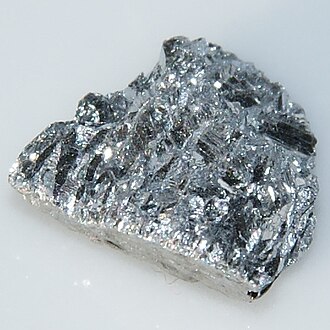
Antimony is a chemical element with the symbol Sb () and atomic number 51. A lustrous grey metal or metalloid, it occurs in nature mainly in the form of the sulfide mineral stibnite (). Antimony compounds have been known since ancient times and were powdered for use as medicine and cosmetics, often known by the Arabic name kohl.

China is the largest producer of antimony and its compounds, with most production coming from the Xikuangshan Mine in Hunan. The industrial methods for refining antimony from stibnite are roasting followed by reduction with carbon, or direct reduction of stibnite with iron.

The most common applications for metallic antimony are in alloys with lead and tin, which have improved properties for solders, bullets, and plain bearings. It improves the rigidity of lead-alloy plates in lead–acid batteries. Antimony trioxide is a prominent additive for halogen-containing flame retardants. Antimony is used as a dopant in semiconductor devices.

Characteristics

Properties

Antimony is a member of group 15 of the periodic table. As one of the elements called pnictogens, it has an electronegativity of 2.05. In accordance with periodic trends, it is more electronegative than tin or bismuth, and less electronegative than tellurium or arsenic. As a metalloid, it has a Mohs scale hardness of 3.

Antimony is a silvery, lustrous gray solid that is stable in air at room temperature. If heated, it reacts with oxygen to produce antimony trioxide,. Antimony is attacked by oxidizing acids.

The stable allotrope of antimony crystallises in a trigonal cell, isomorphic with bismuth and the gray allotrope of arsenic.

A yellow allotrope of antimony, assumed to be analogous to yellow arsenic, forms by oxidation of stibine () with air or oxygen at −90 °C. At ambient temperatures and in ambient light, it transforms into the more stable black allotrope. A rare explosive form of antimony can be formed from the electrolysis of antimony trichloride, but it always contains appreciable chlorine and is not really an antimony allotrope. When scratched with a sharp implement, an exothermic reaction occurs and white fumes are given off as metallic antimony forms; when rubbed with a pestle in a mortar, a strong detonation occurs.

Elemental antimony adopts a layered structure (space group Rm No. 166) whose layers consist of fused, ruffled, six-membered rings. The nearest and next-nearest neighbors form an irregular octahedral complex, with the three atoms in each double layer slightly closer than the three atoms in the next. This relatively close packing leads to a high density of 6.697 g/cm3, but the weak bonding between the layers leads to the low hardness and brittleness of antimony.

Isotopes

Main article: Isotopes of antimony

Antimony has two stable isotopes: with a natural abundance of 57.21% and with a natural abundance of 42.79%. There are 37 artificial radioactive isotopes known with mass numbers 104 to 142, of which the longest-lived is the fission product with a half-life of 2.758 years. Numerous meta states are known, of which the most stable is with a half-life of 5.76 days. Isotopes that are lighter than the stable tend to undergo β+ decay, and those that are heavier β− decay, with some exceptions.

Occurrence

The abundance of antimony in the Earth's crust is estimated at 0.2 parts per million, comparable to thallium at 0.5 ppm and silver at 0.07 ppm. It is the 63rd most abundant element in the crust. Even though this element is not abundant, it is found in more than 100 mineral species. Antimony is sometimes found natively (e.g. on Antimony Peak), but more frequently it is found in the sulfide stibnite () which is the predominant ore mineral.

Compounds

Antimony compounds are often classified according to their oxidation state: Sb(III) and Sb(V). The +5 oxidation state is more common.

Oxides and hydroxides

Antimony trioxide is formed when antimony is burnt in air. In the gas phase, the molecule of the compound is , but it polymerizes upon condensing. Antimony also forms a mixed-valence oxide, antimony tetroxide (), which features both Sb(III) and Sb(V). Unlike oxides of phosphorus and arsenic, these oxides are amphoteric, do not form well-defined oxoacids, and react with acids to form antimony salts.

Antimonous acid is unknown, but the conjugate base sodium antimonite () forms upon fusing sodium oxide and . Transition metal antimonites are also known. Antimonic acid exists only as the hydrate , forming salts as the antimonate anion . When a solution containing this anion is dehydrated, the precipitate contains mixed oxides.

The most important antimony ore is stibnite (). Other sulfide minerals include pyrargyrite (), zinkenite, jamesonite, and boulangerite. Antimony pentasulfide is non-stoichiometric, which features antimony in the +3 oxidation state and S–S bonds. Several thioantimonides are known, such as and .

Halides

Antimony forms two series of halides: and . The trihalides , , , and are all molecular compounds having trigonal pyramidal molecular geometry. The trifluoride is prepared by the reaction of antimony trioxide with hydrofluoric acid: It is Lewis acidic and readily accepts fluoride ions to form the complex anions and . Molten antimony trifluoride is a weak electrical conductor. The trichloride is prepared by dissolving stibnite in hydrochloric acid: Arsenic sulfides are not readily attacked by the hydrochloric acid, so this method offers a route to As-free Sb.

SbF5}}

The pentahalides and have trigonal bipyramidal molecular geometry in the gas phase, but in the liquid phase, is polymeric, whereas is monomeric. Antimony pentafluoride is a powerful Lewis acid used to make the superacid fluoroantimonic acid ().

Oxyhalides are more common for antimony than for arsenic and phosphorus. Antimony trioxide dissolves in concentrated acid to form oxoantimonyl compounds such as SbOCl and .

Antimonides, hydrides, and organoantimony compounds

Compounds in this class generally are described as derivatives of . Antimony forms antimonides with metals, such as indium antimonide (InSb) and silver antimonide (). The alkali metal and zinc antimonides, such as and , are more reactive. Treating these antimonides with acid produces the highly unstable gas stibine, : Stibine can also be produced by treating salts with hydride reagents such as sodium borohydride. Stibine decomposes spontaneously at room temperature. Because stibine has a positive heat of formation, it is thermodynamically unstable and thus antimony does not react with hydrogen directly.

Organoantimony compounds are typically prepared by alkylation of antimony halides with Grignard reagents. A large variety of compounds are known with both Sb(III) and Sb(V) centers, including mixed chloro-organic derivatives, anions, and cations. Examples include triphenylstibine () and pentaphenylantimony ().

History

Antimony(III) sulfide, , was recognized in predynastic Egypt as an eye cosmetic (kohl) as early as about 3100 BC, when the cosmetic palette was invented.

An artifact, said to be part of a vase, made of antimony dating to about 3000 BC was found at Telloh, Chaldea (part of present-day Iraq), and a copper object plated with antimony dating between 2500 BC and 2200 BC has been found in Egypt. Austen, at a lecture by Herbert Gladstone in 1892, commented that "we only know of antimony at the present day as a highly brittle and crystalline metal, which could hardly be fashioned into a useful vase, and therefore this remarkable 'find' (artifact mentioned above) must represent the lost art of rendering antimony malleable."

The British archaeologist Roger Moorey was unconvinced the artifact was indeed a vase, mentioning that Selimkhanov, after his analysis of the Tello object (published in 1975), "attempted to relate the metal to Transcaucasian natural antimony" (i.e. native metal) and that "the antimony objects from Transcaucasia are all small personal ornaments." This weakens the evidence for a lost art "of rendering antimony malleable".

The Roman scholar Pliny the Elder described several ways of preparing antimony sulfide for medical purposes in his treatise Natural History, around 77 AD. Pliny the Elder also made a distinction between "male" and "female" forms of antimony; the male form is probably the sulfide, while the female form, which is superior, heavier, and less friable, has been suspected to be native metallic antimony.

The Greek naturalist Pedanius Dioscorides mentioned that antimony sulfide could be roasted by heating by a current of air. It is thought that this produced metallic antimony.

Antimony was frequently described in alchemical manuscripts, including the Summa Perfectionis of Pseudo-Geber, written around the 14th century. A description of a procedure for isolating antimony is later given in the 1540 book De la pirotechnia by Vannoccio Biringuccio, predating the more famous 1556 book by Agricola, De re metallica. In this context Agricola has been often incorrectly credited with the discovery of metallic antimony. The book Currus Triumphalis Antimonii (The Triumphal Chariot of Antimony), describing the preparation of metallic antimony, was published in Germany in 1604. It was purported to be written by a Benedictine monk, writing under the name Basilius Valentinus in the 15th century; if it were authentic, which it is not, it would predate Biringuccio.

The metal antimony was known to German chemist Andreas Libavius in 1615 who obtained it by adding iron to a molten mixture of antimony sulfide, salt and potassium tartrate. This procedure produced antimony with a crystalline or starred surface.

With the advent of challenges to phlogiston theory, it was recognized that antimony is an element forming sulfides, oxides, and other compounds, as do other metals.

The first discovery of naturally occurring pure antimony in the Earth's crust was described by the Swedish scientist and local mine district engineer in 1783; the type-sample was collected from the Sala Silver Mine in the Bergslagen mining district of Sala, Västmanland, Sweden.

Coins of antimony were issued in China's Guizhou in 1931; durability was poor, and minting was soon discontinued because of its softness and toxicity.

Etymology

The medieval Latin form, from which the modern languages and late Byzantine Greek take their names for antimony, is antimonium. The origin of that is uncertain, and all suggestions have some difficulty either of form or interpretation. The popular etymology, from ἀντίμοναχός anti-monachos or French antimoine, would mean "monk-killer", which is explained by the fact that many early alchemists were monks, and some antimony compounds were poisonous.

Another popular etymology is the hypothetical Greek word ἀντίμόνος antimonos, "against aloneness", explained as "not found as metal", or "not found unalloyed". However, ancient Greek would more naturally express the pure negative as α- ("not"). Edmund Oscar von Lippmann conjectured a hypothetical Greek word ανθήμόνιον anthemonion, which would mean "floret", and cites several examples of related Greek words (but not that one) which describe chemical or biological efflorescence.

The early uses of antimonium include the translations, in 1050–1100, by Constantine the African of Arabic medical treatises. Several authorities believe antimonium is a scribal corruption of some Arabic form; Meyerhof derives it from ithmid; other possibilities include athimar, the Arabic name of the metalloid, and a hypothetical as-stimmi, derived from or parallel to the Greek.

The standard chemical symbol for antimony (Sb) is credited to Jöns Jakob Berzelius, who derived the abbreviation from stibium.

The ancient words for antimony mostly have, as their chief meaning kohl, the sulfide of antimony.

The Egyptians called antimony mśdmt or stm.

The Arabic word for the substance, as opposed to the cosmetic, can appear as إثمد ithmid, athmoud, othmod, or uthmod. Littré suggests the first form, which is the earliest, derives from stimmida, an accusative for stimmi. The Greek word στίμμι (stimmi) is used by Attic tragic poets of the 5th century BC, and is possibly a loan word from Arabic or from Egyptian stm.

Production

Process

The extraction of antimony from ores depends on the quality and composition of the ore. Most antimony is mined as the sulfide; lower-grade ores are concentrated by froth flotation, while higher-grade ores are heated to 500–600 °C, the temperature at which stibnite melts and separates from the gangue minerals. Antimony can be isolated from the crude antimony sulfide by reduction with scrap iron:

The sulfide is converted to an oxide by roasting. The product is further purified by vaporizing the volatile antimony(III) oxide, which is recovered. This sublimate is often used directly for the main applications, impurities being arsenic and sulfide. Antimony is isolated from the oxide by a carbothermal reduction:

The lower-grade ores are reduced in blast furnaces while the higher-grade ores are reduced in reverberatory furnaces.

World antimony output in 2010<ref name=&quot;usgs&quot;/>
World production trend of antimony

Top producers and production volumes

In 2022, according to the US Geological Survey, China accounted for 54.5% of total antimony production, followed in second place by Russia with 18.2% and Tajikistan with 15.5%.

CountryTonnes% of totalTotal world110,000100.0
China60,00054.5
Russia20,00018.2
Tajikistan17,00015.5
Myanmar4,0003.6
Australia4,0003.6
*Top 5*105,00095.5

Chinese production of antimony is expected to decline in the future as mines and smelters are closed down by the government as part of pollution control and stricter environmental rules. Especially due to an environmental protection law having gone into effect in January 2015 and revised "Emission Standards of Pollutants for Stanum, Antimony, and Mercury" having gone into effect, hurdles for economic production are higher.

Reported production of antimony in China has fallen and is unlikely to increase in the coming years, according to the Roskill report. No significant antimony deposits in China have been developed for about ten years, and the remaining economic reserves are being rapidly depleted. Myanmar is also facing supply disruptions due to political unrest.

Reserves

CountryReserves
(tonnes)Total world
China670,000
Russia350,000
Bolivia310,000
Kyrgyzstan260,000
Myanmar140,000
Australia120,000
Turkey100,000
Canada78,000
United States60,000
Slovakia60,000
Tajikistan50,000
2,470,000

Supply risk

For antimony-importing regions, such as Europe and the U.S., antimony is considered to be a critical mineral for industrial manufacturing that is at risk of supply chain disruption. With global production (in 2019) coming mainly from China (74%), Tajikistan (8%), and Russia (4%), these sources are critical to supply. ;European Union: Antimony is considered a critical raw material for defense, automotive, construction and textiles. In 2019, the E.U. sources were 100% imported, coming mainly from Turkey (62%), Bolivia (20%) and Guatemala (7%). ;United Kingdom: The British Geological Survey's 2015 risk list ranked antimony second highest (after rare earth elements) on the relative supply risk index. ;United States: Antimony is a mineral commodity considered critical to the economic and national security. In 2021, no antimony was mined in the U.S. In December 2024, the PR China has banned export of critical minerals.

Applications

In 2017, approximately 48% of antimony was consumed in flame retardants, 33% in lead–acid batteries, and 8% in plastics.

Flame retardants

Antimony is mainly used as the trioxide for flame-proofing compounds, always in combination with halogenated flame retardants except in halogen-containing polymers. The flame retarding effect of antimony trioxide is produced by the formation of halogenated antimony compounds, which react with hydrogen atoms, and probably also with oxygen atoms and OH radicals, thus inhibiting fire. Markets for these flame-retardants include children's clothing, toys, aircraft, and automobile seat covers. They are also added to polyester resins in fiberglass composites for such items as light aircraft engine covers. The resin will burn in the presence of an externally generated flame, but will extinguish when the external flame is removed. Antimony trioxide is also used as a synergist with brominated flame retardants in housings and plastic parts for electrical and electronic equipment (e.g., HIPS/ABS enclosures) to meet flammability standards such as UL 94.

Alloys

Antimony forms a highly useful alloy with lead, increasing its hardness and mechanical strength. When casting it increases fluidity of the melt and reduces shrinkage during cooling. For most applications involving lead, varying amounts of antimony are used as alloying metal. In lead–acid batteries, this addition improves plate strength and charging characteristics. For sailboats, lead keels are used to provide righting moment, ranging from 600 lbs to over 200 tons for the largest sailing superyachts; to improve hardness and tensile strength of the lead keel, antimony is mixed with lead between 2% and 5% by volume. Antimony is used in antifriction alloys (such as Babbitt metal), in bullets and lead shot, electrical cable sheathing, type metal (for example, for Linotype printing machines), solder (some "lead-free" solders contain 5% Sb), in pewter, and in hardening alloys with low tin content in the manufacturing of organ pipes.

Other applications

Three other applications consume nearly all the rest of the world's supply. One application is as a stabilizer and catalyst for the production of polyethylene terephthalate. Another is as a fining agent to remove microscopic bubbles in glass, mostly for TV screens antimony ions interact with oxygen, suppressing the tendency of the latter to form bubbles. This also prevents discolouration. The third application is pigments, Antimony also helps to maintain color stability and surface smoothness when it is used with certain types of ceramics and enamels.

In the 1990s antimony was increasingly being used in semiconductors as a dopant in n-type silicon wafers for diodes, infrared detectors, and Hall-effect devices. In the 1950s, the emitters and collectors of n–p–n alloy-junction transistors were doped with tiny beads of a lead-antimony alloy. Indium antimonide (InSb) is used as a material for mid-infrared detectors.

The material is used for phase-change memory, a type of computer memory.

Biology and medicine have few uses for antimony. Treatments containing antimony, known as antimonials, are used as emetics. Antimony compounds are used as antiprotozoan drugs. Potassium antimonyl tartrate, or tartar emetic, was once used as an anti-schistosomal drug from 1919 on. It was subsequently replaced by praziquantel. Antimony and its compounds are used in several veterinary preparations, such as anthiomaline and lithium antimony thiomalate, as a skin conditioner in ruminants. Antimony has a nourishing or conditioning effect on keratinized tissues in animals.

Antimony-based drugs, such as meglumine antimoniate, are also considered the drugs of choice for treatment of leishmaniasis. Early treatments used antimony(III) species (trivalent antimonials), but in 1922 Upendranath Brahmachari invented a much safer antimony(V) drug, and since then so-called pentavalent antimonials have been the standard first-line treatment. However, Leishmania strains in Bihar and neighboring regions have developed resistance to antimony. Elemental antimony as an antimony pill was once used as a medicine. It could be reused by others after ingestion and elimination.

Antimony(III) sulfide is used in the heads of some safety matches. Antimony sulfides help to stabilize the friction coefficient in automotive brake pad materials. Antimony is used in bullets, bullet tracers, paint, glass art, and as an opacifier in enamel. Antimony-124 is used together with beryllium in neutron sources; the gamma rays emitted by antimony-124 initiate the photodisintegration of beryllium. The emitted neutrons have an average energy of 24 keV. Natural antimony is used in startup neutron sources.

The powder derived from crushed antimony sulfide (kohl) has been used for millennia as an eye cosmetic. Historically it was applied to the eyes with a metal rod and with one's spittle, and was thought by the ancients to aid in curing eye infections. The practice is still seen in Yemen and in other Muslim countries.

Precautions

| NFPA-H = | NFPA-F = | NFPA-R = | NFPA-S = Antimony and many of its compounds are toxic, and the effects of antimony poisoning are similar to arsenic poisoning. The toxicity of antimony is far lower than that of arsenic; this might be caused by the significant differences of uptake, metabolism and excretion between arsenic and antimony. The uptake of antimony(III) or antimony(V) in the gastrointestinal tract is at most 20%. Antimony(V) is not quantitatively reduced to antimony(III) in the cell (in fact antimony(III) is oxidised to antimony(V) instead).

Since methylation of antimony does not occur, the excretion of antimony(V) in urine is the main way of elimination. Like arsenic, the most serious effect of acute antimony poisoning is cardiotoxicity and the resulting myocarditis; however, it can also manifest as Adams–Stokes syndrome, which arsenic does not. Reported cases of intoxication by antimony equivalent to 90 mg antimony potassium tartrate dissolved from enamel has been reported to show only short term effects. An intoxication with 6 g of antimony potassium tartrate was reported to result in death after three days.

Inhalation of antimony dust is harmful and in certain cases may be fatal; in small doses, antimony causes headaches, dizziness, and depression. Larger doses such as prolonged skin contact may cause dermatitis, or damage the kidneys and the liver, causing violent and frequent vomiting, leading to death in a few days.

Antimony is incompatible with strong oxidizing agents, strong acids, halogen acids, chlorine, or fluorine. It should be kept away from heat.

Antimony leaches from polyethylene terephthalate (PET) bottles into liquids. While levels observed for bottled water are below drinking water guidelines, The guidelines are:

  • World Health Organization: 20 μg/L
  • Japan: 15 μg/L
  • United States Environmental Protection Agency, Health Canada and the Ontario Ministry of Environment: 6 μg/L
  • EU and German Federal Ministry of Environment: 5 μg/L

The tolerable daily intake (TDI) proposed by WHO is 6 μg antimony per kilogram of body weight. The immediately dangerous to life or health (IDLH) value for antimony is 50 mg/m3 (50 μg/L).

Toxicity

Certain compounds of antimony appear to be toxic, particularly antimony trioxide and antimony potassium tartrate. Effects may be similar to arsenic poisoning. Occupational exposure may cause respiratory irritation, pneumoconiosis, antimony spots on the skin, gastrointestinal symptoms, and cardiac arrhythmias. In addition, antimony trioxide is potentially carcinogenic to humans.

Adverse health effects have been observed in humans and animals following inhalation, oral, or dermal exposure to antimony and antimony compounds. Antimony toxicity typically occurs either due to occupational exposure, during therapy or from accidental ingestion. It is unclear if antimony can enter the body through the skin. The presence of low levels of antimony in saliva may also be associated with dental decay.

Notes

References

Cited sources

References

  1. (2013). "Some Aspects of the Chemical Bonding in Antimony". Inorganic Materials.
  2. [[#Wiberg. Wiberg and Holleman]], p. 758
  3. (1955). "Über die Struktur und die Eigenschaften der Halbmetalle. IX: Die Allotropie des Antimons". Zeitschrift für anorganische und allgemeine Chemie.
  4. (1904). "Ueber den Antimonwasserstoff und das gelbe Antimon". Berichte der Deutschen Chemischen Gesellschaft.
  5. {{harvnb. Norman. 1998, [{{GBUrl. vVhpurkfeN4C. PA50 pp. 50–51]
  6. {{RubberBible82nd
  7. {{NUBASE2020
  8. [[#Greenwood. Greenwood and Earnshaw]], p. 548
  9. [https://www.mindat.org/chemsearch.php?inc=Sb&exc=&class=0&sub=Search+Minerals Antimony minerals]. mindat.org
  10. [[#Greenwood. Greenwood and Earnshaw]], p. 553
  11. Reger, Daniel L.. (2009). "Chemistry: Principles and Practice". Cengage Learning.
  12. House, James E.. (2008). "Inorganic chemistry". Academic Press.
  13. [[#Wiberg. Wiberg and Holleman]], p. 763
  14. Godfrey, S. M.. (1998). "Chemistry of arsenic, antimony, and bismuth". Springer.
  15. [[#Wiberg. Wiberg and Holleman]], p. 757
  16. (1969). "The oxidation number of antimony in antimony pentasulfide". Inorganic and Nuclear Chemistry Letters.
  17. (2007). "The synthesis and characterisation of four new antimony sulphides incorporating transition-metal complexes". Journal of Physics and Chemistry of Solids.
  18. [[#Wiberg. Wiberg and Holleman]], pp. 761–762
  19. [[#Wiberg. Wiberg and Holleman]], p. 761
  20. [[#Wiberg. Wiberg and Holleman]], p. 764
  21. [[#Wiberg. Wiberg and Holleman]], p. 760
  22. Kahlenberg, Louis. (2008). "Outlines of Chemistry – A Textbook for College Students". READ BOOKS.
  23. [[#Greenwood. Greenwood and Earnshaw]], p. 558
  24. Elschenbroich, C. (2006) "Organometallics". Wiley-VCH: Weinheim. {{ISBN. 3-527-29390-6
  25. [[#Greenwood. Greenwood and Earnshaw]], p. 598
  26. (2006). "Application of Lead Isotope Analysis to a Wide Range of Late Bronze Age Egyptian Materials". Archaeometry.
  27. Moorey, P. R. S.. (1994). "Ancient Mesopotamian Materials and Industries: the Archaeological Evidence". Clarendon Press.
  28. Mellor, Joseph William. (1964). "A comprehensive treatise on inorganic and theoretical chemistry".
  29. Pliny, ''[[Natural History (Pliny). Natural history]]'', 33.33; W.H.S. Jones, the [[Loeb Classical Library]] translator, supplies a note suggesting the identifications.
  30. (2021). "Antimony". De Gruyter.
  31. Vannoccio Biringuccio, [http://library.si.edu/digital-library/book/delapirotechnial00biri ''De la Pirotechnia''] (Venice (Italy): Curtio Navo e fratelli, 1540), Book 2, chapter 3: ''Del antimonio & sua miniera, Capitolo terzo'' (On antimony and its ore, third chapter), pp. 27–28. [Note: Only every second page of this book is numbered, so the relevant passage is to be found on the 74th and 75th pages of the text.] (in Italian)
  32. (1998). "Alchemie. Lexikon einer hermetischen Wissenschaft". C.H. Beck.
  33. [https://assets.cengage.com/gale/psm/2025000R.pdf Harold Jantz Collection of German Baroque Literature Reel Listing].
  34. (1932). "The discovery of the elements. II. Elements known to the alchemists". Journal of Chemical Education.
  35. "Native antimony". Mindat.org.
  36. (1803). "XL. Extracts from the third volume of the analyses". Philosophical Magazine.
  37. "Metals Used in Coins and Medals". ukcoinpics.co.uk.
  38. (May 22, 2024). "antimony".
  39. Fernando, Diana. (1998). "Alchemy: an illustrated A to Z". Blandford.
  40. "Antimony" in ''Kirk-Othmer Encyclopedia of Chemical Technology'', 5th ed. 2004. {{ISBN. 978-0-471-48494-3
  41. {{cite OED. Antimony, which considers the derivation a "[[folk etymology. popular etymology]]".
  42. [[Edmund Oscar von Lippmann. von Lippmann, Edmund Oscar]] (1919) Entstehung und Ausbreitung der Alchemie, teil 1. Berlin: Julius Springer (in German). pp. 642–5
  43. Meyerhof as quoted in {{harvnb. Sarton. 1935, asserts that ''ithmid'' or ''athmoud'' became corrupted in the medieval "traductions barbaro-latines". The ''[[#CITEREFReference-OED-Antimony. OED]]'' asserts some Arabic form is the origin, and if ''ithmid'' is the root, posits ''athimodium, atimodium, atimonium'' as intermediates.
  44. Endlich, F. M.. (1888). "On Some Interesting Derivations of Mineral Names". The American Naturalist.
  45. Jöns Jacob Berzelius, "Essay on the cause of chemical proportions, and on some circumstances relating to them: together with a short and easy method of expressing them," ''Annals of Philosophy'', vol. 2, pages 443–454 (1813) and vol. 3, pages 51–62, 93–106, 244–255, 353–364 (1814). On [{{GBUrl. E8M4AAAAMAAJ. PA52 p. 52], Berzelius lists the symbol for antimony as "St"; however, starting from [{{GBUrl. E8M4AAAAMAAJ. PA248 p. 248], Berzelius consistently uses the symbol "Sb" instead.
  46. Helmenstine, Anne. (2024-07-09). "Antimony Facts - Symbol, Definition, Uses".
  47. Albright, W. F.. (1918). "Notes on Egypto-Semitic Etymology. II". The American Journal of Semitic Languages and Literatures.
  48. Sarton, George. (1935). "Review of ''Al-morchid fi'l-kohhl, ou Le guide d'oculistique'' (Translated by Max Meyerhof)". Isis.
  49. {{OEtymD. antimony
  50. {{multiref. [[LSJ]], ''s.v.'', vocalisation, spelling, and declension vary. Celsus, 6.6.6 ff. Pliny ''Natural History'' 33.33. Lewis and Short: ''Latin Dictionary''. [[#CITEREFReference-OED-Antimony. ''OED'', s. "antimony"]]
  51. {{harvnb. Norman. 1998, [{{GBUrl. vVhpurkfeN4C. PA45 p. 45]
  52. (2004). "Antimony distribution and environmental mobility at an historic antimony smelter site, New Zealand". Environmental Pollution.
  53. "Antimony Statistics and Information". USGS.
  54. S, Saptakee. (2025-03-06). "The Future of Antimony: Rising Prices, Supply Chain Risks, and Demand Growth".
  55. (24 April 2014). "Environmental Protection Law of the People's Republic of China".
  56. "Study of the antimony market by Roskill Consulting Group".
  57. Nassar, Nedal T.. (2020-02-21). "Evaluating the mineral commodity supply risk of the U.S. manufacturing sector". Sci. Adv..
  58. (2020). "Critical Raw Materials Resilience: Charting a Path towards greater Security and Sustainability". European Commission.
  59. "MineralsUK Risk List 2015". BGS.
  60. "British Geological Survey Risk list 2015". BGS.
  61. reuters.com 3 Dec 2025: [https://www.reuters.com/markets/commodities/china-bans-exports-gallium-germanium-antimony-us-2024-12-03/ ''China bans export of critical minerals to US as trade tensions escalate'']
  62. reuters.com 9 July 2025: [https://www.reuters.com/business/autos-transportation/how-us-buyers-critical-minerals-bypass-chinas-export-ban-2025-07-09/ ''How US buyers of critical minerals bypass China's export ban'']
  63. (4 June 2009). "Flame retardants for plastics and textiles: Practical applications". Hanser.
  64. (1973). "Mass spectrometric studies of flame inhibition: Analysis of antimony trihalides in flames". Combustion and Flame.
  65. Grund, Sabina C.; Hanusch, Kunibert; Breunig, Hans J.; Wolf, Hans Uwe (2006) "Antimony and Antimony Compounds" in ''Ullmann's Encyclopedia of Industrial Chemistry'', Wiley-VCH, Weinheim. {{doi. 10.1002/14356007.a03_055.pub2
  66. (4 June 2009). "Flame retardants for plastics and textiles: Practical applications". Hanser.
  67. (15 April 2005). "Decabromodiphenyl ether (decaBDE) substitution in TV enclosures".
  68. "Decabromodiphenyl Ether (PEC 41)". Australian Industrial Chemicals Introduction Scheme.
  69. (20 May 2025). "Hidden Uses of Antimony in Modern Technology".
  70. (2004). "Mineral Commodity Profiles - Antimony".
  71. Kiehne, Heinz Albert. (2003). "Battery Technology Handbook". CRC Press.
  72. Williams, Robert S.. (2007). "Principles of Metallography". Read books.
  73. Holmyard, E. J.. (2008). "Inorganic Chemistry – A Textbook for Colleges and Schools". Read Books.
  74. (2007). "Thermodynamics and phase diagrams of lead-free solder materials". Journal of Materials Science: Materials in Electronics.
  75. Hull, Charles. (1992). "Pewter". Osprey Publishing.
  76. (2021). "2017 Minerals Yearbook: Antimony". United States Geological Survey.
  77. (2000). "Ullmann's Encyclopedia of Industrial Chemistry".
  78. (2001). "Voltammetric Studies of Antimony Ions in Soda-lime-silica Glass Melts up to 1873 K". Analytical Sciences.
  79. (2025-07-24). "Introduction to Antimony - What It Is and Why It's in the News".
  80. (1990). "Handbook of semiconductor silicon technology". William Andrew.
  81. Maiti, C. K.. (2008). "Selected Works of Professor Herbert Kroemer". World Scientific, 2008.
  82. (1995). "Expanding the vision of sensor materials". National Academies Press.
  83. Kinch, Michael A. (2007). "Fundamentals of infrared detector materials". SPIE Press.
  84. Willardson, Robert K. (1970). "Infrared detectors". Academic Press.
  85. Russell, Colin A.. (2000). "Antimony's Curious History". Notes and Records of the Royal Society of London.
  86. (May 2002). "Chemotherapeutic approaches to schistosomes: current knowledge and outlook". Parasitology Research.
  87. (1 August 2003). "Diseases of Warm Lands: A Clinical Manual". The Minerva Group.
  88. (2010). "Control of the leishmaniases: report of a meeting of the WHO Expert Committee on the Control of Leishmaniases, Geneva, 22-26 March 2010". World Health Organization.
  89. McCallum, R. I.. (1999). "Antimony in medical history: an account of the medical uses of antimony and its compounds since early times to the present". Pentland Press.
  90. National Research Council. (1970). "Trends in usage of antimony: report". National Academies.
  91. Stellman, Jeanne Mager. (1998). "Encyclopaedia of Occupational Health and Safety: Chemical, industries and occupations". International Labour Organization.
  92. Jang, H. (2000). "The effects of antimony trisulfide (Sb2S3) and zirconium silicate (ZrSiO4) in the automotive brake friction material on friction". Journal of Wear.
  93. (2002). "A metallurgical review of the interpretation of bullet lead compositional analysis". Forensic Science International.
  94. (1970). "The energy distribution of antimonyberyllium photoneutrons". Journal of Nuclear Energy.
  95. Ahmed, Syed Naeem. (2007). "Physics and engineering of radiation detection". Academic Press.
  96. Schmitt, H. (1960). "Determination of the energy of antimony-beryllium photoneutrons". Nuclear Physics.
  97. Rabbeinu Hananel. (1995). "Perushe Rabenu Ḥananʼel Bar Ḥushiʼel la-Talmud". Mekhon 'Lev Sameaḥ'.
  98. "Sunan an-Nasa'i 5113 – The Book of Adornment – كتاب الزينة من السنن – Sunnah.com – Sayings and Teachings of Prophet Muhammad (صلى الله عليه و سلم)".
  99. (2005). "Observations on the measurement of total antimony and antimony species in algae, plant and animal tissues". Journal of Environmental Monitoring.
  100. (1997). "Arsenic and antimony: Comparative approach on mechanistic toxicology". Chemico-Biological Interactions.
  101. (1977). "President's address. Observations upon antimony". Proceedings of the Royal Society of Medicine.
  102. (2010). "Antimony Toxicity". International Journal of Environmental Research and Public Health.
  103. [http://www.mallbaker.com/americas/msds/english/a7152_msds_us_default.pdf Antimony MSDS]{{dead link. (March 2013. Baker)
  104. (2008). "Antimony leaching from polyethylene terephthalate (PET) plastic used for bottled drinking water". Water Research.
  105. (2010). "Elevated antimony concentrations in commercial juices". Journal of Environmental Monitoring.
  106. Wakayama, Hiroshi (2003) [http://www.nilim.go.jp/lab/bcg/siryou/tnn/tnn0264pdf/ks0264011.pdf "Revision of Drinking Water Standards in Japan"], Ministry of Health, Labor and Welfare (Japan); Table 2, p. 84
  107. [https://www.canada.ca/en/environment-climate-change/services/evaluating-existing-substances/screening-assessment-antimony-containing-substances.html#toc13 Screening assessment antimony-containing substances]. Health Canada. July 2020. {{ISBN. 978-0-660-32826-3
  108. (2006). "Contamination of Canadian and European bottled waters with antimony from PET containers". Journal of Environmental Monitoring.
  109. (2011). "Guidelines for Drinking-water Quality". World Health Organization.
  110. {{PGCH. 0036
  111. "Toxicological Profile for Antimony and Compounds". U.S. Department of Health and Human Services.
  112. "Antimony poisoning".
  113. (2010). "Antimony Toxicity". International Journal of Environmental Research and Public Health.
  114. (2020). "Low levels of salivary metals, oral microbiome composition and dental decay". Scientific Reports.
Info: Wikipedia Source

This article was imported from Wikipedia and is available under the Creative Commons Attribution-ShareAlike 4.0 License. Content has been adapted to SurfDoc format. Original contributors can be found on the article history page.

Want to explore this topic further?

Ask Mako anything about Antimony — get instant answers, deeper analysis, and related topics.

Research with Mako

Free with your Surf account

Content sourced from Wikipedia, available under CC BY-SA 4.0.

This content may have been generated or modified by AI. CloudSurf Software LLC is not responsible for the accuracy, completeness, or reliability of AI-generated content. Always verify important information from primary sources.

Report