From Surf Wiki (app.surf) — the open knowledge base
Alzheimer's disease
Progressive neurodegenerative disease
Progressive neurodegenerative disease
| Field | Value |
|---|---|
| name | Alzheimer's disease |
| image | Brain-ALZH.png |
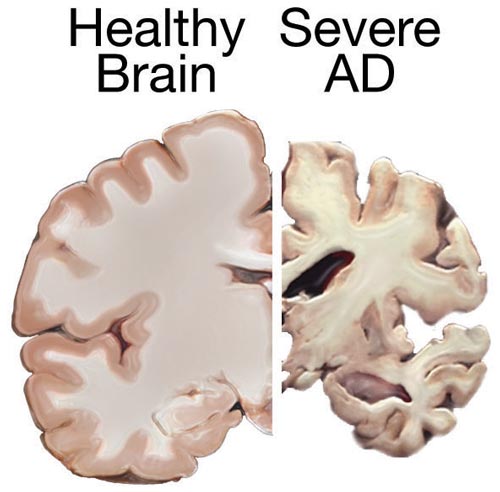
| caption | Diagram of a normal brain compared to the brain of a person with Alzheimer's |
| pronounce | , |
| field | Neurology |
| synonyms | Alzheimer's dementia |
| symptoms | Memory loss, problems with language, disorientation, mood swings |
| complications | Infections, falls and aspiration pneumonia in the terminal stage |
| onset | Over 65 years old |
| duration | Long term |
| causes | Poorly understood |
| risks | Genetics, head injuries, clinical depression, hypertension, psychological stress, lack of physical and mental exercise |
| diagnosis | Based on symptoms and cognitive testing after ruling out other possible causes |
| differential | Normal brain aging, Trisomy 21 |
| medication | Acetylcholinesterase inhibitors, NMDA receptor antagonists |
| prognosis | 100% mortality, life expectancy 3–12 years |
| frequency | 50 million (2020) |
| named after | Alois Alzheimer |
Alzheimer's disease (AD) is a neurodegenerative disease and is the most common form of dementia, accounting for around 60–70% of cases. The most common early symptom is difficulty in remembering recent events. As the disease advances, symptoms can include problems with language, disorientation (including easily getting lost), mood swings, loss of motivation, self-neglect, and behavioral issues. As a person's condition declines, they often withdraw from family and society. Gradually, bodily functions are lost, ultimately leading to death. Although the speed of progression can vary, the average life expectancy following diagnosis is three to twelve years.
The causes of Alzheimer's disease remain poorly understood. Other risk factors include a history of head injury, clinical depression, and high blood pressure. A probable diagnosis is based on the history of the illness and cognitive testing, with medical imaging and blood tests to rule out other possible causes. Initial symptoms are often mistaken for normal brain aging. Examination of brain tissue is needed for a definite diagnosis, but this can only take place after death.
No treatments can stop or reverse its progression, though some may temporarily improve symptoms. Exercise programs may be beneficial with respect to activities of daily living and can potentially improve outcomes. Behavioral problems or psychosis due to dementia are sometimes treated with antipsychotics, but this has an increased risk of early death.
As of 2020, there were approximately 50 million people worldwide with Alzheimer's disease. It affects about 6% of people 65 years and older, The disease is named after German psychiatrist and pathologist Alois Alzheimer, who first described it in 1906.
Given the widespread impacts of Alzheimer's disease, both basic-science and health funders in many countries support Alzheimer's research at large scales. For example, the US National Institutes of Health program for Alzheimer's research, the National Plan to Address Alzheimer's Disease, has a budget of US$3.98 billion for fiscal year 2026. In the European Union, the 2020 Horizon Europe research programme awarded over €570 million for dementia-related projects.
Signs and symptoms
The course of Alzheimer's is generally described in three stages, with a progressive pattern of cognitive and functional impairment. The three stages are described as early or mild, middle or moderate, and late or severe. The disease is known to target the hippocampus which is associated with memory, and this is responsible for the first symptoms of memory impairment. As the disease progresses so does the degree of memory impairment.
First symptoms
The first symptoms are often mistakenly attributed to aging or stress. Detailed neuropsychological testing can reveal mild cognitive difficulties up to eight years before a person fulfills the clinical criteria for diagnosis of Alzheimer's disease. These early symptoms can affect the most complex activities of daily living. The most noticeable deficit is short term memory loss, which shows up as difficulty in remembering recently learned facts and inability to acquire new information.
Subtle problems with the executive functions of attentiveness, planning, flexibility, and abstract thinking, or impairments in semantic memory (memory of meanings, and concept relationships) can also be symptomatic of the early stages of Alzheimer's disease. People with objective signs of cognitive impairment, but not more severe symptoms, may be diagnosed with mild cognitive impairment (MCI). If memory loss is the predominant symptom of MCI, it is termed amnestic MCI and is frequently seen as a prodromal or early stage of Alzheimer's disease. Amnestic MCI has a greater than 90% likelihood of being associated with Alzheimer's.
Early stage
In people with Alzheimer's disease, the increasing impairment of learning and memory eventually leads to a definitive diagnosis. In a small percentage, difficulties with language, executive functions, perception (agnosia), or execution of movements (apraxia) are more prominent than memory problems. Alzheimer's disease does not affect all memory capacities equally. Older memories of the person's life (episodic memory), facts learned (semantic memory), and implicit memory (the memory of the body on how to do things, such as using a fork to eat or how to drink from a glass) are affected to a lesser degree than new facts or memories.
Language problems are mainly characterised by a shrinking vocabulary and decreased word fluency, leading to a general impoverishment of oral and written language. In this stage, the person with Alzheimer's is usually capable of communicating basic ideas adequately. While performing fine motor tasks such as writing, drawing, or dressing, certain movement coordination and planning difficulties (apraxia) may be present; however, they are commonly unnoticed. As the disease progresses, people with Alzheimer's disease can often continue to perform many tasks independently; however, they may need assistance or supervision with the most cognitively demanding activities.
Middle stage
Progressive deterioration eventually hinders independence, with subjects being unable to perform most common activities of daily living. Speech difficulties become evident due to an inability to recall vocabulary, which leads to frequent incorrect word substitutions (paraphasias). Reading and writing skills are also progressively lost. Complex motor sequences become less coordinated as time passes and Alzheimer's disease progresses, so the risk of falling increases. During this phase, memory problems worsen, and the person may fail to recognise close relatives. Long-term memory, which was previously intact, becomes impaired.
Behavioral and neuropsychiatric changes become more prevalent. Common manifestations are wandering, irritability and emotional lability, leading to crying, outbursts of unpremeditated aggression, or resistance to caregiving. Approximately 30% of people with Alzheimer's disease develop illusionary misidentifications and other delusional symptoms.
Late stage
During the final stage, known as the late-stage or severe stage, there is complete dependence on caregivers. The cause of death is usually an external factor, such as infection of pressure ulcers or pneumonia, not the disease itself.
Causes

Alzheimer's disease is believed to occur when abnormal amounts of amyloid beta (Aβ), accumulating extracellularly as amyloid plaques and tau proteins, or intracellularly as neurofibrillary tangles, form in the brain, affecting neuronal functioning and connectivity, resulting in a progressive loss of brain function. This altered protein clearance ability is age-related, regulated by brain cholesterol, and associated with other neurodegenerative diseases.
The cause for most Alzheimer's cases is still mostly unknown, except for 1–2% of cases where deterministic genetic differences have been identified. Several competing hypotheses attempt to explain the underlying cause; the most predominant hypothesis is the amyloid beta (Aβ) hypothesis.
Genetic
Late onset
Late-onset Alzheimer's is about 70% heritable. Most cases of Alzheimer's are not familial, and so they are termed sporadic Alzheimer's disease. Of the cases of sporadic Alzheimer's disease, most are classified as late onset where they are developed after the age of 65 years.
The strongest genetic risk factor for sporadic Alzheimer's disease is APOEε4. APOEε4 is one of four alleles of apolipoprotein E (APOE). APOE plays a major role in lipid-binding proteins in lipoprotein particles and the ε4 allele disrupts this function. Between 40% and 80% of people with Alzheimer's disease possess at least one APOEε4 allele. The APOEε4 allele increases the risk of the disease by three times in heterozygotes and by 15 times in homozygotes. Like many human diseases, environmental effects and genetic modifiers result in incomplete penetrance. For example, Nigerian Yoruba people do not show the relationship between dose of APOEε4 and incidence or age-of-onset for Alzheimer's disease seen in other human populations.
Early onset
Only 1–2% of Alzheimer's cases are inherited due to autosomal dominant mutations, as Alzheimer's disease is substantially polygenic. When the disease is caused by autosomal dominant variants, it is known as early-onset familial Alzheimer's disease, which is rarer and tends to progress more rapidly. Less than 5% of sporadic Alzheimer's disease have an earlier onset, and early-onset Alzheimer's is about 90% heritable.
Early onset familial Alzheimer's disease can be attributed to mutations in one of three genes: those encoding amyloid-beta precursor protein (APP) and presenilins PSEN1 and PSEN2. Most mutations in the APP and presenilin genes increase the production of a small protein called amyloid beta (Aβ)42, which is the main component of amyloid plaques. Some of the mutations merely alter the ratio between Aβ42 and the other major forms—particularly Aβ40—without increasing Aβ42 levels in the brain. Two other genes associated with autosomal dominant Alzheimer's disease are ABCA7 and SORL1.
Alleles in the TREM2 gene have been associated with a three to five times higher risk of developing Alzheimer's disease.
A Japanese pedigree of familial Alzheimer's disease was found to be associated with a deletion mutation of codon 693 of APP. This mutation and its association with Alzheimer's disease was first reported in 2008, and is known as the Osaka mutation. Only homozygotes with this mutation have an increased risk of developing Alzheimer's disease. This mutation accelerates Aβ oligomerization but the proteins do not form the amyloid fibrils that aggregate into amyloid plaques, suggesting that it is the Aβ oligomerization rather than the fibrils that may be the cause of this disease. Mice expressing this mutation have all the usual pathologies of Alzheimer's disease.
Hypotheses
Misfolded protein

Two abnormal proteins define the pathology of Alzheimer's disease: amyloid beta protein (Aβ) in amyloid plaques and tau protein in neurofibrillary tangles. These proteins share two features that promote their ability to cause disease: They both become abnormal by misfolding, that is, by assuming a shape that is rich in beta sheets; and they proliferate in the brain by the prion-like mechanism of seeded protein aggregation. The presence of these abnormal proteins in Alzheimer's disease has spawned two hypotheses of the proteopathic origin of the disease: The amyloid (or Aβ) hypothesis, and the tau hypothesis.
The amyloid hypothesis, also known as the "amyloid cascade hypothesis" or "Aβ cascade hypothesis", holds that the accumulation of misfolded Aβ in the brain is the fundamental cause of Alzheimer's disease. In the amyloid cascade, the buildup of abnormal Aβ leads to tauopathy and eventually the complex degenerative changes of advanced Alzheimer's disease. Abnormal Aβ is thought to damage the brain by directly interacting with cells, and/or indirectly, for example by causing oxidative stress and neuroinflammation.
The amyloid hypothesis is supported by evidence from genetics and biomarkers. All autosomal dominant genetic causes of Alzheimer's disease affect either the amyloid precursor protein (APP) on chromosome 21 or the enzymes that generate Aβ, known as presenilin 1 and presenilin 2. In addition, people with trisomy 21 (Down syndrome), most of whom have an extra copy of the gene for APP, almost universally develop the symptoms and neuropathology of Alzheimer's disease by 40 years of age. Conversely, people with a rare mutation in the APP gene that reduces the production of Aβ and its tendency to aggregate are protected against Alzheimer's disease. Additionally, a major genetic risk factor for Alzheimer's disease is a specific isoform of apolipoprotein E, APOE4. Of the three major isoforms (APOE2, APOE3 and APOE4), APOE4 is linked to the least efficient removal of Aβ by astrocytes, which promotes the buildup of Aβ in the brain. The most efficient clearance of Aβ is achieved by cells bearing the APOE2 isoform, which protects against Alzheimer's disease. Evidence from biomarkers such as imaging of protein deposits in the brain and measurement of brain-derived substances in cerebrospinal fluid and blood implicates abnormalities of Aβ as the earliest and most robust disease-specific change in Alzheimer's disease.
The tau hypothesis proposes that abnormalities of the tau protein initiate the disease cascade, at least in cases of idiopathic Alzheimer's disease. The tau hypothesis is supported by the histopathological findings of Heiko Braak and colleagues that tauopathy can be detected in certain neurons before Aβ plaques are evident. Specifically, Alzheimer's starts with the hyperphosphorylation of tau in specific vulnerable neuronal populations such as the locus coeruleus and projection neurons of the association cortex. There is agreement in the research community that tau contributes strongly to dementia in Alzheimer's disease, but tauopathy occurs in over 30 diseases besides Alzheimer's disease). In addition, mutations of the gene for tau (MAPT) cause neurodegenerative disorders known as primary tauopathies, but these diseases occur in the absence of Aβ proteopathy. Current evidence thus favors abnormal Aβ as the prime mover of Alzheimer's disease. However, the Aβ hypothesis and tau hypothesis are not mutually exclusive, in that abnormalities of Aβ initiate the disease and tauopathy is required for its complete expression.
Hormonal
Because women have a higher incidence of AD than men, it has been thought that estrogen deficiency during menopause is a risk factor. In a 2025 analysis of the Canadian Longitudinal Study on Aging earlier age at menopause was linked with lower cognitive performance.
Infection
The possibility that infectious agents cause Alzheimer's disease has been considered since the early 20th century, when Oskar Fischer likened amyloid plaques to small masses (called 'Drusen') of a microbe called actinomyces. Since then, at least 15 different agents, including bacteria, viruses, fungi and protozoa, have been proposed to cause Alzheimer's disease. No definitive evidence has been presented that a specific infectious agent is necessary and sufficient to cause Alzheimer's disease. However, it is possible that microbial infections might act as risk factors for the disease. For example, human herpes viruses such as HSV1, HHV6 and HHV7 have been linked to the risk of Alzheimer's disease. In addition, some pathogens have been reported to seed Aβ deposition in the brain, and aggregated Aβ has antimicrobial properties, suggesting that Aβ plaques might form when brain cells generate Aβ to fight infection. Researchers caution that brain infections can cause dementia by mechanisms unrelated to Alzheimer's disease.
DNA damage
DNA damage accumulates in affected brains; reactive oxygen species may be the major source of this DNA damage.
Cholinergic
The cholinergic hypothesis proposes that the loss of neurons in the basal forebrain, which produce the neurotransmitter acetylcholine, is a key event in the pathogenesis of Alzheimer's disease. These cells supply acetylcholine to synapses in the limbic system and cerebral cortex. The cholinergic hypothesis led to the development of drugs that increase acetylcholine in the brains of Alzheimer patients. The efficacy of these agents is limited, probably because many other neurotransmitter systems degenerate in Alzheimer's disease.
Sleep
Sleep disturbances are seen as a possible risk factor for inflammation in Alzheimer's disease. Sleep disruption was previously only seen as a consequence of Alzheimer's disease, but , accumulating evidence suggests that this relationship may be bidirectional.
Neuroinflammation, metal toxicity, smoking, and air pollution
Systemic markers of the innate immune system are risk factors for late-onset Alzheimer's disease, and misfolded Aβ and tau proteins both are associated with oxidative stress and neuroinflammation. Chronic inflammation also is a feature of other neurodegenerative diseases, including Parkinson's disease, and ALS. The cellular homeostasis of biometals such as ionic copper, iron, and zinc is disrupted in Alzheimer's disease, though it remains unclear whether this is produced by or causes the changes in proteins. Smoking is a significant Alzheimer's disease risk factor. Exposure to air pollution may be a contributing factor to the development of Alzheimer's disease.
Age-related myelin decline
Retrogenesis is a medical hypothesis that just as the fetus goes through a process of neurodevelopment beginning with neurulation and ending with myelination, the brains of people with Alzheimer's disease go through a reverse neurodegeneration process starting with demyelination and death of axons (white matter) and ending with the death of grey matter. Likewise the hypothesis is, that as infants go through states of cognitive development, people with Alzheimer's disease go through the reverse process of progressive cognitive impairment.
According to one theory, dysfunction of oligodendrocytes and their associated myelin during aging contributes to axon damage, which in turn generates in amyloid production and tau hyperphosphorylation. Comorbidities between the demyelinating disease, multiple sclerosis, and Alzheimer's disease have been reported.
Other hypotheses
Retrogenesis The association with celiac disease is unclear, with a 2019 study finding no increase in dementia overall in those with celiac disease while a 2018 review found an association with several types of dementia including Alzheimer's disease.
Studies have reported a potential link between infection with certain viruses and developing Alzheimer's disease later in life. Notably, a large scale study conducted on 6,245,282 patients has reported an increased risk of developing Alzheimer's disease following COVID-19 infection in cognitively normal individuals over 65.
Some evidence suggests that some viral infections such as Herpes simplex virus 1 (HSV-1) may be associated with dementia, but there are conflicting results and the association with Alzheimer's is unclear as of 2024.
Some researchers have proposed that Alzheimer's disease is Type 3 diabetes because of a number of correspondences with both Type 1 and Type 2 diabetes.
Pathophysiology
Neuropathology
The gross (macroscopic) appearance of the brain in Alzheimer's disease is variable. In many cases the cortical sulci are widened and the gyri are shrunken, but the degree of cortical atrophy varies, and it can sometimes be difficult to discern, particularly in very old subjects. The areas most affected by atrophy are the medial temporal lobe including the hippocampal formation, the amygdala, the frontal lobe and the parietal lobe; the occipital lobe is relatively unaffected by atrophy. The volume of the ventricles increases in parallel with cortical shrinkage. Studies using MRI and PET have documented reductions in the size of specific brain regions in people with Alzheimer's disease as they progress from mild cognitive impairment to Alzheimer's disease, and in comparison with similar images from healthy older adults. These macroscopic changes in the brain can occur in other disorders and to some extent in normal aging; thus, they are not specific to Alzheimer's disease, which can be diagnosed with certainty only by microscopic examination of the brain.
At the microscopic level, the defining histopathologic characteristics of Alzheimer's disease are abundant Aβ plaques and neurofibrillary tangles in certain brain regions. Both of these abnormalities are clearly visible by microscopy; in the early stages of disease, tangles are present mainly in the medial temporal lobe and plaques are present mainly in the neocortex, but as the disease progresses the lesions proliferate throughout much of the brain. newer methods have shown that dementia in these cases can be linked to a comorbid condition, often Lewy body disease.
Aβ plaques are dense, mostly insoluble deposits of amyloid beta peptide and cellular material outside and around neurons. Neurofibrillary tangles are aggregates of the microtubule-associated protein tau which has become hyperphosphorylated and accumulates inside neurons.
In addition to plaques and tangles, other neuropathological changes contribute to the clinicopathologic features of advanced Alzheimer's disease. These include cerebral Aβ-amyloid angiopathy (CAA), inflammation, and the loss of neurons and synapses. The disappearance of neurons and their synapses is a particularly prominent correlate of dementia, although not all cells are affected equally. Selective vulnerability - that is, why certain neurons and synapses are affected and others spared - is an important unanswered question.
In more than half of the cases examined neuropathologically, and especially in very old people, the pathology of Alzheimer's disease is accompanied by lesions that are characteristic of other brain disorders. This mixed pathology can complicate both diagnosis and the evaluation of clinical trials, which often target only one of several potential contributors to dementia.
Biochemistry
Main article: Biochemistry of Alzheimer's disease
Amyloid beta (Aβ)
Alzheimer's disease has been identified as a protein misfolding disease, a proteopathy, caused by the accumulation of abnormally folded Aβ protein into amyloid plaques, and tau protein into neurofibrillary tangles in the brain. Plaques are made up of small peptides, 39–43 amino acids in length, called Aβ. Aβ is a fragment derived from the larger Aβ precursor protein (APP), a transmembrane protein that penetrates the cell's membrane. APP is critical to neuronal growth, survival, and post-injury repair. In Alzheimer's disease, the enzymes gamma secretase and beta secretase act together in a proteolytic process that divides APP into smaller fragments. One of these fragments is Aβ, which misfolds and self-assembles into fibrils; these fibrils form clumps that deposit outside neurons in dense formations known as Aβ plaques. Excitatory neurons are known to be major producers of Aβ that contribute to extracellular plaque deposition.
Phosphorylated tau
Alzheimer's disease is also considered a tauopathy due to the abnormal aggregation of the tau protein within cells. Every neuron has a cytoskeleton, an internal support structure partly made up of organelles called microtubules. These microtubules act like tracks, guiding nutrients and molecules from the body of the cell to the ends of the axon and back. The tau protein stabilises the microtubules when phosphorylated, and it is therefore called a microtubule-associated protein. In Alzheimer's disease, tau undergoes chemical changes, becoming hyperphosphorylated; it then begins to pair with other threads, creating neurofibrillary tangles and disintegrating the neuron's transport system. Pathogenic tau can also cause neuronal death through transposable element dysregulation. Necroptosis has also been reported as a mechanism of cell death in brain cells affected with tau tangles.
Disease mechanism
Exactly how disturbances of production and aggregation of the Aβ peptide give rise to the pathology of Alzheimer's disease is not known. The amyloid hypothesis (also known as the 'amyloid cascade hypothesis') posits that the accumulation of abnormally shaped Aβ peptides is the central event triggering the sequence of changes that eventually lead to neurodegeneration and dementia. Misfolded Aβ accumulates in the brain because it causes normal Aβ molecules to similarly misfold by a prion-like 'seeding' mechanism. The aggregated Aβ takes the form of small oligomers (which are particularly toxic to neurons) and amyloid fibrils, the long polymers that are the main components of Aβ plaques. Some researchers have argued that the amyloid fibrils bind up smaller oligomers and thus protect brain cells from the injurious effects of the oligomers. However, the plaques are not benign inasmuch as they are associated with abnormal neuronal processes and local inflammation. and various other changes such as inflammation.
Evidence supports Aβ as playing a central role in the pathogenesis of Alzheimer's disease, but as the disease progresses the brain undergoes a complex assortment of cellular and molecular changes, including (in addition to tauopathy) inflammation, oxidative/nitrative stress, DNA damage, epigenetic changes, excitotoxicity, endosomal/lysosomal failure, dysproteostasis, autophagy failure, lipid dysmetabolism, calcium ion (Ca2+) dyshomeostasis, post-translational protein modifications, neuronal cell cycle re-entry, mitochondrial failure, cytoskeletal disruption, glucose dysmetabolism, vascular or lymphatic impairments, and biometal dyshomeostasis. Iron dyshomeostasis is linked to disease progression in which an iron-dependent form of regulated cell death called ferroptosis could be involved. Products of lipid peroxidation are also elevated in the Alzheimer brain compared with controls.
Various inflammatory processes and cytokines also play a role in the pathology of Alzheimer's disease. Inflammation is a general marker of tissue damage in any disease, and may be either secondary to tissue damage in Alzheimer's disease or a marker of an immunological response. Cells that mediate neuroinflammation in Alzheimer's include microglia, astrocytes, oligodendrocytes, lymphocytes and myeloid cells. There is increasing evidence of a strong interaction between neurons and the immunological mechanisms in the brain. Obesity and systemic inflammation may interfere with immunological processes which promote disease progression. Microglia are especially important actors in the Alzheimer's-related inflammation. Microglia are the principal immunological cells of the central nervous system, serving as the tissue-resident macrophages of the brain; they are capable of recognizing and taking up Aβ through multiple pattern recognition receptors, making them central to amyloid clearance within the brain. However, microglia can also be a major source of pro-inflammatory mediators which can be deleterious to neurological function. Microglial activation has been documented in people with mild cognitive impairment, despite a lack of detectable binding of a PET tracer for Aβ in the brain, suggesting that microglial dysfunction may precede plaque deposition as an inciting event in AD.
Alterations in the distribution of different neurotrophic factors and in the expression of their receptors, such as the brain-derived neurotrophic factor (BDNF), have been described in Alzheimer's disease.
By the time the symptoms of Alzheimer's first appear, the complex degenerative mechanisms in the brain have been active for many years. Hence, the beneficial effect of therapeutics (specifically, the monoclonal antibodies that promote Aβ clearance) has ranged from nonexistent to modest. Second-generation antibodies to Aβ have resulted in significant slowing of the progression of Alzheimer's disease, but these have not yet stopped or reversed dementia. Hence, researchers increasingly believe that the best strategy is to prevent Alzheimer's by intervening before the brain has been irreversibly damaged.
Diagnosis
Alzheimer's disease (AD) can only be definitively diagnosed with autopsy findings; in the absence of autopsy, clinical diagnoses of AD are "possible" or "probable", based on other findings. Up to 23% of those clinically diagnosed with AD may be misdiagnosed and may have pathology suggestive of another condition with symptoms that mimic those of AD.
AD is usually clinically diagnosed based on a person's medical history, observations from friends or relatives, and behavioral changes. The presence of characteristic neuropsychological changes with impairments in at least two cognitive domains that are severe enough to affect a person's functional abilities are required for the diagnosis. Domains that may be impaired include memory (most commonly impaired), language, executive function, visuospatial functioning, or other areas of cognition. The neurocognitive changes must be a decline from a prior level of function and the diagnosis requires ruling out other common causes of neurocognitive decline. Advanced medical imaging with computed tomography (CT) or magnetic resonance imaging (MRI), and with single-photon emission computed tomography (SPECT) or positron emission tomography (PET), can be used to help exclude other cerebral pathology or subtypes of dementia. On MRI or CT, Alzheimer's disease usually shows a generalised or focal cortical atrophy, which may be asymmetric. Atrophy of the hippocampus is also commonly seen. Brain imaging commonly also shows cerebrovascular disease, most commonly previous strokes (small or large territory strokes), and this is thought to be a contributing cause of many cases of dementia (up to 46% cases of dementia also have cerebrovascular disease on imaging). FDG-PET scan is not required for the diagnosis but it is sometimes used when standard testing is unclear. FDG-PET shows a bilateral, asymmetric, temporal and parietal reduced activity. FDA-approved radiopharmaceutical diagnostic agents used in PET for Alzheimer's disease are florbetapir (2012), flutemetamol (2013), florbetaben (2014), and flortaucipir (2020). Because many insurance companies in the United States do not cover this procedure, its use in clinical practice is largely limited to clinical trials .
Assessment of intellectual functioning including memory testing can further characterise the state of the disease.
Criteria
There are three sets of criteria for the clinical diagnoses of the spectrum of Alzheimer's disease: the 2013 fifth edition of the Diagnostic and Statistical Manual of Mental Disorders (DSM-5); the National Institute on Aging-Alzheimer's Association (NIA-AA) definition as revised in 2011; and the International Working Group criteria as revised in 2010.
Eight intellectual domains are most commonly impaired in AD—memory, language, perceptual skills, attention, motor skills, orientation, problem solving and executive functional abilities, as listed in the fourth text revision of the DSM (DSM-IV-TR).
The DSM-5 defines criteria for probable or possible AD for both major and mild neurocognitive disorder. Major or mild neurocognitive disorder must be present along with at least one cognitive deficit for a diagnosis of either probable or possible AD. For major neurocognitive disorder due to AD, probable Alzheimer's disease can be diagnosed if the individual has genetic evidence of AD or if two or more acquired cognitive deficits, and a functional disability that is not from another disorder, are present. Otherwise, possible AD can be diagnosed as the diagnosis follows an atypical route. For mild neurocognitive disorder due to AD, probable Alzheimer's disease can be diagnosed if there is genetic evidence, whereas possible AD can be met if all of the following are present: no genetic evidence, decline in both learning and memory, two or more cognitive deficits, and a functional disability not from another disorder.
The NIA-AA criteria are used mainly in research rather than in clinical assessments. They define AD through three major stages: preclinical, mild cognitive impairment (MCI), and Alzheimer's dementia. Diagnosis in the preclinical stage is complex and focuses on asymptomatic individuals; the latter two stages describe individuals experiencing symptoms, predominantly those for neuronal injury (mainly tau-related) and amyloid beta deposition. In probable AD dementia there is steady impairment of cognition over time and a memory-related or non-memory-related cognitive dysfunction. In possible AD dementia, another causal disease such as cerebrovascular disease is present.
Techniques
Neuropsychological tests including cognitive tests such as the mini–mental state examination (MMSE), the Montreal Cognitive Assessment (MoCA) and the Mini-Cog are widely used to aid in diagnosis of the cognitive impairments in AD. These tests may not always be accurate, as they lack sensitivity to mild cognitive impairment, and can be biased by language or attention problems;
Further neurological examinations are crucial in the differential diagnosis of Alzheimer's disease and other diseases. A caregiver's viewpoint is particularly important, since a person with Alzheimer's disease is commonly unaware of their deficits. Many times, families have difficulties in the detection of initial dementia symptoms and may not communicate accurate information to a physician.
Supplemental testing can rule out other potentially treatable diagnoses and help avoid misdiagnoses. Common supplemental tests include blood tests, thyroid function tests, as well as tests to assess vitamin B12 levels, rule out neurosyphilis and rule out metabolic problems (including tests for kidney function, electrolyte levels and for diabetes).
Psychological tests for depression are used, since depression can either be concurrent with AD (see Depression of Alzheimer disease), an early sign of cognitive impairment, or even the cause.
Due to low accuracy, the C-PIB-PET scan is not recommended as an early diagnostic tool or for predicting the development of AD when people show signs of mild cognitive impairment (MCI). The use of 18F-FDG PET scans, as a single test, to identify people who may develop Alzheimer's disease is not supported by evidence.
In May 2025, the US FDA approved a blood test by Fujirebio Diagnostics' Lumipulse G pTau217/ß-Amyloid 1-42 Plasma Ratio diagnostic device for the early detection of amyloid plaques associated with AD in adults aged 55 years and older who are exhibiting signs and symptoms of the disease.
Prevention
There is no disease-modifying treatments proven to cure Alzheimer's disease and because of this, AD research has focused on interventions to prevent the onset and progression. There is no evidence that supports any particular measure in preventing AD, These challenges include duration of intervention, different stages of disease at which intervention begins, and lack of standardization of inclusion criteria regarding biomarkers specific for AD. Further research is needed to determine factors that can help prevent AD.
Medication
Cardiovascular risk factors, such as hypercholesterolaemia, hypertension, diabetes, and smoking, are associated with a higher risk of onset and worsened course of AD. The use of statins to lower cholesterol may be of benefit in AD. Antihypertensive and antidiabetic medications in individuals without overt cognitive impairment may decrease the risk of dementia by influencing cerebrovascular pathology. More research is needed to examine the relationship with AD specifically; clarification of the direct role medications play versus other concurrent lifestyle changes (diet, exercise, smoking) is needed.
Depression is associated with an increased risk for AD; management with antidepressant medications may provide a preventative measure.
Historically, long-term usage of non-steroidal anti-inflammatory drugs (NSAIDs) were thought to be associated with a reduced likelihood of developing AD as it reduces inflammation, but NSAIDs do not appear to be useful as a treatment.
Lifestyle
Certain lifestyle activities, such as physical and cognitive exercises, higher education and occupational attainment, cigarette smoking, stress, sleep, and the management of other comorbidities, including diabetes and hypertension, may affect the risk of developing AD.
Physical exercise is associated with a decreased rate of dementia, and is effective in reducing symptom severity in those with AD. Memory and cognitive functions can be improved with aerobic exercises including brisk walking three times weekly for forty minutes. It may also induce neuroplasticity of the brain. Participating in mental exercises, such as reading, crossword puzzles, and chess have reported potential to be preventive. Meeting the WHO recommendations for physical activity is associated with a lower risk of AD.
Higher education and occupational attainment, and participation in leisure activities, contribute to a reduced risk of developing AD, or of delaying the onset of symptoms. This is compatible with the cognitive reserve theory, which states that some life experiences result in more efficient neural functioning providing the individual a cognitive reserve that delays the onset of dementia manifestations. Education delays the onset of Alzheimer's disease syndrome without changing the duration of the disease.
Cessation in smoking may reduce risk of developing AD, specifically in those who carry the APOE ɛ4 allele. The increased oxidative stress caused by smoking results in downstream inflammatory or neurodegenerative processes that may increase risk of developing AD. Avoidance of smoking, counseling and pharmacotherapies to quit smoking are used, and avoidance of environmental tobacco smoke is recommended.
Alzheimer's disease is associated with sleep disorders but the precise relationship is unclear. It was once thought that as people get older, the risk of developing sleep disorders and AD independently increase, but research suggests sleep disorders may be a risk factor for AD. One theory is that the mechanisms to increase clearance of toxic substances, including Aβ, are active during sleep. With decreased sleep, a person is increasing Aβ production and decreasing Aβ clearance, resulting in Aβ accumulation. Receiving adequate sleep (approximately 7–8 hours) every night has become a potential lifestyle intervention to prevent the development of AD.
Stress is a risk factor for the development of AD. The mechanism by which stress predisposes someone to development of AD is unclear, but it is suggested that lifetime stressors may affect a person's epigenome, leading to an overexpression or under expression of specific genes. Although the relationship of stress and AD is unclear, strategies to reduce stress and relax the mind may be helpful strategies in preventing the progression or Alzheimer's disease. Meditation, for instance, is a helpful lifestyle change to support cognition and well-being, though further research is needed to assess long-term effects.
Management
There is no cure for AD; available treatments offer relatively small symptomatic benefits but remain palliative in nature. Treatments can be divided into pharmaceutical, psychosocial, and caregiving.
Pharmaceutical
Symptomatic treatment
Medications used to treat the cognitive symptoms of AD rather than the underlying cause include: four acetylcholinesterase inhibitors (tacrine, rivastigmine, galantamine, and donepezil) and memantine, an NMDA receptor antagonist. The acetylcholinesterase inhibitors are intended for those with mild to severe AD, whereas memantine is intended for those with moderate or severe Alzheimer's disease.
Reduction in the activity of the cholinergic neurons is a well-known feature of AD. Acetylcholinesterase inhibitors are employed to reduce the rate at which the body breaks down acetylcholine (ACh), thereby increasing the concentration of ACh in the brain and combating the loss of ACh caused by the death of cholinergic neurons. Evidence supports medical efficacy in mild to moderate AD, and somewhat in the advanced stage.
Memantine is a noncompetitive NMDA receptor antagonist first used as an anti-influenza agent. It acts on the glutamatergic system by blocking NMDA receptors and inhibiting their overstimulation by glutamate.{{cite web |url=https://www.medlineplus.gov/druginfo/meds/a604006.html |title=Memantine |access-date=3 February 2010|date=4 January 2004|publisher=US National Library of Medicine (Medline) |archive-url=https://web.archive.org/web/20100222203921/https://www.nlm.nih.gov/medlineplus/druginfo/meds/a604006.html |archive-date=22 February 2010 | url-status=live
An extract of Ginkgo biloba known as EGb 761 has been used for treating AD and other neuropsychiatric disorders. Its use is approved throughout Europe. A 2016 review concluded that the quality of evidence from clinical trials on G. biloba has been insufficient to warrant its use.
Atypical antipsychotics are modestly useful in reducing aggression and psychosis in people with AD, but their advantages are offset by serious adverse effects, such as stroke, movement difficulties or cognitive decline. They are recommended in dementia only after first line therapies such as behavior modification have failed, and due to the risk of adverse effects, they should be used for the shortest amount of time possible. Stopping antipsychotic use in this group of people appears to be safe.
Side effects
The most common side effects are nausea and vomiting, both of which are linked to cholinergic excess. These side effects arise in approximately 10–20% of users, are mild to moderate in severity, and can be managed by slowly adjusting medication doses. Less common secondary effects include muscle cramps, decreased heart rate (bradycardia), decreased appetite and weight, and increased gastric acid production. Reported adverse events with memantine are infrequent and mild, including hallucinations, confusion, dizziness, headache and fatigue.
Antibodies
Two monoclonal antibodies have been approved to target amyloid beta – donanemab and lecanemab – but as of 2025, their role in treatment is uncertain because of side effects, questions about efficacy, and cost.
Lecanemab is approved in the US, including a boxed warning about amyloid-related imaging abnormalities. As of early August 2024, lecanemab was approved for sale in Japan, South Korea, China, Hong Kong and Israel although not by an advisory body of the European Union on July 26, citing side effects.
Donanemab is approved in the US.
Psychosocial
Psychosocial interventions are used as an adjunct to pharmaceutical treatment and can be classified within behavior-, emotion-, cognition- or stimulation-oriented approaches.
Behavioral interventions attempt to identify and reduce the antecedents and consequences of problem behaviors. This approach has not reported success in improving overall functioning, but can help to reduce some specific problem behaviors, such as incontinence. There is a lack of high quality data on the effectiveness of these techniques in other behavior problems such as wandering. Music therapy is effective in reducing behavioral and psychological symptoms.
Emotion-oriented interventions include reminiscence therapy, validation therapy, supportive psychotherapy, sensory integration, also called snoezelen, and simulated presence therapy. A Cochrane review has found no evidence that this is effective. Reminiscence therapy (RT) involves the discussion of past experiences individually or in group, many times with the aid of photographs, household items, music and sound recordings, or other familiar items from the past. A 2018 review of the effectiveness of RT found that effects were inconsistent, small in size and of doubtful clinical significance, and varied by setting. Simulated presence therapy (SPT) is based on attachment theories and involves playing a recording with voices of the closest relatives of the person with AD. There is partial evidence indicating that SPT may reduce challenging behaviors.
The aim of cognition-oriented treatments, which include reality orientation and cognitive retraining, is the reduction of cognitive deficits. Reality orientation consists of the presentation of information about time, place, or person to ease the understanding of the person about its surroundings and his or her place in them. On the other hand, cognitive retraining tries to improve impaired capacities by exercising mental abilities. Both have reported some efficacy improving cognitive capacities.
Stimulation-oriented treatments include art, music and pet therapies, exercise, and any other kind of recreational activities. Stimulation has modest support for improving behavior, mood, and, to a lesser extent, function. Nevertheless, as important as these effects are, the main support for the use of stimulation therapies is the change in the person's routine.
Caregiving
Since AD has no cure and it gradually renders people incapable of tending to their own needs, caregiving is essentially the treatment and must be carefully managed over the course of the disease.
During the early and moderate stages, modifications to the living environment and lifestyle can increase safety and reduce caretaker burden. Examples of such modifications are the adherence to simplified routines, the placing of safety locks, the labeling of household items to cue the person with the disease or the use of modified daily life objects. If eating becomes problematic, food will need to be prepared in smaller pieces or even puréed. When swallowing difficulties arise, the use of feeding tubes may be required. In such cases, the medical efficacy and ethics of continuing feeding is an important consideration of the caregivers and family members. The use of physical restraints is rarely indicated in any stage of the disease, although there are situations when they are necessary to prevent harm to the person with Alzheimer's disease or their caregivers.
During the final stages of the disease, treatment is centred on relieving discomfort until death, often with the help of hospice.
Diet
Diet may be a modifiable risk factor for the development of Alzheimer's disease but more research needs to be conducted. The Mediterranean diet, and the DASH diet are both associated with less cognitive decline. Results from large-scale epidemiological studies and clinical trials have not demonstrated an independent role for most individual dietary components.
Prognosis
The early stages of AD are difficult to diagnose. A definitive diagnosis is usually made once cognitive impairment compromises daily living activities, although the person may still be living independently. The symptoms will progress from mild cognitive problems, such as memory loss through increasing stages of cognitive and non-cognitive disturbances, eliminating any possibility of independent living, especially in the late stages of the disease.
Life expectancy of people with AD is reduced. The normal life expectancy for 60 to 70 years old is 23 to 15 years; for 90 years old it is 4.5 years. Following AD diagnosis it ranges from 7 to 10 years for those in their 60s and early 70s (a loss of 13 to 8 years), to only about 3 years or less (a loss of 1.5 years) for those in their 90s.
As of 1995, fewer than 3% of people lived more than fourteen years after diagnosis. Disease features significantly associated with reduced survival are increased severity of cognitive impairment, decreased functional level, disturbances in the neurological examination, history of falls, malnutrition, dehydration and weight loss. Other coincident diseases such as heart problems, diabetes, or history of alcohol abuse are also related with shortened survival. While the earlier the age at onset the higher the total survival years, life expectancy is particularly reduced when compared to the healthy population among those who are younger.
Men have a less favorable survival prognosis than women, even after controlling for age and some medical conditions. As of 2025, the reasons for the higher mortality in men are unknown. It has been speculated that men have different dementia risk factors than women, like traumatic brain injury.
Aspiration pneumonia is the most frequent immediate cause of death brought by AD. While the reasons behind the lower prevalence of cancer in AD patients remain unclear, some researchers hypothesize that biological mechanisms shared by both diseases might play a role. However, this requires further investigation.
Epidemiology
Regarding incidence, where a disease-free population is followed over the years have shown rates between 10 and 15 per thousand person-years for all dementias and 5–8 for AD in Spain and Italy, which means that half of new dementia cases each year are Alzheimer's disease. Advancing age is a primary risk factor for the disease and incidence rates are not equal for all ages: every 5 years after the age of 65, the risk of acquiring the disease approximately doubles, increasing from 3 to as much as 69 per thousand person years. Prevalence rates in some less developed regions around the globe are lower. Both the prevalence and incidence rates of AD are steadily increasing, and the prevalence rate is estimated to triple by 2050 reaching 152 million, compared to the 50 million people with AD globally in 2020.
Sex difference
Women with AD are more common than males. However, many studies have found even higher age-adjusted numbers for women, including the Framingham study which found women to have almost twice the lifetime risk of men.
As of 2025 it is unknown why women are more commonly affected by AD, although many theories exist as mentioned in the section causes above. There are also observable differences in the disease course, as tau protein accumulates faster in women than in men. Also, presence of APOE4 increases AD risk more in women than in men. Even if the same amount of AD pathology observed in a woman compared to a man, there is greater cognitive decline in a woman.
This is relevant for therapy, like the timing of anti-tau treatments or menopausal hormone therapy: In the Canadian Longitudinal Study of Aging women on MHT had higher memory scores than those who were not on MHT.
Ethnicity
In the United States, the risk of dying from AD in 2010 was 26% higher among the non-Hispanic white population than among the non-Hispanic black population, and the Hispanic population had a 30% lower risk than the non-Hispanic white population. However, much AD research remains to be done in minority groups, such as the African American, East Asian and Hispanic/Latino populations. Studies have reported that these groups are underrepresented in clinical trials and do not have the same risk of developing AD when carrying certain genetic risk factors (i.e. APOE4), compared to their caucasian counterparts.
History
The ancient Greek and Roman philosophers and physicians associated old age with increasing dementia. It was not until 1901 that German psychiatrist Alois Alzheimer identified the first case of what became known as Alzheimer's disease, named after him, in a fifty-year-old woman he called Auguste D. He followed her case until she died in 1906 when he first reported publicly on it.Auguste D.:
- During the next five years, eleven similar cases were reported in the medical literature, some of them already using the term Alzheimer's disease. The disease was first described as a distinctive disease by Emil Kraepelin after suppressing some of the clinical (delusions and hallucinations) and pathological features (arteriosclerotic changes) contained in the original report of Auguste D. He included Alzheimer's disease, also named presenile dementia by Kraepelin, as a subtype of senile dementia in the eighth edition of his Textbook of Psychiatry, published on 15 July 1910.
For most of the 20th century, the diagnosis of Alzheimer's disease was reserved for individuals between the ages of 45 and 65 who developed symptoms of dementia. The terminology changed after 1977 when a conference on Alzheimer's disease concluded that the clinical and pathological manifestations of presenile and senile dementia were almost identical, although the authors also added that this did not rule out the possibility that they had different causes. This eventually led to the diagnosis of Alzheimer's disease independent of age. The term senile dementia of the Alzheimer type (SDAT) was used for a time to describe the condition in those over 65, with classical Alzheimer's disease being used to describe those who were younger. Eventually, the term Alzheimer's disease was formally adopted in medical nomenclature to describe individuals of all ages with a characteristic common symptom pattern, disease course, and neuropathology.
The National Institute of Neurological and Communicative Disorders and Stroke (NINCDS) and the Alzheimer's Disease and Related Disorders Association (ADRDA, now known as the Alzheimer's Association) established the most commonly used NINCDS-ADRDA Alzheimer's Criteria for diagnosis in 1984, extensively updated in 2007.
Society and culture
Social costs
Dementia, and specifically Alzheimer's disease, may be among the most costly diseases for societies worldwide. As populations age, these costs will probably increase and become an important social problem and economic burden. Costs associated with AD include direct and indirect medical costs, which vary between countries depending on social care for a person with AD. Direct costs include doctor visits, hospital care, medical treatments, nursing home care, specialised equipment, and household expenses. Indirect costs include the cost of informal care and the loss in productivity of informal caregivers.
In the United States , informal (family) care is estimated to constitute nearly three-fourths of caregiving for people with AD at a cost of US$234 billion per year and approximately 18.5 billion hours of care. The cost to society worldwide to care for individuals with AD is projected to increase nearly ten-fold, and reach about US$9.1 trillion by 2050.
Costs for those with more severe dementia or behavioral disturbances are higher and are related to the additional caregiving time to provide physical care.
Caregiving burden
Individuals with Alzheimer's will require assistance in their lifetime, and care will most likely come in the form of a full-time caregiver which is often a role that is taken on by the spouse or a close relative. Caregiving tends to include physical and emotional burdens as well as time and financial strain at times on the person administering the aid. Alzheimer's disease is known for placing a great burden on caregivers which includes social, psychological, physical, or economic aspects. Home care is usually preferred by both those people with Alzheimer's disease as well as their families. This option also delays or eliminates the need for more professional and costly levels of care. Nevertheless, two-thirds of nursing home residents have dementias.
Dementia caregivers are subject to high rates of physical and mental disorders. Factors associated with greater psychosocial problems of the primary caregivers include having an affected person at home, the caregiver being a spouse, demanding behaviors of the cared person such as depression, behavioral disturbances, hallucinations, sleep problems or walking disruptions and social isolation. In the United States, the yearly cost of caring for a person with dementia ranges from $28,078–$56,022 per year for formal medical care and $36,667–$92,689 for informal care provided by a relative or friend (assuming market value replacement costs for the care provided by the informal caregiver) and $15,792–$71,813 in lost wages.
Cognitive behavioral therapy and the teaching of coping strategies either individually or in group have demonstrated their efficacy in improving caregivers' psychological health.
Media
Main article: Alzheimer's disease in the media
Alzheimer's disease has been portrayed in films such as: Iris (2001), based on John Bayley's memoir of his wife Iris Murdoch; The Notebook (2004), based on Nicholas Sparks's 1996 novel of the same name; A Moment to Remember (2004); Thanmathra (2005); Memories of Tomorrow (Ashita no Kioku) (2006), based on Hiroshi Ogiwara's novel of the same name; Away from Her (2006), based on Alice Munro's short story The Bear Came over the Mountain; Still Alice (2014), about a Columbia University professor who has early onset Alzheimer's disease, based on Lisa Genova's 2007 novel of the same name and featuring Julianne Moore in the title role. Documentaries on Alzheimer's disease include Malcolm and Barbara: A Love Story (1999) and Malcolm and Barbara: Love's Farewell (2007), both featuring Malcolm Pointon.
Alzheimer's disease has also been portrayed in music by English musician the Caretaker in releases such as Persistent Repetition of Phrases (2008), An Empty Bliss Beyond This World (2011), and Everywhere at the End of Time (20162019). Paintings depicting the disorder include the late works by American artist William Utermohlen, who drew self-portraits from 1995 to 2000 as an experiment of showing his disease through art.
Research
Specific medications that may reduce the risk or progression of Alzheimer's disease include those that impact Aβ plaques, inflammation, APOE, neurotransmitter receptors, neurogenesis, growth factors or hormones.
Machine learning algorithms with electronic health records are studied as a way to predict Alzheimer's disease earlier.
As of 2025, 182 clinical trials were testing 138 drugs against multiple targets.
References
References
- (15 March 2023). "Dementia Fact sheet". World Health Organization.
- "Ask the Doctors - What is the cause of death in Alzheimer's disease?".
- (March 2019). "Dementia in Down syndrome: unique insights for Alzheimer disease research". Nat Rev Neurol.
- (2023-08-30). "How Alzheimer's drugs help manage symptoms".
- (2022). "Predictors of Life Expectancy in Autopsy-Confirmed Alzheimer's Disease". Journal of Alzheimer's Disease.
- (November 2013). "Survival in dementia and predictors of mortality: a review". International Journal of Geriatric Psychiatry.
- "Dementia".
- (February 2009). "Alzheimer's disease". BMJ.
- (16 March 2021). "Study reveals how APOE4 gene may increase risk for dementia". National Institute on Aging.
- "Dementia diagnosis and assessment". National Institute for Health and Care Excellence (NICE).
- (20 June 2018). "Dementia: assessment, management and support for people living with dementia and their carers". [[National Institute for Health and Care Excellence]] (NICE).
- (July 2007). "Systematic review of information and support interventions for caregivers of people with dementia". BMC Geriatrics.
- (April 2015). "Exercise programs for people with dementia". The Cochrane Database of Systematic Reviews.
- "Low-dose antipsychotics in people with dementia". National Institute for Health and Care Excellence (NICE).
- (16 June 2008). "Information for Healthcare Professionals: Conventional Antipsychotics". US Food and Drug Administration.
- "Alzheimer's Disease Fact Sheet". National Institute on Aging.
- (November 2012). "Early-onset Alzheimer's disease: nonamnestic subtypes and type 2 AD". Archives of Medical Research.
- "The top 10 causes of death".
- (5 August 2024). "Fiscal Year 2026 NIH Professional Judgment Budget for Alzheimer's Disease and Related Dementias Research: Advancing Progress in Dementia Research". US National Institutes of Health.
- "Horizon Europe research programme".
- (10 May 2018). "Alzheimer's disease – Symptoms".
- (January 2007). "Recommendations for the diagnosis and management of Alzheimer's disease and other disorders associated with dementia: EFNS guideline". European Journal of Neurology.
- (September 2004). "Multiple cognitive deficits during the transition to Alzheimer's disease". Journal of Internal Medicine.
- (2003). "Instrumental activities of daily living: a stepping-stone towards Alzheimer's disease diagnosis in subjects with mild cognitive impairment?". Acta Neurologica Scandinavica. Supplementum.
- (2019). "Psychopharmacology of Neurologic Disease". Elsevier.
- (2012). "Bradley's neurology in clinical practice". Elsevier/Saunders.
- (January 2018). "Practice guideline update summary: Mild cognitive impairment: Report of the Guideline Development, Dissemination, and Implementation Subcommittee of the American Academy of Neurology". Neurology.
- (1999). "Clinical features of Alzheimer's disease". European Archives of Psychiatry and Clinical Neuroscience.
- (June 1992). "Memory deficits in Alzheimer's patients: a comprehensive review". Neuropsychology Review.
- (1995). "Implicit memory performance of patients with Alzheimer's disease: a brief review". International Psychogeriatrics.
- (July 2008). "Language performance in Alzheimer's disease and mild cognitive impairment: a comparative review". Journal of Clinical and Experimental Neuropsychology.
- Services, Department of Health & Human. "Dementia - Alzheimer's disease".
- (24 April 2023). "Alzheimer's disease – Causes".
- (2020). "Familial Alzheimer's disease mutations at position 22 of the amyloid β-peptide sequence differentially affect synaptic loss, tau phosphorylation and neuronal cell death in an ex vivo system". PLOS ONE.
- (August 2021). "Regulation of beta-amyloid production in neurons by astrocyte-derived cholesterol". Proceedings of the National Academy of Sciences of the United States of America.
- (December 2014). "The role of protein clearance mechanisms in organismal ageing and age-related diseases". Nature Communications.
- (2002). "Apoptosis". Oxford University Press.
- (December 2020). "Comprehensive Review on Alzheimer's Disease: Causes and Treatment". Molecules.
- (April 2023). "The complex genetic architecture of Alzheimer's disease: novel insights and future directions". eBioMedicine.
- (April 2021). "Alzheimer's disease". Lancet.
- (September 2020). "Mechanisms of neurodegeneration - Insights from familial Alzheimer's disease". Semin Cell Dev Biol.
- (January 2013). "Genetics of familial and sporadic Alzheimer's disease". Frontiers in Bioscience (Elite Edition).
- (October 2020). "Microglia in Alzheimer's Disease in the Context of Tau Pathology". Biomolecules.
- (April 2006). "Apolipoprotein E4: a causative factor and therapeutic target in neuropathology, including Alzheimer's disease". Proceedings of the National Academy of Sciences of the United States of America.
- (July 2006). "Alzheimer's disease". Lancet.
- (January 2006). "Cholesterol, APOE genotype, and Alzheimer disease: an epidemiologic study of Nigerian Yoruba". Neurology.
- (January 2006). "APOE epsilon4 is not associated with Alzheimer's disease in elderly Nigerians". Annals of Neurology.
- (October 2019). "Alzheimer Disease: An Update on Pathobiology and Treatment Strategies". Cell.
- (2022-05-01). "What contribution can genetics make to predict the risk of Alzheimer's disease?". Revue Neurologique.
- (2018-10-01). "Alzheimer's Disease and Frontotemporal Dementia: The Current State of Genetics and Genetic Testing Since the Advent of Next-Generation Sequencing". Molecular Diagnosis & Therapy.
- (2013). "Genetics of familial and sporadic Alzheimer s disease". Frontiers in Bioscience.
- (June 1999). "Translating cell biology into therapeutic advances in Alzheimer's disease". Nature.
- (November 1996). "Familial Alzheimer's disease-linked presenilin 1 variants elevate Abeta1-42/1-40 ratio in vitro and in vivo". Neuron.
- (December 2018). "Genetics of Alzheimer's Disease". Dementia and Neurocognitive Disorders.
- (August 2018). "The role of TREM2 in Alzheimer's disease and other neurodegenerative disorders". Lancet Neurol.
- (July 2010). "[Involvement of beta-amyloid in the etiology of Alzheimer's disease]". Brain and Nerve = Shinkei Kenkyu No Shinpo.
- (March 2008). "A new amyloid beta variant favoring oligomerization in Alzheimer's-type dementia". Annals of Neurology.
- (February 2020). "APP Osaka Mutation in Familial Alzheimer's Disease-Its Discovery, Phenotypes, and Mechanism of Recessive Inheritance". International Journal of Molecular Sciences.
- (2025). "Dual modulation of amyloid beta and tau aggregation and dissociation in Alzheimer's disease: a comprehensive review of the characteristics and therapeutic strategies". Translational Neurodegeneration.
- (2013). "Self-propagation of pathogenic protein aggregates in neurodegenerative diseases". Nature.
- (2015). "NEURODEGENERATION. Alzheimer's and Parkinson's diseases: The prion concept in relation to assembled Aβ, tau, and α-synuclein". Science.
- (October 1991). "Amyloid deposition as the central event in the aetiology of Alzheimer's disease". Trends in Pharmacological Sciences.
- (1992). "Alzheimer's disease: the amyloid cascade hypothesis". Science.
- (2005). "The Aβ hypothesis: leading us to rationally-designed therapeutic strategies for the treatment or prevention of Alzheimer disease". Brain Pathology.
- (2016). "The Cellular Phase of Alzheimer's Disease". Cell.
- (2018). "A standard model of Alzheimer's disease?". Prion.
- (2024). "The advent of Alzheimer treatments will change the trajectory of human aging". Nature Aging.
- (2024). "Revised criteria for diagnosis and staging of Alzheimer's disease: Alzheimer's Association Workgroup". Alzheimer's & Dementia.
- (2021). "Hypothesis: Tau pathology is an initiating factor in sporadic Alzheimer's disease". Alzheimer's & Dementia.
- (2024). "The prion principle and Alzheimer's disease". Science.
- (2002). "Alzheimer's disease-do tauists and baptists finally shake hands?". Trends in Neuroscience.
- (2014). "Amyloid-β and tau: the trigger and bullet in Alzheimer disease pathogenesis". JAMA Neurology.
- (September 23, 2025). "Association Between Menopause Age and Estradiol-Based Hormone Therapy With Cognitive Performance in Cognitively Normal Women in the CLSA". Neurology.
- (April 2009). "Oskar Fischer and the study of dementia". Brain.
- (October 2017). "The infectious etiology of Alzheimer's disease". Current Neuropharmacology.
- (April 2020). "Do infections have a role in the pathogenesis of Alzheimer disease?". Nature Reviews Neurology.
- (February 2020). "Contributions of DNA Damage to Alzheimer's Disease". Int J Mol Sci.
- (July 2018). "The cholinergic system in the pathophysiology and treatment of Alzheimer's disease". Brain.
- Walker LC, Rosen RF. (July 2006). "Alzheimer therapeutics-what after the cholinesterase inhibitors?". Age Ageing.
- (March 2019). "Implications of sleep disturbance and inflammation for Alzheimer's disease dementia". The Lancet. Neurology.
- (October 2024). "Alzheimer's disease and sleep disorders: A bidirectional relationship". Neuroscience.
- (February 2020). "Is Sleep Disruption a Cause or Consequence of Alzheimer's Disease? Reviewing Its Possible Role as a Biomarker". International Journal of Molecular Sciences.
- (2010). "Neuroinflammation – an early event in both the history and pathogenesis of Alzheimer's disease". Neuro-Degenerative Diseases.
- (June 2020). "Alzheimer's Disease, Inflammation, and the Role of Antioxidants". Journal of Alzheimer's Disease Reports.
- (2018). "Inflammation as a central mechanism in Alzheimer's disease". Alzheimer's & Dementia.
- (May 2021). "Alzheimer disease". Nature Reviews Disease Primers.
- (2015). "Integrating retrogenesis theory to Alzheimer's disease pathology: insight from DTI-TBSS investigation of the white matter microstructural integrity". BioMed Research International.
- (1999). "Retrogenesis: clinical, physiologic, and pathologic mechanisms in brain aging, Alzheimer's and other dementing processes". European Archives of Psychiatry and Clinical Neuroscience.
- (August 2011). "Alzheimer's disease as homeostatic responses to age-related myelin breakdown". Neurobiology of Aging.
- (2016). "Oligodendrocytes and Alzheimer's disease". The International Journal of Neuroscience.
- (January 2019). "Coexistence of Multiple Sclerosis and Alzheimer's disease: A review". Multiple Sclerosis and Related Disorders.
- (February 2019). "Treatment of Neurological Manifestations of Gluten Sensitivity and Coeliac Disease". Current Treatment Options in Neurology.
- (March 2018). "Cognitive impairment in celiac disease and non-celiac gluten sensitivity: review of literature on the main cognitive impairments, the imaging and the effect of gluten free diet". Acta Neurologica Belgica.
- (May 2013). "Viruses and neurodegeneration". Virology Journal.
- (September 2023). "Cognitive Aspects of COVID-19". Current Neurology and Neuroscience Reports.
- (November 2024). "Infectious Disease as a Modifiable Risk Factor for Dementia: A Narrative Review". Pathogens.
- (May 2024). "Alzheimer's disease and herpes viruses: Current events and perspectives". Rev Med Virol.
- (March 2024). "Viral Infections, Are They a Trigger and Risk Factor of Alzheimer's Disease?". Pathogens.
- (May 2017). "Is Alzheimer's disease a Type 3 Diabetes? A critical appraisal". Biochimica et Biophysica Acta (BBA) - Molecular Basis of Disease.
- (2014). "Basic Neuropathology". Oxford University Press.
- (January–February 2010). "Neuropathology of Alzheimer's disease". Mount Sinai Journal of Medicine.
- (August 2009). "Automated MRI measures identify individuals with mild cognitive impairment and Alzheimer's disease". Brain.
- (July 2009). "MRI Software Accurately IDs Preclinical Alzheimer's Disease". Diagnostic Imaging.
- (August 2019). "The neuropathological diagnosis of Alzheimer's disease". Molecular Neurodegeneration.
- (June 2004). "The importance of neuritic plaques and tangles to the development and evolution of AD". Neurology.
- (April 2004). "Alzheimer disease without neocortical neurofibrillary tangles: "a second look"". Neurology.
- (May 2012). "Correlation of Alzheimer disease neuropathologic changes with cognitive status: a review of the literature.". Journal of Neuropathology and Experimental Neurology.
- (October 2020). "Aβ plaques". Free Neuropathology.
- (2001). "Pathology of the Aging Human Nervous System". Oxford University Press.
- (December 2011). "Cerebral amyloid angiopathy in the elderly". Annals of Neurology.
- (December 2024). "Neuroinflammation in Alzheimer disease". Nature Reviews Immunology.
- (May 2024). "Molecular and cellular mechanisms of selective vulnerability in neurodegenerative diseases". Nature Reviews Neuroscience.
- (January 2025). "Synapse vulnerability and resilience underlying Alzheimer's disease". eBioMedicine.
- (June 2019). "Invited Review: APOE at the interface of inflammation, neurodegeneration and pathological protein spread in Alzheimer's disease". Neuropathology and Applied Neurobiology.
- (September 2007). "Tauopathies". Cellular and Molecular Life Sciences.
- (August 2018). "Pathogenic tau-induced piRNA depletion promotes neuronal death through transposable element dysregulation in neurodegenerative tauopathies". Nature Neuroscience.
- Balusu S, Horré K, Thrupp N, Craessaerts K, Snellinx A, Serneels L, T'Syen D, Chrysidou I, Arranz AM, Sierksma A, Simrén J, Karikari TK, Zetterberg H, Chen WT, Thal DR, Salta E, Fiers M, De Strooper B. MEG3 activates necroptosis in human neuron xenografts modeling Alzheimer's disease. ''Science''. 2023 Sep 15;381(6663):1176-1182. {{doi. 10.1126/science.abp9556 {{PMID. 37708272
- (2023-09-15). "Scientists discover how brain cells die in Alzheimer's". BBC News.
- (2007). "Current insights into molecular mechanisms of Alzheimer disease and their implications for therapeutic approaches". Neuro-Degenerative Diseases.
- (March 2012). "Alzheimer mechanisms and therapeutic strategies". Cell.
- (March 2016). "The amyloid hypothesis of Alzheimer's disease at 25 years". EMBO Molecular Medicine.
- (September 2013). "Self-propagation of pathogenic protein aggregates in neurodegenerative diseases". Nature.
- (May 2018). "β-Amyloid Prions and the Pathobiology of Alzheimer's Disease". Cold Spring Harbor Perspectives in Medicine.
- (October 2022). "Seeding, maturation and propagation of amyloid β-peptide aggregates in Alzheimer's disease". Brain.
- (June 2018). "The Amyloid-β oligomer hypothesis: Beginning of the third decade". Journal of Alzheimer's Disease.
- (June 2021). "Neurotoxic Soluble Amyloid Oligomers Drive Alzheimer's Pathogenesis and Represent a Clinically Validated Target for Slowing Disease Progression". International Journal of Molecular Sciences.
- (October 2018). "A standard model of Alzheimer's disease?". Prion.
- (October 2023). "Therapeutic inhibition of ferroptosis in neurodegenerative disease". Trends in Pharmacological Sciences.
- (December 2004). "New therapeutic strategies and drug candidates for neurodegenerative diseases: p53 and TNF-alpha inhibitors, and GLP-1 receptor agonists". Annals of the New York Academy of Sciences.
- (April 2015). "Neuroinflammation in Alzheimer's disease". The Lancet. Neurology.
- (December 2024). "Neuroinflammation in Alzheimer disease". Nat Rev Immunol.
- (May 2024). "Microglia and amyloid plaque formation in Alzheimer's disease - Evidence, possible mechanisms, and future challenges". J Neuroimmunol.
- (December 2020). "Invited Review - Understanding cause and effect in Alzheimer's pathophysiology: Implications for clinical trials". Neuropathol Appl Neurobiol.
- (March 2021). "Neuroinflammation and microglial activation in Alzheimer disease: where do we go from here?". Nat Rev Neurol.
- (November 2008). "New insights into brain BDNF function in normal aging and Alzheimer disease". Brain Research Reviews.
- (February 2008). "Neurotrophic factors in Alzheimer's disease: role of axonal transport". Genes, Brain and Behavior.
- (November 2023). "Antiamyloid Monoclonal Antibody Therapy for Alzheimer Disease: Emerging Issues in Neurology". Neurology.
- (January 2025). "Second-generation anti-amyloid monoclonal antibodies for Alzheimer's disease: current landscape and future perspectives". Translational Neurodegeneration.
- (September 2023). "Alzheimer's disease: From immunotherapy to immunoprevention". Cell.
- (November 2024). "The case for regulatory approval of amyloid-lowering immunotherapies in Alzheimer's disease based on clearcut biomarker evidence". Alzheimer's & Dementia.
- (2020). "Recent Advancements in Pathogenesis, Diagnostics and Treatment of Alzheimer's Disease". Curr Neuropharmacol.
- (May 2020). "Concordance of Clinical Alzheimer Diagnosis and Neuropathological Features at Autopsy". Journal of Neuropathology and Experimental Neurology.
- (2006). "The accurate diagnosis of early-onset dementia". International Journal of Psychiatry in Medicine.
- (November 2006). "Therapeutic approaches to Alzheimer's disease". Brain.
- (2006). "Dementia: Quick Reference Guide". (UK) [[National Institute for Health and Clinical Excellence]].
- (October 2019). "Diagnosis and Management of Dementia: Review". JAMA.
- (January 2021). "Tauvid: The First FDA-Approved PET Tracer for Imaging Tau Pathology in Alzheimer's Disease". Pharmaceuticals.
- (March 2019). "The Alzheimer's Disease Clinical Spectrum: Diagnosis and Management". The Medical Clinics of North America.
- (2018). "Current understanding of Alzheimer's disease diagnosis and treatment". F1000Research.
- (2000). "Diagnostic and statistical manual of mental disorders: DSM-IV-TR". American Psychiatric Association.
- (2013). "Diagnostic and statistical manual of mental disorders: DSM-5". American Psychiatric Association.
- (January 2015). "The new DSM-5 diagnosis of mild neurocognitive disorder and its relation to research in mild cognitive impairment". Aging & Mental Health.
- (November 2014). "Classifying neurocognitive disorders: the DSM-5 approach". Nature Reviews. Neurology.
- (2015). "Mild Neurocognitive Disorder: An Old Wine in a New Bottle". Harvard Review of Psychiatry.
- (2014). "Psychopathology and Psychotherapy: DSM-5 Diagnosis, Case Conceptualization, and Treatment". Routledge.
- (2020). "Diagnosis and Treatment of Clinical Alzheimer's-Type Dementia: A Systematic Review". Agency for Healthcare Research and Quality (US).
- (October 2014). "Mild cognitive impairment: diagnosis, longitudinal course, and emerging treatments". SpringerLink.
- (January 2019). "Prevalence and risk of progression of preclinical Alzheimer's disease stages: a systematic review and meta-analysis". Springer Nature.
- (April 2018). "NIA-AA Research Framework: Toward a biological definition of Alzheimer's disease". Alzheimer's & Dementia.
- (May 2011). "Toward defining the preclinical stages of Alzheimer's disease: recommendations from the National Institute on Aging-Alzheimer's Association workgroups on diagnostic guidelines for Alzheimer's disease". Alzheimer's & Dementia.
- (May 2011). "The diagnosis of mild cognitive impairment due to Alzheimer's disease: recommendations from the National Institute on Aging-Alzheimer's Association workgroups on diagnostic guidelines for Alzheimer's disease". Alzheimer's & Dementia.
- (July 2013). "Definitions of dementia and predementia states in Alzheimer's disease and vascular cognitive impairment: consensus from the Canadian conference on diagnosis of dementia". BMC.
- (2021). "Current medical diagnosis & treatment". McGraw Hill.
- (September 1992). "The mini-mental state examination: a comprehensive review". Journal of the American Geriatrics Society.
- (January 1999). "Early diagnosis of dementia: neuropsychology". Journal of Neurology.
- (2005). "The validation of a caregiver assessment of dementia: the Dementia Severity Scale". Alzheimer Disease and Associated Disorders.
- (2004). "[Awareness of deficits and anosognosia in Alzheimer's disease]". L'Encéphale.
- (2004). "[The initial symptoms of Alzheimer disease: caregiver perception]". Acta Médica Portuguesa.
- (2020). "Symptom to diagnosis: an evidence-based guide". McGraw-Hill Medical.
- (2021). "Alzheimer's disease: diagnosis and treatment guide". Springer.
- (May 2008). "Amyloid-associated depression: a prodromal depression of Alzheimer disease?". Archives of General Psychiatry.
- (May 1997). "Differential diagnosis of Alzheimer's disease". Neurology.
- (May 2007). "Contribution of depression to cognitive impairment and dementia in older adults". The Neurologist.
- (July 2014). "(11)C-PIB-PET for the early diagnosis of Alzheimer's disease dementia and other dementias in people with mild cognitive impairment (MCI)". The Cochrane Database of Systematic Reviews.
- (January 2015). "18F-FDG PET for the early diagnosis of Alzheimer's disease dementia and other dementias in people with mild cognitive impairment (MCI)". The Cochrane Database of Systematic Reviews.
- Commissioner, Office of the. (2025-05-16). "FDA Clears First Blood Test Used in Diagnosing Alzheimer's Disease".
- (February 2008). "Diagnosis and treatment of dementia: 1. Risk assessment and primary prevention of Alzheimer disease". CMAJ.
- (2007). "Cardiovascular risk factors for Alzheimer's disease". The American Journal of Geriatric Cardiology.
- (April 2018). "Use of statins and the risk of dementia and mild cognitive impairment: A systematic review and meta-analysis". Scientific Reports.
- (November 2020). "Evidence-based prevention of Alzheimer's disease: systematic review and meta-analysis of 243 observational prospective studies and 153 randomised controlled trials". Journal of Neurology, Neurosurgery, and Psychiatry.
- (January 2008). "Hormone replacement therapy for cognitive function in postmenopausal women". Cochrane Database Syst Rev.
- (September 2016). "Cognitive Reserve and the Prevention of Dementia: the Role of Physical and Cognitive Activities". Current Psychiatry Reports.
- (January 2014). "The effect of exercise interventions on cognitive outcome in Alzheimer's disease: a systematic review". International Psychogeriatrics.
- (March 2022). "Physical Exercise, a Potential Non-Pharmacological Intervention for Attenuating Neuroinflammation and Cognitive Decline in Alzheimer's Disease Patients". Int J Mol Sci.
- (September 2014). "Dietary and lifestyle guidelines for the prevention of Alzheimer's disease". Neurobiology of Aging.
- (2019). "Lifestyle Modifications and Nutritional Interventions in Aging-Associated Cognitive Decline and Alzheimer's Disease". Frontiers in Aging Neuroscience.
- (November 2022). "Effects of physical activity and exercise interventions on Alzheimer's disease: an umbrella review of existing meta-analyses". Journal of Neurology.
- (October 2018). "Alzheimer's disease: Only prevention makes sense". European Journal of Clinical Investigation.
- (April 2014). "Future directions in Alzheimer's disease from risk factors to prevention". Biochem Pharmacol.
- (November 2018). "Lifestyle interventions to prevent cognitive impairment, dementia and Alzheimer disease". Nat Rev Neurol.
- (November 2019). "Alzheimer's disease and sleep disturbances: a review". Arq Neuropsiquiatr.
- (July 2020). "Circadian and sleep dysfunction in Alzheimer's disease". Ageing Research Reviews.
- (November 2024). "Sleep disorders and risk of alzheimer's disease: A two-way road". Ageing Res Rev.
- (November 2018). "The glymphatic pathway in neurological disorders". Lancet Neurol.
- (April 2018). "Precision pharmacology for Alzheimer's disease". Pharmacological Research.
- (March 2020). "Meditation treatment of Alzheimer disease and mild cognitive impairment: A protocol for systematic review". Medicine.
- (November 2023). "The potential of psychedelics for the treatment of Alzheimer's disease and related dementias". European Neuropsychopharmacology.
- (2017). "Clinical neurology and neuroanatomy: a localization-based approach". McGraw Hill.
- (1995). "Cholinesterases and the pathology of Alzheimer disease". Alzheimer Disease and Associated Disorders.
- (November 2000). "The new cholinesterase inhibitors for Alzheimer's disease, Part 2: illustrating their mechanisms of action". The Journal of Clinical Psychiatry.
- (January 2006). "Cholinesterase inhibitors for Alzheimer's disease". The Cochrane Database of Systematic Reviews.
- (June 2018). "Donepezil for dementia due to Alzheimer's disease". The Cochrane Database of Systematic Reviews.
- (November 2007). "Cholinesterase inhibitors in mild cognitive impairment: a systematic review of randomised trials". PLOS Medicine.
- (February 2006). "Paradigm shift in neuroprotection by NMDA receptor blockade: memantine and beyond". Nature Reviews. Drug Discovery.
- (March 2019). "Memantine for dementia". The Cochrane Database of Systematic Reviews.
- (22 January 2019). "Namzaric- memantine hydrochloride and donepezil hydrochloride capsule Namzaric- memantine hydrochloride and donepezil hydrochloride kit".
- (March 2008). "Effectiveness of cholinesterase inhibitors and memantine for treating dementia: evidence review for a clinical practice guideline". Annals of Internal Medicine.
- (February 2019). "Treatment of dementia and mild cognitive impairment with or without cerebrovascular disease: Expert consensus on the use of Ginkgo biloba extract, EGb 761". CNS Neuroscience & Therapeutics.
- (2018). "''Ginkgo biloba'' extract EGb 761 in the symptomatic treatment of mild-to-moderate dementia: a profile of its use". Drugs & Therapy Perspectives.
- (22 October 2015). "Ginkgo Biloba for Mild Cognitive Impairment and Alzheimer's Disease: A Systematic Review and Meta-Analysis of Randomized Controlled Trials". Current Topics in Medicinal Chemistry.
- (January 2006). "The effectiveness of atypical antipsychotics for the treatment of aggression and psychosis in Alzheimer's disease". The Cochrane Database of Systematic Reviews.
- (March 2013). "Withdrawal versus continuation of chronic antipsychotic drugs for behavioural and psychological symptoms in older people with dementia". The Cochrane Database of Systematic Reviews.
- (2013). "Applied therapeutics: the clinical use of drugs". Wolters Kluwer Health/Lippincott Williams & Wilkins.
- (15 November 2018). "Namenda- memantine hydrochloride tablet Namenda- memantine hydrochloride kit".
- (2022). "Impact of Anti-amyloid-β Monoclonal Antibodies on the Pathology and Clinical Profile of Alzheimer's Disease: A Focus on Aducanumab and Lecanemab". Frontiers in Aging Neuroscience.
- (2023). "Alzheimer's disease drug development pipeline: 2023". Alzheimer's & Dementia.
- (1 April 2023). "How Is Alzheimer's Disease Treated?". U.S. [[National Institute on Aging]].
- (September 2025). "Antiamyloid treatment for dementia: concerns outweigh hopes". Curr Opin Psychiatry.
- (6 July 2023). "FDA Converts Novel Alzheimer's Disease Treatment to Traditional Approval".
- (6 July 2023). "FDA Makes Alzheimer's Drug Leqembi Widely Accessible".
- Wade, Grace. (August 3, 2024). "The truth about Alzheimer's drugs". New Scientist.
- (2 July 2024). "FDA approves treatment for adults with Alzheimer's disease".
- (December 2007). "American Psychiatric Association practice guideline for the treatment of patients with Alzheimer's disease and other dementias. Second edition". The American Journal of Psychiatry.
- (December 2005). "Cognitive rehabilitation combined with drug treatment in Alzheimer's disease patients: a pilot study". Clinical Rehabilitation.
- (May 2001). "Practice parameter: management of dementia (an evidence-based review). Report of the Quality Standards Subcommittee of the American Academy of Neurology". Neurology.
- (January 2007). "Non-pharmacological interventions for wandering of people with dementia in the domestic setting". The Cochrane Database of Systematic Reviews.
- (January 2007). "Effectiveness and acceptability of non-pharmacological interventions to reduce wandering in dementia: a systematic review". International Journal of Geriatric Psychiatry.
- (March 2017). "Systematic review of systematic reviews of non-pharmacological interventions to treat behavioural disturbances in older patients with dementia. The SENATOR-OnTop series". BMJ Open.
- (2002). "Snoezelen for dementia". The Cochrane Database of Systematic Reviews.
- (March 2018). "Reminiscence therapy for dementia". The Cochrane Database of Systematic Reviews.
- (November 2008). "Effectiveness of simulated presence therapy for individuals with dementia: a systematic review and meta-analysis". Aging & Mental Health.
- (September 2003). "Efficacy of an evidence-based cognitive stimulation therapy programme for people with dementia: randomised controlled trial". The British Journal of Psychiatry.
- (February 2001). "A randomized, controlled trial of a home environmental intervention: effect on efficacy and upset in caregivers and on daily function of persons with dementia". The Gerontologist.
- (March 2005). "Maintenance of effects of the home environmental skill-building program for family caregivers and individuals with Alzheimer's disease and related disorders". The Journals of Gerontology. Series A, Biological Sciences and Medical Sciences.
- (2006). "Treating Behavioral and Psychiatric Symptoms". Alzheimer's Association.
- (August 2004). "Visual contrast enhances food and liquid intake in advanced Alzheimer's disease". Clinical Nutrition.
- (2007). "Nutrition Essentials for Nursing Practice". Lippincott Williams & Wilkins.
- (2006). "Analysis of patients' rights: dementia and PEG insertion". British Journal of Nursing.
- (April 2006). "Tube feeding patients with dementia". Nutrition in Clinical Practice.
- (April 2003). "Palliative Excellence in Alzheimer Care Efforts (PEACE): a program description". Journal of Palliative Medicine.
- (June 2018). "Nutritional prevention of cognitive decline and dementia". Acta Bio-Medica.
- Galvin, James E.. (2012-05-01). "Practical Guidelines for the Recognition and Diagnosis of Dementia". The Journal of the American Board of Family Medicine.
- (2009). "Life expectancy in Alzheimer's disease (AD)". Archives of Gerontology and Geriatrics.
- "United States Life Tables, 2017". National Vital Statistics Reports, CDC.
- (March 1995). "Long-term survival and predictors of mortality in Alzheimer's disease and multi-infarct dementia". Acta Neurologica Scandinavica.
- (August 1996). "Predictors of mortality in patients diagnosed with probable Alzheimer's disease". Neurology.
- (April 2004). "Survival after initial diagnosis of Alzheimer disease". Annals of Internal Medicine.
- (January 1995). "Predictors of survival with Alzheimer's disease: a community-based study". Psychological Medicine.
- (February 2003). "Functional transitions and active life expectancy associated with Alzheimer disease". Archives of Neurology.
- (May 2005). "Alzheimer disease and mortality: a 15-year epidemiological study". Archives of Neurology.
- (September 2025}} {{Cite journal). "Sex Differences in Mortality and Health Care Utilization After Dementia Diagnosis". JAMA Neurology.
- (January 2021). "Cancer and Alzheimer's disease inverse relationship: an age-associated diverging derailment of shared pathways". Molecular Psychiatry.
- (January 2008). "Incidence and subtypes of dementia in three elderly populations of central Spain". Journal of the Neurological Sciences.
- (January 2002). "Incidence of dementia, Alzheimer's disease, and vascular dementia in Italy. The ILSA Study". Journal of the American Geriatrics Society.
- (May 2021). "Population estimate of people with clinical Alzheimer's disease and mild cognitive impairment in the United States (2020-2060)". Alzheimer's & Dementia.
- (2014). "Global epidemiology of dementia: Alzheimer's and vascular types". Biomed Res Int.
- (December 2005). "Global prevalence of dementia: a Delphi consensus study". Lancet.
- (1 January 2021). "Model-Based Projection of Dementia Prevalence in China and Worldwide: 2020-2050". IOS Press.
- (February 2022). "Estimation of the global prevalence of dementia in 2019 and forecasted prevalence in 2050: an analysis for the Global Burden of Disease Study 2019". Lancet Public Health.
- (2018). "Clinical neurology". McGraw Hill.
- (April 1, 2025). "Sex Differences in Longitudinal Tau-PET in Preclinical Alzheimer Disease: A Meta-Analysis". JAMA Neurology.
- (April 2025). "Disentangling the effects of sex and gender on APOE ɛ4–related neurocognitive impairment". Alzheimer's & Dementia: Diagnosis, Assessment & Disease Monitoring.
- (July 2025). "Sex differences and the role of estrogens in the immunological underpinnings of Alzheimer's disease". Alzheimer's & Dementia: Translational Research & Clinical Interventions.
- Tejada-Vera B. (2013). [https://purl.fdlp.gov/GPO/gpo41882 Mortality from Alzheimer's Disease in the United States: Data for 2000 and 2010.] Hyattsville, MD: [[United States Department of Health and Human Services. U.S. Department of Health and Human Services]], [[Centers for Disease Control and Prevention]], [[National Center for Health Statistics]].
- (October 2020). "Late-onset vs nonmendelian early-onset Alzheimer disease: A distinction without a difference?". Neurology. Genetics.
- (February 2013). "Apolipoprotein E and Alzheimer disease: risk, mechanisms and therapy". Nature Reviews. Neurology.
- (29 June 2021). "Facilitators, Challenges, and Messaging Strategies for Hispanic/Latino Populations Participating in Alzheimer's Disease and Related Dementias Clinical Research: A Literature Review". Journal of Alzheimer's Disease.
- (2017). "Alzheimer's Disease: Biomarkers in the Genome, Blood, and Cerebrospinal Fluid". Frontiers in Neurology.
- (1998). "Evolution in the conceptualization of dementia and Alzheimer's disease: Greco-Roman period to the 1960s". Neurobiology of Aging.
- (1990). "Alzheimer's Disease: A Conceptual History". Int. J. Geriatr. Psychiatry.
- (2007). "Clinical Psychiatry: A Textbook For Students And Physicians (Reprint)". Kessinger Publishing.
- (1978). "Alzheimer's Disease: Senile Dementia and Related Disorders". Raven Press.
- (June 1998). "History of dementia and dementia in history: an overview". Journal of the Neurological Sciences.
- (November 1986). "Origin of the distinction between Alzheimer's disease and senile dementia: how history can clarify nosology". Neurology.
- (July 1984). "Clinical diagnosis of Alzheimer's disease: report of the NINCDS-ADRDA Work Group under the auspices of Department of Health and Human Services Task Force on Alzheimer's Disease". Neurology.
- (August 2007). "Research criteria for the diagnosis of Alzheimer's disease: revising the NINCDS-ADRDA criteria". The Lancet. Neurology.
- (2019). "Tip of the Iceberg: Assessing the Global Socioeconomic Costs of Alzheimer's Disease and Related Dementias and Strategic Implications for Stakeholders". Journal of Alzheimer's Disease.
- (August 2020). "Economic burden of Alzheimer disease and managed care considerations". Am J Manag Care.
- (February 2022). "The Humanistic and Economic Burden of Alzheimer's Disease". Neurol Ther.
- (2021). "Major Cost Drivers in Assessing the Economic Burden of Alzheimer's Disease: A Structured, Rapid Review". J Prev Alzheimers Dis.
- (August 2023). "Comparison Between Burden of Care Partners of Individuals with Alzheimer's Disease Versus Individuals with Other Chronic Diseases". Neurology and Therapy.
- (August 2006). "The MetLife study of Alzheimer's disease: The caregiving experience". MetLife Mature Market Institute.
- (August 1999). "EUROCARE: a cross-national study of co-resident spouse carers for people with Alzheimer's disease: I—Factors associated with carer burden". International Journal of Geriatric Psychiatry.
- (August 1999). "EUROCARE: a cross-national study of co-resident spouse carers for people with Alzheimer's disease: II—A qualitative analysis of the experience of caregiving". International Journal of Geriatric Psychiatry.
- (2006). "Economic considerations in the management of Alzheimer's disease". Clinical Interventions in Aging.
- (April 2005). "Early community-based service utilization and its effects on institutionalization in dementia caregiving". The Gerontologist.
- (November 2002). "The dementias". Lancet.
- (September 1990). "Psychosocial effects on carers of living with persons with dementia". The Australian and New Zealand Journal of Psychiatry.
- (April 1998). "Determinants of carer stress in Alzheimer's disease". International Journal of Geriatric Psychiatry.
- (February 2024). "Cost of care for Alzheimer's disease and related dementias in the United States: 2016 to 2060". npj Aging.
- (2000). "Iris: A Memoir of Iris Murdoch". Abacus.
- (1996). "The notebook". Thorndike Press.
- "Thanmathra". Webindia123.com.
- (2004). "Ashita no Kioku". Kōbunsha.
- (2001). "Hateship, Friendship, Courtship, Loveship, Marriage: Stories". A.A. Knopf.
- "Malcolm and Barbara: A love story". Dfgdocs.
- "Malcolm and Barbara: A love story". BBC Cambridgeshire.
- (7 August 2007). "Alzheimer's film-maker to face ITV lawyers". Guardian Media.
- (26 August 2009). "The Caretaker: ''Persistent Repetition of Phrases''".
- (14 June 2011). "The Caretaker: ''An Empty Bliss Beyond This World'' Album Review".
- (23 October 2020). "Why Are TikTok Teens Listening to an Album About Dementia?".
- (19 July 2015). "Words fail us: dementia and the arts".
- (24 October 2006). "Self-Portraits Chronicle a Descent Into Alzheimer's".
- (July 2021). "The informed road map to prevention of Alzheimer Disease: A call to arms". Molecular Neurodegeneration.
- (November 2018). "Early Life Stress and Epigenetics in Late-onset Alzheimer's Dementia: A Systematic Review". Curr Genomics.
- (2020). "The Interrelationship between Insulin-Like Growth Factor 1, Apolipoprotein E ε4, Lifestyle Factors, and the Aging Body and Brain". J Prev Alzheimers Dis.
- (February 2023). "Early prediction of Alzheimer's disease and related dementias using real-world electronic health records". Alzheimer's & Dementia.
- (2025). "Alzheimer's disease drug development pipeline: 2025". Alzheimer's & Dementia: Translational Research & Clinical Interventions.
This article was imported from Wikipedia and is available under the Creative Commons Attribution-ShareAlike 4.0 License. Content has been adapted to SurfDoc format. Original contributors can be found on the article history page.
Ask Mako anything about Alzheimer's disease — get instant answers, deeper analysis, and related topics.
Research with MakoFree with your Surf account
Create a free account to save articles, ask Mako questions, and organize your research.
Sign up freeThis content may have been generated or modified by AI. CloudSurf Software LLC is not responsible for the accuracy, completeness, or reliability of AI-generated content. Always verify important information from primary sources.
Report