From Surf Wiki (app.surf) — the open knowledge base
1970 Caribbean–Azores hurricane
Atlantic hurricane in 1970
Atlantic hurricane in 1970
| Field | Value |
|---|---|
| image | 15L 1970-10-18 1342Z.png |
| caption | Satellite image of the hurricane to the southwest of the Azores |
| formed | September 30, 1970 |
| dissipated | October 22, 1970 |
| damage-prefix = The 1970 Caribbean–Azores hurricane was an unnamed Atlantic hurricane that became the wettest known tropical cyclone on record to affect the United States territory of Puerto Rico. The long-lived system formed on September 24 just off the west coast of Africa, and for several days maintained a general westward track. It passed through the Lesser Antilles on October 1, and later stalled in the eastern Caribbean Sea. On October 8, the depression crossed over the Dominican Republic, and subsequently it accelerated to the northeast. It was declassified as a tropical cyclone on October 12, although its remnants persisted for another week before dissipating in the westerlies near the Azores.
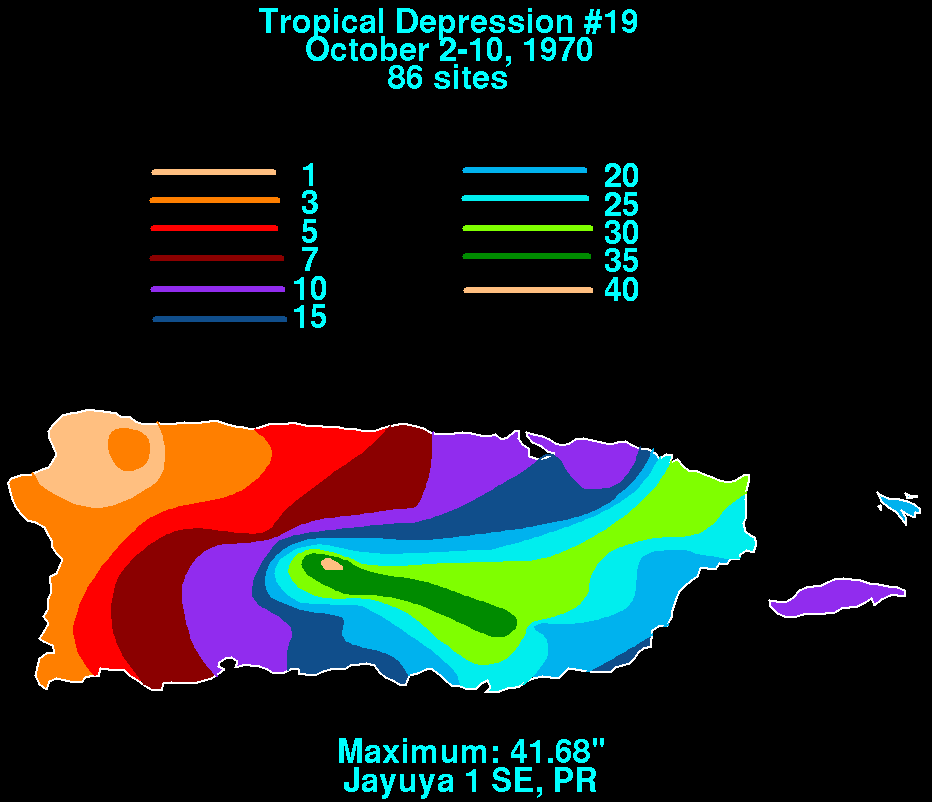
The depression produced heavy rainfall in the Lesser Antilles, reaching 12 in on Barbados; it left three deaths and moderate damage on the island. Another death was reported in the United States Virgin Islands. Torrential rainfall on Puerto Rico inflicted heavy damage, totaling $65 million (1970 USD$, USD). The highest precipitation total was 41.68 in in Jayuya, of which 17 in fell in a 24‑hour period. Most of the damage can be attributed to damaged sugar cane and coffee crops. At least 18 people were killed on the island, and the system was considered one of the worst disasters in Puerto Rican history.
Meteorological history
The origins of the depression were identified as a tropical wave on September 22 over western Africa. The system exited the west coast of Africa the next day, and on September 24 it developed into a tropical depression about 95 mi southwest of Conakry, Guinea. The depression moved generally westward, gradually intensifying to attain peak winds of 35 mph by September 25. A nearby upper-level trough — an elongated area of low pressure — hindered further strengthening, and on October 1 the depression struck the island of Saint Lucia. As it crossed the Lesser Antilles, its winds and barometric pressure approached the values of a tropical storm.
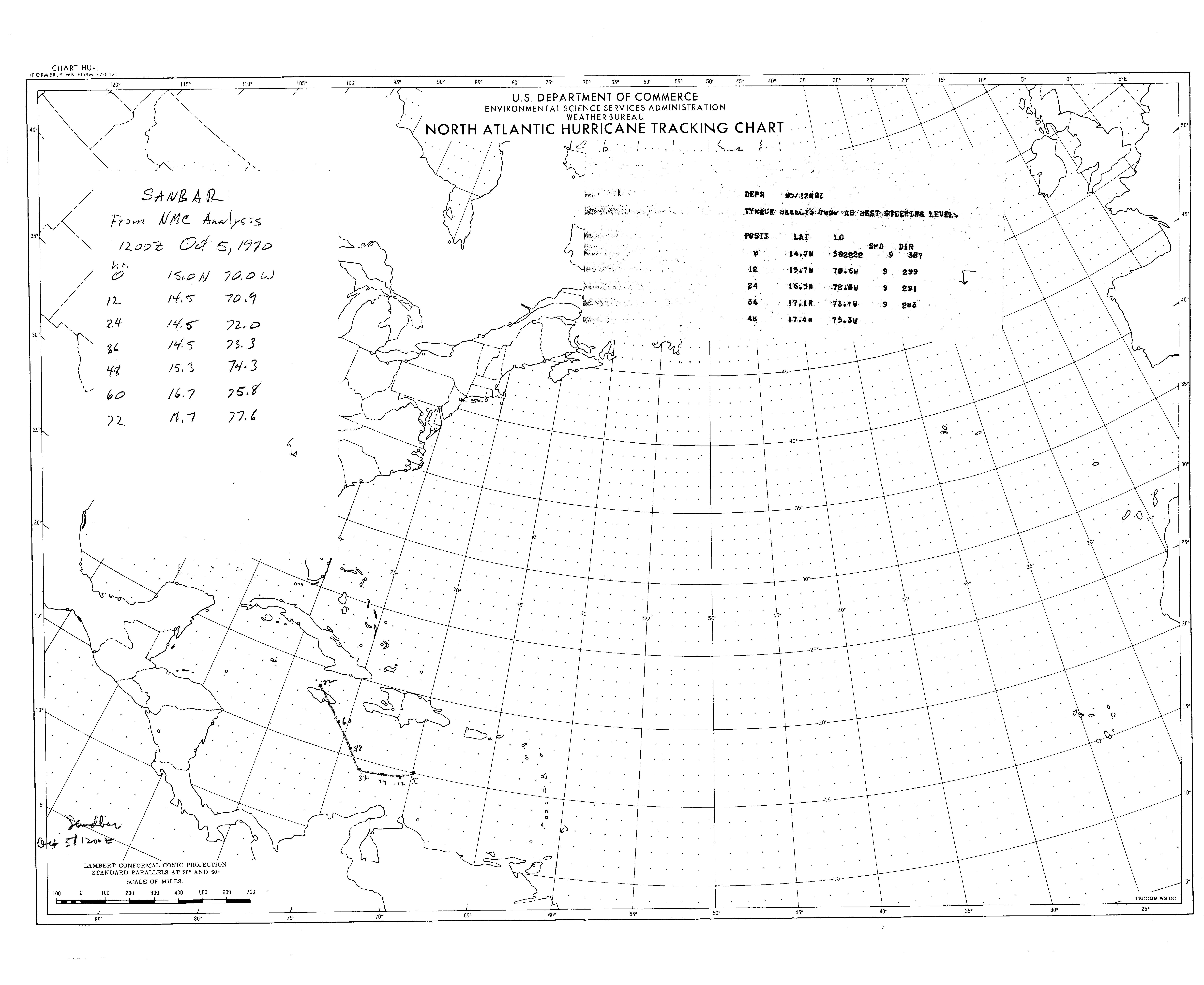
In the Caribbean, the trough caused the depression to slow to a westward drift, resulting in several days of heavy rainfall in the region, particularly Puerto Rico. One forecast on October 5 anticipated a continued westward track toward Jamaica. Instead, the depression turned to the north the next day under the influence of the upper-level westerlies. On October 7, the depression attained its lowest pressure of 1000 mbar (29.53 inHg), off the southern coast of Hispaniola. The next day, it made landfall in Peravia Province in the Dominican Republic. After crossing the country and exiting into the Atlantic Ocean, the depression accelerated to the northeast, followed by an eastward turn on October 10 before another turn to the northeast. By October 12, the depression could no longer be classified as a tropical cyclone, although satellite imagery indicated that its remnants continued northeastward. On October 15 the system turned to the west, suppressed by a strong high-pressure area to its north. It re-intensified while crossing through the Azores, attaining a pressure of 994 mbar. It turned to the northwest and was absorbed into the westerlies on October 20.
Preparations, impact, and aftermath
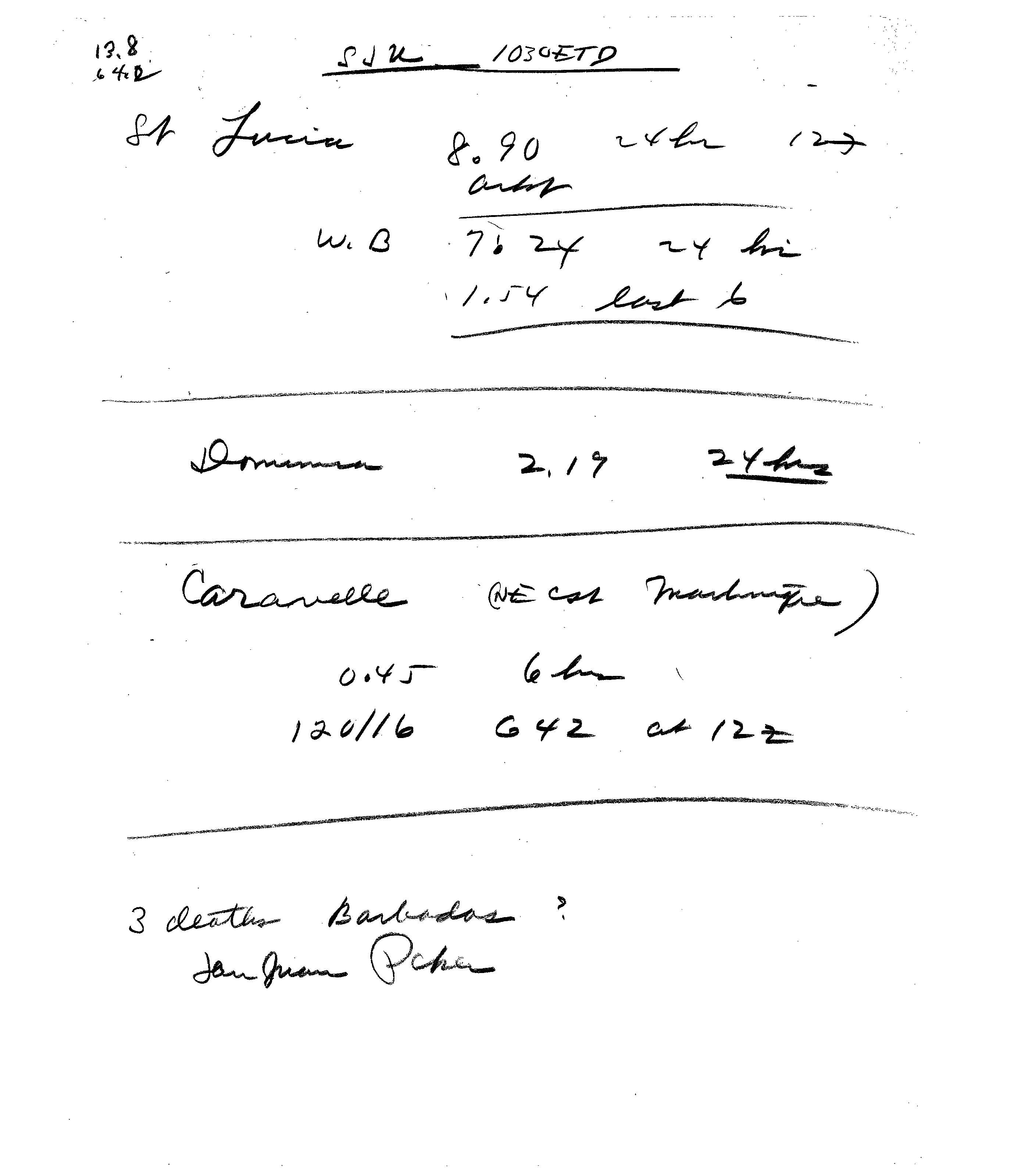
Around October 3, forecasters advised residents on islands from Barbados and St. Vincent through Guadeloupe to prepare for floods, high seas, and gale-force gusts. On October 10, a warning to be on guard against gusts was issued to owners of light aircraft in Puerto Rico and the Virgin Islands. As it crossed through the islands, the depression produced heavy rainfall, including 8.90 in on Saint Lucia, 2.19 in on Dominica, and 12 in on Barbados. In the latter island, the depression left 200 people homeless, caused $500,000 in damage, and killed three people.
Heavy rains impacted the U.S. Virgin Islands, including a total of 11.4 in recorded by the National Park Service on Saint John. The rains caused flooding across the territory, washing out roads and destroying several houses. One boy was swept away by the floodwaters, although he was rescued by two people. A girl was also swept by the floods and drowned. The desalination plant on Saint Croix was damaged during the floods, temporarily stopping the supply of drinking water; water from Puerto Rico had to be shipped to provide the 700,000 gallons needed daily. On St. Thomas, the main airport was closed for several days.
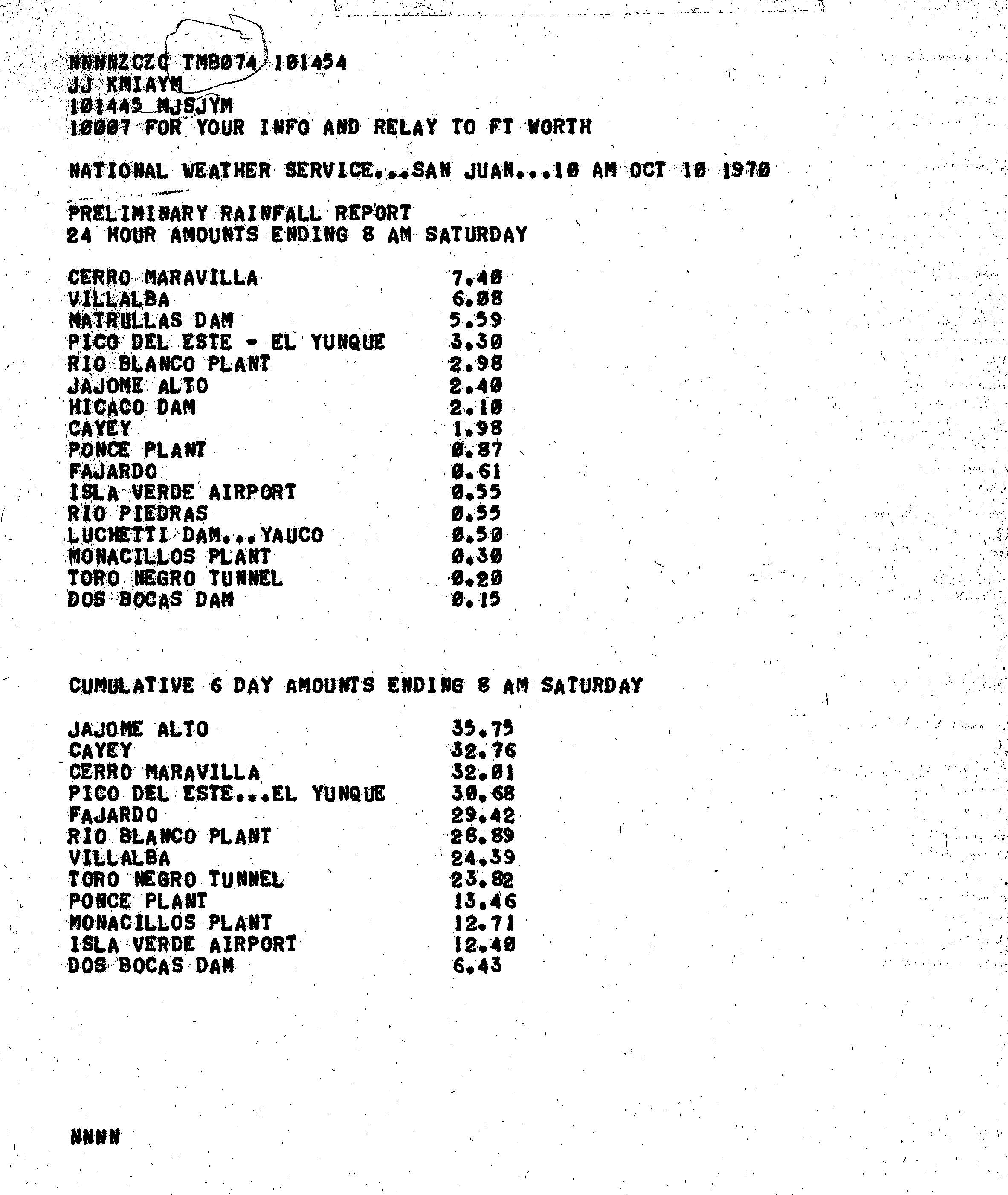
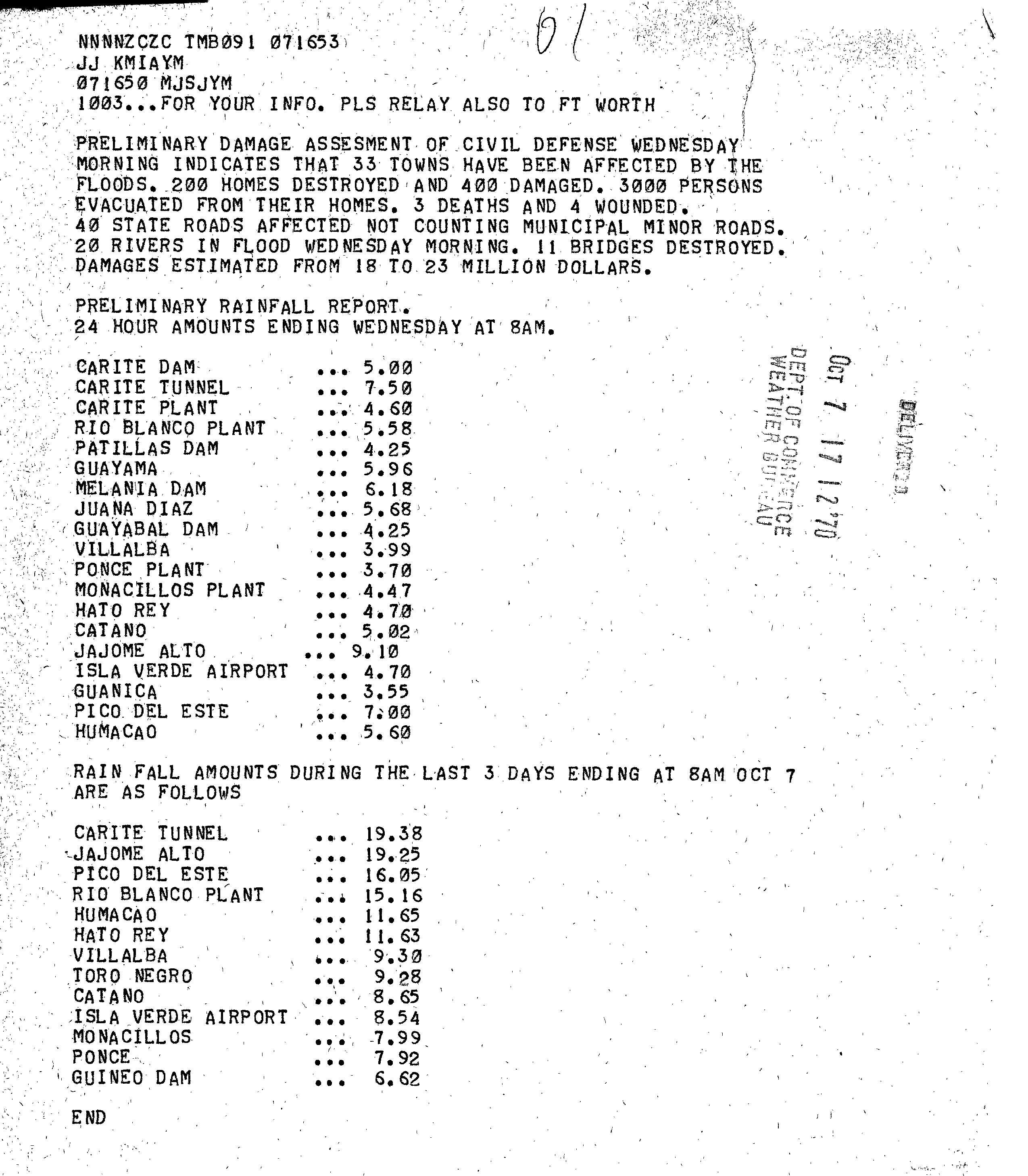
For six days, the depression dropped rainfall across the northern Caribbean, particularly in Puerto Rico. The highest overall rainfall total was 41.68 in, recorded at a station near Jayuya in the center of the island. This was the highest rainfall total from a tropical cyclone on record in Puerto Rico, surpassing that of the deadly hurricanes of 1928 and 1899, which produced 29.6 in and 23.0 in, respectively. The station at Jayuya also recorded 17 in in 24 hours. Four other locations reported over 30 in. Such heavy rainfall caused 20 rivers to swell above flood stages.
The depression left 10,000 people homeless across Puerto Rico, with 3,000 housed in emergency shelters in San Juan. At least 600 houses were destroyed and another 1,000 damaged. Damage was particularly severe in Barceloneta, Aibonito, and Coamo. Across the island, the depression affected at least 40 state roads, with fifteen blocked by landslides, and eleven bridges destroyed. Flooding forced the closure of Puerto Rico Highway 2 between Manatí and Barceloneta. The depression left more than $40 million (1970 USD$, USD) in crop damage, primarily to sugarcane and coffee, as reported by William R. Poage, the chair of the House Agricultural Committee. Throughout Puerto Rico, the depression caused damage estimated at $65 million (1970 USD$, USD), as well as at least 18 confirmed fatalities. A report six months after the depression indicated there were 34 people missing, although their status is unknown.
In the aftermath of the disaster, Luis A. Ferré, the Governor of Puerto Rico, declared a state of emergency over the whole island, asking for $10 million (1970 USD) in federal aid. On October 12, two days after the rains subsided, President Richard Nixon declared the territory as a disaster area. Ferre also appeared in a telethon to raise funds for the homeless. The National Guard, the Red Cross, and other volunteer groups helped the displaced persons. In all, the disaster was described as one of the worst in Puerto Rico history. The Governor of the Virgin Islands, Melvin Evans, requested aid similar to Puerto Rico, and that territory was also declared a federal disaster area about a week after the rains ended. The heavy rainfall in the Virgin Islands caused a marked dinoflagellate algal bloom in the days after the rains ended.
References
References
- Frank, Neil L.. (April 1971). "Atlantic Tropical Systems of 1970". [[American Meteorological Society]].
- Roth, David M.. (2008-09-24). "Tropical Depression #19 - October 2–10, 1970". [[Hydrometeorological Prediction Center]].
- National Hurricane Center. (1970-10-05). "SANBAR Forecast Track". National Oceanic and Atmospheric Administration.
- (1970-10-03). "Depression Hits Windwards". [[Daytona Beach Morning Journal]].
- (1970-10-09). "13 Dead In Floods Around Caribbean". [[Virgin Islands Daily News]].
- (1970-10-30). "Impact from the Tropical Depression". National Hurricane Center.
- (1970-01-06). "Heavy Floods Hit Puerto Rico".
- Office of U.S. Foreign Disaster Assistance. (August 1993). "Significant Data on Major Disasters Worldwide 1990-present".
- (1970-10-09). "Island Cleaning Up After Heavy Deluge". The Virgin Islands Daily News.
- (1970-10-10). "Evans Says Islands Major Disaster Area". The Virgin Islands Daily News.
- (1970-10-09). "Caribbean Flood Deaths Mount". [[Spartanburg Herald-Journal]].
- Orlando Pérez. (1970). "Notes on the Tropical Cyclones of Puerto Rico". San Juan, Puerto Rico National Weather Service.
- Puerto Rico National Weather Service. (1970-10-07). "Preliminary Rainfall Report".
- (1970-10-07). "Preliminary Damage Assessment". National Hurricane Center.
- (1970-10-12). "Puerto Rico Starts Flood Cleanup Job". [[Spokesman Review]].
- (1970-10-10). "Puerto Rico Reeling From 4 Day Floods". [[Virgin Islands Daily News]].
- (1970-10-08). "Floods Kill 10 In Barbados, Puerto Rico". Morning Record.
- (1970-10-09). "Puerto Rico Asks U.S. Flood Relief". [[Palm Beach Post]].
- (2005-05-20). "Puerto Rico Heavy Rains, Flooding". Federal Emergency Management Agency.
- (2005-05-20). "US Virgin Islands Heavy Rains, Flooding". Federal Emergency Management Agency.
- (June 1972). "Some Phytoplankton Blooms in the Virgin Islands". Caribbean Journal of Science.
This article was imported from Wikipedia and is available under the Creative Commons Attribution-ShareAlike 4.0 License. Content has been adapted to SurfDoc format. Original contributors can be found on the article history page.
Ask Mako anything about 1970 Caribbean–Azores hurricane — get instant answers, deeper analysis, and related topics.
Research with MakoFree with your Surf account
Create a free account to save articles, ask Mako questions, and organize your research.
Sign up freeThis content may have been generated or modified by AI. CloudSurf Software LLC is not responsible for the accuracy, completeness, or reliability of AI-generated content. Always verify important information from primary sources.
Report