From Surf Wiki (app.surf) — the open knowledge base
1939 New York World's Fair
World's fair held in New York City

World's fair held in New York City
| Field | Value |
|---|---|
| class | Universal |
| category | 2 |
| image | Joseph Binder's poster for the 1939 New York World's Fair.jpg |
| caption | Poster by Joseph Binder |
| year | 1939 |
| name | New York World's Fair |
| motto | The World of Tomorrow |
| area | 1202 acre |
| organized | Grover Whalen |
| cnt | 62 |
| org | 1,400 |
| visitors | 45 million |
| country | United States |
| city | New York |
| venue | Flushing Meadows–Corona Park |
| coord | |
| open | (first season) |
| (second season) | |
| close | (first season) |
| (second season) | |
| prevexpo | Exposition Internationale des Arts et Techniques dans la Vie Moderne |
| prevcity | Paris |
| nextexpo | Exposition internationale du bicentenaire de Port-au-Prince |
| nextcity | Port-au-Prince |
| suppl | Specialized Expositions |
| prevsuppl | Second International Aeronautic Exhibition (1938) |
| prevsupcity | Helsinki |
| nextsuppl | International Exhibition on Urbanism and Housing (1947) |
| nextsupcity | Paris |
| simuni | Golden Gate International Exposition |
| simspe | Exposition internationale de l'eau in Liège |
(second season) (second season) The 1939 New York World's Fair (also known as the 1939–1940 New York World's Fair) was an international exposition held at Flushing Meadows–Corona Park in Queens, New York City, United States. The fair featured exhibitions, activities, performances, films, artworks, and food presented by 62 nations, 35 U.S. states and territories, and more than 1,400 organizations and companies. Slightly over 45 million people attended across two seasons. Themed to "the world of tomorrow" and promoted with the slogan "Dawn of a New Day", the 1202 acre fairground was divided into seven color-coded zones and two standalone focal exhibits, with approximately 375 buildings.
Plans for the fair were first announced in September 1935, and the New York World's Fair Corporation (WFC) began construction in June 1936. The fair officially opened on April 30, 1939, coinciding with the 150th anniversary of the first inauguration of George Washington. Four months after the fair’s opening, World War II began in Europe, prompting several exhibitions to close or scale back. Although the fair ultimately drew more than 45 million visitors, it recouped only 32% of its original cost. When the exposition closed on October 27, 1940, most pavilions were demolished or removed, while others were relocated or reused during the 1964 New York World's Fair.
Throughout its run, the fair hosted a wide array of cultural programming, including themed celebration days for participating nations, states, businesses, and organizations. Musical performances, sculptures, and visual artworks were displayed throughout the grounds and within individual pavilions. Numerous restaurants and concession stands operated across the site, and a variety of consumer products such as new household appliances and early electronic devices were showcased to the public. The exposition stimulated significant spending within New York City and contributed to the broader development of Queens. Many artifacts from the fair survive in museums and private collections, and the event has been referenced or dramatized in film, television, and other media.
Development
New York City had hosted the United States' first world's fair, the Exhibition of the Industry of All Nations, in 1853–1854. The city did not host another world's fair for 85 years. The site of the 1939 World's Fair, Flushing Meadows–Corona Park in Queens, was originally a natural wetland straddling the Flushing River before becoming an ash dump in the early 20th century. New York City Parks Commissioner Robert Moses first conceived the idea of developing a large park in Flushing Meadows in the 1920s. Although the neighborhoods around Flushing Meadows contained residential developments, the meadow itself remained undeveloped and isolated. Meanwhile, the 1933 Century of Progress exposition in Chicago had boosted that city's economy, prompting businesspeople in New York City to consider a similar fair.
Planning
The New York Times writes that the civil engineer Joseph Shadgen came up with the idea for the World's Fair in 1934, while talking with his daughter. By early 1935, a group led by the municipal reformer George McAneny was considering an international exposition in New York City in 1939. Though the date coincided with the 150th anniversary of George Washington's first inauguration, Moses said the date was "an excuse and not the reason" for the fair. That September, the group announced plans to spend $40 million to host an exhibition at the 1003 acre Flushing Meadows site. The Flushing Meadows site had been selected because of its large size and central location, and because the city already owned 586 acre nearby. The New York City Board of Estimate approved the use of Flushing Meadows as a fairground on September 23, and Moses directed municipal draftsmen to survey the site.
Mayor Fiorello La Guardia pledged financial support for the fair that October, and the New York World's Fair Corporation (WFC) was formed to oversee the exposition on October 22, 1936. The WFC elected McAneny as its president, and two contractors were hired that December to conduct preliminary surveys. State lawmaker Herbert Brownell Jr. introduced legislation in January 1936, which allowed the WFC to lease Flushing Meadows from the city government. By then, the fair was estimated to cost $45 million. To oversee the fair's development, McAneny organized a committee, which initially advocated for a single massive building. The project remained stalled during early 1936, but the New York State Legislature ultimately voted in April to allow the city to lease out Flushing Meadows.
Grover Whalen replaced McAneny as the WFC's chairman in April 1936 and was later elected as the agency's full-time president. J. Franklin Bell drew preliminary plans for the fair, and the WFC appointed seven men to devise a plan for the fairground. At the end of the month, the city government announced plans to sell $7 million in bonds, and the state pledged $4.125 million for the project. In addition, the WFC issued $26,862,800 in bonds. The New York City Board of Estimate appropriated $308,020 to begin landscaping the site that May, and city officials acquired another 372 acre through eminent domain. The WFC dedicated the fairground site on June 4, 1936, shortly before the city finalized its lease of Flushing Meadows to the WFC.
Construction
Work on the World's Fair site began on June 16, 1936, and a groundbreaking ceremony for the fairground took place on June 29. The WFC established seven departments and thirteen committees to coordinate the fair's development. The fair was planned to employ 35,000 people. The construction of the fairground involved leveling the ash mounds, excavating Meadow and Willow lakes, and diverting much of the Flushing River into underground culverts. The dirt from the lake sites was used as additional topsoil for the park. Workers also transported soil from Westchester County, New York, to the fairground. Four hundred fifty workers were employed on three eight-hour shifts. The rebuilt landscape was to be retained after the fair. The city, state, and federal governments also worked on 48 infrastructure-improvement projects, such as highway and landscaping projects, for the fair.
To promote the fair, the WFC established advisory committees with members from every U.S. state. Several baseball teams wore patches promoting the fair during the 1938 Major League Baseball season, while the businessman Howard Hughes named an airplane after the fair and flew it around the world in 1938. Helen Huntington Hull led a women's committee that helped promote and develop the fair. New York license plates from 1938 were supposed to have slogans advertising the fair, but a city judge deemed the slogans unconstitutional. New York license plates from 1939 and 1940 also advertised the fair. Local retailers also sold more than $40 million worth of merchandise with World's Fair motifs, and the U.S. government issued stamps depicting the fair's Trylon and Perisphere. World leaders delivered "greetings to the fair" as part of the "Salute of the Nations" radio program, and the WFC also broadcast 15-minute-long "invitations to the fair", featuring musical entertainments and a speech by Gibson. In addition, the WFC distributed a promotional film, Let's Go to the Fair.
1936 and 1937
.jpg)
The WFC's board of design reviewed several proposed master plans for the site, and the corporation had relocated the last occupants of the fairground site by August 1936. The WFC launched a design competition for several pavilions that September and selected several winning designs two months later. The WFC announced details of the fair's master plan that October, which called for a $125 million exposition themed to "the world of tomorrow". Later that month, the WFC signed construction contracts for the fairground's first building. At that point, only a small number of fairground buildings had been approved.
In November 1936, France became the first nation to announce its participation, and the city government began selling bonds for the fair. The International Convention Bureau endorsed the 1939 World's Fair, allowing the bureau's 21 member countries to host exhibits there. Lehman also invited the governors of other U.S. states. By the beginning of 1937, eleven hundred concessionaires had applied for concessions at the fair, and nine buildings were under construction. The WFC unveiled a model of the fairground at its Empire State Building headquarters that March. Workers had finished grading and filling the World's Fair site by April, and they began planting trees. That month, AT&T became the first company to lease a pavilion at the fair, and work officially began on the first building, the administration structure. In addition, the WFC began auctioning off the fairground's concession spaces, and workers also began planting trees in early 1937.
Whalen announced plans in June 1937 for a 280 acre amusement zone at the south end of the fairground, and work on the first non-commercial pavilion, the Temple of Peace, began in July. By then, 89 buildings were under construction, and 86% of the fairground sites had been leased. Utah became the first U.S. state to lease space in the fair's Hall of States that September, while Missouri was the first state to lease space for a standalone building. Whalen also traveled to Europe to invite European countries to the fair. Various fairground buildings were being developed, as well as the Trylon and Perisphere, the fair's icons. That December, the Ford Motor Company became the first automobile manufacturer to lease space at the fair; by then, the WFC had received commitments from 60 nations.
1938 and 1939

The WFC awarded the first fair concession in January 1938. At that point, Whalen was making plans for the fair's opening ceremony. Whalen wanted to have 100 buildings under construction by the end of April, and the WFC planned to spend $10 million upgrading the utilities. Work on the Perisphere, the fair's theme building, began in early April, along with work on the first foreign-government structure. The same month, the WFC leased out the last vacant sites in the fair's Government Zone. The city hosted a parade with one million spectators on April 30, 1938, exactly a year before the planned opening, and the WFC hosted a fireworks show the next week. That May, the WFC began allowing visitors to inspect the fairground on weekends for a fee. The structures were all supposed to be completed by the end of March 1939, giving one month for exhibitors to fit their pavilions out.
The WFC awarded contracts to 30 amusement-ride operators in June 1938, following months of disputes over the concessions. The WFC continued to issue concessions for eateries and amusement rides. By late 1938, workers were painting murals on buildings, and the subway stations serving the fairground were being completed. That October, the Heinz Dome became the first commercial exhibit to be completed, and 80% of the fairground's 3 e6ft2 of exhibit space had been leased. Leasing lagged in the amusement zone; by that December, only two-thirds of the ride concessions had been leased.
Whalen announced in January 1939 that the fairground was more than 90% complete, though work on one-third of the amusement concessions had not started. The fair had attracted 1,300 industrial exhibitors and 70 concessionaires. In addition, 62 nations and 35 U.S. states or territories had leased space at the fair. That March, Whalen announced plans to spend $1 million on shows and miniature villages in the Amusement Area. The lights on the fairground were first turned on three weeks before the fair's scheduled opening. In conjunction with the fair, La Guardia issued a proclamation declaring April 1939 as "Dress Up and Paint Up Month" in New York City. Sixteen thousand workers were putting final touches on the site by mid-April, and foreign nations were delivering $100 million worth of exhibits to the fair. Thousands of additional workers were employed toward the end of April.
Operation
The fairground ultimately cost , and Whalen anticipated that 60 million people would visit. Five major newsreel companies were hired to provide newsreel coverage, and the Crosley Corporation and WNYC both had radio broadcasting studios there. The WFC hired Exposition Publications to print a guidebook, souvenir book, and daily programs, and it promoted 17 other books and news stories about the fair. The Bureau International des Expositions (BIE) retroactively recognized the 1939 World's Fair as an official World Expo, even though the BIE's rules permitted official Expos to run for only one year.
Whalen agreed to hire only union laborers to install exhibits on the fairground; in exchange, several trade unions agreed to buy the WFC's bonds. Free emergency services were provided on site by dozens of doctors and nurses, and there were six first-aid stations, a mobile X-ray machine, and five ambulances. The fairground was covered by a temporary New York City Police Department (NYPD) precinct and a temporary New York City Fire Department (FDNY) battalion. In addition, the Queens County Court was temporarily expanded to hear criminal cases relating to the fair.
1939 season
Preparations and opening

For the 1939 season, the WFC charged 75 cents per adult and 25 cents per child; the agency also sold season tickets, multi-visit tickets, and souvenir ticket books. Manhattan's borough president, Stanley M. Isaacs, had wanted the WFC to give students free admission, but Moses opposed the proposal. Whalen began selling discounted advance tickets in February 1939, which were sold by 1,000 retailers in the New York metropolitan area. Journalists could visit the fairground free of charge, but no other free tickets were distributed. The WFC had to print additional souvenir books due to high demand. Though there was an upcharge fee for some of the exhibits and attractions, three-fourths of the original attractions did not charge any extra fees.
On April 30, 1939, exactly 150 years after Washington's first inauguration, the fair formally opened with a speech by President Roosevelt. The fair received 600,000 visitors on its first day, far short of the one million visitors that the WFC had predicted. Many major attractions in the Amusement Area were incomplete, and only 80% of the structures were ready. The fair accommodated one million visitors in its first four days. By mid-May, the fair was 90% finished, but many of the amusement attractions were still incomplete. The WFC's operations department oversaw the remaining work.
May to October
In early May, the WFC began selling 10-cent children's tickets once a week, which helped increase children's attendance significantly. At La Guardia's behest, the New York City Board of Education operated guided tours in which school classes could visit the fair for free. The WFC opened more restaurants late that May. Several exhibitors alleged that labor unions had charged exorbitant prices for labor at the fair, and, due to concerns over sexually explicit content, several of the fair's shows were raided. That June, the WFC established a committee to oversee the amusement area, and amusement concessionaires agreed to offer discounted ride tickets once a week. The WFC also sold discounted 50-cent tickets to organizations and businesses.
Lower-than-expected attendance prompted Whalen to fire hundreds of employees in July 1939, and there were also proposals to reduce performers' salaries. The same month, the WFC began selling discounted "combination tickets" with snacks and admission to multiple attractions, as well as "bargain books", with food vouchers and admission tickets. At the request of amusement-ride operators, the WFC also considered reducing admission prices. At the beginning of August, admission was reduced during weekends, and the WFC started selling discounted tickets at night. With daily attendance averaging 129,000—less than half the original estimate of 270,000—the WFC was unsure if the fair would run for another season. By mid-August, the WFC was asking bondholders to lend more money, and the bondholders agreed to forgo their right to collect a portion of the fair's admission revenue. A writer for Variety magazine said local residents tended to avoid the fair's restaurants and that the amusement area deterred visitors with more refined tastes.
In September 1939, the WFC began inviting foreign exhibitors to return for the second season, and it notified the city government of its intention to extend its lease. The Carrier Corporation was the first industrial exhibitor to renew its lease. While numerous foreign exhibitors curtailed their operations, Whalen traveled to Europe, asking exhibitors to return for the following season. In the final weeks of the 1939 season, visitors increasingly came from outside the New York City area. The final week was celebrated with a Mardi Gras–themed festival. When the first season ended on October 31, 1939, the WFC had recorded 25,817,265 paying guests. Attendance had exceeded 100,000 on 114 days, and the fair employed up to 25,000 people during that season. At the end of the first season, the WFC owed bondholders $23.5 million, and it had $1.13 million on hand. In addition, the fair had handled 8.52 million phone calls and 3.3 million pieces of mail. Around 150 fairgoers had been arrested during the first season, only one of whom was charged with a felony.
Off-season

After the 1939 season ended, many exhibits were removed for safekeeping and the fairground's utilities were turned off. Most of the fair's 2,800 employees were reassigned to other positions, though the WFC hired a skeleton crew and allocated $3.3 million to maintain the fairground during the off-season. The FDNY and NYPD watched over the fairground, and many exhibitors also hired their own security guards. Because of lower-than-expected attendance, the WFC agreed to reduce adult admission prices to 50 cents. The WFC agreed to redesign the Amusement Area to emphasize the rides there. The corporation also tried to attract visitors within an overnight drive from New York City, rather than guests from further afield.
At the requests of several U.S. state exhibitors, the WFC halved rent rates for U.S. state pavilions during the second season. Despite the uncertainty caused by the ongoing war, many European countries expressed interest in returning. In January 1940, Finland became the first country to agree to reopen its pavilion, while West Virginia was the first U.S. state to lease additional space. More than thirty nations had agreed to return by the end of the next month, though 11 nations and nine U.S. states withdrew. Most commercial exhibitors agreed to reopen their exhibits. Almost all major exhibitors with their own pavilions renewed their leases for the 1940 season, while most of the exhibitors who had withdrawn were more likely to be renting space from the WFC.
The fair was rebranded as the World's Fair 1940 in New York for its second season. The WFC decided to focus more heavily on amusement attractions, and it added theaters and free shows. The Amusement Area was reduced in size and rebranded as the "Great White Way", a reference to Broadway theatre. The transportation zone was renovated for more than $2 million. Several exhibits were added or expanded, and some pavilions were repaired. Low-cost eateries were also added. The fair's construction superintendent estimated that the upgrades would cost $8 million. The WFC began selling one million souvenir ticket books on April 11, 1940, and the next week, it began selling discounted tickets to students across the U.S. By the end of April, all of the attractions in the Amusement Area had been leased, and half a million advance tickets had been sold or ordered.
1940 season
Originally, the second season was supposed to open on May 25, 1940, but following requests from organizations, the WFC agreed to open the fair two weeks earlier. The fair's police force was downsized due to low crime rates, and the overall number of staff was reduced to 5,500. According to Gibson, at least 40 million visitors needed to attend during 1940 for the WFC to break even. In contrast to the more formal atmosphere that had characterized the first season, the second season had a more informal, "folksy" atmosphere. Additionally, the international area included exhibits from 43 countries, plus the Pan-American Union and League of Nations. Adults paid 50 cents, while children paid 25 cents; children's admission was reduced to 10 cents on "Children's Days". To entice people to attend the fair, several local business groups and hotels randomly gave 170 automobiles to visitors. The World's Fair reopened on May 11 and recorded 191,196 visitors on that day. Early in the 1940 season, the WFC sold off most of its outstanding debt from the previous season.
By the end of June, revenue was lagging projections, so the WFC dismissed 500 employees. Due to an increase in federal tax rates, amusement concessionaires increased ticket prices. The fair's restaurateurs elected to pay the extra taxes rather than raise food prices. On July 4, 1940, two NYPD officers investigating a time bomb at the British Pavilion died when the bomb detonated. Later the same month, the WFC began surveying the fair's buildings, with plans to demolish them. In large part due to inclement weather, some concessionaires considered closing their attractions that August. Attendance lagged by nearly 3 million compared with the previous season. Bondholders agreed to waive $14.5 million of the WFC's debt. The WFC also began selling off materials and memorabilia from the fair. Daily attendance increased gradually, reaching 10 million visitors by the end of August; by then, Gibson said the fair had made over $2.5 million. The WFC had drawn up detailed plans for clearing the site by the beginning of October, and the corporation's executive leadership oversaw the site-clearing process.
To promote the fair, hundreds of American newspapers printed discounted tickets; the promotion attracted nearly 350,000 visitors on a single day. The city government also provided free tickets to adults who were receiving welfare payments through the Home Relief program. By the middle of that month, the fair's second season had recorded a $4.15 million net profit. In the fair's last week, the WFC hosted extravagant shows such as fireworks displays. The fair had 537,952 visitors on its final day, October 27, 1940. The day afterward, passersby were allowed to tour the grounds for $2. In total, the fair had recorded 19,115,713 million visitors during 1940, and attendance had exceeded 100,000 on only 59 days. The fair had attracted just over 45 million visitors across both seasons. The 1940 season also recorded little crime, with 96 arrests; the July 4 bombing had been the only violent crime. File:1939-40 World's Fair, New York ticket (front).jpg|This 1940 general admission ticket also included visits to "5 concessions" (listed on backside) File:Back of 1940 New York Worlds Fair Ticket.jpg|Ticket backside File:US 853.jpg|Trylon and Perisphere on 1939 US stamp
Fairground

The fairground was divided into seven geographic or thematic zones, five of which had "focal exhibits", and there were two focal exhibits housed in their own buildings. The plan called for wide tree-lined pathways converging on the Trylon and Perisphere, the fair's symbol and primary theme center. The Trylon and Perisphere were the only structures on the fairground that were painted completely white; the buildings in the surrounding zones were color-coded. The fairground had 34 mi of sidewalks and 17 mi of roads, in addition to dozens of miles of sewers, water mains, gas mains, and electrical ducts. About 850 phone booths were scattered across the fairground. There were 11 entrances to the grounds during the 1939 season, and 13 entrances during the 1940 season.
Landscape features
From the start, Moses wanted to convert the site into a park after the fair, and the fairground's landscape architect, Gilmore David Clarke, had designed the fairground with this expectation in mind. The central portion of the old ash dumps became the main fairground, while the southern section of the dumps became the Amusement Area. The fairground used up to 400000 yd3 of topsoil, as well as salty, acidic soil dredged from the bottoms of the lagoons. The fairground included 250 acre of lawns and a wide range of topiary and deciduous trees. Around 10,000 trees were transplanted to the fairground, of which more than 97 percent survived the 1939 season. There were no evergreen trees because it was not open during the winter, and the site also did not have rare plants.
The fairground contained one million plants, one million bulbs, 250,000 shrubs, and 10,000 trees. The site had 7,000 American camassias, 48,000 scillas, and 50,000 narcissi, and there were several formal gardens as well, with roses, yew, and other plants. In addition, the Netherlands donated one million tulip bulbs; as part of an agreement with the Dutch government, the tulips were destroyed and replaced with summertime plantings the month after the 1939 season opened. The Washington Post estimated that the WFC spent some on plants at the fair. There were also around 50 landscaped gardens. Some of these fountains included water features such as fountains, pools, and brooks. For the 1940 season, annuals and trees were added instead of the tulips, and a woodland garden was added.
Despite the fair's futuristic theme, the fairground's layout—with streets radiating from the theme center—was heavily inspired by classical architecture. Some streets were named after notable Manhattan thoroughfares or American historical figures, while others were named based on their function. A central esplanade called Constitution Mall was planned as part of the fairground, running between the Grand Central Parkway to the west and Lawrence Street to the east. A curving road named Rainbow Avenue connected the color-coded zones. At the eastern end of the mall was the Central Mall Lagoon, an 800 ft elliptical lake with fountains. In the southern half of the fairground, the Flushing River was dredged to create Meadow and Willow lakes. Several of the fair's fountains had illuminated water jets with gas burners. Nightly light shows, with music, took place at the Lagoon of Nations as well.
Pavilions and attractions{{Anchor|Attractions|Pavilions}}
Main article: 1939 New York World's Fair pavilions and attractions
Pavilions and attractions generally fell into one of three categories: exhibits sponsored by either the WFC or private companies, government exhibits, and amusement attractions. The WFC subleased the land to exhibitors, charging different rates based on the sites' proximity to major paths. There were 1,500 exhibitors on the fair's opening day, representing about 40 industries.
The fair had about 375 buildings, of which 100 were developed by the WFC. The commission reserved about 500,000 ft2 for its own structures. The buildings included design features such as domes, spirals, buttresses, porticos, rotundas, tall pylons, and corkscrew-shaped ramps. Many buildings' steel frames were bolted together so they could be easily disassembled. Most of the attractions were in the central exhibit area, covering 390 acre. Because the fairground was built atop swampy land, many of the largest buildings were placed on steel-and-concrete decks, pilings, or caissons. The pavilions were mostly illuminated by artificial light fixtures, including fluorescent lighting tubes, mercury lamps, and fluorescent pylons. The fairground also had a marina, as well as hundreds of fountains, toilets, and benches.
Zones
The Trylon and Perisphere theme center, designed by Wallace Harrison and Max Abramovitz, consisted of a 610 ft tower and a 180 ft sphere. North of the theme center was the Communications and Business Systems Zone. The Community Interest Zone, immediately to the east, showcased several trades or industries that were popular among the public at the time. The Government Zone occupied the east end of the fair; it contained a centrally located Court of Peace, a Lagoon of Nations, and a smaller Court of States. Southwest of the Government Zone was the Food Zone, composed of 13 buildings related to that industry.
The Production and Distribution Zone was dedicated to showcasing industries that specialized in manufacturing and distribution. The Transportation Zone was located west of the Theme Center, across the Grand Central Parkway, connected to the rest of the fairground by two crossings. The Transportation Zone included large exhibits for the motor-vehicle aviation, railroad, and maritime industries. The Amusement Area was located south of the World's Fair Boulevard, on a horseshoe-shaped site surrounding Meadow Lake, and it was divided into more than a dozen themed zones. The Amusement Area contained numerous bars, restaurants, miniature villages, musical programs, dance floors, rides, and arcade attractions.
Standalone exhibits and structures
Two focal exhibits were not located within any zone. The first was the Medical and Public Health Building on Constitution Mall and the Avenue of Patriots (immediately northeast of the Theme Center), which contained several halls dedicated to health. The other was the Science and Education Building, just north of the Medical and Public Health Building. The administration building was at the western end of the fairground, and there was also a Manufacturers Trust bank branch.
Transportation
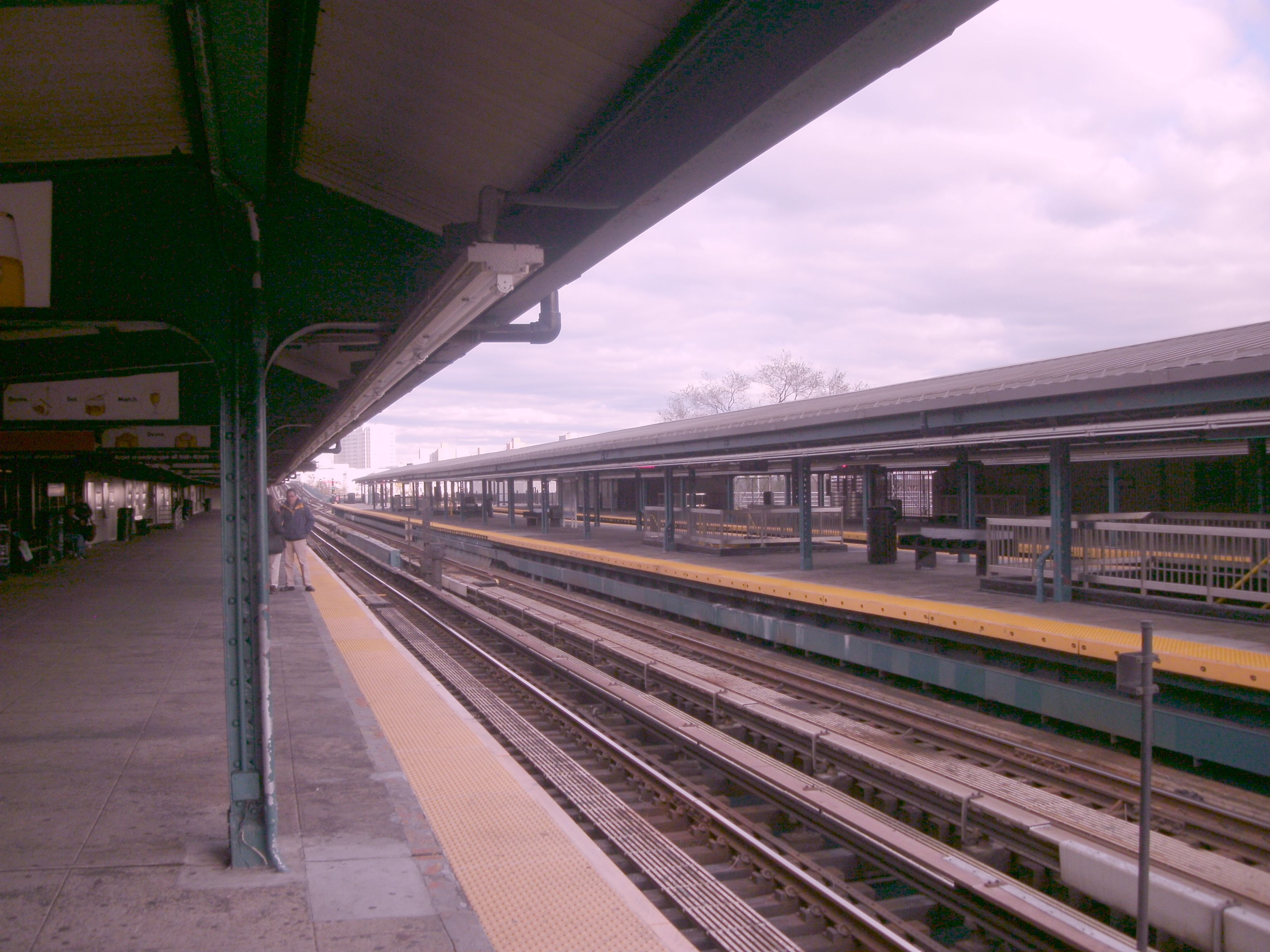
There were also several modes of transit traveling around the fairground itself. General Motors manufactured 100 buses specifically for the fair; Exposition Greyhound Lines operated the buses, which connected with each of the fairground's entrances and operated along seven routes. There were also tractor trains that traveled along the fairground's paths, as well as tour buses that gave one-hour-long tours of the fair. In addition, visitors could rent one of 500 rolling chairs, each of which had space for one or two people. Boats also traveled around Fountain Lake (now Meadow Lake), stopping at seven piers. For a fee, visitors could ride a 40-passenger motorboat across Meadow Lake to the Florida pavilion.
Several highways and roads were widened or extended in advance of the World's Fair. Markers were placed throughout the city to direct motorists to the fairground, and several highways were outfitted with amber lights. Maps also touted the fairground's proximity to five airports and seaplane bases. During the fair, the Civil Aeronautics Authority temporarily banned most planes from flying over the fairground, except for planes taking off or arriving at the nearby airports.
Culture
Themes and icons{{Anchor|Themes}}
The fair was themed to "the world of tomorrow". The colors blue and orange, the official colors of New York City, were chosen as the official colors of the fair. The fair's official seal depicted the Statue of Liberty with her torch, which was available in multiple color schemes. The fair's official flag was originally a triband with a blue bar flanked by orange bars; there was a white seal in the center of the blue bar.
Another theme of the fair was the emerging new middle class. The Westinghouse Electric Corporation produced the film The Middleton Family at the New York World's Fair, which depicted a fictional Midwestern family, the Middletons, taking in the fair. The Perisphere's Democracity exhibition envisioned middle-class "Pleasantvilles" arranged around a central hub.
Arts
Music
The WFC established a music advisory committee for the fair in 1937, which was led by the conductor Allen Wardwell. The music advisory committee proposed hosting a festival at the fairground and other places in New York City. About 500 groups signed up to perform at the fair, and music festivals also took place at Carnegie Hall and the Metropolitan Opera House in Manhattan. New York Times music critic Olin Downes was the fair's music director; he selected Hugh Ross to organize recitals and concerts at the Temple of Religion. Eugene La Barre led the World's Fair band, which was composed of 56 musicians, and the WFC held a competition to select three songs for the band to perform. Unlike in the 1939 season, the fair had no organized music program during 1940. Instead, the fair's orchestra played songs on request during 1940; on an average day, they received more than 1,200 requests and played over 200 songs.
Several theme songs were written for the fair, none of which caught on. William Grant Still recorded the song "Rising Tide", a three-minute tune that was played continuously during the 1939 season. "Dawn of a New Day", one of George Gershwin's final songs, was also recorded for the fair. La Barre's "For Peace and Freedom" was selected as the 1940 season's theme song.
Films and stage shows
The fair hosted eight musical shows during the 1939 season and seven musicals during 1940. For instance, Billy Rose staged his Aquacade musical, and the fair had a musical pageant called the American Jubilee. Exhibitors screened 612 films during the first season. The fair had 34 auditoriums during the 1939 season, which were operated by the governments of 19 nations, industrial exhibitors, and city-government agencies. During the 1940 season, the fairground had 30 cinemas with an estimated 6,200 seats. The fair showcased not only feature films but also non-theatrical motion pictures, including both silent films and sound films. These motion pictures were all shot on 16 mm and 35 mm film.
Visual art and sculpture
From the outset, the fairground was planned to include decorations, particularly large murals, sculptures, and reliefs. Initially, however, there were no plans to exhibit contemporary art at the fair. After observers criticized the fair's lack of formal art galleries, Whalen agreed to include a community art center, and the WFC also held art competitions for muralists and sculptors. Eight hundred contemporary American artworks of the 48 states were exhibited at the fair during 1939, and a rotating display of American art was showcased in 1940. At the Masterpieces of Art building, there were hundreds of rare paintings. During the 1940 season, even more paintings were shown. The WFC bought some of the fair's artwork and distributed it across the U.S. after the fair. In addition, foreign governments sponsored exhibits of sculptures and visual art in their respective pavilions. IBM's pavilion hosted contemporary art from 79 countries, the most popular of which was the Filipino artist Fernando Amorsolo's painting Afternoon Meal of Rice Workers.
Whalen, who was determined that the fair should "not represent the work of any one person or school", employed 181 visual artists, designers, and architects. Many of the buildings' facades were decorated with murals, commissioned by both the WFC and individual exhibitors in about 100 colors. There were about 105 murals at the fair, which measured as large as 250 by. The murals were executed in a variety of materials, such as metal strips, mosaic tiles, and paint. The WFC's board of design approved murals based on how well they harmonized with the surrounding buildings. Union members painted the actual murals. The New York Times called it "the largest program of exterior mural painting ever undertaken", while the New York Herald Tribune said that "never before has mural decoration been attempted on so large or lively a scale". Works Progress Administration artists painted murals for the fair as well. Ernest Peixotto oversaw the development of the murals and the fair's color-coding system.
The fair also included 174 sculptures. The largest statue at the fair was James Earle Fraser's 65 ft sculpture of George Washington, which stood in the middle of the fair's Constitution Mall. The Times credited Lee Lawrie—who oversaw the installation of the fair's artwork—with describing the sculptures as "an essential part of the fair". Three of the sculptures were intended to be preserved after the fair: Robert Foster's Textile, Lawrence Tenney Stevens's The Tree of Life, and Waylande Gregory's Fountain of the Atom. Various temporary sculptures, many of which were made of plaster, were placed on buildings.
Consumer products
The fair focused significantly on consumer products that happened to include scientific innovations, rather than presenting scientific innovations in their own right. Products shown at the fair included RCA televisions, a Crosley vehicle from 1940, and a Novachord organ manufactured by The Hammond Organ Company. There were also exhibits of nylon, cellophane, and Lucite. Other objects included Vermeer's painting The Milkmaid, a pencil sharpener, the White Manna diner, General Motors' model city Futurama, and the Nimatron computer game. In addition, older objects were displayed at the fair, such as a model of the world's first bicycle.
Electronics were showcased at the fair. The IBM exhibit displayed the Radiotype writing machine, and RCA displayed various types of machinery in a "television laboratory". RCA and NBC agreed to host television demonstrations at the World's Fair. These TVs displayed several programs, including the first televised Major League Baseball game; a program from WRGB-TV in Schenectady, New York; and performances of the play When We Are Married. Westinghouse's exhibit featured Elektro the Moto-Man, a robot that talked, differentiated colors, and smoked cigarettes. Bell Labs' Voder, a keyboard-operated speech synthesizer, was demonstrated at the fair. Other futuristic exhibits included General Electric's home of tomorrow, as well as the 15 homes in the Tomorrow Town exhibit.
Food
The fair had at least 40 restaurants with a combined 23,000 seats, in addition to 261 refreshment stands, during the 1939 season. Cuisine from 24 participating countries was served at the fair. These included caviar in the Romanian and Polish pavilions; borscht, blini, and pelmeni from the Soviet pavilion; soufflés from the French pavilion; smorgasbords from the Swedish pavilion; and kebabs and honey desserts from the Albanian pavilion. A New York Times article from 1964 characterized bicarbonate of soda as the 1939 fair's most popular soda. The WFC also awarded quick-service food concessions to companies such as Childs Restaurants, Longchamps, and the Brass Rail. The concessions included 80 hot-dog stands, in addition to 59 soda stalls, 38 root beer stands, and 25 popcorn stands.
The city government also appointed 36 inspectors to enforce food safety at the fair. During the fair's first season, there were complaints that the food was too expensive; one New York Times report found that restaurants were charging as much as for à la carte meals. For the 1940 season, there were 70 restaurants and between 150 and 235 concession stands. The WFC introduced regulations during the second season, restricting restaurateurs from drastically increasing food prices. Throughout both seasons, the fair sold an estimated 16.2 million hot dogs, 8.3 million burgers, 5.1 million doughnuts, and 2.7 million cups of beer.
Other events
Participating countries, U.S. states and territories, New York counties, businesses, and organizations were given special theme days at the fair, during which celebrations were held. A different button was issued for each theme day. During the fair, there were fireworks displays on the lagoon, as well as colorful searchlights illuminating Meadow Lake.
The fair coincided with the 1st World Science Fiction Convention, which took place at the Caravan Hall in Manhattan on July 2–4, 1939. In addition, on July 3, 1940, the fair hosted "Superman Day", which included an athletic contest and an appearance by an actor portraying Superman. Sporting events throughout the New York City area were also planned in conjunction with the World's Fair, and the WFC sponsored a sports camp for boys during both seasons.
Aftermath
Site and structures
Demolition began the day after the fair ended. Almost all structures had to be removed within 120 days of the fair's closure, and the vast majority of structures were dismantled or moved shortly after the fair's final day. Valuable exhibits, artwork, and historic artifacts were relocated. Within a month of the fair's closure, many of the structures had been demolished and workers were restoring the landscape. Cables and other materials were removed and sold for scrap, and there were proposals to melt down the buildings' structural steel into scrap metal for the U.S. war effort. During the fair's demolition, five men were killed when one of the buildings' ceilings collapsed.
Despite a citywide moratorium on new construction, La Guardia provided funding to convert the fairground into parkland, although only $750,000 was provided for this purpose. Work on the park began in December 1940, and Flushing Meadows Park opened the next year. The site hosted the 1964 New York World's Fair before it again became a park in 1967. The NYPD's Flushing Meadows precinct was disbanded in 1952, but the Queens traffic division (which had been established to manage traffic during the fair) continued until 1972.
Seven structures were preserved as part of the park. By the 1960s, only two of the fair's original structures remained, the New York City Pavilion and the Billy Rose's Aquacade amphitheater, though the Aquacade was torn down in the 1990s. The fair's esplanade, five bridges, and the World's Fair Marina were preserved as well, but the fountains were demolished. Many amusement rides were sold to Luna Park at Coney Island; the Parachute Jump was sold and relocated to Steeplechase Park, also in Coney Island. Other buildings that were relocated included a structure from the fair's Town of Tomorrow exhibit, as well as the Belgian Building. Some of the buildings' glass bricks were salvaged and used elsewhere. Furniture, equipment, and decorations were sold off.
Foreign exhibits and staff

Several countries in German-occupied Europe donated or lent their World's Fair exhibits to institutions across the United States. Most of the Polish pavilion's items were sold by the Polish government-in-exile to the Polish Museum of America, except for the monument of the Polish–Lithuanian King Jagiełło. which was reinstalled in Central Park. The British pavilion's copy of the Magna Carta remained in the U.S., and a panel from that pavilion depicting George Washington's lineage was sent to the Library of Congress. In addition, some French artwork displayed at the fair was lent to the Metropolitan Museum of Art in Manhattan, and other artwork from that pavilion was displayed at the Riverside Museum. Three French restaurants from the fair—La Caravelle, Le Pavillon, and La Côte Basque—reopened in Manhattan. Objects from the Swedish, Turkish, and Canadian pavilions were also retained in New York City.
The WFC also had to dispose of Axis countries' exhibits. The U.S. government seized the Italian State Railways' train display and melted it down for scrap, while it sold off binoculars from the Czechoslovak pavilion and wine from the Rumania pavilion to pay customs duties. There were several unsuccessful attempts to give away the Italian pavilion's Guglielmo Marconi monument, and the Hungarian pavilion's statue of Saint Istvan was not given away until 1956.
Profitability and dissolution of WFC
When the fair closed, the WFC initially predicted that the fair would recoup 38.4% of its cost, later revised to 39.2%. The WFC ultimately recovered only 32% of its original expenditure. Despite the fair's overall unprofitability, the Amusement Area recorded a net profit. In total, the WFC earned $3.9 million during the 1939 season and $3.4 million during the 1940 season. The WFC paid bondholders $2.08 million in early 1941 and made their final payments to bondholders in June 1942. For several years, the WFC retained a small staff to close out its financial accounts. The corporation was not formally dissolved until August 1944; at the time of its dissolution, the WFC owed shareholders $19 million.
Impact
Reception

The Washington Post wrote in 1936, as the fair was still being developed, that the fair would give New York City a permanent public park, while "visitors will get an eyeful beyond their fondest imagination and the hotel-keepers will get a pocketful" of money. The New York Times said that the event would "still be a great fair", even if half the buildings were never built. Another newspaper wrote that the fair, along with the Golden Gate Exposition, would be "two stunning examples of science in action". Just before the fair opened, The Scotsman wrote that, despite the ongoing Nazi conquest of Europe, workers at the 1939 fair "still [believed] the world of to-day has possibilities of progress".
Upon the fair's opening, a Washington Post writer praised the fairground's futuristic architecture and landscaping, even while stating that "there is also architecture on which the classicist can rest his peepers". The New York Times reported that European countries regarded the fair as an opportunity to display "its particular political views before the American public under the guise of good-will and commercial display". In an August 1939 Gallup poll of the fair's visitors, 84% of respondents said they wanted to return, while only 3% disliked the fair.
When the fair closed, the Baltimore Sun wrote in 1940 that "the World's Fair was devoted to the arts of peace, and this is time of war". A decade after the fair, one writer for the New York Herald Tribune said the expo had "become for many of us a symbol of the past", in large part because of the war that followed. In 1964, one New York Times writer said the 1939 fair had been envisioned in an era "that had in its calendar no World War II, no Hiroshima, no Korea, no fires in Africa and Asia". The design critic Paul Goldberger, writing in 1980, described the fair as significant for its products and architecture, while a Newsday critic wrote that the fair had provided hope at a time when everyone was fearful of the war. Robert A. M. Stern wrote in his 1987 book New York 1930 that "the fair was seen as little more than a transitory good-time place".
Economic and regional influence
To limit excessive real-estate development around the fairground, city officials requested in early 1936 that the neighborhoods around Flushing Meadows be rezoned as residential areas. The city approved restrictions in 1937, preventing the construction of high-rise buildings around the site and regulating businesses from operating within 1000 ft of the fairground. One New York Times writer wrote in 1938 that, although residential development in Queens was increasing, this was due to the presence of new transport links, rather than because of the fair. After the fair began, commercial activity around Flushing, Queens, also increased, and real-estate prices there increased several times over.
Grover Whalen predicted that the fair would attract 50 million visitors, who would spend $1 billion in total. Numerous retailers on Fifth Avenue in Manhattan renovated their buildings for the fair, and room rates at local hotels were also increased. By May 1939, real-estate figures predicted that the fair would earn between $1 billion and $1.5 billion for the city's economy. The state legislature predicted that the fair would spur business throughout New York state, and Whalen predicted that the fair would increase total spending across the U.S. by $10 billion. During the fair, the New York state government sought to attract visitors to other parts of the state, such as the Finger Lakes, Adirondack Mountains, and Catskill Mountains.
During the 1939 season, New York City saw both increased vehicular traffic and public-transit use, even though the city actually had fewer commuters (continuing a decade-long trend). Vehicular traffic in Manhattan south of 61st Street increased during the fair, as did hotel-room bookings in the city. The exposition also spurred increased spending in New York City and was indirectly connected with Queens' further development. Although most tourists to New York City in 1939 came specifically for the fair, the rest of the city also saw increased tourism in 1940.
Media and archives
After the fair, documents and films from the event were sent to the New York Public Library. The National Building Museum in Washington, D.C., described the 1939 fair in its 2010–2011 exhibition Designing Tomorrow: America's World's Fairs of the 1930s, while the Queens Museum hosted a retrospective exhibit about the fair in 1980. Private collectors have amassed a large amount of memorabilia from the fair. These ephemera include print media such as guidebooks, posters, and programs, in addition to everyday objects such as pens, ashtrays, maps, and puzzles.
The 1939 New York World's Fair has been dramatized in books such as David Gelernter's 1995 novel 1939: The Lost World of the Fair. There have also been several nonfiction books about the fair, including Barbara Cohen, Steven Heller, and Seymour Chwast's 1989 book Trylon and Perisphere and James Mauro's 2010 book Twilight at the World of Tomorrow. In addition, objects and footage from the event are shown in the 1984 documentary The World of Tomorrow.
References
Notes
Citations
Sources
References
- (September 23, 1935). "First World's Fair Opened at London; Crystal Palace Exhibition in 1851 Was a Notable Financial Success.". The New York Times.
- Dalton, Dudley. (9 Feb 1964). "Flushing Hopes for a New Boom". The New York Times.
- "Appendix: The History of Flushing Meadows Corona Park". [[New York City Department of Parks and Recreation]].
- Renaud, Ralph E.. (December 13, 1936). "New York Lays Plans For 1939 World's Fair". The Washington Post.
- {{harvnb. Stern. Gilmartin. Mellins. 1987
- Cramer, Robert S.. (April 24, 1938). "Two American Gateways Set Elaborate Stages for 1939 Fairs". The Washington Post.
- Doty, Robert C.. (September 9, 1963). "World's Fair Gains Impetus Despite Snubs". The New York Times.
- (September 23, 1935). "Huge World's Fair Planned for 1939 On Site at Flushing: McAneny Heads Group to Map 40-Million Celebration of First Inaugural of Washington 1,000-Acre Park Tract Is Proposed Roosevelt, Lehman and LaGuardia Approve It". New York Herald Tribune.
- {{harvnb. Stern. Gilmartin. Mellins. 1987
- (September 23, 1935). "New York Plans 'Greatest' Fair in '39 and '40: Committee of Notables Formed; Site Picked.". Chicago Tribune.
- (March 5, 1936). "Site in Flushing Definitely Picked for Exposition". Times Union.
- Bernstein, Victor H.. (July 5, 1936). "World's Fair Project in Construction Stage; Though Financing and Planning Have Still to Be Arranged, Workmen Are Preparing the Site". The New York Times.
- (September 24, 1935). "City Grants Use Of Flushing Site For World Fair: Estimate Board Speedily Backs Move to Bring 40 Million Project Here". New York Herald Tribune.
- (September 25, 1935). "Surveying is Begun at World Fair Site; Moses Details Staff to the 1,003-Acre Tract in Queens – May Start Swamp Job.". The New York Times.
- (October 4, 1935). "Mayor Fledges City's Cash Aid To World's Fair: Wants 1939 Exposition to Stress Re-establishment of Port's Foreign Trade". New York Herald Tribune.
- (October 23, 1935). "World's Fair Sponsors File To Incorporate: Six Directors Designated, but Board Will Later Be Increased to Twenty-one 109 City Leaders Sign Financial Plans Are To Be Adopted at Early Meeting". New York Herald Tribune.
- (November 21, 1935). "World Fair Corporation Elects M'Aneny as Head: Woll's Nominee Is Chosen Unanimously by Directors". New York Herald Tribune.
- (December 7, 1935). "Contract Is Let For Survey of World Fair Site: Madigan & Hyland, Under Fire at Relief Inquiry, Gets $90,000 City Job Action Starts Board Clash Mayor, Lyons and Harvey in Warm Argument". New York Herald Tribune.
- (January 3, 1936). "Brownell Offers a Bill For World Fair in City: Albany Measure Provides Leasing of Park Lamb in 1939". New York Herald Tribune.
- (January 25, 1936). "World's Fair Not His Affair Moses Asserts: Says Park. Department Is Responsible Only for the Basic Improvements Galls Plan Unimpressive McAneny Sees Flushing Exposition in '39 a Success They Sound a Discordant Note in W. P. A. Theater Project". New York Herald Tribune.
- (January 25, 1936). "Moses Attacks Delay in Fund for Fair Land". The Brooklyn Daily Eagle.
- (February 9, 1936). "McAneny Tells Women Of World's Fair Art Plans". New York Herald Tribune.
- (March 24, 1936). "'39 World's Fair Halted as Board Awaits Grants: No Money, No Action, Say Directors, in Effect, Deploring Official Delays". New York Herald Tribune.
- (April 4, 1936). "Political Buck Passing, Lack of Authority Delay N. Y. World Fair".
- Harrington, John W.. (April 5, 1936). "World Fair Plans Pushed at Albany; Legislature Authorizes Lease of Flushing Meadows Park and Weighs State Aid". The New York Times.
- (April 23, 1936). "Whalen Appointed Chairman of N.Y. World Fair Group". The Christian Science Monitor.
- (October 9, 1937). "Whalen Named To Presidency Of World's Fair: Quits as Schenley Chairman to Give Full Time to Preparing 1939 Exposition". New York Herald Tribune.
- (May 3, 1936). "'39 World Fair Begins to Take Shape on Paper: Col. J. F. Bell Draws Up Preliminary Suggestions on Buildings and Layout". New York Herald Tribune.
- {{harvnb. Stern. Gilmartin. Mellins. 1987
- (May 22, 1936). "7 Are Chosen As Designers Of World Fair: Voorhees, Clarke, Delano, Downer, Teagne, Shreve and Kohn Become Board". New York Herald Tribune.
- (April 28, 1936). "City Asks Right to Sell World's Fair Bonds". The Wall Street Journal.
- (29 June 1942). "40 Cents Gross On Dollar Paid On Fair Bonds: Final Payment of 3½% to Bondholders; 40.18% Total Includes Interest". New York Herald Tribune.
- (May 2, 1936). "$308,020 Voted To Begin Work On World's Fair: Estimate Board Assures '39 Opening With Fund Toward Preparing Site". New York Herald Tribune.
- (May 15, 1936). "Condemnation Of World's Fair Land Is Begun: Lockwood Authorization for City Action on 372 Acres Sets Record for Speed". New York Herald Tribune.
- (June 4, 1936). "World Fair Site Duly Dedicated In Champagne: Whalen Breaks '23 Bottle on Observation Tower in Presence of Directors". New York Herald Tribune.
- (June 18, 1936). "Commission Votes World Fair Lease; Sinking Fund Group Approves Transfer of Flushing Land to New Corporation.". The New York Times.
- (June 16, 1936). "Work at Fair Site Begins Without Ceremony; 700 Job-Seekers on Hand, 500 to Be Hired".
- (June 30, 1936). "Lease Is Signed For World Fair, Ground Broken: LaGuardia and Bray Use Ancient Spade, Modern Shovel at Ceremonies". New York Herald Tribune.
- Harrington, John Walker. (November 8, 1936). "The 1939 Fair Rises Bit by Bit: Dreamers Plot, Engineers Build And Gradually It Takes Shape". New York Herald Tribune.
- {{harvnb. Caro. 1974. Steinberg. 2015
- (2006). "Flushing the Meadows – Relaxing a post-World's Fair Urban Landscape". [[International Federation of Landscape Architects]].
- (July 8, 1936). "Task of Filling World's Fair Site Will Be Pushed Night and Day; Moving of 7,000,000 Cubic Yards of Ashes and Soil Will Be in Full Swing Next Week – Two Lakes to Be Dug as Part of Work to Last till Next March". [[The New York Times]].
- (December 6, 1936). "Vast Queens Park Rising on Fair Site". [[The New York Times]].
- (September 29, 1938). "Fair's Use of Soil Irks Westchester; Harrison Sues to Enjoin Group of Contractors From Shifting Loam to Flushing". The New York Times.
- (October 11, 1936). "'Cut and Fill' Grading of World's Fair Site Reported More Than One-Third Complete". [[The New York Times]].
- Bernstein, Victor H.. (August 16, 1936). "Dump and Swamp Areas Reclaimed for Fair; Steam Shovels and Trucks Work Day and Night in Giant Effort to Prepare a 1,130-Acre Site for the 1939 Exposition". The New York Times.
- {{harvnb. Patterson. 1939
- {{harvnb. Whalen. 1939
- (December 30, 1936). "New York Seeks Aid of Every State In 1939 World Fair". The Christian Science Monitor.
- Tofel, R.J.. (2002). "A Legend in the Making: The New York Yankees in 1939". Ivan R. Dee.
- Marrett, G.J.. (2016). "Howard Hughes: Aviator". Naval Institute Press.
- (July 12, 1938). "Hughes Nearing Moscow On a World Flight After 16½-Hour Dash to Paris". New York Herald Tribune.
- (July 14, 1937). "Women Planning Widespread Part In New York Fair". The Christian Science Monitor.
- (December 21, 1937). "Board Starts to Issue New Car License Plates: All Bear 'New York World's Fair 1939' Sign". New York Herald Tribune.
- (January 28, 1938). "Holds World Fair Tag Invalid". The New York Times.
- (February 10, 1938). "Car Fair Ads to Continue; 1939 Auto Plates Also Expected to Bear Protested Legend". The New York Times }}.
- (March 12, 1938). "Fashions to Show World Fair Motif; Wide Range of Themes". The New York Times.
- Byrnes, Robert D.. (March 12, 1939). "N. Y. World's Fair Stamp First Day Sale April 1: Will Be Same Size As Golden Gate Exposition Stamp --Nine Foreign Governments Participating Will Issue Commemoratives Philately". The Hartford Courant.
- (December 15, 1938). "Broadcast Series For World's Fair". The Christian Science Monitor.
- Spiegel, Irving. (October 27, 1940). "Airing the Fair; Radio Has Spent $14,000,118 in Pick-Ups From Flushing Meadows, Report States".
- {{harvnb. Wasson. 2012
- (July 16, 1936). "Fair Designers Roam Cosmos For Ideas on 1939 Ground Plan". New York Herald Tribune.
- (August 4, 1936). "Lehman Makes Appointments For World Fair: Names 6 Commissioners to Fill Group of 16 on State's Participation". New York Herald Tribune.
- (September 10, 1936). "Contest Starts For World Fair Building Design: $4,250 in Prizes Is Offered in Attempt to Bring to Light Unknown Talent". New York Herald Tribune.
- (November 11, 1936). "World's Fair Building Contest Awards Made: G. L. Paine, Jr., Gets First Prize For Design Typifying 1939 Fair".
- (October 9, 1936). "World's Fair to Cost About $125,000,000". The Wall Street Journal.
- Weer, William. (October 9, 1936). "World's Fair Theme To Be The World of Tomorrow: Plans for $125,000,000 1,200-Acre Blueprint of Future of Mankind Are Approved by Directors". New York Herald Tribune.
- (October 22, 1936). "Contract Signing Marks Start Of 1939 World's Fair: Preview of the New York World's Fair of 1939". The Christian Science Monitor.
- (November 6, 1936). "Philip Benson Named to Board of World's Fair". The Brooklyn Daily Eagle.
- (November 24, 1936). "Sale Of World's Fair Bonds In N.Y. Under Way: 2,000, Comprising "Who's Who" Of New York's Retail, Financial, Industrial Worlds, Attend Formal Launching.". The Christian Science Monitor.
- (December 5, 1936). "N.Y. World Fair Named as Official Exposition in 1939: Invitations Go Abroad Building Requirements Nations Signify Plans". The Christian Science Monitor.
- (December 1, 1936). "Lehman Invites States to Join in World's Fair". The Brooklyn Citizen.
- (January 16, 1937). "Heavy Demand for World's Fair Space".
- (February 2, 1937). "Designs Asked for Four World's Fair Buildings: Architectural Contracts Now Total $4.350.000". New York Herald Tribune.
- (March 25, 1937). "Uniforms May Come And Go—But The World's Fair Already Has Model Selected". The New York Times.
- (April 15, 1937). "New York World Fair Site Filling and Grading Done". The Christian Science Monitor.
- (April 3, 1937). "3 Sycamores First Trees Set For World Fair: 30-Foot Specimens From Bird in Hand, Pa., Here in Special Motor Trucks Group of 30 Purchased 10,000 To Be Planted Before Exposition Opens". New York Herald Tribune.
- (April 27, 1937). "A. T. & T. Signs 1st Contract for Fair Exhibit Site: Gifford Gives Whalen Check for $48,790 for Parcel Fronting on Theme Plaza". New York Herald Tribune.
- (April 27, 1937). "World Fair Space Leased by A. T. & T.; Gifford Turns Over $48,790 Check on First Contract for an Exhibit Site". The New York Times.
- (April 28, 1937). "Notables See First Stone Laid for '39 Fair". The Brooklyn Daily Eagle.
- (April 13, 1937). "New York Fair Plans Auction For Concessions". The Christian Science Monitor.
- {{harvnb. Patterson. 1939
- (June 4, 1937). "Fair Will Offer Carnival Zone Of 280 Acres: Amusement Facilities for 250,000 at One Time Planned at Queens Site". New York Herald Tribune.
- (July 23, 1937). "Site is Dedicated for Peace Temple; Ground Broken at the World Fair for First Building for Cultural Purpose". The New York Times.
- (August 17, 1937). "Theme Center's Site Dedicated for World Fair". The Brooklyn Daily Eagle.
- (August 17, 1937). "'Theme Center' Site Dedicated For World Fair". New York Herald Tribune.
- (September 26, 1937). "Utah First to Take Space In Fair's Hall of States: Italians Among Visitors to Flushing Meadows Site". New York Herald Tribune.
- (September 16, 1937). "Missouri Signs N.Y. Fair Contract". The Christian Science Monitor.
- (September 14, 1937). "Earle Believes Europeans Do Not Want War". New York Herald Tribune.
- (November 7, 1937). "Fair Building Nucleus Rapidly Takes Shape". Daily News.
- (December 6, 1937). "Acres, Acres of Men at Work". The Brooklyn Daily Eagle.
- (December 8, 1937). "Ford Reserves Plot for Exhibit at Fair; Auto Company Contracts for 298,718 Square Feet, the Most for One Concern". The New York Times.
- (December 21, 1937). "N.Y. Fair Space Taken By 60 Nations Already". The Christian Science Monitor.
- (January 17, 1938). "Nickel Drinks Will Be a Nickel At World's Fair: Coca-Cola Contracts for 59 Stands and Will Serve Other Soft Beverages". New York Herald Tribune.
- (February 3, 1938). "World's Fair To Mass Troops Of All Nations: Whalen Says 50,000 Will Parade; Exposition Will Have Preview in' 3 Months". New York Herald Tribune.
- (February 15, 1938). "10,000 to Get Work Soon at World's Fair: 100 Buildings To Be Under Construction by End of April in Speed-Up Plan". New York Herald Tribune.
- (April 15, 1938). "New York's Great Fair Rising In Setting of Lavish Artistry: Preview of New York World's Fair". The Christian Science Monitor.
- (April 9, 1938). "1st Rivet Driven In Perisphere At World's Fair: Whalen, Stettinius, Aided by Catcher and Backer-Upper, Work Machinery to Start Theme Structure". New York Herald Tribune.
- (April 8, 1938). "1 st Cornerstone Of Foreign Unit At Fair Is Laid: Farouk's Uncle Officiates at Egyptian Pavilion Ceremonies; Work Starts Today on Perisphere and Trylon". New York Herald Tribune.
- (April 15, 1938). "64 Nations to Exhibit: Several Designs Approved A Carillon Tower". The Christian Science Monitor.
- (May 1, 1938). "Million Watch Motorcade in Preview for World's Fair". New York Herald Tribune.
- (May 9, 1938). "300,000 View Fair Fireworks, Week Late, Without Traffic Jam". New York Herald Tribune.
- (May 14, 1938). "Fair Grounds Now Open Only On Week Ends: Admission To Be Charged to Pay Cost of Handling Visitors on Saturdays, Sundays and Holidays". New York Herald Tribune.
- (October 15, 1938). "General Outdoor: N. Y. World's Fair Amusement Zone Over Twice Size of Chi's; Officially Titled "The Loop"".
- (June 18, 1938). "World's Fair Body's Contract Okehs Presage Fun Zone Start".
- (August 27, 1938). "Fairs-Expositions: Much Midway Space Is Taken At World's Fair".
- (September 11, 1938). "World's Fair Building Progress From Blueprints to All Colors". New York Herald Tribune.
- (October 16, 1938). "First Display Unit Completed at Fair; H. J. Heinz Company Hails Construction of 150-Foot Dome in Flushing". The New York Times.
- (October 9, 1938). "World Fair Space Nearly All Sold; Only 600,000 of Its 3,000,000 Square Feet for Exhibits Remain, Whalen Says Byrd to Reproduce Camp". The New York Times.
- (December 3, 1938). "Fairs-Expositions: New York World's Fair May Be Busy Holiday for P. A.'s".
- (January 15, 1939). "Whalen Says World's Fair Is 90% Ready: To Open 15 Weeks From Today; Exhibit Area Is Just About Complete". New York Herald Tribune.
- Compere, Thomas. (March 12, 1939). "Fair Will Pep Up Its Amusements With $1,000,000: Adopts More Liberal Policy Plans Foreign Villages". New York Herald Tribune.
- (April 11, 1939). "Lights Gleaming in Mist Test Enchantment of Fair". The Christian Science Monitor.
- (April 9, 1939). "World's Fair at Hand, Mayor Warns, Calling City to Spruce Up: April Set Aside As 'Dress Up, Paint Up Month LaGuardia's Proclamation Urges Public Particularly to Clear Vacant Lots". New York Herald Tribune.
- (April 18, 1939). "16,000 at Work on World's Fair, Pay Roll Now $900,000 a Week: Concessions Rise Almost Like a Traveling Circus". New York Herald Tribune.
- (April 20, 1939). "Treasures Arrive for World's Fair; Most of the Foreign Exhibits, Worth $100,000,000, Are Already at Scene". The New York Times.
- (April 28, 1939). "Rush Final Touches To World's Fair: Thousands Of Extra Workers Prepare Plenty To See, In Addition To Sunday's Gala Spectacle".
- (May 1, 1939). "$156,000,000 Show: Eleven Gates Ready to Swing at the N. Y. World's Fair: Spectacle".
- (July 7, 1937). "Pictures: Newsreels to Bally N.Y.'s '39 World Fair".
- Robertson, Bruce. (May 1, 1939). "Television Motif Marks New York Fair".
- (December 12, 1938). "Contract Let For Three Fair Publications: New York Company to Put Out Official Guide, Daily Program and a Souvenir for Exposition Visitors Parachute Jumps to Thrill Visitors to Fair". New York Herald Tribune.
- (December 24, 1938). "World's Fair Lists 17 Publications on Aspects of Exhibit: Whalen Announces Works of Educational and Scientific Type". New York Herald Tribune.
- (June 19, 1939). "Unfair at Fair?: New York Unions Are Accused of Shaking Down Exhibitors".
- (October 20, 1938). "Fair to Provide Free First Aid Medical Care: Intoxicated visitors to Get Hangover-less Remedy 6 Stations Will Be Ready for Emergency Cases". New York Herald Tribune.
- (April 30, 1939). "6 First-aid Units on Guard at Fair; Free Treatment Is Ready for Victims of Accidents—Five Ambulances on Duty". The New York Times.
- (April 13, 1939). "Valentine Sets Up New Police Precinct for Fair Area: Detail Reports Saturday for Duty in Corona Quarters in Schoolhouse; Exposition's Own Force to Onerate on Grounds". New York Herald Tribune.
- (September 2, 1938). "Mayor Sets Up Special Body of Fair Firemen". New York Herald Tribune.
- (February 15, 1939). "Queens Court to Expand For World's Fair Cases: Out-of-Town Judges Invited to Sit in Extra Session". New York Herald Tribune.
- (June 11, 1939). "Lack of Time Causes Drastic Curtailment of Reception at the World's Fair".
- (February 16, 1939). "75 Cents Admission to the Fair For Adults; Children 25 Cents". New York Herald Tribune.
- (June 17, 1938). "Free Tickets to Fair for Pupils Opposed; Proposal by Isaacs Draws Fire of Moses and Lyons". The New York Times.
- (February 24, 1939). "No Fair Passes, Mayor Says as He Buys Ticket: Even Officials of Exposition and City Will Have to Pay; Advance Sale On Today". New York Herald Tribune.
- (March 4, 1939). "1,000 Stores Offer Tickets for Fair; Advance Sale Extended to Retail Outlets Throughout Metropolitan Area". The New York Times.
- (April 22, 1939). "Advance Sale of Fair Tickets Ends Today Except $15 Ones". New York Herald Tribune.
- (April 3, 1939). "Sightseer at World's Fair Can Pass a Week Covering Only Free Attractions: Entertainment On a Vast Scale Open to Guests". New York Herald Tribune.
- (October 9, 1936). "Washington Gave Slogan for Fair; Inaugural Speech in 1789 Spoke of 'Pursuit of Public Good,' Chosen as Theme.". The New York Times.
- (May 1, 1939). "Gay Throng of 600,000 Jams World's Fair for Opening". The Buffalo News.
- (May 1, 1939). "Half Million See World's Fair on Opening Day; Roosevelt Calls It Symbol of the Will to Peace". New York Herald Tribune.
- (May 1, 1939). "Play Area's Gala Opening Put Off For Two Weeks: Whalen Decides on Second Try After Tour Reveals It Still Far From Complete". New York Herald Tribune.
- Schoenfeld, Joe. (April 26, 1939). "Outdoors: Analysis of the Midway Slows That Phase of N. Y. Fair Furthest Behind".
- Hughes, Alice. (April 30, 1939). "A Woman's New York: The World's Fair Is 80 Per Cent Ready . . . And That's Considered a High Figure". The Washington Post.
- (May 5, 1939). "Bride Honored at Fair As Its Millionth Visitor: Dutch and Finnish Pavilions Formally Opened". New York Herald Tribune.
- (May 8, 1939). "Whalen's Marvel: President Pulls the Curtain on Mammoth N. Y. World's Fair".
- (May 20, 1939). "World's Fairs: New York World's Fair – Operations Dept. Assumes Duties of Construction".
- Porter, Russell B.. (May 4, 1939). "Poland Opens Pavilion at Fair First School Class Goes In Free: Attendance Holds Up Despite Cool Weather Initial Dime Day for Children Will Be Held Tomorrow; Finland and Netherlands on Parade Today". New York Herald Tribune.
- (June 19, 1939). "Fair 'Over the Top,' Whalen Holds, Predicting Unparalleled Success; Reply to Critics Is Seen in Report It Is 'Firing on All Cylinders'--Attendance Said to Run Within 1 Per Cent of Estimates".
- (24 Aug 1939). "World's Fair Visited By 1,806,237 Children: 399,049 Came for 10 Cents; More 'Bargains' Urged". New York Herald Tribune.
- (April 25, 1939). "Fair to Admit School Pupils Of City Free". New York Herald Tribune.
- Porter, Russell B.. (June 29, 1939). "Jersey Dedicates Fair Exhibit Recalling Revolution Role". The New York Times.
- Porter, Russell B.. (May 18, 1939). "Russian Envoy Open Nation's Pavilion at Fair as a 'Good Neighbor' of U.S.". The New York Times.
- Essary, J. Fred. (7 Jun 1939). "Union Demands Beset Foreign Shows at Fair: Some Exhibitors Submit Lest Outcries Strain U. S. Relations Protest by New York Judge Against Actions Unavailing". The Baltimore Sun.
- (May 30, 1939). "Censor Descends Upon 'Sexy' Shows; Fair Official Orders Five to Erase 'Vulgarity' and Tone Down Various Scenes".
- (28 June 1939). "World's Fair Picks Comdr. Lammers to Head Committee Controlling Amusements: Move Climaxes Tightening Up On Play Center Shows Will Be Supervised Closely, and Broadway Standard Will Prevail". New York Herald Tribune.
- (June 20, 1939). "World's Fair Announces '5 and 10 Cent Days' for Children, Beginning Tomorrow". New York Herald Tribune.
- (August 12, 1939). "Railroads Offer 50c Fair Gate Fee; Out-of-Town Guests May Buy Excursion Tickets Reducing Fare and Admission Rates".
- (12 Aug 1939). "World's Fair Reduces Admission to 50 Cents for Rail Excursions of 500 or More: Roads Will Sell Tickets to Help Weekday Gate Exposition Prepares More Free Shows for Second of 50-Cent Week Ends". New York Herald Tribune.
- (20 July 1939). "New York World's Fair Slashes Pay of All Executives 10%". Chicago Tribune.
- (July 19, 1939). "Fair Drops Hundreds of Workers; Cadets Leap Into Pool as Protest".
- (Jul 19, 1939). "Legitimate: Equity Now Likely to Scale Down Minimum Salaries at World's Fair".
- Adams, Frank S.. (July 18, 1939). "Fair Offers $1 Bargain Ticket, Worth $2.25". New York Herald Tribune.
- Adams, Frank S.. (July 25, 1939). "Whalen Reports Satisfaction at Result of Plan". New York Herald Tribune.
- (17 July 1939). "Whalen May Cut Admission To N.Y. World Fair to 50 Cents". The Christian Science Monitor.
- Porter, Russell B.. (July 29, 1939). "World's Fair to Decide Monday on Cutting Admission Price to 50 Cents: Slash Favored By Concessions And Exhibitors Attendance, Despite Bargain Tickets, Is Disappointing; Maryland Has Its Day". New York Herald Tribune.
- (7 Aug 1939). "Fair's 2-Day Paid Gate 400,473 On Its First 50-Cent Week End: Carnival Crowds Enjoy Pleasant Sunday Weather, Hear Swing Music All Over Grounds; Committee to Study Figures, Discuss All-Week Cut". New York Herald Tribune.
- (Aug 12, 1939). "World's Fairs: New York World's Fair – Hope Fading for Full-week 50-cent Gate".
- (9 Aug 1939). "Attendance Slim at World's Fair: Drawing Power Only Hull of What Promoters Predicted Daily Average 141,000 Below Estimate—Second-year Run Uncertain". The Baltimore Sun.
- (16 Aug 1939). "World's Fair Asks To Use Funds Held For Debentures: Also Proposes That Holders Waive Next $2,800,000 Accruing Under Indenture Contractors' Bills Overdue". The Wall Street Journal.
- (30 Aug 1939). "World's Fair Debenture Holders Agree to Waive Payments Under New Fiscal Plan". New York Herald Tribune.
- Green, Abel. (Aug 23, 1939). "Restaurateurs' Private Probe on Why Class Spenders Shun N.Y. World's Fair".
- (3 Sep 1939). "Fair To Continue Year If Foreign Exhibits Remain". The Hartford Courant.
- (26 Sep 1939). "Fair Will Start '40 Machinery Rolling Today: Will Tell Moses It Intends to Renew Lease and Move to Sign Up Exhibitors". New York Herald Tribune.
- Shalett, Sidney M.. (September 11, 1939). "World's Fair Crowds Reflect War Influence by Flocking to Foreign Ceremonies: First Exhibitor Renews Space For Next Year". New York Herald Tribune.
- (11 Sep 1939). "N.Y. World's Fair Officials Plan Second Year Program". The Christian Science Monitor.
- Shalett, Sidney M.. (September 12, 1939). "Rhodesia Shuts Fair Exhibit as Result of War: France Curtails Operation of Her Pavilion 3 Hours Daily in Economy Move". New York Herald Tribune.
- (Sep 30, 1939). "New York World's Fair: 1940 Session Talk Continues, With 50c Gate Indicated".
- (17 Sep 1939). "Whalen Sails for Europe to Enlist Nations' Participation in World's Fair Next Year: Mayor at Dock, Asserts He May Make Tour, Too Trip to South America Not 'Definite'; Fine Weather Brings Big Attendance". New York Herald Tribune.
- (September 17, 1939). "Fair Lures Crowds From Hinterlands; Out-of-Town Visitors Increase as Exhibition Enters Its Final Six Weeks of 1939".
- (24 Oct 1939). "World's Fair Begins Colorful Grand Finale With a Mardi Gras Week: Merry Parade For Children Sets the Tempo Torchlight Procession and Strolling Clowns Provide Atmosphere of Carnival". New York Herald Tribune.
- Shalett, Sidney M.. (November 1, 1939). "Fair Closes, 79,482 in Rain Say Au Revoir: Last Hardy Sightseers and Bargain Hunters TurnOut at Quiet Finale". New York Herald Tribune.
- (October 28, 1940). "Paid Total Exceeds 45.000,000: Season's Admissions Pass 19,000,000; Fun Zone Has 54-Minnle Blackout, Willi Parachutes Stalled 5 Minutes; Last-Day Crowds Gay". New York Herald Tribune.
- Traube, Leonard. (Jan 4, 1941). "Fairs-Expositions: New York World's Fair".
- (9 Nov 1940). "New York World's Fair".
- Shalett, Sidney M.. (October 29, 1939). "Fair Prepares to Hibernate; As Its First Year Draws to a Close, New York's Exposition Faces Many Tasks Before Reopening on May 25, 1940 Schedule Mapped Keeping Roads Open Storing the Exhibits From Foreign Countries".
- (1 Nov 1939). "World's Fair Cash On October 29 Totals $1,328,000, Says Gibson: Expects No Financial Problem to Interfere With 1940 Opening New Plans Underway". The Wall Street Journal.
- (1939-11-16). "Fair Used Plenty of Water—Over 547,321,500 Gallons". Brooklyn Eagle.
- (November 6, 1939). "Mayor is Gratified by 'Crimeless Fair; Praises Police and Exposition for Low Number of Arrests".
- (November 4, 1939). "Only One Felony Reported at Fair; Queens Grand Jury Is Discharged".
- Hughes, Alice. (15 Nov 1939). "A Woman's New York: World's Fair Has Record of Only One Felony". Brooklyn Eagle.
- Compere, Thomas. (5 Nov 1939). "World's Fair Quickly Folds Up Its Exhibits, Puts Them Away In Wait for the 1940 Season: Shows Operating Profit, Despite $24, 000, 000 Obligation". New York Herald Tribune.
- (27 Oct 1939). "Fair's $75,000,000 Property To Have Strong Winter Guard". New York Herald Tribune.
- Goodman, Peter. (15 June 1980). "Dawn of a New Day,' exhibition of hove". Newsday.
- Shalett, Sidney M.. (November 2, 1939). "World's Fair to Charge 50 Cents When It Reopens for '40 Season". New York Herald Tribune.
- (21 Oct 1939). "Fair Plans More Free Entertainment and Lower Prices for 1940 Amusement Area: Gibson Asserts Play Zone Will Be Made Gayer Sim Valley to Raise Scaling Capacity to 8,000; Town of Tomorrow to Return". New York Herald Tribune.
- (Dec 26, 1939). "World's Fair Busily Engaged In Preparations For 1940: Appeal Believed Likely To Be Concentrated On Drawing Patronage From Nearby Areas—To Facilitate Merchandise Tie-Ups.".
- (3 Oct 1939). "Fair Exhibitors Seek Rent Cut". The Christian Science Monitor.
- Shalett, Sidney M.. (October 10, 1939). "World's Fair Cuts Rentals for State Exhibits by Half for 1940". New York Herald Tribune.
- (22 Dec 1939). "Europe in the 1940 N.Y. Fair". The Christian Science Monitor.
- (January 31, 1940). "Finland Renews Fair Contract, First Nation to Sign Up for '40". New York Herald Tribune.
- (January 24, 1940). "West Virginia Renews Lease on Fair Pavilion: Enlargement to Care for 12 Additional Exhibits". New York Herald Tribune.
- (27 Feb 1940). "Fair Expecting 46 Nations in Foreign Section: 32 Already Signed, Success Is Assured, Says Whalen Finns and Poles to Show". New York Herald Tribune.
- (February 25, 1940). "31 Nations Accept World's Fair Bid". The Christian Science Monitor.
- (May 2, 1940). "Fair Will Have 45 Exhibitors In Foreign Area: League and Pan American Union Included Europe Is Sending War Displays". New York Herald Tribune.
- (12 May 1940). "Many Changes Greet Visitors to Court of States: 9 of 1939 Exhibits Gone, but Throngs Return to 12 Remaining in Area". New York Herald Tribune.
- (14 Nov 1939). "New York Fair Of '40 Assured Of Big Displays". The Christian Science Monitor.
- (January 13, 1940). "Fair Confident Big Exhibitors Will All Return: 95% of Those Having Own Buildings Already Signed; New Play Area Planned". New York Herald Tribune.
- (9 Mar 1940). "Now It's World's Fair 1940 in New York". New York Herald Tribune.
- Schwartz, Jerry. (April 23, 1989). "N.Y.'s 1939 World's Fair: A Look Then at World We're Living in Now". Los Angeles Times.
- (24 Feb 1940). "Fair Planning Three Arenas For Jitterbugs: Merrie England to Go Collegiate, Old New York to Become Old New Orleans". New York Herald Tribune.
- (8 Dec 1939). "Fair Planning Fun Center No One Can Miss: Midway Theme Scrapped; Smaller but Brighter Is Motif;' Chute Jump to Move". New York Herald Tribune.
- (March 9, 1940). "'Great White Way' New Fair Feature; Center of Fun in Amusement Zone to Be Brighter, More Colorful, Gibson Says". The New York Times.
- (March 9, 1940). "Flanigan Says Exhibits at Fair Will Surpass '39: Announces New Attractions and Improvements Upon Displays and Buildings". New York Herald Tribune.
- Compere, Thomas. (5 May 1940). "Transportation Area at the Fair Gets $2,000,000 'Face Lifting'". New York Herald Tribune.
- Britten, Dudley. (13 May 1940). "Major Industrial Exhibitors of 1939 Back This Year With Added Features: Their Shows Brought Up to Date in Line With Rapid Scientific Developments". The Wall Street Journal.
- (March 13, 1940). "Boy Scouts to Aid at the Fair Again; Will Maintain Own Service Camp on Two-Acre Plot at the Exposition". The New York Times.
- Le Tour, M.. (April 19, 1940). "New York World's Fair Soon to Reopen: Greenery in 'The World of Tomorrow'". The Christian Science Monitor.
- (March 1, 1940). "1940 Fair Stresses Low-cost Menus; 80 Restaurants, Cafeterias, Snack Bars to Serve Meals 'for Every Pocketbook'".
- (11 Mar 1940). "$8,000,000 Being Spent on Fair; 3,000 Work on Improvements: Exposition Allots $3,000,000 to Construction and Alteration, Exhibitors $5,000,000; Lighting in Amusement Area To Be 'Ten Times' Brighter". New York Herald Tribune.
- (11 Apr 1940). "Mayor Will Buy First Tickets For Fair Today: Advance Sale of Family Books for $2.50 Beginning Throughout Country". New York Herald Tribune.
- (18 Apr 1940). "School Tickets To Fair Go on Sale Thursday: Ten-Admission Book To Be Sold to Children for $1, Junior Season Pass$3.50". New York Herald Tribune.
- (April 29, 1940). "Fair Amusement Zone Sold Out, 90 Concessions on Its New List: Director Reports All Space Taken; Area Will Offer 3 Major Shows, 18 Smaller Ones and 15 Rides Among Other Attractions". New York Herald Tribune.
- (30 Apr 1940). "Advance Sales Of Fair Tickets Ahead of 1939: Million Family Books Are Half Sold; Out-of-Town Orders Increased 15%". New York Herald Tribune.
- (18 Oct 1939). "World Fair '40, Month Shorter, To Open May 25: Mardi Gras Next Week Will Climax '39 Season With 'Big Blaze,' Gibson Says". New York Herald Tribune.
- (7 Dec 1939). "Fair Advances 1940 Opening Date to May 11: Gibson Announces Change From May 25 to Favor Delegates to Conventions World's Fair Welcomes 1940 a Few Weeks in Advance". New York Herald Tribune.
- (30 Apr 1940). "Fair Will Have Police Force of 300 This Year: Decrease of 200 Laid to Record of Few Crimes and Accidents in 1939". New York Herald Tribune.
- (1 May 1940). "Fair Will Place 2,500 at Work Before May 11: All Jobs Are Now Filled; Stall for Opening Set at 5,500, Majority Rehired". New York Herald Tribune.
- (30 Apr 1940). "World's Fair Bonds". The Wall Street Journal.
- Nichols, Herbert B.. (10 May 1940). "New York Fair Goes 'Folksy' in Second Year Bid for Popular Acclaim". The Christian Science Monitor.
- Shalett, Sidney M.. (May 19, 1940). "Folksy World's Fair Off to a Good Start; 1940 Edition Shows Many Contrasts, With 1939 Formality Abandoned, But Old Favorites Carry On".
- (10 May 1940). "Facts About the World's Fair". New York Herald Tribune.
- (April 27, 1940). "Auto Is Offered As Daily Prize To Fair Visitors: N. Y. Hotels and Business Organizations Sponsors of 'Golden Key' Contest". New York Herald Tribune.
- Porter, Russell B.. (May 12, 1940). "Rush to the Fair Taxes All City's Traffic Systems: Subways and L. I. Road Tag 5,175 Through in 1st 10 Minutes Parking Lots Busy Snip and the World's Fair of 40 Is Officially Open". New York Herald Tribune.
- Porter, Russell B.. (1940-05-19). "Fair Throng Hears Ickes Draft F.D.R.". Daily News.
- (29 May 1940). "New York World's Fair 16-Days' Loss $10,631: Gibson Say's Results Satisfactory Considering Weather $650,000 of1939 Bills Liquidated". The Wall Street Journal.
- Bird, Robert S.. (June 29, 1940). "Shake-up of Staff is Planned by Fair; Reduction in Personnel Not 'Wave of Economy,' Only Good Business, Gibson Asserts".
- Bracker, Milton. (1940-07-04). "Fair Drops 200, to Ease Strain of Slow Gate". Daily News.
- Bracker, Milton. (July 1, 1940). "Tax Rise Affects Fair's Play Zone; Levy Will Not Be Retroactive on Advance Sale of Tickets With Concession Rights".
- (July 2, 1940). "Most Bars at Fair to Absorb Tax Rise; Increase Generally Considered Too Small to Pass On".
- (5 July 1940). "Bomb At World's Fair Kills Two, Five Hurt: Policemen Slain Removing Device". The Hartford Courant.
- (20 Jul 1940). "Officials at Fair Begin a Survey For Demolition: Urge Exhibitors to Speed Contracts for Removal; Find Many Are Signed". New York Herald Tribune.
- Bird, Robert S.. (August 10, 1940). "Boom in Play Zone Heartens the Fair; Concessionnaires Hope to Do Better in Closing Months Than in All 1939".
- Bird, Robert S.. (August 3, 1940). "Fair Starts Drive at Half-way Mark; Middle of Final Season Will Be Reached Tomorrow—Huge Poster Campaign Under Way".
- (August 30, 1939). "World's Fair Debenture Holders Agree to Waive Payments Under New Fiscal Plan". New York Herald Tribune.
- Bracker, Milton. (August 1, 1940). "Fair's Equipment Put on Sales Block; Wealth of Unusual Material Cost $2,000,000 and Took 4 Years to Assemble". The New York Times.
- (August 26, 1940). "1940 Fair Exceeds Ten Million Mark; Cool Day Draws Third Biggest Throng for a Sunday This Year Despite Clouds".
- (September 7, 1940). "$2,565,665 Profit Reported by Fair; Gibson Cites Figure to Refute Charge of Moses, Who Still Contends It Is 'Busted'".
- (October 4, 1940). "Mall at the Fair to Remain in Park; Esplanade From Theme Center to the Court of Peace Will Not Be Demolished". The New York Times.
- (Sep 14, 1940). "World's Fairs: New York World's Fair – Exec Branch in Charge of Teardown Job".
- (4 Oct 1940). "Fair's Newspaper Day To Offer Ticket Bargain: Clippings to Entitle Holder to $1.50 Value Sunday". New York Herald Tribune.
- (October 7, 1940). "Cut-rate Tickets Jump Fair Crowds; a Sellout at a World's Fair Parking Lot".
- (12 Oct 1940). "Adults on Relief To Ride Free to Fair, Get In Free: Subway and Gale Tickets Will Go to 246,500 on City Rolls Next Week". New York Herald Tribune.
- (9 Oct 1940). "Fair Has Profit Of $4,150,792 On Operations: Sets Aside SI, 635, 651 To Be Paid to Bondholders After Exposition Closes". New York Herald Tribune.
- (20 Oct 1940). "Fair Will Shut Gates Forever Next Sunday: Arranges 'Blaze of Old Glory Week to Crown World's Greatest Show Will Offer Biggest Fireworks Exhibit Trims Admission Costs; Razing Begins Oct. 28; Financial Picture Dark". New York Herald Tribune.
- Shalett, Sidney M.. (October 28, 1940). "New York Fair Ends in Glory: Record Attendance of 537,952 Reported During Closing Day". Los Angeles Times.
- Shalett, Sidney M.. (27 Oct 1940). "Fair Closing Tonight; Best Saturday Ever". New York Herald Tribune.
- (October 28, 1940). "High Standard Shown in Fair Police Record; No Discourtesy Charges Ever Made by Exhibit Visitors".
- Conklin, William R.. (July 10, 1938). "New Sights at Fair; Visitors Now See, in Rising Structures, the Suggestions of Beauty That Is to Be Color Effects Police Are Guides Exhibition Buildings The Theme Center". The New York Times.
- Robbins, L. H.. (May 1, 1938). "It Begins to Look Like a Great Fair!". The New York Times.
- Bletter, Rosemarie Haag. (1989). "Remembering the Future: The New York World's Fair from 1939–1964". Rizzoli.
- (May 7, 1940). "Fair's Phone Booth Fans, Too Popular in '39, Gone".
- (May 15, 1939). "Moses Visualizes Park After Fair; How World's Fair Site Will Look After It is Turned Into Huge Public Park".
- {{harvnb. Stern. Gilmartin. Mellins. 1987
- {{harvnb. Patterson. 1939
- (February 25, 1937). "500 Large Trees Due This Spring On Site of Fair: Corporation Opens Bids for Moving, Replanting Job to Cost $100,000 55-Foot Elms on List Specimens Within 100 Miles Are Catalogued for Site". New York Herald Tribune.
- Johnston, J. W.. (October 20, 1939). "World's Fair Already at Work On Its Floral Displays for 1940". New York Herald Tribune.
- {{harvnb. Patterson. 1939
- Harrington, John W.. (March 27, 1938). "Flowers at World's Fair; Although Opening Date Is Far Off, Trees, Shrubs and Bulbs Are Being Planted Gift From the Netherlands To Accent Building Colors Material for Formal Gardens". The New York Times.
- Johnston, J. W.. (May 14, 1939). "Million Tulips in Fair Rainbow". New York Herald Tribune.
- Hughes, Alice. (March 26, 1939). "A Woman's New York: Gardens and Flowers Abound at World's Fair Landscaping Expenditures Amount to $150,000". The Washington Post.
- (May 26, 1939). "Holland Tulip Bulbs at Fair Being Burned; As Plants Are Taken Up They Are Replaced by Other Plants". The New York Times.
- McLaughlin, Kathleen. (May 3, 1939). "50 Gardens Lure Throngs at Fair; Gardens on Parade in the Horticultural Exhibition at the World's Fair". The New York Times.
- Greeves-Carpenter, C.F.. (July 30, 1939). "Use of Water at World's Fair Holds Hints for Gardeners".
- Johnston, J. W.. (20 Oct 1939). "World's Fair Already at Work On Its Floral Displays for 1940: Tulips, Ruled Out by Later Opening Date, Will Be Replaced by Other Types; Trees to Remain, a Monument to Transplanting Record". New York Herald Tribune.
- Dustan, Alice L.. (May 26, 1940). "A Restful Woodland Garden Created for the World's Fair".
- (June 21, 1938). "World's Fair Uses Manhattan Street Names: But There Will Re a Main as Well as Broadway and Times Square; Also Plaza of Light and Peace Court". New York Herald Tribune.
- Deschin, Jacob. (October 12, 1938). "It Won't Be Long Now: Today's Vision of Tomorrow, as Depicted in New York's World's Fair Promises Heaping Measure of Enlightenment and Diversion". The Christian Science Monitor.
- (December 12, 1937). "Mile-long Mall Feature of Fair; $60,000,000 Central Walk in Flushing to Pass Lagoons, Statuary and Flower Beds". The New York Times.
- (2006). "Flushing the Meadows – relaxing a post-World's Fair urban landscape". [[International Federation of Landscape Architects]].
- {{harvnb. Whalen. 1939
- {{harvnb. Stern. Gilmartin. Mellins. 1987
- (August 14, 1938). "Bold and Streamlined Beauty for the Fair; The Buildings Reveal Strange, New Designs". The New York Times.
- {{harvnb. Hamlin. 1938
- MacGregor, Donald. (20 Oct 1940). "Taking the World's Fair Apart: the Last Visitor Walks Out. The Wreckers Stalk in-- to Turn a World of Fantasy Into a Playground for All Time". New York Herald Tribune.
- (October 26, 1936). "70 Feet of Mud Found Beneath World Fair Site: Floating Steel 'Saucers' Planned to Support Some of Projected Structures Huge Caissons Proposed Important Buildings Due to Rest on 'Bridge' Piers". New York Herald Tribune.
- {{harvnb. Whalen. 1939
- (November 3, 1937). "Whalen Describes New Lighting Developed For World's Fair".
- (April 11, 1939). "World's Fair Lights Turned On, Make Site a Dreamland of Color". New York Herald Tribune.
- (1989). "House & Garden". Condé Nast Publications.
- (1980). "Dawn of a New Day: The New York World's Fair, 1939/40". Queens Museum.
- (December 11, 1940). "Fair's Perisphere Stripped of Glory; Workman Start Tearing Down Huge Structure—Trylon to Be Taken Down Next". The New York Times.
- (February 1, 1938). "The World's Fair Today: Facts And Figures".
- (December 6, 1937). "World's Fair Amusement Zone To Be Laid Out in 13 Sections". New York Herald Tribune.
- (March 12, 1939). "New York World's Fair Votes To Undress Its Attractions: Nudity And Gayety To Be Stressed In Spending Of New $1,000,000 Appropriation". The Baltimore Sun.
- (June 17, 1937). "World Fair Group to Glorify Health; $1,000,000 Project Planned to Show Wonders of Body and Medicine's Aids". The New York Times.
- (August 13, 1937). "Office Building Opens For World's Fair Today: 600 of Administration Staff Start Work There Monday World's Fair Administration Building Ready for Occupancy on Monday". New York Herald Tribune.
- (September 24, 1938). "State Banking Rulings; Manufacturers Trust to Open Branch at World's Fair". The New York Times.
- (January 9, 1938). "Work Is Begun On I. R.T. Station At World's Fair: Willets Point Structure in Flushing Being Rebuilt at Cost of $494.000 To Serve 40 Trains an Hr. $260,000 Signal System Is Planned for Expresses". New York Herald Tribune.
- (October 26, 1936). "Traffic Plans For World Fair Are Announced: Present Lines to Transport' 250,000 to 800,000 Daily Visitors". New York Herald Tribune.
- (April 17, 1939). "B. M. T., I. R. T. Express Trains Start April 24: Subways Will Make Run to Willets Point Boulevard Station in 24 Minutes". New York Herald Tribune.
- (October 28, 1940). "City Subway Line to Fair Closes at 5 A.M. Today". The New York Times.
- (February 18, 1939). "Ride to Fair to Cost 10 Cents: City to Set Rate for Independent Branch Line to Cover Expense of Building It". [[The Sun (New York).
- (March 3, 1938). "I. R. T. Will Buy 50 New Cars for Express to Fair: Bids Asked on Equipment for Special Service on Line Running to Flushing". New York Herald Tribune.
- Electric Railroaders Association. (1969). "ERA Headlights". Electric Railroaders Association..
- (March 3, 1937). "Buses for World's Fair". The Wall Street Journal.
- (January 8, 1939). "Service to World's Fair; City Island Arranges Express Transportation for Yachtsmen". The New York Times.
- (July 20, 1938). "Huge Buses to Run at World's Fair; Greyhound Intramural System to Operate 100 of the Largest Ever Built". The New York Times.
- (April 30, 1939). "Buses to Cover 10-Mile Route Within Grounds: Tractor Trains and Chair 'Taxis' Also Will Carry Visitors Over 1,216 Acres". New York Herald Tribune.
- (April 30, 1939). "How to Get Around the Fair; Pick-up Buses". The New York Times.
- (May 14, 1939). "Fair Postpones Formal Start of Its Play Area: Fete Set for Next Saturday; Attendance Holds Up in Face of All-Day Drizzle Ireland's Pavilion Officially Opened After Dedication". New York Herald Tribune.
- (July 13, 1939). "Fine Weather Increases Crowd; Children Parade on Special Day". New York Herald Tribune.
- (November 3, 1937). "$31,000,000 Road Building Under Way for Fair". Daily News.
- Markland, John. (January 1, 1939). "Making Fair Accessible; Many Steps Are Taken to Smooth the Path of Summer Visitors". The New York Times.
- (February 7, 1939). "Amber Globes on City Highways Will Light Way to World's Fair". New York Herald Tribune.
- (July 25, 1937). "Map for World's Fair Shows Ring of Airports: Five Terminals and Seaplane Bases Are Near Exposition". New York Herald Tribune.
- (April 26, 1939). "World's Fair Area Is Barred to Planes by Aeronautics Authority to Promote Safety". New York Herald Tribune.
- "World's Fair Hat Design". The New York Public Library.
- (October 31, 1936). "Goddess of Liberty Design Is Chosen for '39 Fair Seal: Like Statue, Holding Torch; Engineers Insist Site's Foundations Are Safe". New York Herald Tribune.
- (January 5, 1937). "'39 World's Fair Flag Dedicated; Colors Flown by Early Settlers: Orange, White and Blue Emblem Recalls Standard That Waved Over Homes of New Amsterdam; Mrs. Astor, Aldrich to Pick 10,000 Aids". New York Herald Tribune.
- (4 Oct 1939). "Film Reviews: Middleton Family at The N. Y. World's Fair".
- (July 4, 1937). "Musical Plans For World Fair Are Confirmed; Full Committee Is Listed by Whalen; Mrs. Astor and Marshall Field Included". New York Herald Tribune.
- Downes, Olin. (June 27, 1937). "Music Festival Is Planned for '39 World Fair: Auditorium on Grounds Proposed by Committee for Artists of All Nations". New York Herald Tribune.
- (June 30, 1940). "Making Music at the World's Fair; Bands, Choruses and Recorded Music Are Among Offerings".
- (December 27, 1938). "New York Fair Plans Festival Of Opera, Symphony and Ballet". The Christian Science Monitor.
- (February 18, 1938). "Olin Downes to Direct World's Fair's Music". New York Herald Tribune.
- McAll, Reginald L.. (February 1, 1939). "Great Church Music Program at Exposition". [[The Diapason]].
- (October 24, 1940). "Fair Band to Enter Radio, Concert Work; La Barre Group to Play Also at Willkie Rally Here".
- (April 16, 1939). "World's Fair Opens Contest For Composers: Seeks Three Works for the Band; Musicians of All Countries Eligible". New York Herald Tribune.
- (Aug 16, 1939). "Music-Dance-Bands: No World Fair Song Hit, Yet".
- (August 4, 1938). "Theme Song For World's Fair Written By Negro Composer". Philadelphia Tribune.
- (2007). "Music of the World War II Era". Bloomsbury Publishing.
- (September 10, 1938). "World's Fair Theme Song To Be Recorded By Duke Ellington". The Pittsburgh Courier.
- (February 3, 1940). "Fair's Theme Song Has Its Premiere; 'For Peace and Freedom' Sung at Mayor's Luncheon-- Written by LaBarre".
- Pihodna, Joseph. (14 Apr 1940). "The Playbill: Three New Musicals Planned for Spring Season, Which Will Make Seven Musicals in All, When World's Fair Re-opens". New York Herald Tribune.
- Atkinson, Brooks. (July 2, 1938). "Billy Rose Plans Extravaganza At World's Fair: $500,000 Production, With 1,000 in Cast, to Employ Modern American Theme in Five Showings Daily". New York Herald Tribune.
- (May 12, 1940). "Jubilee and Aquacade Open With Big Audiences". The New York Times.
- {{harvnb. Wasson. 2012
- Weisberg, Leonard. (May 11, 1940). "52,000 Amusement Seats at New York Fair; 6,200 House Films Shown Without Charge".
- (May 25, 1940). "Non-Theatrical Films: Non-Theatrical Films Splurge At the New York World's Fair; Both Silent and Sound Are Used".
- (June 15, 1937). "Color and Murals Figure in Fair". The New York Times.
- {{harvnb. Hamlin. 1938
- Graeme, Alice. (March 27, 1938). "World's 'Fair's' Snub to Artists Sets Off Debate: New York Show Scored for Omitting to Plan an Exhibition". The Washington Post.
- (January 31, 1938). "Whalen Reveals Art Center Plan At World's Fair: Studio Displays, to Present Stages in Production of Works, Are Proposed". New York Herald Tribune.
- (October 30, 1938). "World Fair Art To Be Picked at Regional Shows: 800 Contemporary Works To Be Chosen at Displays Covering Entire Nation; Artists Limited to One". New York Herald Tribune.
- Graeme, Alice. (21 Jul 1940). "Art Exhibit at World's Fair to Be Rotated: More Stimulating Display Assured Visitors This Year". The Washington Post.
- Linn, Thomas C.. (April 22, 1939). "World's Fair Announces List of Art Works To Be Shown in $30,000,000 Exhibition: Rare Paintings Of 7 Centuries Will Be on View". New York Herald Tribune.
- (May 10, 1940). "Fair Exhibition to Get More Master Paintings: Works by Rembrandt, Hals and Velasquez Assured". New York Herald Tribune.
- (28 Jan 1940). "Fair Purchases And Distributes 31 Works of Art: Museums and Galleries in 18 States to Get Items of Contemporary Exhibit World's Fair Buys Art for Distribution to U. S. Galleries". New York Herald Tribune.
- (April 2, 1939). "Foreign Countries to Exhibit National Art at Fair Pavilions: Contemporary And Old Works Will Be Shown". New York Herald Tribune.
- (1939-07-16). "Horizons; Matters of Moment In New York". The New York Times.
- (July 17, 1937). "181 Artists Join To Give N.Y. Fair Variety in Design". The Christian Science Monitor.
- (April 20, 1939). "Outdoor Mural System Ready At World's Fair: Colorful Spectacle of Man's History Is Unfolded as Scaffolding Comes Down". New York Herald Tribune.
- (September 11, 1938). "Murals for Fair Mark New Epoch; Exterior Decorating Program Planned to Give New Note to American Architecture". The New York Times.
- Hardesty, Lynn. (December 25, 1938). "World's Fair Uses Dramatic Color Effects: Previews of New York Exhibit Buildings Amaze Art Critics". The Washington Post.
- (July 19, 1938). "Union Warns Mural Painters At World's Fair: Artists Are Told They Must Join Local Before They Can Start Work; They Plan to Turn Down Offer". New York Herald Tribune.
- Brenner, Anita. (April 10, 1938). "American Creates American Murals; To Bid for the Favor of a New Mass Public". The New York Times.
- Appleton Read, Helen. (September 1, 1938). "Murals at the World's Fair...".
- (December 11, 1938). "Fair Will Exhibit Heroic Statuary; More Than 60 Pieces to Adorn Various Buildings, Thoroughfares and Plazas". The New York Times.
- (1999). "George Washington: American Symbol". Hudson Hills Press.
- Kuznick, Peter. (September 1994). "Losing the World of Tomorrow: The Battle over the Presentation of Science at the 1939 World's Fair". American Quarterly.
- (2009). "Vermeer's Masterpiece The Milkmaid". [[Metropolitan Museum of Art]].
- Hiott, Andrea. (2012). "Thinking Small: The Long, Strange Trip of the Volkswagen Beetle". Ballantine Books.
- Sietsema, Robert. (April 15, 2015). "A Visit to Jersey City's White Mana, a Diner Relic of the 1939 World's Fair".
- Herman, Arthur. (2012). "Freedom's Forge". Random House Incorporated.
- (1 Jun 1939). "London Exhibits 'First Bicycle' At World's Fair". The Christian Science Monitor.
- (June 18, 1937). "Contract Made For Television Station at Fair: Large-Scale Demonstration of New Radio Science To Be Offered for Visitors". New York Herald Tribune.
- Bragdon, E. L.. (April 24, 1949). "Ten Years of TV; The Medium's Modern History Spans Time Since FDR Opened World's Fair".
- Jackson, Nicholas. (February 21, 2011). "Elektro the Moto-Man, One of the World's First Celebrity Robots".
- (April 27, 1939). "Fair Will Prove Promised Land For Gourmets: 24 Countries Will Serve Native Food and Drinks for Which They're Noted". New York Herald Tribune.
- Loeb, August. (May 28, 1939). "Menus and Prices Vary Widely at Fair; Simple Refreshment Stands and De Luxe Foreign Restaurants Draw Crowds". The New York Times.
- Herzberg, Joseph G.. (April 22, 1964). "Yesterday's World of Tomorrow; A Nostalgic Look at 1939 Extravaganza That Ended an Era; Gastronome Recalls the Lavish Feasts of Whalen's Day". The New York Times.
- (April 24, 1939). "City to Protect Visitors' Health At Fair Grounds: 2,800 Workers Will Watch Food, Sanitation and Give First Aid in Emergencies". New York Herald Tribune.
- (May 3, 1939). "Food Price Trend High at Fair; A Few Restaurants Keep Cost Low; Places With Only a la Carte Menus Listing Dishes Up to $2.50--'Hot-Dog' Stands Boon to Average Workingman". The New York Times.
- (April 30, 1940). "Fair Food Menu Is Designed to Fit All Purses: 150 Stands and 70 Restaurants oil Grounds Will Have Prices From 10c". New York Herald Tribune.
- (October 28, 1940). "16,222,358 Hot Dogs Sold at the Fair, And Wait—172,800 Dozen Headache Pills". The New York Times.
- (January 26, 1939). "World Fair List Of Special Days Is Announced: Every State, Many Cities and New York Counties Are Included in Program". New York Herald Tribune.
- (2016). "World Expositions as Time Machines: Two Views of the Visual Construction of Time Between Anthropology and Futurama". World History Connected.
- Franklin, H. Bruce. (1982). "America as Science Fiction: 1939 (L'Amérique Comme Science-Fiction: 1939)". Science Fiction Studies.
- Pollak, Michael. (April 2, 2006). "The Beyond-This-World's Fair". The New York Times.
- Weldon, Glen. (2013). "Superman: The Unauthorized Biography". Turner Publishing Company.
- (September 15, 1937). "1939 World Fair Activities Will Include Sports". The Christian Science Monitor.
- (18 Apr 1940). "World's Fair to Sponsor Boys' Sports Program". New York Herald Tribune.
- (29 Oct 1940). "Fair Fades Into a Ghost Town; Dismantling Barely Dents Quiet". New York Herald Tribune.
- Hallett, Robert M.. (January 11, 1941). "The World's Fair's Legacy to Flushing: .. Park". The Christian Science Monitor.
- MacGregor, Donald. (October 20, 1940). "Taking the World's Fair Apart: the Last Visitor Walks Out. The Wreckers Stalk in – to Turn a World of Fantasy Into a Playground for All Time". New York Herald Tribune.
- (November 27, 1940). "Closed a Month, Fair Slips Back To Pristine Mud: Vestiges of Beauty Remain, but Swamp Is Emerging Again as Razing Proceeds". New York Herald Tribune.
- (3 Oct 1942). "Copper Buried At Fair Ground Will Be Dug Up: Park Department May Get 200 Tons of Metal From Cables Never Removed". New York Herald Tribune.
- Shalett, Sidney M.. (22 Aug 1940). "World's Fair Scrap: Rise in Cost of Iron to Prove Beneficial Closing in October New York, June 25". South China Morning Post.
- (5 Dec 1940). "Five Die at Fair As Ceiling Falls In Railroad Hall: Workmen Tearing Down the Rotunda Drop 50 Feet; Three Others Badly Hurt Rescue Workers Amid the Ruins of a World's Fair Roof". New York Herald Tribune.
- (18 Sep 1940). "Moses Assured Of '41 Fund for Flushing Park: Mayor Says Capital Budget Will Include Money to Convert World Fair Site". New York Herald Tribune.
- (5 Dec 1940). "Capital Budget For '41 Adopted At $84,585,044: Board of Estimate Votes $750,000 for Fair Park, $600,000 for Bus Tunnel". New York Herald Tribune.
- (December 28, 1940). "First Contract Bids on Flushing Park in; Low Offers for 4 Jobs on Old World's Fair Site Total $77,000".
- (27 Jul 1941). "City Dedicates Rebuilt Pool of Old Aquacade: Mayor and Philharmonie on Amphitheater Program at Flushing Meadow Park". New York Herald Tribune.
- Schumach, Murray. (June 4, 1967). "Moses Gives City Fair Site as Park; Flushing Meadows in Queens Becomes the 2d Biggest Recreation Area Here". The New York Times.
- (May 3, 1951). "2 Police Precincts Will Be Abolished; an Old Landmark Being Closed".
- Prial, Frank J.. (September 23, 1972). "Trend to Cuts in Traffic Patrols Seen in Closing of a Queens Unit".
- Zinsser, William K.. (January 17, 1960). "A Walk Among World's Fair Ghosts; By 1964 a new World's Fair will rise, right where that other one awed and enchanted millions an age – or was it only twenty years? – ago. World's Fair Ghosts". The New York Times.
- Marzlock, Ron. (March 22, 2012). "The Fair's Million-Dollar Aquacade".
- (October 4, 1940). "Mall at the Fair to Remain in Park; Esplanade From Theme Center to the Court of Peace Will Not Be Demolished".
- Ranson, Jo. (August 4, 1940). "Shows to Migrate from Fair Midway to Coney in 1941". The Brooklyn Daily Eagle.
- Francis, Robert. (13 Jan 1965). "Where Are They Now?". Brooklyn Daily Eagle.
- (26 Jun 1955). "Plywood House is 16 Years Old: Building Transported From Queens to Jersey Farm Still in Good Shape". The New York Times.
- (2014). "Virginia Union University". Arcadia Publishing.
- (1 Sep 1941). "Salvaged Glass Blocks Replace Old Window Sash". Railway Engineering and Maintenance.
- (November 14, 1940). "Treasury Interprets Fair Exhibit Ruling; Officials Get Instruction on Disposal of Foreign Goods".
- (February 8, 1941). "Customs Problem at Fair 90% Solved; Clearing Out of Foreign Exhibits Keeps 40 Federal Agents Checking on Regulations".
- Compere, Thomas. (13 Oct 1940). "Fair Exhibits From Abroad Pose Problem: Disposal of $20,000,000 Displays Is Complicated by Hitler's Conquests". New York Herald Tribune.
- (13 Nov 1940). "Fair a Desolate Picture as Rain Halts All Work: Only Activity Is Auction of Furniture, and Few Chilly Customers Find Bargains". New York Herald Tribune.
- (February 4, 1966). "Restaurants: The King".
- Franey, Pierre. (October 18, 1989). "De Gustibus; Innocence Abroad: Memories of '39 Fair". The New York Times.
- (October 3, 1940). "Fair's Foreigners Face Crisis Oct. 27; 350 Attaches of Pavilions Must Return to War-Torn Homes or Win U.S. Stay".
- (October 8, 1940). "Bill Would Let Alien Employes at the Fair Stay in U.S. if War Bars Them From Home". The New York Times.
- (September 6, 1940). "Nazi Victims Offer Fair's Riches to Us; Britain Also is Among Nations That Will Donate or Lend Treasures After Oct. 27". The New York Times.
- (November 24, 2008). "Quid Plura? | "Moja Droga, Ja Cię Kocham ..."".
- (7 Nov 1943). "World's Fair Foreign Accounts Totaling 15 Millions Balanced: World's Fair Railroad Exhibits That Still Await Their Fate". New York Herald Tribune.
- Green, Amanda. (February 26, 2013). "5 non-gold treasures stored at Fort Knox".
- (4 July 1941). "Library Receives Washington Panel, Britain's Gift". The Washington Post.
- Burrows, Carlyle. (10 Aug 1941). "Two Loan Displays Of French Artists". New York Herald Tribune.
- (December 8, 1940). "French Art Put On View Today; World's Fair Exhibit With Additions to Be Shown by Riverside Museum".
- Sheraton, Mimi. (December 17, 2007). "The Frog at Forty-five".
- (28 Oct 1940). "Orphan Nations At Fair Facing Vital Quandary: Foreign Area Musi Dispose of S20,000,000 Exhibits 400 Employees Stranded". New York Herald Tribune.
- (1 Oct 1942). "Italian Trains From World's Fair Are Seized by U. S. for Scrap". New York Herald Tribune.
- Crist, Judith. (28 Dec 1954). "The Statue Nobody Wants Not Going to Lodi, Either". New York Herald Tribune.
- (November 1, 1956). "Rejected Statue Gets Haven Here; Figure of Hungary's Patron Saint Given to City—Reds Refused Its Return Statue Is Purchased".
- (October 23, 1940). "N.Y. Fair Bondholders to Get 38 P.C. Return on Investment: Exhibitors Satisfied Chase Bank Paid Back". The Christian Science Monitor.
- (31 Oct 1940). "N.Y. World's Fair Bondholders Get 39.2c on Dollar". The Christian Science Monitor.
- {{Harvnb. Samuel. 2007
- Hornaday, Mary. (September 23, 1965). "World's Fair Plans for Closing Curtain: Pavilions to Move". The Christian Science Monitor.
- (October 24, 1940). "Fair Amusements to Show a Profit; Net This Year Put at 'Nominal to Handsome' as Big Costs of '39 Are Eliminated".
- (Apr 12, 1941). "Fairs-Expositions: Final Figures New York World's Fair—1939 and 1940".
- (3 Jan 1941). "Gibson Plans Cash Distribution To World's Fair Lien Holders". New York Herald Tribune.
- (24 Jan 1943). "World Fair Aid Still Engaged in Settling Affairs: Solitary Worker Answering Requests for Data and Striving to Close Books The Last Employee of the World's Fair". New York Herald Tribune.
- (Aug 3, 1944). "Retail Executive: World's Fair Of 1940 Ordered Dissolved".
- (1944-07-15). "1940 World's Fair Asks Dissolution". Democrat and Chronicle.
- (March 12, 1938). "World Fairs Will Show Science in Action". Dunkirk Evening Observer.
- Butcher, Harold. (April 15, 1939). "New York World's Fair: Its International Significance". The Scotsman.
- Robb, Inez. (May 1, 1939). "World of Tomorrow Has the Same Old Hot Dogs, Both Kinds: 40,000 Hear Fair Opened By Roosevelt". The Washington Post.
- (May 7, 1939). "Europe Divided on World's Fair; First Reports on the Show Are in Tune With National Aims and Policies Italy's Reaction".
- (20 Aug 1939). "Fair Pleases Its Visitors, Poll Finds: 83 Per Cent of Those 'Who've Been There' Say They 'Liked' It Very Much Survey". The Washington Post.
- (October 28, 1940). "The World's Fair That May Have Ended World's Fairs". The Baltimore Sun.
- Crozier, Emmet. (24 Apr 1949). "Once There Was a World's Fair...". New York Herald Tribune.
- Goldberger, Paul. (June 20, 1980). "World's Fair of '39 Revisited; World's Fair of 1939–40 Revisited on Queens Site A Coherent Design Emerged Vision of a New Kind of City Era of Corporate Giants Loomed".
- (January 18, 1936). "Restricted Zoning in Fair Area Urged; Queens Leader Moves to Balk Underhand Speculation and Irregular Building". The New York Times.
- (June 5, 1937). "Protests Delay Zoning Near World's Fair: Board of Estimate Holds Up Restrictions on Signs, Parking, Amusements Discriminations Charged Resolution Prohibits High Buildings Near Grounds". New York Herald Tribune.
- (September 28, 1937). "City Votes to Restrict Grounds Surrounding '39 World's Fair". New York Herald Tribune.
- Cooper, Lee E.. (October 26, 1938). "Various Branches of Real Estate Industry Feel Effects of Approaching World's Fair". The New York Times.
- (October 20, 1936). "N. Y. Fair Will Aid Recovery, Says Whalen: 50,000,000 Visitors Due to Spend Huge Sums, He Tells Sales Executives". New York Herald Tribune.
- (August 8, 1937). "Fifth Ave. Starts To 'Primp' for '39 World's Fair: Retailers Between 34th and 42d Streets Rebuild, Modernize and Expand New jersey House Bought by New York Interest". New York Herald Tribune.
- (February 8, 1939). "15%–30% Rise Announced in City Hotel Rates: Increase in World's Fair Year Is Ascribed to Steadily Mounting Costs". New York Herald Tribune.
- (April 23, 1939). "Fair is Expected to Aid State Trade; 150 Legislators at Preview-- 25,000 Will Go on Job to Rush the Work". The New York Times.
- (March 6, 1939). "See World Fair Boosting Trade By 10 Billion: Billion Dollars Added To N. Y. Business Will Be Respent 10 Times In U. S., Whalen Points Out".
- (11 June 1939). "N. Y. State Attracts: Visitors To World's Fair Invited To View State's Scenic Attractions". The Baltimore Sun.
- (1 Apr 1940). "World's Fair Spurred Traffic to New York, But Fewer Commuted: Total Traffic Up 3.3% in 1939, But Commutation Extended Decline of Past 10 Years". The Wall Street Journal.
- (June 1, 1941). "Sharp 1939–40 Rise in Traffic Noted; Vehicles Entering and Leaving Manhattan Below 61st St. Show Spurt in Period".
- (5 Oct 1939). "World's Series Fans, Fair Patrons Bring Boom To New York's Hotels". The Hartford Courant.
- (Jun 19, 1940). "Miscellany: Tourists Spread Out, Not Limiting Selves Just to Flushing Meadows".
- (October 25, 1940). "Archives of Fair to Go to Library; Permanent Records Including Photographs, Clippings and Signatures Will Be Kept".
- Futter, Catherine L.. (Mar 2012). "Designing Tomorrow: America's World's Fairs of the 1930s". Design and Culture.
- Reif, Rita. (July 6, 1980). "Antiques; Treasure and Trivia From the 1939 Fair".
- Duggan, Dennis. (December 11, 1999). "1939–40 World's Fair / Queens of the Fair". Newsday.
- Leibowitz, Barry. (August 2, 2010). "Book 'Em: Twilight at the World of Tomorrow". CBS News.
- Antos, Jason D.. (April 25, 2018). "The World of Tomorrow Returns To Film Forum 34 Years After Its Premiere".
This article was imported from Wikipedia and is available under the Creative Commons Attribution-ShareAlike 4.0 License. Content has been adapted to SurfDoc format. Original contributors can be found on the article history page.
Ask Mako anything about 1939 New York World's Fair — get instant answers, deeper analysis, and related topics.
Research with MakoFree with your Surf account
Create a free account to save articles, ask Mako questions, and organize your research.
Sign up freeThis content may have been generated or modified by AI. CloudSurf Software LLC is not responsible for the accuracy, completeness, or reliability of AI-generated content. Always verify important information from primary sources.
Report