William Peyton
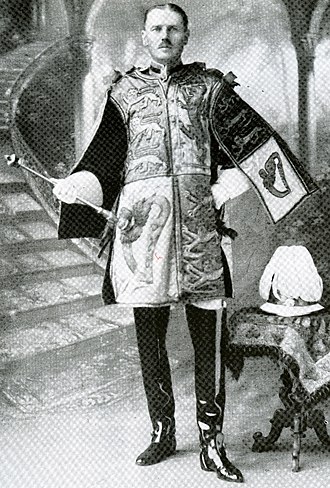
British general (1866–1931)
title: "William Peyton" type: doc version: 1 created: 2026-02-28 author: "Wikipedia contributors" status: active scope: public tags: ["1866-births", "1931-deaths", "military-personnel-of-british-india", "british-army-cavalry-generals-of-world-war-i", "british-army-personnel-of-the-second-boer-war", "7th-dragoon-guards-soldiers", "7th-dragoon-guards-officers", "15th-the-king's-hussars-officers", "people-of-the-gallipoli-campaign", "knights-commander-of-the-order-of-the-bath", "knights-commander-of-the-royal-victorian-order", "companions-of-the-distinguished-service-order", "english-officers-of-arms", "people-educated-at-brighton-college", "british-army-generals", "burials-at-brompton-cemetery", "recipients-of-the-order-of-the-medjidie,-4th-class", "british-army-personnel-of-the-mahdist-war", "british-recipients-of-the-croix-de-guerre-(belgium)", "graduates-of-the-staff-college,-camberley", "people-from-nilgiris-district"] description: "British general (1866–1931)" topic_path: "history" source: "https://en.wikipedia.org/wiki/William_Peyton" license: "CC BY-SA 4.0" wikipedia_page_id: 0 wikipedia_revision_id: 0
::summary British general (1866–1931) ::
::data[format=table title="Infobox military person"]
| Field | Value |
|---|---|
| honorific_prefix | General |
| name | Sir William Peyton |
| honorific_suffix | |
| image | William Eliot Peyton - Delhi Herald.jpg |
| caption | William Peyton as Delhi Herald Extraordinary in 1911 |
| birth_date | |
| birth_place | Wellington, Tamil Nadu, Madras, British India |
| death_date | |
| death_place | Army and Navy Club, London |
| allegiance | United Kingdom |
| branch | British Army |
| serviceyears | 1885–1930 |
| rank | General |
| commands | Scottish Command (1926–1930) |
| 3rd Indian Division (1920–1922) | |
| 40th Infantry Division (1918–1919) | |
| X Corps (1918) | |
| Reserve Army (1918) | |
| Western Frontier Force in Egypt (1916) | |
| 2nd Mounted Division (1914–1915) | |
| Meerut Cavalry Brigade (1908–1912) | |
| 15th Hussars (1903–1907) | |
| battles | Mahdist War |
| Second Boer War | |
| First World War | |
| awards | Knight Commander of the Order of the Bath |
| Knight Commander of the Royal Victorian Order | |
| Distinguished Service Order | |
| Mentioned in Despatches (6) | |
| :: |
| honorific_prefix = General | name = Sir William Peyton | honorific_suffix = | image = William Eliot Peyton - Delhi Herald.jpg | caption = William Peyton as Delhi Herald Extraordinary in 1911 | nickname = | birth_date = | birth_place = Wellington, Tamil Nadu, Madras, British India | death_date = | death_place = Army and Navy Club, London | placeofburial = | allegiance = United Kingdom | branch = British Army | serviceyears = 1885–1930 | rank = General | unit = | commands = Scottish Command (1926–1930) 3rd Indian Division (1920–1922) 40th Infantry Division (1918–1919) X Corps (1918) Reserve Army (1918) Western Frontier Force in Egypt (1916) 2nd Mounted Division (1914–1915) Meerut Cavalry Brigade (1908–1912) 15th Hussars (1903–1907) | battles = Mahdist War Second Boer War First World War | awards = Knight Commander of the Order of the Bath Knight Commander of the Royal Victorian Order Distinguished Service Order Mentioned in Despatches (6) | relations = | laterwork = General Sir William Eliot Peyton, (7 May 1866 – 14 November 1931) was a British Army officer who served as Military Secretary to the British Expeditionary Force from 1916 to 1918. He was Delhi Herald of Arms Extraordinary at the time of the Delhi Durbar of 1911.
Early life
The third son of Colonel John Peyton, commanding officer of the 7th Dragoon Guards, Peyton was educated at Brighton College.
Early military career
In 1885, Peyton enlisted in the ranks in the 7th Dragoon Guards, and promoted lieutenant in 1890. He was appointed regimental adjutant in 1892. In 1896 he transferred to the 15th Hussars and was promoted captain.
He was seconded to the Egyptian Army and saw service with the Dongola Expeditionary Force in 1896, and was mentioned in despatches, then in the Sudan in 1897 and 1898, where he was dangerously wounded and his horse killed under him by a spear. and received the Distinguished Service Order. He was also awarded the Order of the Medjidieh, Fourth Class.
Peyton fought next in South Africa, 1899–1900, where he served with Alexander Thorneycroft's mounted infantry, was promoted major and brevet lieutenant colonel, again mentioned in despatches, and received the Queen's South Africa Medal with three clasps, but his service was cut short by illness and he was invalided back to England. He passed the army's Staff College in December 1901.
In October 1903 Peyton took command of the 15th Hussars, which he commanded for four years, until October 1907 when he was placed on half-pay. He had been granted the brevet rank of colonel in April 1905, while in command of his regiment. In October 1907 he was promoted to colonel and, reverting to normal pay, went to India to become assistant quartermaster general, India, and, as a temporary brigadier general, to command the Meerut Cavalry Brigade from 1908 to 1912.
In India, he served as Delhi Herald of Arms Extraordinary at the Coronation Durbar held on 12 December 1911, and from July 1912 was military secretary to the Commander-in-Chief, India.
First World War
::figure[src="https://upload.wikimedia.org/wikipedia/commons/d/d7/Peyton_and_Bacon_at_Calais_1917_IWM_Q_2491.jpg" caption="Sir Reginald Bacon]] waiting on the quayside at [[Calais]] for the arrival of King [[George V]] and Queen Mary, June 1917"] ::
Peyton returned to England in 1914 on the outbreak of the First World War and took up a new post as GSO1, or chief of staff, of the 1st Mounted Division, a Territorial Force (TF) formation. Promoted to major general in 1914 (first as temporary promotion, from October as substantive rank), he commanded the 2nd Mounted Division TF on the Gallipoli Peninsula, seeing action on 21 August 1915 and later taking part in the final evacuation of Allied forces from Gallipoli on 19 December 1915. The division suffered severe casualties at Suvla.
Peyton then commanded the Western Frontier Force in Egypt in 1916, leading an expedition against the Senussi and re-occupying Sidi Barrani and Sollum, again being mentioned in despatches. For rescuing the shipwrecked British prisoners of from Bir Hakkim (by a force of armoured cars led by Hugh Grosvenor, 2nd Duke of Westminster) he received the special thanks of the Admiralty and was again mentioned in despatches.
In May 1916, after success as a combat commander, Peyton was transferred to the Western Front to become the military secretary to General Sir Douglas Haig. remaining with Haig until March 1918. The post was at the heart of the operation of the management of appointments, promotions, removals, honours and awards of the BEF.
Peyton was knighted in 1917, being made a Knight Commander of the Royal Victorian Order when King George V visited the troops in the field.
::figure[src="https://upload.wikimedia.org/wikipedia/commons/d/d3/WilliamPeytonBrompton01.jpg" caption="Funerary monument, Brompton Cemetery, London"] ::
In April and May 1918, Peyton nominally commanded the Reserve Army. The Fifth Army had been defeated on the Somme in March 1918 and taken over by the Fourth Army, and the former Fifth Army staff formed a reserve HQ at Crécy-en-Ponthieu. On 23 May, the Fifth Army was reconstituted and given to General Sir William Birdwood, and for six weeks (as a temporary lieutenant general) Peyton took command of X Corps, though his corps was held back from the fighting.
Peyton's feelings about his postings between May 1916 and July 1918 were expressed silently by his omitting any mention of them from his entry in Who's Who.
Post-war and final years
Peyton next returned to India, to command the United Province district and the 3rd Indian Division at Meerut between 1920 and 1922. He was promoted substantive lieutenant general in August 1921.
Peyton was next posted as military secretary to the secretary of State for War, from 1922 to 1926, and as general officer commanding-in-chief of Scottish Command, a post he held from February 1926 until he relinquished it in February 1930, during which time he had been to promoted general in June 1927. This was his last post, being placed on half-pay before retirement in June of that year.
A member of the Army and Navy Club, he died there suddenly at the age of 65 on 14 November 1931. He is buried in Brompton Cemetery, London, just to the north-west of the chapel.
He was unusually tall, with a height of six feet, six inches.
Family
On 27 April 1889, Peyton married Mabel Maria, daughter of late Lt-General the Hon. E. T. Gage CB, third son of Henry Gage, 4th Viscount Gage, and of Ella Henrietta Maxse, a granddaughter of the 5th Earl of Berkeley. With Mabel, he had one daughter, Ela Violet Ethel. After his wife's death in 1901, Peyton remarried in 1903 with Gertrude, daughter of Major-General A. R. Lempriere and the widow of Captain Stuart Robertson of the 14th Hussars. They had one son and his second wife died in 1916.
In 1921, Peyton's daughter Ela married Lieutenant-Colonel Sir Edward Daymonde Stevenson KCVO (1895–1958) and she died in 1976, leaving one son.
Freemasonry
He was Initiated in Lodge Logonier, No.2436, (England) and was made an Honorary Member of Lodge Holyrood House (St. Luke's), No.44, (Edinburgh) on 24 March 1923. He was the Grand Sword-bearer of the Grand Lodge of Scotland 1927–1928.
Honours
- Mentioned in Despatches, 1896, 1898, 1900, 1915, 1916
- Khedive's Medal with two clasps, 1896
- Distinguished Service Order, 1898
- Order of the Medjidieh, Fourth Class, conferred by the Khedive of Egypt with the authority of the Sultan of Turkey, 1899
- Queen's South Africa Medal with three clasps
- Commander of the Royal Victorian Order, 1911
- Commander of the Legion d'Honneur
- Companion of the Order of the Bath, 1913
- Order of the Nile, 2nd Class, 1916
- Commandeur de l'Ordre de Leopold, 1916
- Colonel of the 15th The King's Hussars, 10 December 1916
- Knight Commander of the Order of the Bath, 1917
- Knight Commander of the Royal Victorian Order, 1917
- Croix de Guerre (Belgium), 1918
- Colonel of the 15th/19th The King's Hussars, 1922
- Honorary Colonel of the Warwickshire Yeomanry, 17 February 1926
References
References
- https://web.archive.org/web/20250313162750/https://www.eliotsofporteliot.com/familytree/getperson.php?personID=I00679&tree=eliot1
- ''PEYTON, General Sir William Eliot'', in ''[[Who's Who (UK). Who Was Who 1929–1940]]'' (London, A. & C. Black, 1967 reprint: {{ISBN. 0-7136-0171-X)
- [http://www.firstworldwar.bham.ac.uk/donkey/peyton.htm William Eliot Peyton] {{Webarchive. link. (28 January 2008 at the web site of the CENTRE FOR FIRST WORLD WAR STUDIES online at bham.ac.uk (accessed 19 January 2008))
- (17 June 1887)
- {{London Gazette. (10 June 1890)
- {{London Gazette. (21 June 1892)
- {{London Gazette. (14 April 1896)
- {{London Gazette. (21 April 1896)
- {{London Gazette. (3 November 1896)
- {{London Gazette. (7 April 1899)
- {{London Gazette. (19 April 1901)
- {{London Gazette. (8 February 1901)
- {{London Gazette. (20 October 1903)
- {{London Gazette. (11 October 1907)
- {{London Gazette. (5 May 1905)
- {{London Gazette. (5 November 1907)
- {{London Gazette. (11 February 1908)
- Cox, Noel, "A New Zealand Heraldic Authority?" in John Campbell-Kease (ed), ''Tribute to an Armorist: Essays for John Brooke-Little to mark the Golden Jubilee of The Coat of Arms'', London, The Heraldry Society, 2000, pp. 93, 101: "Two heralds, with ceremonial rather than heraldic responsibilities, were appointed for the Delhi Durbar in 1911 ... Delhi Herald (Brigadier-General William Eliot Peyton) and Assistant Delhi Herald (Captain the Honourable Malik Mohammed Umar Haiyat Khan)."
- {{London Gazette. (23 August 1912)
- {{London Gazette. (14 April 1914)
- {{London Gazette. (19 June 1914)
- {{London Gazette. (11 September 1914)
- {{London Gazette. (3 November 1914)
- {{London Gazette. (20 June 1916)
- {{London Gazette. (7 December 1920)
- {{London Gazette. (23 May 1916)
- {{London Gazette. (22 December 1916)
- {{London Gazette. (7 May 1918)
- {{London Gazette. (30 November 1920)
- {{London Gazette. (11 March 1921)
- {{London Gazette. (7 March 1922)
- {{London Gazette. (18 February 1930)
- {{London Gazette. (21 February 1930)
- {{London Gazette. (10 June 1930)
- [http://www.william1.co.uk/wa1.htm Conqueror A1] at william1.co.uk (accessed 19 January 2008)
- Peyton's son-in-law was [[Gentleman Usher of the Green Rod]], 1953–1958, and Purse Bearer to the [[Lord High Commissioner to the General Assembly of the Church of Scotland]], 1930–1958.''STEVENSON, Lieut-Col Sir Edward Daymonde'' in ''Who's Who 1958'' (London, A. & C. Black, 1958)
- A History of the Mason Lodge of Holyrood House (St.Luke's), No.44, holding of the Grand Lodge of Scotland with Roll of Members, 1734–1934, by Robert Strathern Lindsay, W.S., Edinburgh, 1935. Vol.II, p.720.
- {{London Gazette. (13 February 1917)
- {{London Gazette. (22 December 1916)
- [http://www.regiments.org/regiments/uk/cav/D15h.htm 15th The King's Hussars] at regiments.org (accessed 19 January 2008) {{webarchive. link. (18 January 2008)
- {{London Gazette. (8 March 1918)
- {{London Gazette. (12 February 1932)
- [http://www.regiments.org/regiments/uk/cav/D15-19h.htm 15th/19th The King's Hussars] at regiments.org (accessed 19 January 2008) {{webarchive. link. (3 January 2008)
- {{London Gazette. (16 February 1926)
- [http://www.regiments.org/regiments/uk/volmil-england/vcav/warwick.htm Warwickshire Yeomanry] at regiments.org (accessed 19 January 2008) {{webarchive. link. (19 December 2007)
::callout[type=info title="Wikipedia Source"] This article was imported from Wikipedia and is available under the Creative Commons Attribution-ShareAlike 4.0 License. Content has been adapted to SurfDoc format. Original contributors can be found on the article history page. ::