Wilhelm Sauer
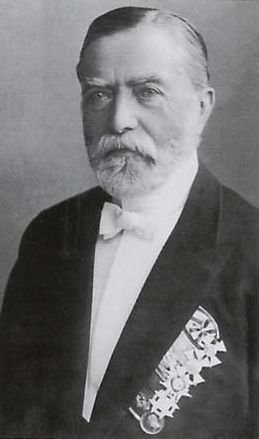
German organ builder (1831–1916)
title: "Wilhelm Sauer" type: doc version: 1 created: 2026-02-28 author: "Wikipedia contributors" status: active scope: public tags: ["1831-births", "1916-deaths", "19th-century-people-from-the-kingdom-of-prussia", "german-pipe-organ-builders", "people-from-schönebeck", "musical-instrument-manufacturing-companies-of-germany"] description: "German organ builder (1831–1916)" topic_path: "arts" source: "https://en.wikipedia.org/wiki/Wilhelm_Sauer" license: "CC BY-SA 4.0" wikipedia_page_id: 0 wikipedia_revision_id: 0
::summary German organ builder (1831–1916) ::
::data[format=table title="Infobox person"]
| Field | Value |
|---|---|
| name | Wilhelm Sauer |
| image | Wilhelm Sauer portrait.jpg |
| caption | Sauer |
| birth_name | Wilhelm Carl Friedrich Sauer |
| birth_date | |
| birth_place | Schönbeck, Grand Duchy of Mecklenburg-Strelitz |
| death_date | |
| death_place | Frankfurt (Oder), German Empire |
| occupation | Pipe organ builder |
| :: |
| name = Wilhelm Sauer | image = Wilhelm Sauer portrait.jpg | caption = Sauer | birth_name = Wilhelm Carl Friedrich Sauer | birth_date = | birth_place = Schönbeck, Grand Duchy of Mecklenburg-Strelitz | death_date = | death_place = Frankfurt (Oder), German Empire | occupation = Pipe organ builder
Wilhelm Carl Friedrich Sauer (23 March 1831 – 9 April 1916) was a German pipe organ builder. One of the famous organ builders of the Romantic period, Sauer and his company W. Sauer Orgelbau built over 1,100 organs during his lifetime, amongst them the organs at Bremen Cathedral, Leipzig's St. Thomas Church, and Berlin Cathedral, which is considered to be "his final great masterpiece".
Early years
Wilhelm Sauer was born in Schönbeck, in the Grand Duchy of Mecklenburg-Strelitz, the son of blacksmith and self-educated organ builder Ernst Sauer (1799–1873) from Karlsburg in Pomerania, and his wife Johanna Christine, née Sumke (1800–1882). His parents married in 1822. He was the brother of Johann Ernst Sauer (1823–1842). When Wilhelm was seven years old, the family moved to the neighboring town of Friedland, where his father built a factory and started the commercial organ business. Wilhelm spent his youth there, attending school, with the idea that he would transfer to the Berlin Academy. However, when his older brother Johann died in December 1842, it was decided that Wilhelm would be the one to inherit his father's business and continue the work he had started building organs. Wilhelm received an early education about organ building from his father. He left home in 1848 to further his education in this business, including studying with E.F. Walcker (1851–1853) in Ludwigsburg and with Aristide Cavaillé-Coll in Paris.
Career
In 1855, Sauer took over the management of the German crown branch in his father's factory, which had been opened there for the Prussian market in order to avoid customs duties. On 1 March 1856 Sauer finally opened his own business as Wilhelm Sauer, organ builder in Frankfurt (Oder), which grew quickly with temporary branches in Königsberg (1860). International orders soon followed. By 1882, he had completed 380 organs. In 1883, Sauer was awarded the Distinction of Akademischer Künstler and the following year, on 18 April 1884, he was named by the cabinet as "Royal Organ Builder".
::figure[src="https://upload.wikimedia.org/wikipedia/commons/2/27/Berlin.Dom_016.jpg" caption="quote=For nearly 50 years the 1905 Wilhelm Sauer four manual organ stood, damaged and vandalised, in Berlin's Cathedral. It has been restored to its original specification by the Sauer firm...}}"] ::
::figure[src="https://upload.wikimedia.org/wikipedia/commons/a/aa/2006-09_Frankfurt_(Oder)_01.jpg" caption="Sauer's tombstone"] ::
In his lifetime, Wilhelm Sauer and his staff built more than 1,100 organs. His largest and most famous organs are, amongst others, in Berlin Cathedral (1903, IV/113), Thomaskirche in Leipzig (1888/1908, III/88), and in Görlitz City Hall (1910, IV.72). Two of his 1897 organs are in Namibia: one in Windhoek's Christ Church and another in Swakopmund's Lutheran Church. In 1910, Sauer sold the company to his longtime manager and deputy Paul Walcker, son of E. F. Walcker.
At least 10 of his organs were installed in Latvia.
Personal life
He married Minna Auguste Penske in 1859, the daughter of a cantor, and the couple had a daughter named Johanna (1859–1887). His wife died in 1876. On 7 September 1878, he married his second wife Anna Bauer (18 January 1848 – 11 August 1924). She was the daughter of a brewery owner and member of the city council in Potsdam. They had two sons: Wilhelm (1879–1962) and Franz Gustav Adolf (1883–1945 missing). His grandson, Wolfgang Sauer (1920–1989), went to the United States in 1964 and became a professor of German history at the University of California, Berkeley. Wilhelm Sauer's grave stone is now in Kleistpark in Frankfurt (Oder), where he died.
Notable works
::data[format=table]
| Year | Opus | Place | Church | Photo | Manuals | Registers | Comments |
|---|---|---|---|---|---|---|---|
| 1853 | Rechlin-Boek | St Johannis Church | [[File:Sauer-Orgel in der St.-Johannis-Kirche Boek.jpg | 160x160px]] | I/P | 6 | |
| 1864 | 94 | Marienwerder (present-day Kwidzyn) | Cathedral Church | [[File:Wnętrze katedry w Kwidzynie 2011 2.jpg | 160x160px]] | III/P | 49 |
| 1869 | 95 | Berlin | St Thomas Church | IV/P | 52 | Damaged by Allied bombing and dismantled in 1944. | |
| 1870 | Labiau (present-day Polessk) | Town Church | Replaced an older organ by Johann Josua Mosengel; demolished after 1945. | ||||
| 1872 | 235 | Zeschdorf-Döbberin | Village Church | I/P | 8 | ||
| 1874 | 209 | Doberlug-Kirchhain | Dobrilugk Abbey Church | [[File:Klosterkirche Doberlug Orgelempore.JPG | 160x160px]] | II/P | 26 |
| 1879 | 248 | Frankfurt (Oder) | St Gertraud Church | [[File:Sauer Organ in Frankfurt.jpg | 160x160px]] | III/P | 36 |
| 1883 | 401 | Wernigerode | Church of Our Lady (Liebfrauenkirche) | [[File:Hauptorgel Liebfrauen.JPG | 160x160px]] | II/P | 30 |
| 1884 | 419 | Lauchhammer-Kostebrau | Village Church | [[File:Ev-Kirche Kostebrau Orgel.jpg | 160x160px]] | I/P | 7 |
| 1886 | Herne-Eickel | St John's Church (Johanneskirche) | II/P | 33 | Destroyed by Allied bombing in 1944. | ||
| 1887 | 475 | Frankfurt-Griesheim | Benediction Church (Segenskirche) | [[File:Segenskirche Frankfurt-Griesheim Sauer-Orgel.jpg | 160x160px]] | II/P | 28 |
| 1888 | Göttingen | St Nicolas' Church (University Church) | [[File:Orgel St Nikolai Göttingen (Feb2014)1.jpg | 160x160px]] | II/P | 23 | |
| 1889 | 501 | Leipzig | St Thomas Church | [[File:Sauer organ Thomaskirche Leipzig 01.JPG | 160x160px]] | III/P | 63 |
| 1889 | 505 | Amsterdam | Basilica of St. Nicholas | [[File:Amsterdam St. Nicolaas Orgel.jpg | 160x160px]] | III/P | 40 |
| 1890 | 530 | Bad Freienwalde-Bralitz | Village Church | II/P | 13 | Restored in 2015. | |
| 1891 | 554 | Mühlhausen | St. Mary's Church | [[File:Orgel Marienkirche Mühlhausen.JPG | 160x160px]] | III/P | 61 |
| 1891 | Hötensleben-Barneberg | Church of Peace (Friedenskirche) | II/P | 19 | |||
| 1891 | 557 | Jacobsdorf-Sieversdorf | Village Church | I/P | 6 | ||
| 1893 | 554 | Berlin | Garrison Church | III/P | 70 | Then Berlin's largest church organ. Destroyed by a blaze in 1908. | |
| 1893 | Berlin | Immanuel Church | [[File:Berlin-ImmanuelkircheOrgel1-Asio.jpg | 160x160px]] | II/P | 29 | |
| 1894 | 620 | Apolda | Luther Church | [[File:Orgel.lutherkirche.apolda.png | 160x160px]] | III/P | 47 |
| 1894 | Saalfeld | St John's Church (Johanneskirche) | [[File:Johanneskirche Saalfeld Orgel.JPG | 160x160px]] | III/P | 49 | |
| 1894 | Bremen | Cathedral | [[File:BremerDom-03.jpg | 160x160px]] | III/P | 65 | |
| 1895 | 661 | Gehren | St Michael's Church | [[File:Gehren-kirche-2013-0002.JPG | 160x160px]] | II/P | 23 |
| 1896 | Potsdam | Pentecostal Church (Pfingstkirche) | II/P | 16 | Extended to II/P/28 in 1933. Dismantled in 2011. | ||
| 1897 | Chorin-Golzow | Village Church | [[File:Golzow Dorfkirche 04.jpg | 160x160px]] | II/P | 15 | |
| 1898 | 731 | Wuppertal-Elberfeld | Cemetery Church | [[File:Wuppertal Hochstraße Friedhofskirche 2013 020 (cropped).JPG | 160x160px]] | II/P | 30 |
| 1898 | 755 | Moscow | Sts Peter and Paul Lutheran Cathedral | III/P | 33 | Built for the St. Michael Lutheran Church in Moscow, at present location since 2005. | |
| 1903 | 891 | Bad Harzburg | Luther Church | [[File:Bad Harzburg Lutherkirche Sauerorgel (1903).JPG | 160x160px]] | III/P | 40 |
| 1905 | 945 | Fulda | Heilig-Geist-Kirche (Church of the Holy Ghost) | [[File:Heilig-Geist-Kirche Fulda Orgel 1.JPG | 160x160px]] | II | 16 |
| 1906 | 981 | Neuzelle Abbey | St Mary's Church | [[File:Sauerorgel Stift Neuzelle.JPG | 160x160px]] | II/P | 24 |
| 1907 | Kostebrau | ||||||
| 1908 | Potsdam | St. Nicholas' Church | [[File:Bundesarchiv Bild 170-215, Potsdam, Orgel der Nikolaikirche.jpg | 160x160px]] | III/P | 49 | |
| 1908 | Bad Homburg | Church of the Redeemer | The sound of the "Fernwerk" appears in the above the altar. | ||||
| 1909 | 1025 | Bad Salzungen | Stadtkirche Bad Salzungen | III | 41 | The organ was built according to the ideas of Max Reger, and restored from 1994 to 2000. | |
| 1910 | Jerusalem | Augusta Victoria Hospital | url=http://organ.org.il/pws/page!5420 | ||||
| :: |
References
References
- Incorporated Association of Organists. (1997). "Organists' review". Incorporated Association of Organists.
- (2005). "Die Musik in Geschichte und Gegenwart: allgemeine Enzyklopädie der Musik". Bärenreiter.
- (1992). "The American Organist". American Guild of Organists..
- "History". Sauerorgelbau.de.
- Kassel, Richard. (2006). "The organ: an encyclopedia". Psychology Press.
- (1922). "Logos: Internationale Zeitschrift für Philosophie der Kultur". J.C.B. Mohr.
- (1908). "The American history and encyclopedia of music ...". I. Squire.
- (1995). "The Organ". Musical Opinion..
- (13 April 2006). "The Organ: An Encyclopedia". Psychology Press.
- (August 2007). "A History of the Organ in Latvia". Scranton Gillette Communications.
- Gilbert Allardyce. (July 1971). "The Place of Fascism in European History". Prentice-Hall.
- "Organ of the Church of the Ascension - Augusta Victoria". Israel Organ Association.
::callout[type=info title="Wikipedia Source"] This article was imported from Wikipedia and is available under the Creative Commons Attribution-ShareAlike 4.0 License. Content has been adapted to SurfDoc format. Original contributors can be found on the article history page. ::