Western alienation
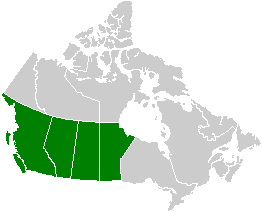
Phenomenon in Canadian politics
title: "Western alienation" type: doc version: 1 created: 2026-02-28 author: "Wikipedia contributors" status: active scope: public tags: ["political-terminology-in-canada", "separatism-in-canada", "politics-of-western-canada", "regionalism-(politics)", "electoral-geography", "rural-society-in-canada"] description: "Phenomenon in Canadian politics" topic_path: "politics" source: "https://en.wikipedia.org/wiki/Western_alienation" license: "CC BY-SA 4.0" wikipedia_page_id: 0 wikipedia_revision_id: 0
::summary Phenomenon in Canadian politics ::
Before the Second World War, western alienation was principally rooted in a sense of being unequal in Confederation and held back in economic development—in a sense, the notion that the west was a colony of eastern Canada. This changed after the war, when the prairie provinces in particular became more prosperous, based largely on newfound resource wealth. Feelings of alienation returned in the 1970s, but by then were based principally on a sense of unjustified intrusion by the federal government into western economic interests. In part, this was an outcome of the expansion of the federal state in the postwar period, and in part this was due to the rising economic power of the prairie provinces. It had largely to do with debates over federalism versus decentralization in Canadian politics. The 1970s energy crises led to rapid increases in energy resource prices, which produced windfall profits in the energy-rich western provinces. The 1974 federal budget from Pierre Trudeau's Liberal government terminated the deduction of provincial natural resources royalties from federal tax. According to Roy Romanow—then Saskatchewan's attorney general—this move kicked off the "resource wars", a confrontation between Trudeau's federal government and the prairie provinces over the control of and revenues from natural resource extraction and energy production.
Following an increase in the world price of oil between 1979 and 1980, Trudeau's government introduced the National Energy Program (NEP), which was designed to increase Canadian ownership in the oil industry, increase Canada's oil self-sufficiency, and redistribute the wealth generated by oil production with a greater share going to the federal government. While the program was meant to mitigate the effect of higher gas prices in eastern Canada, it was extremely unpopular in the west due to the perception that the federal government was implementing unfair revenue sharing. In response, a quote from future Alberta Premier Ralph Klein—then the mayor of Calgary—featured prominently on bumper stickers in that province: "Let the eastern bastards freeze in the dark". The program was ultimately repealed in 1985.
Resource rights were prominent in negotiations of the Patriation of the Canadian Constitution in the early 1980s. Alberta and Saskatchewan premiers Peter Lougheed and Allan Blakeney negotiated to ensure that provincial resource rights were enshrined in Section 92A of the Constitution.
The Reform Party
Brian Mulroney's Progressive Conservatives replaced the Liberals with an historic majority in the 1984 election. However, Mulroney was seen as similarly neglectful of western Canada, which led to the establishment of the conservative Reform Party in 1987. Led by Preston Manning—son of former Alberta Social Credit premier Ernest Manning—Reform campaigned on the slogan "The West Wants In". Despite controversy over the party's social conservatism, it surged to third party status in 1993, winning 52 seats—all but one of them in Western Canada—in the fall election while the PCs were reduced to just 2. In the 1997 election, Reform became the Official Opposition. In 2000, Reform rebranded as the Canadian Alliance in an attempt to appeal to voters beyond Western Canada; in 2003, the party merged with the PCs to form the Conservative Party of Canada, the power base of which has since resided in the west.
Contemporary western alienation
::figure[src="https://upload.wikimedia.org/wikipedia/commons/1/14/Political_map_of_Canada.png" caption="Political map of Canada"] ::
The twenty-first century has seen a resurgence of western alienation sentiments, which coincided again with the boom and bust of commodity prices. Paul Martin stated that addressing western alienation was one of his two priorities when he became prime minister in 2003. In 2007, he said he had learned that the phenomenon ebbs and flows, and by the end of that decade such sentiments were reported to have decreased. However, particularly since the 2015 election of a Liberal federal government under the leadership of Justin Trudeau—the son of Pierre Trudeau—western alienation has reached heights not seen since the 1980s. This has largely to do with perceptions of federal overreach by a governing party that has frequently been shut out of much of the Prairies. In particular, federal environmental policy and efforts at addressing climate change, such as the Pan-Canadian Framework, have been at the core of contemporary western alienation, stoking fears of a forced economic downturn for key resource industries. However, this resurgence of western alienation also coincided with a major downturn in commodity prices after 2014.
Governments in both Alberta and Saskatchewan have characterized federal environmental policy as an attack on their respective resource industries, and therefore as a threat to their provinces' economic stability. The Saskatchewan Party, especially under the leadership of Scott Moe since 2018, and since its formation in 2017 Alberta's United Conservative Party—currently under the leadership of Danielle Smith—have positioned themselves in opposition to Ottawa, and sought greater autonomy within Canada. At the same time, polling has consistently suggested that Alberta and Saskatchewan residents perceive the federal government as harmful to their province's interests. Moreover, residents in British Columbia and Manitoba have also indicated a sense of rising resentment towards Ottawa, and residents in all four western provinces indicated that they would support a new "Western Canada Party" at the federal level to advocate for the region's interests.
Also at question is the degree to which westerners identify more with their region or province than with the country. 2018 polling suggested that 76% of western Canadians felt a sense of "unique western Canadian identity", the same percentage that said so in 2001. Governments have at times contributed to such sentiments. For example, Scott Moe in 2021 called for recognition of Saskatchewan as a "nation within a nation"—drawing on terminology frequently employed by Quebec nationalists—and argued that the province has its own "cultural identity". In 2023, Saskatchewan made it mandatory for schools in the province to fly the provincial flag, which the government indicated was meant to increase pride in provincial identity.
Legal and policy challenges
The federal effort to institute a carbon tax across the country has been a significant point of contention. Saskatchewan—which was later joined by Alberta along with Ontario—challenged the constitutionality of the Greenhouse Gas Pollution Pricing Act in court. The challenge was first launched in April 2018, and in March 2021 the Supreme Court of Canada ruled that the Act is constitutional. The western provinces found some success in their constitutional challenge against federal environmental impact assessment legislation, as the Supreme Court ruled in October 2023 that portions of the 2019 Impact Assessment Act dealing with "designated projects" outside of federal jurisdiction were unconstitutional. An amended Impact Assessment Act received royal assent in June 2024.
In 2022, both Alberta and Saskatchewan passed new legislation to affirm their control over natural resources and to try and mitigate the encroachment of federal power. The Alberta Sovereignty Act and the Saskatchewan First Act were both introduced in November 2022.
Alberta and Saskatchewan have made other efforts to distance themselves from Ottawa. Both have frequently criticized the equalization payment scheme as unfair. In his call for "A New Deal with Canada", Moe has signaled a desire for more control over taxation and immigration, and Saskatchewan has introduced plans to create a provincial police force. Smith has opened discussions about Alberta withdrawing from the Canada Pension Plan and starting its own. ::figure[src="https://upload.wikimedia.org/wikipedia/commons/2/29/Freedom_Convoy_2022,_Ottawa,February_12(3).jpg" caption="Saskatchewan flags]]."] ::
Convoy protests
Since 2019, a number of popular protests have organized convoys to Ottawa to take demands directly to the federal government, something that has a long tradition in western Canada dating back to the early twentieth century, including the attempted On-to-Ottawa Trek during the Great Depression. In particular, large convoy protests in 2018 and 2022 have received international attention. The first of these convoys was organized by the "yellow vests movement", which drew inspiration from the 2018 French yellow vests protests. The Canadian protest demanded, among other things, the elimination of the federal carbon tax. The second was the self-styled "freedom convoy", which purported to be focused on protesting COVID-19 vaccine mandates, but shared many of the same organizers and resources as the 2018 protest. In both cases, the extent to which the convoys were supported by western Canadians was a subject of debate; for example, a 2022 study suggested that fewer than 20% of Albertans thought positively of the convoy protest. Moreover, several studies have indicated that these protests included a high degree of far-right political elements, including xenophobic and conspiratorial elements.
Western separatism
Particularly since the 1970s, when the resource-based economies of Alberta and Saskatchewan began to see rapid growth, the idea of separatism and independence for western provinces—on their own or in some combination together—has at times gained political traction and led to the creation of new movements and parties working towards that end. Such sentiment did not arise in a vacuum, with agitation for Quebec sovereignty reaching new heights in the 1970s. The extent to which agitation for western sovereignty has merely been a "bargaining tool" for the west, as former Prime Minister Pierre Trudeau characterized it in 1980, has been debated, and western Premiers, including Peter Lougheed, have tended to downplay any push for secession. Parties advocating for western secession have tended to fare poorly at the polls.
1980s
::figure[src="https://upload.wikimedia.org/wikipedia/commons/3/3e/Flag_of_Western_Canada.svg" caption="A Western Canadian flag adopted by the [[Western Independence Party]] in 1988."] ::
While movements like the Reform Party stated that they were dedicated to realizing a bigger role for the west within Canada, other movements, like the Western Canada Concept, founded in 1980, argued that the west would be better off carving out its own nation, and was politically and economically capable of doing so. Although envisioned as a federal movement, Western Canada Concept never ran candidates in a federal election. However, it did field provincial branches in each of the western provinces. It found its biggest success in Alberta, where Gordon Kesler won a 1982 by-election under the WCC banner; in that year's general election, the party was one candidate short of a full slate and earned 12% of the vote, although none of its candidates were elected. During Saskatchewan's 20th Legislature, two sitting MLAs—Bill Sveinson and Lloyd Hampton—took up the WCC banner. However, the party failed to have any candidates elected in the 1986 election.
The short-lived Unionest Party in Saskatchewan offered another separatist option in that province. Former Progressive Conservative leader Dick Collver founded the party in 1980, and advocated for a secession of western provinces and a subsequent union with the United States—Unionest was a contraction of "best" and "union". This was seen as "traitorous" by some, and somewhat ironic given that one factor in Canada's acquisition of the west was to avoid its annexation by the US.
Other such movements that arose to advocate for secession include the Western Independence Party, which fielded candidates in federal and provincial elections from 1988 into the twenty-first century, and the Western Block Party.
Wexit (2019–)
Separatist sentiment began to re-emerge ahead of the 2019 federal election, with one study indicating record levels of separatist sentiment in Alberta and Saskatchewan. In the wake of the 2019 election—which saw the governing Liberal Party shut out from both Alberta and Saskatchewan—the "Wexit" movement consolidated this new wave of separatist sentiment. A play on the British "Brexit" movement, Wexit established federal and provincial branches to advocate for western secession, and adopted a reversed version of Preston Manning's slogan: "The West Wants Out". In 2020, Wexit Canada rebranded as the Maverick Party; Wexit Alberta merged with the Freedom Conservative Party to form the Wildrose Independence Party; and Wexit Saskatchewan rebranded as the Buffalo Party. Wexit BC was de-registered in 2022.
In the 2020 Saskatchewan provincial election, the Buffalo Party ran just 17 candidates but received 2.6% of the popular vote, more than any other third party, and finished second in a handful of rural ridings. The result prompted Saskatchewan Premier Scott Moe to state that his Saskatchewan Party—which handily won a majority government—"share your frustrations", and to call for more "independence" from Ottawa, although he downplayed talk of secession. Ahead of the 2021 federal election, the Maverick Party stated that it was trying to emulate the model laid out by the Bloc Québécois. However, the party failed to gain traction in the election, earning just over 1% of the vote in each of Alberta and Saskatchewan. Then-interim leader Jay Hill acknowledged after the election that focusing on separatism created "a certain degree of discomfort with most westerners who aren’t prepared at this point to go that far." Although Maverick did not officially endorse the 2022 convoy protest that occupied Ottawa, many of its members supported it and one of the party's secretaries, Tamara Lich, was a key convoy organizer. The party ultimately lost momentum and was de-registered in 2025. There are also signs of the movement losing traction in Saskatchewan. After its surprising 2020 performance, the Buffalo Party fell to sixth place in the 2024 provincial election, earning less than 1% of the popular vote.
In the wake of the 2025 Canadian federal election, which resulted in the Liberal Party being re-elected to a fourth term, this time under the leadership of Mark Carney, United Conservative Party members reignited agitation for Alberta separatism. The day after the election, Danielle Smith introduced legislative changes to make it easier for citizens to trigger a referendum.
Impact of Quebec separatism
It was revealed in 2014 that Roy Romanow's New Democratic Party government in Saskatchewan held secret meetings to discuss contingencies for the event of a successful secession vote in the 1995 Quebec referendum, including the possibility of following suit and potentially courting annexation by the United States. Romanow stated that Allan Blakeney had held similar discussions ahead of the 1980 Quebec referendum. He further explained that, in his view, secession for Saskatchewan "would not make sense economically and socially".
Responses to western alienation
Federal government
In the 1980s, Pierre Trudeau called talk of western alienation and separatism a "bargaining tool" for the west, and urged the west to find ways to get more representation in the federal government. For his part, given the lack of Liberal representation in the west—his party won only two seats west of Ontario, both of them in Manitoba—Trudeau took the uncommon step of appointing western senators to his cabinet.
Amidst criticism that the federal government was inhibiting pipeline development, Justin Trudeau's Liberals purchased the Trans Mountain pipeline in 2018 to try and help ensure the completion of its expansion project, which has before and since been mired in financial uncertainty.
First Nations
First Nations leaders have often asserted that they have been forgotten in discussions of western alienation. Given that First Nations in Canada have direct relationships with the federal government, and the large number of First Nations in western Canada, such assertions complicate those discussions. This is particularly true in British Columbia, where a large number of First Nations have never entered into treaty agreements with the federal government.
In recent years, Indigenous leaders have pushed back against talk of western alienation, particularly talk of western separatism. In 2019, Assembly of First Nations National Chief Perry Bellegarde said that First Nations consent would be required for any secession, given that "provincial boundaries came after treaty territories", further adding that western leaders "have to be careful when you go down that road of Western alienation... We have inherent rights... and those are international agreements with the Crown." Saskatoon Tribal Council Chief Marc Arcand added that any western province "does not have the authority to decide if they want to separate". First Nations chiefs from Treaty 8 territory also released a statement in 2019, declaring that they were "strongly opposed to the idea of separation from Canada." In 2025, two First Nations chiefs in Alberta again pushed back against separatist rhetoric, addressing a letter to Danielle Smith, urging the Premier to respect Treaty rights and stop stoking separatist sentiments. First Nations leaders have been similarly vocal in their opposition to the 2022 Alberta Sovereignty and Saskatchewan First Acts, arguing that they infringe on treaty rights and circumvent their relationship with the Crown. Both Acts were drafted without consultation with Indigenous communities.
Political parties
The following is a list of federal and provincial political parties that were founded in response to western alienation, to advance western interests within Canada, or to promote western independence. Some such parties, like the CCF and Reform, have merged with other entities to become truly national parties. ::data[format=table]
| Party name | Founded | Level | Political position | Notes |
|---|---|---|---|---|
| Provincial Rights Party | 1905 | Provincial (SK) | Right-wing | Advocated for equal rights for the province within Confederation. Became the provincial Conservative Party in 1912. |
| :: |
References
References
- Berdahl, Loleen. (2021-06-09). "The past, present, and future of western alienation". [[Institute for Research on Public Policy]].
- Sorensen, Eric. (2019-10-25). "Analysis: Western alienation is very real in Alberta and Saskatchewan".
- Berdahl, Loleen. (2010). "Whither Western Alienation? Shifting Patterns of Western Canadian Discontent with the Federal Government". [[Canada West Foundation]].
- Shah, Maryam. (2019-11-05). "Separatist sentiment in Alberta, Saskatchewan at 'historic' highs: Ipsos poll". Global News.
- Belshaw, John Douglas. (2020). "Canadian History: Post-Confederation". BCcampus.
- Conway, John F.. (2014). "The Rise of the New West: The History of a Region in Confederation". James Lorimer & Co..
- (2003). "Canada's founding debates". University of Toronto Press.
- Conrad, Margaret. (2012). "A Concise History of Canada". Cambridge University Press.
- Conrad. "Concise History of Canada".
- "Building a Nation". CBC Learning.
- Brown, Robert Craig. "National Policy".
- Conway. "Rise of the New West".
- Conway. "Rise of the New West".
- Friesen, Gerald. (1984). "The Canadian Prairies: A History". University of Toronto Press.
- Goldsborough, Gordon. (Summer 2015). "The Postage Stamp Province". Manitoba Historical Society.
- Belshaw. (2020). "Canadian History".
- Waiser, Bill. (2005). "Saskatchewan: A New History". [[Fifth House]].
- Eneas, Bryan. (2019-09-20). "Disenfranchisement and disappointment: Idea of western Canadian separation has deep roots in Prairies". CBC News.
- (2013-10-18). "Redrawing the West: The Politics of Provincehood in 1905".
- Sommers, Javed. (2023-06-19). "Legislating Broken Promises: Canada's Natural Resources Transfer Agreement Today".
- Belshaw. (2020). "Canadian History".
- "Striking Back". CBC Learning.
- Owram, Doug. (2020). "Canadian History".
- Martin, Joseph. (2007-06-11). "Let's be honest about 'Honest John'". [[The Globe and Mail]].
- (August 24, 2019). "Back to Blakeney: Revitalizing the Democratic State".
- Bregha, Francois. "National Energy Program".
- "Canadian Energy Overview 2010 – Energy Briefing Note". National Energy Board.
- Martin, Sandra. (2013-03-29). "Ralph Klein, 70: The man who ruled Alberta". The Globe and Mail.
- Romanow, Roy. (2019). "Back to Blakeney: Revitalizing the Democratic State". University of Regina Press.
- Nossal, Kim Richard. (2003-06-01). "The Mulroney Years: Transformation and Tumult". Policy Options.
- Grenier, Eric. (2021-02-10). "Why Conservatives can't turn their backs on their western base". CBC News.
- (2005-12-01). "Alienating the west". [[The Economist]].
- MacGregor, Roy. (2007-07-28). "Paul Martin's new mission". The Globe and Mail.
- Anderson, Drew. (2019-10-28). "The anger is real, but is western separatism?". CBC News.
- Levinson-King, Robin. (2019-10-11). "Wexit: Why some Albertans want to separate from Canada". [[BBC News]].
- (2019-02-05). "Decades after Reform's rise, voters open to a new 'Western Canada Party'".
- Vomiero, Jessica. (2018-10-08). "Western Canadians still feel more connected to their province than to country as a whole: Ipsos".
- Hunter, Adam. (2021-11-09). "Premier Moe wants Saskatchewan to be a 'nation within a nation' by increasing autonomy". CBC News.
- (2023-10-22). "Saskatchewan flag legally required to be flown at schools as part of parental rights' bill". CBC News.
- Tasker, John Paul. (2021-03-25). "Supreme Court rules Ottawa's carbon tax is constitutional". CBC News.
- Gowling, Jordan. (2023-10-13). "Supreme Court rules against federal environmental impact assessment law". [[CTV News]].
- (2024-06-21). "Amended ''Impact Assessment Act'' now in force".
- Bennett, Dean. (2022-12-08). "Alberta passes Sovereignty Act, but first strips out sweeping powers for cabinet". CBC News.
- (2022-11-01). "'Saskatchewan First Act' aims to assert constitutional jurisdiction: province". CTV News.
- (2019-10-22). "'New deal with Canada': Premier Scott Moe calls on Prime Minister to support Sask.". CTV News.
- Simes, Jeremy. (2023-08-16). "As Sask. forms new police service; critics question lack of oversight". CTV News.
- Heydari, Anis. (2023-11-02). "What is the CPP anyway? And why is Alberta leaving it different from Quebec?". CBC News.
- Newton, Paula. (2022-02-11). "They are protesting Covid restrictions and support is growing. This is what could happen in the Canada protests next". [[CNN]].
- Murphy, Jessica. (2022-01-29). "Freedom Convoy: Why Canadian truckers are protesting in Ottawa". BBC News.
- Climenhaga, David. (2022-10-17). "Think the Convoy Had Big Support in Alberta? Hardly". [[The Tyee]].
- Mosleh, Omar. (2019-01-04). "Canada's yellow vest movement looks like it's here to stay — but what is it really about?". StarMetro Edmonton.
- (2022-01-27). "The 'Freedom Convoy' is nothing but a vehicle for the Far Right".
- MacDonald, Fiona. (2022-02-16). "The 'freedom convoy' protesters are a textbook case of 'aggrieved entitlement'". [[The Conversation (website).
- (2019-10-24). "In the '70s and '80s, some wanted Alberta to separate from Canada".
- "What is the Western Canada Concept?".
- (2019-04-15). "Alberta separatism was a thing in the early 1980s". CBC Archives.
- Waiser. "Saskatchewan".
- Edmiston, Jake. (2014-01-28). "Dream of 'free and independent Western Canada' ends as separatist party officially deregistered". [[National Post]].
- Soloducha, Alex. (2019-05-10). "Survey suggests Sask. residents want Western Canada to separate". CBC News.
- Bartko, Karen. (2019-11-05). "The West Wants Out: Alberta separatist group Wexit Canada seeking federal political party status". Global News.
- Dryden, Joel. (2020-09-17). "Seeking broader appeal, separatist Wexit Canada party changes its name to the Maverick Party". CBC News.
- (2020-06-30). "Wexit Alberta and Freedom Conservative Party vote to merge as Wildrose Independence Party of Alberta". CBC News.
- Zinchuk, Brian. (2020-07-26). "Provincial separatist party rebrands, appoints new interim leader". Estevan Mercury.
- (2022-07-14). "DEREGISTRATIONS". [[Queen's Printer]].
- Kliem, Theresa. (2020-10-26). "Buffalo Party runs fraction of candidates, yet outdraws Greens in preliminary election count". CBC News.
- White-Crummey, Arthur. (2020-10-27). "Scott Moe walks 'fine line' by backing independence, not separation". [[Regina Leader-Post]].
- Graveland, Bill. (2021-09-12). "Maverick Party looks to Bloc Québécois as inspiration to ensure western interests". CBC News.
- Graveland, Bill. (2021-10-02). "Maverick Party planning to up its game after poor election results". Global news.
- Climenhaga, David. (2022-01-26). "A BC Ex-MP, Western Separatists and that Truck Protest". The Tyee.
- Kurjata, Andrew. (2025-03-24). "Maverick Party, which pushed for Wexit and western autonomy, will not run in federal election". [[CBC News]].
- (2024-10-29). "Buffalo Party leader, others react to Estevan-Big Muddy results". Sask Today.
- Markusoff, Jason. (2025-04-16). "Alberta separatists getting organized — a unity challenge for Canada and Danielle Smith's party". [[CBC News]].
- Bellefontaine, Michelle. (2025-04-29). "Alberta overhauls election laws to allow corporate donations, change referendum thresholds". [[CBC News]].
- Warren, Jeremy. (2014-08-26). "Secret Romanow group mulled secession". [[The StarPhoenix]].
- (2020-02-27). "How Pierre Trudeau ensured western cabinet representation in 1980". CBC Archives.
- Lang, Eugene. (2019-11-01). "The Trudeaus and western alienation". Policy Options.
- (2018-05-29). "Liberal government to buy Trans Mountain pipeline project, seek new investors". Toronto Star.
- Thurton, David. (2023-05-13). "The overbudget Trans Mountain pipeline project is carrying $23B in debt — and needs to borrow more". CBC News.
- McIntosh, Emma. (2020-01-24). "What we mean when we say Indigenous land is 'unceded'". [[Canada's National Observer]].
- Barrera, Jorge. (2019-10-30). "Western separatism would have to face treaty nations, say First Nations leaders". CBC News.
- Heidenreich, Phil. (2019-11-06). "Treaty 8 chiefs call Wexit a 'bad idea' as support for separating from Canada grows in Alberta". Global News.
- (2025-05-01). "Indigenous chiefs accuse Alberta Premier Smith of stoking separatism talk". [[Edmonton Journal]].
- (2022-12-07). "First Nations demand withdrawal of proposed Alberta Sovereignty, Saskatchewan First acts". CBC News.
::callout[type=info title="Wikipedia Source"] This article was imported from Wikipedia and is available under the Creative Commons Attribution-ShareAlike 4.0 License. Content has been adapted to SurfDoc format. Original contributors can be found on the article history page. ::