Terzan 7
title: "Terzan 7" type: doc version: 1 created: 2026-02-28 author: "Wikipedia contributors" status: active scope: public tags: ["globular-clusters", "sagittarius-dwarf-spheroidal-galaxy", "sagittarius-(constellation)", "astronomical-objects-discovered-in-1968"] topic_path: "general/globular-clusters" source: "https://en.wikipedia.org/wiki/Terzan_7" license: "CC BY-SA 4.0" wikipedia_page_id: 0 wikipedia_revision_id: 0
::data[format=table title="Infobox globular cluster"]
| Field | Value |
|---|---|
| name | Terzan 7 |
| image | [[Image:It came from outer space.jpg |
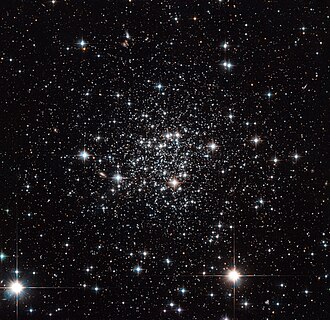
| caption | Terzan7 by Hubble Space Telescope; 3.5 view |
| epoch | J2000 |
| constellation | Sagittarius |
| ra | |
| dec | |
| dist_ly | 75.7 kly{{citation |
| title | Terzan 7 @ seds |
| url | http://www.seds.org/~spider/spider/MWGC/ter07.html |
| url-status | dead |
| archiveurl | https://web.archive.org/web/20021024065203/http://www.seds.org/~spider/spider/MWGC/ter07.html |
| archivedate | 2002-10-24 |
| appmag_v | 12.0 |
| size_v | 7.3 |
| radius_ly | 160 ly |
| v_hb | 17.76{{citation |
| last1 | Wilson |
| first1 | Barbara |
| date | July 2, 1995 |
| title | Obscure Globulars |
| url | http://www.astronomy-mall.com/Adventures.In.Deep.Space/obscure.htm |
| age | 7.5 Gyr{{citation |
| last1 | Geisler |
| first1 | Doug |
| last2 | Wallerstein |
| first2 | George |
| last3 | Smith |
| first3 | Verne V. |
| last4 | Casetti-Dinescu |
| first4 | Dana I. |
| title | Chemical Abundances and Kinematics in Globular Clusters and Local Group Dwarf Galaxies and Their Implications for Formation Theories of the Galactic Halo |
| date | September 2007 |
| journal | The Publications of the Astronomical Society of the Pacific |
| volume | 119 |
| issue | 859 |
| pages | 939–961 |
| bibcode | 2007PASP..119..939G |
| doi | 10.1086/521990 |
| arxiv | 0708.0570 |
| notes | young extragalactic globular |
| names | Ter 7, GCl 109.1 |
| :: |
| name = Terzan 7 | image = [[Image:It came from outer space.jpg|250px]] | caption = Terzan7 by Hubble Space Telescope; 3.5 view | credit = | epoch = J2000 | class = | constellation = Sagittarius | ra = | dec = | dist_ly = 75.7 kly{{citation |title = Terzan 7 @ seds |url = http://www.seds.org/~spider/spider/MWGC/ter07.html |url-status = dead |archiveurl = https://web.archive.org/web/20021024065203/http://www.seds.org/~spider/spider/MWGC/ter07.html |archivedate = 2002-10-24 | appmag_v = 12.0 | size_v = 7.3 | mass_msol = | radius_ly = 160 ly | v_hb = 17.76{{citation | last1 = Wilson | first1 = Barbara | date = July 2, 1995 | title = Obscure Globulars | url = http://www.astronomy-mall.com/Adventures.In.Deep.Space/obscure.htm | age = 7.5 Gyr{{citation | last1 = Geisler | first1 = Doug | last2 = Wallerstein | first2 = George | last3 = Smith | first3 = Verne V. | last4 = Casetti-Dinescu | first4 = Dana I. | title = Chemical Abundances and Kinematics in Globular Clusters and Local Group Dwarf Galaxies and Their Implications for Formation Theories of the Galactic Halo
| date = September 2007 | journal = The Publications of the Astronomical Society of the Pacific | volume = 119 | issue = 859 | pages = 939–961 | bibcode = 2007PASP..119..939G | doi = 10.1086/521990 |arxiv = 0708.0570 | s2cid = 119599242 | notes = young extragalactic globular | names = Ter 7, GCl 109.1
Terzan 7 is a sparse and young globular cluster that is believed to have originated in the Sagittarius Dwarf Spheroidal Galaxy (Sag DEG) and is physically associated with it. It is relatively metal rich with {{citation | last1 = Sbordone | first1 = L. | last2 = Bonifacio | first2 = P. | last3 = Marconi | first3 = G. | last4 = Buonanno | first4 = R. | last5 = Zaggia | first5 = S. | title = Family ties: Abundances in Terzan 7, a Sgr dSph globular cluster | date = July 3, 2005 | journal = Astronomy and Astrophysics | volume = 437 | issue = 3 | pages = 905–910 | bibcode = 2005A&A...437..905S | doi = 10.1051/0004-6361:20042315 |arxiv = astro-ph/0505307 | s2cid = 11063189 | last1 = Sbordone | first1 = L. | last2 = Bonifacio | first2 = P. | last3 = Marconi | first3 = G. | last4 = Buonanno | first4 = R. | date = 2004 | title = Chemical abundances in Terzan 7 | journal = Memorie della Societa Astronomica Italiana | volume = 75 | page = 396 | bibcode = 2004MmSAI..75..396S | last1 = Held | first1 = Enrico V. | last2 = Rosenberg | first2 = Alfred | last3 = Saviane | first3 = Ivo | last4 = Momany | first4 = Yazan | title = The Globular Cluster Terzan 7 in the Sagittarius Dwarf Spheroidal Galaxy | journal = Extragalactic Star Clusters | volume = 207 | publisher=Astronomical Society of the Pacific | location = Pucon, Chile | date = March 12–16, 2001 | editor1-first = D. | editor2-last = Grebel | editor2-first = E.K. | editor3-last = Minniti | editor3-first = D. | publication-date = 2002 | publication-place = San Francisco | page = 165 | bibcode = 2002IAUS..207..165H | editor-last = Geisler | last1 = van den Bergh | first1 = Sidney | authorlink1 = Sidney van den Bergh
| date = July 2007 | title = The Luminosity Distribution of Globular Clusters in Dwarf Galaxies | journal = The Astronomical Journal | volume = 134 | issue = 1 | pages = 344–345 | bibcode = 2007AJ....134..344V | doi = 10.1086/518868 |arxiv = 0704.2226 | s2cid = 14209616 | last1 = van den Bergh | first1 = Sidney | authorlink1 = Sidney van den Bergh | title = Young Globular Clusters and Dwarf Spheroidals
| date = February 2000 | journal = The Astrophysical Journal | volume = 530 | issue = 2 | pages = 777–782 | bibcode = 2000ApJ...530..777V | doi = 10.1086/308413 |arxiv = astro-ph/9910243 | s2cid = 14218931 | url = https://cds.cern.ch/record/403506/files/9910243.pdf
History
Terzan 7 was the brightest of six globulars discovered by Turkish-Armenian{{citation | title = Sky and telescope | last1 = Gottlieb | first1 = Steve | journal = Sky and Telescope | volume = 100 | issue = 2 | issn = 0037-6604 | page = 112 | date = August 1, 2000 | last1 = Terzan | first1 = Agop | date = 1968 | title = Six nouveaux amas stellaires (Terzan 3-8) dans la region DU centre de la Voie lactee et les constellations DU Scorpion et DU Sagittaire | journal = C. R. Acad. Sci. | issue = Ser. B | volume = 267 | pages = 1245–1248 | bibcode = 1968CRASB.267.1245T
Young globular
Nearly all globular clusters of the Milky Way's galactic halo formed at the same time (12-15 Gyr). Even the far situated NGC 2419 (~100 kpc from Galactic Center) has a similar age. This trend also applies to the age of globulars found in the Large Magellanic Cloud and Fornax Dwarf (~140 kpc from Galactic Center). However, a few globulars seem to be significantly younger than the rest; these include Palomar 1, Palomar 3, Palomar 4, Palomar 12, Palomar 14, Ruprecht 106, IC 4499, Arp 2, Eridanus, Fornax 4, and Terzan 7. In particular, the ones associated with the Sag DEG appear to have formed more recently. The data suggests that all the present outer halo globulars may have originally formed in dwarf spheroidals.
Hierarchical galaxy formation
Alternatively, a hierarchical galaxy formation model is hypothesized under which a portion, possibly large, of the Milky Way's globular clusters would have originated in the accretion of other dwarf spheroidals like Sag DEG. The best candidate for this idea is Palomar 12.{{citation | last1 = Briley | first1 = Michael M. | last2 = Martell | first2 = S. | last3 = Smith | first3 = G. H. | title = The Homogeneity of Light Elements in the Sagittarius Elliptical Dwarf Galaxy Globular Clusters Terzan 7 and Arp 2
| date = December 2007 | journal = American Astronomical Society, AAS Meeting #211, #58.31 | volume = 211 | pages = 58.31 | bibcode = 2007AAS...211.5831B
Notes
75.7 kly × tan( 7.3 / 2 ) = 160 ly. radius
References
References
- (December 2010). "The ACS Survey of Galactic Globular Clusters. X. New Determinations of Centers for 65 Clusters". The Astronomical Journal.
- "Cl Terzan 7".
::callout[type=info title="Wikipedia Source"] This article was imported from Wikipedia and is available under the Creative Commons Attribution-ShareAlike 4.0 License. Content has been adapted to SurfDoc format. Original contributors can be found on the article history page. ::