Rupert Mayer
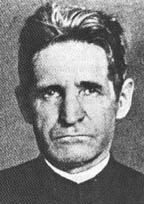
German Jesuit priest
title: "Rupert Mayer" type: doc version: 1 created: 2026-02-28 author: "Wikipedia contributors" status: active scope: public tags: ["1876-births", "1945-deaths", "20th-century-german-jesuits", "german-beatified-people", "world-war-i-chaplains", "20th-century-venerated-christians", "german-military-chaplains", "roman-catholics-in-the-german-resistance", "catholic-saints-and-blesseds-of-the-nazi-era", "clergy-from-stuttgart", "german-amputees", "recipients-of-the-iron-cross-(1914),-1st-class", "people-from-the-kingdom-of-württemberg", "beatifications-by-pope-john-paul-ii", "venerated-catholics-by-pope-john-paul-ii", "sachsenhausen-concentration-camp-prisoners"] description: "German Jesuit priest" topic_path: "history" source: "https://en.wikipedia.org/wiki/Rupert_Mayer" license: "CC BY-SA 4.0" wikipedia_page_id: 0 wikipedia_revision_id: 0
::summary German Jesuit priest ::
::data[format=table title="Infobox saint"]
| Field | Value |
|---|---|
| honorific_prefix | Blessed |
| name | Rupert Mayer |
| honorific_suffix | SJ |
| birth_date | |
| death_date | |
| feast_day | 3 November (several German dioceses, Jesuit order), 5 November (Diocese of Eichstätt) |
| venerated_in | Roman Catholic Church |
| image | [[File:RupertMayer.jpg |
| imagesize | 250px |
| birth_place | Stuttgart, Germany |
| death_place | Munich, Germany |
| titles | Martyr |
| beatified_date | 3 May 1987 |
| beatified_place | Munich |
| beatified_by | Pope John Paul II |
| :: |
|honorific_prefix= Blessed |name= Rupert Mayer |honorific_suffix= SJ |birth_date= |death_date= |feast_day= 3 November (several German dioceses, Jesuit order), 5 November (Diocese of Eichstätt) |venerated_in= Roman Catholic Church |image= [[File:RupertMayer.jpg|Father Rupert Mayer]] |imagesize= 250px |caption= |birth_place= Stuttgart, Germany |death_place= Munich, Germany |titles= Martyr |beatified_date= 3 May 1987 |beatified_place= Munich |beatified_by= Pope John Paul II |canonized_date= |canonized_place= |canonized_by=
Rupert Mayer (23 January 1876 – 1 November 1945) was a German Jesuit priest and a leading figure of the Catholic resistance to Nazism in Munich. In 1987, he was beatified by Pope John Paul II.
Early life
Mayer was born and grew up in Stuttgart, one of five siblings. He finished his secondary education in 1894 and studied philosophy and theology in Freiburg, Switzerland; Munich and Tübingen. He was, among other things, a member of A.V. Guestfalia Tübingen and K.D.St.V. Aenania München, two Studentenverbindungen that belong to the Cartellverband der katholischen deutschen Studentenverbindungen. In 1899, he was ordained a priest and served for a year as an assistant pastor in Spaichingen before joining the Society of Jesus in Feldkirch, Vorarlberg, Austria (then Austria-Hungary) in 1900. After his novitiate, he went to the Netherlands for further studies between 1906 and 1911, and then moved about Germany, Switzerland and the Netherlands preaching missions in many parishes. In 1912, he was transferred to Munich, where his ministry was largely to migrants who had come to the city seeking employment.
Army chaplain
::figure[src="https://upload.wikimedia.org/wikipedia/commons/9/9b/Bürgersaal_Eisernes_Kreuz_Rupert_Mayer.jpg" caption="[[Iron Cross]] medal of Fr. Rupert Mayer, exhibited in the [[Bürgersaalkirche]] of Munich"] ::
From 1914, Mayer volunteered as a chaplain in the First World War. He was initially assigned to a camp hospital; but was later made a Field Captain and sent to the fronts in France, Poland and Romania as chaplain to a division of soldiers. His bravery was legendary and he was held in great esteem by the soldiers. When there was fighting at the front, Mayer would be found himself crawling along the ground from one soldier to the next talking to them, and administering the sacraments to them. In December 1915, Mayer was the first chaplain to win the Iron Cross for bravery in recognition of his work with the soldiers at the front. In December 1916, he lost his left leg after it was injured in a grenade attack. He returned to Munich to convalesce and was referred to as the Limping Priest.
Mayer worked managing a clerical retreat, as a preacher, and as of 1921 as a leader of the men's sodality in Munich. Mayer introduced Sunday Masses at the main railway terminal for the convenience of travellers.
Protest against the Nazis
In January 1933, when Adolf Hitler became Chancellor of Germany, he began to close church-affiliated schools and started a campaign to discredit the religious orders in Germany. Mayer spoke out against this persecution from the pulpit of St. Michael's in downtown Munich and because he was a powerful influence in the city, the Nazis could not tolerate such a force to oppose them. On 16 May 1937, the Gestapo ordered Mayer to stop speaking in public which he obeyed, but he continued to preach in church.
Mayer spoke out against anti-Catholic baiting campaigns and fought against Nazi church policy. Since he believed that a Catholic could not be a National Socialist, conflict inevitably arose between him and the Nazis. He preached that Man must obey God more than men. His protests against the Nazis landed him several times in Landsberg prison. Mayer resolutely spoke out against the Nazi régime's evil in his lectures and sermons. On 5 June 1937, he was arrested and found himself in "protective custody" in Stadelheim Prison for six weeks. When he became the target of defamatory attacks on the part of the Nazis, his Jesuit superiors allowed him to return to the pulpit to defend himself against slanders that the Nazis had made during his silence. He was re-arrested and served a sentence of five months.
Mayer was arrested again on 3 November 1939 and sent to Sachsenhausen concentration camp under the Kanzelparagraphen, a series of 19th-century laws that forbade the clergy to make political statements. He was released from there on the condition of a broad ban on preaching. The sixty-three-year-old priest developed heart problems. From late 1944, he was interned in Ettal Abbey, mainly because the Nazis were afraid that he would die in the concentration camp, and thus become a martyr. He remained there until liberated by the US forces in May 1945.
A United States officer returned him to Munich, where he resumed his duties at St. Michael's Church.
Veneration
::figure[src="https://upload.wikimedia.org/wikipedia/commons/0/09/Burgersaalkirche_-Grave_of_Rupert_Mayer(Munich,_Bavaria).jpg" caption="Rupert Mayer's grave in the Bürgersaalkirche's "Lower Church""] ::
::figure[src="https://upload.wikimedia.org/wikipedia/commons/8/85/Burgersaalkirche_-Relic_of_Ruper_Mayer's_hair(Munich,_Bavaria).jpg" caption="relic]] in the Bürgersaalkirche"] ::
Since his death in 1945, Mayer's followers called for his beatification. On 26 September 1951, Cardinal Michael von Faulhaber opened the information process in the Archdiocese of Munich and Freising regarding the call to sanctity and virtues. In 1951, Jesuit provincial Otto Faller completed and formally forwarded the beatification information to Rome.
In 1956, Pope Pius XII, who had personally known Rupert Mayer during his time as nuncio in Munich, awarded him the title Servant of God. Under Pope John XXIII, the beatification process was initiated, the results of which were formally accepted by Pope Paul VI in 1971. Under Pope John Paul II, the decree of 'heroic virtue' was issued in 1983. Mayer was beatified by Pope John Paul II on 3 May 1987 in Munich. His feast day is 3 November.
Legacy
In Bavaria, numerous streets are named after Father Mayer. In 1954, the Cartell Rupert Mayer (CRM) was founded. It was a further development of the first Christliche Loge (CL) founded in Munich in 1946. The mediaeval Dombauhütten Logen may be considered its forerunner. In Pullach, Bavaria, a public school, a Realschule and a Gymnasium bear his name.
In Cebu City, Philippines, Sacred Heart School - Ateneo de Cebu, has a section named after him. Another Jesuit school in the Philippines, Xavier University - Ateneo de Cagayan, has a high school section that bears his name. Regis Jesuit High School in Aurora, Colorado dedicated the chapel to him. The parish church of Oberbozen (Soprabolzano) on South Tyrol's Ritten, inaugurated in 1991, has been dedicated to P. Rupert Mayer. In 2006 Fordham University dedicated a chapel in his name at their Lincoln Center campus in Manhattan, New York. A missionary school is named after him in Zimbabwe. Ateneo de Davao University's Senior High School in the Philippines has a senior high school section named after him.
In 1988 he was pictured on a German postage stamp with Edith Stein in honour of their beatifications.
In 2014 a movie was made of his life, called Father Rupert Mayer and starring Oliver Gruber. The movie can be seen on YouTube.
Prayer of Rupert Mayer
The following text come from the song produced by Bukas Palad Music Ministry: ::quote
Lord, what You will let it be so
Where You will there we will go
What is Your will help us to know
Lord, when You will the time is right
In You there's joy in strife
For Your will I'll give my life
To ease Your burden brings no pain
To forego all for You is gain
As long as I in You remain
REFRAIN:
Because You will it, it is best
Because You will it, we are blest
Till in Your hands our hearts find rest
Till in Your hands our hearts find rest ::
References
References
- Murray, John. (1955). "An Apostle of the Great City: Father Rupert Mayer, S.J. 1876-1945". Studies: An Irish Quarterly Review.
- "The Martyrs of our century beatified by Pope John Paul II.".
- (2008-01-21). "A Jesuit Martyr to the Nazis: Hitler wanted Alfred Delp forgotten, but his way of resistance still inspires.".
- "Blessed Rupert Mayer - Papal Artifacts".
- "Rupert Mayer {{!}} Sacred Space".
- [https://www.jesuits.global/saint-blessed/blessed-rupert-mayer/ Jesuits Global website, profile page]
- ""Bl Rupert Mayer. SJ", The Jesuits, Singapore".
- [http://www.sjweb.info/saintsBio.cfm?SaintID=308 Rochford SJ, Thomas. "Blessed Rupert Mayer", Jesuit Curia in Rome]
- [https://livingspace.sacredspace.ie/f1103s/ "Rupert Meyer", ''Living Space'', Irish Jesuits]
- (11 June 2018). "Blessed Rupert Mayer".
- (January 1953). "Index ac status causarum beatificationis servorum dei et canonizationis beatorum". Typis polyglottis vaticanis.
- "Pater-Rupert-Mayer-Realschule: Home".
- "Pater-Rupert-Mayer-Gymnasium: Startseite".
- (6 November 2019). "Roxford Azo '18".
- (2 March 2007). "Lincoln Center Chapel Gets Makeover, New Name".
- [https://news.fordham.edu/event/ignatian-week-closing-mass-lincoln-center/ "Ignatian Week Closing Mass: Lincoln Center", ''Fordham News'', 11 February 2018]
- "St. Rupert Mayer Secondary School".
- [https://www.stamps-sieger.com/beatification-of-edith-stein-and-father-rupert-mayer-first-day-cover-catalog-no-1352-bund/ Stamps Sieger website, Catalog number 1352]
::callout[type=info title="Wikipedia Source"] This article was imported from Wikipedia and is available under the Creative Commons Attribution-ShareAlike 4.0 License. Content has been adapted to SurfDoc format. Original contributors can be found on the article history page. ::