Red Snow
British nuclear weapon
title: "Red Snow" type: doc version: 1 created: 2026-02-28 author: "Wikipedia contributors" status: active scope: public tags: ["cold-war-weapons-of-the-united-kingdom", "nuclear-bombs-of-the-united-kingdom", "military-equipment-introduced-in-the-1960s", "rainbow-code"] description: "British nuclear weapon" topic_path: "geography/united-kingdom" source: "https://en.wikipedia.org/wiki/Red_Snow" license: "CC BY-SA 4.0" wikipedia_page_id: 0 wikipedia_revision_id: 0
::summary British nuclear weapon ::
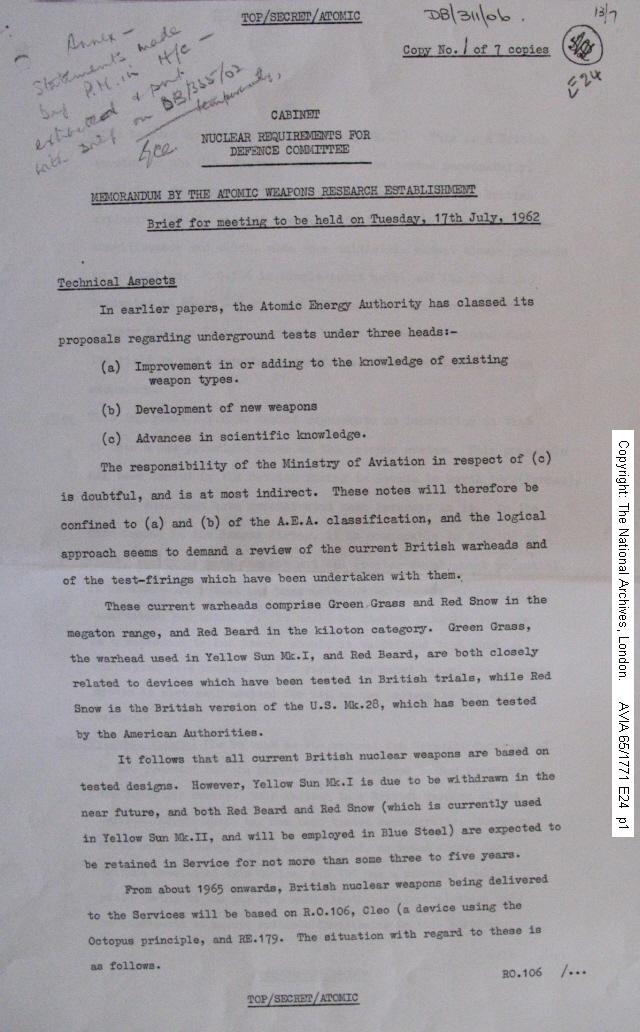
Red Snow was a British thermonuclear weapon, based on the US W28 (then called Mark 28) design used in the B28 thermonuclear bomb and AGM-28 Hound Dog missile. The US W28 had yields of 70 , and while Red Snow yields are still classified, declassified British documents indicate the existence of "kiloton Red Snow" and "megaton Red Snow" variants of the weapon, suggesting similar yield options, while other sources have suggested a yield of approximately 1 MtTNT.
Development
The Red Snow warhead was developed after a September 1958 decision to adopt the US warhead for British use, following the 1958 US-UK Mutual Defence Agreement. It entered service in 1961, remaining in use until 1972, when it was replaced by the WE.177 bomb.
Red Snow was used as both a free-fall bomb and as the warhead of the Blue Steel missile. In the gravity bomb role, it was fitted into the casing of the Yellow Sun weapon, even though the Red Snow warhead was considerably smaller than that of the original Yellow Sun bomb.
The Red Snow physics package was later reduced in size, weight and yield, and fitted with a smaller more modern primary, intended as a Red Beard replacement. Known as Una, this was later reduced in diameter and renamed Ulysses as the physics package intended for the UK warhead on the Skybolt project.
Design
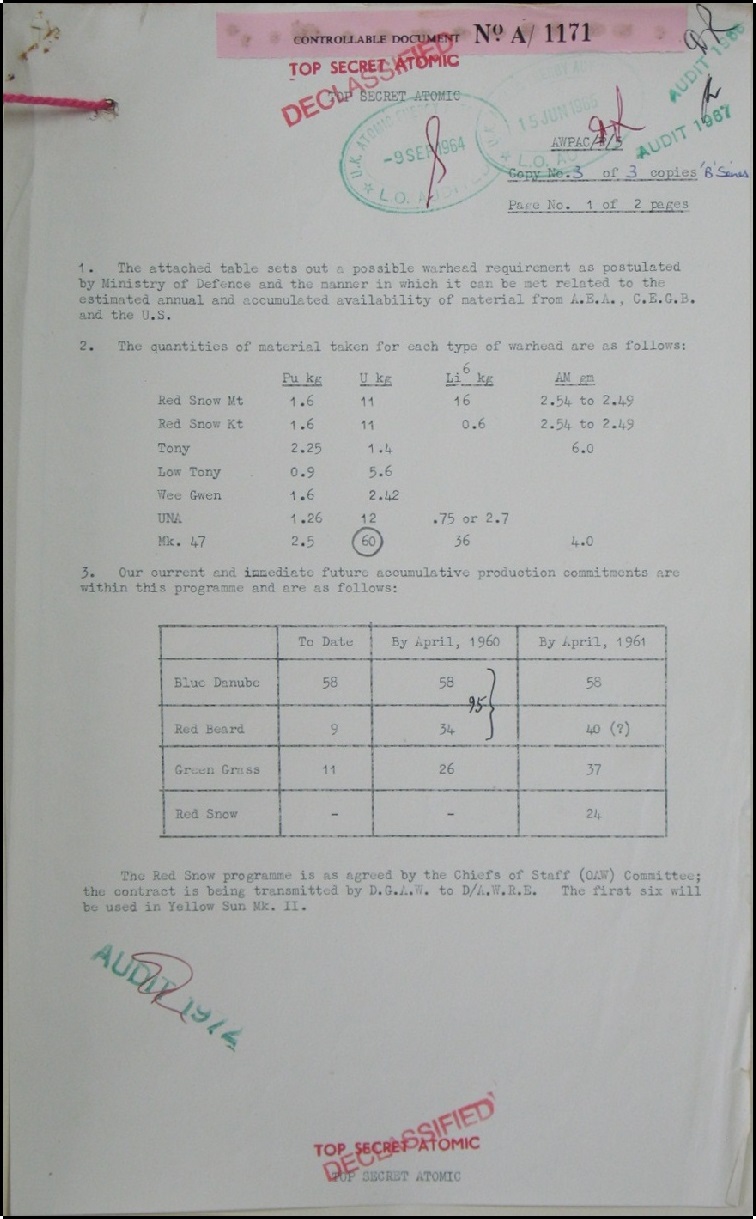
Red Snow used the primary stage Peter, an anglicised version of the US Python device used in the W28. The Peter device contained 2.25 kg of plutonium and 1.4 kg of uranium. The kiloton Red Snow contained 1.6 kg of plutonium, 11 kg of uranium, 0.6 kg of lithium deuteride and 2.49 to of tritium, while in megaton Red Snow all the values stayed the same except the lithium deuteride amount which increased to 16 kg.
The device was fitted inside weapon cases from the older Yellow Sun weapons. This may have been to simplify crew retraining, simplify integration of the new weapon to existing platforms, or to hide the radical reduction in weapon size.
References
References
- (September 2007). "Yellow Sun MK.2 Enters Service". Atomic Weapons Establishment.
- (17 July 1962). "Defence Committee on Nuclear Requirements 1959–1963". National Archive.
- Sublette, Carey. (12 June 2020). "Complete List of All U.S. Nuclear Weapons".
- (1964). "Weapons Department Atomic Warheads Production Committee, Papers & Minutes". UK Atomic Energy Authority.
- Sublette, Carey. (2002-04-30). "History of the British Nuclear Arsenal".
- [https://web.archive.org/web/20070922202648/http://www.awe.co.uk/main_site/about_awe/history/timeline/1961b/index.html Blue Steel Nuclear Missile Enters Service], Atomic Weapons Establishment timeline, September 2007
- "Nuclear-weapons.info".
- Burnell, Brian. (2018-04-15). "WE.177".
::callout[type=info title="Wikipedia Source"] This article was imported from Wikipedia and is available under the Creative Commons Attribution-ShareAlike 4.0 License. Content has been adapted to SurfDoc format. Original contributors can be found on the article history page. ::