Ralph Fowler
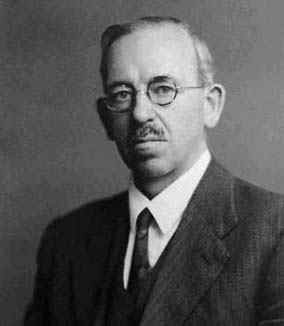
British mathematical physicist (1889–1944)
title: "Ralph Fowler" type: doc version: 1 created: 2026-02-28 author: "Wikipedia contributors" status: active scope: public tags: ["1889-births", "1944-deaths", "people-from-roydon,-essex", "people-educated-at-winchester-college", "alumni-of-trinity-college,-cambridge", "military-personnel-from-essex", "fellows-of-the-american-physical-society", "royal-marines-officers", "royal-marines-personnel-of-world-war-i", "royal-medal-winners", "english-cricketers", "norfolk-cricketers", "officers-of-the-order-of-the-british-empire", "wicket-keepers", "john-humphrey-plummer-professors", "20th-century-english-sportsmen", "20th-century-british-physicists", "british-fellows-of-the-royal-society"] description: "British mathematical physicist (1889–1944)" topic_path: "history" source: "https://en.wikipedia.org/wiki/Ralph_Fowler" license: "CC BY-SA 4.0" wikipedia_page_id: 0 wikipedia_revision_id: 0
::summary British mathematical physicist (1889–1944) ::
::data[format=table title="Infobox scientist"]
| Field | Value |
|---|---|
| honorific_prefix | Sir |
| name | Ralph Fowler |
| honorific_suffix | |
| image | Ralph H. Fowler.jpg |
| birth_date | |
| birth_name | Ralph Howard Fowler |
| birth_place | Roydon, England, UKGBI |
| death_date | |
| death_place | Trumpington, England, UK |
| education | Winchester College |
| alma_mater | Trinity College, Cambridge |
| known_for | {{plainlist |
| spouse | |
| children | 4, including Ruth |
| relatives | {{Plain list |
| awards | {{Plain list |
| * FRS (1925)<ref name | "frs" |
| fields | {{Plain list |
| work_institutions | University of Cambridge (1919–44) |
| academic_advisors | Archibald Vivian Hill |
| doctoral_students | {{Plain list |
| * Bertha Swirles (1929)<ref name | MGP |
| * Harrie Massey (1932)<ref name | MGP/ |
| * {{Cite journal | last |
| * Maurice Pryce (1937)<ref name | MGP/ |
| notable_students | {{Plain list |
| * Charles Coulson<ref name | MGP/ |
| * Nevill Mott<ref name | MGP/ |
| :: |
| honorific_prefix = Sir | name = Ralph Fowler | honorific_suffix = | image = Ralph H. Fowler.jpg | birth_date = | birth_name = Ralph Howard Fowler | birth_place = Roydon, England, UKGBI | death_date = | death_place = Trumpington, England, UK | education = Winchester College | alma_mater = Trinity College, Cambridge | known_for = {{plainlist|
- Darwin–Fowler method
- Bernal–Fowler rules
- Field electron emission
- Zeroth law of thermodynamics | spouse = | children = 4, including Ruth | relatives = {{Plain list|
- Ernest Rutherford (father-in-law)
- Robert Edwards (son-in-law)
- Mary Fowler (granddaughter) | awards = {{Plain list|
- Rayleigh Prize (1913)
- Adams Prize (1924)
- FRS (1925)
- Royal Medal (1936) | fields = {{Plain list|
- Statistical physics
- Thermodynamics | work_institutions = University of Cambridge (1919–44) | academic_advisors = Archibald Vivian Hill | doctoral_students = {{Plain list|
- John Lennard-Jones (1924)
- Paul Dirac (1926)
- Bertha Swirles (1929)
- William McCrea (1930)
- Harrie Massey (1932)
- S. Chandrasekhar (1933)
- Daulat Singh Kothari (1933)
- Homi J. Bhabha (1935)
- Maurice Pryce (1937) | notable_students = {{Plain list|
- Charles Coulson
- Edward Arthur Milne
- Nevill Mott
Sir Ralph Howard Fowler (17 January 1889 – 28 July 1944) was a British mathematical physicist.
Biography
Ralph Howard Fowler was born on 17 January 1889 in Roydon, England, the son of Howard Fowler from Burnham-on-Sea, and Frances Eva Dewhurst, the daughter of a cotton merchant from Manchester.
After attending Winchester College, Fowler won a scholarship to Trinity College, Cambridge, where he studied mathematics and became a Wrangler in Part II of the Mathematical Tripos.
In World War I, Fowler obtained a commission in the Royal Marine Artillery and was seriously wounded in his shoulder in the Gallipoli campaign. The wound enabled his friend Archibald Hill to use his talents properly. As Hill's second in command he worked on anti-aircraft ballistics in the Anti-Aircraft Experimental Section of HMS Excellent on Whale Island. He made a major contribution on the aerodynamics of spinning shells. He was awarded the OBE in 1918.
In 1919, Fowler returned to Trinity College, where he became College Lecturer in Mathematics the following year.
Fowler worked on thermodynamics and statistical mechanics, bringing a new approach to physical chemistry. With Arthur Milne, a comrade during the war, he wrote a seminal work on stellar spectra, temperatures, and pressures. In 1925, he was elected a Fellow of the Royal Society. He became research supervisor to Paul Dirac and, in 1926, worked with him on the statistical mechanics of white dwarf stars.
In 1927, Fowler was one of the participants of the fifth Solvay Conference on Physics that took place at the International Solvay Institute for Physics in Belgium. The following year, he published (with Lothar Nordheim) a seminal paper that explained the physical phenomenon now known as field electron emission, and helped to establish the validity of modern electron band theory. In 1931, he was the first to formulate and label the zeroth law of thermodynamics. The following year, he was appointed John Humphrey Plummer Professor of Mathematical Physics in the Cavendish Laboratory. In 1933, he worked with John Bernal to develop a model for the structure of water and ice known as the ice rules.
In 1939, when World War II began, he resumed his work with the Ordnance Board, despite poor health, and was chosen for scientific liaison with Canada and the United States. He knew America well, having visiting professorships at Princeton University and the University of Wisconsin–Madison. For this liaison work, he was knighted in 1942 (see MAUD Committee). He returned to Britain later in the war and worked for the Ordnance Board and the Admiralty up until a few weeks before his death in 1944.
Fifteen Fellows of the Royal Society and three Nobel Laureates (Chandrasekhar, Dirac, and Mott) were supervised by Fowler between 1922 and 1939. In addition to Milne, he worked with Sir Arthur Eddington, Subrahmanyan Chandrasekhar, Paul Dirac, Homi J. Bhabha, and Sir William McCrea. It was Fowler who introduced Dirac to quantum theory in 1923. Fowler also put Dirac and Werner Heisenberg in touch with each other through Niels Bohr. At Cambridge, he supervised the doctoral studies of 64 students, including John Lennard-Jones, Paul Dirac, and Garrett Birkhoff.
Fowler died on 28 July 1944 in Trumpington at the age of 55.
The Fowler Islands in Crystal Sound on the Antarctic Peninsula were named by the UK Antarctic Place-Names Committee in his honour.
Personal life
Fowler was a keen amateur cricketer who played as a wicket-keeper. He played for Norfolk in the Minor Counties Championship in 1908 and 1909.
In 1921, Fowler married Eileen Mary (1901–1930), the only daughter of Ernest Rutherford. They had four children; two sons and two daughters. Eileen died after the birth of their last child, Ruth Fowler Edwards, a geneticist and wife of Robert G. (Bob) Edwards, the "father" of in vitro fertilisation and 2010 Nobel Prize in Physiology or Medicine laureate. One of his grandchildren is Mary Fowler, a geophysicist and the sixth Master (2012–2020) of Darwin College, Cambridge.
Selected publications
- with E. A. Guggenheim:
References
References
- (1945). "Ralph Howard Fowler. 1889–1944". [[Obituary Notices of Fellows of the Royal Society]].
- "Ralph Fowler - The Mathematics Genealogy Project".
- Panchapakesan, N.. (July 1994). "DS Kothari and Delhi University". Defence Science Journal.
- Milne, E. A.. (2004-09-23). "Fowler, Sir Ralph Howard (1889–1944), mathematical physicist and weapons researcher".
- Van der Kloot W. (2011). "Mirrors and Smoke: A. V. Hill, his Brigands, and the Science of Anti-aircraft Gunnery in World War I.". Notes Rec. R. Soc. Lond..
- Y. Cengel, M. Boles, ''Thermodynamics – An Engineering Approach'' 5th ed.
- (1933). "A Theory of Water and Ionic Solution, with Particular Reference to Hydrogen and Hydroxyl Ions". J. Chem. Phys..
- "Player profile: Ralph Fowler". CricketArchive.
- (3 April 2012). "New Master for Darwin". University of Cambridge.
- (13 May 1920). "Review: ''The Elementary Differential Geometry of Plane Curves'' by R. H. Fowler". Nature.
- Bartky, Walter. (1929). "Review: ''Statistical Mechanics'' by R. H. Fowler". Astrophysical Journal.
- Stone, M. H.. (1933). "Review: ''Statistical Mechanics'' by R. H. Fowler". Bull. Amer. Math. Soc..
- Frank, N. H.. (1937). "Review: ''Statistical Mechanics'', 2nd edition by R. H. Fowler". Bull. Amer. Math. Soc..
- Young, T. F.. (1941). "Review: ''Statistical Thermodynamics'' by R. H. Fowler and E. A. Guggenheim". J. Chem. Educ..
::callout[type=info title="Wikipedia Source"] This article was imported from Wikipedia and is available under the Creative Commons Attribution-ShareAlike 4.0 License. Content has been adapted to SurfDoc format. Original contributors can be found on the article history page. ::