Radical 37
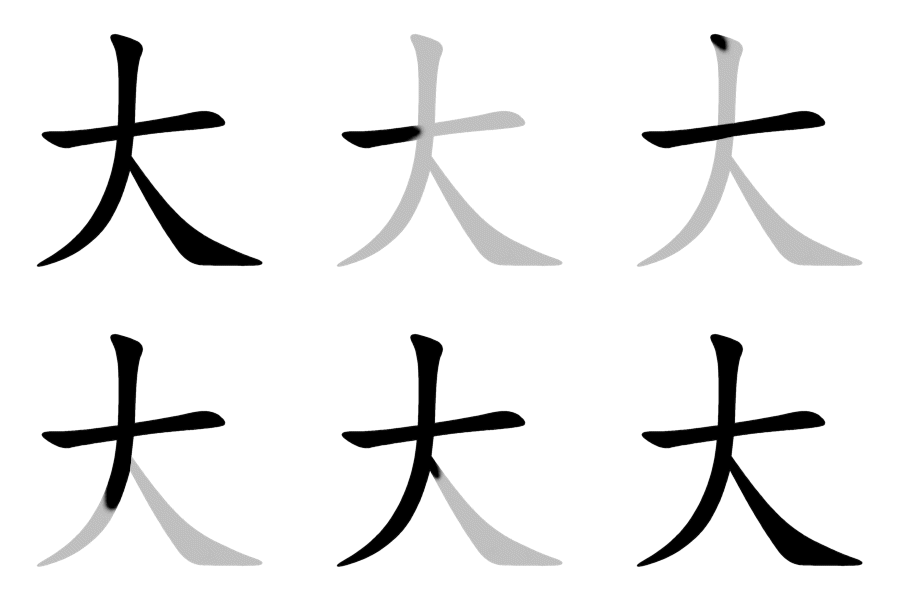
Chinese character radical
title: "Radical 37" type: doc version: 1 created: 2026-02-28 author: "Wikipedia contributors" status: active scope: public tags: ["kyōiku-kanji", "kangxi-radicals", "simplified-chinese-radicals"] description: "Chinese character radical" topic_path: "geography/china" source: "https://en.wikipedia.org/wiki/Radical_37" license: "CC BY-SA 4.0" wikipedia_page_id: 0 wikipedia_revision_id: 0
::summary Chinese character radical ::
::data[format=table title="Infobox Kangxi radical|37"]
| Field | Value |
|---|---|
| uni | 5927 |
| meaning | big, very |
| pny | dà |
| bopo | ㄉㄚˋ |
| gr | dah |
| wade | ta4 |
| jyutping | daai6 |
| yale | daaih |
| poj | tāi |
| cn | (Top) 大字頭/大字头 dàzìtóu |
| onyomi | ダイ dai / タイ tai |
| kunyomi | おお ō / おお-きい ō-kii |
| jp | 大/だい dai |
| (Top) 大頭/だいがしら daigashira | |
| (Top) 大冠/だいかんむり daikanmuri | |
| hang | 클 keul |
| hanja | 대 dae |
| hanviet | Đại |
| :: |
| uni = 5927 | meaning = big, very | pny = dà | bopo = ㄉㄚˋ | gr = dah | wade = ta4 | jyutping = daai6 | yale = daaih | poj = tāi | cn = (Top) 大字頭/大字头 dàzìtóu | onyomi = ダイ dai / タイ tai | kunyomi = おお ō / おお-きい ō-kii | jp = 大/だい dai (Top) 大頭/だいがしら daigashira (Top) 大冠/だいかんむり daikanmuri | hang = 클 keul | hanja = 대 dae | hanviet = Đại
Radical 37 or radical big (大部) meaning "big", "great", or "very" is one of the 31 Kangxi radicals (214 radicals total) composed of three strokes.
In the Kangxi Dictionary, there are 132 characters (out of 49,030) to be found under this radical.
大 is also the 33rd indexing component in the Table of Indexing Chinese Character Components predominantly adopted by Simplified Chinese dictionaries published in mainland China.
Evolution
File:大-oracle.svg|Oracle bone script character File:大-bronze.svg|Bronze script character File:大-bigseal.svg|Large seal script character File:大-seal.svg|Small seal script character
Derived characters
::data[format=table]
| Strokes | Characters |
|---|---|
| +0 | 大 夨 |
| +1 | 天 太 夫 夬 夭 |
| +2 | 央 夯 夰 失 夲 夳 头SC (=頭 - 頁) |
| +3 | 夵 夶 (=比 - 比) 夷 夸 (also SC form of 誇 - 言) 夹SC (=夾) 夺SC (=奪) 夻 夼 |
| +4 | 夽 夾 夿 奀 奁SC (=奩) 奂SC (=奐) |
| +5 | 奃 奄 奅 奆 奇 奈 奉 奋SC (=奮) 奌 (=點 - 黑) 奍 奔 |
| +6 | 奎 奏 奐 契 奒 奓 奕 奖SC (=獎 - 犬) |
| +7 | 奊 套 奘 奙 奚 |
| +8 | 奛 奜 奝 奞 奟 |
| +9 | 奠 奡 奢 奣 奤 奥SC/JP (=奧) |
| +10 | 奦 奧 奨JP (=獎 - 犬) |
| +11 | 奩 奪 奫 奬 (=獎 - 犬) |
| +12 | 奭 |
| +13 | 奮 奯 |
| +15 | 奰 |
| +19 | 奱 |
| +21 | 奲 |
| :: |
Sinogram
The radical is also used as an independent Chinese character. It is one of the Kyōiku kanji or Kanji taught in elementary school in Japan. It is a first grade kanji.
References
References
::callout[type=info title="Wikipedia Source"] This article was imported from Wikipedia and is available under the Creative Commons Attribution-ShareAlike 4.0 License. Content has been adapted to SurfDoc format. Original contributors can be found on the article history page. ::