Radical 22
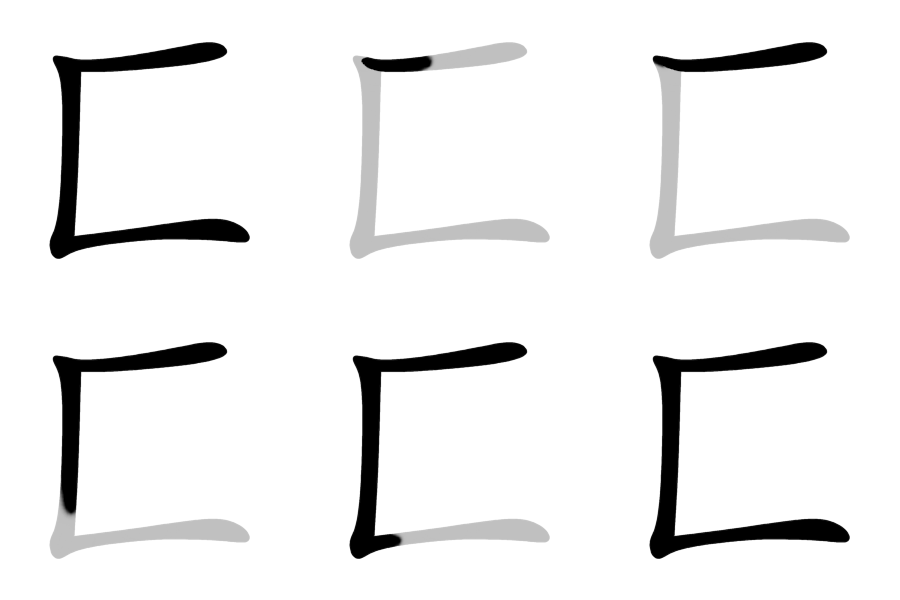
Chinese character radical
title: "Radical 22" type: doc version: 1 created: 2026-02-28 author: "Wikipedia contributors" status: active scope: public tags: ["kangxi-radicals", "simplified-chinese-radicals"] description: "Chinese character radical" topic_path: "geography/china" source: "https://en.wikipedia.org/wiki/Radical_22" license: "CC BY-SA 4.0" wikipedia_page_id: 0 wikipedia_revision_id: 0
::summary Chinese character radical ::
::data[format=table title="Infobox Kangxi radical"]
| Field | Value |
|---|---|
| 22 | uni |
| meaning | box |
| pny | fāng |
| bopo | ㄈㄤ |
| wade | fang1 |
| jyutping | fong1 |
| yale | fong1 |
| poj | hong |
| cn | 左方框 zuǒfāngkuàng |
| onyomi | ホウ hō |
| kunyomi | はこ hako |
| jp | 匚構/はこがまえ hakogamae |
| hang | 상자 sanja |
| hanja | 방 bang |
| hanviet | phương |
| :: |
|22|uni=531A |meaning=box |pny= fāng |bopo= ㄈㄤ |wade= fang1 |jyutping= fong1 |yale= fong1 |poj= hong |cn= 左方框 zuǒfāngkuàng |onyomi= ホウ hō |kunyomi= はこ hako |jp= 匚構/はこがまえ hakogamae |hang= 상자 sanja |hanja= 방 bang |hanviet= phương
Radical 22 or radical right open box (匚部) meaning "box" is one of the 23 Kangxi radicals (214 radicals total) composed of two strokes.
In the Kangxi Dictionary, there are 64 characters (out of 49,030) to be found under this radical.
In Traditional Chinese used in Taiwan, Hong Kong and Macau, radical 22 (right open box, 匚), whose two strokes share the same starting point, is slightly different from radical 23 (hiding enclosure, 匸), whose second stroke starts is a bit right to the starting point of the first stroke.
In mainland China, the two radicals were unified as right open box 匚, which then became the 8th indexing component in Table of Indexing Chinese Character Components predominantly adopted by Simplified Chinese dictionaries, and the nuance between the two radicals no longer exists; No associated indexing component is left after the merger. This merger also applies to Traditional Chinese characters in China's GB character set.
Radical 22 and radical 23 were also unified in Japanese kanji. JIS character set (including kyūjitai). Mainstream Japanese fonts and dictionaries do not distinguish between the two radicals.
Evolution
File:匚-oracle.svg|Oracle bone script character File:匚-bronze.svg|Bronze script character File:匚-bigseal.svg|Large seal script character File:匚-seal.svg|Small seal script character
An archaic version of this radical, directly regularised from the bronzeware and seal script forms, occasionally appears in regular script (kai shu) or printed text as 𠥓 (12 strokes, 匚 + 10 strokes, e.g., 𠥧, an archaic version of 杯) and is used for the transcription of ancient inscriptions.
Derived characters
::data[format=table]
| Strokes | Characters |
|---|---|
| +0 | 匚 |
| +3 | 匛 匜 匝 匞 |
| +4 | 匟 匠 匡 匢 |
| +5 | 匣 匤 匥 医SC/JP (=醫 - 酉) |
| +7 | 匦SC (=匭) 匧 |
| +8 | 匨 匩 匪 匫 |
| +9 | 匬 匭 匮SC (=匱) |
| +10 | 𠥓 |
| +11 | 匯 匰 |
| +12 | 匱 匲 |
| +13 | 匳 |
| +14 | 匴 |
| +15 | 匵 |
| +17 | 匶 |
| +18 | 匷 |
| :: |
Literature
References
References
- Examples include {{Lang. ja. 新明解現代漢和辞典 ''Shin Meikai Gendai Kanwa Jiten'' published by [[Sanseidō]]. While its index lists both radicals, they both lead to the same merged radical.
::callout[type=info title="Wikipedia Source"] This article was imported from Wikipedia and is available under the Creative Commons Attribution-ShareAlike 4.0 License. Content has been adapted to SurfDoc format. Original contributors can be found on the article history page. ::