Radical 2
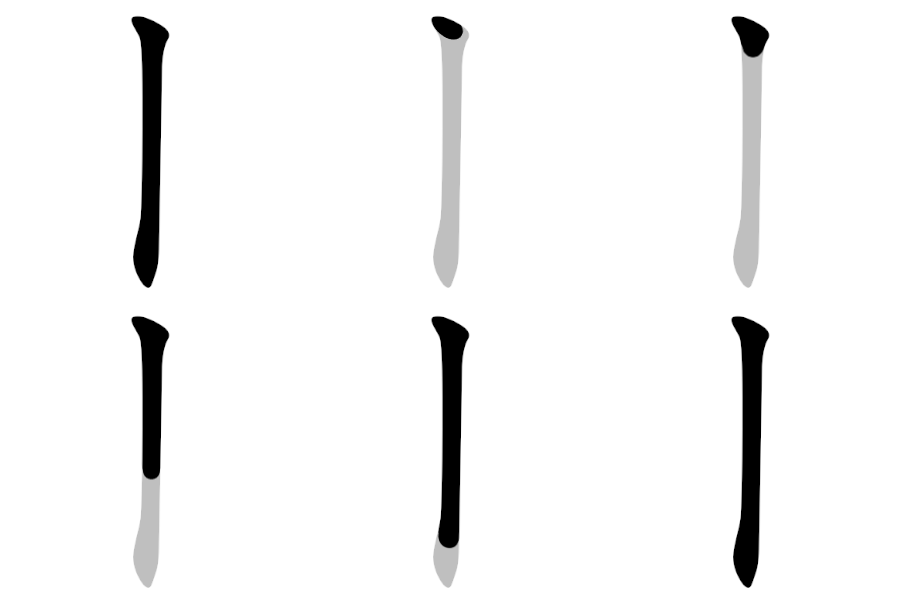
Kangxi radical
title: "Radical 2" type: doc version: 1 created: 2026-02-28 author: "Wikipedia contributors" status: active scope: public tags: ["kangxi-radicals", "simplified-chinese-radicals"] description: "Kangxi radical" topic_path: "geography/china" source: "https://en.wikipedia.org/wiki/Radical_2" license: "CC BY-SA 4.0" wikipedia_page_id: 0 wikipedia_revision_id: 0
::summary Kangxi radical ::
::data[format=table title="Infobox Kangxi radical|2"]
| Field | Value |
|---|---|
| uni | 4E28 |
| meaning | line, stick |
| pny | gǔn |
| bopo | ㄍㄨㄣˇ |
| gr | goen |
| wade | kun3 |
| jyutping | kwan2 |
| yale | kwán |
| poj | khún |
| cn | 豎/竖/竪 shù |
| onyomi | コン kon |
| kunyomi | ぼう bō |
| jp | 棒/ぼう bō (stick) |
| 縦棒/たてぼう tatebō (vertical stick) | |
| hang | 뚫을 tturheul |
| hanja | 곤 gonn |
| hanviet | cổn |
| :: |
::callout[type=note] the second Chinese character component ::
| uni = 4E28 | meaning = line, stick | pny = gǔn | bopo = ㄍㄨㄣˇ | gr = goen | wade = kun3 | jyutping = kwan2 | yale = kwán | poj = khún | cn = 豎/竖/竪 shù | onyomi = コン kon | kunyomi = ぼう bō | jp = 棒/ぼう bō (stick) 縦棒/たてぼう tatebō (vertical stick) | hang = 뚫을 tturheul | hanja = 곤 gonn | hanviet = cổn Radical 2 or radical line (丨部) meaning "vertically connected" is one of 6 of the 214 Kangxi radicals that are composed of only one stroke.
In the Kangxi Dictionary, there are only 21 characters (out of 49,030) to be found under this radical.
丨 is also the 2nd indexing component in the Table of Indexing Chinese Character Components predominantly adopted by Simplified Chinese dictionaries published in mainland China, with 亅 being its associated indexing component (used to be associated with 乛 prior to the new standard in 2009).
Evolution
File:丨-bigseal.svg|Large seal script character File:丨-seal.svg|Small seal script character
Derived characters
::data[format=table]
| Strokes | Characters |
|---|---|
| +0 | 丨 |
| +1 | 丩 |
| +2 | 个SC/variant (=個 - 人) 丫 |
| +3 | 中 丮 丯 丰SC/JP/丰TC (also SC/JP form of 豐 - 豆) 书SC (=書 - 曰) |
| +4 | 丱 |
| +6 | 串 |
| +7 | 丳 |
| +8 | 临SC (=臨 - 臣) |
| +9 | 丵 |
| :: |
In calligraphy
::figure[src="https://upload.wikimedia.org/wikipedia/commons/b/bf/Yongzi_Bafa_3.svg" caption="The vertical line as in 永"] ::
The only stroke in radical line, known as 豎/竖/竪 shù "vertical", is called 努 nǔ in the eight principles of the character 永 (永字八法 Yǒngzì Bāfǎ) which are the basis of Chinese calligraphy.
Literature
References
References
- {{Lang. zh-Hant. 《說文解字》:“丨,上下通也。” ''[[Shuowen Jiezi]]'': "丨" means vertically connected.
::callout[type=info title="Wikipedia Source"] This article was imported from Wikipedia and is available under the Creative Commons Attribution-ShareAlike 4.0 License. Content has been adapted to SurfDoc format. Original contributors can be found on the article history page. ::