Radical 188
Chinese character radical
title: "Radical 188" type: doc version: 1 created: 2026-02-28 author: "Wikipedia contributors" status: active scope: public tags: ["kyōiku-kanji", "kangxi-radicals", "simplified-chinese-radicals"] description: "Chinese character radical" topic_path: "geography/china" source: "https://en.wikipedia.org/wiki/Radical_188" license: "CC BY-SA 4.0" wikipedia_page_id: 0 wikipedia_revision_id: 0
::summary Chinese character radical ::
::data[format=table title="Infobox Kangxi radical"]
| Field | Value |
|---|---|
| 188 | uni |
| meaning | bone |
| pny | gǔ |
| bopo | ㄍㄨˇ |
| wade | ku3 |
| jyutping | gwat1 |
| yale | gwat1 |
| cn | 骨字旁 gǔzìpáng |
| onyomi | コツ kotsu / コチ kochi |
| kunyomi | ほね hone |
| jp | 骨偏/ほねへん honehen |
| hang | 뼈 ppyeo |
| hanja | 골 gol |
| hanviet | cốt, cọt, cút, gút |
| :: |
|188|uni=9AA8 |meaning= bone |pny= gǔ |bopo= ㄍㄨˇ |wade= ku3 |jyutping= gwat1 |yale= gwat1 |cn= 骨字旁 gǔzìpáng |onyomi= コツ kotsu / コチ kochi |kunyomi= ほね hone |jp= 骨偏/ほねへん honehen |hang= 뼈 ppyeo |hanja= 골 gol |hanviet= cốt, cọt, cút, gút
Radical 188 or radical bone (骨部) meaning "bone" is one of the 8 Kangxi radicals (214 radicals in total) composed of 10 strokes.
In the Kangxi Dictionary, there are 185 characters (out of 49,030) to be found under this radical.
骨 (9 strokes in Simplified Chinese) is also the 182nd indexing component in the Table of Indexing Chinese Character Components predominantly adopted by Simplified Chinese dictionaries published in mainland China.
Evolution
File:骨-oracle.svg|Oracle bone script character File:骨-bigseal.svg|Large seal script character File:骨-seal.svg|Small seal script character
Derived characters
::data[format=table]
| Strokes | Characters |
|---|---|
| +0 | 骨 |
| +2 | 骩 |
| +3 | 骪 骫 骬 骭 骮 |
| +4 | 骯 骰 骱 |
| +5 | 骲 骳 骴 骵 (=體) 骶 骷 |
| +6 | 骸 骹 骺 骻 骼 |
| +7 | 骽 (=腿 - 肉) 骾 (=鯁 - 魚) |
| +8 | 骿 髀 髁 |
| +9 | 髂 髃 髄 (=髓) 髅SC (=髏) |
| +10 | 髆 髇 髈 (=膀 - 肉) 髉 髊 髋SC (=髖) 髌SC (=髕) |
| +11 | 髍 髎 髏 |
| +12 | 髐 |
| +13 | 髑 髒 髓 體 |
| +14 | 髕 |
| +15 | 髖 |
| +16 | 髗 |
| :: |
Variant Forms
This radical character is written in different countries and regions.
In the Kangxi Dictionary, the twist inside the upper component (冎) is positioned to the right (◲, ⾻), and the lower part of the character is 月 with the first stroke vertical (This component means "meat" instead of "moon". See Radical 130 肉). This form is inherited in modern Japanese, Korean, and Hong Kong Traditional Chinese.
In Taiwan standard (骨), while the upper twist is positioned to the right, the lower component meaning "meat" (Radical 130 肉) became ⺼ (two horizontal strokes become a dot and a rising stroke) to distinguish from 月 ("moon", Radical 74).
In mainland China, the xin zixing (new printing typeface) reform stipulates that the twist inside the upper component is positioned to the left (◱, 骨), while the lower part remains unchanged. This form is used in modern Simplified Chinese (Mainland China, Singapore, Malaysia) and also in Traditional Chinese publications in mainland China (This change of direction reduces stroke count from 10 to 9).
A more ancient form of this radical character is 人 inside the frame, from which the "orthodox" form found in the Kangxi Dictionary and the xin zixing form is derived. Both derived forms along with the ancient form had been used in ancient publications and writing.
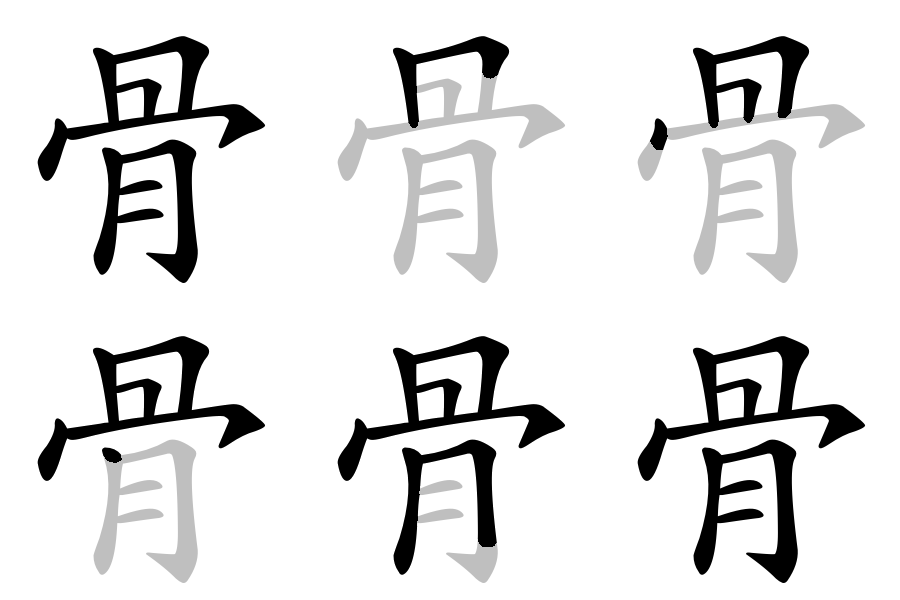
File:骨-mingti-kangxi.svg|Kangxi Dictionary File:骨-torder.gif|Stroke order in Taiwan standard File:骨-jorder.gif|Stroke order in Hong Kong and Japanese standard File:骨-order.gif|Stroke order in Simplified Chinese
::data[format=table] | Kangxi Dict Japanese Korean Trad. Chinese (HK & MO) | Trad. Chinese (Taiwan) | Simp. Chinese Trad. Chinese (xin zixing) | |---|---|---| | 骨 | 骨 | 骨 | ::
Sinogram
As an individual character this is one of the Kyōiku kanji or Kanji taught in elementary school in Japan. It is a sixth grade kanji.
References
Literature
References
::callout[type=info title="Wikipedia Source"] This article was imported from Wikipedia and is available under the Creative Commons Attribution-ShareAlike 4.0 License. Content has been adapted to SurfDoc format. Original contributors can be found on the article history page. ::