Radical 150
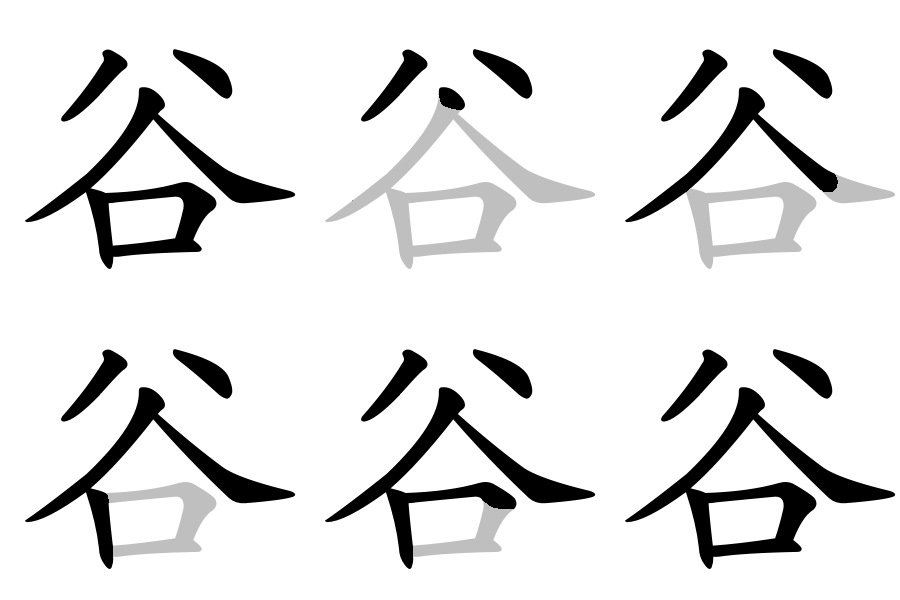
Chinese character radical
title: "Radical 150" type: doc version: 1 created: 2026-02-28 author: "Wikipedia contributors" status: active scope: public tags: ["kyōiku-kanji", "kangxi-radicals", "simplified-chinese-radicals"] description: "Chinese character radical" topic_path: "geography/china" source: "https://en.wikipedia.org/wiki/Radical_150" license: "CC BY-SA 4.0" wikipedia_page_id: 0 wikipedia_revision_id: 0
::summary Chinese character radical ::
::data[format=table title="Infobox Kangxi radical"]
| Field | Value |
|---|---|
| 150 | uni |
| meaning | valley |
| pny | gǔ |
| bopo | ㄍㄨˇ |
| wade | ku3 |
| jyutping | guk1, juk6 |
| yale | guk1 |
| onyomi | コク koku |
| kunyomi | たに tani |
| jp | 谷/たに tani |
| hang | 골 gol |
| hanja | 곡 gok |
| :: |
|150|uni=8C37 |meaning= valley |pny= gǔ |bopo= ㄍㄨˇ |wade= ku3 |jyutping= guk1, juk6 |yale= guk1 |cn= |onyomi= コク koku |kunyomi= たに tani |jp= 谷/たに tani |hang= 골 gol |hanja= 곡 gok
Radical 150 or radical valley (谷部) meaning "valley" is one of the 20 Kangxi radicals (214 radicals in total) composed of 7 strokes.
In the Kangxi Dictionary, there are 54 characters (out of 49,030) to be found under this radical.
谷 is also the 162nd indexing component in the Table of Indexing Chinese Character Components predominantly adopted by Simplified Chinese dictionaries published in mainland China.
The character 谷 is also used as a Chinese surname.
In Simplified Chinese, 谷 is used as the simplified form of 穀 (grain).
Evolution
File:谷-oracle.svg|Oracle bone script character File:谷-bronze.svg|Bronze script character File:谷-bigseal.svg|Large seal script character File:谷-seal.svg|Small seal script character
Derived characters
::data[format=table]
| Strokes | Characters |
|---|---|
| +0 | 谷 |
| +3 | 谸 |
| +4 | 谹 谺 谻 |
| +6 | 谼 |
| +7 | 谽 |
| +8 | 谾 |
| +10 | 谿 (=溪 - 水) 豀 (=溪 - 水) 豁 |
| +11 | 豂 |
| +12 | 豃 |
| +15 | 豄 |
| +16 | 豅 |
| :: |
Sinogram
The radical is also used as an independent Chinese character. It is one of the Kyōiku kanji or Kanji taught in elementary school in Japan. It is a second grade kanji.
References
Literature
References
::callout[type=info title="Wikipedia Source"] This article was imported from Wikipedia and is available under the Creative Commons Attribution-ShareAlike 4.0 License. Content has been adapted to SurfDoc format. Original contributors can be found on the article history page. ::