Radical 127
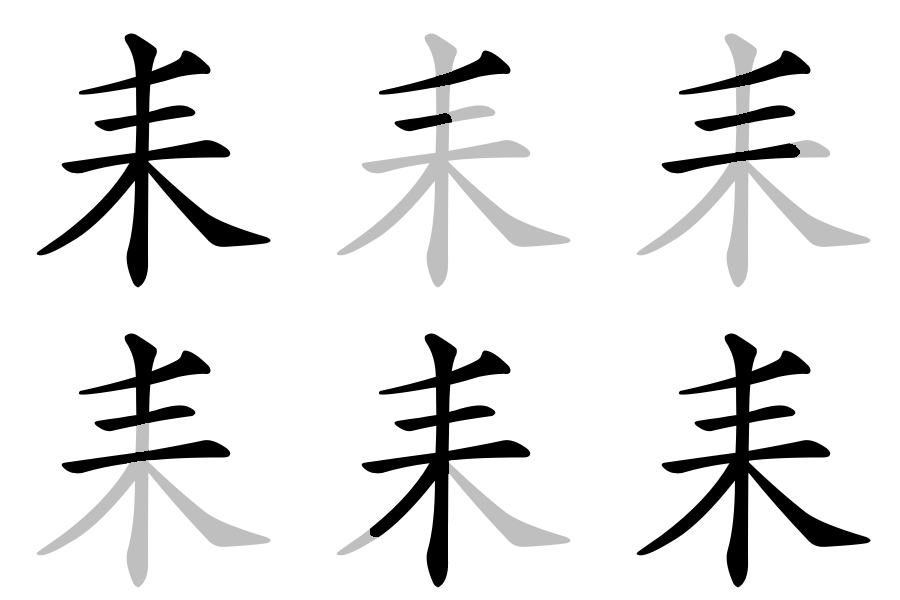
Chinese character radical
title: "Radical 127" type: doc version: 1 created: 2026-02-28 author: "Wikipedia contributors" status: active scope: public tags: ["kangxi-radicals", "simplified-chinese-radicals"] description: "Chinese character radical" topic_path: "geography/china" source: "https://en.wikipedia.org/wiki/Radical_127" license: "CC BY-SA 4.0" wikipedia_page_id: 0 wikipedia_revision_id: 0
::summary Chinese character radical ::
::data[format=table title="Infobox Kangxi radical"]
| Field | Value |
|---|---|
| 127 | uni |
| meaning | plough |
| pny | lěi |
| bopo | ㄌㄟˇ |
| wade | lei3 |
| jyutping | leoi6, loi6 |
| yale | leui6, loi6 |
| onyomi | ライ rai |
| kunyomi | すき suki |
| jp | (Left) 耒偏/すきへん sukihen |
| らいすき raisuki | |
| hang | 쟁기 jaenggi |
| hanja | 뢰 roe |
| :: |
|127|uni=8012 |meaning= plough |pny= lěi |bopo= ㄌㄟˇ |wade= lei3 |jyutping= leoi6, loi6 |yale= leui6, loi6 |cn= |onyomi= ライ rai |kunyomi= すき suki |jp= (Left) 耒偏/すきへん sukihen らいすき raisuki |hang= 쟁기 jaenggi |hanja= 뢰 roe
Radical 127 or radical plough (耒部) meaning "plough" is one of the 29 Kangxi radicals (214 radicals in total) composed of 6 strokes.
In the Kangxi Dictionary, there are 84 characters (out of 49,030) to be found under this radical.
耒 is also the 122nd indexing component in the Table of Indexing Chinese Character Components predominantly adopted by Simplified Chinese dictionaries published in mainland China.
Evolution
File:耒-bronze.svg|Bronze script character File:耒-bigseal.svg|Large seal script character File:耒-seal.svg|Small seal script character
Derived characters
::data[format=table]
| Strokes | Characters |
|---|---|
| +0 | 耒 |
| +2 | 耓 |
| +3 | 耔 |
| +4 | 耕 耖 耗 耘 耙 |
| +5 | 耚 耛 耜 耝 耞 耟 |
| +6 | 耠 |
| +7 | 耡 耢SC (=耮) |
| +8 | 耣 耤 耥 |
| +9 | 耦 耧SC (=耬) |
| +10 | 耨 耩 耪 |
| +11 | 耫 耬 |
| +12 | 耭 耮 |
| +14 | 耯 |
| +15 | 耰 |
| +16 | 耱 耲 |
| :: |
Variant forms
Traditionally, the first stroke of this radical character is a right-to-left slash. In Simplified Chinese xin zixing, it becomes a horizontal stroke. A similar change was also applied to Japanese jōyō kanji, while hyōgai kanji remain unchanged.
::data[format=table] | Trad. Chinese Korean | Japanese | Simp. Chinese | |---|---|---| | 耒 耕 耘 | 耒 耕 耘 | 耒 耕 耘 | ::
Literature
References
References
- Lunde, Ken. (Jan 5, 2009). "CJKV Information Processing: Chinese, Japanese, Korean & Vietnamese Computing". [[O'Reilly Media]].
::callout[type=info title="Wikipedia Source"] This article was imported from Wikipedia and is available under the Creative Commons Attribution-ShareAlike 4.0 License. Content has been adapted to SurfDoc format. Original contributors can be found on the article history page. ::