Radical 10
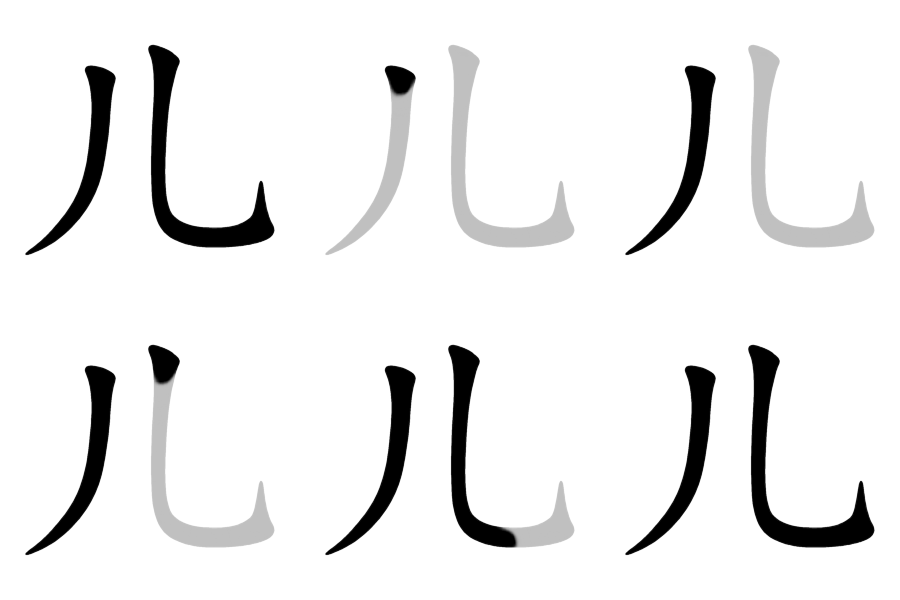
Chinese character radical
title: "Radical 10" type: doc version: 1 created: 2026-02-28 author: "Wikipedia contributors" status: active scope: public tags: ["kanji", "kyōiku-kanji", "kangxi-radicals", "simplified-chinese-radicals"] description: "Chinese character radical" topic_path: "geography/china" source: "https://en.wikipedia.org/wiki/Radical_10" license: "CC BY-SA 4.0" wikipedia_page_id: 0 wikipedia_revision_id: 0
::summary Chinese character radical ::
::data[format=table title="Infobox Kangxi radical"]
| Field | Value |
|---|---|
| 10 | uni |
| meaning | legs |
| pny | ér (SC), rén |
| bopo | ㄦˊ (SC), ㄖㄣˊ |
| gr | erl (SC), ren |
| wade | êrh2 (SC), jên2 |
| jyutping | jan4 |
| yale | yàhn |
| poj | jî |
| cn | 兒字底/儿字底 érzìdǐ |
| onyomi | ジン jin / ニン nin |
| jp | 人繞/にんにょう ninnyō |
| 人足/ひとあしhitoashi | |
| hang | 어진사람 eojinsalam |
| hanja | 인 in |
| hanviet | nhân |
| :: |
::callout[type=note] radical legs (儿) ::
|10|uni=513F |meaning=legs |pny= ér (SC), rén |bopo= ㄦˊ (SC), ㄖㄣˊ |gr= erl (SC), ren |wade= êrh2 (SC), jên2 |jyutping= jan4 |yale= yàhn |poj= jî |cn= 兒字底/儿字底 érzìdǐ |onyomi= ジン jin / ニン nin |jp= 人繞/にんにょう ninnyō 人足/ひとあしhitoashi |hang= 어진사람 eojinsalam |hanja= 인 in |hanviet=nhân ::figure[src="https://upload.wikimedia.org/wikipedia/commons/3/3c/Radical_legs.png" caption="兄}} "elder brother""] ::
Radical 10 or radical legs (儿部) meaning "legs" is one of 23 of the 214 Kangxi radicals that are composed of 2 strokes.
In the Kangxi Dictionary, there are 52 characters (out of 49,030) to be found under this radical.
儿 is also the 14th indexing component in the Table of Indexing Chinese Character Components predominantly adopted by Simplified Chinese dictionaries published in mainland China. In addition, this radical is commonly pronounced ér among Simplified Chinese users as 儿 is the simplified form of 兒 ér. However, the meaning of 儿 as a radical is irrelevant to 兒.
Evolution
File:儿-oracle.svg|Oracle bone script File:儿-bronze.svg|Bronze script File:儿-bigseal.svg|Large seal script File:儿-seal.svg|Small seal script
Derived characters
::data[format=table]
| Strokes | Characters |
|---|---|
| +0 | 儿 |
| +1 | 兀 |
| +2 | 允 兂 (=簪 - 竹) 元 |
| +3 | 兄 |
| +4 | 充 兆 兇 先 光 兊 (=兌) 尧SC (=堯 - 土) |
| +5 | 克 兌 兎JP/variant (=兔) 兏 (=長 - 長) 児JP (=兒) 兑SC/HK (=兌) |
| +6 | 免 兒 兓 兔 兕 兖SC/variant (=兗) |
| +7 | 兗 兘 兙 |
| +8 | 党 (also SC/JP form of 黨 - 黑) 兛 |
| +9 | 兜 兝 兞 |
| +10 | 兟 兠 |
| +11 | 兡 |
| +12 | 兢 |
| +14 | 兣 |
| +18 | 兤GB TC variant |
| +19 | 兤Traditional variant |
| :: |
Sinogram
The radical is also used as an independent Chinese character. It means child, and sometimes simply means erhua phonetically . 兒 is sometimes used to differentiate when it specifically means child and not phonetic use.
::callout[type=info title="Wikipedia Source"] This article was imported from Wikipedia and is available under the Creative Commons Attribution-ShareAlike 4.0 License. Content has been adapted to SurfDoc format. Original contributors can be found on the article history page. ::