Paul Cornu
French engineer
title: "Paul Cornu" type: doc version: 1 created: 2026-02-28 author: "Wikipedia contributors" status: active scope: public tags: ["1881-births", "1944-deaths", "20th-century-french-engineers", "20th-century-french-inventors", "aviation-inventors", "french-aviation-pioneers", "french-aircraft-designers", "french-aerospace-engineers", "members-of-the-early-birds-of-aviation", "french-civilians-killed-in-world-war-ii"] description: "French engineer" topic_path: "history" source: "https://en.wikipedia.org/wiki/Paul_Cornu" license: "CC BY-SA 4.0" wikipedia_page_id: 0 wikipedia_revision_id: 0
::summary French engineer ::
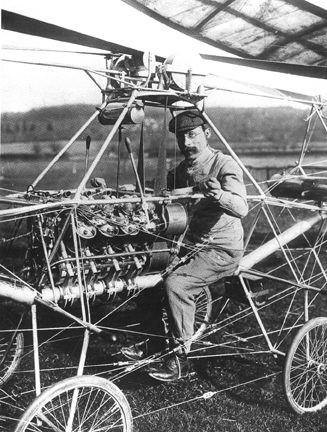
::figure[src="https://upload.wikimedia.org/wikipedia/commons/d/de/HE2G13.jpg" caption="1907]]. Note that he is sitting between the two rotors, which rotated in opposite directions to cancel torque. This helicopter was the first flying machine to have risen from the ground using rotor blades instead of wings."] ::
::figure[src="https://upload.wikimedia.org/wikipedia/commons/f/fa/HE2G8.jpg" caption="Full length photograph of the [[Cornu helicopter]]."] ::
Paul Cornu (; 15 June 1881 – 6 June 1944) was a French engineer.
Life
Paul Cornu was born in Glos la Ferrière, France and was one of thirteen children. At a young age, he helped his father in his transports company. He made history by designing the world's first successful manned rotary wing aircraft.
Cornu first built an unmanned experimental design powered by a 2 hp Buchet engine.
His manned helicopter was powered by a 24 hp Antoinette engine. He piloted this construction himself at Normandy, France on 13 November 1907. Previously, a French helicopter, the Breguet-Richet Gyroplane I, had managed to lift off under its own power, but it had been held in position by men standing on the ground. Cornu's performance was a considerable progress because his aircraft flew without additional support and lifted Cornu about 30 cm (1 ft) for 20 seconds. Unfortunately this early helicopter was scarcely maneuverable and had only a few additional flights. The construction was not much further developed by this technical pioneer, who had to keep on making a living by manufacturing bicycles.
Death
In 1944 Paul Cornu was killed in Lisieux, France, when his home was destroyed during the bombardment by the Allies that accompanied the Normandy landings of World War II. He was 62 years old.
References
References
- Pike, John. "Cornu Helicoplane".
- (June 1906). "Hélicoptère Cornu et fils à Propulseur Spécial". [[L'Aérophile]].
- [http://www.eurocopter.com eurocopter.com] {{webarchive. link. (2007-05-04)
- (3 Apr 1959). "Hops and Flights: A roll call of early powered take-offs". [[Flight International.
::callout[type=info title="Wikipedia Source"] This article was imported from Wikipedia and is available under the Creative Commons Attribution-ShareAlike 4.0 License. Content has been adapted to SurfDoc format. Original contributors can be found on the article history page. ::