Microvision
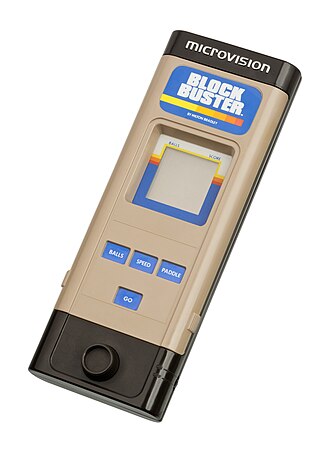
First handheld game console that used interchangeable ROM cartridges
title: "Microvision" type: doc version: 1 created: 2026-02-28 author: "Wikipedia contributors" status: active scope: public tags: ["microvision", "handheld-game-consoles", "monochrome-video-game-consoles", "products-introduced-in-1979", "1970s-toys", "milton-bradley-company-games", "discontinued-handheld-game-consoles"] description: "First handheld game console that used interchangeable ROM cartridges" topic_path: "general/microvision" source: "https://en.wikipedia.org/wiki/Microvision" license: "CC BY-SA 4.0" wikipedia_page_id: 0 wikipedia_revision_id: 0
::summary First handheld game console that used interchangeable ROM cartridges ::
::data[format=table title="Infobox CVG system"]
| Field | Value |
|---|---|
| name | Microvision |
| aka | Milton Bradley Microvision |
| MB Microvision | |
| logo | Milton Bradley Microvision Logo.png |
| image | Milton-Bradley-Microvision-Handheld-FL.jpg |
| caption | A Microvision with Block Buster cartridge inserted |
| manufacturer | Milton Bradley Company |
| type | Handheld game console |
| generation | Second generation |
| price | |
| media | ROM cartridges |
| release_date | |
| discontinued | 1981 |
| cpu | Intel 8021/TI TMS1100 (on cartridge) clocked at 100 kHz |
| display | 16 × 16 pixels resolution |
| memory | 64 bytes RAM, 2K ROM |
| power | 1 × 9V battery (TMS1100 processors), 2 × 9V battery (Intel 8021 processors) |
| :: |
| name = Microvision | aka = Milton Bradley Microvision MB Microvision | logo = Milton Bradley Microvision Logo.png | image = Milton-Bradley-Microvision-Handheld-FL.jpg |caption = A Microvision with Block Buster cartridge inserted | manufacturer = Milton Bradley Company | family = | type = Handheld game console | generation = Second generation | price = | media = ROM cartridges | units_sold = | top_game = | predecessor = | successor = | release_date = | discontinued = 1981 | cpu = Intel 8021/TI TMS1100 (on cartridge) clocked at 100 kHz | display = 16 × 16 pixels resolution | memory = 64 bytes RAM, 2K ROM | power = 1 × 9V battery (TMS1100 processors), 2 × 9V battery (Intel 8021 processors) The Microvision (aka Milton Bradley Microvision or MB Microvision) is the first handheld game console that used interchangeable cartridges and in that sense is reprogrammable. It was released by the Milton Bradley Company in November 1979 for a retail price of $49.99, equivalent to $221.00 in 2025.
The Microvision was designed by Jay Smith, the engineer who later designed the Vectrex video game console. According to Satoru Okada, the former head of Nintendo's R&D1 Department, the Microvision inspired the Game Boy, the follow-up to Game & Watch, after Nintendo designed around Microvision's limitations.
Production
::figure[src="https://upload.wikimedia.org/wikipedia/commons/f/fa/Microvision_-Block_Buster(1979)_-_Gameplay_screenshot.svg" caption="Screenshot of Block Buster, which came packaged with the Microvision"] ::
Unlike most later consoles, the Microvision did not contain an onboard processor (CPU). Instead, each game included its own processor contained within the removable cartridge. This meant that the console itself effectively consisted of the controls, LCD panel and LCD controller.
The processors for the first Microvision cartridges were made with both Intel 8021 (cross-licensed by Signetics) and Texas Instruments TMS1100 processors. Due to purchasing issues, Milton Bradley switched to using TMS1100 processors exclusively, including reprogramming the games that were originally programmed for the 8021 processor. The TMS1100 was a more primitive device, but offered more memory and lower power consumption than the 8021. First-revision Microvisions needed two batteries due to the 8021's higher power consumption, but later units (designed for the TMS1100) only had one active battery holder. Even though the battery compartment was designed to allow the two 9-volt batteries to be inserted with proper polarity of positive and negative terminals, when a battery was forcefully improperly oriented, while the other battery was properly oriented, the two batteries would be shorted and overheat. The solution was to remove terminals for one of the batteries to prevent this hazard. Due to the high cost of changing production molds, Milton Bradley did not eliminate the second battery compartment, but instead removed its terminals and called it a spare battery holder.
Problems
::figure[src="https://upload.wikimedia.org/wikipedia/commons/a/ad/Milton-Bradley-Microvision-Casing-Open-02.jpg" caption="The uncovered LCD screen of a Microvision, showing screen damage"] ::
Microvision units and cartridges are now somewhat rare. Those that are still in existence are susceptible to three main problems: "screen rot," ESD damage, and keypad destruction.
Screen rot
The manufacturing process used to create the Microvision's LCD was primitive by modern standards. Poor sealing and impurities introduced during manufacture have resulted in the condition known as screen rot. The liquid crystal spontaneously leaks and permanently darkens, resulting in a game unit that still plays but is unable to properly draw the screen. While extreme heat, which can instantly destroy the screen, can be avoided, there is nothing that can be done to prevent screen rot in most Microvision systems.
ESD damage
A major design problem on early units involves the fact that the microprocessor (which is inside the top of each cartridge) lacks ESD protection and is directly connected to the copper pins which normally connect the cartridge to the Microvision unit. If the user opens the protective sliding door that covers the pins, the processor can be exposed to any electric charge the user has built up. If the user has built up a substantial charge, the discharge can jump around the door's edge or pass through the door itself (dielectric breakdown). The low-voltage integrated circuit inside the cartridge is extremely ESD sensitive, and can be destroyed by an event of only a few dozen volts which cannot even be felt by the person, delivering a fatal shock to the game unit. This phenomenon was described in detail by John Elder Robison (a former Milton Bradley engineer) in his book Look Me in the Eye; according to Robison, up to 60% of units were returned as defective during the 1979 holiday season, causing significant panic among Milton Bradley staff and prompting extensive modifications to both later Microvision units (which were his own design) and Microvision factories to better dispel stray static charges.
Keypad destruction
The Microvision unit had a twelve-button keypad, with the switches buried under a thick layer of flexible plastic. To align the user's fingers with the hidden buttons, the cartridges had cutouts in their bottom (over the keypad). As different games required different button functions, the cutouts were covered with a thin printed piece of plastic, which identified the buttons' functions in that game. The problem with this design is that pressing on the buttons stretched the printed plastic, resulting in the thin material stretching and eventually tearing. Having long fingernails exacerbated the condition. Many of the initial games were programmed to give feedback of the keypress when the key was released instead of when the key was pressed. As a result, users may press on the keypad harder because they are not being provided with any feedback that the key has been pressed. This resulted from a keypad used for prototyping being different from the production keypad; the prototyping keypad had tactile feedback upon key pressing that the production units lacked.
Technical specifications
::figure[src="https://upload.wikimedia.org/wikipedia/commons/5/5a/Milton-Bradley-Microvision-Cartridge-Motherboard.jpg" caption="The PCB of a Sea Duel game cartridge, showing the TI3496 processor from the TMS1100 family"] ::
- CPU: Intel 8021/TI TMS1100 (on cartridge)
- Screen type and resolution: 16 × 16 pixel LCD
- Register width: 4 bit (TMS1100), 8 bit (8021)
- Processor speed: 100 kHz
- RAM (integrated into CPU): 64 bytes
- ROM: 2K (TMS1100), 1K (8021)
- Cartridge ROM: 2K (TMS 1100), 1K (8021) masked (integrated into CPU; each game's CPU was different)
- Video Display Processor: LCD Custom Driver (made by Hughes)
- Sound: Piezo beeper
- Input: Twelve button keypad, one paddle
- Power requirements: One or two 9 volt batteries on earlier Microvision consoles, one 9 volt battery on later Microvision consoles
- Power Dissipation: 110 mW (TMS 1100), 1 W (8021)
Games
While the game cartridge plastic cases were beige colored in the USA, in Europe they came in a variety of different colors, and the games were numbered on the Box. The age range in Europe for the console and its games was from 8 to 80 years old or 8 to Adult.
There were **** titles known to have been released.
:
::data[format=table]
| # | US title | Overseas titles | Game number (EU) | Release date | Microprocessor/s | PCB Revision(s) |
|---|---|---|---|---|---|---|
| 1 | USA Block Buster | UK Block Buster | ||||
| GER Block Buster | ||||||
| NED Block Buster | ||||||
| ITA Block Buster | ||||||
| FRA Casse Brique | UK 1 | |||||
| GER 1 | ||||||
| NED 1 | ||||||
| ITA 1 | ||||||
| FRA 1 | TI MP3450A | 4952 REV A | ||||
| 2 | USA Bowling | UK Bowling | ||||
| GER Bowling | ||||||
| NED Bowling | ||||||
| ITA Bowling | ||||||
| FRA Bowling | UK 2 | |||||
| GER 2 | ||||||
| NED 2 | ||||||
| ITA 2 | ||||||
| FRA 2 | TI MP3475NLL | 4952 REV A | ||||
| 3 | USA Connect Four | UK Connect 4 | ||||
| GER 4 Gewinnt | ||||||
| NED Vier Op'n Rij | ||||||
| ITA Forza 4 | ||||||
| FRA Puissance 4 | UK 5 | |||||
| GER 5 | ||||||
| NED 5 | ||||||
| ITA 5 | ||||||
| FRA 5 | Signetics Intel 8021 | 4971 REV C | ||||
| 4 | USA Pinball | UK Pinball | ||||
| GER Pinball | ||||||
| NED Flipper | ||||||
| ITA Flipper | ||||||
| FRA Flipper | UK 4 | |||||
| GER 4 | ||||||
| NED 4 | ||||||
| ITA 4 | ||||||
| FRA 4 | TI MP3455NLL | 4952 REV A | ||||
| 5 | USA Mindbuster | N/A | N/A | TI MP3457NLL | 4952 REV A | |
| 6 | USA Star Trek: Phaser Strike | |||||
| (later just Phaser Strike) | UK Shooting Star | |||||
| GER Shooting Star | ||||||
| NED Shooting Star | ||||||
| ITA Shooting Star | ||||||
| FRA Shooting Star | UK 3 | |||||
| GER 3 | ||||||
| NED 3 | ||||||
| ITA 3 | ||||||
| FRA 3 | TI MP3454NLL | 4952 REV A | ||||
| 7 | USA Vegas Slots | N/A | N/A | TI MP3474-NLL | 4952-56 REV - | |
| 8 | USA Baseball | N/A | N/A | TI MP3479-N1NLL | 4952-56 REV - | |
| 9 | USA Sea Duel | UK Sea Duel | ||||
| GER See-Duell | ||||||
| NED Duel | ||||||
| ITA Duello Sul Mare | ||||||
| FRA Bataille Navale (Battleship) | UK 6 | |||||
| GER 6 | ||||||
| NED 6 | ||||||
| ITA 6 | ||||||
| FRA 6 | TI MP3496-N1 | 4952-56 REV - | ||||
| 10 | USA Alien Raiders | UK Space Blitz | ||||
| GER Blitz | ||||||
| NED Blitz | ||||||
| ITA Blitz | ||||||
| FRA Blitz | UK 7 | |||||
| GER 7 | ||||||
| NED 7 | ||||||
| ITA 7 | ||||||
| FRA 7 | TI M34009-N1 | 4952-79 REV B | ||||
| 11 | USA Cosmic Hunter | N/A | N/A | TI M34007-N1 | 4952-79 REV B | |
| 12 | N/A | UK Super Block Buster | ||||
| GER Super Blockbuster 611497800 | ||||||
| ITA Super Block Buster | ||||||
| FRA Super Casse Brique (Super Brick Breaker) 611497801 | UK 8 | |||||
| GER 8 | ||||||
| ITA 8 | ||||||
| FRA 8 | TI M34047-N2LL | 7924952D02 Rev B | ||||
| 13 | Barrage* | ? | ? | Unreleased | ||
| (supposed to be released in 1982) | ? | |||||
| :: |
Reviews
- 1980 Games 100 in Games
- 1981 Games 100 in Games
References
References
- Sfetcu, Nicolae. (2014-05-04). "Game Preview". Nicolae Sfetcu.
- (April 1998). "Cribsheet No. 15: Milton Bradley's Microvision". [[Imagine Media]].
- www.lookingtodraw.com, MICHAEL J. BARNES, ILTD DESIGN SERVICES. "PC Timeline. The Freeman PC Museum... Largest Collection of Vintage Computers On The Web.".
- (2014-02-19). "Milton Bradley Microvision – Pop Culture Maven".
- "Microvision by Milton Bradley – The Video Game Kraken".
- The Microvision's combination of portability and a cartridge-based system led to moderate success, with Smith Engineering grossing $15 million in the first year of the system's release. However, its small game library, its small screen, and a lack of support from established home video game companies led to its discontinuation in 1981.Donald Melanson, March 3, 2006, [https://www.engadget.com/2006-03-03-a-brief-history-of-handheld-video-games.html A Brief History of Handheld Video Games] [[Engadget]]
- Barder, Ollie. (December 31, 2016). "New Interview With Satoru Okada Delves Into The Hidden History Behind Nintendo's Gaming Handhelds".
- Brown, Jason. (2022-01-14). "12 Best Microvision Games Of 2022".
- Lester, John "Gamester81". (2013-04-28). "History of Consoles-Microvision (1979)".
- Vinciguerra, Robert. (November 25, 2007). "Milton Bradley Microvision: The World's First Handheld Game Console". The Rev. Rob Times.
- (25 September 2007). "Look Me in the Eye". Three Rivers Press.
- "Dan B's Atari Microvision Tech Page".
- (November 1980). "GAMES Magazine #20".
- "Milton Bradley Microvision (U.S.)".
- "MB Microvision Handheld Games Console".
- (27 September 2013). "Milton Bradley Microvison (1979 – 1981)".
::callout[type=info title="Wikipedia Source"] This article was imported from Wikipedia and is available under the Creative Commons Attribution-ShareAlike 4.0 License. Content has been adapted to SurfDoc format. Original contributors can be found on the article history page. ::