Lockheed AP-3C Orion
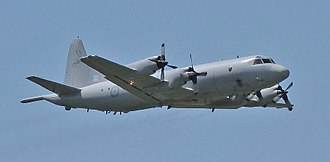
Australian patrol and anti-submarine aircraft
title: "Lockheed AP-3C Orion" type: doc version: 1 created: 2026-02-28 author: "Wikipedia contributors" status: active scope: public tags: ["lockheed-aircraft", "1990s-united-states-patrol-aircraft", "four-engined-tractor-aircraft", "low-wing-aircraft", "four-engined-turboprop-aircraft", "lockheed-p-3-orion", "aircraft-in-royal-australian-air-force-service"] description: "Australian patrol and anti-submarine aircraft" topic_path: "geography/united-states" source: "https://en.wikipedia.org/wiki/Lockheed_AP-3C_Orion" license: "CC BY-SA 4.0" wikipedia_page_id: 0 wikipedia_revision_id: 0
::summary Australian patrol and anti-submarine aircraft ::
::data[format=table title="Infobox aircraft"]
| Field | Value |
|---|---|
| name | AP-3C Orion |
| image | File:AP-3C Orion 2008.jpg |
| caption | AP-3C Orion |
| type | Maritime patrol aircraft |
| national_origin | United States |
| manufacturer | Lockheed Corporation |
| first_flight | 19 May 1999 |
| last_flight | 5 December 2023 |
| introduction | 2002 |
| status | Retired |
| primary_user | Royal Australian Air Force |
| number_built | 18 |
| developed_from | Lockheed P-3 Orion |
| :: |
| name = AP-3C Orion | image = File:AP-3C Orion 2008.jpg | caption = AP-3C Orion | type = Maritime patrol aircraft | national_origin = United States | manufacturer = Lockheed Corporation | first_flight = 19 May 1999 | last_flight = 5 December 2023 | introduction = 2002 | status = Retired | primary_user = Royal Australian Air Force | more_users = | number_built = 18 | developed_from = Lockheed P-3 Orion
The Lockheed AP-3C Orion is a variant of the P-3 Orion formerly used by the Royal Australian Air Force (RAAF) for tasks such as naval fleet support, maritime surveillance, search and survivor supply and anti-surface and anti-submarine warfare. The 18 AP-3C Orions were upgraded from P-3Cs between 1997 and 2005, with the program taking three years longer than expected due to systems integration problems. All 18 AP-3C Orions were operated by No. 92 Wing which is based at RAAF Base Edinburgh in South Australia. Aircraft from the wing have seen service as part of Australian Defence Force operations in Australia, South East Asia and the Middle East. They were retired in 2019 following the introduction of the Boeing P-8 Poseidon to the RAAF fleet. The two AP-3C(EW) variants equipped for electronic and signals intelligence (ELINT/SIGINT) were retired in December 2023.
Development
The AP-3C Orion project began in the early 1990s to upgrade the radar and mission systems on 18 of Australia's 19 P-3C-II Orions. L3 Communications completed the prototype AP-3C at its facility at Greenville, Texas. The other 17 aircraft were upgraded at Avalon Airport in Australia under a sub-contract to Australian companies. Tenix Defence took over the project in mid-2003 and BAE Systems was involved with many of the aircraft's sub-systems and developing a simulation facility. Work began on the first AP-3C in January 1997 and the original project schedule called for this aircraft to be provided to the RAAF for operational acceptance trials in March 1998 and all upgrades to be completed by the end of 2001. The remaining 19th Orion was not included in the upgrade program, and the Australian military stated in 2005 that it is "used for development purposes".
When the Australian Orion upgrade project was being developed in 1996 there was not an 'off the shelf' package of upgrades that met the requirements specified by the RAAF. As a result, it was decided to tailor the upgrade to Australian specifications, which included integrating different systems. The systems integration task proved to be much more difficult than was expected, and L3 Communications and its suppliers were required to write over two million lines of software code.
As a result of the systems integration problems delivery of upgraded Orions was delayed by three years. The first two aircraft were handed over to the RAAF in December 2001 and the final AP-3C was delivered in early 2005. This delay caused a major reduction in the RAAF's maritime surveillance capability, and in February 2001 only nine of the RAAF's 17 Orions were operational.
Capabilities
::figure[src="https://upload.wikimedia.org/wikipedia/commons/f/f0/RAAF_Lockheed_P-3C_Orion_CBR_Gilbert-2.jpg" caption="An AP-3C at [[Canberra Airport]] in 2005"] ::
::figure[src="https://upload.wikimedia.org/wikipedia/commons/a/ad/Loading_Sonobouys_on_an_AP-3C_Orion.jpg" caption="Two crewmen loading sonobuoys on board an AP-3C"] ::
The AP-3C upgrade improved the Orions' radar, intelligence-gathering and computing systems. The upgrade included fitting each aircraft with a new Elta EL/M-2022(V)3 radar, a nose-mounted Star Safire III electro-optical and infrared system, "highly capable" signals and electronic intelligence (SIGINT/ELINT) equipment, the UYS 503 acoustic system, a new automatic information system processor, a new navigation system based on two Honeywell H764G Embedded GPS/INUs, a new communications system and other improvements. The Orions' weight was also reduced by more than 3,000 kg as part of the upgrade.
The AP-3Cs' new radar and electronic surveillance system greatly increased the capabilities of the RAAF's Orion fleet. These new systems allow the Orions to detect and identify more targets and at longer range. In 2002 the then-Chief of Air Force Air Vice Marshal Angus Houston claimed that the AP-3Cs were the best maritime patrol aircraft in the world and The Australian reported that they were superior to the United States Navy's Orions, though an upgrade was planned for the USN's Orion fleet.
There has been speculation that one or more of the AP-3Cs was fitted with additional SIGINT/ELINT capabilities and operate as specialised intelligence-gathering aircraft. An article in the magazine Australian Aviation in December 2007 stated that this is probably not correct, and it is more likely that several SIGINT/ELINT 'kits' were purchased and can be swapped between all 18 airframes. The magazine also quoted an unnamed 'industry source' as stating that all the AP-3Cs have SIGINT/ELINT capabilities "equivalent or better" than those of the Royal Air Force's specialised Hawker Siddeley Nimrod surveillance aircraft. Jane's World Air Forces states that the RAAF's 19th Orion was converted to an EP-3 signals reconnaissance aircraft in 1997, however, and was operational as late as 2009.
The aircraft are equipped with AGM-84 Harpoon anti-ship missiles, Mark 46 or MU90 Impact torpedoes, mines, and a range of sonar buoys and other stores.
AP-3C Orions have a normal crew complement of 13, broken down as follows:
- two pilots (captain and co-pilot)
- two flight engineers
- tactical co-ordinator
- navigator/communication officer
- sensor employment manager
- six airborne electronic analysts.
In addition to their traditional maritime surveillance role, AP-3Cs have been equipped for over-land surveillance roles. As of 2007, the RAAF's two-aircraft Orion detachment in the Middle East was spending 60 percent of its flying time conducting intelligence gathering, surveillance and reconnaissance over Iraq.
On 14 May 2007 BAE Systems Australia was awarded an $76.1 million contract to provide an upgraded electronic support measures (ESM) system for the Orions. The contract involved replacing existing sub-systems and ground support systems from 2011.
In 2008 the Australian Government awarded contracts for further enhancements to the AP-3C fleet. Under this project 18 Orions were to be equipped with new electro-optical/infrared sensors, tactical common datalinks and video recorders by 2011.
Operational history
::figure[src="https://upload.wikimedia.org/wikipedia/commons/6/63/AP-3C_Orions_RIMPAC_2010.jpg" caption="Two AP-3C Orions in July 2010"] ::
All AP-3Cs were assigned to No. 92 Wing RAAF, which forms part of the air force's Surveillance and Response Group. Each of the 18 aircraft is permanently allocated to either No. 10 Squadron or No. 11 Squadron rather than being placed in a wing-owned pool. AP-3C aircraft are also used by the RAAF's Orion operational conversion unit, No. 292 Squadron, for training flights.
The AP-3Cs have seen extensive operational service. The first operational deployment of one of the upgraded aircraft was conducted in late 2002, when an AP-3C assigned to No. 10 Squadron flew border protection patrols from Darwin. The Orions have subsequently formed an important part of Operation Resolute, the Australian Defence Force's contribution to patrolling Australia's Exclusive Economic Zone. As part of this operation Orions fly regular missions around Australia's western and northern approaches and report the results of their patrols to Maritime Border Command. AP-3Cs also periodically conduct patrols over the Indian Ocean, Strait of Malacca and South China Sea from RMAF Butterworth in Malaysia as part of Operation Gateway. A single AP-3C was also deployed to Pago Pago in American Samoa during November and December 2006 to support the Australian force deployed off Fiji in response to the 2006 Fijian coup d'état.
Further afield, a detachment of two AP-3Cs was based in the Middle East from 2003 until late 2012 as part of Australia's commitment to the war on terrorism (Operation Slipper) and the Iraq War (Operation Catalyst). These aircraft conducted maritime surveillance patrols over the Persian Gulf and North Arabian Sea; providing support to Coalition warships and boarding parties; and conducting extensive overland flights of Iraq to support the Coalition ground forces there. By December 2007 the AP-3C detachment had conducted 1,200 sorties totaling more than 11,000 hours of flying. The aircraft also operated over Afghanistan conducting intelligence, surveillance and reconnaissance missions, as well supporting counter-piracy operations in Somalia. This deployment ended in December 2012; by this time the aircraft had flown over 2,400 sorties; and more than 3,500 No. 92 Wing personnel had served in the Middle East.
In February 2009 an AP-3C Orion conducted flights over the state of Victoria in which it used its sophisticated cameras to map the damage and destruction caused by the Black Saturday bushfires and to search for survivors. ::figure[src="https://upload.wikimedia.org/wikipedia/commons/e/e2/Australian_Orion_MPA_Flying_Over_HMS_Echo_During_Search_for_Malaysian_Airliner_MH370_MOD_45157505.jpg" caption="HMS ''Echo'']] during MH370 search" alt="4-engined plane flies over ship"] ::
In March 2014, four AP-3Cs participated in the search for Malaysia Airlines Flight 370.
In December 2015, it was reported by the BBC that an AP-3C Orion aircraft from the Royal Australian Air Force conducted freedom of navigation exercises over contested islands in the South China Sea. The Department of Defence released a statement stating that the Orion had conducted routine maritime patrols between 25 November and 4 December as part of a regular surveillance operation. The aircraft was operating as a part of Operation Gateway, Australia's "enduring contribution to the preservation of regional security and stability in South East Asia".
In June 2017 the Australian Government announced that two AP-3C Orions would operate over Mindanao in the Philippines to gather intelligence for Filipino forces engaged in the Marawi crisis.
Replacement
Except for two modified AP-3C(EW) aircraft serving in the ISREW role, the RAAF's Orions have been replaced by 12 (with an additional two on order) Boeing P-8A Poseidons, and up to seven (four currently on order) MQ-4C Triton HALE UAVs, with the first to arrive in 2024.
Operators
;
- Royal Australian Air Force
- No. 10 Squadron
- No. 11 Squadron (until 25 November 2016 when they formally transitioned to the P-8A Poseidon)
- No. 292 Squadron
Survivors
::figure[src="https://upload.wikimedia.org/wikipedia/commons/1/18/AP-3C_Orion_at_the_Treloar_Technology_Centre_September_2023.jpg" caption="AP-3C Orion A9-659 in storage at the Australian War Memorial's [[Treloar Technology Centre]] in 2023"] ::
- A9-659 - Held by the Australian War Memorial since 2019.
- A9-751 - RAAF Museum
- A9-753 - Historical Aircraft Restoration Society (HARS), Shellharbour Airport, New South Wales, Australia. Ex-Royal Australian Air Force A9-753 10 Squadron, and 292 Squadron as a static training aid. Officially handed over to HARS by the RAAF on 3 November 2017. It will be maintained as a flying warbird.
- A9-760 - Held by Queensland Air Museum having been officially transferred to them on 11 June 2018.
Specifications (AP-3C Orion)
::figure[src="https://upload.wikimedia.org/wikipedia/commons/c/c3/AP-3_Orion_with_bomb_bay_doors_open_2010.jpg" caption="An AP-3C Orion with its bomb bay doors open"] ::
|ref= |prime units?=kts General characteristics
|crew=13 |length ft=116 |length in=10 |length note= |span ft=101 |span in=6 |span note= |height ft=34 |height in=3 |height note= |wing area sqft=1300 |wing area note= |swept area sqft= |swept area note= |volume ft3= |volume note= |aspect ratio= |airfoil=root: NACA 0014-1.10; tip: NACA 0012-1.10 |empty weight kg=27900 |empty weight note= |gross weight lb= |gross weight note= |max takeoff weight kg=61200 |max takeoff weight note= |fuel capacity= |lift lb= |lift note= |more general= Powerplant
|eng1 number=4 |eng1 name=Allison T56-A-14 |eng1 type=turboshaft engines |eng1 shp=4600 |eng1 note=
|prop blade number=4 |prop name=constant-speed fully-feathering propellers |prop dia m= |prop dia ft= |prop dia in= |prop dia note= Performance
|max speed kts=405 |max speed note= |cruise speed kts= |cruise speed note= |stall speed kts= |stall speed note= |never exceed speed kts= |never exceed speed note= |minimum control speed kts= |minimum control speed note= |range nmi= |range note= |combat range nmi=2346 |combat range note= |ferry range nmi=4866 |ferry range note= |endurance= |ceiling ft=28300 |ceiling note= |climb rate ftmin=3140 |climb rate note= |time to altitude= |lift to drag= |wing loading lb/sqft=107 |wing loading note= |fuel consumption lb/mi= |power/mass=0.03 hp/lb |more performance=
- Take-off run: ft
- Take-off distance to 50 ft: ft
- Landing run: ft
- Landing distance from 50 ft: ft-- Armament -- |armament= specific parameters, remove this parameter-- |guns= |bombs= |rockets= |missiles= |hardpoints= |hardpoint capacity= |hardpoint rockets= |hardpoint missiles= |hardpoint bombs= |hardpoint other=
|avionics=
Notes
References
References
- RAAF, RAAF. (1 November 2019). "Heading to retirement of the AP-3C after 50 years of service".
- (7 December 2023). "Royal Australian Air Force quietly bids farewell to the ‘Mighty Hunter’". Region Group.
- (7 December 2023). "Australia waves its last AP-3C Orions into retirement". FlightGlobal.
- (2005-03-15). "Upgraded Orion fleet now in service". Australian Associated Press.
- (2001-02-20). "Updated Orion unveiled after three years delay.". Flight International.
- McCaughlin, Andrew. (December 2007). "Quiet Achiever". Australian Aviation.
- (2002-11-15). "Refit gives Orions a new lease of life". The Australian.
- (2001-11-30). "Orion systems update back on track". The Australian.
- (2001-12-08). "Updated Orion Aircraft Delivered To The RAAF". Forecast International.
- Peacock, Lindsay. (2009). "Jane's World Air Forces. Issues Twenty-Nine". Jane's Information Group.
- Wilson, Stewart. (1994). "Military Aircraft of Australia". Aerospace Publications.
- (28 February 2013). "Remediation of the Lightweight Torpedo Replacement Project". Australian National Audit Office.
- "AP-3C Orion maritime patrol aircraft". Royal Australian Air Force.
- Skehan, Craig. (2007-06-08). "Spy plane mission revealed". The Sydney Morning Herald.
- (2007). "In Brief". Journal of Electronic Defense.
- Kelly, Emma. (2008-08-26). "Canberra agrees to upgrade AP-3C Orion fleet". Flight International.
- McCaughlin, Andrew. (December 2007). "Quiet Achiever". Australian Aviation.
- (21 November 2002). "AP-3C patrols nation's north". Air Force News.
- (2006-12-17). "Australian task group returns from Fiji". The Age.
- "Mission complete on wings of a dream craft". Adelaide Now.
- Dodd, Mark. (2009-02-10). "RAAF 'spy' plane searches for survivors and maps damage". The Australian.
- (15 December 2015). "Australia conducting 'freedom of navigation' flights in South China Sea". BBC News.
- "Operation Gateway". Department of Defence.
- (15 December 2015). "Defence claims RAAF South China Sea flight is "routine"". [[Australian Financial Review]].
- (15 December 2015). "Audio captures RAAF surveillance flight over South China Sea". ABC News.
- (22 June 2017). "RAAF spy planes to join fight against Islamic State in the Philippines". The Sydney Morning Herald.
- (15 March 2014). "PM gives go-ahead to buy Triton drones". news.com.au.
- Ferguson, Gregor. (2008-11-29). "Crossroads for maritime surveillance deal". The Australian.
- "PM gives go-ahead to buy Triton drones". NewsComAu.
- Makowski, Dion. (9 January 2017). "RAAF 11 Sqn Arrival of the P-8 Poseidon and Retirement of the AP-3C Orion". Down Under Aviation News.
- (28 February 2019). "Memorial welcomes AP-3C Orion aircraft into National Collection". Australian War Memorial.
- "Exhibitions". Royal Australian Air Force.
- "ADF Serials - Orion".
- (4 November 2017). "Lockheed AP-3C Orion Signed Over to HARS - Historical Aircraft Restoration Society".
- "Lockheed AP-3C Orion - Historical Aircraft Restoration Society".
- "QAM AIRCRAFT - Lockheed AP-3C Orion A9-760". Queensland Air Museum.
- "The Incomplete Guide to Airfoil Usage".
::callout[type=info title="Wikipedia Source"] This article was imported from Wikipedia and is available under the Creative Commons Attribution-ShareAlike 4.0 License. Content has been adapted to SurfDoc format. Original contributors can be found on the article history page. ::